Images courtesy of Disney Enterprises, Inc.

Images courtesy of Disney Enterprises, Inc.
Partnering on solving the visual effects for Zootopia 2, much like Judy Hopps and Nick Wilde investigating the mysterious circumstances surrounding the appearance of pit viper Gary De’Snake, are Gregory Smith and Marlon West. Smith previously worked on the original movie and the Disney+ series Zootopia+, while West is a newcomer to the franchise that takes place in an animal-oriented metropolis divided into distinct ecosystems. “There is certainly a throughline with the character performances and the look of the world,” states Gregory Smith, Visual Effects Supervisor. “One of the challenges on the show was our processes, and looking at how that world has changed. You want to update things and keep it looking to our standards, but also try to maintain the original spirit and look of the world.” In live-action, visual effects are all about being grounded, but animation tends to have a stylized aesthetic run counter to physically-based simulations. “Believability is the thing that drives our world-building across all of our various disciplines,” remarks Marlon West, Visual Effects Supervisor. “If our effects don’t look like at a basic level what it’s supposed to be, whether water or fire or destruction, it falls apart. What we prioritize doing is not only supporting the production design of the film but also the animation performances. Sometimes, water has to look sad or funny. We’re trying to drive an emotion and be supportive of our world-building when it comes to visual effects.”
Several departments collaborated to produce the underwater chase involving a couple of hippos. “Those hippos are moving too quickly for them to look funny, relative to the seals and sea lions that are actually being displaced by their weight,” West states. “There is a certain amount of stylization in regard to what does and doesn’t get disturbed, and how much silt is being kicked up to remind you that you’re underwater, but not so much that it becomes this big, cloudy scene that is not pretty or funny to look at. There are all of these choices we have to make as visual storytellers, not just Greg and I as visual effects supervisors, but character animators, tech animation and lighting. We have a wake effect that goes through that came out of lighting. There was a compositing beat that was added by them that helped give you the sense of being underwater because there are not a lot of simulation cues otherwise.” Photorealism is not the goal. “We try to find a style which is of that world, then take a lot of shorthand of what people think things look like,” Smith notes. “Obviously, there are physically-based simulations, and it’s ray traced, and light is bouncing around. A lot of artistic choices are made at every step of the process, whether it’s in the shape, shading, lighting or compositing of it; all of that helps give you a sense of what it’s supposed to be, but also helps to simplify it so it can be a quick read and you’re getting the joke.”
“Part of what makes Zootopia unique are the [different] scales. You have characters that are inches high and others that are 20 feet tall living in the same city and going into the same buildings. An aspect of the world that makes it believable is you have something like that pop can that looks one way being held by Nick, which was probably big for him because it was made for an elephant to drink, and it’s even bigger for this mole that gets blasted out of frame by the soda that comes out of it.”
—Marlon West, Visual Effects Supervisor
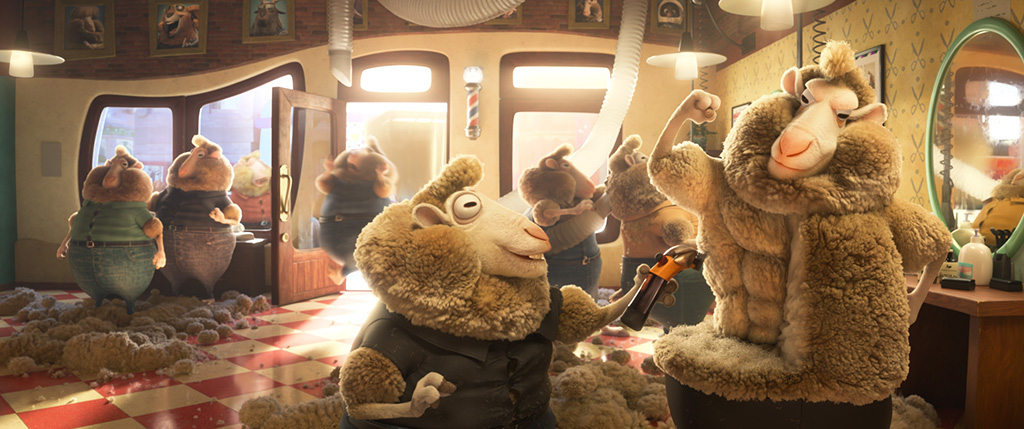
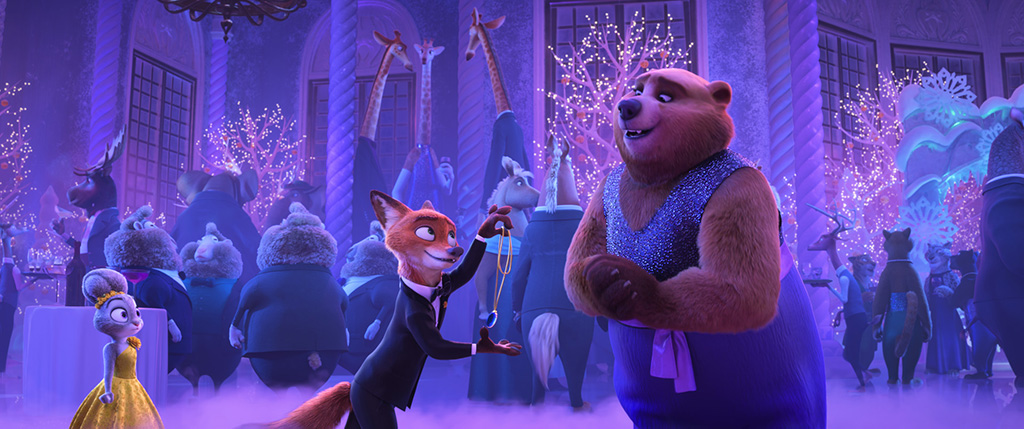
When composing shots, the various size and scale of the animals had to be kept in mind, like when Nick throws a pop can that goes through a wall and explodes while Paul Moledebrandt is working. “Part of what makes Zootopia unique are the [different] scales,” West remarks. “You have characters that are inches high and others that are 20 feet tall living in the same city and going into the same buildings. An aspect of the world that makes it believable is you have something like that pop can that looks one way being held by Nick, which was probably big for him because it was made for an elephant to drink, and it’s even huger for this mole that gets blasted out of frame by the soda that comes out of it. We’re constantly making and changing things broadly like that pop can or subtly for the carrot pen, depending on who’s holding it, to make things look believable in the world of Zootopia.” The scale differences have comedic value. “One of the things that gives this world a lot of charm is multi scale jokes that we can do,” Smith observes. “A mouse taking another mouse’s invitation and an elephant dropping an invitation on a mouse. You can have a lot of fun with these different scales, and it does provide quite a challenge, not only with the simulation where you’re dealing with something that might be too high-frequency for a large-scale joke, but then too small-frequency for something else. A mouse’s costume is going to be a similar real-world material for an elephant. We have to try to find what is the right balance because we don’t want the mouse to feel like it’s in stiff doll clothes. Likewise, we don’t want the elephant to feel like it’s wearing a circus-tent-size piece of fabric.”
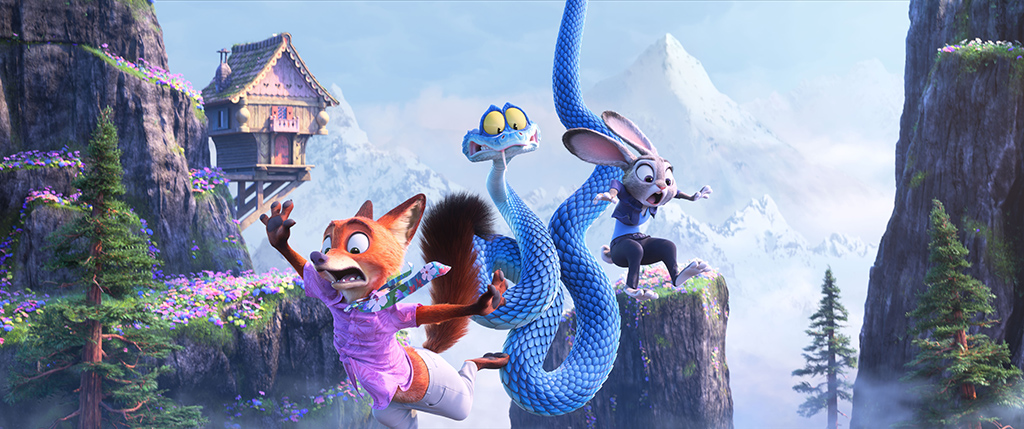
Judy and Nick find themselves being propelled through a transport tube full of water that essentially acts like a wind tunnel. “We spent a lot of time discussing whether the current of that water is pushing them through the tunnel and whether their clothing should be pushing past them because the current is coming from behind,” West explains. “What would that look like? We did tests and had arguments. But at the end of the day, it looked cooler, and people expected it to be like a wind tunnel where you have everything pushing back because that looks like speeding through space. What people expect and what looks cool are often the choices we make versus what it should be.” Technology had to be modified. West remarks, “That was a great challenge for effects and tech animation, which does our character effects work for the fur and costume simulations and bubbles animation for layout making the environment. It’s basically a roller-coaster ride through multiple locations, but in these semi-transparent tubes, which was its own technology journey. Actually, we had to do some new work to our render engine in order to support the challenges and artifacts we were getting while trying to effectively shoot through a plexiglass tube to make sure you’re getting the right read. But it also got down to, ‘How much reflections are we seeing in the interior?’ You want it to feel like the glass, but you don’t want it to be so busy that it’s hard to read the characters or what they’re doing. We make a lot of artistic choices that might not be physically accurate but help with the read and the audience’s understanding of what’s going on from a storytelling standpoint.”

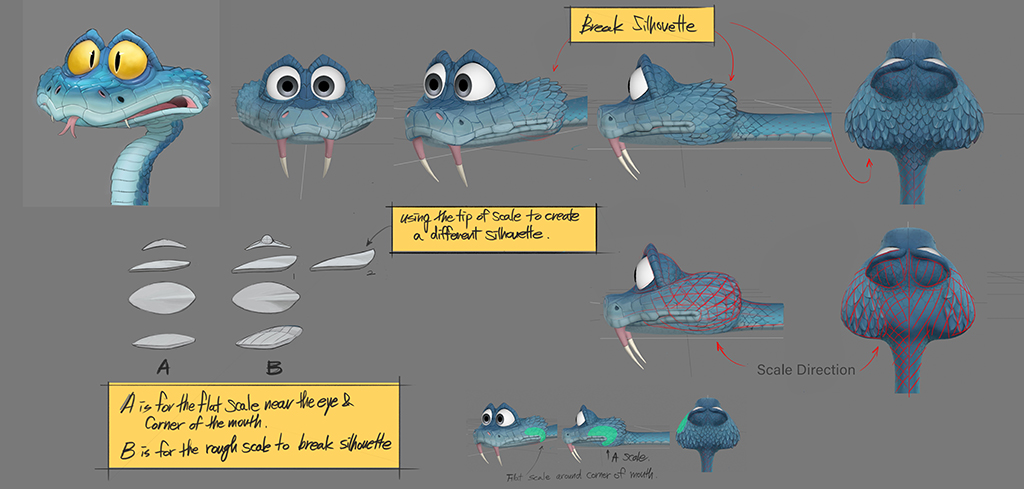
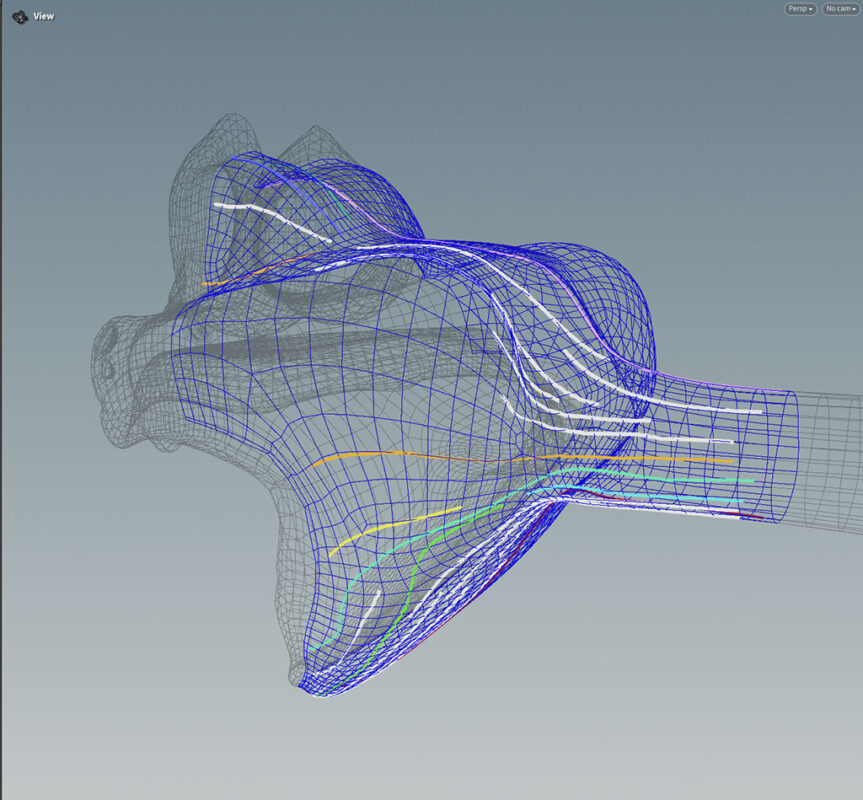
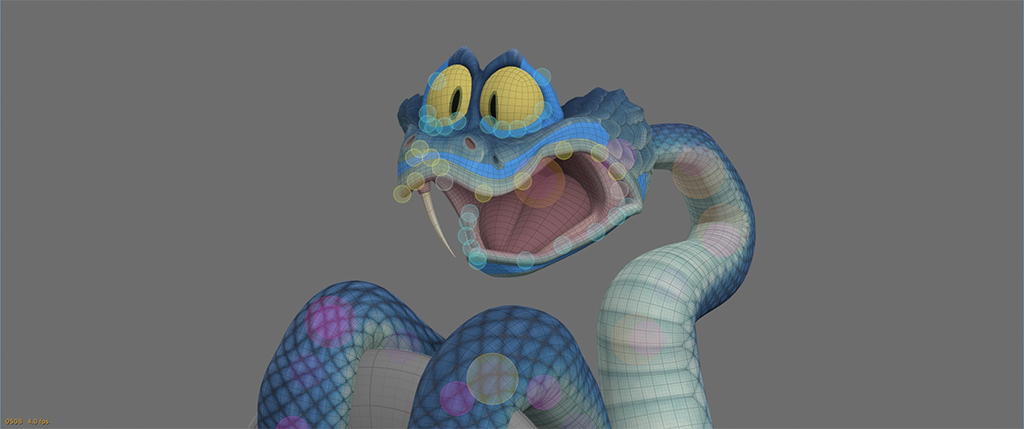
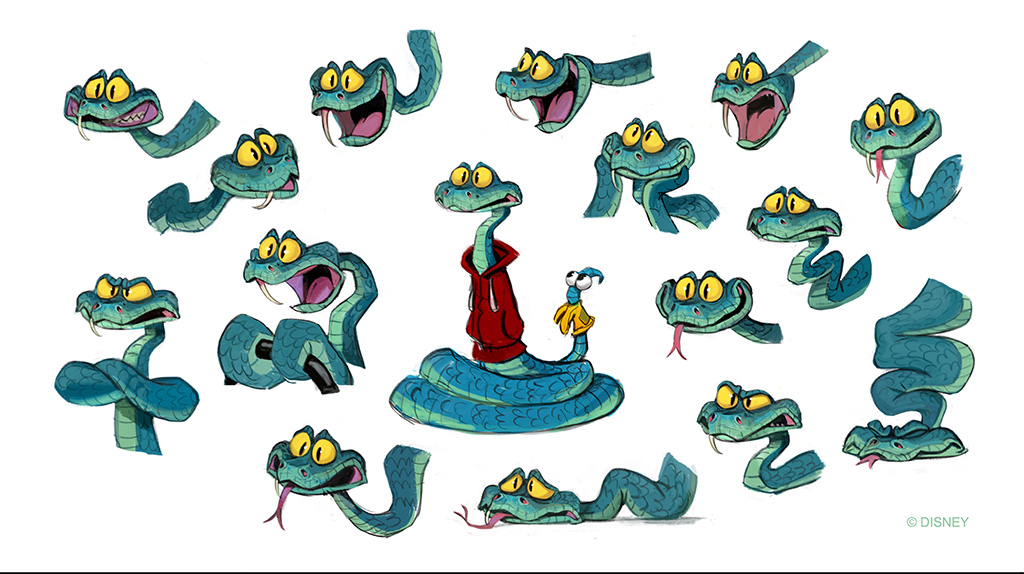
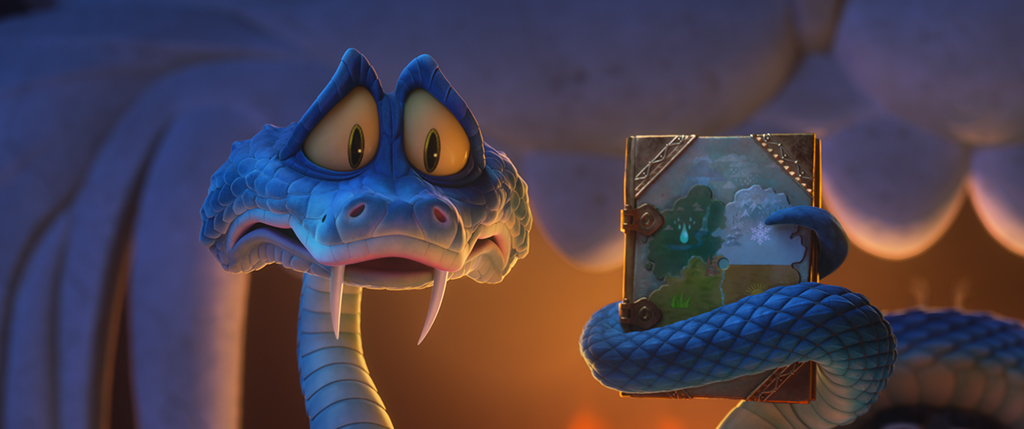
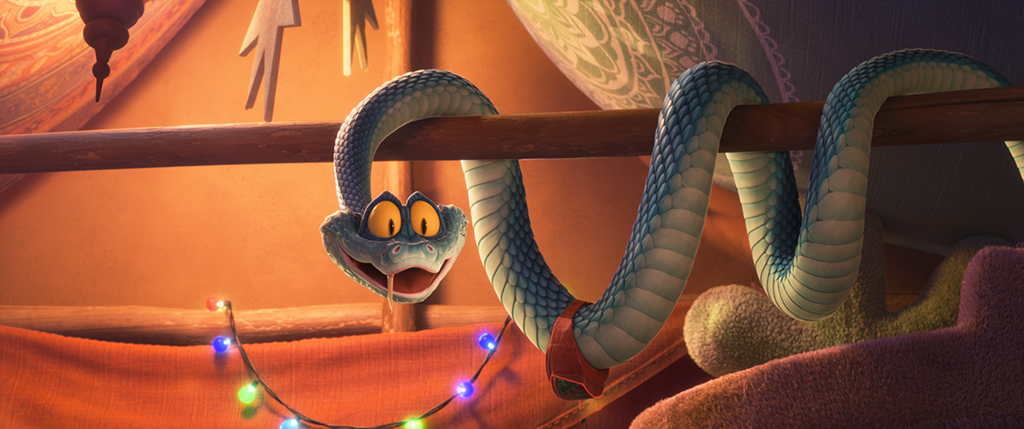
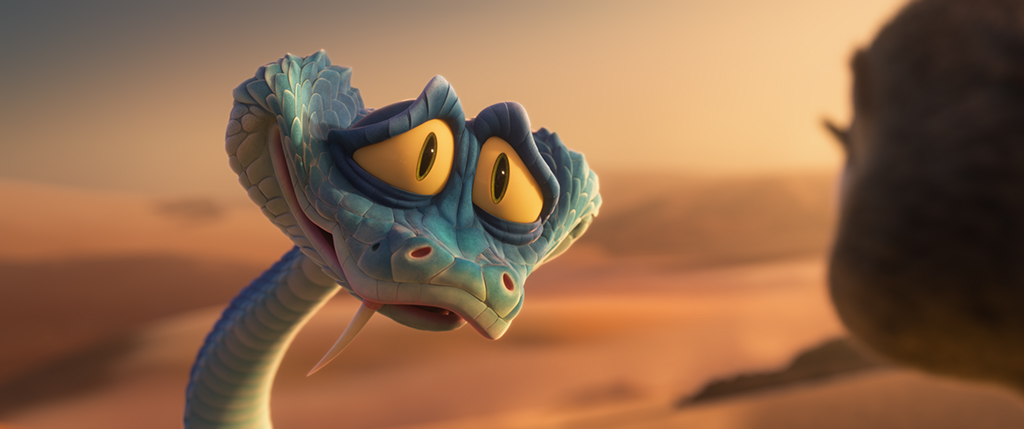
Among the 178 unique characters is Gary De’Snake, who does not have a skeletal structure, meaning he can bend in several ways resulting in numerous contact points. “We leveraged a lot of tools in Presto, which we adopted for this show in order to get some of the simplification of the controls for animation,” Smith states. “We leveraged the vehicle system to drive the cars on uneven ground and integrated that into Gary’s rig controls. The animators could do a cycle, move Gary, and his whole body would stick to the ground, which made him zipping across uneven terrain a lot easier for them to manage.” A defining physical trait is the 448 scales on the head, 160 on the belly and 2,392 on the dorsal side, which led to the development of a new technique to figure out how to do scale placement. “Scales normally do not stretch, and when they separate you might see some of the skin underneath,” Smith notes. “We called this grout. We found in early tests that as Gary went through his performances, we were either getting too much compression of the scales or they were stretching too much and missing too much grout. We spent quite a bit of time on what is the right amount of stretch where it helps to cover some amount of distance but doesn’t feel like it’s stretching.”

“Nibbles [the beaver] is one of the feature mains of this film, and she is a broad character. The huge ask of her performance was that she could do things that were maybe even broader than Judy and Nick. Nibbles is really out there. She has little wooden snacks in her pouches and will eat pencils. There was a lot of animation/ effects collaboration of having wood chips flying!”
—Gregory Smith, Visual Effects Supervisor
Other new characters are the beaver named Nibbles Maplestick and the quokka called Dr. Fuzzby. “Nibbles is one of the feature mains of this film, and she is a broad character,” West states. “The huge ask of her performance was that she could do things that were maybe even broader than Judy and Nick. Nibbles is really out there.” Nibbles is always chewing on wooden objects. “She has little wooden snacks in her pouches and will eat pencils,” Smith remarks. “There was a lot of animation/ effects collaboration of having wood chips flying!” Some animals are played against type. “Dr. Fuzzby is a character in the real world, an animal that is smiley and adorable,” West states. “Her ask was not to be so smiley all the time. Part of the joke with her is she’s the cutest little furry creature you’ve ever seen and is no nonsense. There is a dichotomy to how Dr. Fuzzby looks and behaves.” Getting the characters to emote properly and look appealing at the same time is always an ongoing concern. “A lot of times we have broad smiles, and you get cheek wrinkles and other kinds of things that on a human face you would see. They help you understand what the performance is,” Smith observes. “But on the furry characters it can be harder to get those to read. When the team is working with the rigging artists, animators and look artists who do the groom of the characters, it’s something they’re always been mindful of, like how long does the fur need to be and how much does it need to follow the curvature of the face so it feels fluffy and believable as you would expect but also reinforce and communicate the performance that the character needs to do.”
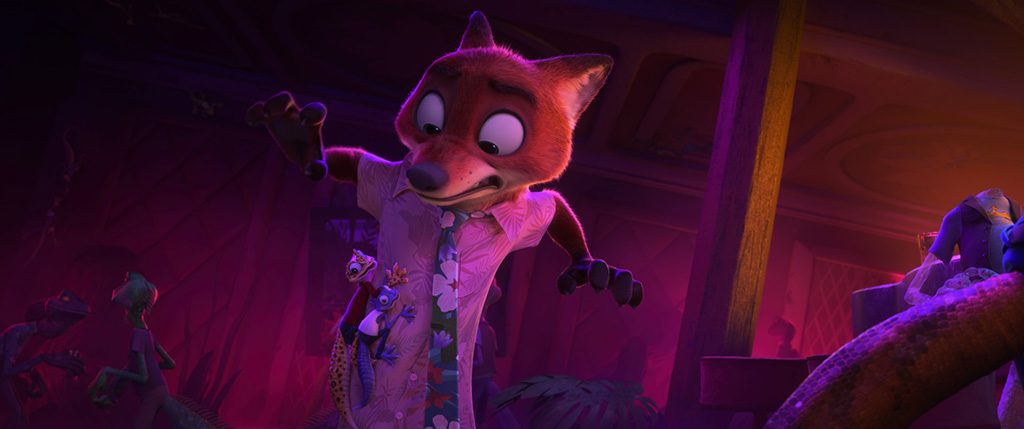
Reflecting the emotional turmoil between to the two lead characters is the destruction of the lodge. “Judy and Nick have a breakup as friends, and this lodge breaks into three distinct sections,” West states. “It’s one of those times where the character animation has to animate on something that is fracturing and moving at the same time. Often character animation goes first and effects puts flourishes and is in complete support of that. This was a time where we had shots in that sequence that were effects-led, meaning that the destruction had to happen first, and the character animators needed to animate to that, or even sometimes layout had to set cameras based on that. Some of those lodge breakup shots were the toughest to do in the studio because it makes us take our workflow in a different order to get that to be completely believable. It’s great to have characters animating to the floor that is moving underneath their feet, breaking and separating. Nick is here and Judy is over there, and the distance between them is growing. It makes for a more believable performance for them because the animators are animating to a space that is really changing.”
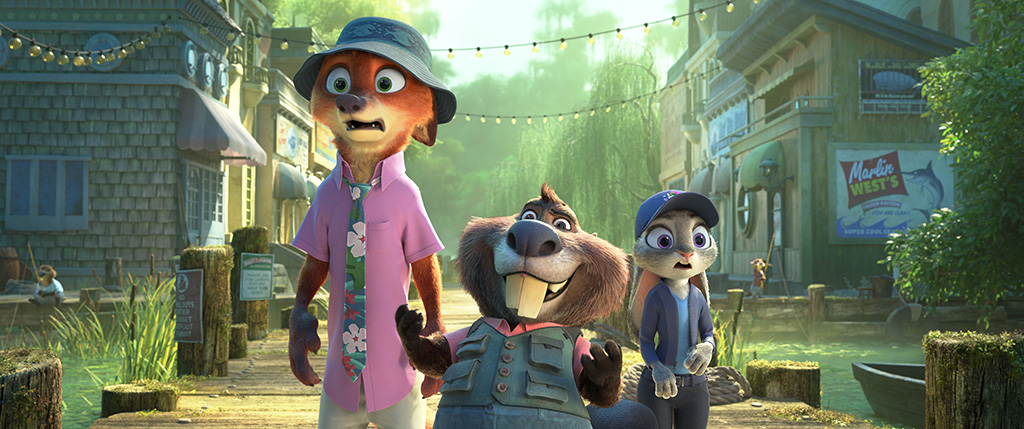
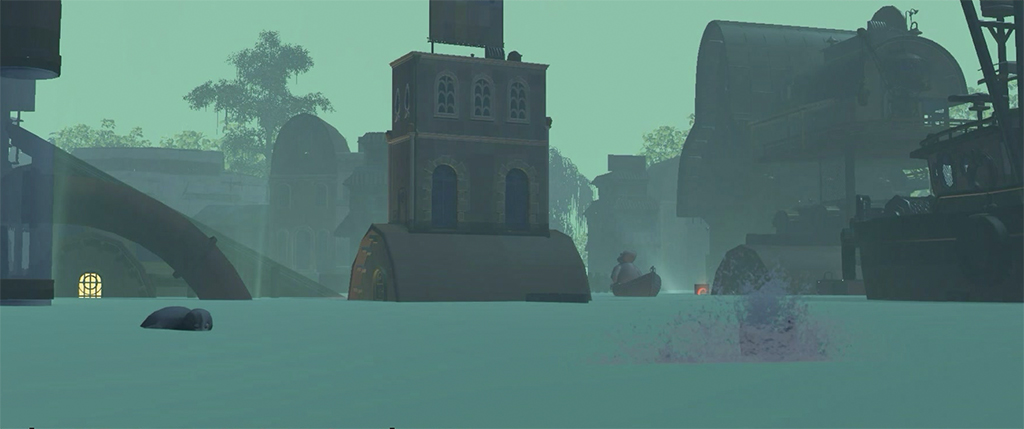
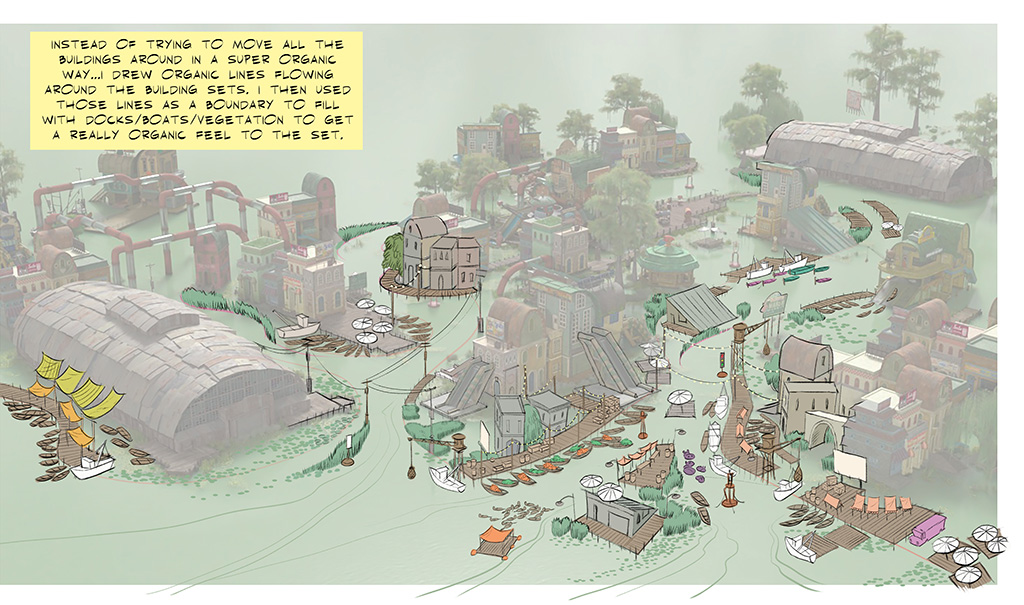
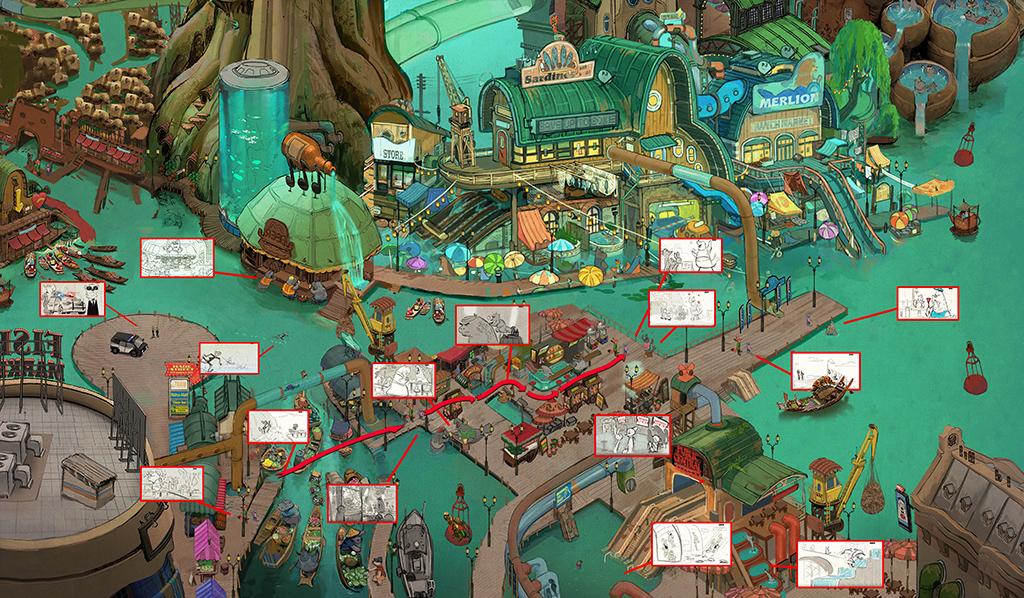
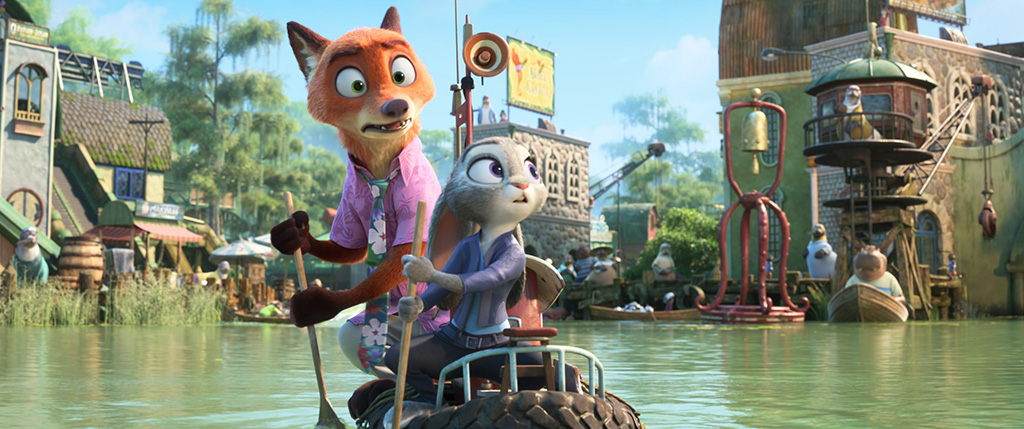
Allowing the various biomes to exist is the weather wall climate system. “The whole construct of Zootopia is that weather walls have been created to actually make it cold on one side or hot on the other side,” West describes. “They enable all these different neighborhoods to coexist in one city. In this film we go more into the inner workings of those weather walls and go inside at least one of them.” A new environment is introduced. “Marsh Market is this world that is a big mashup across all our departments,” West states. “We have new characters that needed to be designed and rigged that we haven’t done before, wonderful performances of how you get a seal to walk, going in and out of water, and the gags of just the signage. You’re walking through it in one sequence and then running through it in another. I can’t wait for folks to see that.” Zootopia 2 is a huge film. “You want to make a sequel that is worthy of the original and is something that people want to go see in the theater on a big screen,” Smith reflects. “We have so many unique and fun characters, personalities and voices; however, each of those is a challenge. We have a mayor who is a horse with blowing hair and feathers on the hooves. All of this over-the-top stuff. All the different biomes we’re moving through. Trying to coordinate and realize all that and get it up onscreen is a huge challenge, but it’s what makes the movie a lot of fun and worth seeing in the theater.”