Images courtesy of Wētā FX and 20th Century Studios.

Images courtesy of Wētā FX and 20th Century Studios.
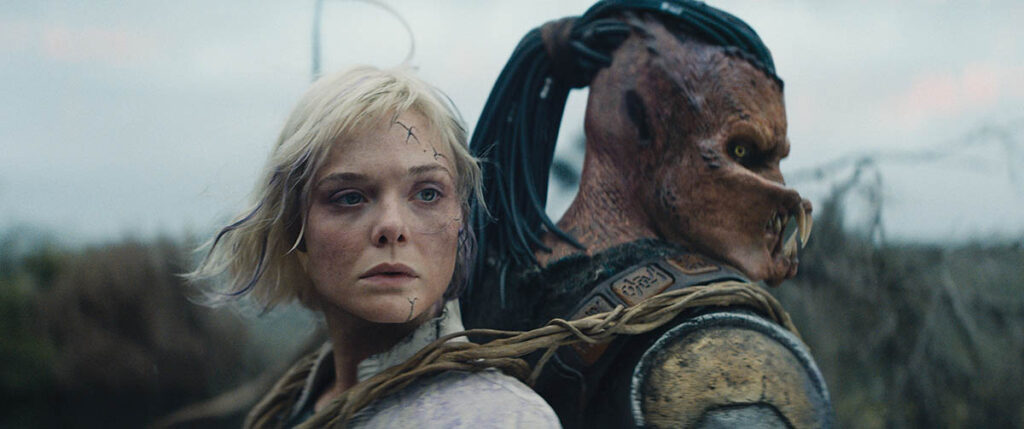
It’s equally scary, amusing and satisfying to discover that the Yautja – the extraterrestrial hunter at the heart of Predator: Badlands – could rise to leading-man status and make audiences swoon. The challenge was to avoid parodying the iconic alien species. “You’ve got to ride that fine line. We’ve been told our whole life that it’s a badass to be feared. It’s going to kill you. You have to start with that,” Karl Rapley, Animation Supervisor at Wētā FX, says. “Then the story drops, and Dek is stripped of his tools and weapons. You build him back up slowly, and the audience gets to empathize. When you go for that smile, the audience is ready to connect with Dek on that level. It’s a character without lips, just big scary mandibles. To make that smile work, you raise the mandibles and cheeks over those huge fangs and squint the eyes. It’s a suggestion of a human emotion on an alien creature.”
Since humans and the Yautja do not share the same physiology and proportions, animating them becomes an exercise in emotional translation. “We were presented with this anatomical difference, so you don’t have the means of mapping human performance onto a human-like character,” Sheldon Stopsack, Visual Effects Supervisor at Wētā FX, explains. “There was no automation or expertise on how this would translate and how we would do that. It came down to Karl and his team. It’s an artist-driven interpretation of Dimitrius Schuster-Koloamatangi’s performance in many ways.”
Initial tests were done with a practical face puppet. “It was through those tests that the realization kicked in: The emotional depth we needed to give Dek warranted breaking out of that limitation and engaging with us,” Stopsack remarks. “It was an interesting experience to start with honoring what was true to the original, then seeing where the potential limitations are kicking in and what we can bring in. On the opposite end of the spectrum, when you go CG, you can do everything without boundaries. We needed to rein ourselves in and play it a lot more subtly than you would think.” Constraints are important. “It took time to find the range, what was appealing and what was too far,” Rapley observes. “It was a journey of discovery.”
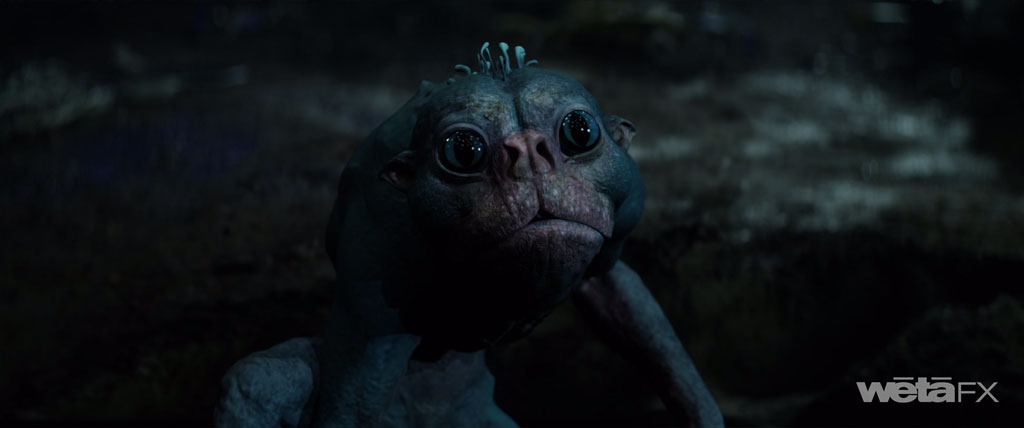
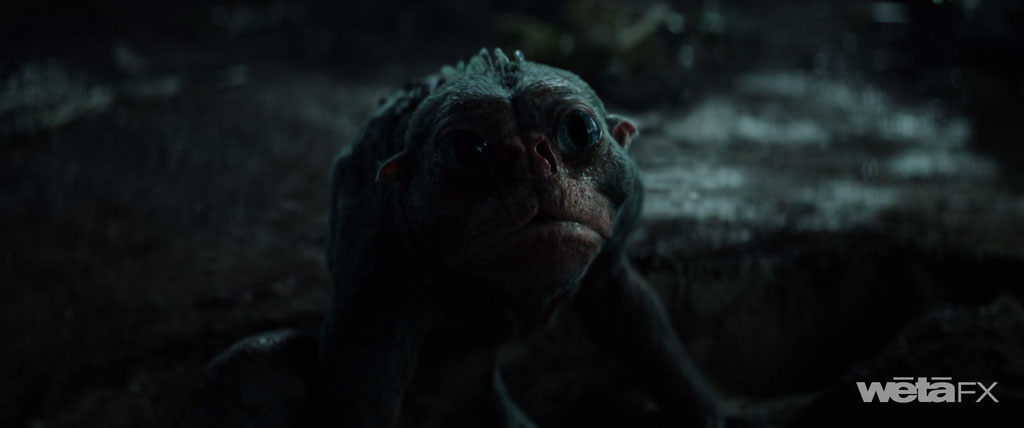
Rather than being a creature lurking in the background that could strike at any moment, Dek maintains a constant screen presence as the protagonist. “After the elephant tree vine fight, you start to see the broadening of the spectrum,” Stopsack says. “For example, [the moment] when Dek picks up the glow worm and tosses it away is the first time you see a sense of humor and a different reaction than expected. The film is easing the audience into this, which is a smart choice from a filmmaker’s point of view.”
“There was this fine line of knowing that the Kalisk needed to be this new, imposing, ferocious creature. But we also knew there was a different role for her to play in the back end of the movie when the relationship with Bud gets revealed. How evil can you make it, and how can you still relate to it? When I joined, we made a few deliberate choices. The eyes had gotten a lot darker and denser. We made changes to the tendrils. All of those choices were interesting because something started clicking for the appearance and the performance.”
—Karl Rapley, Animation Supervisor
Dimitrius Schuster-Koloamatangi provided a strong foundation through his performance. “It always gave us something that we could ground ourselves in,” Stopsack says. “Everything was filmed with him there on the day. The creative and emotional intent was already captured at that time, which was great. Dek has human features. If you look into Dek’s eyes, there is more of a window into the soul that we can connect with and relate to. There are deliberate choices made in the design, in the animation, and in the way it was rendered and finished. The mandibles are anatomically the most severe difference to a human, but there was always a relationship and connection to the eyes.”
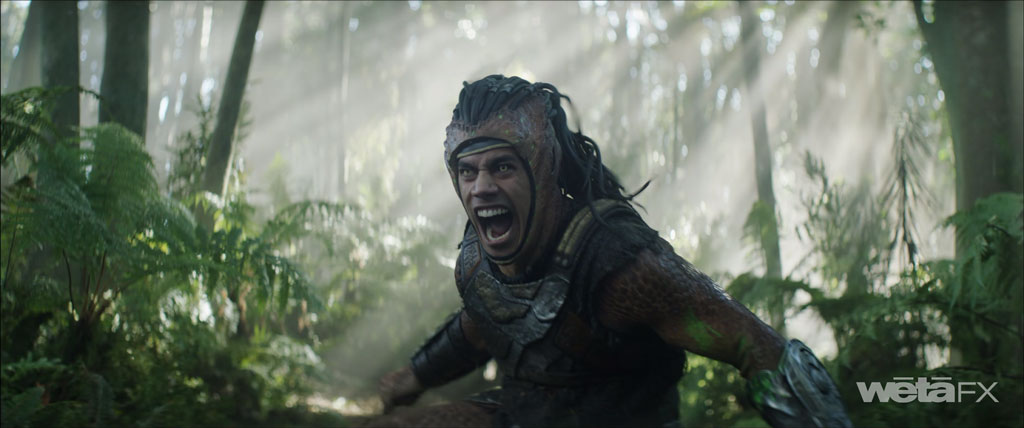
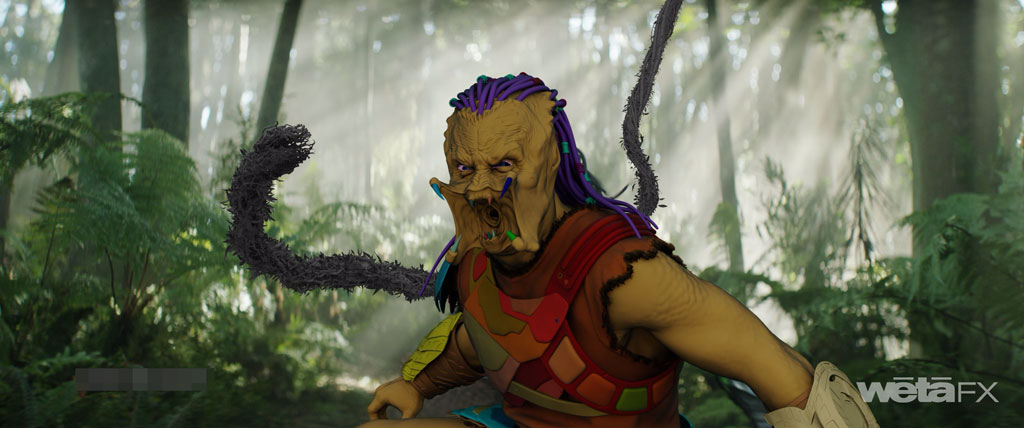
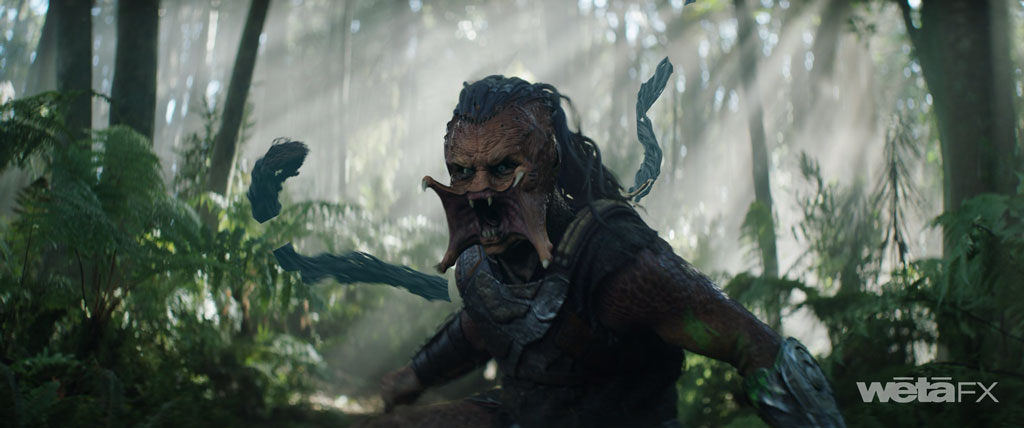
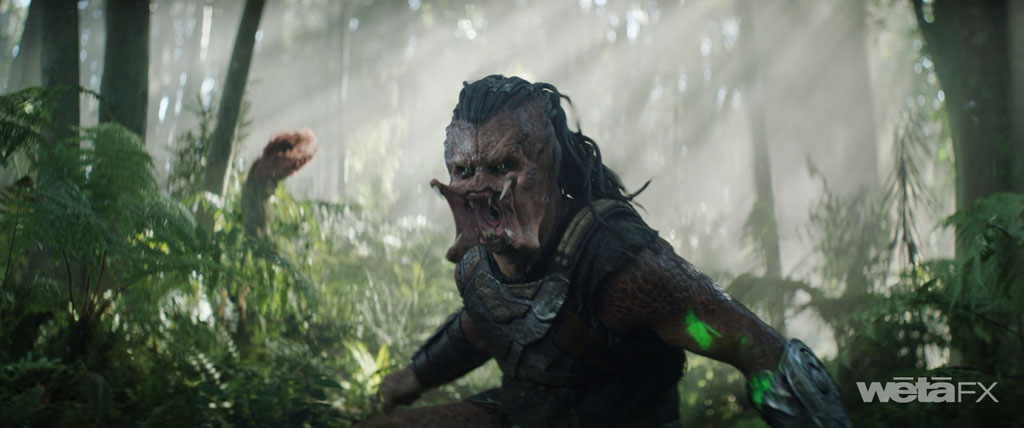
Most of Dek’s body performance was achieved on set. “Demetrius had a certain way he moved, and it was on us to get that physicality right in the digital double,” Rapley notes. “Luckily, we have great resources here at Wētā FX. I was able to go to the mocap stage next door and work with a couple of amazing stunt performers. We could look at his style of movement, try to reproduce that, and give it the weight it needed – that subtle physicality. If you don’t get it right, the audience comes out of it easily.”
New shots were created during post-production. “Dek has to slide down the arm of the Power Loader, throw a spear and jump off,” Rapley explains. “Those were late additions, so we were making rigs on the stage and throwing ourselves around.”
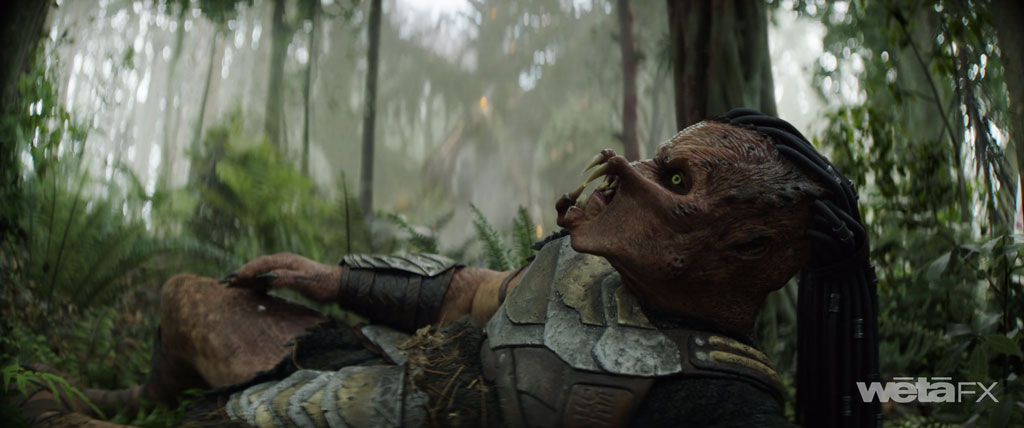
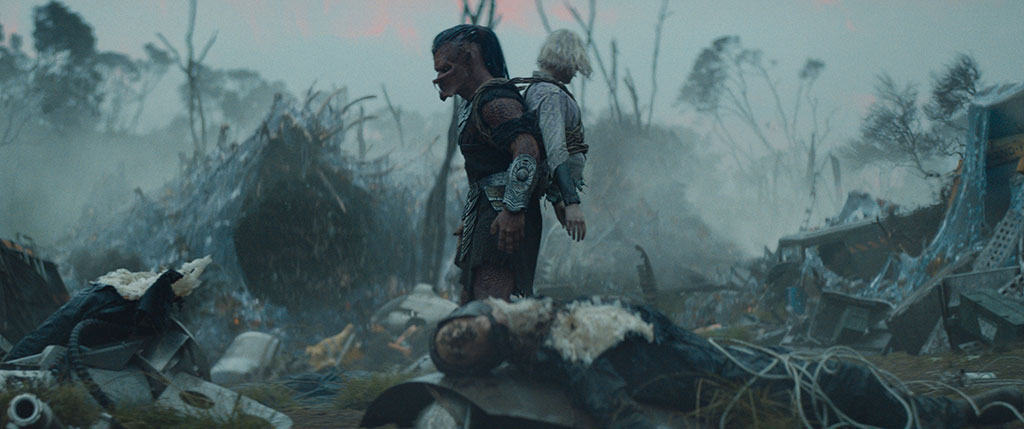
Oscar-nominated actor Elle Fanning plays a mangled android that rides on Dek’s back, inspiring the movie’s working title, Backpack. “There were different solutions applied to this one,” Stopsack states. “Sometimes she had a set of wheels supporting her lower body so she could be disengaged, with Dimitrius dragging her around. Other times, wire supports carried her weight. The practical solutions gave us a strong foundation, and then we used traditional match-moving and camera tracking to determine the cross-section for the cap on her. That didn’t always work – particularly the scene where her upper and lower body are engaged in the fight with the synth. Given this action-driven performance, we had to decide whether to augment this or opt for a more generous replacement of CG usage. Certain shots needed intervention, like when the legs of one of the decapitated synths makes this big backflip. You can attempt to shoot this, but there will be limitations. When you see her upper body, Elle is playing herself, but her lower body was often a stunt double.”
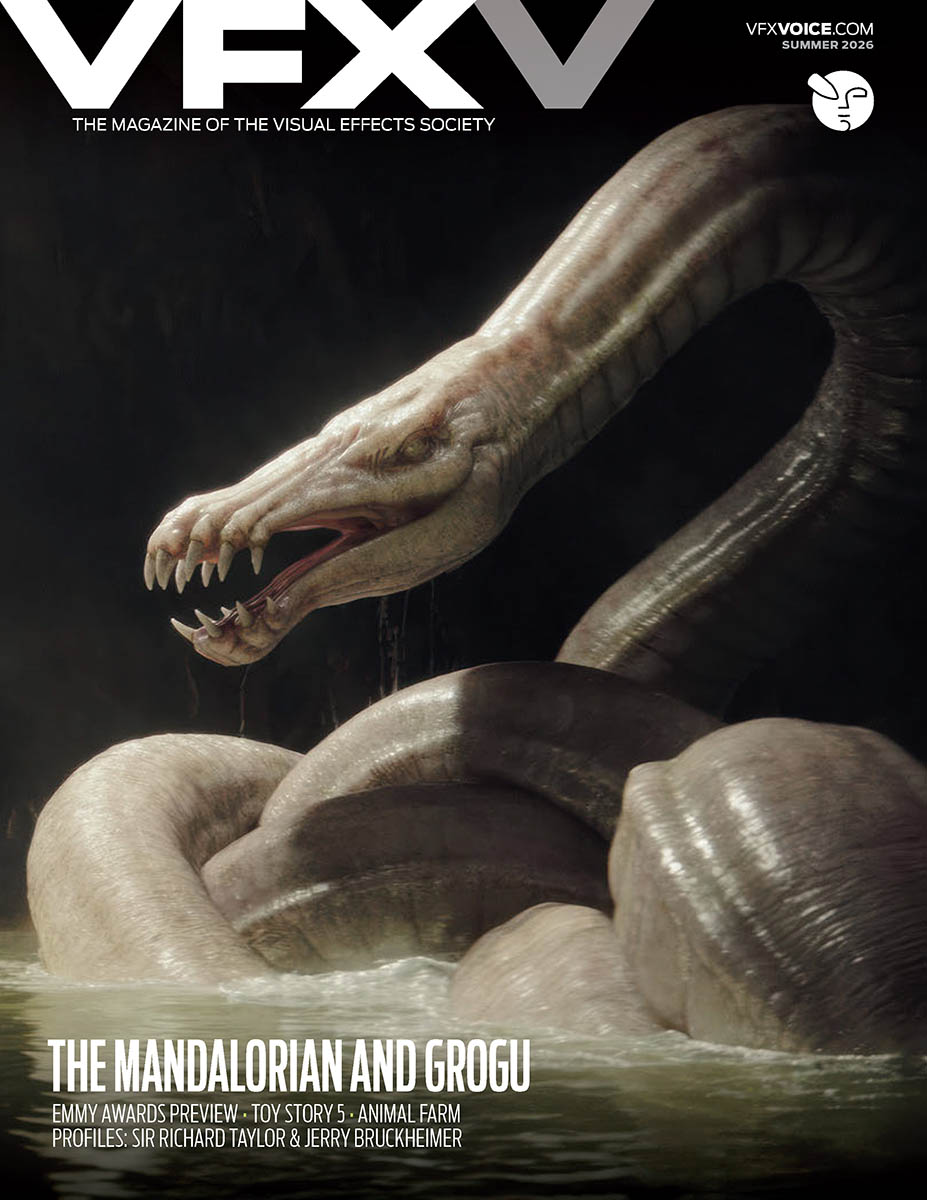
Upping the badass creature component is the Kalisk, a lethal threat to Dek. “The Kalisk was a journey,” Stopsack admits. “It went through a long evolution before we all joined. The initial designs were done outside of Wētā FX. Our art department engaged in that space even before I joined the project. There were different designs in play compared to what ended up on screen.”
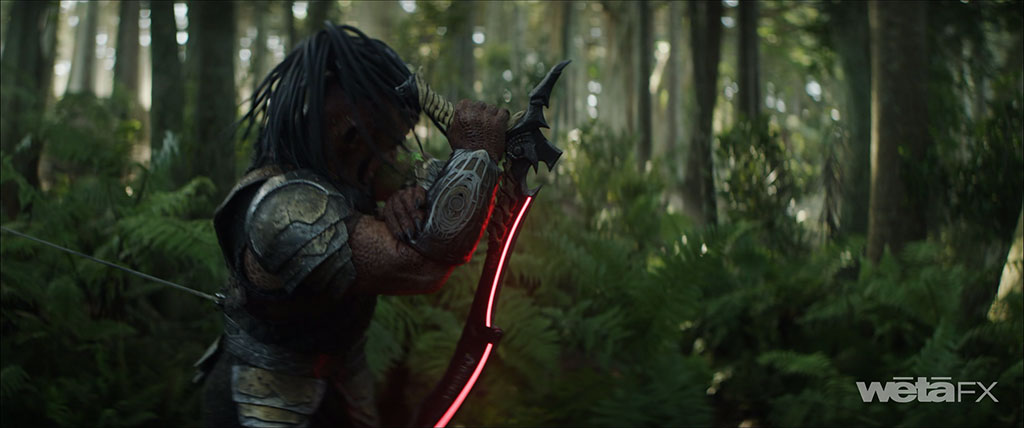
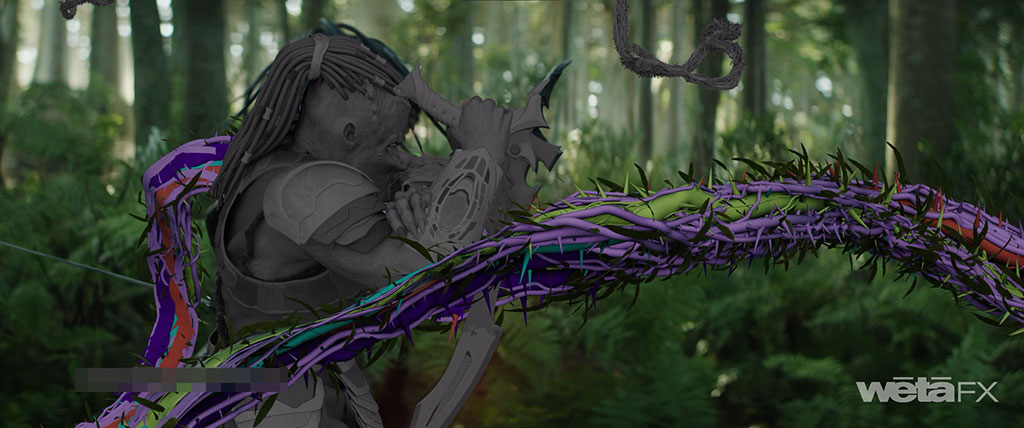
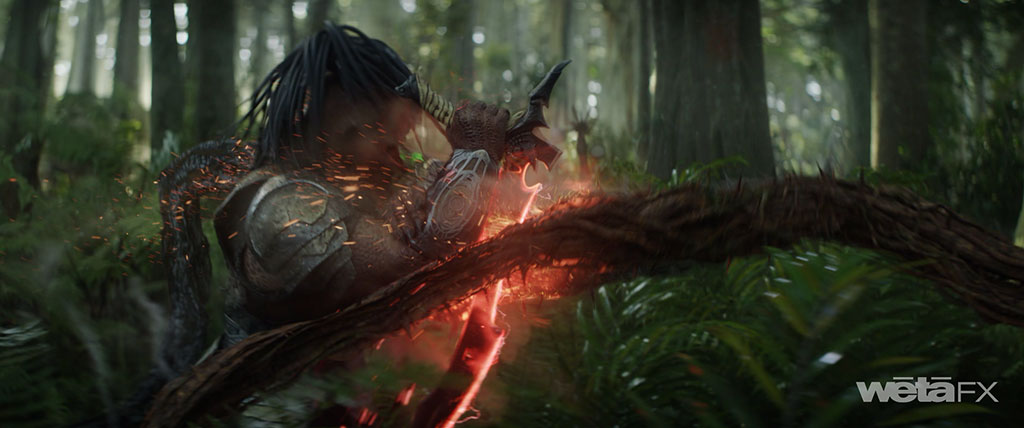
“Along with Dan Trachtenberg [director] and Olivier Dumont [Production Visual Effects Supervisor], we discussed the choreography of these elephant tree vines and their behavior. We did various motion tests to try to figure that out. They began by taking his weapons away. There is a certain paranoia and tension to that with single vines. It develops into this wolf pack snapping at him and trying to attack. Anything vine-related has to be keyframe animated and based on artistic interpretation and finding a language for their movement.”
—Sheldon Stopsack, Visual Effects Supervisor
Once production began, the Kalisk went through another round of look development. “She wasn’t the ferocious creature that we wanted her to be,” Stopsack explains. “There was this fine line of knowing that the Kalisk needed to be this new, imposing, ferocious creature. But we also knew there was a different role for her to play in the back end of the movie when the relationship with Bud gets revealed. How evil can you make it, and how can you still relate to it? When I joined, we made a few deliberate choices. The eyes had gotten a lot darker and denser. We made changes to the tendrils. All of those choices were interesting because something started clicking for the appearance and the performance.”
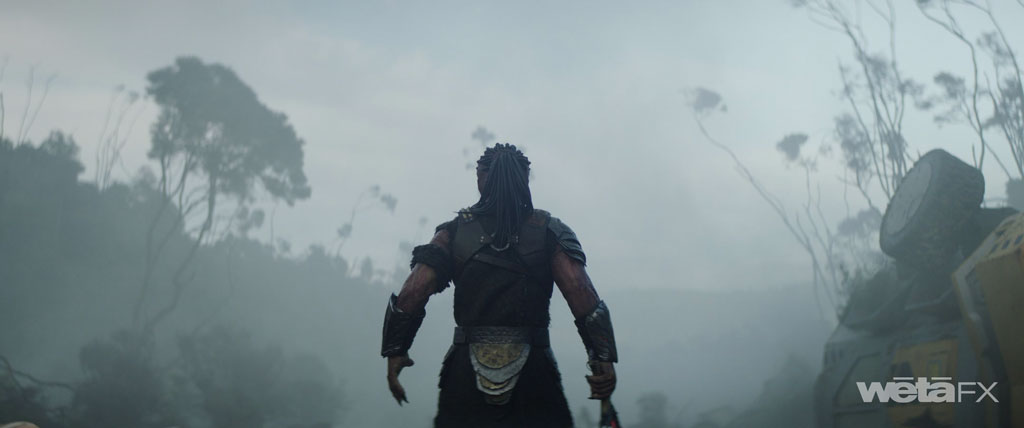
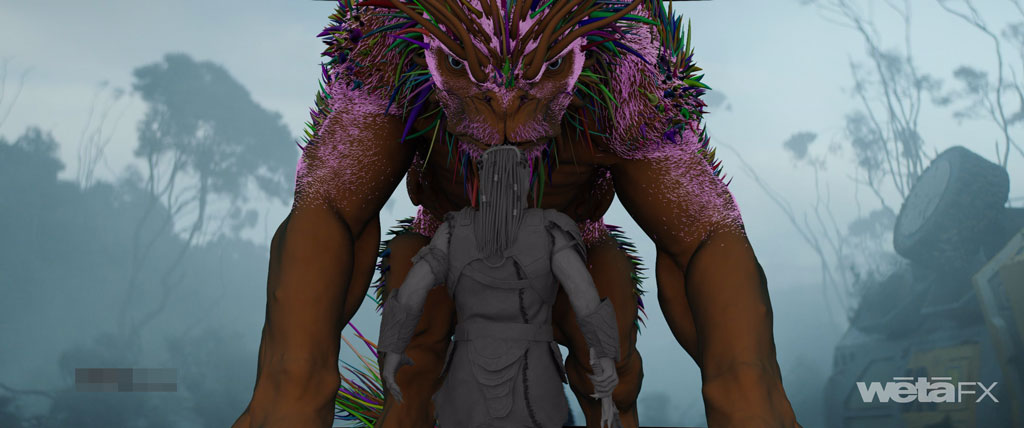
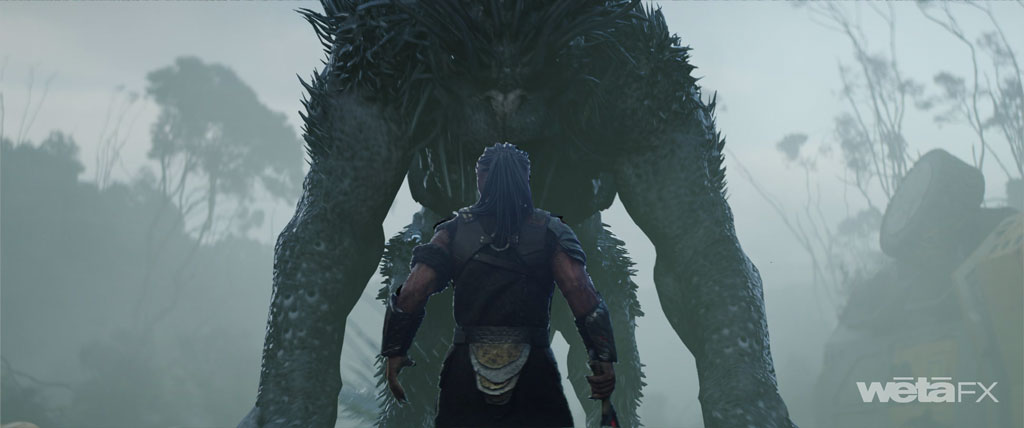
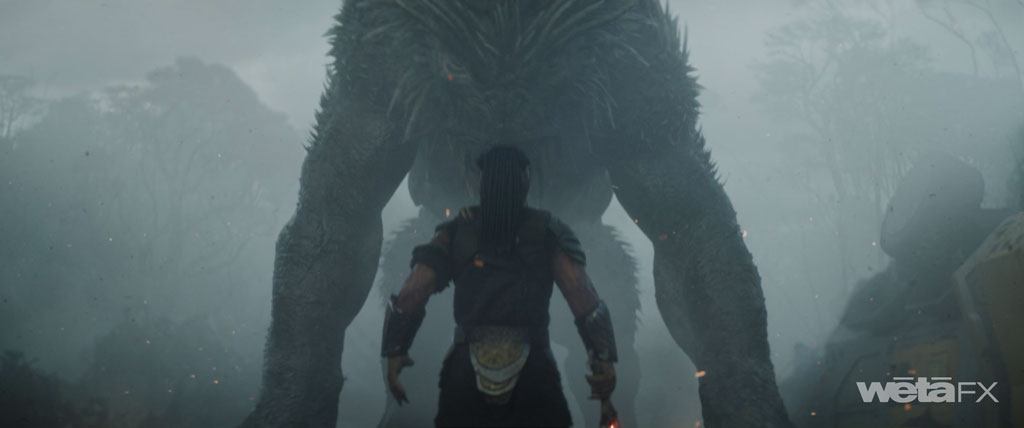
Animating the Kalisk’s tongue was an adventure. “It was almost a character on its own,” Stopsack notes. “We treated it as a separate asset, so we could rig up and control it in animation. It was a secondary rig that displayed from her mouth. But the appearance of that was also quite interesting. There is a strange alien webbing that displays from it. There were no shortages of challenges to figure out, like how all of this would technically work and equate to something visually ‘appealing.’”
Bears were a major reference. “There’s a part where the Kalisk is ripping into the top of the Power Loader and pushing down on top of it,” Rapley notes. “You can sense a sort of bear physicality in that. The Kalisk had to also drop down into a different emotional display and touch foreheads with Dek, with that slow breathing. The audience starts to connect with it differently again. That was a massive challenge.”
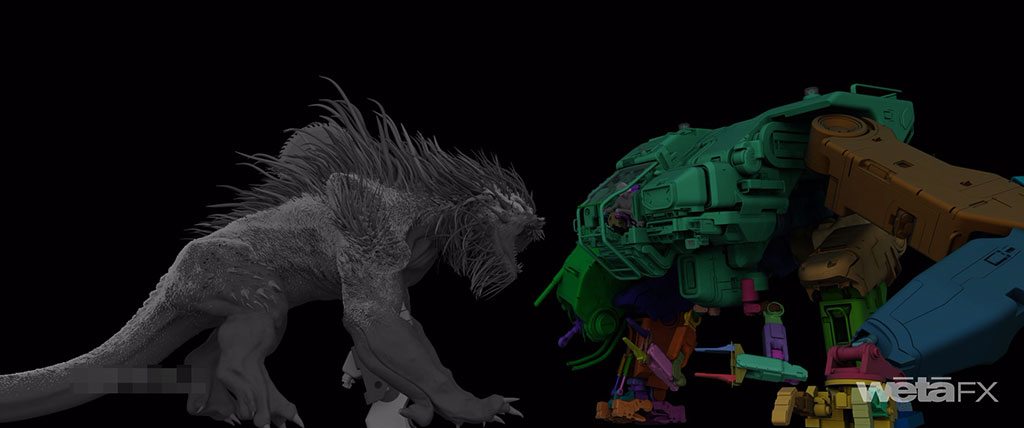
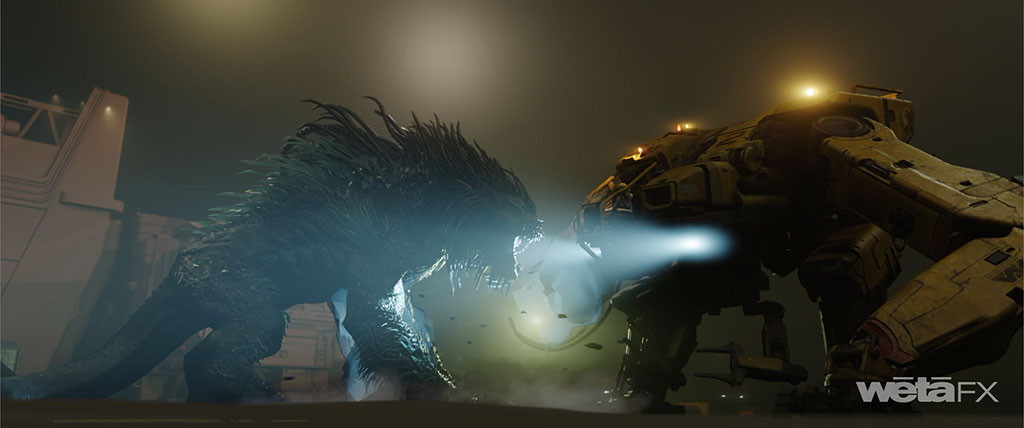
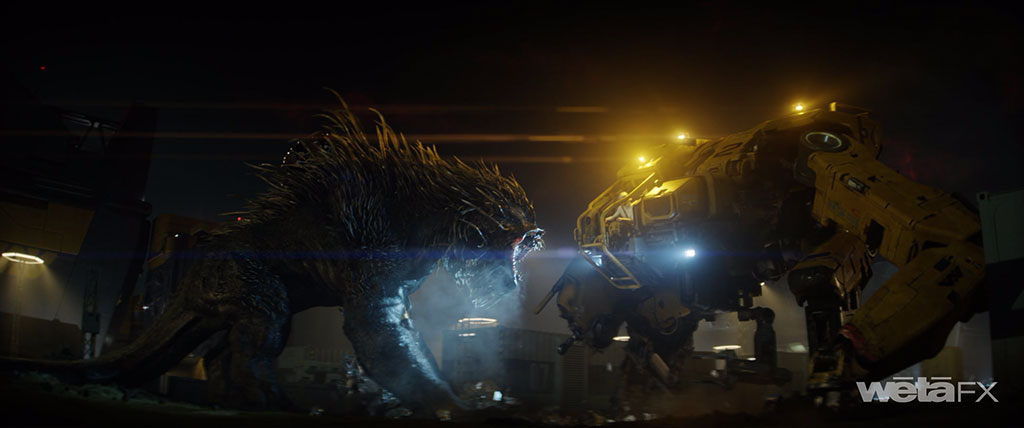
An AR app was used to visualize the Kalisk on set. “Our Special Projects department has an app where you can load up the character and, through augmented reality, see its size and depth, and move it around,” Rapley explains. “You can say, ‘That’s how big your Power Loader is, so we better put our camera up there.’ That was a cool tool for the filmmakers to see, but we weren’t there for all of it. A lot of the time, they were guessing while shooting.”
Dek gets grabbed and lifted by the Kalisk’s tongue. “There’s always this cross-section of practical meets CG,” Stopsack remarks. “How do you marry this? The tongue is an interesting example. You always start off trying to honor the plate photography, but when you have things wrapping around and wanting to press and put pressure on the costume, we typically say, ‘Our digital double looks pretty damn good. Can we spice it up and replace more of it?’ It’s the benefit of having a fleshed-out digital double that meets the practical suit standards to a high level of detail. But for the environment, the filmmakers didn’t have the benefit of having the giant Kalisk and the Super Power Loader there. There were certain shots where the plate photography was well-intended, but it didn’t give us the right feeling. As soon as you’re in an all-digital environment, for instance, things get easier in the sense that you’re destroying containers that the Kalisk smashes into. This is all part of the effects work that is being triggered by Karl having too much fun!”
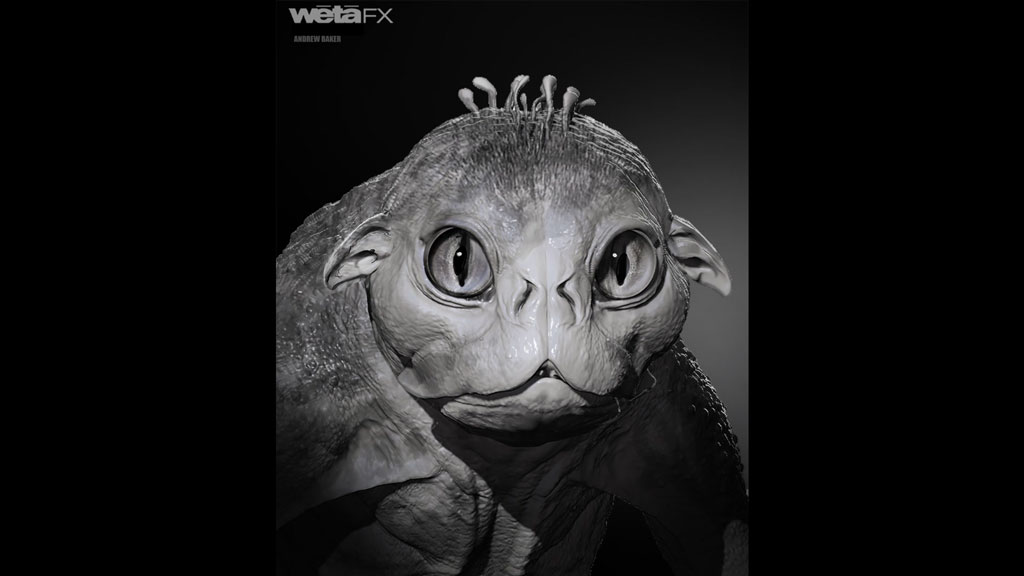
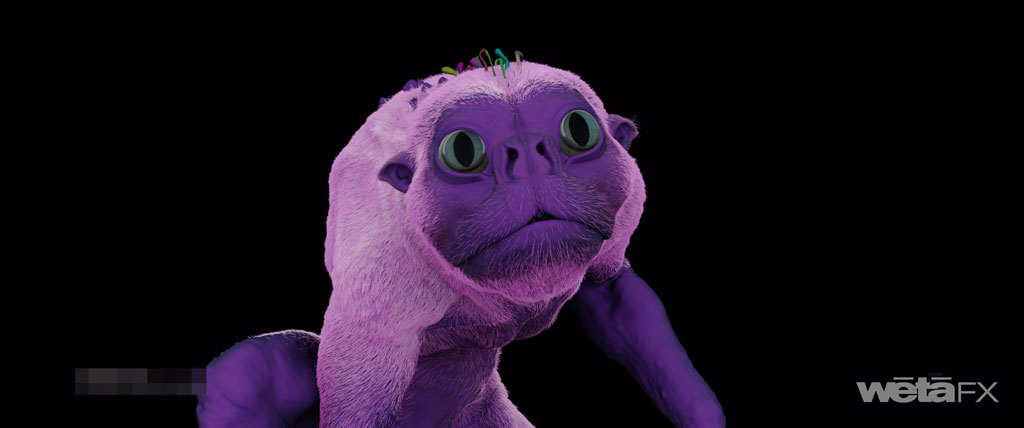
Dek has an alien sidekick named Bud. “We referred to him as a cuddly psychopath,” Rapley states. “Bud had a fun energy, but you didn’t want it to be overly cute like Baby Yoda. His design was fun and appealing, but didn’t lean too far into the harmless territory. Bud loves to rip synthetic robots apart. You had to show enough physicality and animal behavior that the audience could see that this is a creature from this planet, but also change the texture and emotion in those quiet moments. The audience will sense there’s more to it than they thought. You start to build from there. There was an actor on set for the actors’ eyelines and basic performance, but we created a lot of that physical performance.”
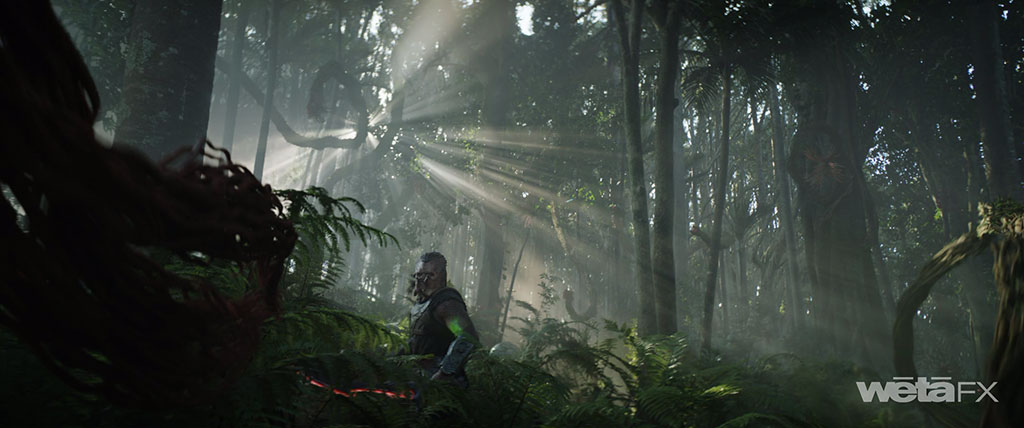
Nature itself is an imposing character. “There was some stunning plate photography that set the foundation for the lush forestry,” Stopsack explains. “But because we needed to make it look foreign and alien, we put these elephant tree vines characters in there and augmented the environment with alien-esque features in the vegetation. It’s tricky because if you have something as complex and lush with different intricate leaves and berms, where do you begin nesting these things? Am I going to roto all of these leaves? What can I keep, replace or reproject? The Kalisk den was an equally difficult puzzle. All of the augmentation of the saliva stringy structure. It was complex, overcast and intricate plate photography, which was beautiful, but a lot of work went into that. The campsite was a different beast. While shot on location, it was a minimal set, and we had to extrapolate it into this large Weyland-Yutani campsite. It was a world-building exercise because there were going to be establishing shots showing the campsite almost in its entirety. That environment goes through quite a change. It starts at night with the fight causing heavy augmentation and effects work. Then we go into this transition into the daylight period, which was shot differently because it took place on the soundstage. The big exercise for us there was to have a plausible transition and make it feel like it was present on the day. Massaging this out while building the world was a challenging task.”
Every sequence was a journey and a puzzle piece. “Along with Dan Trachtenberg [director] and Olivier Dumont [Production Visual Effects Supervisor], we discussed the choreography of these elephant tree vines and their behavior,” Rapley says. “We did various motion tests to try to figure that out. They began by taking his weapons away. There is a certain paranoia and tension to that with single vines. It develops into this wolf pack snapping at him and trying to attack. Anything vine-related has to be keyframe animated and based on artistic interpretation and finding a language for their movement.”
Environmental interaction was important in being able to embed the elephant tree vines. “We had them brushing against ferns, which are digital. We’re not going to roto all of these different ferns,” Stopsack remarks. We wanted to work with the plates because they were stunning, so we had to choose, ‘Where is the line to be drawn?’ This changed from shot to shot. Every shot was unique in that sense.”
Glow worms are also dangerous. “What does a glow worm explosion actually look like?” Stopsack laughs. “You start embarking on this esoteric conversation. Is it a pyroplastic thing or more magical? We ultimately landed on something that felt grounded enough to be physical. The cryo-grenade explosion ended up being incredibly beautiful, but with a different color scheme and language. It was physical with optical. There needed to be a notion of force and energy, whether it’s through the distortion of a shockwave or ripples through the grass. Ultimately, everything we do while there is a notion of making it alien or abstract, it needed to be grounded and physical.”