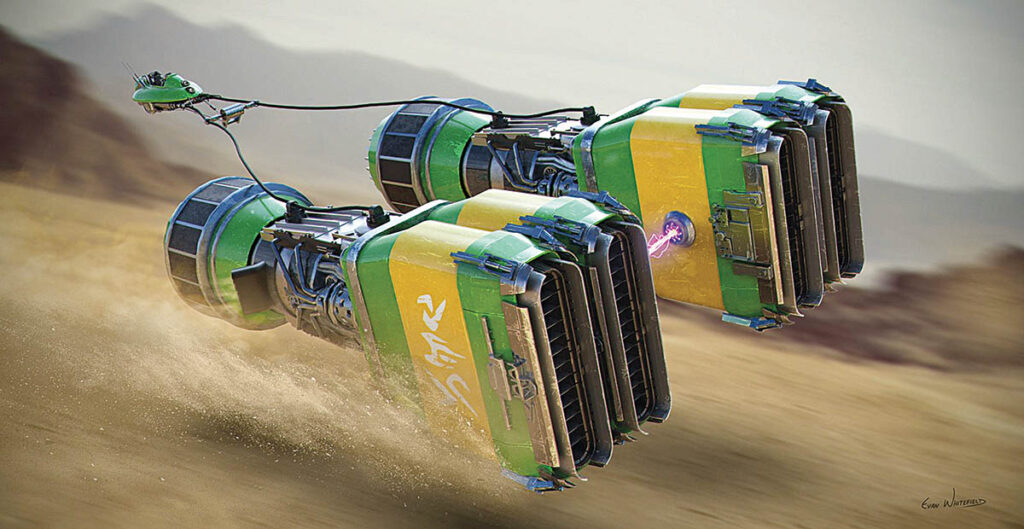

With the VR experiences Vader Immortal: A Star Wars VR Series and Star Wars: Tales from the Galaxy’s Edge, Lucasfilm’s ILMxLAB raised the bar for immersive, interactive home entertainment, delivering high production values, compelling voice acting and cinema-quality visuals. ILM and Lucasfilm’s Star Wars: Beyond Victory – A Mixed Reality Playset, a single-player immersive game for Meta Quest 3 and 3S VR headsets, introduces a new twist through mixed reality integration.
Director Jose Perez III states, “At ILM, we are constantly pushing the future of storytelling, and mixed reality was right there as the next step. It wasn’t just about wishing the technology was ready; it was ready now. With the platform becoming mass-market – meaning a lot of people were able to see and experience it – it felt like the absolutely right time to jump in, test the waters and see what we could achieve with this new medium.”
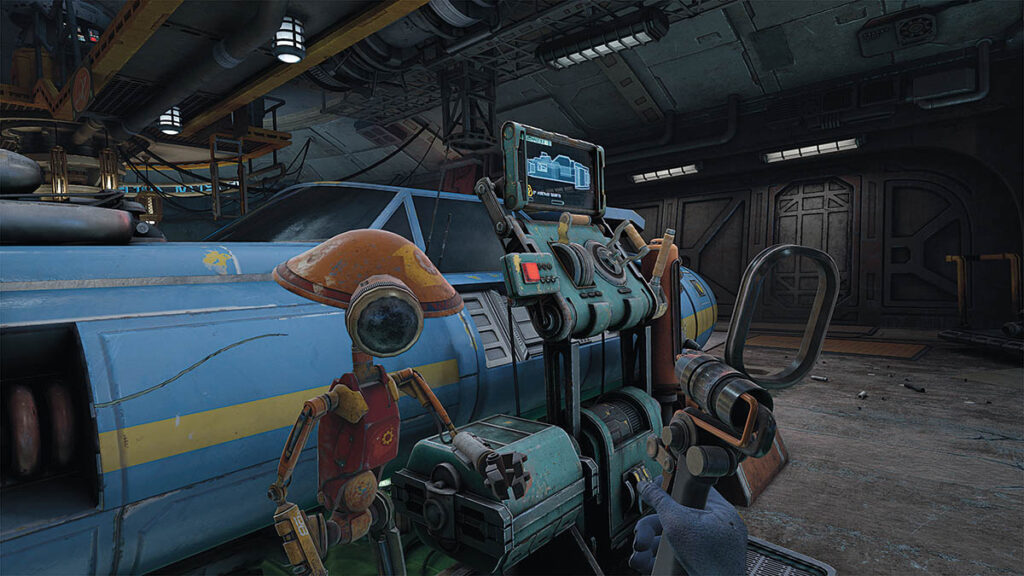
“The three modes of the experience are Adventure, Arcade and Playset,” Perez explains. “This design provides variety and easy entry points, allowing users to jump directly into podracing or play with virtual toys.” More importantly, it enables the telling of “a holistic story.” There are rich visuals throughout, especially during the full VR segments, and a feeling of immersion in the Star Wars universe. The primary narrative journey is in the Adventure mode, which offers a story-driven experience that unfolds in both MR (for third-person exploration) and VR (for interacting with characters and solving puzzles and challenges from a first-person perspective). You assume the role of Volo Bolus, an eager up-and-coming podracer who gets mixed up with the Star Wars legacy character Sebulba, a famed podracer who is a shifty mentor.
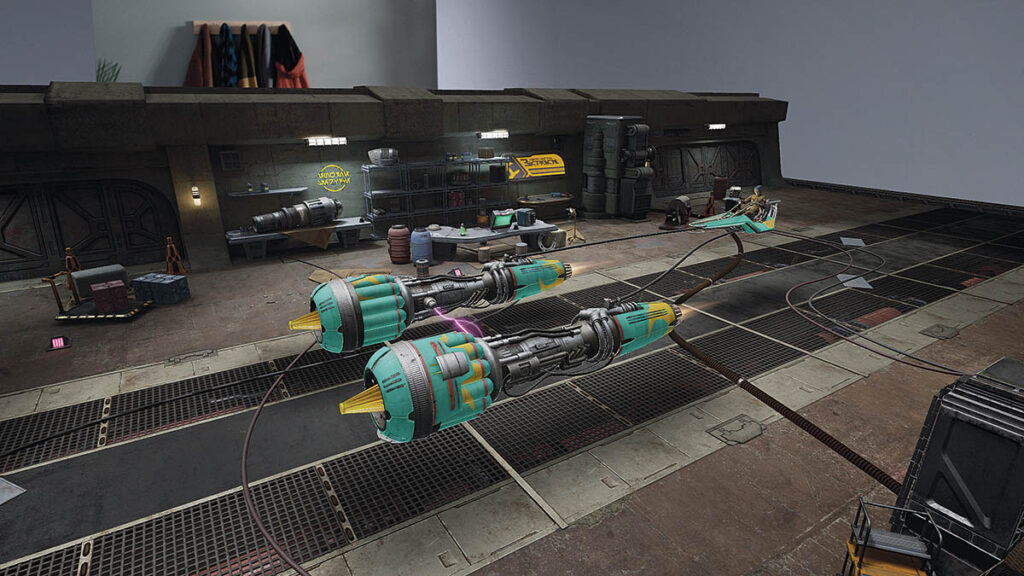
The Arcade mode in MR “transforms the player’s physical space into a holotable-style racing arena where high-speed podraces are controlled from a top-down view,” according to ILM. “Each track features multiple paths to the finish line” with “playing experiences linked to the story.” Playset continues the story at home through interactive toys in MR. Digital characters and vehicles populate the player’s own physical environment, and players can stage their own Star Wars stories. The three modes thematically connect the movie, video game and toy experience.
Perez recalls, “One of the original ideas was to create a VR playset, and we had created that on the film side. However, once we’d done this in VR, which is amazing, we realized how cool it would be in mixed reality. The idea of taking a playset and being able to put it in your room, around your other actual toys, was really exciting to us. While the original idea was a VR playset, the evolution quickly moved toward MR. From that technical seed, we developed the story, focusing on a personal theme: choosing family over fame and fortune, understanding what is truly important in life, and avoiding the trap of running away or hiding behind one’s ego. The core concept came from wanting to make cool toys and playset experiences. We then filtered elements from my life, [writer] Ross [Beeley]’s life, and others’ personal experiences, the universal emotional moments, and reflected them into this cool Star Wars world.”
Over time, the project evolved significantly. Perez observes, “Initially, our ambitions were much larger. We envisioned multiple playsets and content beyond racing, including elements with spaceships and other vehicle types. However, we ultimately decided to focus intensely on the podracing mode [Arcade] due to the high excitement surrounding it. From there, the concept evolved significantly, moving from an initial idea that felt like a slot-car experience to something more akin to a Spy Hunter-style 1980s video game mixed with a miniature theatrical presentation.”
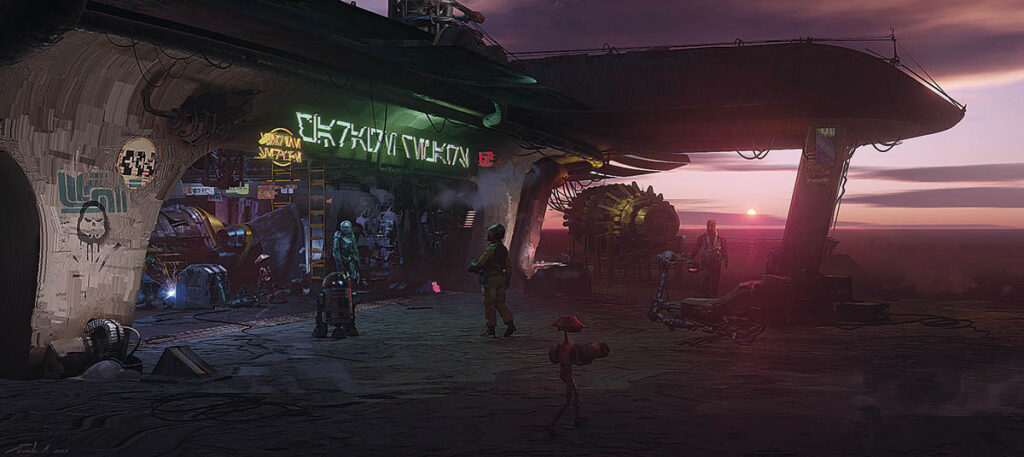
“In Beyond Victory, the virtual cameras were handled by our animation department with input from the art team to capture the right composition to serve the story’s needs,” says Ronman Ng, CG Supervisor. “Specifically, with the view portal holotable, the collaboration needed to be close because achieving a good composition in 3D space required some extra tinkering since it has to work in all angles. This is different from a traditional feature film, where the camera work is mostly handled by a director of photography or a VFX supervisor [for virtual cameras] who dictates the framing. Throughout development, the animation department was in constant communication with the art team when it came to animating characters/vehicles/props, capturing a piece of concept work as intended and ensuring all character motion felt authentic.”
Perez wore many hats during the shoot, including design supervision, story development (collaborating with Ross Beeley and the Lucasfilm franchise group), and working with Production Designer Stephen Zavala on art approvals. In addition, he served as a Performance Director and Voice-Over (VO) Director (directing the VO sessions, with assistance from Kevin Bolen on the audio team), and “prototyping/grayboxing.” Alyssa Finley served as Executive Producer and Steve McManus as Lead Experience Designer. At the same time, the voice cast included Lewis MacLeod (Sebulba), Fin Argus (Volo Bolus), Greg Proops (Fode and Trizz), Emilie Talbot (Sornah) and Bobby Moynihan (Grakkus the Hutt).
Pulling off a project like Star Wars: Beyond Victory was a great cross-disciplinary team effort. According to Perez, “You need amazing programmers, designers, artists, actors, lighters and franchise considerations to ensure it fits into the grand mosaic of Star Wars. You have many different perspectives and points of view. To achieve this, you need to communicate and collaborate across these disciplines, as it’s not a single, controllable output. It’s different from watching a movie, where you control every single frame; at any point, the person wearing the headset can look wherever they want. Crafting a story for that environment and ensuring that all parts feel good, no matter where the user is looking or what they are doing, takes a massive collaborative effort from many different talented eyes.”
Working at ILM has been gratifying for Perez. “The ILM culture is built on the creative spirit infused by pioneers like George Lucas and Dennis Muren, VES, and it continues to permeate our walls,” he notes. “We maintain genuine kindness and respect for each other, caring about the person, not just the project. Crucially, this kindness is balanced by brutal honesty. If something isn’t working, we dig into the issues. We understand that our world-class artists thrive on freedom and a bit of structure. While that freedom occasionally leads us off into the weeds, we prioritize bringing the vision into alignment with the system. Ultimately, the quality of the final piece of art on screen matters more than any ego or disagreement. It comes down to providing enough agency. You have to respect that people will make their own decisions, and they expect a certain degree of agency in these environments. The key is to give them the ability to express themselves as they move through your story. This ability for the player to express themselves creatively while being delivered an engaging and forward-pushing story or specific type of gameplay experience is what makes these interactive immersive projects successful.”
One notable feature of the MR experience is a scalable holotable that floats in front of the player and can transform the player’s space into an arena. Perez explains, “The way we created this was exciting and brought new ideas to how people could experience MR. We experimented with ideas that might be considered controversial, such as our approach to cutting the camera while watching these miniatures. This was done to ensure we conveyed the story exactly as we intended and maintained a consistent perspective on the narrative. Furthermore, being here at ILM, our visual quality strong storytelling chops allow us to tell a more nuanced story, which really sets this apart from many other MR experiences.”
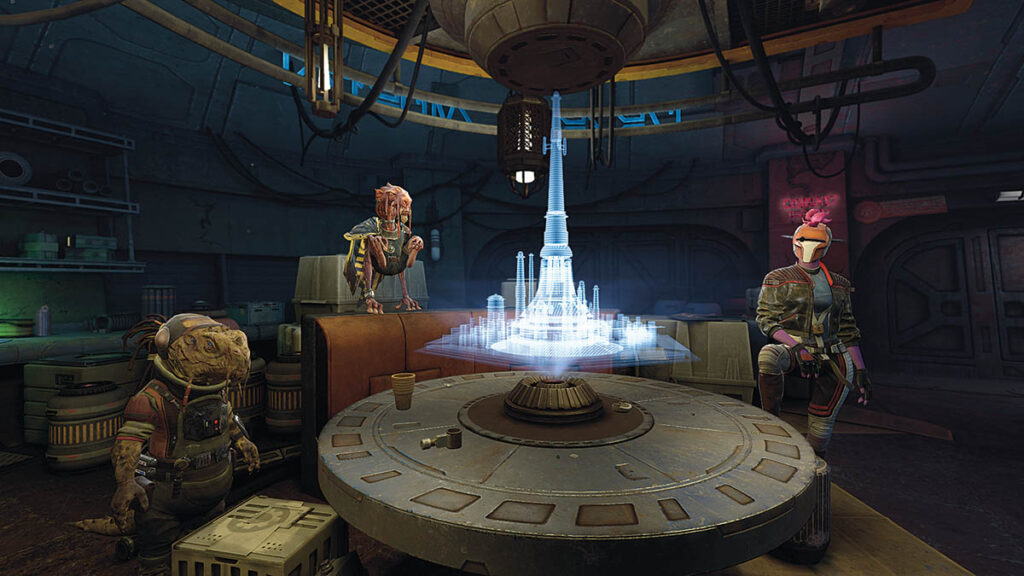
The title’s Arcade mode was influenced by 1980s retro games, according to Perez. “I’m a huge retro game fan, so I spent a lot of time in the arcades and loved my Nintendo. The title really embraced that ‘arcadiness’ quality for our Arcade mode. We drew inspiration from games such as Spy Hunter, 1942, Galaga, Hang-On and even the early Mario Kart games. The main takeaway was the idea of quick jump-in, jump-out fun. You can jump in quickly, play for a few exciting minutes and jump back out. The more you play, the more skilled you become, allowing you to achieve a high score that you want to beat, and beat your friends’ high scores. It’s that immediate, satisfying gameplay loop that you can easily fit into your day before running off to play the Playset or whatever else you’re doing.”
Visual consistency in the modes was key. “To help create a more consistent visual style among these three modes, we started with authoring the assets in a similar way,” Perez describes. “Therefore, the model silhouette and the textures were using the same hi-res reference model and texture sets. The lighting environment in MR [for example, Arcade and Playset modes] was more generic but equally balanced in key-to-fill ratios for light intensity. With this methodology, we could maintain an equal visual ‘weight’ and contrast to the characters and environments in our experience.”
Throughout, the filmmakers had to stay true to the Star Wars canon. “This is a fun and difficult challenge,” Perez says. “We achieved balance by telling a new micro-story through the lens of Star Wars. For innovation, we pushed on mixed reality with new camera angles and user guidance techniques. For canon integrity, we ensured characters, including Sebulba [important to the mythos], fit authentically within the global timeline of the Galactic battle. The story focuses on the consequences for ordinary people trying to make a life in that world.”
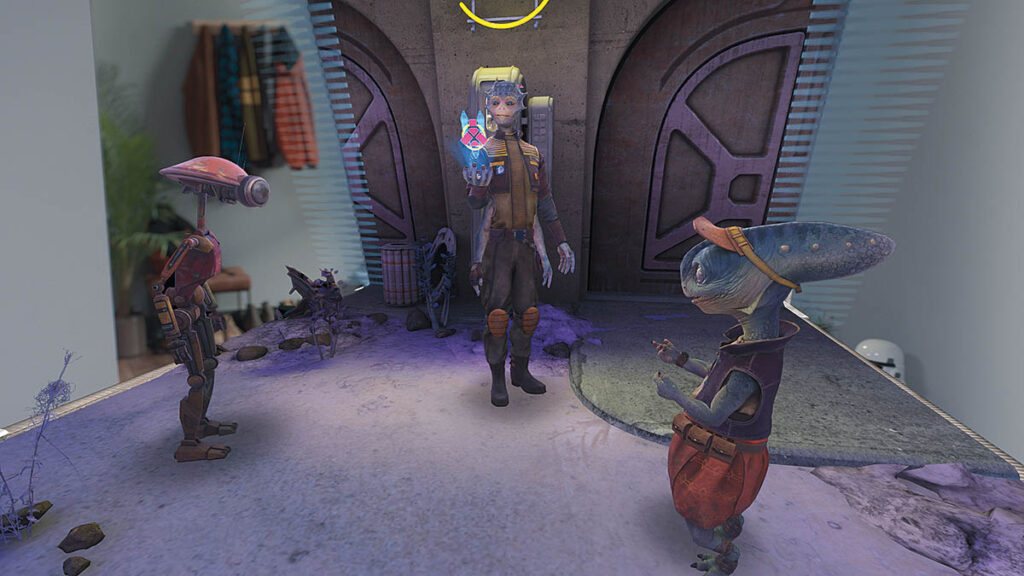
Star Wars: Episode I – The Phantom Menace was a primary resource. “I watch all the Star Wars movies all the time for comfort, but Episode I was by far the biggest inspiration. This was especially true for the animation team, who were going back and animating characters for the first time in over 20 years, and of course, for the podracing aspect itself, including how the pods move. Beyond the surface-level elements, the rest of the Star Wars mythos was essential, specifically that idea of found family, companionship and choosing what’s right over what is wrong.”
Stephen Zavala, Production Designer on Beyond Victory, says, “We truly hope players take a moment to really dig in and experience the story. We were making this for the fans, and the idea that Star Wars is for everybody is central to that. So, if you get a chance to play, open up the Playset and put a Stormtrooper on your cat!”