Images courtesy of Disney/Pixar.

Images courtesy of Disney/Pixar.
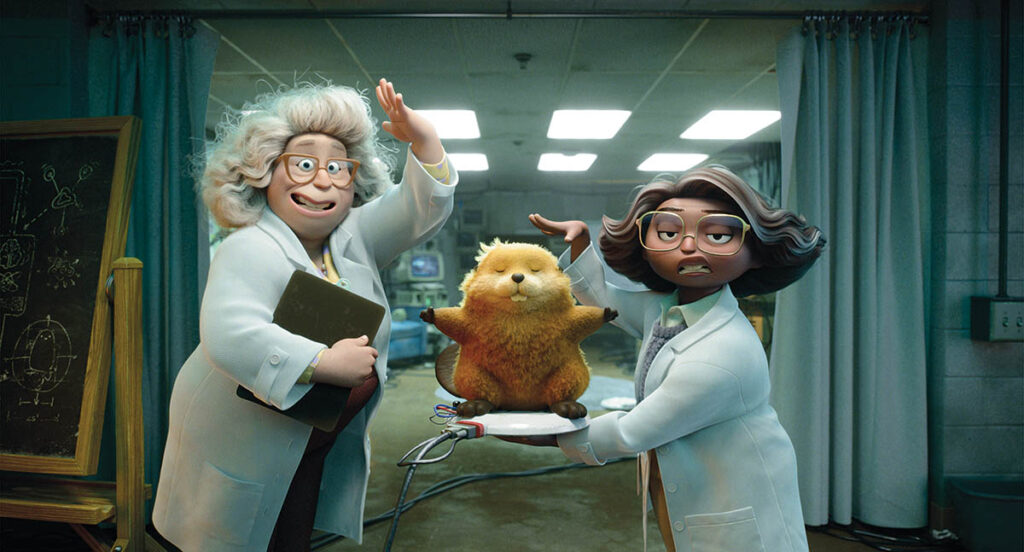
After a grizzly, panda and polar bear attempt to infiltrate human society in his We Bare Bears, director Daniel Chong reverses the narrative for his Pixar directorial debut Hoppers, where scientists are able to ‘hop’ human consciousness into lifelike robotic animals that are able to talk to and understand what every creature big or small is saying.
“There are these creatures who live with us and share this planet, but we can’t talk to them,” Chong states. “You can look at the Internet and see that everyone is trying to make sense of them. It’s amusing to even try to give voice to them.” The biggest inspiration was not James Cameron or David Attenborough, but videos where awkward robots with cameras in their eyes try to fit in with animals. “There are even these funny ideas or things that we were seeing in real life with panda enclosures where in order not to habituate the pandas to humans, people will dress up in panda costumes and go feed them. There are a bunch of stories like that, and it makes you think, ‘Humans are so interested in animals and are trying to infiltrate in these wonky and clearly hilarious ways. How can we take that and push that idea?”
Transitioning from 2D to 3D animation required some adjustments. “The original boards for the movie were so charming and worked so well as 2D cartoons,” remarks Nicole Paradis Grindle, Producer. “I remember saying to Daniel that I thought the biggest challenge we would have was translating this into 3D because they worked so well in 2D. It was a big leap to translate and also hold onto the humor. There were jokes that didn’t play in 3D in the same way they played in 2D, so we had to come up with a different play on certain gags.” The story constantly shifts between the human and animal perspectives. “Another big thing was dot eyes versus cartoon eyes. That was not something that was a slam dunk. We had to work for a long time to get it so that the same model could have those dot eyes that made it seem more like an animal and then have the cartoon eyes. The whole language around the human perspective without the earpiece versus the perspective in that animal world; that was a long journey,” Grindle says.
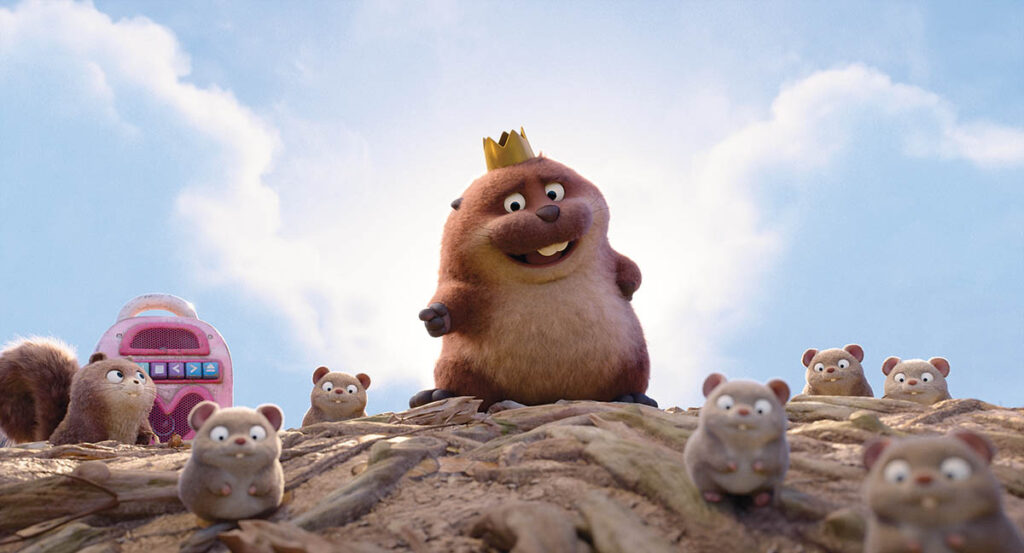
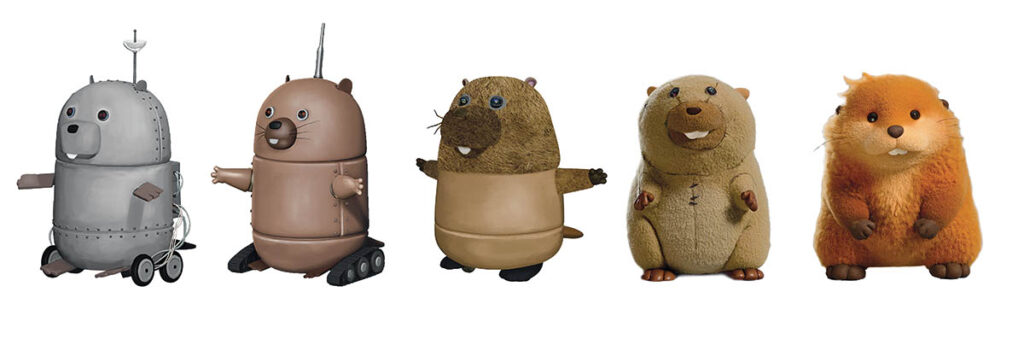
Adopting the disguise of a robotic beaver is Mabel, who attempts to solve the mysteries of the animal world. “For human Mabel and Mabel Beaver, we had a few things outside of her general personality and performance that we made sure tracks through both forms,” explains Alon Winterstein, Animation Supervisor. “When Mabel is a kid, her hair spikes up or goes fuzzy when she gets angry, and we incorporated that into the beaver. What made Mabel unique was her human instinct inside of the beaver. Where a beaver’s instinct would be to walk on fours, Mabel would feel more comfortable walking on twos. There is a scene when George is trying to encourage her to come with them to the Super Lodge and swim. Mabel is not sure if she is going to do it. Mabel did what she needed to and now is going back home. But Mabel gets convinced. However, her choice to jump into the water is different than any other beaver. A beaver would jump head on and swim in an organic way. Mabel ‘cannonballs’ into the water. It’s a much more human instinct.”
Maintaining the appeal of the characters was not easy. “We definitely had innovations on the characters themselves, as they were built in more of the rigging and groom parts to allow for the animators to achieve what they need out of the performance and the graphic shapes, appeal, silhouette and performance,” Winterstein notes. “There was a lot of effort there to create models that could support all of that range, but also unique solutions for things such as those short arms and legs that sound simple in concept. But a character that is so round, and everything is so close to each other, it tends to collapse on itself. To manage that was challenging in addition to a tail. Once they go between two legs to four legs, for that transition, the proportion actually needs to change to accommodate a silhouette that is more appealing on fours. You need to find ways to cheat that in the transition but also make sure that this model looks good in both ways and doesn’t start looking unappealing.”
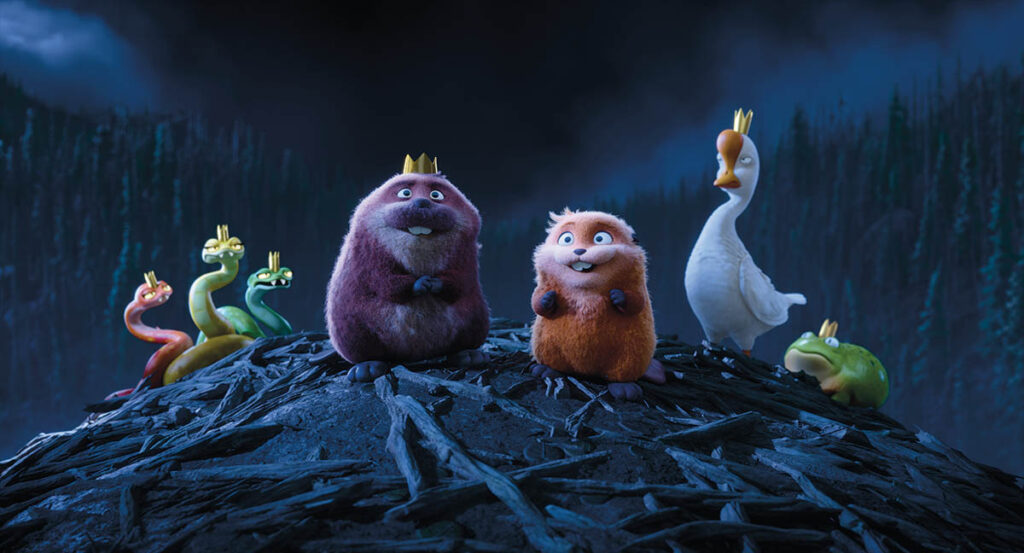
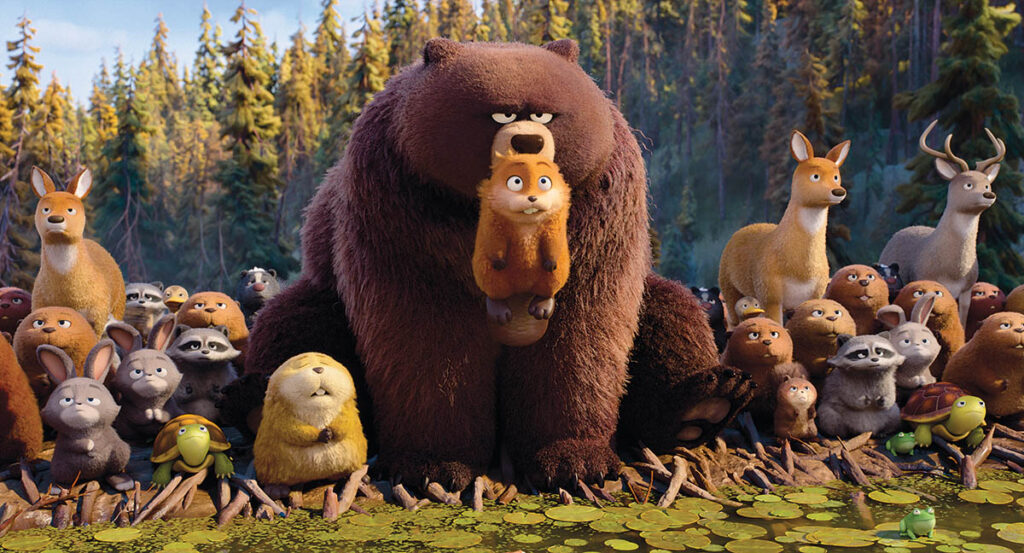
New tools were created. “We developed a new system for generating feathers on characters and for rigging the wings of birds,” states Laura Beth Albright, Visual Effects Supervisor. “When birds fold their wings, the way that the feathers have to follow the wing, fold up and unfold, is actually complex. There are layers of different feathers; some of them articulate like fingers and some follow the others. Instancing the feathers on the body was another project. We hadn’t updated the way we make feathers in quite some time. Since we had some birds that were going to be prominent, close to camera, right up with our main characters, we wanted the feathers to be compelling and nice.” A prominent plant had to be accommodated. “We worked early on with the tools department to create a new internal tool for modeling and instancing procedural trees because we were going to have a ton of them,” Albright notes.
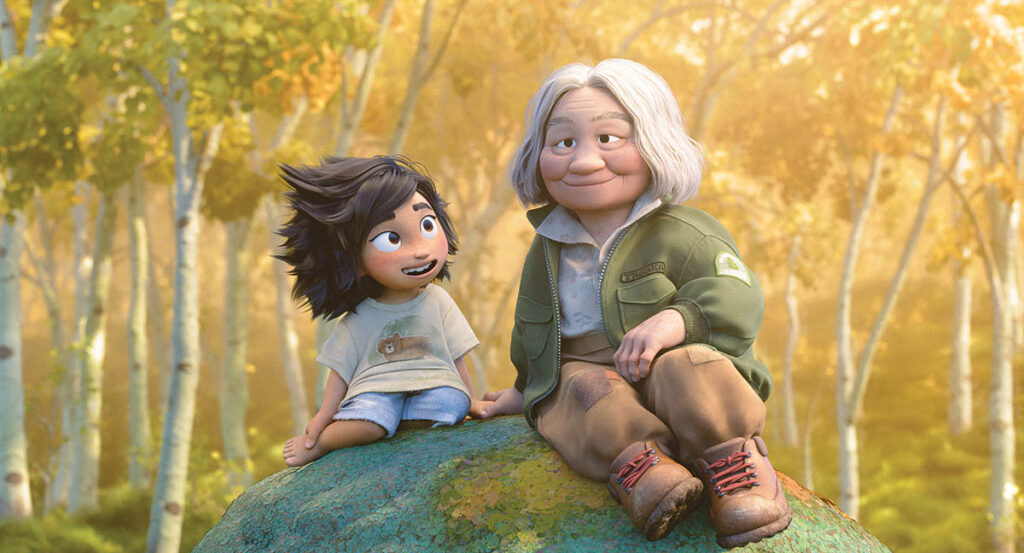
Having the ability to manage the visual complexity of nature led to the Brushstroke Project. “It’s a system of projecting points in space onto the environment, applying a texture card on each one of those points, bringing that in and rendering it, pulling the color from the existing beauty pass render and then applying the texture cards with those colors in the final composite of the image in whatever way the compositor chooses to dial it in,” Albright remarks. “What that did was to provide a way to visually stylize the extremely complex environment. Natural environments have so many little pieces, it can be really busy and visually hard to look at. You have your characters in front with all of these little things going on. We needed some way to quiet all of that visual noise and frame the characters. It adds to the tactile style that we wanted for the movie as well.” Effects simulations like water, fire and smoke did not vary that much between human and animal perspectives. Albright adds, “It was more in the design and shaping. You can also see in our human world that things are more orderly and organized. Even the vegetation is more structurally controlled. Then, in the natural world, things are wilder.”
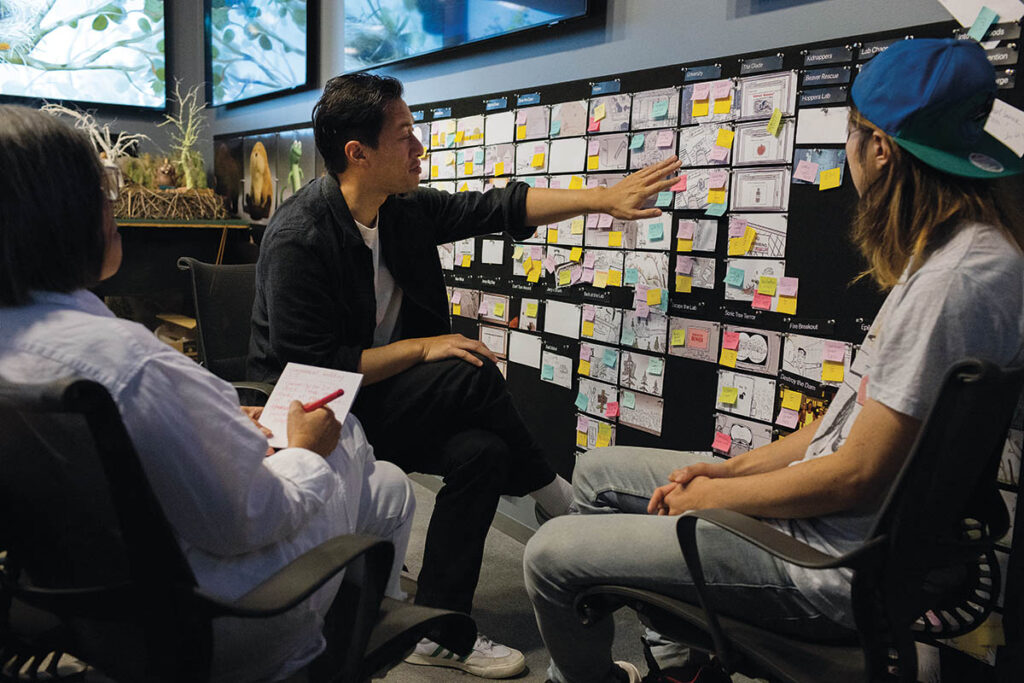
Comedy is a fragile concept. “I feel like we’ve learned a lot about how you can step on the comedy by making something overdramatic or not putting clarity in the right place,” states Ian Megibben, DP, Lighting. “Much like the timing is important, the clarity of what you see is important. Seeing it at the right time. A lot of this is worked out already between the blocking they do in layout and the work they do with the edit, but when you have an eye fixed on a cut, making sure that we’re clearly highlighting that in a subtle way. That was probably the biggest lesson. I’m probably proudest of putting a lens flare in the movie that got the largest laugh that I’ve ever seen a lens flare get in the right way. It was rewarding for me to contribute to a movie that is hilarious in a way that elevates the humor. I put so much thought into lens aberrations and effects in a way that feels organic. It doesn’t draw the eye. There is one time where I was like, ‘We can pour a lot of sauce on this shot!’”
Given the nature of the humor and storytelling, the visual aesthetic had to feel real without having to be realistic. “There is such an odd character design, and odd in the best way, and a cartoony feel to things in the natural world,” remarks Jeremy Lasky, DP, Layout. “The human world gave us permission to come up with our own style for it without having to feel like we were doing Finding Dory. We could get away from making it feel like we were just observing these characters doing what they are doing. Ian and I wanted to establish this tone of pushing the visuals just enough in the beginning that we came up with this stylized feel that could be then really pushed to extremes when we needed to because the story gets really weird. It gave this baseline that the audience was comfortable with, so they weren’t saying, ‘What do you mean you have a shark being pulled by a bunch of seagulls that lift it out of the water? I don’t understand how that works physically.’ It doesn’t matter because you’re hooked in the story and the characters that you roll with it.”