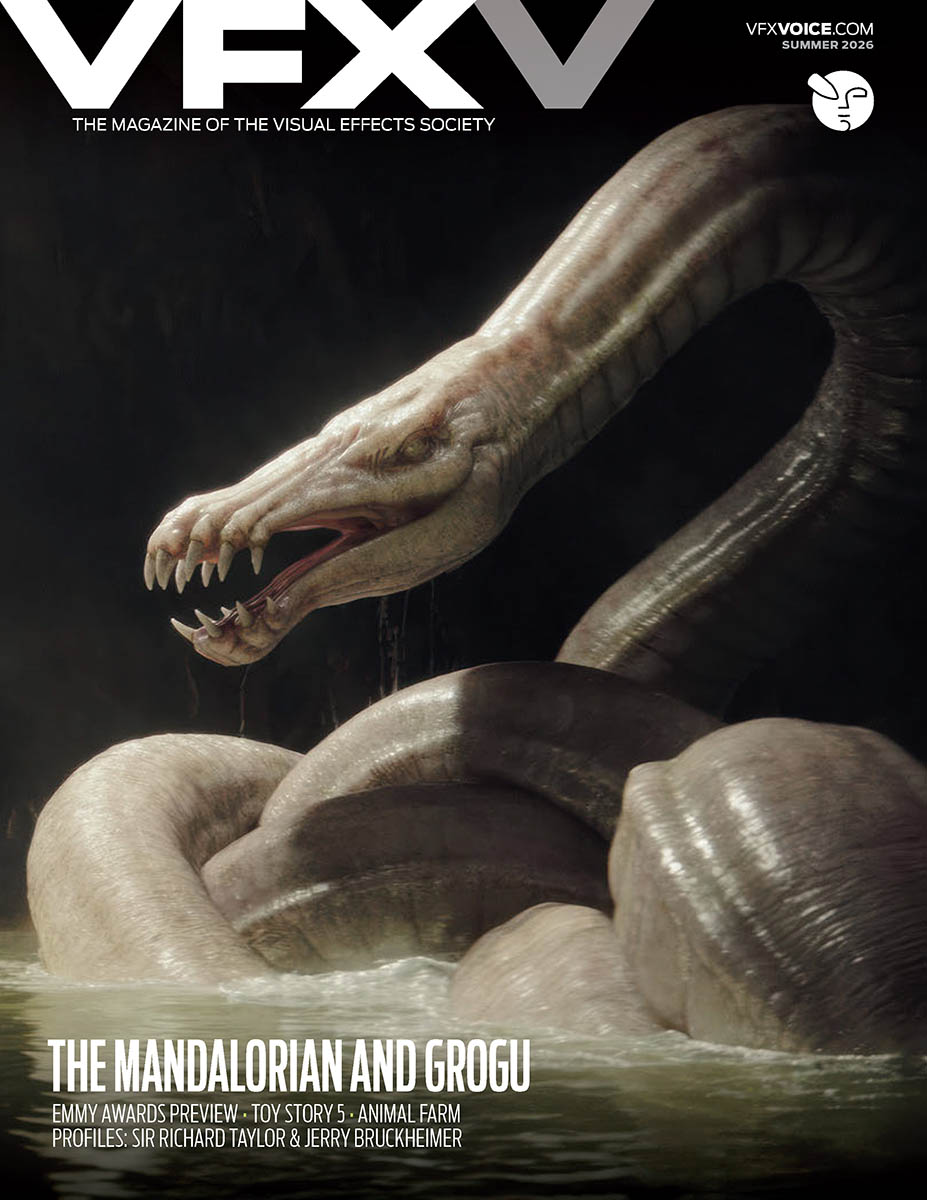
Images courtesy of Netflix.

Images courtesy of Netflix.
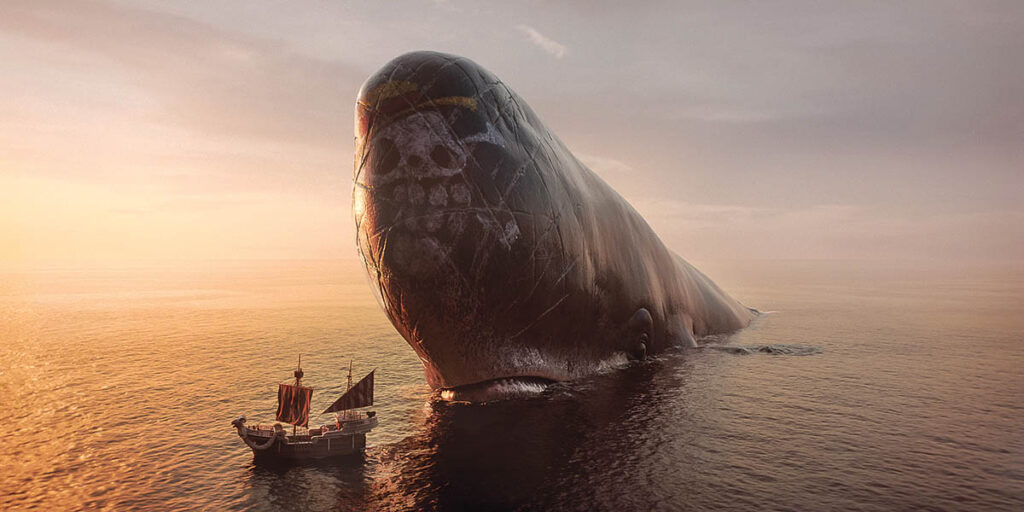
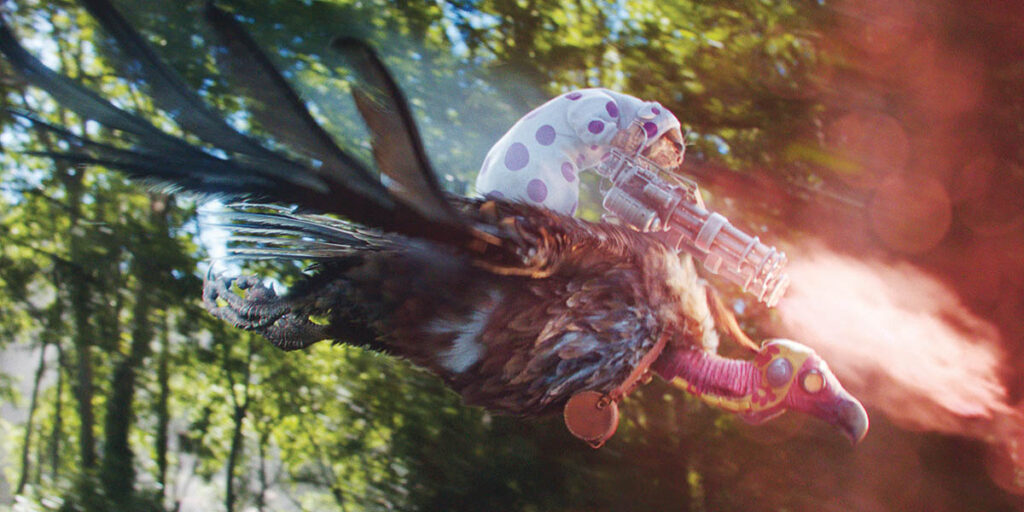
Setting sail on the treacherous ocean current that flows around the entire Blue Planet in an effort to find a legendary treasure and be crowned the Pirate King, One Piece: Into the Grand Line marks the return of Monkey D. Luffy and his Straw Hat crew for eight episodes that travel to Loguetown, Reverse Mountain, Whisky Peak, Little Graden and Drum Island, along with introducing an entirely CG character, a massive sperm whale, a pair of giants, and antagonists with the ability to manipulate wax and smoke.
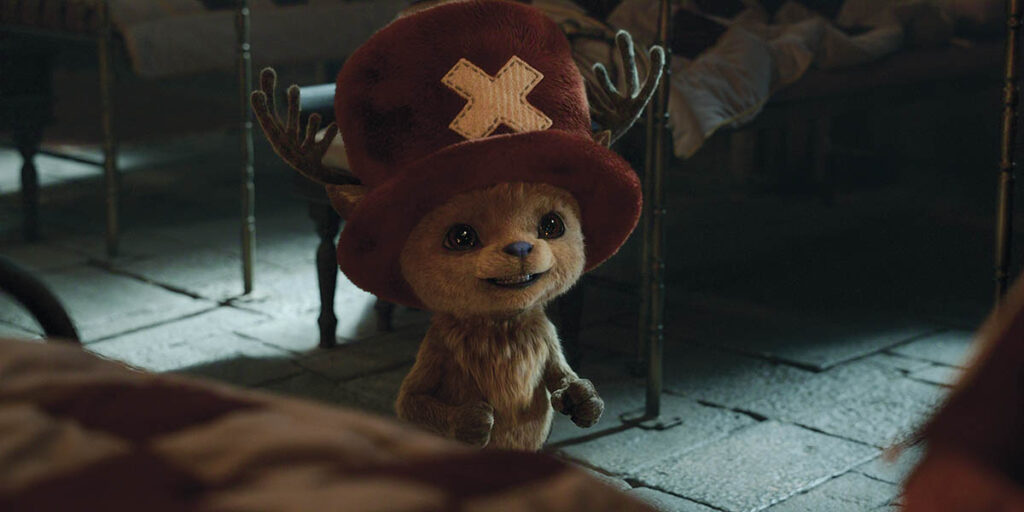
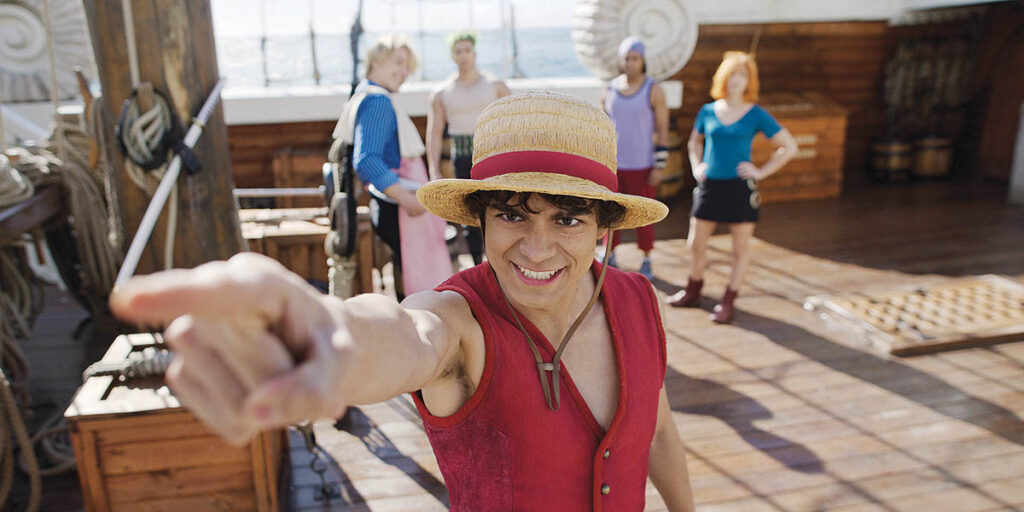
“This show wouldn’t be possible without visual effects, and we have an incredible visual effects team,” states Joe Tracz, Co-Showrunner. “There were definitely superpowers to figure out for the first season. Luffy is made of rubber, so him stretching was the big challenge. But each season gets bigger and bigger. In Season 2, we knew that one of our big challenges was we were introducing a new crew member to the Straw Hats, and he is a little reindeer boy known as Tony Tony Chopper, who is an entirely visual effects character.” The methodology was borrowed from Guardians of the Galaxy. “We have an incredible local actress named N’kone Mametja. She was on set every day in a body suit, giving someone that our actors could do a real performance with. You’d shoot with her, shoot the clean plate for visual effects, and then in post-production, Chopper’s face and voice were provided by another actress, Mikaela Hoover, who also was in the Guardians movies.”
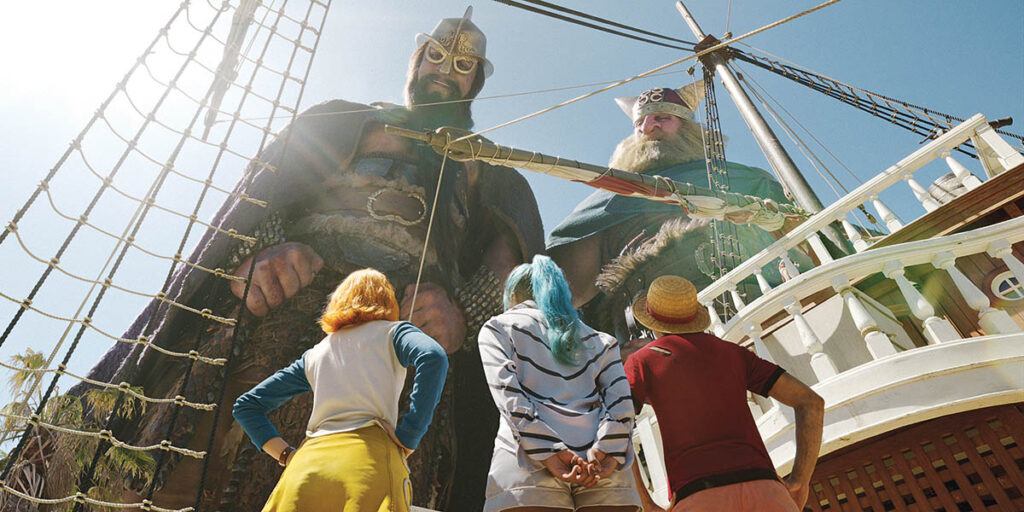
Things get even weirder in the second season. “In the writers’ room, we constantly have questions of, ‘Can we do dinosaurs and giants?’” Tracz recalls. “The answer was, ‘It’s One Piece. You have to do dinosaurs and giants. If you don’t do dinosaurs and giants, Little Garden, the island where they discover those things, just isn’t the same Little Garden.’ There are expectations that fans of the manga and the anime have that we want to make sure we’re delivering on because that’s the promise you make when you’re adapting something as specific and beloved as One Piece. If you shy away from those things in favor of realism, you lose what makes this world so special.”
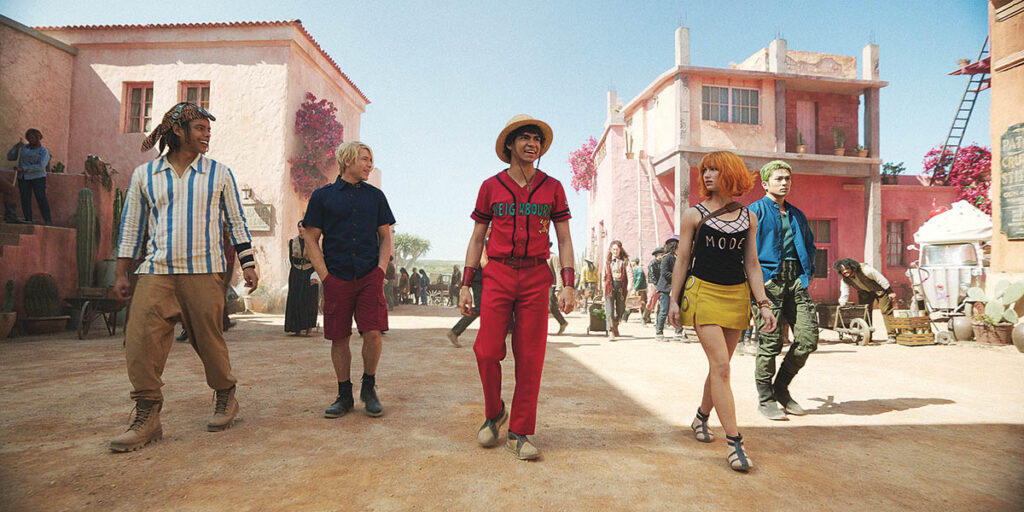
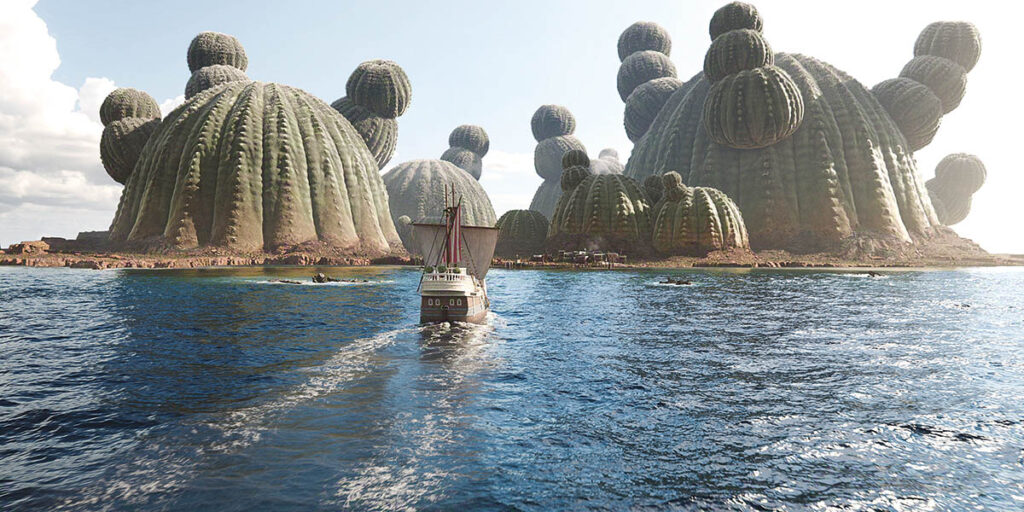
Given the scope of the world-building, the task was divided between two production designers with each island treated as a unique environment. “[The approach towards visual effects was] definitely different for various parts of the show,” remarks Tom Hannam, Production Designer. “Whisky Peak was one of the islands where everything was in-camera and I didn’t have to consider the visual effects side of it so much. But Little Garden is an island populated by two giants that were 60-to-70-feet tall, and they got bigger in post as these things always do. That had a lot of Straw Hats, human-sized crew, dealing with these two enormous giants. It took a lot of collaboration with visual effects right from the beginning. I worked it out with Victor Scalise [Visual Effects Supervisor] and Scott Ramsey [Visual Effects Producer] literally shot-by-shot, but at the same time there was still the desire to do as much in-camera as possible.”
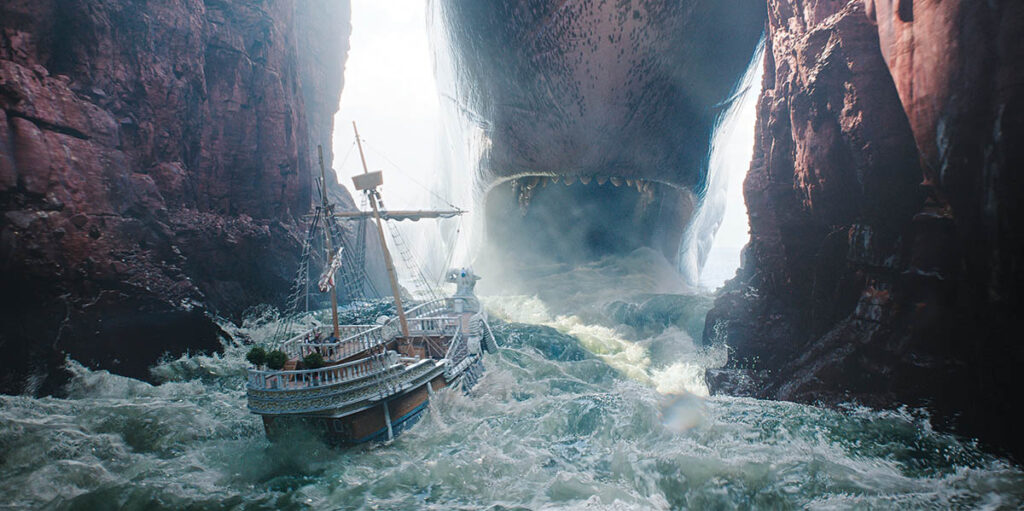
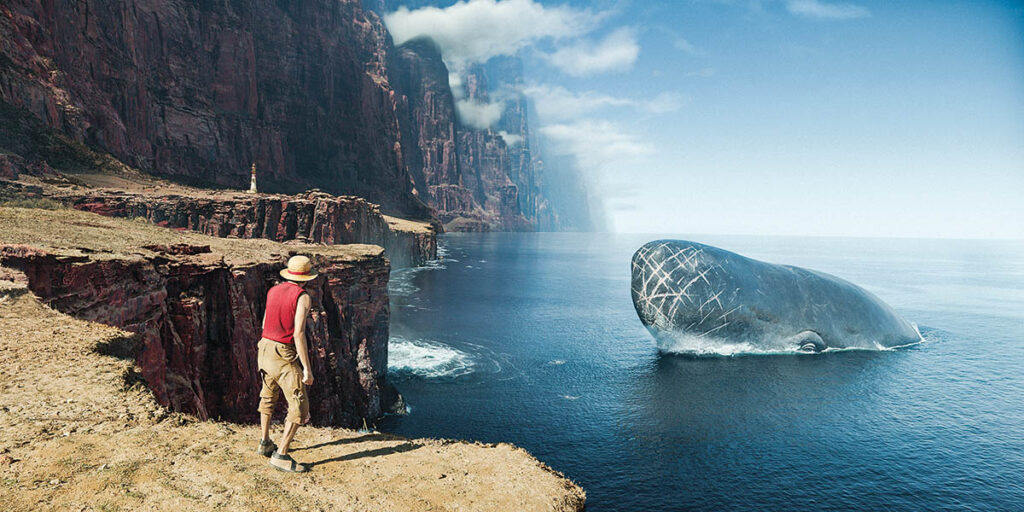
Everything was like putting together a jigsaw puzzle consisting of practical and digital pieces. “For each setup we would have continuous meetings,” states Max Gottlieb, Production Designer. “You would have full set extension and bits you could and couldn’t see through. For instance, with Laboon we built the lighthouse up to the edge, and we had to make a mark where there was this huge drop and cliff, and then there was the sea and Laboon. Beforehand, we have to proportion the whole thing into a series of drawings that are exactly to scale and then design where the eye of Laboon would be. Luffy is standing on what would be the clifftop, and we have to pinpoint where his eye would be and where he’s looking at different parts of the action. There is the financial aspect, as well, of how many wide and close-ups shots you can have. In the end, the whole thing becomes this jigsaw puzzle broken down shot-by-shot.”
“One of the most important parts of a cinematographer’s job is to try and facilitate the best outcome for all the imagery, whether live-action or visual effects,” remarks Michael Swan, Cinematographer, who was responsible for the final three episodes. “I try and collaborate with the visual effects team as much as possible to make their life as easy as it can be. This is a visual effects-heavy show, and nothing is undemanding.” Previs and storyboarding are important. “All the big visual effects sequences are prevised and often storyboarded by the director. In addition, the fight scenes are carefully rehearsed and choreographed well ahead of time.” There are few practical locations with the emphasis on elaborate sets and shooting against screens. “The look was established in the first season, and although we used less extreme wide-angle lenses for close-ups in Season 2, the look remained the same. Netflix has full control over the final color grade,” Swan notes.
Ensuring that there is enough time to produce the required visual effects is a quick and efficient editorial turnover. “While we are still offline, we have this absolutely fantastic team of visual effects editors and also our own previs artists so we can do internal turnovers constantly and get temp visual effects moving,” remarks Tessa Verfuss, Editor. “Even by the time we’re presenting to Netflix, we have something there. It’s different when we’re talking about a full CG character, but things like Luffy’s punches, we’re getting previs for that before we even send cuts to Netflix. That just becomes an ongoing process that we keep moving. Personally, I do have an advantage of a time zone difference because I’m in Cape Town, so most of that team are only starting when I finish my day, so we’re not literally trying to jump into each other’s bins and timelines at the same time.”
Imagination is required when assembling sequences. “When you do a show like this, so much is on bluescreen or greenscreen,” states Eric Litman, Editor. “You have a character that is not present because it’s CGI. And from an editor’s perspective, it requires, at least from me, so much imagination. As an editor you are imagining the timing and pacing. Is this enough time to do x, y and z or deliver a line? The boat is doing this right now, but we don’t have the effect of what’s causing that. We’re constantly figuring out cause and effect and how that translates into visual effects. It also requires a tremendous amount of conversation and homework with the people you are working with, the director and visual effects department, in understanding the storyboards. Sometimes you have to go to the manga to understand the concept of these shots.”
“What is good about One Piece is that the show accelerates its insanity from a storytelling perspective. Everything gets bigger, and I’m sure Season 3 will be no different,” observes Tim Kinzy, Editor. “It was different with the full CG character for the first month with this flashback scene, which had nothing to do with the Straw Hats. It was basically Mark Harelik and N’kone Mametja doing the Chopper/Dr. Hiriluk scenes. I felt like I was working on a spin-off. It was refreshing because this is nothing like I saw in Season 1 or have even dealt with before. It was a unique opportunity, a different kind of pacing, especially with a fully CG Chopper that is expensive per shot. A lot of shots get pared down or taken out to save money and for economy of storytelling. That was quite a challenge. You can’t just cut away to Chopper whenever you’re stuck on an editor because it’s going to cost a lot of money, so sometimes the pacing had to play out. It’s still One Piece, but it feels like something unique.”
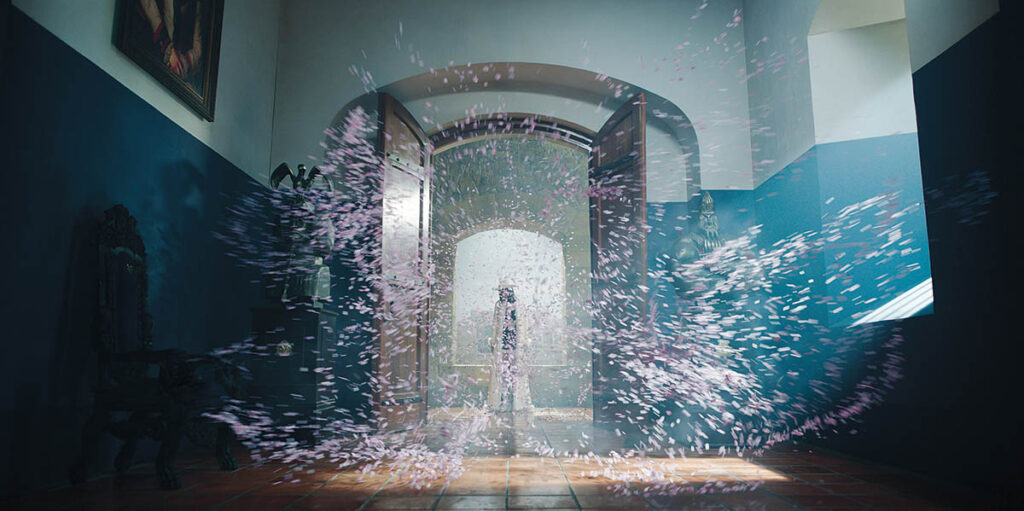
Pushing the gimbal for the Going Merry was the sequence where the pirate vessel goes up Reverse Mountain. “We had the Going Merry at 20-odd degrees going up Reverse Mountain,” states Mickey Kirsten, Special Effects Supervisor. “That was incredibly tricky. Everything needed to be elevated, like our water cannons. We were shooting water onto the ship and people were sliding around. Resetting was quite challenging. People literally had to use ropes to pull themselves up and reset everything that was falling down during the take.” Mr. 13 generates a specific substance with his fingers. “The wax was insane. It was such a journey trying to find a product that we could have on the artist, and get it to do what we wanted it to do. We literally went from food stuffs like marzipan to baking products. We finally settled on a medical plastic that you can mold and it breaks really cool and nicely,” Kirsten says.
Creating the interior of the whale, Laboon, was a labor of love. “There was a lot of stomach acid inside of the whale,” Kirsten remarks. “Skeletons would fall into these little pools of water and would smoke and bubble away. We had to keep the walls of Laboon moist all the time. If you think about it, it’s 40-odd meters by 25 meters, and you square that. It’s a lot of rain rigs working there. We had kilometers of plumbed air underneath Laboon for the bubbles, steam and smoke, and also plumbed water underneath it, causing little eruptions. It was probably three, four months of prep on that one.”
While Season 1 had 2,300 visual effects shots, Season 2 has 3,800 created by Framestore, Rising Sun Pictures, ILP, Folks VFX, Barnstorm VFX, Ingenuity VFX, Mr. Wolf and Refuge VFX. “We broke down the approach coming up to Reverse Mountain as one section so you wouldn’t have to match into water,” states Scott Ramsey. “We gave the basic idea that the water needs to be sucking the boat toward Reverse Mountain, and as it does that it gets closer. When the Going Merry gets sucked into it, then we turn it over to Rising Sun Pictures. As it keeps going up to the top, at the top we know that ILP is very good at specializing in work like that. Once we get down to the bottom, that’s Laboon. We broke it down in those areas, hitting the vendors’ strengths.”
“The biggest problem we had was fighting the scale of the water [for Reverse Mountain] because a lot of the fluid simulators are meant to build oceans,” notes Victor Scalise, Visual Effects Supervisor. “You’re using water simulations that are defying physics and also need to be moving upward, colliding with the landscape, as well as being like white water rafting.” The giants were achieved practically. “We ended up getting two actors, and we worked with Tom Hannam to build big and small sets. Christoph Schrewe [director] came in, and we blocked everything out. We had little characters that were the size they were, so on the giant-size set, we could have Straw Hats, stand-ins that were the real size. We did a lot of math and planning to where it all snapped together beautifully in post.” Digital effects were unavoidable for Smoker. Scalise states, “The punches are true to the manga, and with the tendrils, we wanted to give them more shape, so a tornadoish swirling was added. One of the tricky parts was, how do you make tendrils, when they grab Luffy, actually feel like it’s not emitting smoke from Luffy? We came up with the idea of these spinning cuffs that gave more depth. We also had a lot of fun developing the Gum Gum Gatling effects as Luffy is punching Smoker. We went through a lot of cool simulations to answer the questions: How do things go through Smoker? How does it react? How does it interact? Smoker was a lot of fun, and as viewers watch it, I hope they’ll enjoy what we came up with for it. The sequence is intense.”