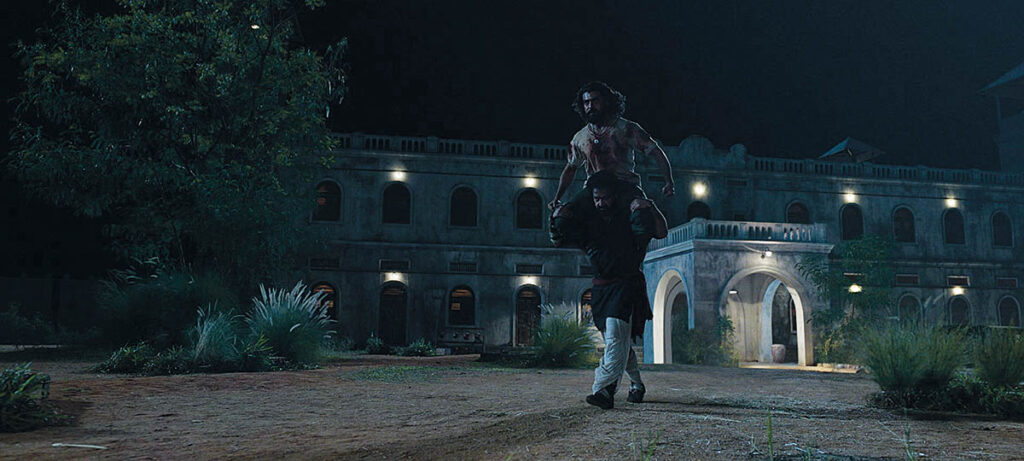

Creating waves back in 2014 when Prime Focus World merged with DNEG and carrying into 2025 when Phantom Digital Effects consolidated Milk VFX, Tippett Studio, PhantomFX, Lola Post and Spectre Post into the Phantom Media Group, India remains a significant player in the visual effects industry, with the South Asian country getting its own chapter in the Visual Effects & Animation World Atlas 2025. Joseph Bell states in the comprehensive research report that Mumbai is the largest visual effects hub worldwide by headcount. Six out of 10 of the fastest growing visual effects and animation hubs in the world are in India. The vast majority of the visual effects and animation revenue comes from international revenue, with domestic clients accounting for only 10% to 15%, and 2,000 visual effects and animation workers lost their jobs with the collapse of Technicolor. Unlike other markets where tax incentives have been a driving force in attracting international productions, it has been the cheap labor that has turned India into a global outsourcing powerhouse; however, that might start to change as the Indian government becomes more actively involved.
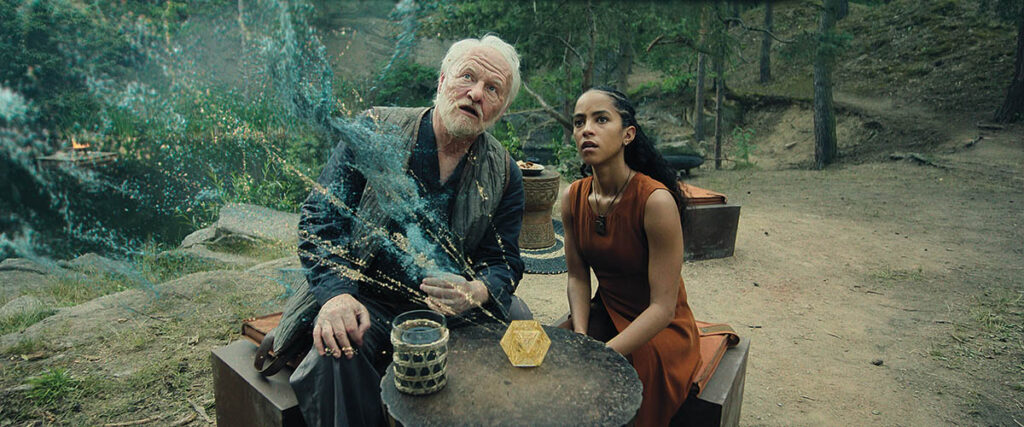
India has over a 100-year history with films and filmmaking. “Given India’s long history with films, visual effects were not an unknown element here, though they weren’t really used to their full potential,” states Akhauri P. Sinha, Managing Director, India for Framestore. “I, along with many other people from the industry in India, have always maintained across various forums that visual effects is something filmmakers should start thinking about at the beginning, instead of as an afterthought or a corrective tool, as it usually was in the early days in India. As filmmakers started understanding the ability of visual effects to help realize their cinematic vision, and their films did well commercially, it made others aware of the possibilities. The other part of the puzzle that also fell in place was the availability of talent, as over the years, working on global projects had grown the talent pool as well as honed the skills of the artists here.” Machine learning/AI are tools that aid air artists and enhance output. “It’s also reasonable to assume that as technology evolves, certain repetitive tasks could also be automated. Digital infrastructure like cloud computing and storage has been a game-changer for smaller Indian companies as it allows them to scale without expensive capital outlays.”
“The Indian government has made significant progress in supporting the visual effects industry,” remarks Sudhir Reddy, President, Global VFX Business for Digital Domain. “The Ministry of Information and Broadcasting now offers incentives for international film and visual effects projects, allowing production service companies to claim up to 40% of qualifying expenses incurred in India, with a maximum payout of approximately $3.6 million USD, substantially higher than previous limits. The government has also established the National AVGC [Animation, Visual Effects, Gaming and Comics] task force and proposed policy frameworks to develop the sector further. However, comprehensive nationwide implementation is still underway. At the state level, support remains uneven, with only some states [such as Telangana and Karnataka] implementing dedicated visual effects policies. Skill development programs are in place, but there is still a need for more focused approaches to advanced specialization and training. Overall, while necessary steps have been taken, large-scale and consistent national support is still evolving.”

Since 2005, the Indian visual effects industry has experienced rapid growth. “Initially centered on basic corrective work such as clean-up and motion graphics, the sector has transformed dramatically due to exposure to international markets and the entry of global visual effects leaders, like Rhythm & Hues, DreamWorks, Technicolor, DNEG, Digital Domain, Framestore and ILM,” Reddy explains. “These companies have integrated Indian talent into the global production pipeline, elevating technical standards and expertise. Domestically, Indian filmmakers are now making visual effects a core part of their creative process, leading to more ambitious storytelling and higher production values in film, television and streaming content. Internationally, India has become a vital hub for major Hollywood productions, delivering complex visual effects at scale. Strategic partnerships, government incentives, and ongoing investments in talent and technology continue to strengthen India’s reputation as a major force in the global visual effects industry.”
When Digital Domain established a facility in Hyderabad in 2017, Reddy was appointed the Head of Digital Studio. “Digital Domain expanded to India to support global growth, improve margins and leverage the country’s growing talent and technology pool,” Reddy notes. “The supportive ecosystem and government encouragement for the AVGC sector were also key factors. The primary advantages have been access to skilled professionals and cost efficiencies. Challenges include heavy reliance on North American projects, limited high-revenue domestic work and time zone differences. Indian teams have, however, demonstrated strong adaptability and flexibility.” Real-time rendering, cloud computing and AI/ML are reshaping the visual effects landscape. “Artists are actively upskilling to maintain global competitiveness. Indian tech firms are also investing in cloud render farms and data centers, with support from government initiatives. The rise of AI tools is expected to significantly affect outsourcing studios in India, particularly those focused on labor-intensive tasks like roto, paint and camera tracking,” Reddy says.


Kiran Prasad has a varied career in India with experience in food and beverage, retail, insurance and visual effects. “For the quality of ILM to be done, you need good quality people, and we have roughly 400 people now [at the Mumbai facility],” remarks Prasad, Executive in Charge of ILM Mumbai. “The talent exists, and it’s just a matter of time to grow to the level of what the Western world has seen. You have to realize that India doesn’t have a 50-year history of visual effects. We started about 15 to 20 years ago. That cycle is picking up.” Education needs to be improved. “That is one area where we could do much better in terms of the quality of education that we’re giving in visual effects. When I say quality, I don’t mean how you use the application, but how to think differently. How do you apply what you have learned in a different situation? It’s about thinking big and using technology and different forms of storytelling. There are very few schools honoring that knowledge. Recently, the Maharashtra government established a college of creative technology. There are a lot of baby steps happening together, and this is part of reviving or making sure that India becomes self-sufficient in every industry.” The domestic industry has become more accepting of digital augmentation. “Four or five years back, visual effects would have formed only 5% of the budget of any Indian movie. Today, it is even up to 30% or 40%. There is awareness of the fact that stories can be made more engaging with the visual effects.”
“The benefit of having DNEG and ILM [in India] is that the talent pool spreads to these smaller outlets and helps them become big, more relevant and efficient,” Prasad notes. “There are a lot of things that we’ve learned from the West, but we also have numerous things that we do indigenously over here, which works well for us. We are given the brief, pick up the work, and execute it. Culture doesn’t matter as long as we’re able to deliver it on time. The benefit is that we all speak English well, so there is no risk of miscommunication or misunderstanding. We work exactly the same way as any other ILM studio does. We are given work; we independently manage it, have a visual effects supervisor who handles the show, submit the work to the hub side, and, in some cases, present it to the client-side supervisor if our time zones align. I’m not seeing much of a cultural issue from that perspective. We may have a different way of working, but we do not see much concern about getting the job done. We start at 8:30 a.m. and close at 5:30 p.m. My team is gone by 6 p.m. With both London and Sydney, we have a coverage of four hours, which is good enough. In San Francisco and Vancouver, we use all the available tools to communicate what we want. At the end of our day, we would have sent out recordings or notes to people in San Francisco or Vancouver: ‘We have worked on all of this. These are the things we want from you. Let’s talk about this tomorrow.’ We send it across. They look at it, and at the end of the day, they would send back their notes: ‘This is approved. Moved on to this. This is what we want you to work on. And here are the answers to all of the questions that you had.’ It works well because at the beginning of the day, when we come back, we have all of the answers that we need.”



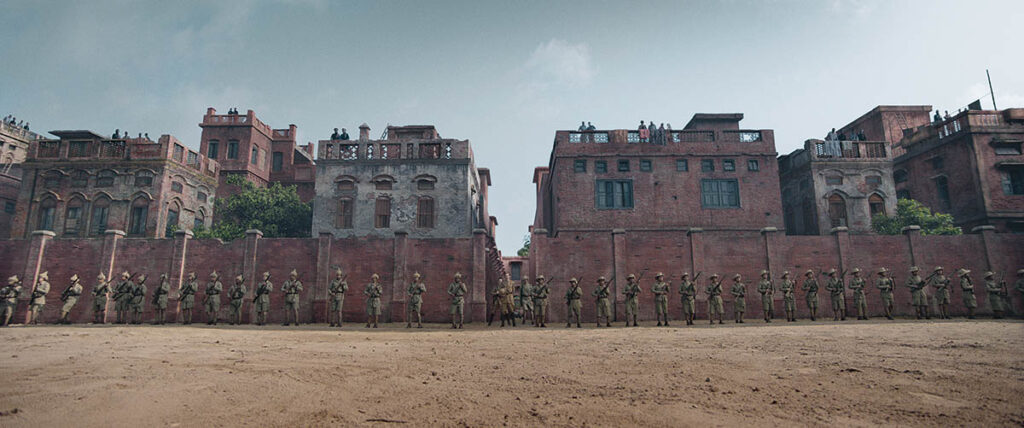


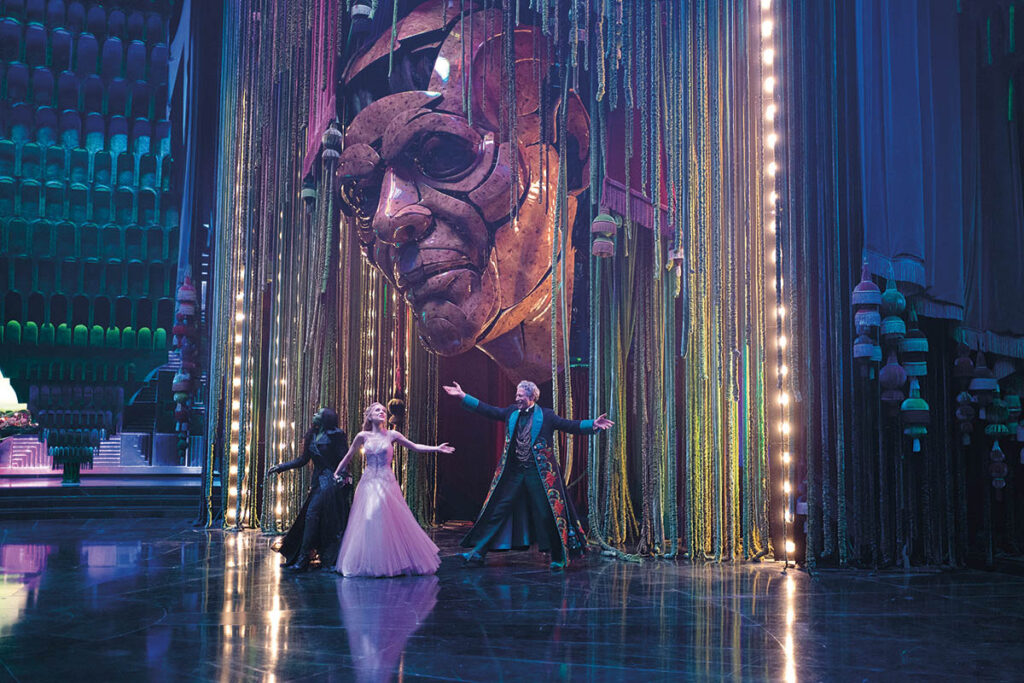
Going from providing ride support for “Harry Potter and Forbidden Journey” at the Universal Orlando Resort in 2008 with a team of six, to being involved with Deadpool & Wolverine, Wicked and Pachinko Season 2 with a crew of 745 in 2024 is BOT VFX, which has facilities in Hyderabad, Pune, Coimbatore, Chennai and Atlanta. “When I started in this industry in late 2003 and 2004, no one was using the word outsourcing to India,” recalls Hitesh Shah, CEO and Founder of BOT VFX. “No one was taking any of the work. I started a company called FrameFlow. We worked with Sony Pictures Imageworks, and most of the services were roto and paint, then gradually matchmove. Back then, it was hard to do anything more than revolutions per minute work out of India. It wasn’t a heavy creative collaboration because you could describe or annotate what you wanted to get done, and the next day or within days, you could have that; it lent itself to the development of that market quite well. When stereo conversion got big, it picked up even more, and more roto and paint work were needed. Over the last decade, there has been a gradual rise in skill levels in India. Many companies have been chipping away at this. Even when Rhythm & Hues was around in India, they had started doing compositing training. When Technicolor and MPC were still around, they began pushing out a lot more certain types of compositing, asset development, and even more complex work in Mufasa: The Lion King. Many companies, including ours, ILM and Framestore, have begun investing in a footprint in India that extends beyond roto and paint, and is now seriously into comp and some parts of asset and CG development. At the same time, a lot of Indian facilities serving the Indian domestic market are doing full-on visual effects work.”
“Significant skill development happens through Western projects because Indian domestic films still don’t use a heavy number of visual effects, and the budgets are very constrained,” Shah states. “You don’t learn as much as when you work on a Mufasa or The Jungle Book. Those operations trained many talented artists in mature pipelines. Your artists are only as good as the number of shots they’ve worked through in that skill set.” It is not all about tax incentives. “The labor cost advantage is a sufficient driver of value, where we can produce a budget that is still attractive to studios and production houses that have other constraints, like, ‘I’m already shooting here, so I have to keep 80% of my budget there.’ Those are things that we can’t help, but pound for pound, if you give me a sequence to bid and work on, India still comes out ahead.” Partnerships have been established with the major visual effects companies. Shah says, “We have a dual relationship. We are a vendor as well, and so is Digital Domain, not as much these days with DNEG and ILM, and heavily with Wētā FX and Rodeo FX. All of these players source their roto, paint and matchmove work to us and others. We are a subcontractor to them. They’re happy that we have that scale. They’re not putting roto paint management resources in India but trying to work on higher-end talent.” Diversification is a risky business because it cannot be achieved overnight. “What we want to do is geographically expand with the same core competency to the main markets that are now beginning to embrace visual effects the way that Hollywood has for a long time,” Shah states.
FutureWorks Academy, founded by a visual effects, post and rental company based in Mumbai, contributes to local talent development. “FutureWorks has taken an active role in talent development through the FutureWorks Academy, which bridges academic learning and real-world production,” states Gaurav Gupta, CEO of FutureWorks. “The Academy leverages internal talent to mentor and provide structured, hands-on training that prepares students for studio environments. By integrating education with live-project experience, we’re helping to shape a new generation of skilled artists who are ready to contribute from day one.” Roto is not the only focus. “India delivers the full spectrum of visual effects from concept development and asset creation to complex compositing, effects simulations, digital environments and final finishing. Studios here contribute to global features, streaming series and high-end commercials as well as local productions. The range extends from large-scale, visible effects to subtle, invisible work that supports storytelling. What stands out most today is the combination of artistry, technical precision and the ability to collaborate seamlessly with creative teams around the world.”
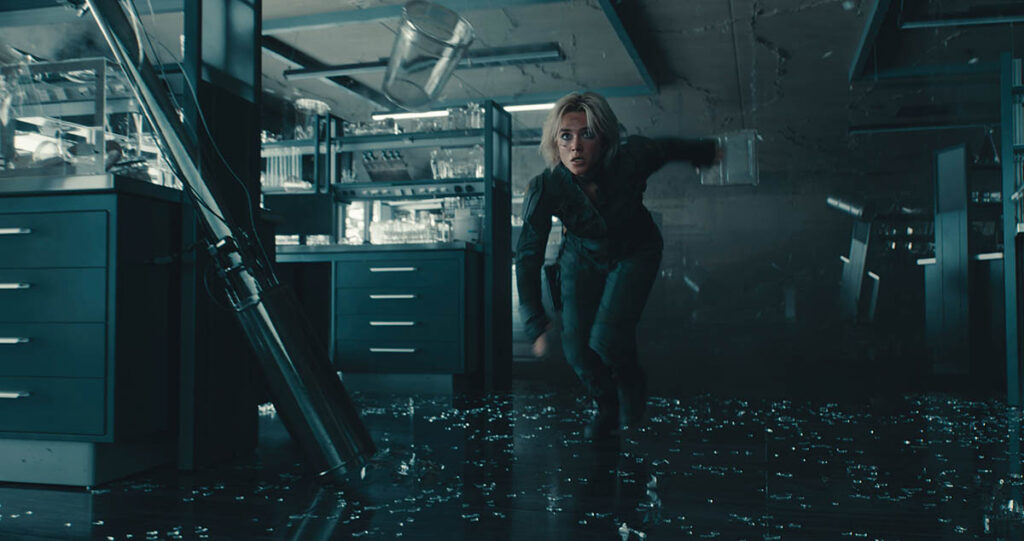



Diversification is important. “Having multiple specialized divisions enables us to bring depth and flexibility to every project,” Gupta observes. “At FutureWorks, our visual effects, post-production and camera rental teams each operate with dedicated expertise while collaborating closely across disciplines. With a team of more than 500 professionals, that specialization ensures we can deliver creative and technical excellence at every stage of production. Establishing strong internal capabilities and continuously developing proprietary workflows is equally important.” One has to keep an open mind about potential opportunities. “To sustain innovation, we must constantly explore adjacent sectors like animation, virtual production and immersive media. This exploratory mindset is why we at FutureWorks developed proprietary software tools that enable seamless cross-facility collaboration, and we are preparing to bring these powerful solutions to the broader market.”
“Renderman XPU, Houdini, USD and Katana are shaping the industry in India and globally by automating routine tasks to give artists more room for creativity,” Gupta remarks. “Real-time rendering accelerates visualization, and cloud computing offers massive scalability. While machine learning and AI streamline workflows, their adoption demands careful governance. At FutureWorks, our dedicated R&D team, led by CTO Krishna Prasad, focuses on applying these innovations responsibly, ensuring they enhance artistry while adhering to the highest ethical and technical standards.” Success requires balancing artistry, technology and finance. Gupta concludes, “To thrive, the industry must be relentless in the pursuit of excellence while remaining operationally lean. This involves continuing to foster innovation, strategically investing in new technologies and deepening cross-industry collaboration. Robust partnerships between studios, educators and technology leaders will sustain a strong talent pipeline, and ongoing R&D will keep teams ahead of emerging trends. By balancing efficiency with technical mastery and creativity, India is positioned to maintain its leading role in global visual storytelling.”