
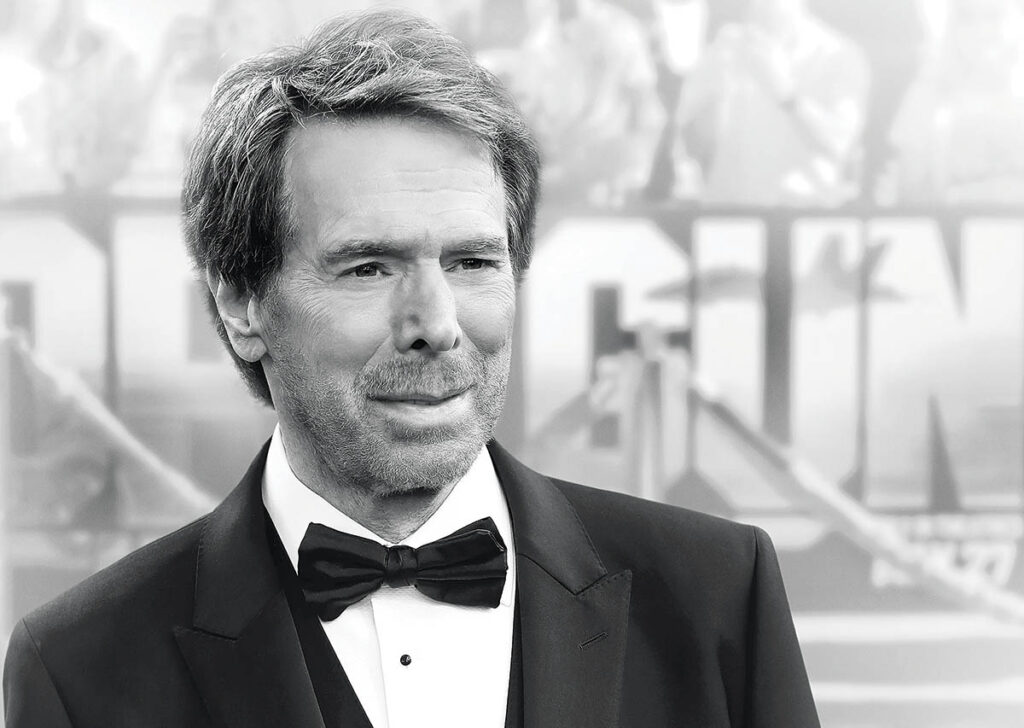

Brand recognition is not something you usually associate with producers, as their role takes place behind the scenes, initiating projects, securing studio financing and recruiting creative talent, but occasionally certain names enter the public domain, such as David O. Selznick, Robert Evans, Richard D. Zanuck, Joel Silver and Jerry Bruckheimer. Jerry Bruckheimer’s nickname is Mr. Blockbuster, stemming in large part from his partnership with Don Simpson, especially during the 1980s and 1990s. Nothing got more epic and entertaining than Beverly Hills Cop, Top Gun, Bad Boys, The Rock and Armageddon.
Currently, a different type of renaissance is taking place with Top Gun: Maverick and F1, resulting in Oscar nominations for Best Picture. “I wish I could tell you because every movie would be an Oscar movie of mine if I knew what it is,” Bruckheimer admits. “Both those movies are big and entertaining with terrific writing, a great cast and great directors. We were fortunate to get Joseph Kosinski on Top Gun: Maverick, and that Tom Cruise wanted to do it. The team that we put together with Christopher McQuarrie and everybody else was the magic on that movie.”

A love of cinema began at an early age. “I became aware of movies early on because I grew up in Detroit, and my folks would drop me off at matinees every Saturday,” Bruckheimer recalls. “I was enamored with that big screen. The Great Escape, Lawrence of Arabia, and some of those big epic movies made in those days by David Lean and others captivated me, and I wanted to be part of that world. I always thought I could never be an actor. That wasn’t my thing. I had to find a way in, and I don’t have the attention span that a director needs. I was always putting things together. Even when I was 10 or 12 years old, I put together a baseball and hockey team. I was always organizing people, so this comes easy to me because I’ve been doing it my whole life.”
A decision was made to follow his father’s advice: “Whatever you do, make sure you do something you really like so you don’t just have your vacation to look forward to.’” “Yeah, it’s so true. I mean, he was always on his feet. My father was a salesman and enjoyed what he did, but what he would have looked forward to was that two-week vacation. That was the thing that they dreamt about every summer, getting those two weeks off. Just the fact that he said, ‘Do something you love and try to find a way into it for yourself.’ I had a cousin who said the same thing.”
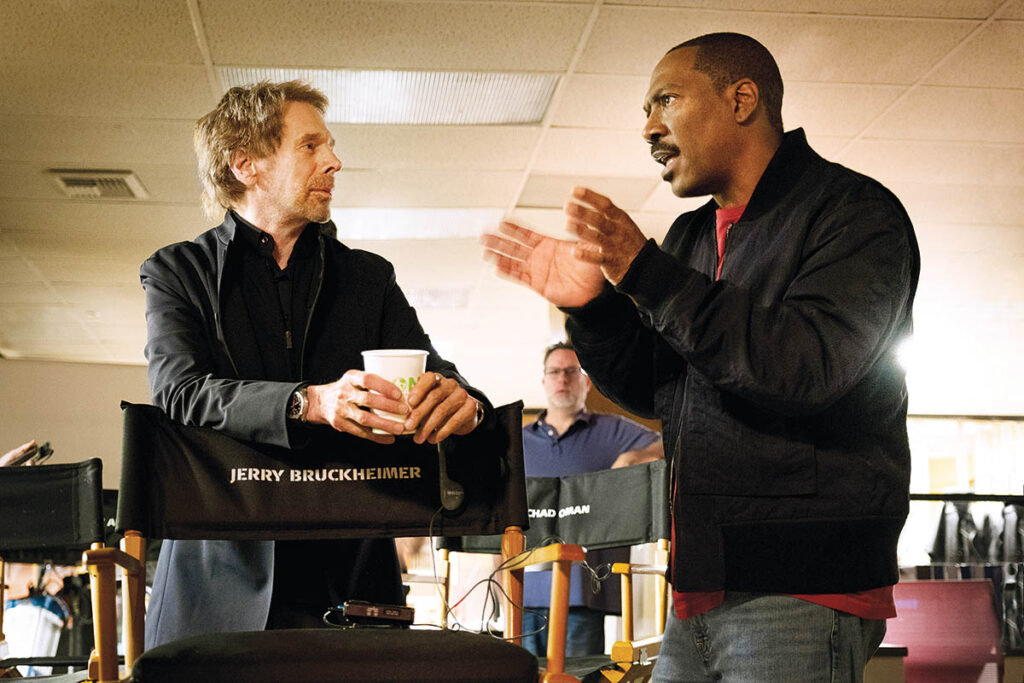
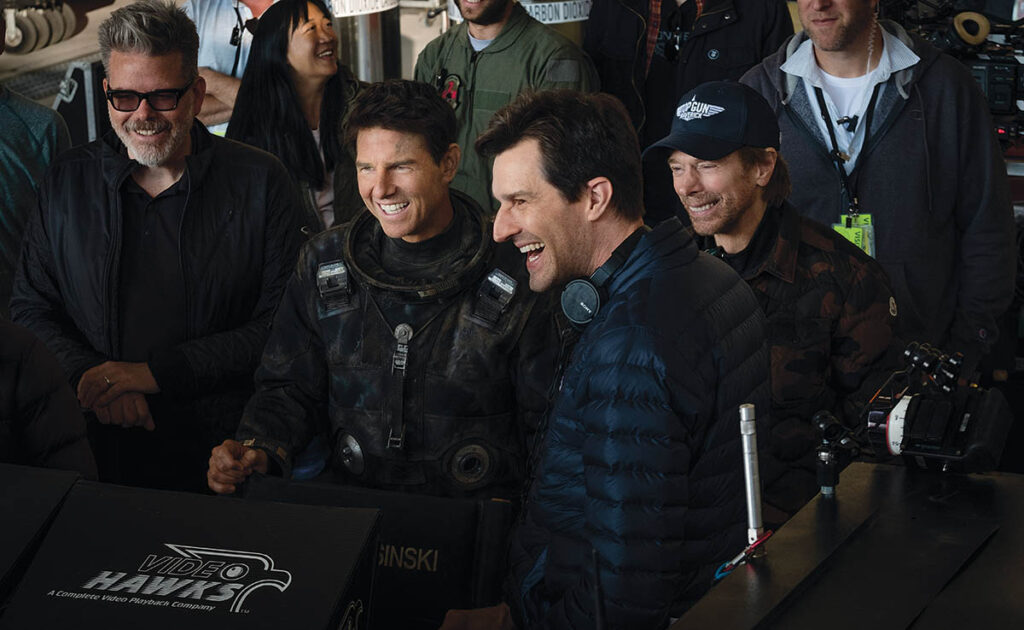
While producing award-winning Pepsi commercials for advertising firm BBDO, Bruckheimer discovered his way into the film industry. “Dick Richards brought me out from advertising. We did some commercials together and had a good relationship. Dick said, ‘I got this opportunity to make this Western at Fox. I want you to come with me to California. I can’t give you much money.’” I always bet on myself, so I took the $10,000, came to L.A., found a place to live, and I haven’t left. I’m still doing it.” Laurel Canyon was a music mecca during the 1970s. “I rented a house where Jim Morrison of the Doors threw a party in and poured all the pot in the fireplace and lit the place up. It was the Go-Go Years. It was the hippies and the bellbottoms. I lived across the street from Alice Cooper and the Monkees.” The further risk-taking led the up-and-coming producer to make American Gigolo his first independent production. “It was a great experience. Paul Schrader is a terrific artist, a great writer and director.”
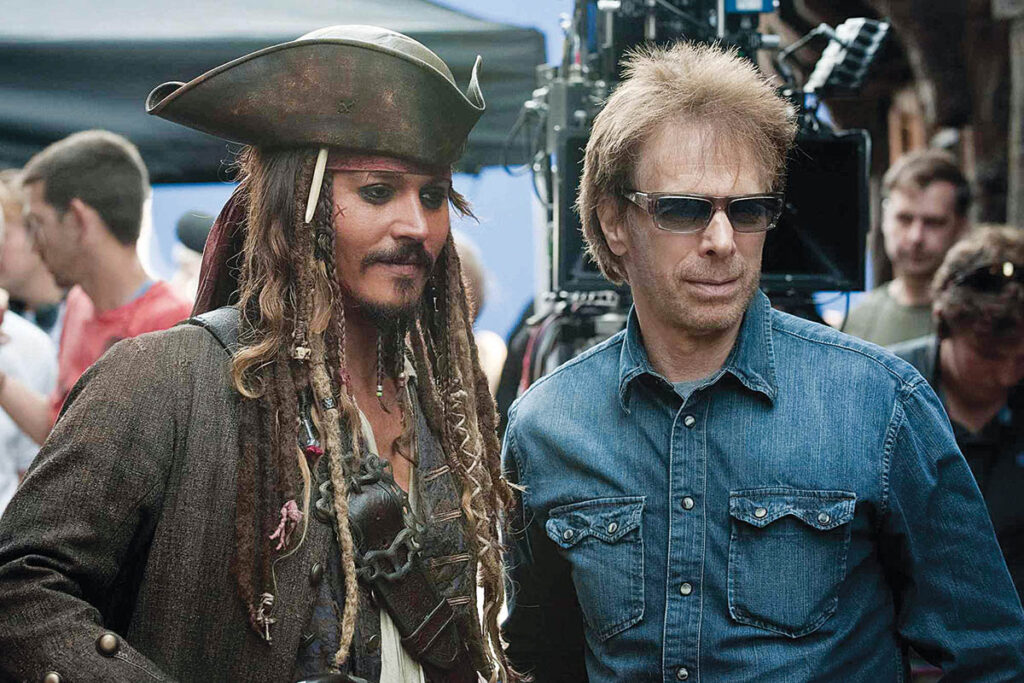
Bruckheimer and Don Simpson had a yin-and-yang relationship that paid off at the box office with Eddie Murphy and Tom Cruise rocketing into the stratosphere of stardom through their signature roles as Axel Foley and Pete “Maverick” Mitchell. “It certainly gave us the kind of gravitas that hit movies give you. Don was a great storyteller and salesman; he was a brilliant guy. I learned a lot from him. Don was somebody who came up with a lot of the ideas for the films; he was words on pages. Don spent his time working on character and story. He would spend weekends and all nights tearing scripts apart. I’m the one who actually had to go out and make it all work once that was done.”
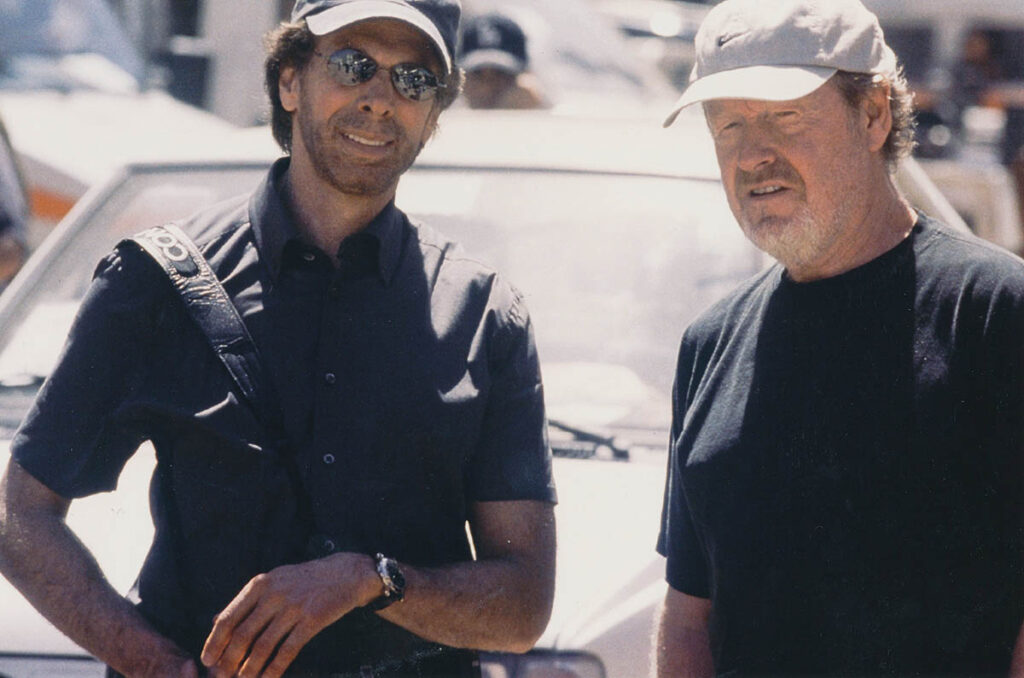
Another influential partnership was with filmmaker Tony Scott and, currently, Joseph Kosinski, both of whom came from making commercials. “I suppose we have similar visions of what we want to do. But we can certainly tell war stories. We all know what it was like making those commercials and the fun we had doing it. No, I don’t think that really has any bearing, although I lean to some of the directors out of that world, because they’re such visual artists, and you have to tell a story in 30 seconds, and that’s really hard to do and get a unique selling proposition out. Those are things that these directors know how to do to stretch it out to two hours, which is where we’re at for most of our movies.”
The criteria for making movies is straightforward. “It’s got to be interesting, unique characters,” Bruckheimer notes. “You want a theme and an interesting plot. I also want to do something different, fresh, or put a different spin on something they haven’t seen before. F1 is that way. We’ve seen a lot of race-car movies, but the way Joseph Kosinski made it, and the craftsmanship between the visual effects and the live things he shot and how they blended everything together perfectly – it’s flawless. It’s seamless what he’s done.”
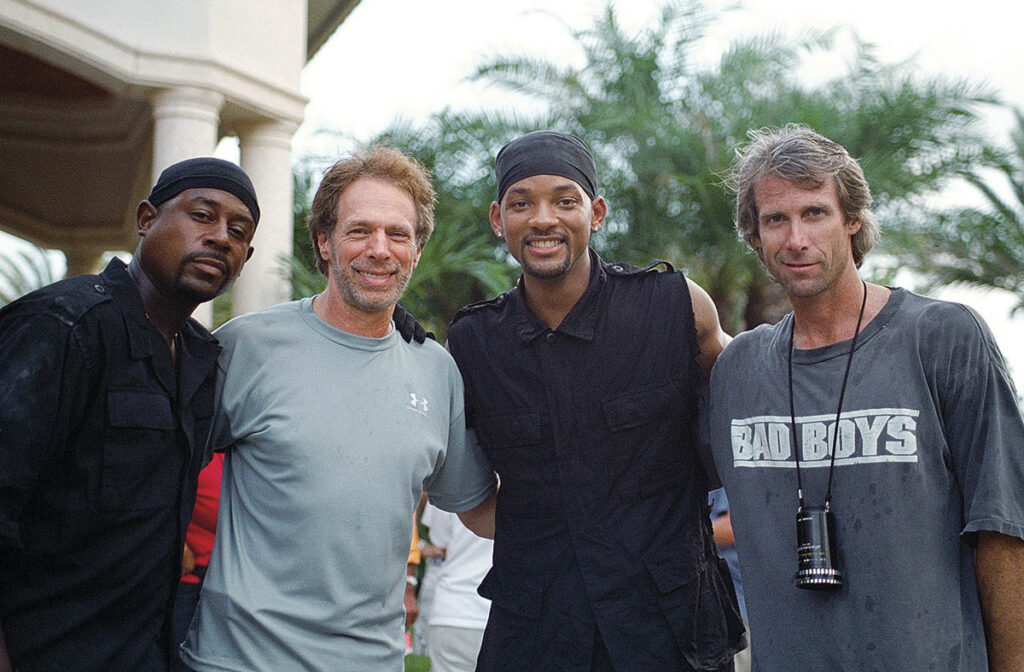
The role of producer has not changed. “A producer’s job is to interpret what the filmmaker wants to do and interpret it in the language that the studio will understand and feel comfortable with. It’s our job to get the best script possible, the best directors and actors, then sell it to a studio and get it made. There are different types of producers. There are producers who are brilliant at setting up movies but don’t want to be on the set. They just move on and set up the next movie. We’re the ones who are usually around and make sure that everything goes the way the director and I had planned it.”
Story matters more than trends. “There’s always a way into something, a genre that you can reinvent, and that’s what Gore Verbinski and I did on Pirates of the Caribbean,” Bruckheimer states. “We reinvented that genre in a fun yet edgy way, and that got the audience excited about that particular movie we made.” Getting the cooperation of the U.S. Navy or Formula One is a negotiation. “You know the certain things they definitely don’t want to happen. You’ve got to make sure that you guide the process away from the things that scare them. The fact is that we’ve been so successful with the Navy and now with F1, and a lot of the stories we’ve told about real people. They still talk to us afterwards and love the movies that we made with them. They’re our partners in it, and we make sure they understand that.”
Success has also been achieved with television, particularly CSI: Crime Scene Investigation and The Amazing Race. “What happened is, it was a cameraman on Cops, and eventually a producer named Bertram van Munster and his wife, Elise Doganieri, came in and gave us this pitch on The Amazing Race, and we thought it was fantastic,” Bruckheimer recalls. “We took it around to the various places, and it was first ABC, then CBS, and God, it’s still going!” Producing television is no different than film. “It’s the same thing. You’re trying to stretch a dollar as far as you can. In movies, you get a few more dollars, but in television, you don’t have much. You’ve got to figure out how to make it work, and the ones that are successful figure it out and get the best people to work with them, then you end up with a hit series.” Certain things need to be taken into consideration. “When you write your screenplays, you have to understand it’s an hour format, and you’re going to have a limited budget.” The viewing environments are not the same for television and film. “People pay to go to the movie, so it’s got to be a little different and special. They can go home, turn on the TV, drink a beer, have a pizza and have their kids running around the house at the same time. It’s a much different way of entertaining an audience.”
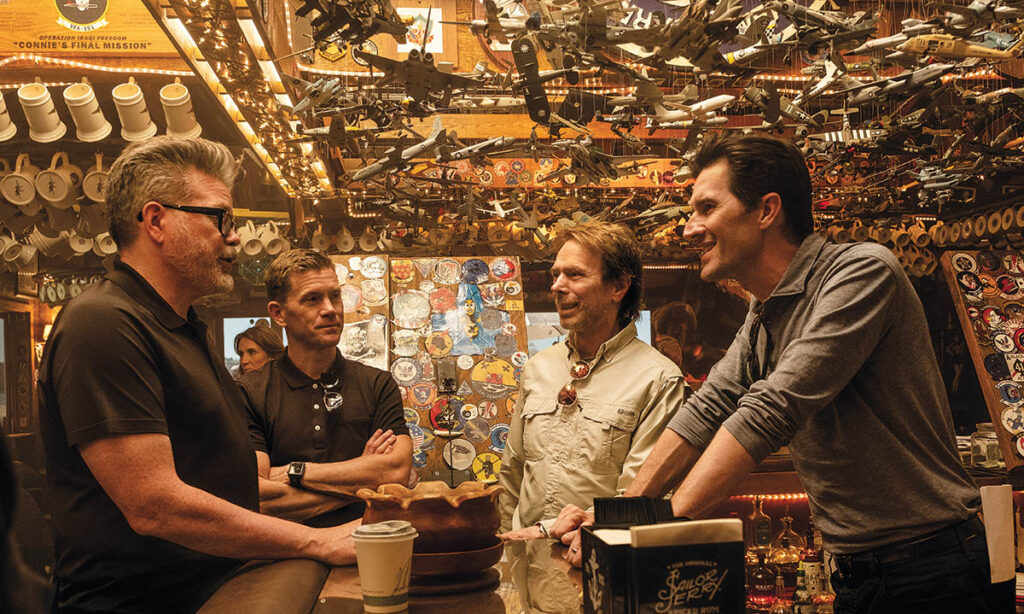
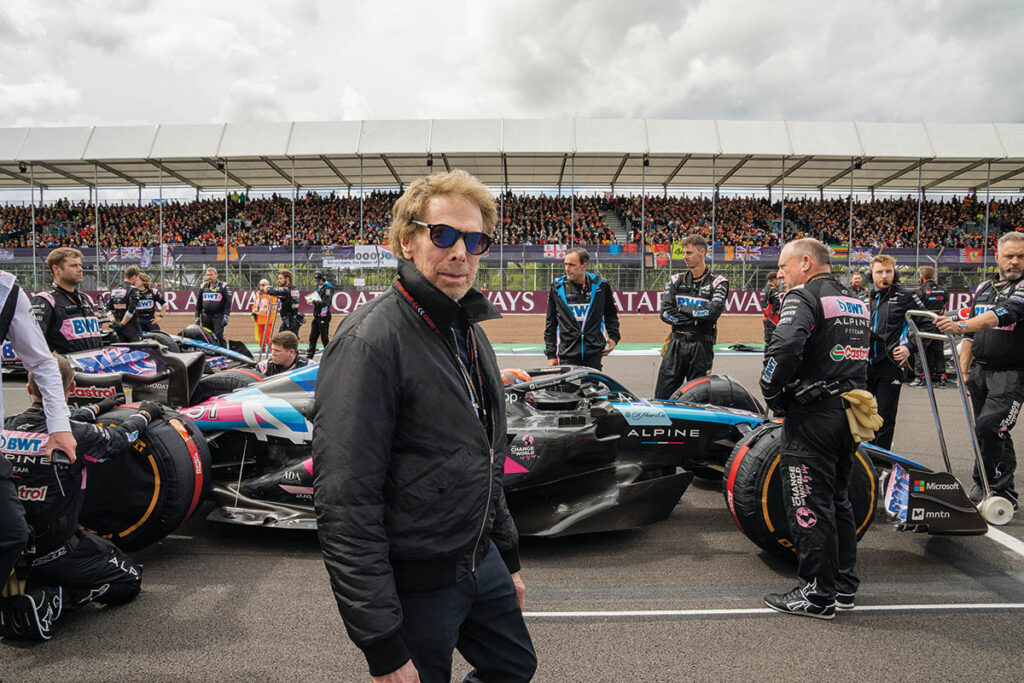
Streaming services have had a significant impact. “Yeah, we’re fortunate that Apple leaned in and decided to do a theatrical release on F1,” Bruckheimer remarks. “That is the only way we’d have made it there. We would have had to do it elsewhere if they didn’t want to give us [a theatrical release]. And it worked out great for them. It’s their highest-grossing movie. It’s Brad Pitt’s highest-grossing movie. It’s the highest-grossing sports movie. Everything that we told them we could do, we delivered to them.” IMAX releases are extremely important. “The grosses on IMAX and the experience for an audience, especially on Top Gun: Maverick and F1, that experience in an IMAX theater is spectacular. We make sure that we have a good IMAX release on a lot of our movies.” Social media assists with marketing. “It’s a useful tool. Let’s put it that way. Warner Bros. did a terrific job, and so did Apple, on using the Internet to let people know that there’s an F1 movie and Brad Pitt is in it.”
Social media reactions are immediate. “There’s nothing you can do about that,” Bruckheimer observes. “You try to hold it to a minimum, but the movie has to speak for itself. They’re not going to listen to just one person. Sometimes, I’ve read audience reviews of movies that they said were terrible, then they come out and become huge hits. You can’t predict what’s going to happen.”
AI and machine learning are not going away. “We use it in a certain way, as a selling tool,” Bruckheimer states. “If we want to sell a project, we’ll use AI to do a reel of what the movie is going to feel or look like. We use it in post-production. I’m sure writers use it as a research tool. The visual effects houses use it. Everybody’s using it. It’s a revolution. It’s like a wave that’s coming our way, and I’m not sure we can stop it.”
Visual effects are a crucial part of the storytelling process. “It’s such an amazing tool,” Bruckheimer believes. “We couldn’t make the kind of movies we make without it. The expertise and things they’ve done over the last 10 years are amazing. I mean, just the things we did in Top Gun: Maverick and F1, I’m sure we couldn’t have done that five, six years ago with the quality we’ve achieved. For me, they’re the magic that makes our storytelling all work. They’re the creators of all these wonderful things that we put in our movies or our writers write. They say, ‘We can’t do this.’ And I say, ‘Yeah, we can. We have people who can do this.’ That’s what the visual effects give us; the kind of tools our directors need to create that magic.”
Even after receiving the VES Lifetime Achievement Award, getting the next film made remains a big challenge for Bruckheimer. “I don’t even think about it. I just do what I do, try to keep making entertainment and put one foot in front of the other. It’s nice that they honor me for a lot of the stuff I have done that people enjoyed and still enjoy. I’m just going to keep doing it. As long as they let me do it, I’ll be talking to you.”