Images courtesy of Lucasfilm Ltd.

Images courtesy of Lucasfilm Ltd.
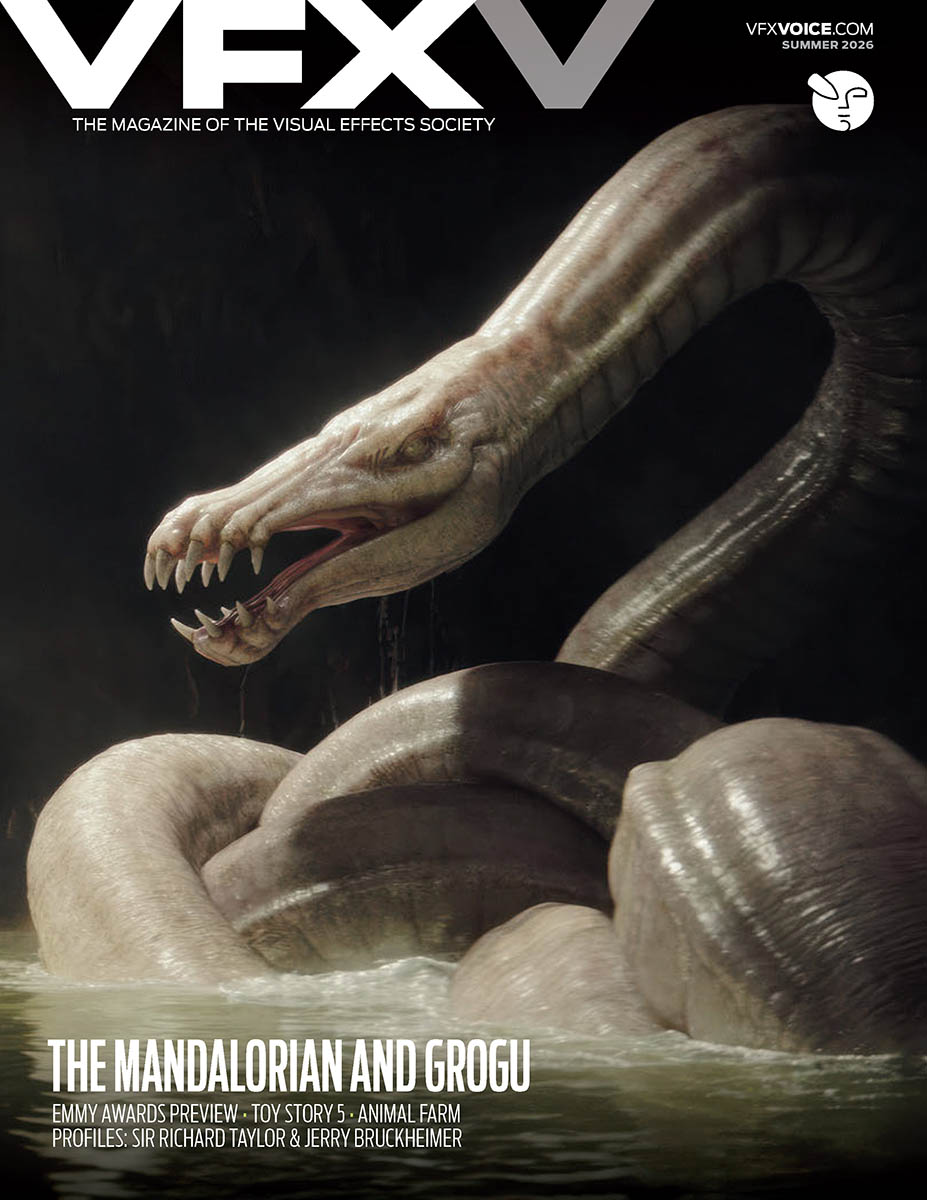
Star Wars began as a cinematic franchise that later adapted to television and streaming, while the Lucasfilm and Disney+ series The Mandalorian reverses the script to appear on the big screen for the first time with the release of The Mandalorian and Grogu.
“I had written Season 4 of The Mandalorian before the strike,” recalls Jon Favreau, producer, director and writer of The Mandalorian and Grogu. “Historically, if you’re able to finish writing before a strike, sometimes you move forward with it; that wasn’t the case this time around. When we came back, the discussion was, ‘Do we have a feature film and does that feature need characters?’ I had to start from scratch. We understand the trajectory of the overall story because this time period has a lot of different interweaving narratives, like Ahsoka, The Mandalorian seasons, The Book of Boba Fett and even Skeleton Crew. It had to account for all of this. And to be honest with you, Ahsoka happening after us changes the way that things unfold. There was a lot that had to be shifted quite a bit, but I had to start with a narrative that lent itself to a two-hour movie. Also, a film has to appeal to people beyond those who are familiar with the show.”
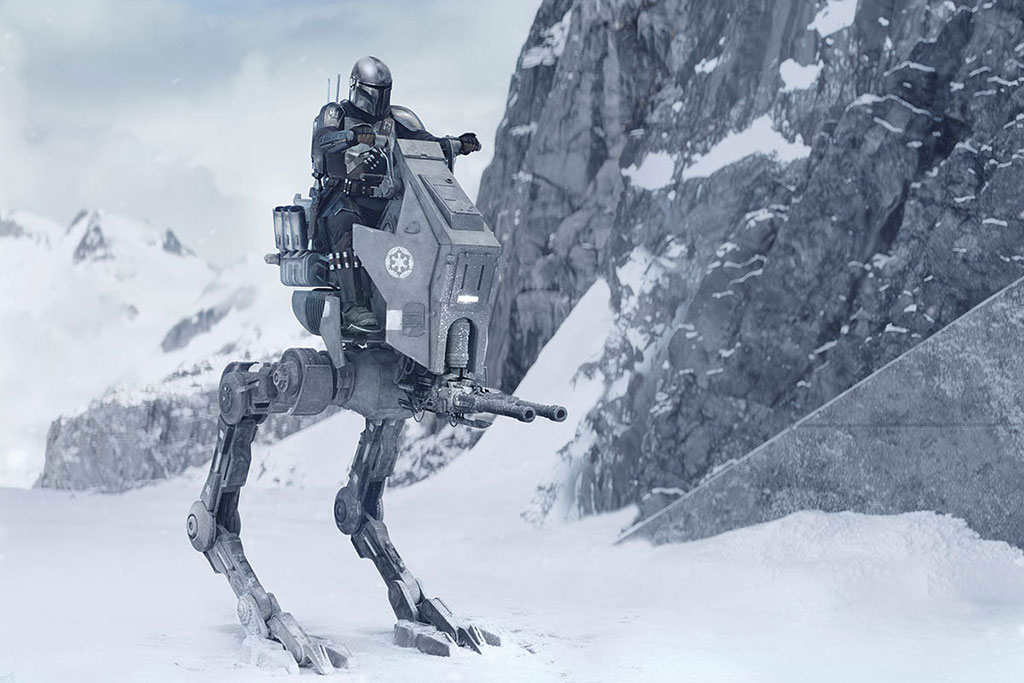
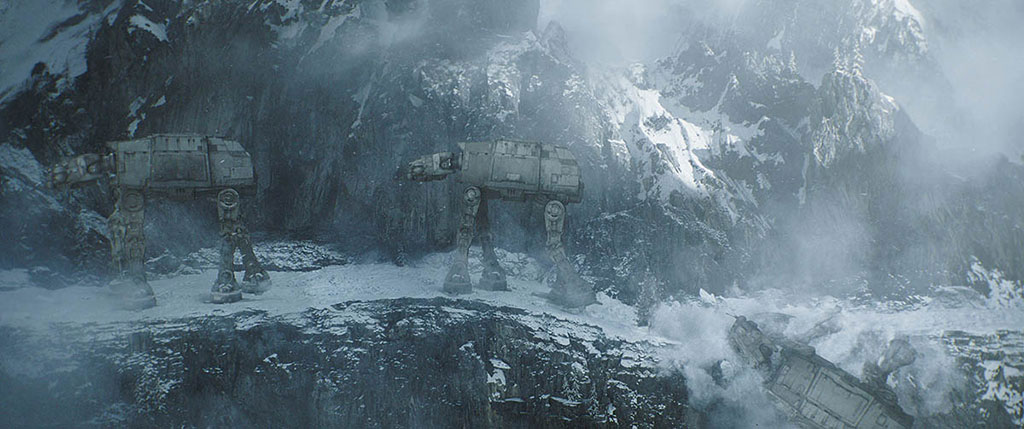
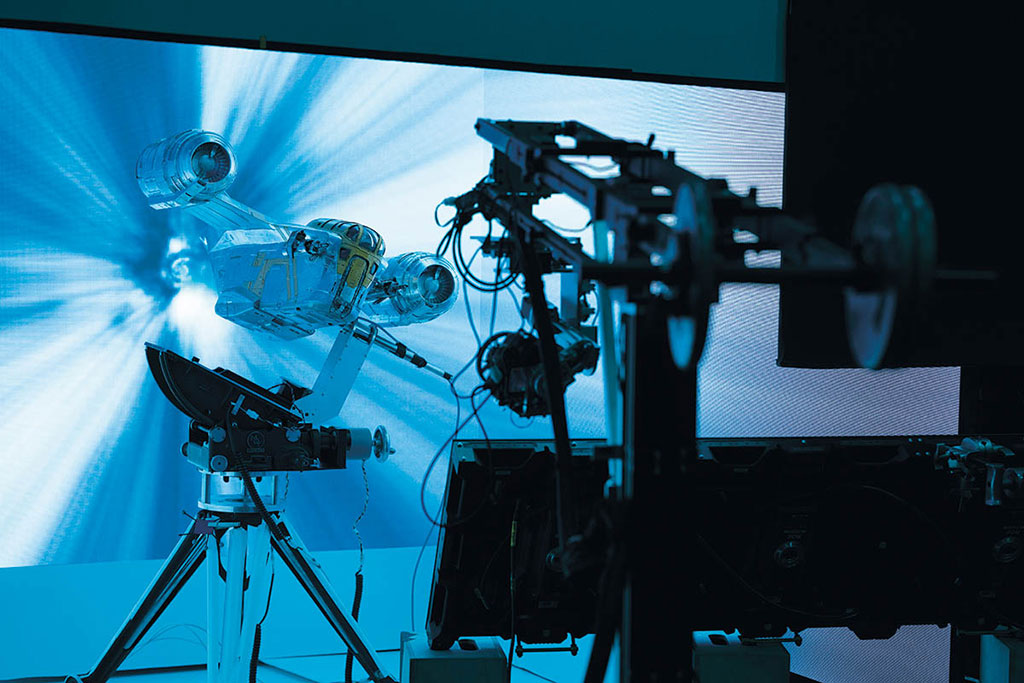
The gold bar for the visual effects had already been established and needed to be surpassed. “Part of what people enjoyed about The Mandalorian was that we were delivering cinema-level effects,” Favreau notes. “And when we had projections on the big screen for things like premieres or fan screenings, it would hold up quite well. We had to take that up a notch and deliver best-in-class VFX on a scale that held up to IMAX projection. That meant taking a much longer time. We would turn around a whole season of a show in less than a year. For this, we had several years. We made sure we locked into what we wanted to do early so we could build sets, create assets and engage with every generation of visual effects that Star Wars has embraced over the decades. On one hand, we have state-of-the-art CGI with beautiful particle, water and fire simulations. But also, we go all the way back to doing motion-control miniatures, building spaceships, and engaging with Phil Tippett for stop-motion sequences in the film as well.”
Apple Vision Pro came in handy during pre-production. “Way back on the early seasons of the streaming show, we started doing virtual set scouts in a VR headset, but one of the different things we were doing was an AR version of that where we were going to do it,” explains John Knoll, Visual Effects Supervisor. “We scouted the SCS Warehouse in downtown Los Angeles for an exterior of the planet Shikari, but we couldn’t use it as it was. We had to dress it with have Star Wars set pieces. We walked it once when we were considering the space. Then [Production Designer] Andrew Jones did a virtual build of the set augmentations we were planning, cladding one whole wall, and adding this element here and that piece there. All of this was loaded into the headset so the department heads could walk around the actual location looking at a half-transparent version of what we’re going to build over the top of it. We could say, ‘This is good, but we’re building this wall out too far.’ It was cool. I like that as a use case.”
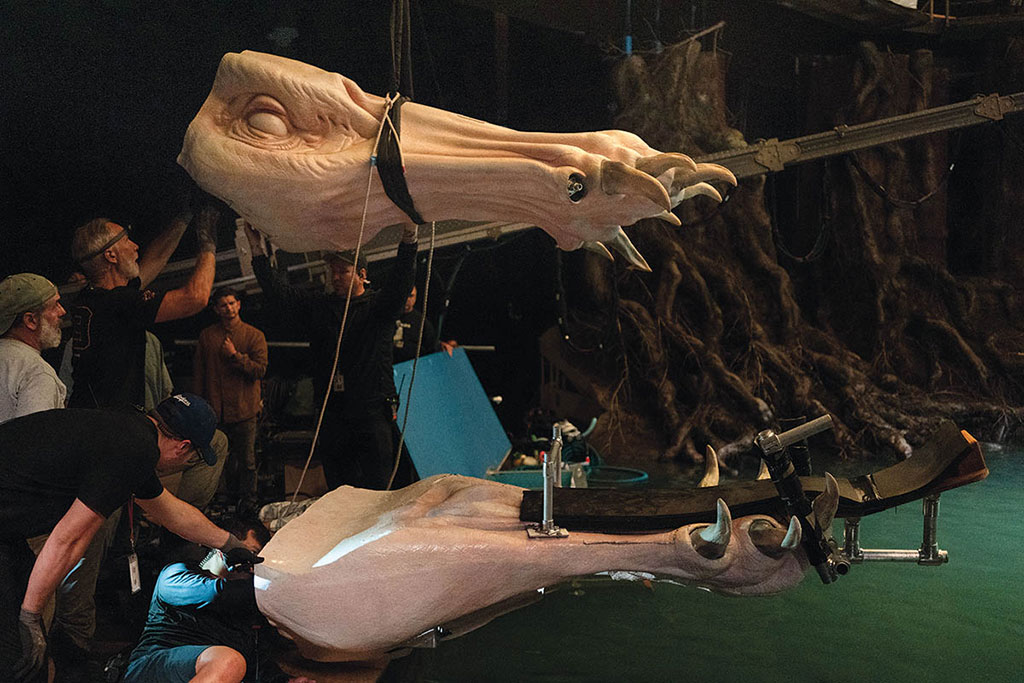
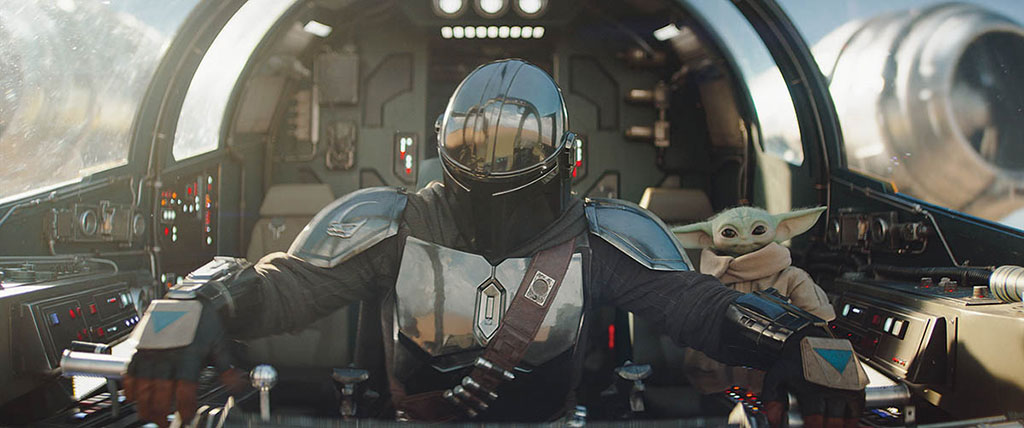
Among the 2,200 visuals effects shots created by ILM, Image Engine, Hybride Technologies and Important Looking Pirates, nothing significant was altered when it came to technology and methodology. “One of the things that was a little new to Jon is we have a fairly short scene of maybe 10 shots or so of the interior of a U-wing,” Knoll remarks. “We had a U-wing set that built for Rogue One and used again on Andor, but for various reasons, it couldn’t be shipped to the U.S. So, we built a simple proxy set with blank walls that were about the right color; we shot on that, then replaced the interior with a CG model that was built from photogrammetry of the original set. In the movie, every time you see the U-wing interior, that’s the CG model with the actors shot on the proxy set. That was something we had done on Rogue One for Raddus’ bridge, the Blockade Runner cockpit and the Hammerhead Corvette cockpit. It worked well and saved the production a lot of money because cockpit sets are expensive, with all the seats, control surfaces, display screens and control panels. I’m pleased with how the shots have turned out on this show.”
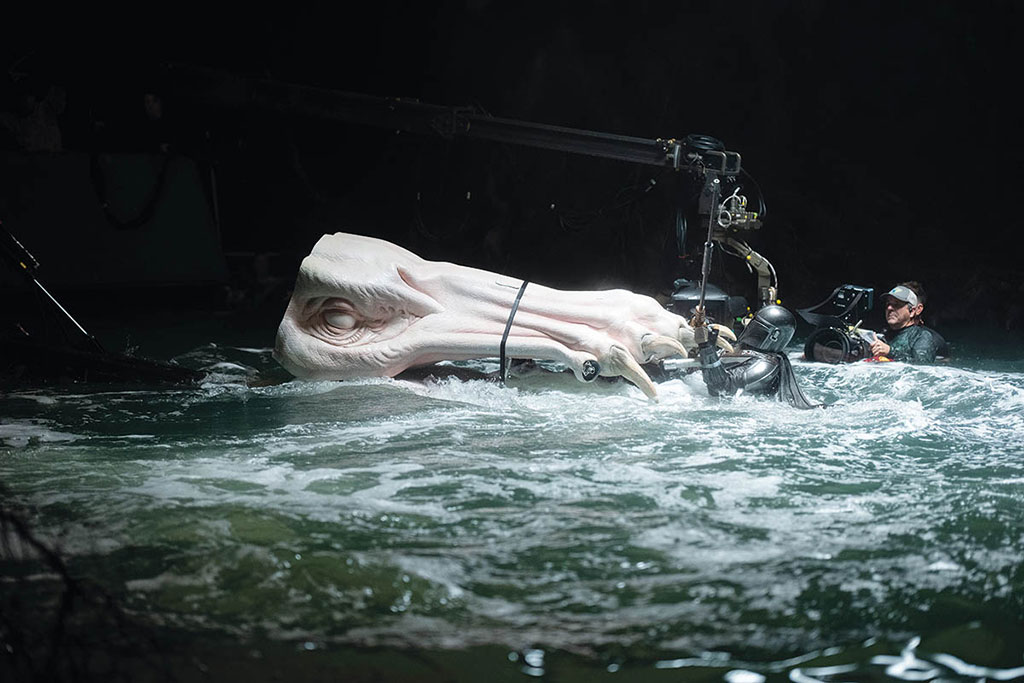
Animators are cast members. “I speak to animators as I would to actors,” Favreau says. “They’re performers. It’s a slower process, but if you watch an animator work, they’re making acting choices. I also try to give notes from the perspective of story because inevitably I hire people who are much better at what they do than my understanding of their field. I tend to express what I’m looking for from a story or emotional perspective. I’ll often give notes of how we should achieve it, but I find it’s better if I explain what I’m looking for, and they help figure out how to solve it through their expertise.” Proving to be the hardest to animate was Rotta the Hutt. “This is a buff Hutt who can fight, is dangerous and can move quickly,” states Hal Hickel, Animation Supervisor. “What does that look like? Even if he’s just walking from A to B in a scene, what does that look like? Is it a big inchworm or slithery? All of that had to be figured out including fighting moves. Rotta also has the second-most lines in the film next to Mando; he’s a sympathetic character that we actually need to care about for the film to work. That was nerve-wracking but fun.”
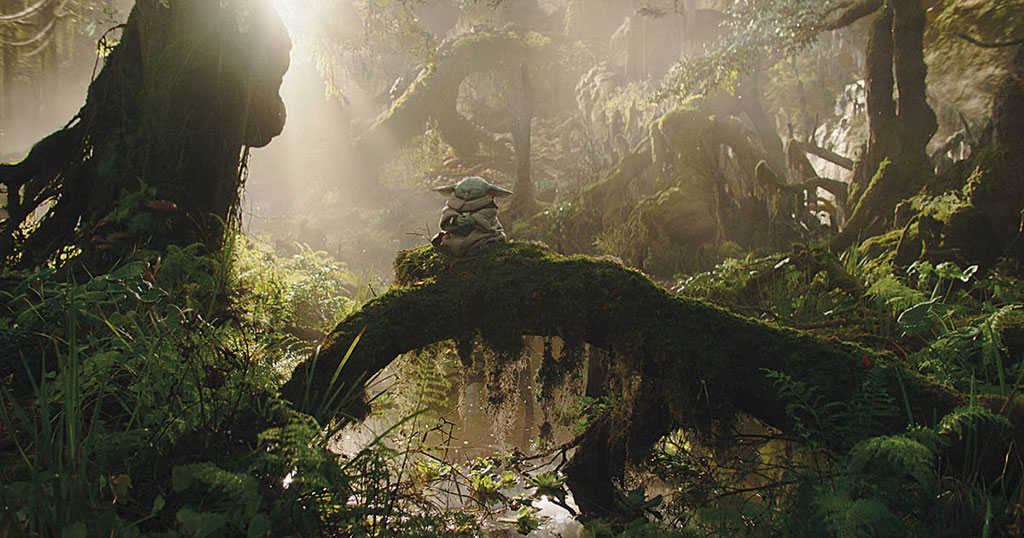
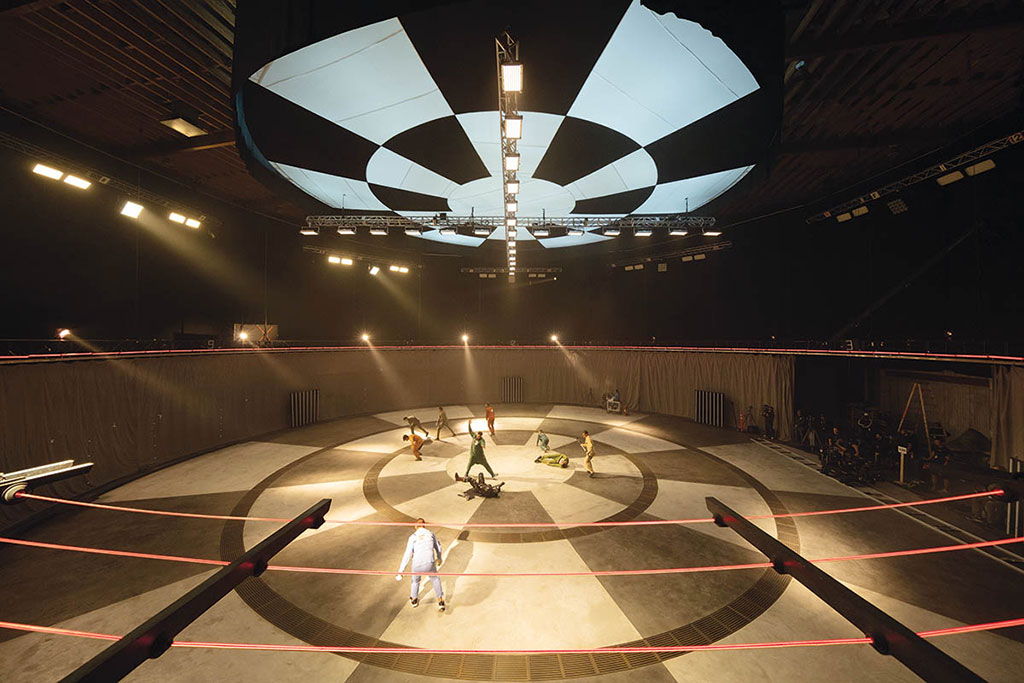
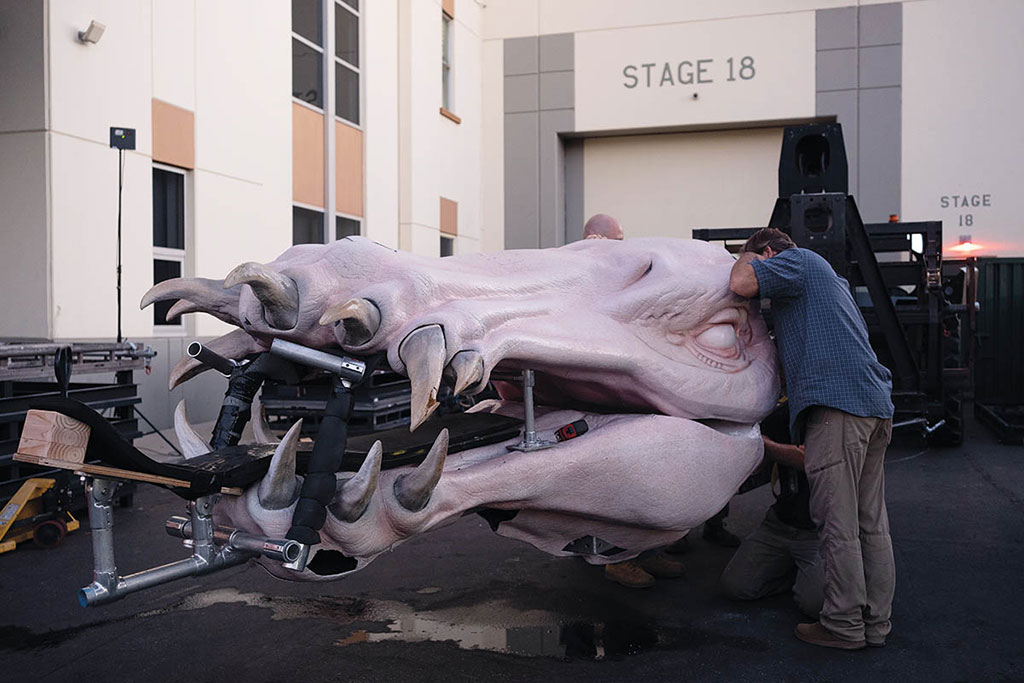
Getting elevated to life-sized are the Dejarik creatures used as holo-chess pieces in the original Star Wars. “It was taking something that had only ever been seen in a simple toy-like form and imagining if the toy represented an actual living, breathing thing out in the universe,” Hickel states. “It’s all about specificity and detail, in terms of the modeling and the texturing; real, definite choices that tell you this is an animal with history, and it’s a species that has various characteristics that you couldn’t see in the little holographic puppets. Does it have scales? No. It has lizard-like skin but fine wrinkles. There are all kinds of weird choices and questions that you have to suddenly start making and asking yourself. Most of them seem like beasts, monsters, creatures or animals, but some of them, like the Mantellians, have a belt and tunic. Does this creature have language? The Monnok has a staff and a weapon. So does Strider, which uses a big stone hammer more like an actual gladiatorial opponent than an animal. But then the K’lor’slug, Houjix and Molator seem like weird alien creatures that are like fighting a tiger or a bear in the ring. We brought up all kinds of conversations and questions about how we animate them and how they act and behave.”
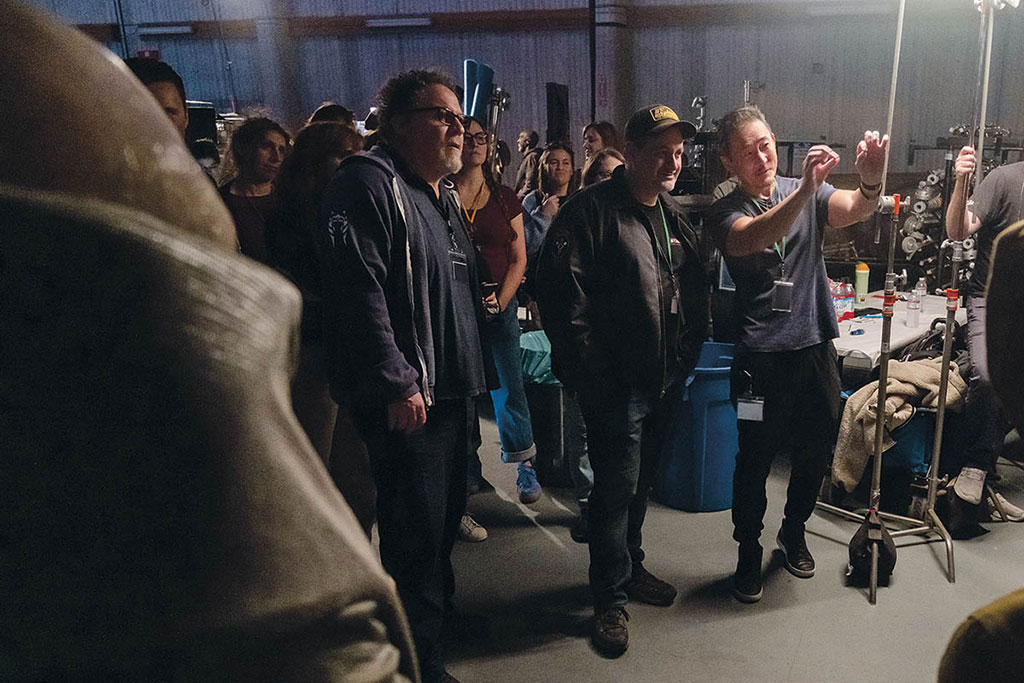
For Hickel, this was a chance to revisit his stop-motion roots. “I put a ton of time into the Tippett Studio stop-motion sequence, and my end of it was helping to beat the sequence into shape,” Hickel remarks. “Initially, we went to Phil Tippett, who did rough boards, which he called his cave paintings. We incorporated those and worked with David Lowery, the head storyboard artist, all the way through The Mandalorian series. We shifted it into a 3D CG previs because, at a certain point, Tippett Studio had built Maya assets of the droids and then 3D printed parts that were attached to the real armature. It proved to be an extraordinarily tough sequence to finesse because it was simple in terms of what toys we had to play with. We had two big droids, one with a club and another with a big gun on its arm, in a relatively confined space, fighting Mando and Grogu. Mando had his disintegrator rifle, but we didn’t want him to use it much because he uses it against Embo in the next scene. We wanted to separate him from the rifle, leaving him with the pistol – which we decided would be ineffective against these big armored droids – and his vibro knife. There was a lot of what I call action math. ‘If we have Mando get in close, maybe this can happen. But if that happens, it would be logical for the other droid to just shoot him.’ I worked closely with editor Dylan Firshein; we would bounce cuts back and forth, play with ideas and show them to Jon, who would give us notes, and then we would go back and reiterate. It warms my heart to see it. I even snuck in there and did one shot!”
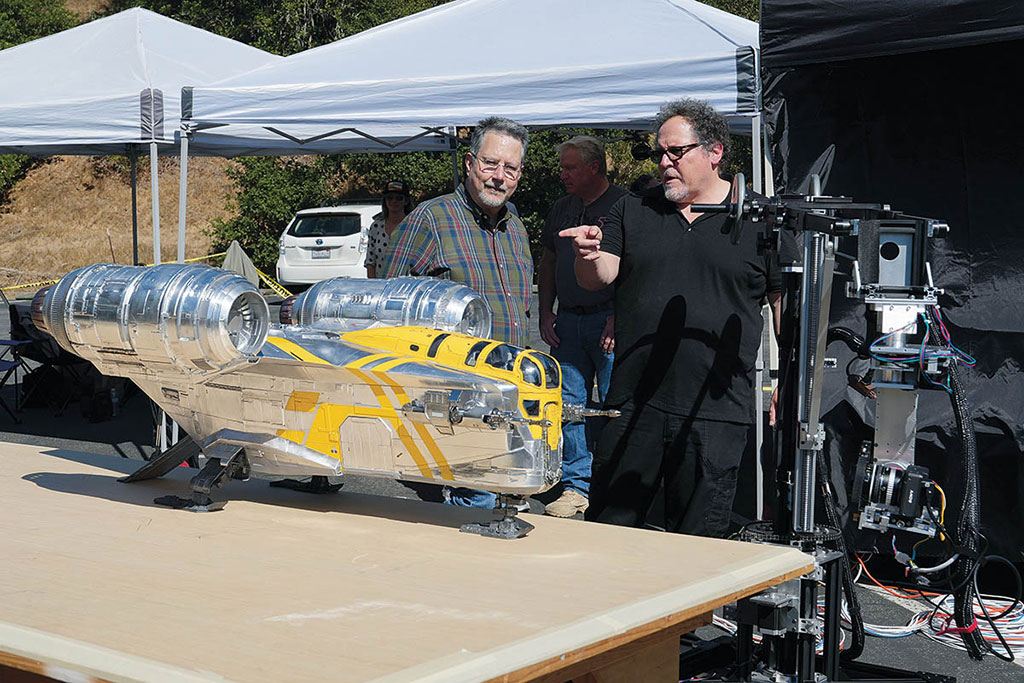
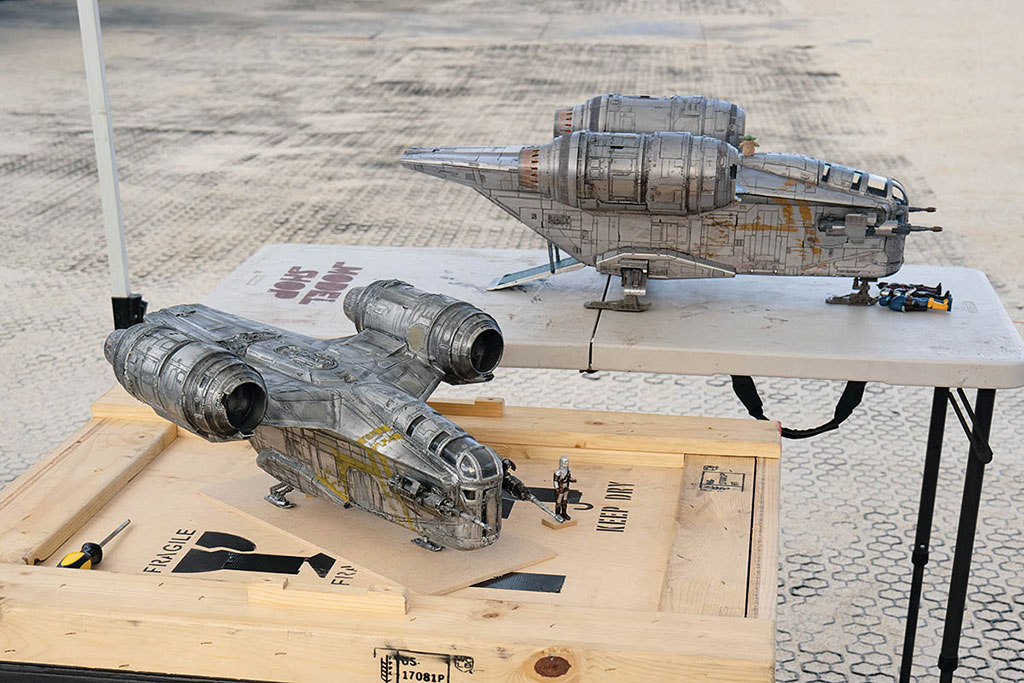
Star Wars fans with a keen eye might notice a nod to franchise history. “We have a scene where part of the New Republic fleet gets involved with an aerial battle, and there are X-wings and Y-wings in that fleet,” Knoll explains. “For various story reasons, the Y-wings that are part of the Adelphi squadron have red stripes on them. John Goodson, our modelmaker, who built the 48-inch Razor Crest, had been doing some work for the Lucas Museum of Narrative Art and mentioned he had done a restoration on the Red Jammer Y-wing model. Apparently, that model was the first Y-wing that ILM built back in 1976 when, in story, they were still Red Squadron and had red stripes on them. They built this model and sent it to England to be the reference for the art department to use to build the full-size exterior cockpit set. The model got damaged on its way back, was partially restored, and recently John Goodson had done a full restore of it. After a lengthy negotiation, George Lucas gave us permission to borrow the model. We shot two motion-control elements of it. It’s in the movie and will go by quickly. Unless somebody points it out, you won’t notice it, but there are two photographed elements of a 1976 original model from Star Wars, which has never been seen onscreen before.”
Connecting emotionally with non-human characters is a staple of the Star Wars franchise. “If you look at R2-D2, it’s not a complex design, and yet I felt tremendously for that character,” Favreau recalls. “To me, that’s the big litmus test: if people can care and feel for characters that are either fully CG or puppets or mechanically built or even stop-motion.” Considering this is the first Star Wars movie in seven years, The Mandalorian and Grogu will enable a new generation of audience members to witness the franchise in its original cinematic format for the first time. “You want to deliver something that is exciting, fun, powerful and compelling,” Favreau believes. “Star Wars aside, you have to make a case nowadays for why people should come to the movie theater. There are lots of other things vying for people’s attention. I grew up loving movies. Whether I was an usher, extra, actor or filmmaker, I have always loved movies, so I want to make sure that The Mandalorian and Grogu creates an experience that makes people want to come to the movies and fall in love with them as well.”