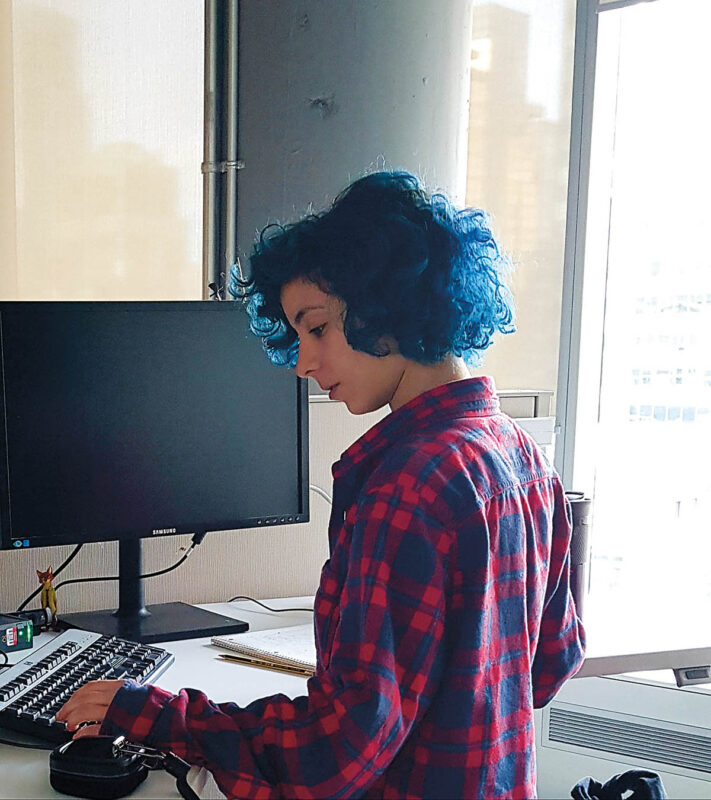
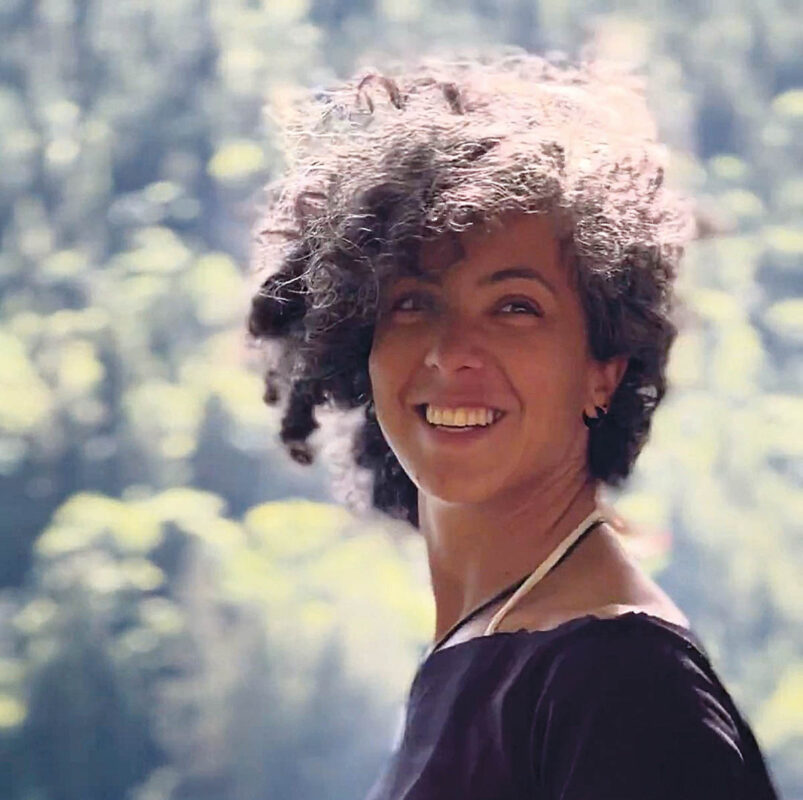

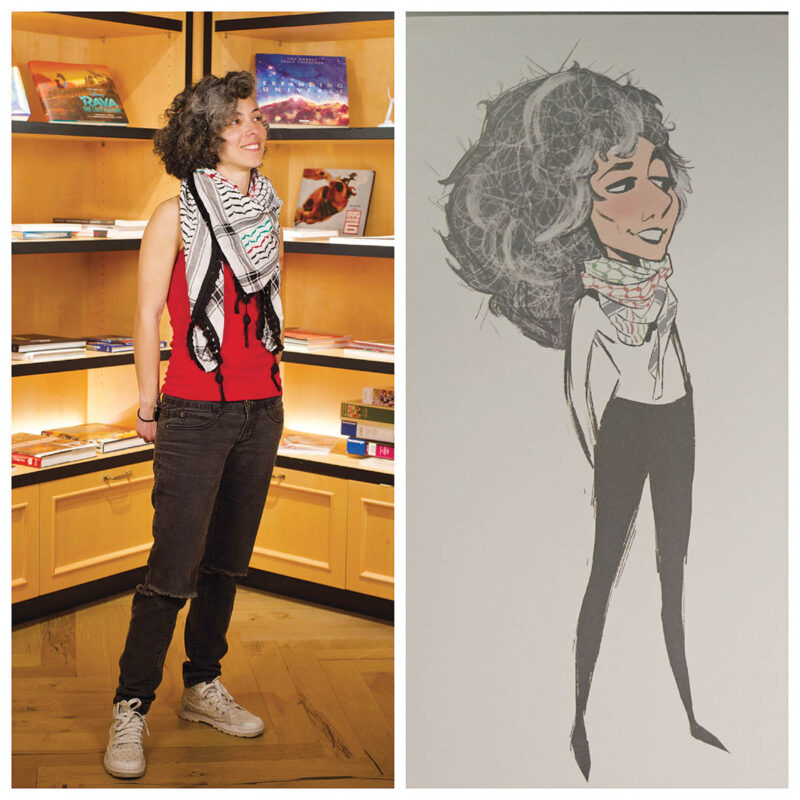
Although animation is not typically the first medium mentioned in relation to the Middle East, Oscar-nominated films such as Persepolis and The Breadwinner illustrate its effectiveness in addressing social issues affecting the region. Among a new generation of artists emerging from the region is Palestinian-Lebanese multimedia animator Alissar Kobeissi, who grew up watching Pokémon, Nobody’s Boy: Remi and Romeo’s Blue Skies dubbed in Arabic on the Pan-Arab television channel Spacetoon, and rewatching Disney and Pixar movies on VHS.
“I remember getting Mulan for my birthday, and I was totally obsessed with it,” Alissar Kobeissi, Senior Animator at Sony Pictures Imageworks, states. “Mulan had everything: culture, real-world issues on gender, humor and creativity. It was cinematically beautiful. I would like to make a movie like that one day.” A fascination with animation led Kobeissi to Académie Libanaise des Beaux-Arts in Beirut, where sheearned a Bachelor’s in Computer Graphics & Interactive Media. There, she learned gouache painting, JavaScript, art history and typography. After witnessing a donkey rotate in LightWave 3D, Kobeissi took an online course in 3D character animation provided by AnimSchool.
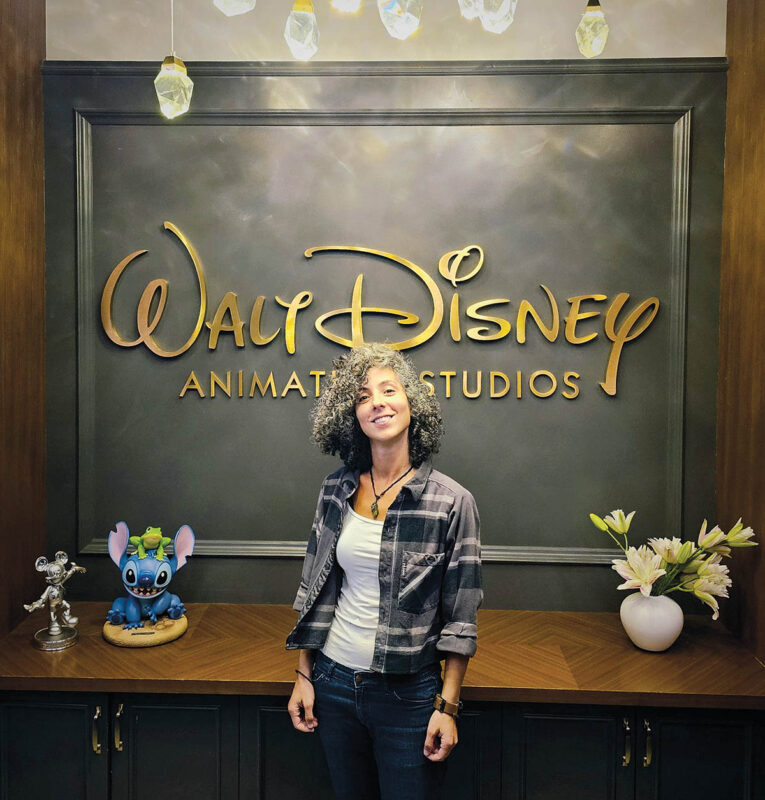
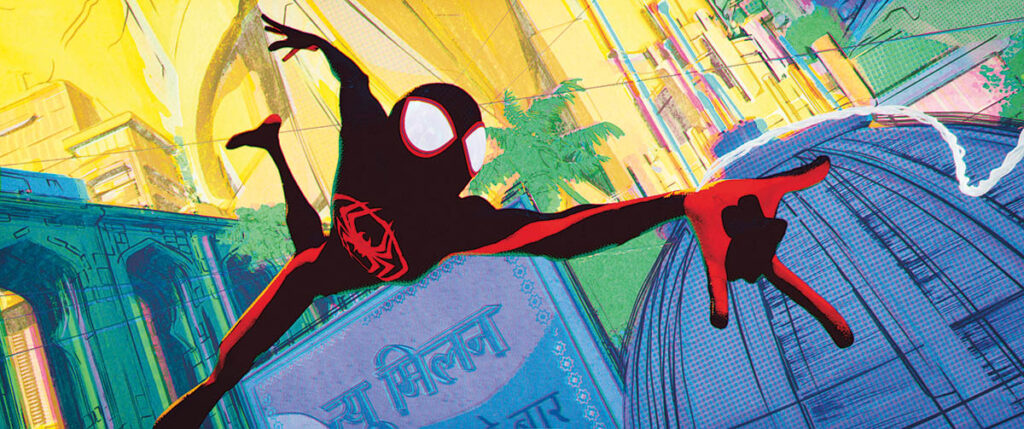
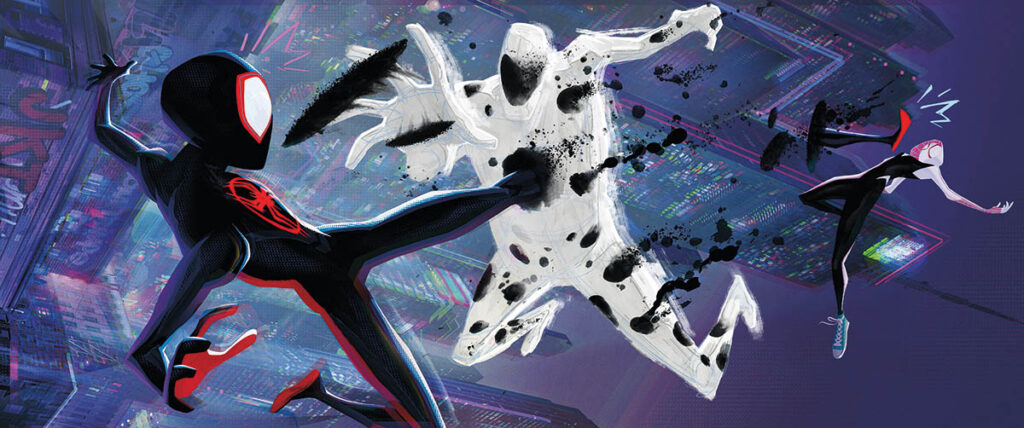
A decade later, the former student would have a full-circle moment when she returned as a freelance instructor. At the school’s Gnomon Workshop, Kobeissi conducted a four-hour animation course titled “Animating Characters for Feature Films,” which explored how to achieve natural performances through personality, character specificity and entertainment. “Teaching allows me to put words to things that have become such an intuitive process,” Kobeissi remarks. “Even though that might sound small, it’s not, because it opens up what collaboration can be.” In addition to working at Sony Pictures Imageworks, Kobeissi has contributed to projects produced by Illumination, Skydance Animation and Walt Disney Animation Studios. “On a broad scale, all of those studios had a similar approach to the pipeline,” Kobeissi observes. “Of course, everyone has their own tools and adapts them to the show that is being worked on. Even within Sony Pictures Imageworks, that changes drastically from show to show. A new department was created to bridge layout and animation because, in the previous Spider-Verse, we as animators ended up doing a lot of layout in our shots. This was to take some of that load off and bring layout into animation, but still not have animators do it in production.”
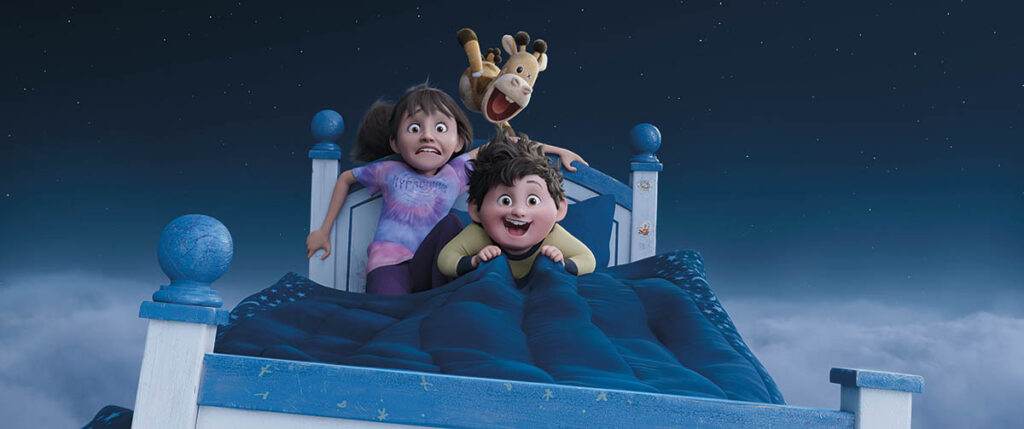
Animation styles have become more diverse as artists blend 2D and 3D techniques. “I have never thought of anime being part of the influence towards those new animation styles,” Kobeissi notes. “It definitely has a role to play because animation is connected across the world. You see where things are growing or where people are getting excited. You try to think of how you can [incorporate] some of these elements into the way you make a film. The comic style birthed Spider-Verse, the game style birthed Arcane, and, in a way, they had a similar result with the 2D/3D. Then anime was also growing in parallel, and KPop Demon Hunters inspired [a more modern, cinematic style blending 2D, 3D and anime]. Forgotten Island is also experimenting with that anime 2D-drawn style on top of 3D, which is beautiful. I can’t wait to see what else comes out of this. We have yet to uncover its full potential.”
Animation’s growing popularity among older audiences has opened the door to more ambitious forms of storytelling. “The most juice for animation in our generation is that now there is more unpaved road to experiment with different stories that we can tell within animation,” Kobeissi remarks. “We are seeing a rise in audiences that watch animation, but also if you talk to teens and animation students these days, they’re obsessed with things like Spider-Verse and Arcane versus what it used to be when I was growing up, which was more Disney and traditional. Also, the understanding of animation is broadening, and people are realizing it’s not a genre but a medium. Both of these [factors], maturing together, allow for more content and greater diversity in stories. Flee is a great example. There is also The Breadwinner. I love it when animation styles are created to serve the story. Animation has the power to tell a difficult or emotional story or [address] real-world issues in a more digestible way for audiences. The Breadwinner has some simple graphics; however, sometimes the story is hard, but it never feels too hard.”
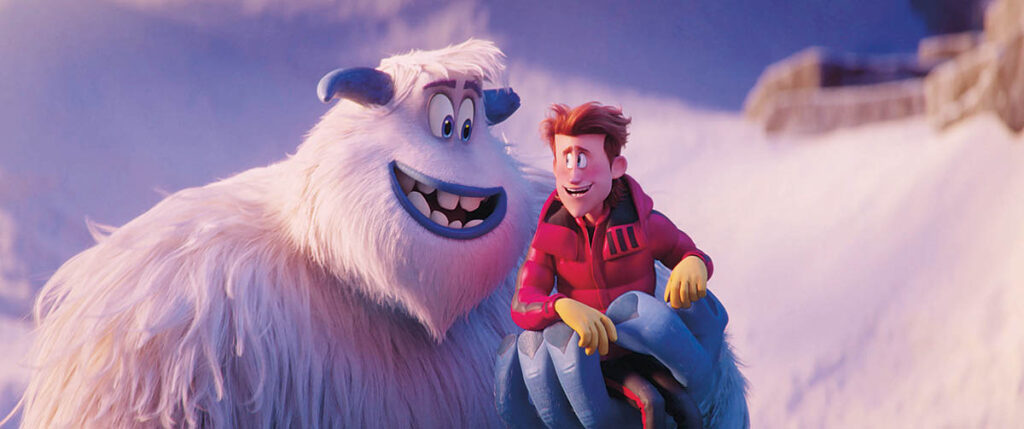
Opportunities to work in animation were limited in the United Arab Emirates, where Kobeissi was born and raised. “For my generation, at the time, I had to leave, and also for personal reasons,” Kobeissi states. “I wanted to live abroad, experience different cultures and work at various studios. However, more and more artists are coming from that region, and more education is happening there as well. I keep up to date with everything through animation festivals. I’m helping to host an animation festival for films made by Lebanese artists called Beirut Animation Nights. There is so much content and such diversity in animation styles, and so many stories and perspectives on what people are thinking about and wanting to express. I’m honestly fascinated by it. Not a lot of that existed when I studied at university in Lebanon.” Her big career break came from perfecting a particular shot that went viral, catching the attention of Kevin Webb, then head animator at Sony Pictures Imageworks (he’s now at Netflix) and Patrick Delage at Illumination. “I came to Sony Pictures Imageworks first to work on Smallfoot in 2018, then I went to Illumination to work on Sing 2, and it flowed from there.” The original interest in animation has evolved into something else. “I used to be drawn to animation styles like 2D, 3D, naturalistic or cartoony. Now I’m into mature storytelling and complex performances.”
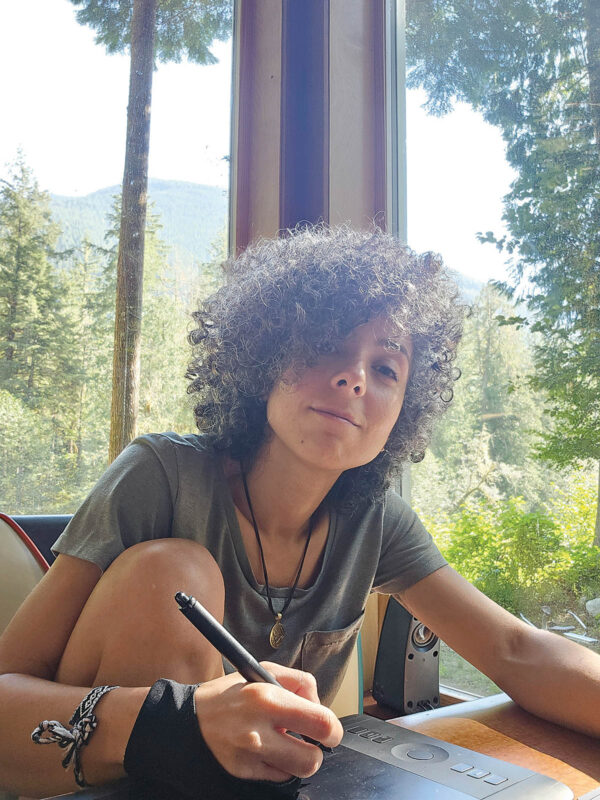
Reference footage is essential in capturing the essence of movement. “We are not capable of imagining these nuances and creating them from scratch,” Kobeissi remarks. “There’s so much detail in the real world that can inspire us. I am one to learn from real life, stylizing it in animation and using artistic knowledge to pick and choose what you want to keep and how to shape it. Then we get to craft the performance on top of a base that is already original and unique to the moment and character.” While tools and technology constantly change, the need to be creative remains constant. “I use the Wacom tablet because it’s the closest thing to drawing, and I do draw thumbnails. Then I draw over my animation reference and poses to push the stylization, the line of action and the shapes to have them more graphic and readable. Even if you’re not a draftsman, you can bring a lot of the artistic tools into your workflow. It makes the performance look a lot better.” The 2D and 3D techniques feed off each other. “The 3D helps to inform the 2D because it allows you to maintain consistency of proportions across the whole film. There are a lot of benefits in limiting a 3D rig in a movie, but then it’s our job to push the 3D rig where we need to push them.”
Dealing with effects-driven characters is always difficult. “I did a VR short film called Reimagined Volume III: Young Thang, which had a character made out of water,” Kobeissi recalls. “Every single acting choice came with a different way that water moved, and it all had to match the emotion and energy of the character. It was ambitious because everything had to be hand-drawn, but it was a great challenge to know how water would move to match acting like a character.” The effects and animation departments work closely together to ensure the desired silhouette and poses are preserved. “We try to guide that as much as possible in the anima-tion department before it goes to effects, particularly if there’s a specific action happening. In a shot I recently finished animating, one character is yelling at another. In one stylistic acting choice I made, the character being scolded has wind flowing through their hair to emphasize the energy coming at them. This is something I indicated in the animation, and then you make sure to communi-cate it across departments.”
The future is bright for animation. “We are starting to break some of the walls that animation was confined within, whether that be stylistically or the types of stories being told,” Kobeissi states. “In a more general sense, we are getting bolder with the types of stories we’re telling, and we can get even bolder. There are numerous important stories out there to tell. We have not tapped into that enough yet. We should not shy away from incorporating real-world issues in terms of entertainment like The Breadwinner or Arcane; if done well, it can have a powerful impact.” Streaming platforms have been instrumental in expanding storytelling and distribution. “We are seeing the de-monopolizing of animation. More countries can be players in the animation world. Netflix, for example, invests heavily in diverse stories, and skills across different countries are rising. Especially around the time of Arcane, smaller studios found ways of making beautiful 3D animation that also utilizes the artistic hand-drawn skill. Blue Eye Samurai came after that. There continues to be an exploration of artistic styles that trickle down to everywhere in the world. I’m seeing it in the short films from Beirut. It is the blend of this openness to culture as well as a strong identity, which is giving birth to so much of the animation potential I’m seeing now in Lebanon.”
Kobeissi adds, “On an artistic level, the skills are rising among the younger generation. Students are getting more of the resources they need and are getting creative in how to use them. They’re making it work!” There is room for improvement. “Something I’m thinking about at this stage of my career is how we can bridge the [gap between the] artist and the story in these big studios a little bit more. As artists, we somehow get disconnected from the big creative decisions made on a movie as well as the story. Breaking out of the animation role into something more creative feels challenging, but there’s something for everyone to benefit from by making some of these barriers more fluid. It is possible. We do it through some of the short-film circuits the big studios have, but unfortunately we are not doing much of that anymore. There is something that we can do in that area.”