

The economics of visual effects seem to be changing by the minute. Tax incentives, tech advances, remote pipelines and AI efficiencies have reshaped how VFX work gets bid, staffed and delivered. Margins are thin and the competition is fierce, played out on a global scale. The companies still standing are acutely aware of many factors in flux, including national and state incentives.
“In the current landscape, tax incentives are no longer just a ‘bonus’ at the end of a project; they are the financial architecture that determines where and how we work,” comments Sudhir Reddy, President, Global VFX Business at Digital Domain. “Over the last decade, we’ve seen the industry shift from a centralized model to a territory-first strategy. But for a studio to be successful now, it’s about more than just chasing the highest rebate. It’s a balancing act. We have to strategically align our global footprint– utilizing high-yield regions like Canada, the U.K., Australia and India – while ensuring we are still tapped into the top-tier talent pools in those locations.”
Ultimately, incentives have reshaped the bidding process. Reddy notes, “We now integrate fiscal logic into the creative conversation from day one. It’s not just about [whether we can] build this creature or environment. But where can we build these most sustainably for the client and the studio? In 2026, tax geography is just as critical as creative capability.”

“Incentives have definitely helped to build out the Canadian industry, as the economics of making films is vital to the producers and studios,” says Dave Sauro, Executive Producer at MR. X, based in Toronto. “It’s no secret that the federal and provincial tax credits Canada has offered over the years have been a major draw for international productions, and that’s what allowed us to grow and develop world-class talent here at home. Without those credits, a lot of that investment flows elsewhere. What’s changing now is that the incentive landscape is getting more competitive globally. The U.K., Australia and European jurisdictions are all actively fighting for the same productions.”
“Tax incentives have become a major factor in bidding and resource planning, requiring us to be more strategic about where work is executed and how we leverage regions such as the U.K. and other incentive-friendly territories,” comments Måns Björklund, Senior Executive VFX Producer and Head of Sales at Important Looking Pirates. ILP has offices in Stockholm, Hamburg and London, and is owned by Dream Machine FX, which owns several other studios.
“Tax rebates and other incentives have had a major impact on the VFX industry,” says Chris Jones, Founder, ECD and Director of Zoic Studios, based in Los Angeles. “In a world of generating high-level creative for a price, the studios lean very heavily into areas where they can get more done for less. Canada as a whole, and B.C. in particular, has become a bastion of cost savings, between tax incentives and favorable exchange rates. That, coupled with a large pool of very skilled talent, makes it incredibly viable to move work into these regions. We’ve become a global industry, allowing studios and VFX companies alike to leverage different countries and cities to benefit both ourselves as well as our projects.”
“If your strategy is to hold your position and outlast the disruption, the margin picture will keep getting worse. If your strategy is to lead the disruption, the opportunity is significant.”
— Sébastien Bergeron, CEO, Pitch Black
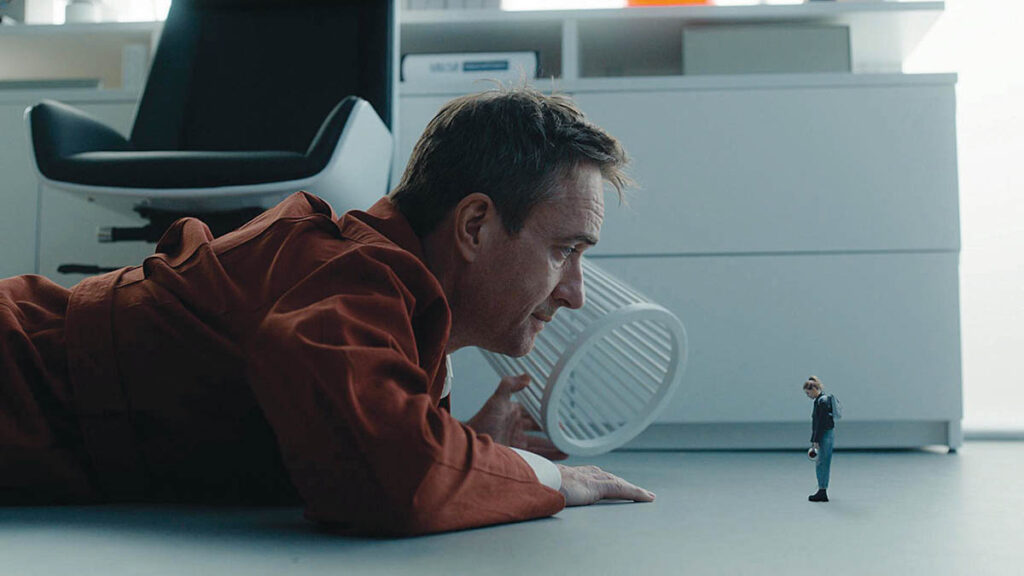
“Tax incentives were genuinely transformative for the industry – they reshaped where work was done and accelerated the globalization of VFX production in ways that would have taken decades otherwise. But the landscape has matured,” comments Sébastien Bergeron, Chief Executive Officer of Pitch Black, a global house that brings together FOLKS, Rising Sun Pictures, Square One and El Ranchito in a total of 14 locations. “Most jurisdictions have now converged around similar percentages and conditions, so the gap between them has narrowed considerably. What’s driving financial differentiation today is currency exchange rates and cost of living in specific cities – those variables can move the needle more than a rebate differential.”

CALIFORNIA 4.0
Sauro thinks the California Film & Television Tax Credit Program 4.0 – expanded under Assembly Bill 1138 in 2025 – may help the Golden State. “There’s a genuine cultural and creative gravity to L.A. that the industry has missed, and I personally hope they can get back on track to being a leading production hub across all aspects of production,” he says. The film/TV industry in Los Angeles is competing with many locations offering rebates and other incentives, including states such as Georgia, New York and New Jersey, as well as international markets. Jones notes, “The California incentives are having a very positive impact in bringing work back to L.A. Over the past year at Zoic Studios, we have had multiple projects requiring the work be done here [in California]. It’s great because over this time, we have seen a mass migration of artists into other industries, and it’s nice that many of these artists are returning as a more stable flow of work remains within the California community.” Digital Domain’s Reddy comments, “I believe California’s expanded incentive programs could reshape production locations. Early signs suggest it will help bring live-action production back to the state, creating VFX opportunities. We are closely observing how the change will help our U.S. operations and talent strategy.”
Jones notes, “The challenge, of course, is talent. Although many countries offer incredible cost savings, these areas are often in an infant stage of creating a vibrant visual effects industry and can get overwhelmed quickly with a large volume of work. After all, it’s relatively easy to create a visual effects company now, but [it] will only be as good as the artists who create the work.”
“What’s equally important is that certain regions have built something harder to replicate than a tax credit: a genuine ecosystem,” comments Bergeron. “That means strong schools feeding into the industry, established networks of artists, cloud rendering infrastructure, scalable workforce models and deep pockets of specialized expertise. The real competitive conversation has shifted away from incentives and toward creative bench strength – the quality of the work, the depth of the talent and the experience of working with a studio day to day.”
WORKING FROM ANYWHERE
Remote work is another factor in the new economics. “Remote pipelines were already being explored before the pandemic, but COVID accelerated that adoption by roughly a decade, practically overnight. We proved as an industry that the work can be done from anywhere, and that has genuinely changed how we think about staffing and where talent can live. The flip side is that clients now have a much broader pool to shop work to globally, which only adds to the competitive pressure we’re all feeling,” MR. X’s Sauro notes.
“Remote pipelines have matured significantly, giving us access to talent regardless of location and allowing teams to scale more flexibly around project needs,” comments ILP’s Björklund. Reddy explains, “Our remote pipelines, established during COVID, have now become our standard operating procedure and continue to influence our bidding and staffing strategies.”

Remote pipelines can also cause complications. “Remote pipelines give a company a great deal of flexibility in hiring the right artist for the job, but it also means that those artists may or may not be located in a tax rebate area,” Jones says. “New York has this challenge. Many artists who would have qualified for the New York tax credit when they were coming into the office now don’t because they actually live outside the area, say in New Jersey, which has a different tax incentive.”
AI AND VFX
AI is also changing the VFX landscape. “We could spend all day talking about how it is currently impacting production and will eventually impact production going into the future, but the top level is, AI is a powerful tool that will always need true artists to guide the creative process,” Zoic’s Jones says. “Those embracing it now will have an advantage in the future because it will become a larger part of our production workflow, but it won’t replace artists any more than computers did when we started to use them to create CGI. The world evolves, and we all must adapt, but art will always need artists to bring a vision to life.”
Reddy comments, “While tools for tasks such as rotoscoping, clean-up and simulation have increased per-artist throughput, we remain committed to ensuring client awareness and approval before these tools are utilized. Because AI usage is determined on a case-by-case basis, we are re-evaluating our bidding process for instances where AI-assisted tools [shorten] timelines. As an industry, we are still navigating how to balance these efficiencies between maintaining margins and providing cost savings to clients.”



“Right now, most of our competitors are genuinely scratching their heads on how to bid for AI-driven workflows because those workflows are being invented in real-time,” Bergeron comments. “Clients expect solutions that don’t compromise a filmmaker’s ability to control every detail of the image in service of their story. The most common mistake I see is studios overpromising at a low price point that assumes full AI execution, then having to pivot to traditional CGI mid-production with a fraction of the budget left. That’s a painful and avoidable position to be in.”
“AI is beginning to improve efficiency across a range of tasks, helping artists spend less time on repetitive work and more time on creative problem-solving,” Björklund says. “At ILP, we’ve traditionally embraced a generalist mindset, and we believe that approach becomes even more valuable in an AI-enabled future. Rather than moving toward a larger assembly-line model, we see artists taking greater ownership of their shots, using new tools to handle a broader range of tasks and focusing their expertise where it creates the most creative value. The result is a leaner, more agile production model that still prioritizes craftsmanship and quality. AI won’t replace great artists, but it will empower artists who can think holistically, adapt quickly and take greater ownership of their work.”
STAYING PROFITABLE
“I feel the studios that are nimble, with manageable overhead to carry them through the lean days, are in a more favorable position,” MR. X’s Sauro notes. “We’ve seen some of the bigger studios unfortunately not find a way through in this post-COVID landscape of smaller shows, fewer productions and more modest budgets. The economics of a sprawling multi-city operation are just harder to justify when the volume isn’t there to fill it. Margins are thin across the board. The studios that are holding up are the ones that right-sized early and kept their fixed costs in check.”
Sauro continues, “Beyond that, it comes down to not overextending. Studios that chased growth aggressively during the boom years found themselves with infrastructure they couldn’t sustain when the market corrected. The quieter, steadier path of building a lean, high-quality operation is a less exciting story to tell, but it’s the one that survives.”
“We maintain a disciplined approach to bidding and contract structure, ensuring our capabilities are rigorously defined upfront,” comments Digital Domain’s Reddy. “We leverage our unique technology and legacy to deliver high-quality work that justifies premium rates. The shops getting squeezed are mid-tier facilities without the balance sheet to invest in pipeline infrastructure or the negotiating power with studios to meet budgets,” he explains. “Given the declining production budgets across the studios, which have been under pressure – that’s not a secret. The combination of fixed-bid contracts, work scope increases and the cost of talent in competitive markets has made this a difficult business to run profitably at scale. What’s changed is that the conversation about margins is now happening more openly – with clients and with our own teams.”
Pitch Black’s Bergeron notes, “The history of visual effects has always been about innovating to meet challenging timelines and budgets – and that’s still exactly what’s being asked of us today. What’s different is the pace. An entirely new set of tools and workflows are shaping simultaneously, and the acceleration is real. The studios that are winning are the ones moving fast: adapting quickly, mastering new capabilities and staying focused on what has never changed – creating beautiful images that elevate a story. The ones getting squeezed are those waiting for the industry to return to what it looked like five years ago. It won’t. If your strategy is to hold your position and outlast the disruption, the margin picture will keep getting worse. If your strategy is to lead the disruption, the opportunity is significant.”


SOMETHING’S GOTTA GIVE
“VFX has historically been a low-margin business, and budget pressure has only increased,” Björklund says. “The reality is that long-term success depends on creating a more sustainable ecosystem for everyone involved – not just vendors, but also studios, VFX producers, supervisors and artists. Better planning, realistic schedules and stronger partnerships between clients and vendors will be critical if we want to maintain the level of creativity and craftsmanship audiences expect. Ultimately, the goal shouldn’t be to extract more from the system, but to build a healthier and more resilient one.”
Reddy notes, “The primary challenge in our industry is the growing gap between expectations and reality. There is an expectation of high-end visual effects on lower budgets and tighter schedules, yet the costs for senior talent, technology and infrastructure continue to rise. Something must change. I hope we, as an industry and production partners, have a more honest discussion about the true cost of visual effects and the significant value they contribute to the final product.”