

The future of visual effects will not hinge on a single breakthrough. It’s being assembled – tool by tool – inside the pipeline. Some of these tools accelerate the work. Others change it entirely. Most do both, often before the industry has time to fully absorb the impact.
AI may be the headline, but it’s only part of a broader shift. Real-time engines, virtual production, cloud workflows and increasingly intelligent systems are converging into a new kind of toolkit – one that compresses timelines, expands possibilities and shifts who holds creative control.
We asked a group of VFX artists, supervisors, technologists and others in the VFX and AI ecosystem to identify the tools they believe will shape what comes next. Their answers reveal an industry moving faster than its own definitions, where the future is already in use.
Elizabeth Willaman, VFX Producer, Los Angeles
“As a Producer, regardless of any specific ML/AI tool, what I’m watching for is the time and money that using a tool saves the vendors, which, in turn, also saves the studios. Can it compress the schedule? Can it reduce change orders, or even eliminate the need to reshoot a missing plate? Traditional VFX vendors are already well underway with deepening their hybrid ML/AI pipelines, and this will keep accelerating as tools change.
“What’s incredibly interesting to me is that alongside this, a new generation of GenAI-native studios is emerging. They never had our pipelines to begin with, which means they’re using these tools, but answering those same questions about time and money from a completely different starting point. Both are real. I’m paying attention to both.”
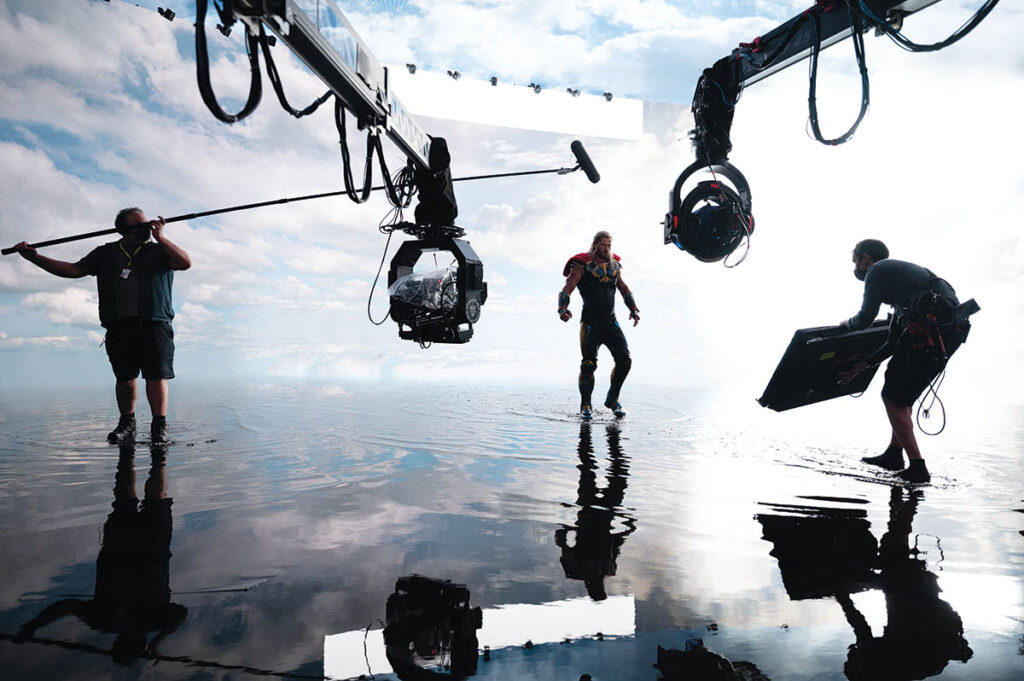
Rob Bredow, Senior Vice President, Creative Innovation, Digital Production & Technology, ILM, San Francisco
“When I look at where our workflows are heading, I’m most interested in the evolution of art-directable machine learning. When you work with amazing artists, they already have a precise picture in their minds of what they are creating. The best innovations I’m seeing right now are ML tools that act as assistants – filling in the complex details in real-time as an artist draws, driven entirely by artistic choices rather than random generation. By letting these responsive algorithms handle the technical heavy lifting, I hope we can empower teams to do what they do best: focus their energy on storytelling, problem-solving and creative expression.”
Mark O. Hammond, VFX Supervisor, MR. X, Toronto
“The most meaningful shift I’m seeing is AI reducing friction in the production pipeline. Less time hunting for data or toggling between asset management tools, more time working on shots. Departments like rigging are a good early indicator – as the simpler foundational steps get automated, artists can build more sophisticated rigs faster. What won’t change is the need for creative problem-solvers at the top of whatever toolset comes next.”
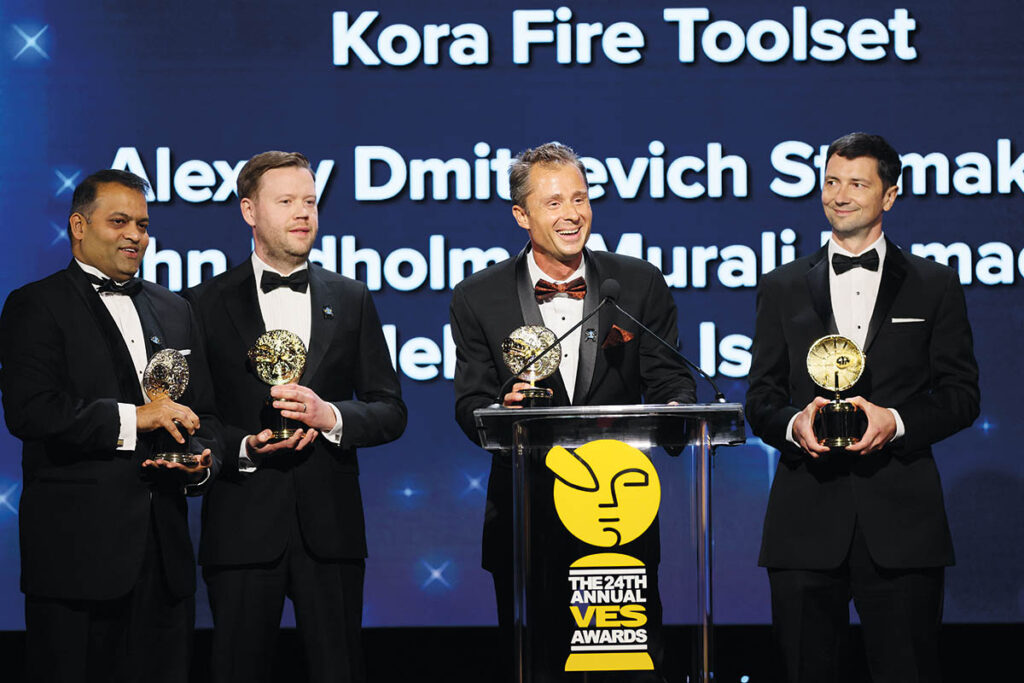
Kimball Thurston, CTO, Wētā FX, New Zealand
“The box office has performed strongly in the first half of the year, with several titles shaking up what will make a successful movie. Premium screens and in-person cinema experiences continue to play strongly, and there appears to be a trend of younger audiences wanting analog, in-person experiences – which is exciting for cinema lovers.
“The desire to ‘AI all the things’ will trigger companies to create new features or tout wholesale replacement of workflows. The challenge is that the AI push is largely driven as a cost-saving mechanism. In the short term, generative AI will likely not be used for final pixels, as governance, quality and token cost issues compound to restrict usage. Instead, the desired financial efficiencies are more likely to be found as AI assistance helps empower artists to collaborate better and iterate more rapidly – AI agents that find and fix errors, integrate with production tracking, or make turnovers between vendors more consistent.”
Hoon Kim, CEO, Beeble AI, Seoul
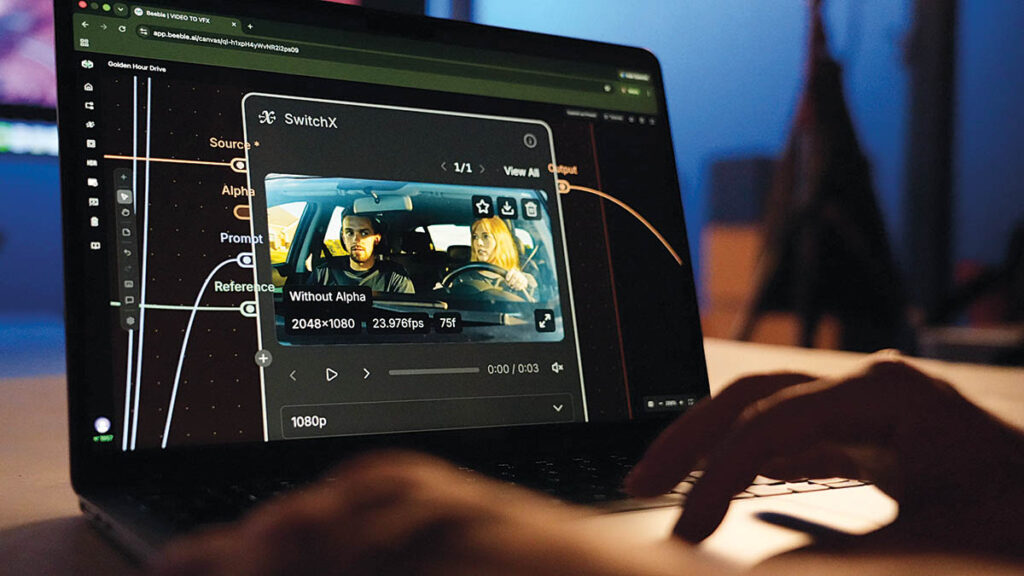
“One of the most significant shifts in VFX is the transition from AI as a purely generative tool toward AI as a controllable production system. Early AI workflows prioritized novelty and speed, but professional productions require consistency, continuity across shots and precise creative direction. We are seeing hybrid workflows emerge where traditional compositing intersects with learned systems, allowing artists to relight scenes, transform environments and refine imagery after capture while maintaining creative intent.”
Christy Anzelmo, Chief Product Officer, Foundry, London
“Cultivating an understanding of the fundamentals of visual storytelling remains as crucial when working with AI as it is for traditional VFX. Artists who understand cinematography, layout, color, lighting and composition can better direct the tools toward a quality result versus being guided by them. When this expertise is coupled with curiosity and problem-solving, artists can combine agentic assistance, fast AI visualization through Griptape, and refinement using traditional tools like Nuke to achieve their creative vision with both speed and control.”
Sebastien Bergeron, CEO, Pitch Black, Montreal
“AI has been a major focus in VFX for years, but what matters most are the tools that hold up in production. That experience evolved into REVIZE, our production-proven machine-learning capability used across our global studios. Originally developed at Rising Sun Pictures and used on delivered projects since 2022, the value isn’t just the technology itself – it’s how naturally it fits into existing workflows, expanding creative possibilities and giving us the confidence to hit delivery deadlines.”
Cristin Barghiel, Vice President, Product Development/R&D, SideFX, Toronto
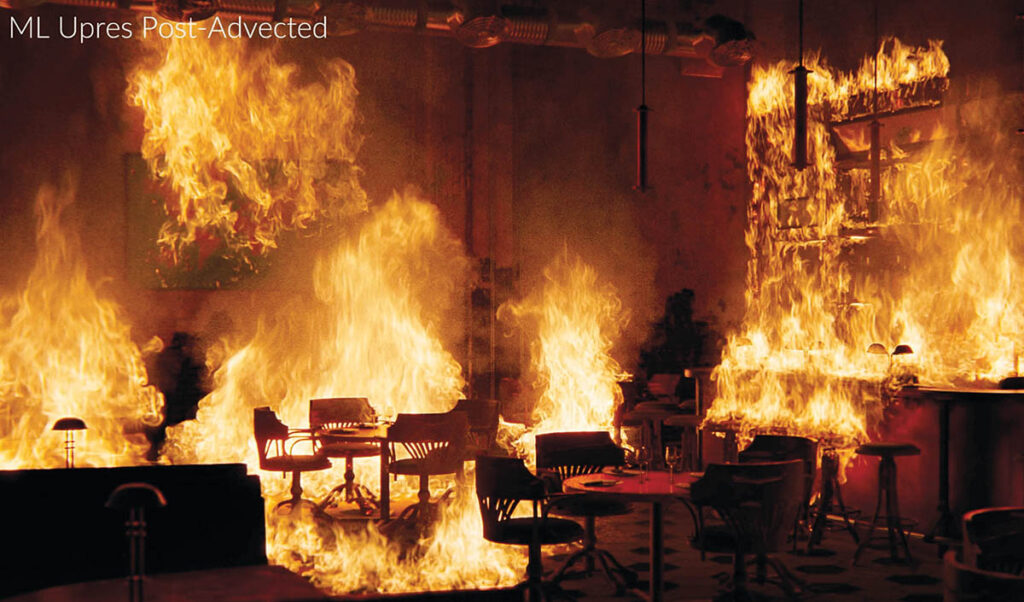
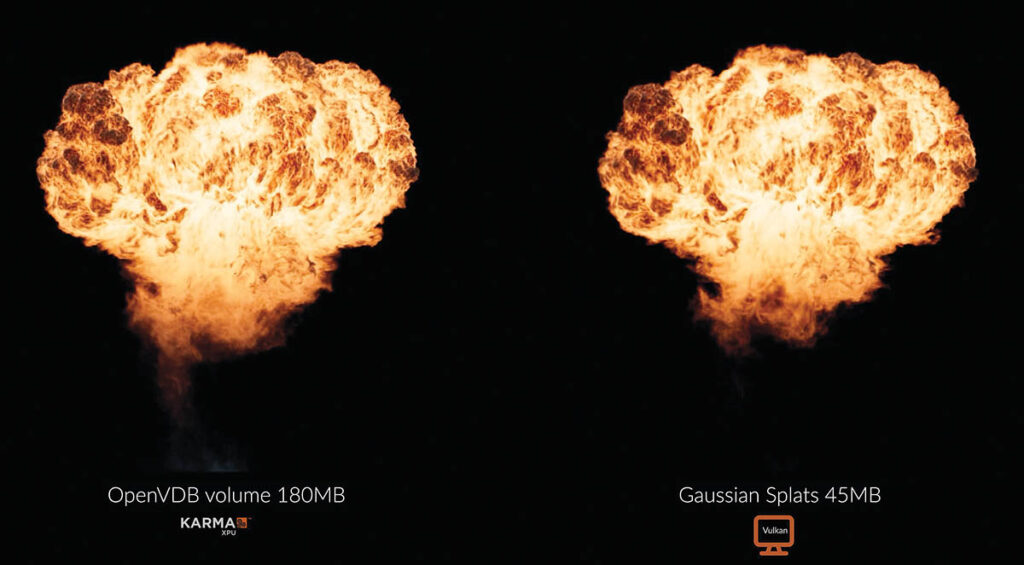
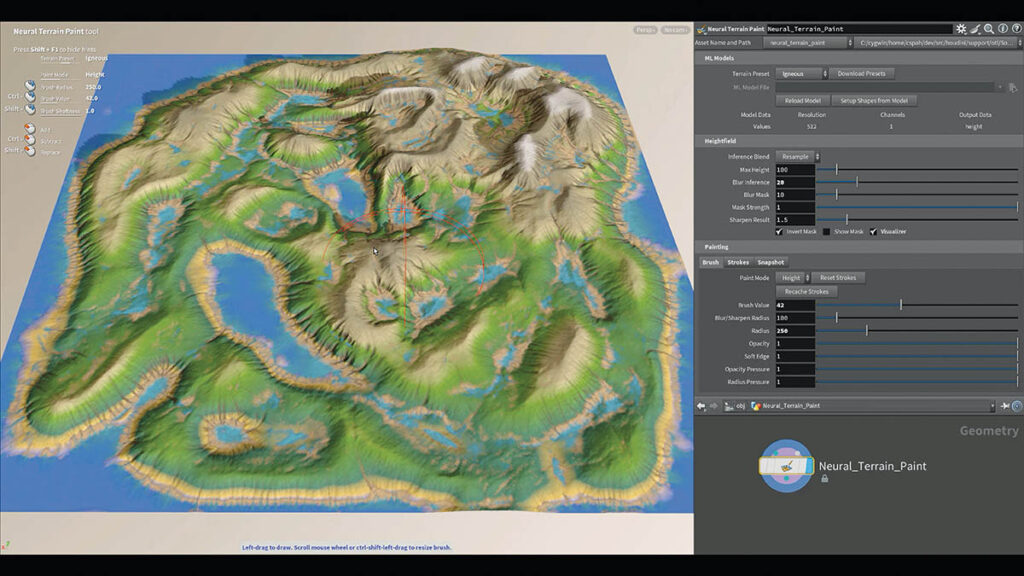
“The most significant shift in recent versions of Houdini is the integration of machine learning into the very fabric of the software. By training neural networks on existing high-quality simulation data, Houdini’s ML tools can enhance the look and feel of physics behaviors in a fraction of the time – including the ability to up-res pyroclastic simulations in near real-time, allowing artists to iterate rapidly and explore many variations of smoke and fire in the time it once took to produce a single result.
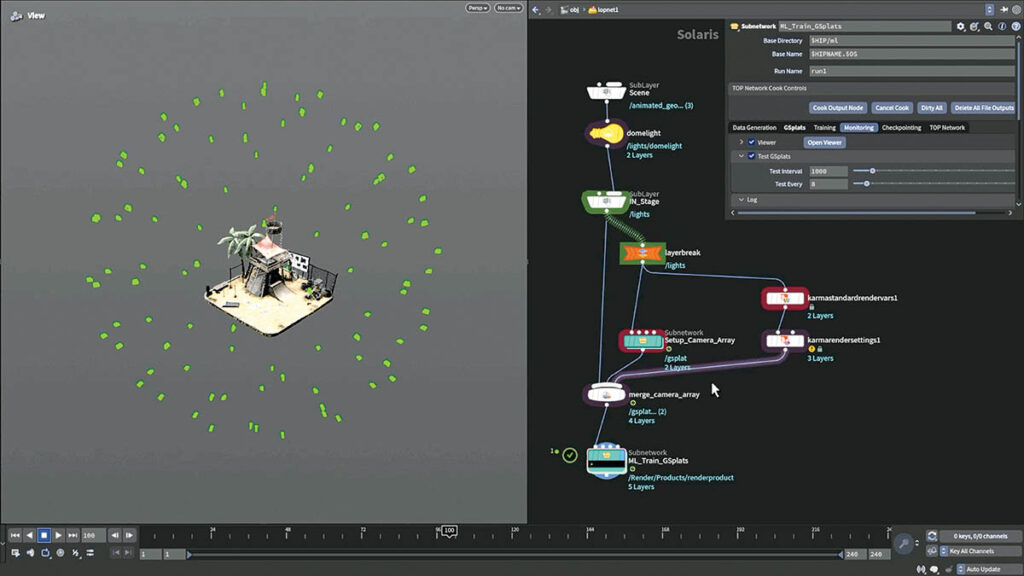
“Houdini’s procedural approach continues to expand: KineFX brings procedural workflows to character rigging and animation; Solaris extends that philosophy into look development and lighting through OpenUSD; Copernicus introduces procedural image-processing directly inside Houdini. As ML becomes increasingly pervasive, these systems will combine AI-assisted workflows with procedural generation to accelerate creativity and production.”
Gary Mundell, CEO, LOFTAPPS, San Francisco
“What feels most impactful is how AI can open up the creative process for artists who are not necessarily technical. With LOFTai, I’m interested in shortening the distance between the idea and the image. The most immediate seismic shift will be in animation – where AI can dramatically change how ideas are developed, iterated and brought to screen at a fraction of traditional cost. The next big opportunity is not just making more images faster but building tools that help people make sense of everything they are creating.”
Mathieu Raynault, Founder/Owner, Raynault, Montreal
“The future of our industry will be shaped less by VFX tools than by the tools used by directors, editors and cinematographers. AI will soon let them block layouts, animation and concepts directly in the cutting room or on set. But our role as VFX artists won’t fundamentally change – we’ll still be expected to bring creativity and artistic judgment to turn ideas into final imagery. The tools that matter aren’t the ones generating the most buzz. They’re the ones that shorten iteration cycles, reduce technical friction and improve communication with clients.”
Chris Barnett, Entrepreneur/ Technologist, Christie Digital/ Virtual Production, Cypress, California
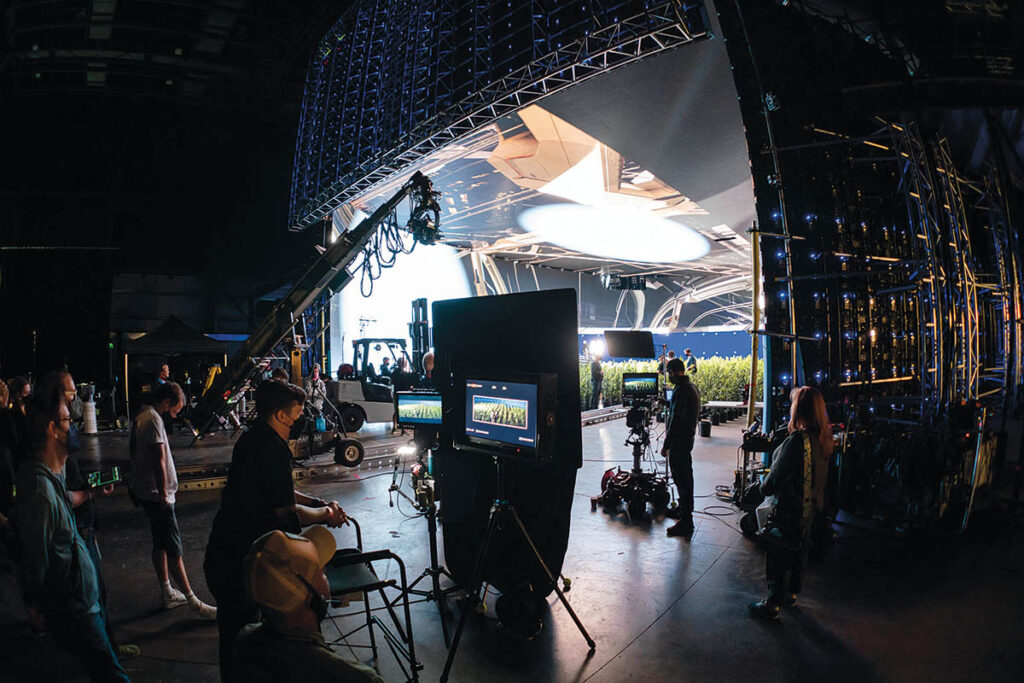
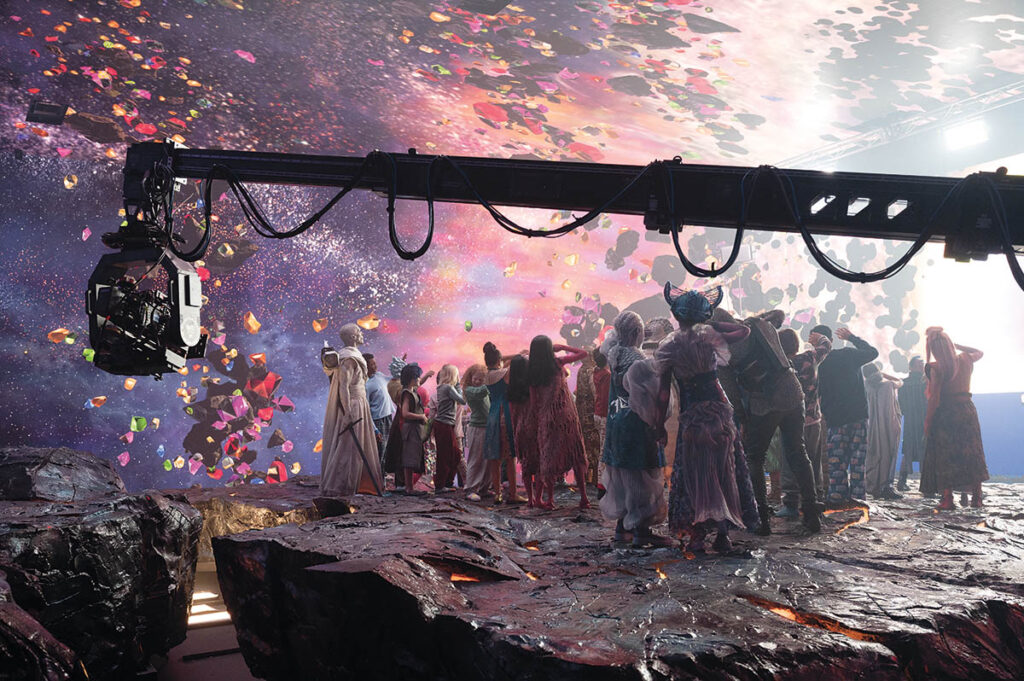
“Virtual production is evolving fast, but the right tool depends on the project. Christie’s projection-based approach – Virtual Projection – offers a compelling alternative to LED stages, particularly where budget and image quality both matter. High-quality RGBH projection creates large, seamless backgrounds across curved and unconventional surfaces while preserving color accuracy, eliminating the red-lobster color cast common in LED environments, and removing moiré artifacts entirely. Christie sees projection as part of a broader hybrid virtual production ecosystem – bridging the gap between practical sets and VFX.”
Fernando Rivas-Manzaneque, Co-Founder & CEO, Volinga, Los Angeles
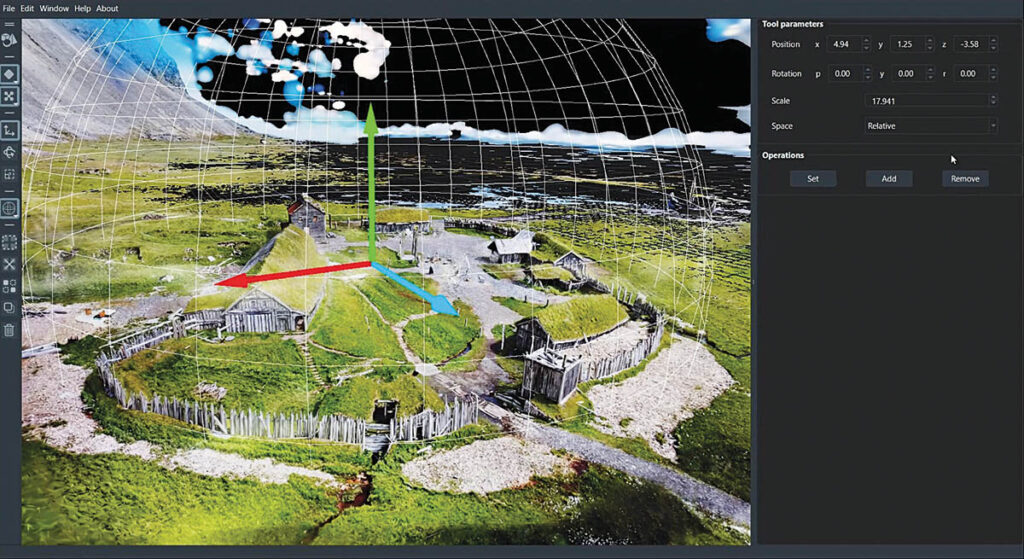
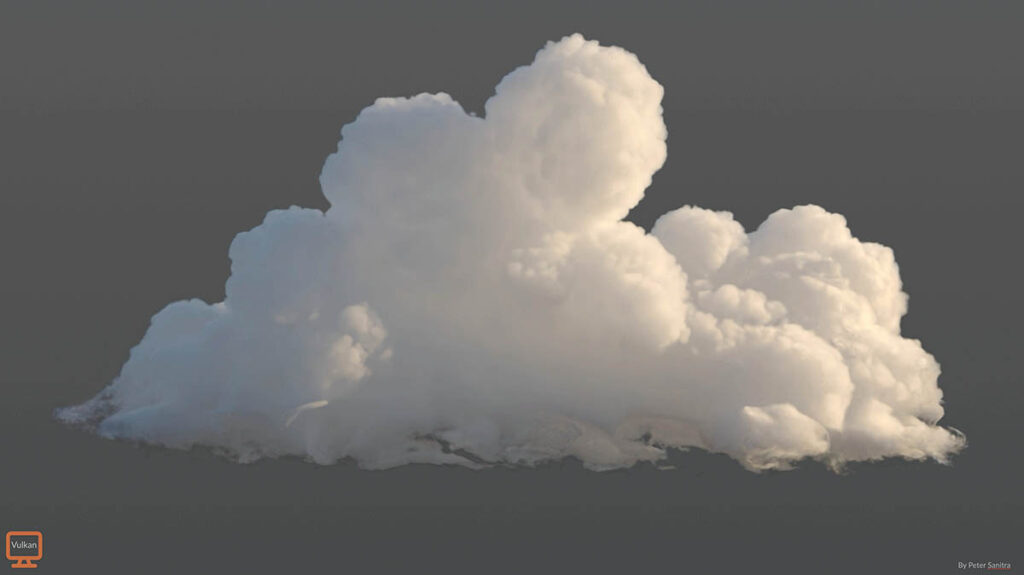
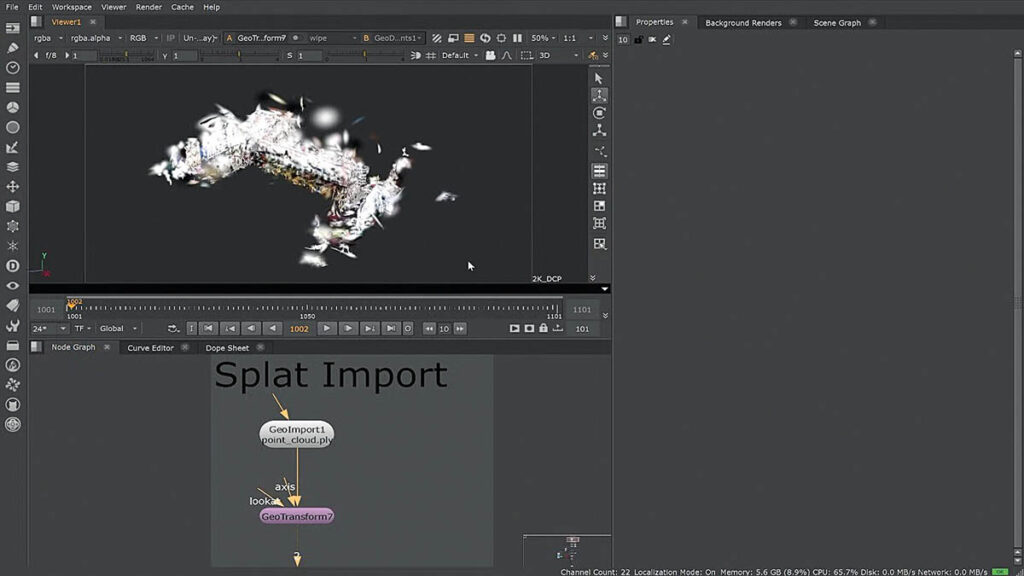
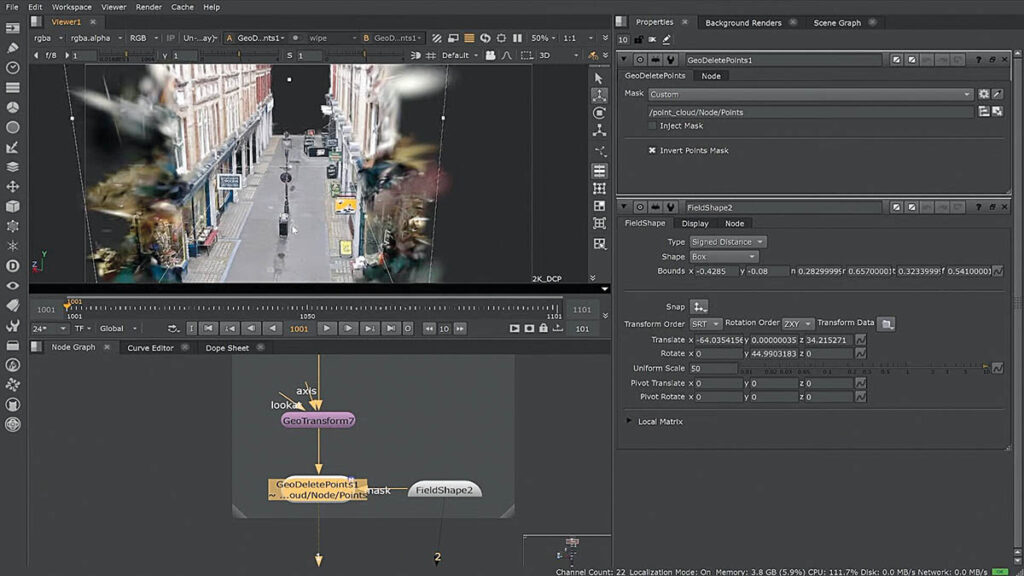
“The most grounded way to think about AI’s current impact is not as a replacement for production, but as a layer of acceleration on top of it. Where things get genuinely exciting is in 3D Gaussian splatting – ML applied to 3D reconstruction. What used to require expensive photogrammetry pipelines can now be captured and integrated into virtual production workflows in a fraction of the time. Beyond capture, Gaussian splatting is becoming the key that unlocks generative AI in 3D environments – genuine three-dimensional spaces, not flat images or video. When that layer meets generative AI built on top of it, the result won’t just be faster pipelines. It will be a fundamentally different way of building worlds.”
Jamie Hearing, DFX Supervisor, Clear Angle Studios, London “The most exciting recent development for us has been the integration of Gaussian splatting and volumetric capture, built on top of our pre-existing Structure from Motion pipelines. For environments, this provides instant realism with a level of spatial awareness that previously required exhausting stages of post-processing – rich, layout-ready spaces delivered directly from capture to the VFX pipeline. For characters, volumetric capture arrays allow for temporally consistent data that remains entirely true to the original performance, providing instant access to spatial performance data without traditional rigging bottlenecks.”
Jase Lindgren, Principal User Advocate, Perforce, Minneapolis
“I spent more than a decade in VFX before joining Perforce, and what I notice now is how quickly AI tools have moved from novelty to daily use – and how little the asset side of our pipelines has changed to match. It’s the leakiest era of asset management VFX has ever seen. The most impactful innovation of the next phase isn’t another generative model – it’s the layers underneath. The studios that pull ahead won’t be the ones with the best models. They’ll be the ones who treat every output, the one that shipped and the 10 that didn’t, as part of their creative library.”
David McGavran, CEO, Maxon, Bad Homburg, Germany/ Thousand Oaks, California
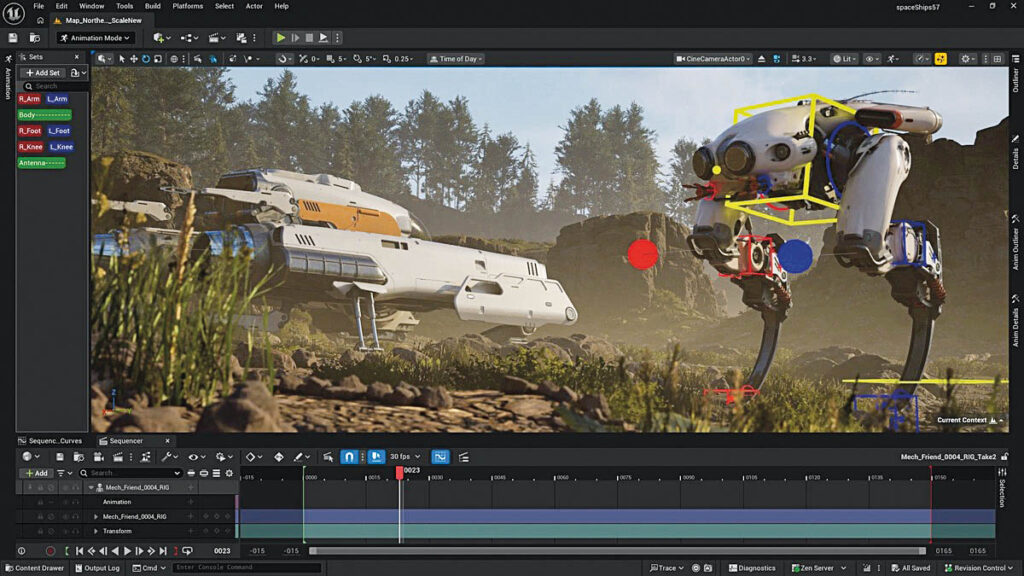
“The next phase of VFX will be shaped by tools that make production faster, more connected and more artist-driven. Real-time simulation, faster rendering, smarter asset workflows and more native 3D pipelines are giving artists and smaller teams the ability to take more of a project from concept through final output without losing creative control. AI-assisted tools are becoming valuable where they remove friction – denoising, upscaling, rotoscoping, depth maps, smarter search – rather than where they try to replace the artist. The future is not about pushing creators out of the process; it is about helping them work faster, iterate more freely and preserve creative intent.”
Benjamin Field, Co-Founder & CEO, Deep Fusion, Cardiff, Wales
“What is VFX, exactly? At its core, it’s a trick – a visual tool designed to immerse an audience in a world or a story. Nothing specifies how that trick has to be done. The craft and skill are human. The technology has always driven the execution. AI is the latest evolution of that relationship, not a break from it. The more consequential shift is economic: if AI can reduce VFX budgets by even a significant fraction, more productions become financially viable – which means more work, not less. The real promise of AI efficiency isn’t replacement – it’s restoration of sustainable margins in an industry that has priced itself out of its own business.”
Zeev Farbman, CEO, LTX, Jerusalem
“Every major creative tool goes through the same three stages before it becomes part of how an industry works. The first is novelty – early adopters push tools to the extreme, often treating them as separate from the creative process. After years of testing, we’ve reached the adoption phase: industries are shifting their use of AI from demos or brief scenes to entire films, pre- and post-production and visual effects. For AI video to earn a permanent place in production, it has to meet professional standards. Motion needs to be stable across frames, timing and sound need to stay aligned, and outputs need to be usable in post-production environments where artists expect precision. That’s what we’re building at LTX – designing models for production workflows rather than isolated demos.”
Dan May, President, Blackmagic Design, Australia, U.S., U.K., Asia
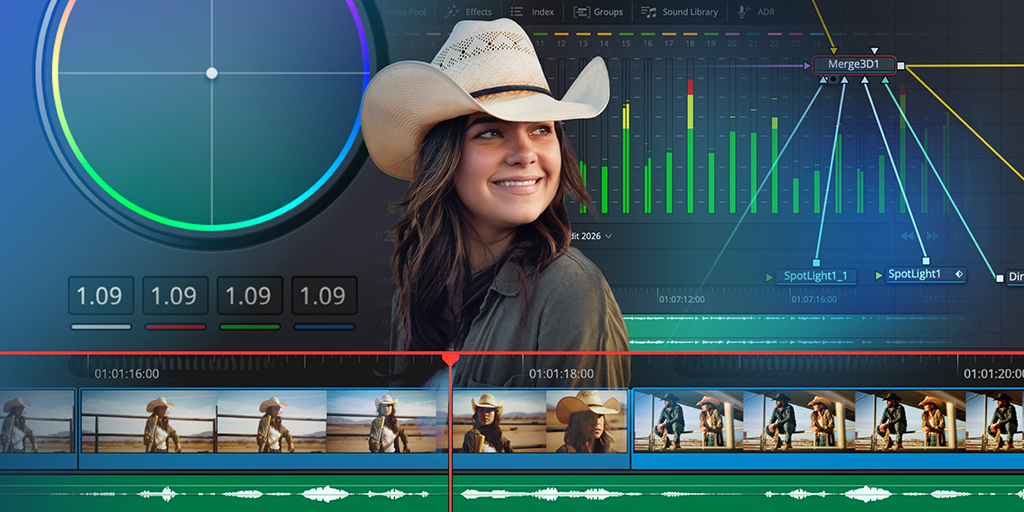
“The ability to collaborate and truly work together in real-time across VFX and the rest of post is a game changer that will continue to shape the future of the VFX industry. With tight timeframes and tighter budgets, linear workflows no longer work for post – different departments need to be able to work together, in the same project, in the same software, at the same time. Whether live-syncing projects across VFX, color, audio and editorial; sharing media globally across different VFX houses; or being able to make changes live while remotely receiving client feedback; cloud-based collaboration is the key to working together in an environment where creativity drives the decisions, not technological limitations. That being said, not all cloud-based collaboration solutions are created equal. To protect their work and IP, it’s important for VFX artists and post houses to select solutions that keep their media private and do not use it for AI training.”
Sarah Watling, Co-Founder & CEO of JALI Research, Toronto
“As character-driven storytelling expands across film, games and immersive media, one area of growing importance is the ability to deliver high-fidelity character performance – particularly facial animation and multilingual dialogue – at scale, without losing directability. Emerging audience engagement opportunities need expressive, believable characters that can operate consistently across platforms, languages and interactive contexts, often within real-time or near-real-time constraints. This is driving a shift toward more integrated workflows – where capture, creation, animation and interaction increasingly operate as part of a continuous system rather than discrete stages. Within these environments, performance is no longer a downstream output, but a foundational layer that must remain coherent, adaptable and responsive – supporting both authored storytelling and live or participant-driven experiences. As immersive formats evolve, the demand for subtle facial nuance in digital characters and avatars will only grow, reinforcing the need for systems that allow artists to direct performance with precision while sustaining consistency at scale.”
Mohsen Mousavi, VP, Visual Pioneering, Eyeline, Vancouver
“At Eyeline, we see the future of VFX not in automated prompts, but in pioneering cutting-edge techniques that enhance the artistry of traditional filmmaking. We treat generative AI as a new creative tool, and one that can only be guided by our artists who have been honing their unique expertise for decades. The heart of our philosophy centers on a deep respect for what we call the ‘sacred relationship’ between directors and actors: human performance, emotion and identity remain the centerpiece of every project. So, when we choose to leverage these emerging tools, it’s to enable actors and directors to work together effectively with production-ready AI systems that prioritize high fidelity, reliability and precise creative control.”
Neishaw Ali, Founding Partner, CEO & Executive Producer, SPINVFX, Toronto
“For decades, our industry has been organized around separate sectors such as film, television, gaming, animation, visual effects, advertising and immersive media. Each had its own workflows, technology, talent and business models. That distinction is rapidly disappearing. We’re entering a screen-based content economy where content is no longer defined by where it’s viewed but by how efficiently it can move across platforms. The same characters, environments and digital assets can power a feature film, a streaming series, a game, a live event or an immersive experience. The value is no longer in creating assets once; instead, it’s in creating them once and using them everywhere.
“That requires a completely different production model. The traditional linear pipeline where departments work in isolation and hand work off one stage at a time is giving way to a connected ecosystem built on USD, real-time engines, AI tech and cloud collaboration. Production is becoming simultaneous rather than sequential. Artists, supervisors, clients, and technology are all interacting with the same data at the same time.
“AI is accelerating this shift, but I don’t believe its greatest impact is replacing artists. Its real value is removing the repetitive work that prevents artists from doing what humans do best: making creative decisions, solving complex problems and telling compelling stories.
“I believe the next generation of studios won’t be defined by whether they’re VFX studios, animation studios or game studios. They’ll be content technology companies that combine world-class artists with intelligent, interoperable pipelines capable of creating content for every screen. The competitive advantage will no longer come from having the most artists or even the newest technology. It will come from how well technology enhances human creativity, how quickly ideas move from concept to screen, and how effectively studios can adapt to a market that is changing faster than ever before. It isn’t an evolution of our business; it is a reinvention of it.”
Diana Colella, Executive Vice President of Media & Entertainment, Autodesk
“The industry conversation is shifting from ‘if’ we use AI to ‘how’ we can use it responsibly. This is why Autodesk is augmenting the VFX tools creators already use and trust – Maya, 3ds Max, Flame and Flow Studio – with AI-powered capabilities designed to empower artists, not replace them, helping them continue to push creative boundaries and tell more ambitious stories.”
Dr. Yanpei Cao, Chief Scientist & Co-Founder, Tripo AI, Shanghai & San Francisco
“I believe the future of VFX will be shaped by a shift from editing shots and assets to authoring controllable worlds. Today, VFX already combines many forms of creation and transformation: building assets, modifying images and video, simulating motion, compositing layers and refining shots until they serve the story. The deeper transformation is that these elements will increasingly be created and controlled within dynamic, editable, simulation-ready generated worlds, rather than as disconnected assets or isolated frames. This can change the production process: previs, virtual production, layout, lighting, post and interactive experiences can begin to share the same underlying scene intelligence. That shift will not remove the need for artists; it will raise the importance of taste, direction and supervision. The next generation of VFX tools should help artists explore more ideas, preserve creative intent, and maintain control over geometry, motion, lighting, physics and style. In my view, the most valuable AI systems in VFX will not be black boxes that generate a final answer. They will be collaborators inside the production pipeline: fast, controllable, interoperable and grounded in the language of filmmaking. The future is not less craft; it’s craft amplified by much more powerful creative infrastructure.”
Marco Ragozzino, Writer/Director/Visual Effects Producer, Los Angeles
“We’re witnessing the evolution of the VFX industry in, no pun intended, real time! I see the future of VFX as being a more iterative and malleable process thanks to gen AI tools incorporated into pipelines along with real-time rendering. Take Gaussian splats for example; they’re basically 3D environments generated from 2D photographic data and can be turned around quickly. This is exciting to me since I no longer have to rethink writing a scene that takes place in a cost-prohibitive location. G-Splats are like Rosco softdrops on steroids; when used in conjunction with a virtual production volume, I can shoot without the usual restrictions of a complicated location (such as an airport), retain the proper parallax and dynamic lighting, and make reasonable adjustments on the fly.
“I also believe that with advancements in performance capture, even more of the actors’ work will translate into the finished film, whether the character is fully digital or a hybrid. Reviewing a take with the actor(s), as their full digital form in real-time, helps not only dial in the performance, but allows more room to improvise, adjust blocking and shot composition, and incorporate new ideas without affecting the production schedule. This is all under the assumption that gen AI tools are incorporated responsibility, like assisting in tedious and repetitive tasks, so the creative teams can jump right into their artistic skill sets faster.”

Jon Mason, CEO, Hotspring, U.K.
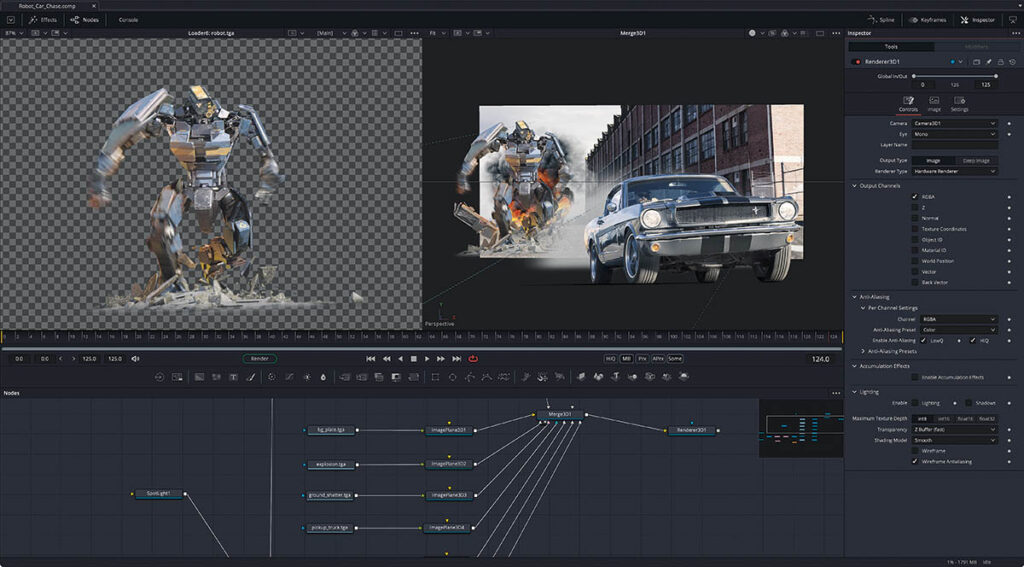
“As certain AI tools designed to do particular tasks get embedded in VFX workflows we will see savings in time and money and a general contraction and realignment of the production and VFX industry. Beyond that, we will see the birth of more AI production companies using AI-generated plates instead of shot material, then enhancing those plates using VFX. We will begin to see more of a mix of both shot content enhanced by AI and VFX alongside fully AI-generated content enhanced by VFX and some live-action elements. There will also be a premium on hand-crafted, human-centric skills like stop-frame animation, some CG work, and anything new and unique created by skilled craftspeople.”
Jon Wood, Head of VFX, Untold Studios, U.K.
“The most important developments driving the next phase of the industry are the integration of AI into existing VFX toolsets and more controllable, production-ready workflows. These advances will allow artists to work faster while still maintaining the precision and control we require. Rather than standalone or overly simplified ‘one-click’ AI solutions, the real value comes from tools that integrate into established pipelines and preserve the level of control artists are used to in traditional workflows. Clients expect precise, pixel-level control, and simply regenerating the entire image with random results each time is not a viable approach.”