Images courtesy of HBO.

Images courtesy of HBO.
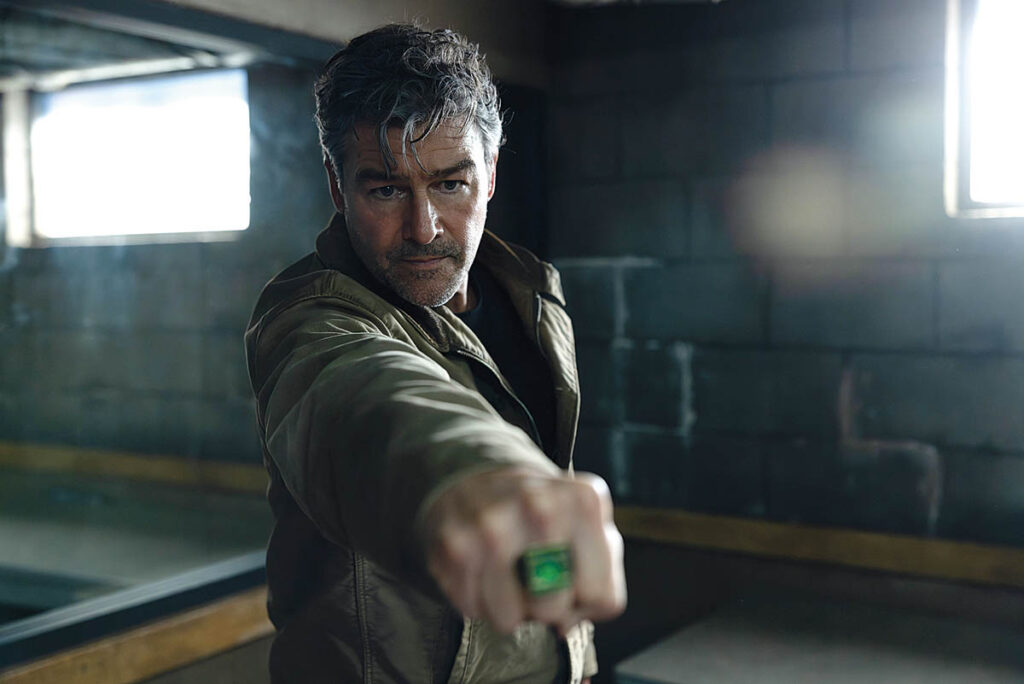
Based on DC Comics’ Green Lantern characters, HBO’s new series Lanterns centers on an intergalactic police force made of various sentient lifeforms. While the premise is inherently fantastical, the series, created by Chris Mundy, Damon Lindelof and Tom King, roots its story in the evolving relationship between its two lead superheroes.
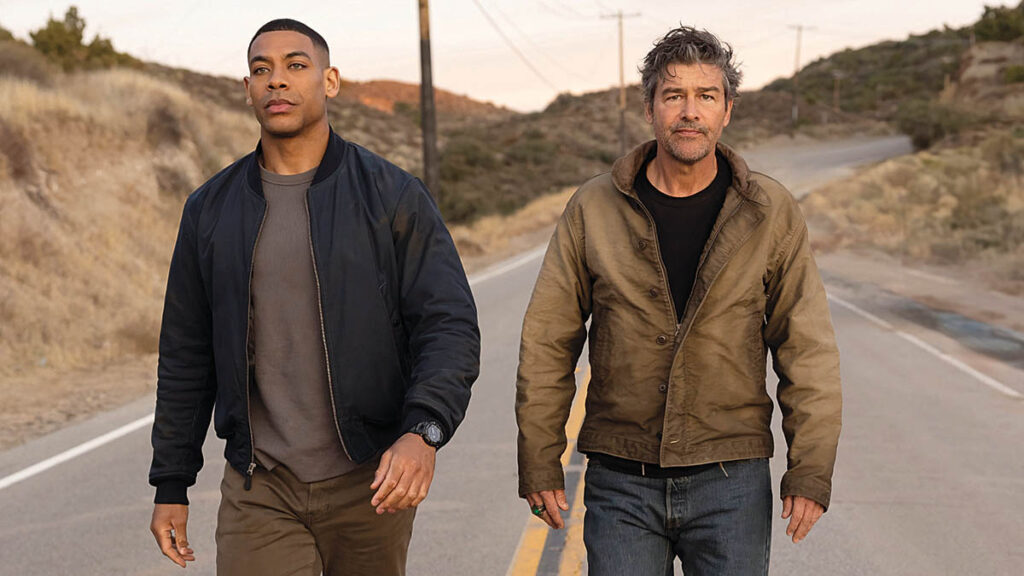
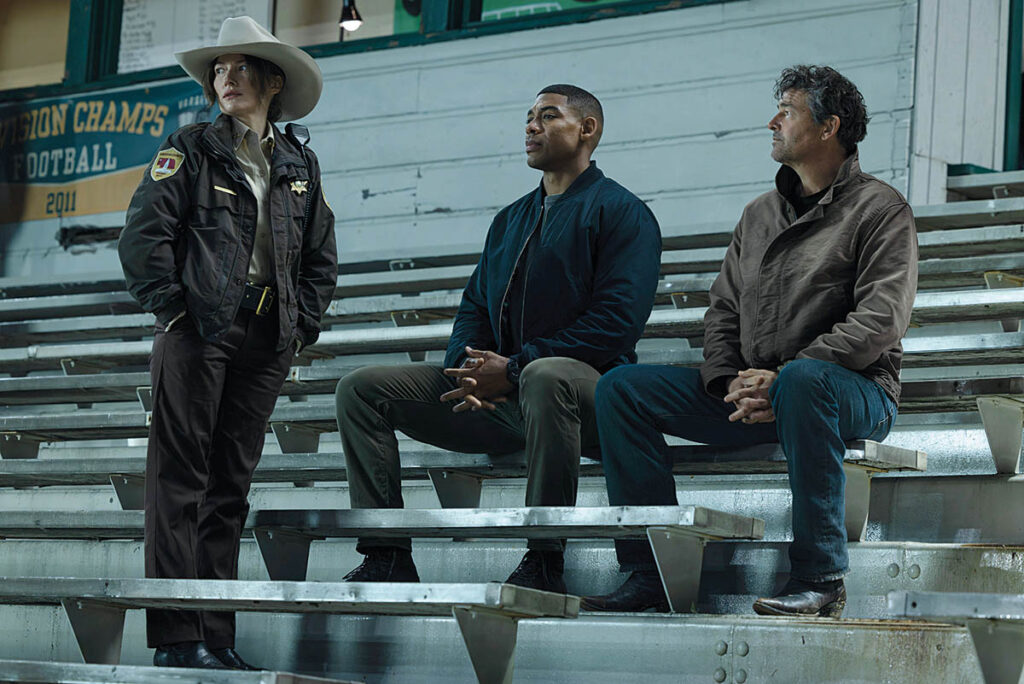
“We wanted to feel that the season itself was grounded by Hal Jordan and John Stewart’s relationship,” Chris Mundy, Co-Creator, Executive Producer and Showrunner, states. “By the end of the season, they would have a true emotional arc both individually and as a twosome. One of the ways we wanted to accomplish that is to have a firm sense of place and these people’s day-to-day reality, not just their superhero reality.” Having Jordan mentor Stewart while investigating a mass shooting at a high school football game in a small town in Nebraska was a deliberate creative choice. “We got interested in this idea of replacement. It was not something we had ever seen inside the superhero space. Everyone is in their prime, and we thought it was interesting on a human level. What would that look like when you can still do things well but somebody is chomping at the bit to take over?”
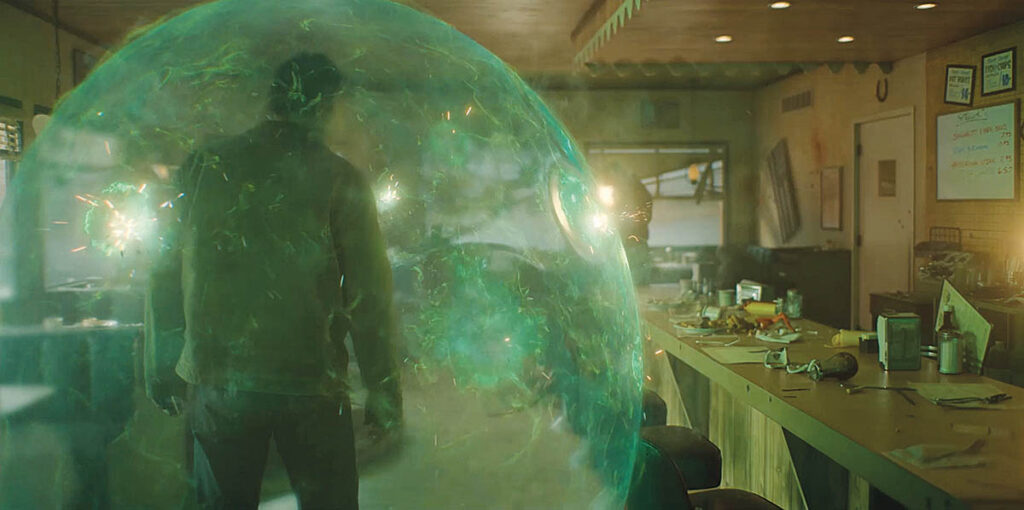
“[Visual effects] should make you believe more, not less. We always talked about grounding and tactile [qualities] in the things we design and the sets John Paino designed. [Visual Effects Supervisor] Greg Steele is obsessed, in the best way, with making things feel like part of the environment around them, even in their green state. They should be additive. They’re not something on their own. They’re part of the whole picture.”
—Chris Mundy, Co-Creator, Executive Producer & Showrunner, Lanterns
Designing ancient alien technology that feels both timeless and advanced presented a unique creative challenge. “There is a certain amount of magic in all of this,” Mundy admits. “But at the same time, you want it to be believable, and if you find yourself trying to explain what it is in four sentences, you’ve probably lost people. They want to understand it. People have phones. You can pull it out of your pocket and call someone on the other side of the world. There is a certain amount of magic that has come into all our lives in the last quarter century. But we always talked about the Power Ring as being [an extension] of the wearer’s imagination. When you can create whatever you want, it becomes a question of, ‘What is my creative thinking on the fly in this situation?’” The green constructs produced by the Power Ring were used as a character device. “We always joked that Hal is going to do everything with a big green fist; that’s his way of solving a problem. He’s going to be like, ‘Boom! Knock it over.’ John is going to be inside the workings of things. If he was going to do a construct, you would practically see the architectural plans overlaid. It was a nice way for us to think about not only visuals but also them as characters.”
While Lanterns embraces the imaginative possibilities of the Power Ring, the series never loses sight of the stakes. “We were always aware of keeping things real, but there is a real threat,” Mundy remarks. “Hal has used the ring a couple of times in ways that were funny, like with a bottle opener and the counterfeit dollar bill. But when shit is going to hit the fan, and he needs to save this town, he better be able to do it and in a hurry. You always find if it starts to get too quiet, it probably needs to get loud. And if it gets too funny, then it probably needs to get a little bit tense. We wanted to be aware of keeping that balance.” Visual effects are meant to serve the scene and feel believable. “You want to make them feel as fully integrated into the scenes as possible and not distracting. They should make you believe more, not less. We always talked about grounding and tactile [qualities] in the things we design and the sets John Paino designed. Greg Steele, who does our visual effects, has been incredible, has good ideas, and is obsessed, in the best way, with making things feel like part of the environment around them, even in their green state. They should be additive. They’re not something on their own. They’re part of the whole picture.”
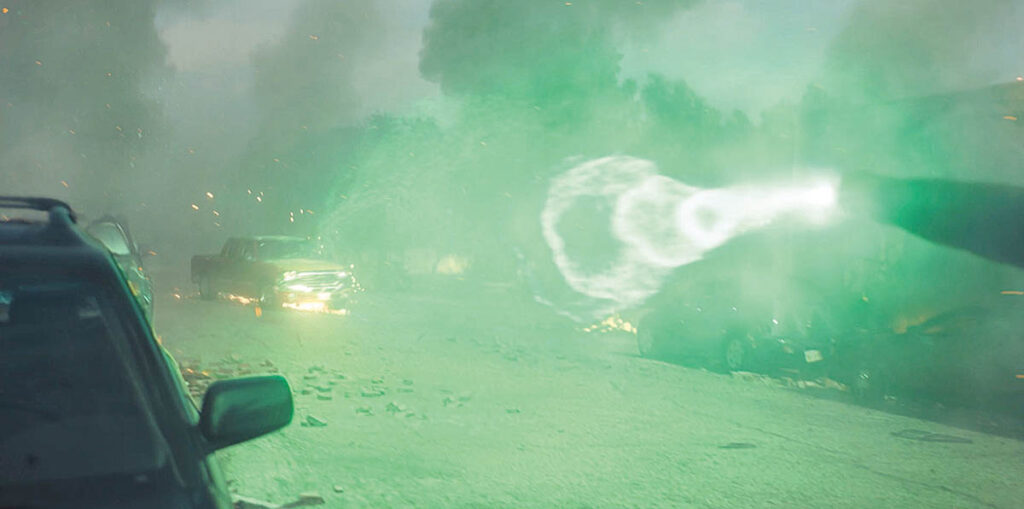
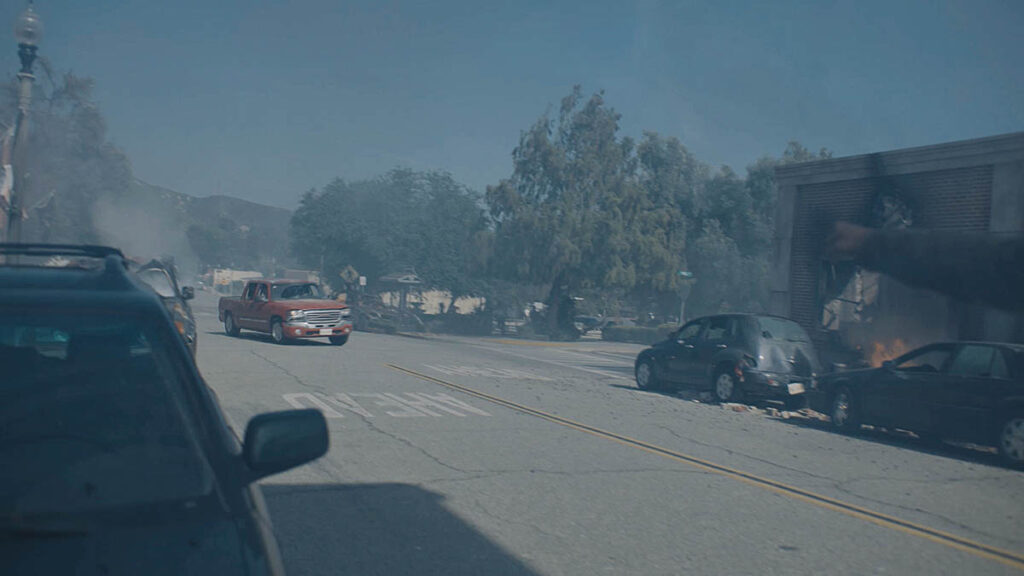
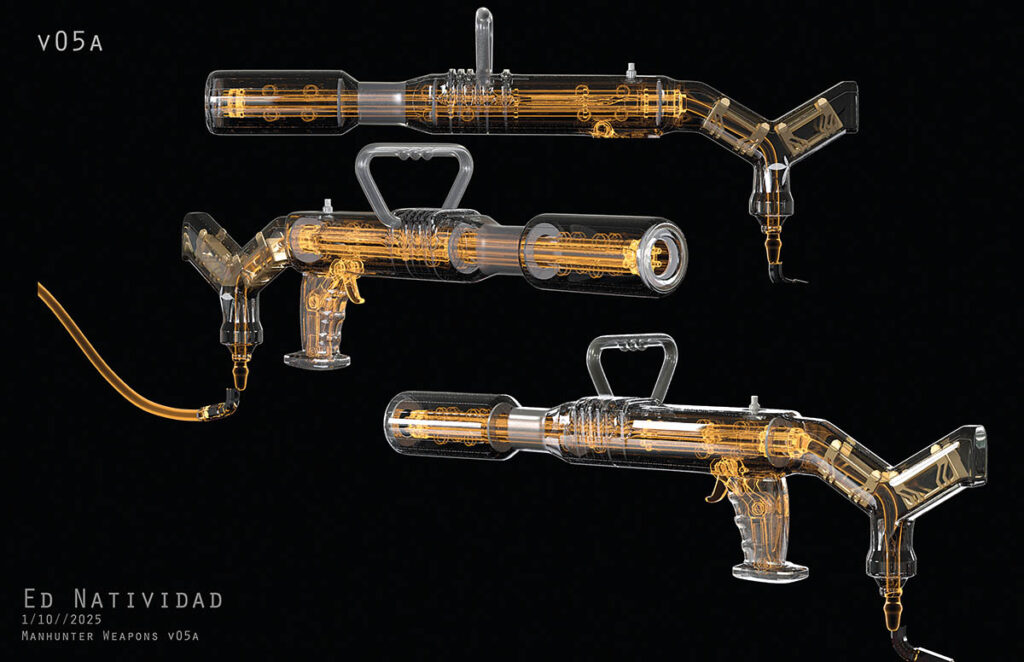
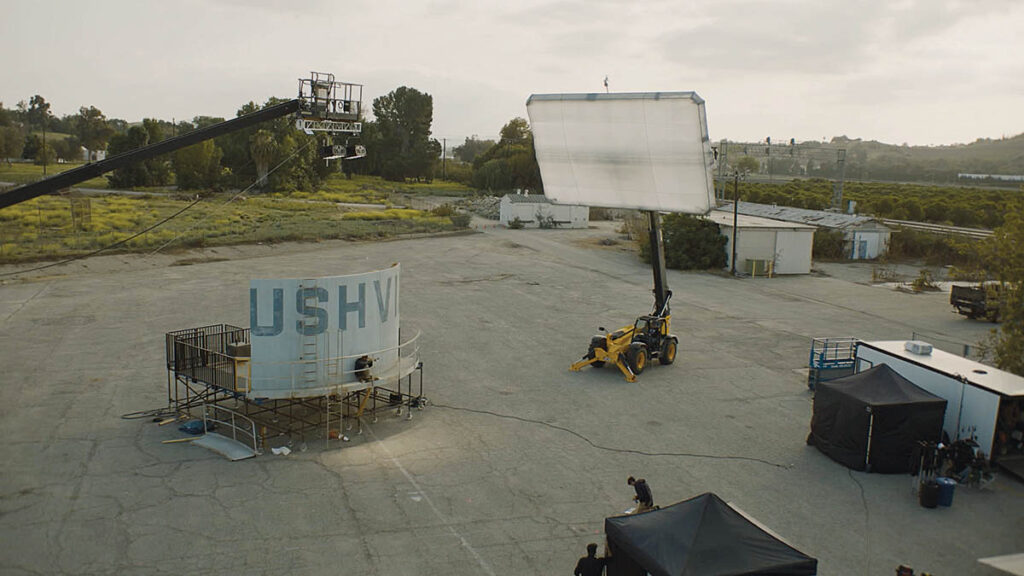
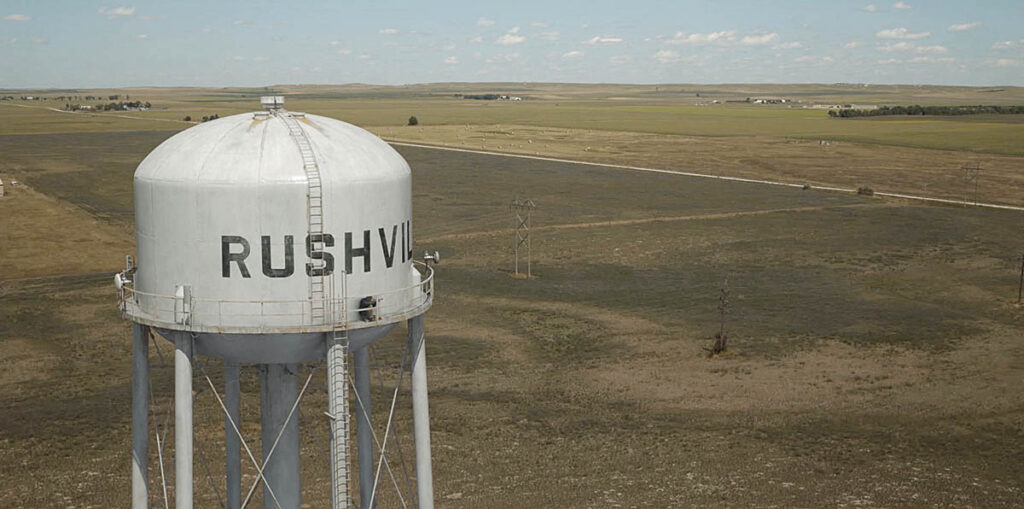
Piru, California, doubled as Rushville, Nebraska, where most of the narrative for the eight episodes takes place. “We did a lot of building in the town,” John Paino, Production Designer, reveals. “It also had empty lots where we could put up façades so later when we had destruction, we could destroy them. Stepping off this two-block main street, you’re supposed to be in a prairie. But we are in a valley, and that’s where the visual effects came in and did a lot of replacement work.” The art department created all the concept art for Lanterns. “We did the LiDAR scans of the locations, came up with concept art, and were able to pass it off to our visual effects team. We worked concurrently. It was great that I was able to work more in developing it before visual effects came in.” The story unfolds across different timelines, with the action centered primarily in 2016 and 2026. “Everything was supposed to be at a mid level. We were accurate with things, but the timelines are concurrent. They are within a decade of each other. It’s not like we jumped from the 1940s to the 1960s to the 1970s. We wanted to maintain a general color for Rushville because most of the show takes place there.” Hal Jordan visits an imprisoned Sinestro at a galactic penitentiary. “At the beginning of the show, I reference Morphosis, an interesting architectural firm. It so happens that Emerson College was one of their only buildings in Los Angeles. Nobody wanted anything to be too fantastical, so it had a good mix of a grounded modern technology that wasn’t specific.”
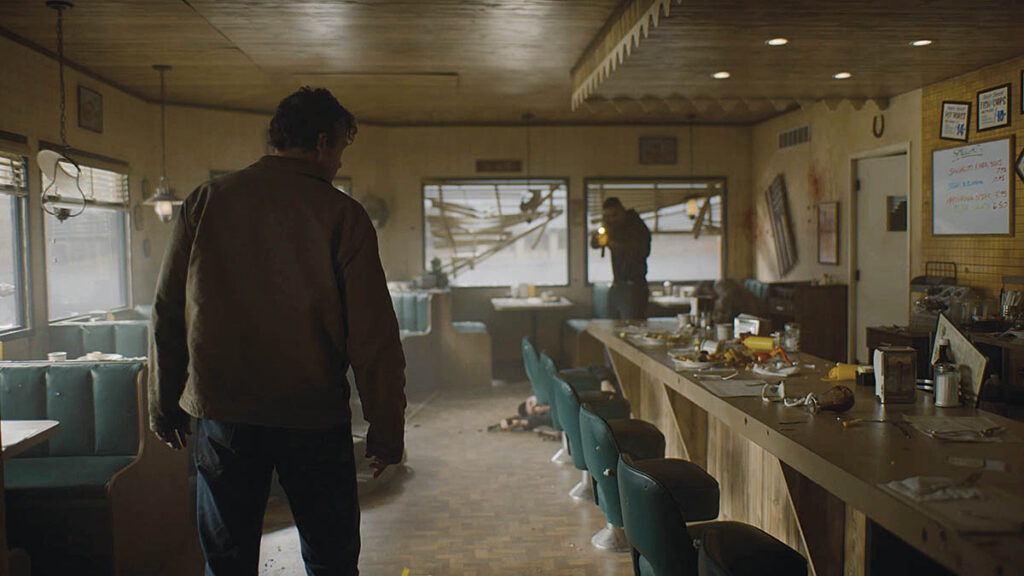
Reaching into a pocket dimension, Stewart pulls out a Power Battery that is literally a lantern. “I became fascinated with Fresnel lenses in lighthouses, and the glass, shape and beveling of it are based on a Fresnel lighthouse structure,” Paino explains. “I was looking back at a lot of incredibly engineered things from the 1930s. But I also have other things that I have to bow to and incorporate. The ring and lantern were the canon of this world, and we tried to find that sweet spot between the canon and something ancient. That’s why the things tend to be simple. We went through so many different things for the container for the lantern, and they felt derivative and not solid. That’s why the portal ends up being simple, because we were worried about something being referential that was outside of our world.” Some of the most fundamental superhero abilities demanded the most scrutiny. “How do we make someone fly so it doesn’t look like he’s yanked up in the air? What kind of contrail would a person have? There was a lot of back and forth with that.” The protective bubble construct Jordan created to contain a detained self-destructing alien had to feel real. “That’s why we have this light cistern that makes this magma, which is the [substance] in the lantern. We didn’t want the bubble in the police station to feel like, ‘It’s a greenscreen bubble. Anything can happen. Magic.’ We built the set with circular cutouts. When they were developing the visual effects for the bubble, we played with smoke. I showed them stop-motion bubbles and atomic blasts. We looked at a lot of stuff.”
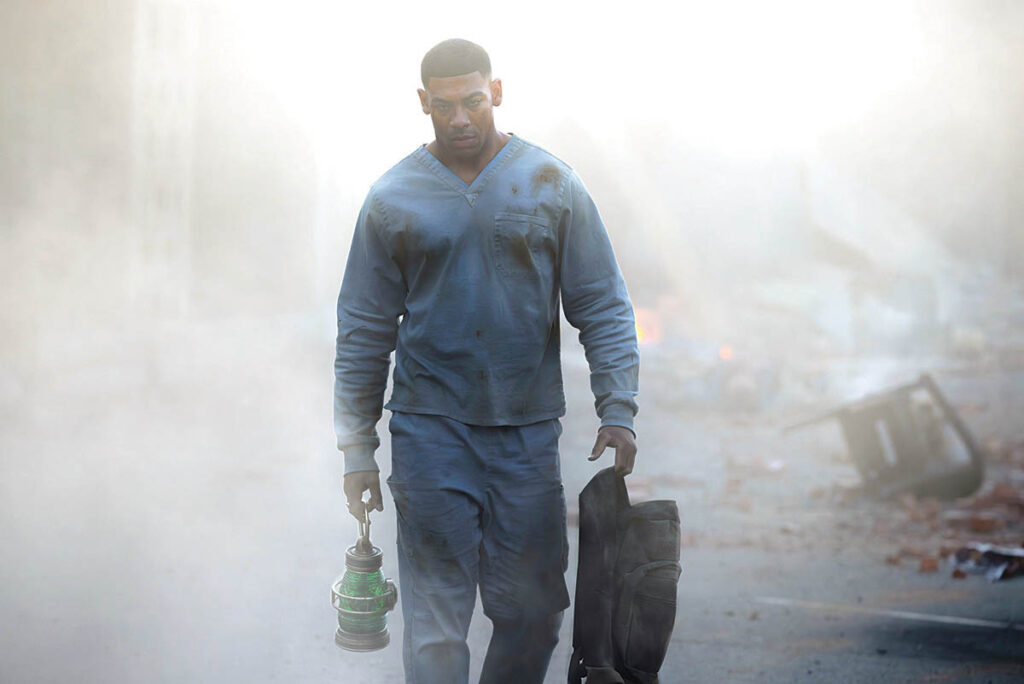
The sheer volume and diversity of visual effects work required a carefully coordinated approach across multiple studios. “For the series, we had around 2,350 visual effects shots in the final episodes,” Greg Steele, Visual Effects Supervisor, states. “We had a good number of unique challenges, such as multiple large-scale environment modifications, cosmic powers such as green lantern constructs, portals, multiple laser technologies, darkness effects and holograms. Other visual effects staples, such as CG characters, de-aging, large-scale destruction, set extensions, makeup and gore enhancement, driving shots and production fixes, rounded out the type of shots. Because of the large variation of unique work and the short timeframe to complete the shots, the efforts were spread across 16 vendors. This allowed the vendor teams to focus on specific types of effects, with the intention of avoiding shared assets and shots, or at least keeping them to a minimum. In some cases – like the Hal digital double and the Rushville building extensions – the assets were shared among several vendors for their work. Talented teams at Digital Domain, Fin, Accenture Song, Ghost VFX, Rodeo FX, Image Engine, Refuge VFX, Spin VFX, Distillery VFX, CoSA VFX, Twin Pines, El Ranchito, MAS, Digikore, FutureWorks and Incessant Rain crafted the work. Work was divided up according to the vendor’s historically specialized skills.”
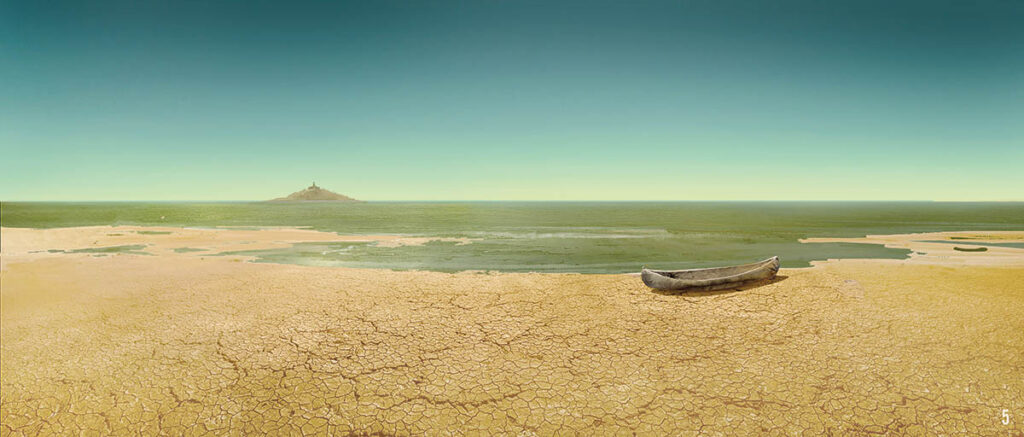
Steele reveals that “three main locations served as the alien planet where the foundry island is located: a dry lakebed, a night on a stormy lake in a boat and the forge island. The inhospitable barren surface was shot on a real dry lakebed in Lancaster, outside Los Angeles, in 106-degree heat. For this part of the planet, visual effects removed the distant mountains and added sweeping dust storms across the surface. In the island direction, a lake was created, as were the foreboding clouds of a storm descending on the lake. As John rows across the lake at night through the blowing atmosphere, a storm begins to form. As it rains, John is infected by the hallucinogenic properties of the rain and sees a lake full of apples and people from his past appearing in the boat. The storm builds to a crescendo of rain and emotion. With the intent to capture as much in-camera as possible for this part of the sequence, the Paramount Studios Lake was painted black, filled with water four feet high and surrounded by black duvetyne with LED tracking markers. Special Effects Supervisor Mark Byers and stunts rigged boat movers, wave makers, rain sprayers, and brought in large Ritter fans and fog-making equipment. In post, visual effects augmented all the shots to give the environment more depth, lake-like water, extra rain and heavy atmospherics. The apples and the water during the hallucination part of the sequence were created digitally, and the wide views of the environment were designed and implemented in CG. The shore area where the characters get out of the boat was built on the edge of the Paramount Lake set and further augmented with an expanded island and foundry location created in CG by Fin. The forge interior was built on stage at Warner Bros., and the openings were filled with distant lake views and heavy atmospherics.”
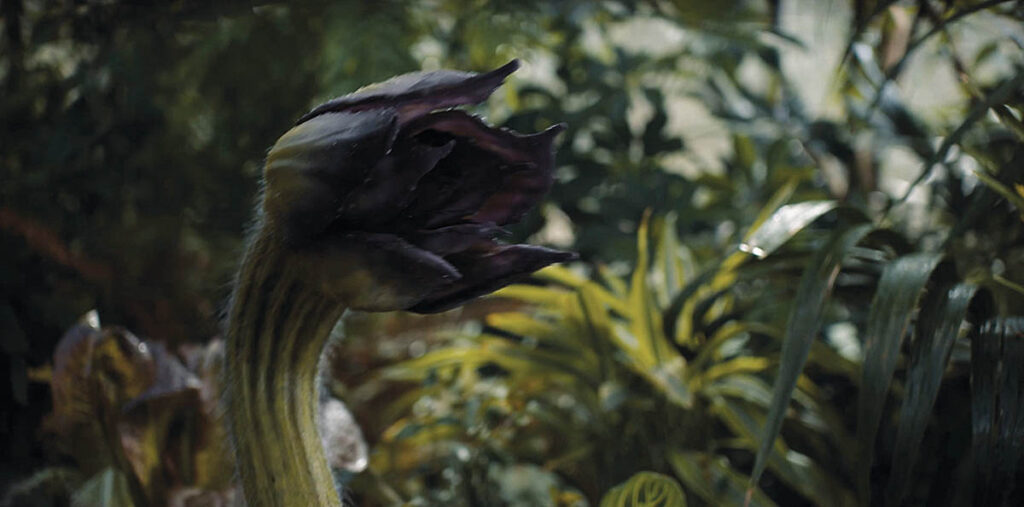
Creatures of varying sizes make appearances throughout the series. “During the element shoot, we shot a good deal of reference of a green canary,” Steele remarks. “This footage of the canary was utilized as reference in the creation of a green construct canary that John manifests and keeps ‘alive’ via his willpower once the ring is deactivated. Because the bird would be in John’s hands and on his shoulder, we shot quite a bit of material of the bird on surfaces that mimicked those shapes. We also shot flight paths and slow motion to capture the incredible high-speed movement of the wings. In post, Image Engine crafted the construct bird, using all the look development that had been done up to this point for the other constructs, to bring the bird to life and interact with John across multiple sequences.” Legacy Effects designed and built a puppet for Earl, a three-foot-tall alien plant creature that Jordan adopted. “It was controlled by two puppeteers for the gross body movement and another for the large petals that made up its head. Having the puppet to work with the actors was invaluable and helped the performances. It gave the actors something to interact with in the long takes. Because of the practical limitations of the real-world materials and mechanics inside the character, it was decided in post to replace Earl with a computer-generated version that gave us a bit more control over the performance and physical mechanics of the petals and writhing nature of the stalk. It also allowed Earl to move around on his pedestal using his tentacle-like roots at its base.”
“The most interesting aspect about Lanterns is the characters’ relationships and the interesting storytelling style across the 40-year time span. If we’ve done our job correctly, everything we’ve done will support the story and not draw attention to itself.”
—Greg Steele, Visual Effects Supervisor
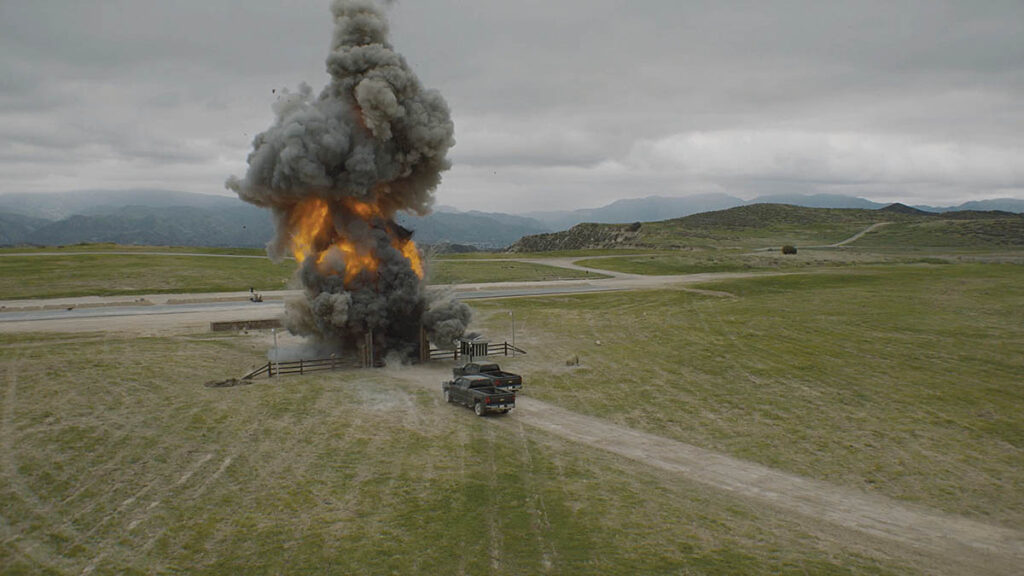
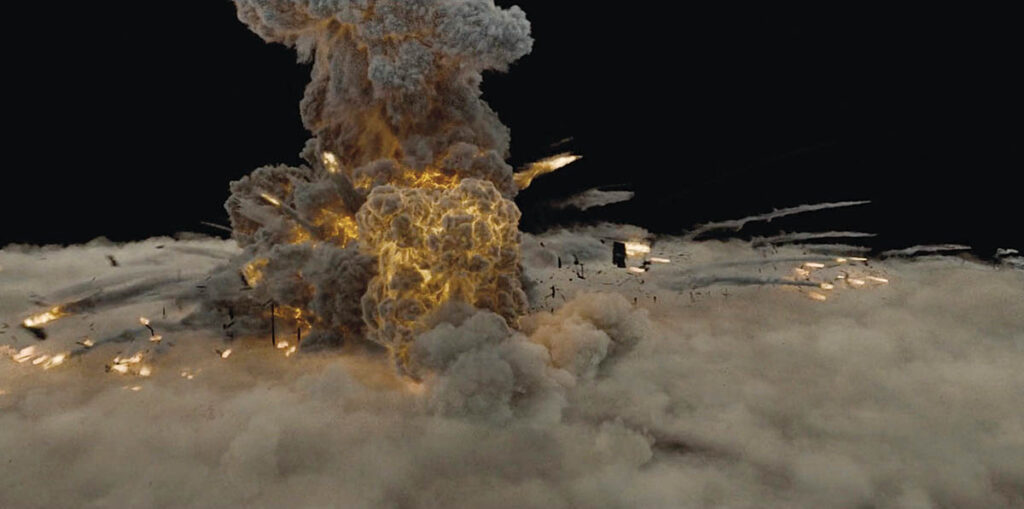
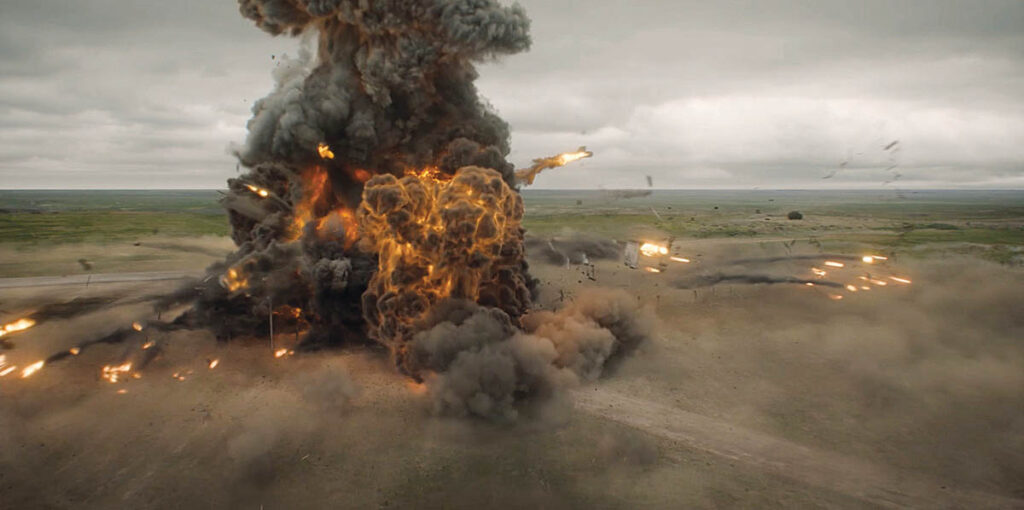
The destruction of Rushville’s main street featured some of the most complex shot sequences in the series. “The shots combined many of the effects we were creating in isolation, but it combined them all into one sequence,” Steele states. “We had Hal flying in and over the main street, massive explosions and walls of atmospherics from the destruction, as well as construct domes being created to protect the citizens against the space lasers, and new ring powers, such as powerful plasma blasts. The shots also required set extensions to extend our town and modify buildings. Ghost VFX and Rodeo FX deftly crafted the destruction of the town.” Most of the visual effects research centered on scientific and real-world phenomena, including molecular biology, radio and sound waves, and the behavior of light. “When Lianna the Guardian transforms from a human to her natural alien form, we referenced butterflies coming out of their cocoons and the unfurling of their wings as they would slide against each other and reveal additional layers below it. We had Lianna’s outer coat break into sheets of cloth that slid away, revealing multiple additional layers of cloth that eventually pulled away to reveal her final form. This type of application of a real-world movement helped the effects work fit into the world Chris was creating.”
Supporting the series’ ambitious visual effects work is a talented ensemble that includes Kyle Chandler, Aaron Pierre, Kelly Macdonald, Laura Linney, Nathan Fillion, Ulrich Thomsen and Jason Ritter. “The most interesting aspect about Lanterns,” Steele notes, “is the characters’ relationships and the interesting storytelling style across the 40-year time span. If we’ve done our job correctly, everything we’ve done will support the story and not draw attention to itself.”