
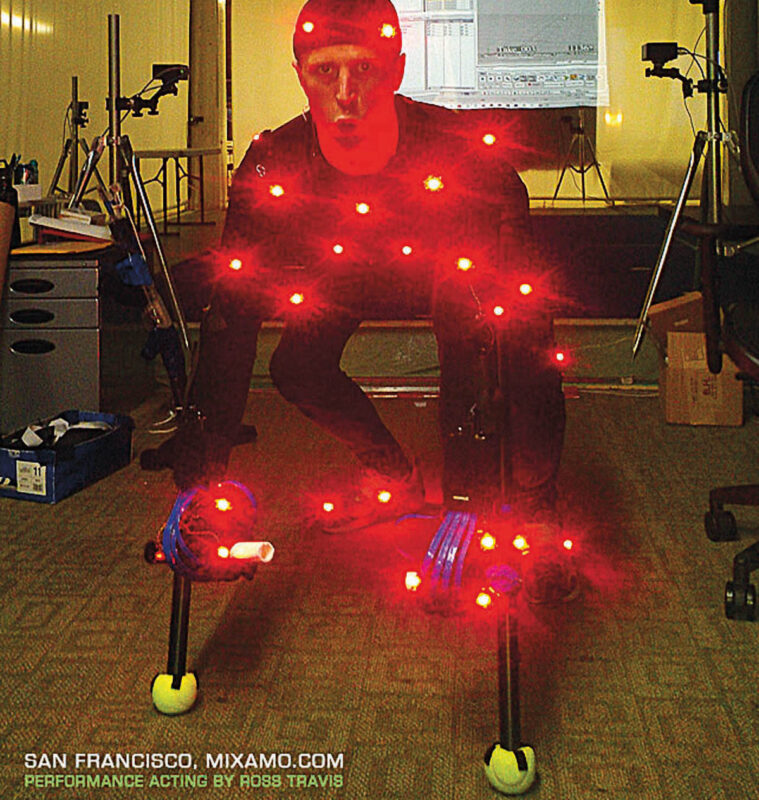
During the 1990s, creating visual effects was a cost-prohibitive enterprise. SGI’s high-end graphics supercomputers – priced from $119,000 to more than $600,000 – were often paired with Alias/Wavefront software packages that sold for $7,500 to over $16,000 per seat. Three decades later, the landscape has undergone a seismic shift. An Unreal Engine license is free for creators and studios until they cross the $1 million revenue threshold. The open-source 3D software Blender is free, and computer workstations from Signa Computer Systems range from around $3,000 to $15,000. Now, independent musicians, YouTubers and aspiring filmmakers can craft professional-quality digital effects on shoestring budgets.
“Facial motion capture used to be insanely difficult: the rigging, skinning, getting quality facial animation, and piping it into a 3D program was near impossible. Now, with an iPhone, you can hold it up to your face, post-process it and have it look beautiful with Unreal Engine, and also live-feed it into Unreal Engine so you can see the performance live. You’re also getting real-time feedback, which is insane in and of itself. … There has never been a better time to be making something.”
—Sam Wickert, Director & Visual Effects Supervisor
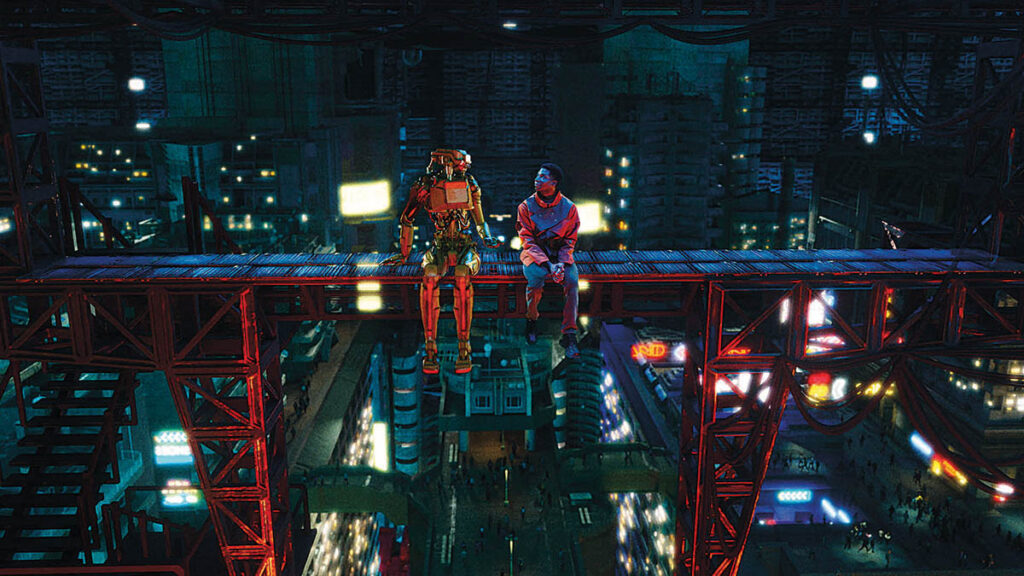
Friends of Sophia: Tidbits & Bytes – a proof-of-concept, queer sci-fi short film that won the 2024 Silver Collision Award for excellence in animation and visual effects – was expanded into a seven-episode spin-off series with creator Alden Peters collaborating with virtual production company Lightcraft Technology. The character animation is especially challenging because the series, now streaming on YouTube, centers on a love story between a human and a CG robot. “The only reason it remotely works is that B.J. Minor, who plays the human character Tidbits, can look at a light stand on a greenscreen, and you believe that emotion,” Peters, Director and Visual Effects Supervisor, states. “All these social media platforms, when they first start, are excellent for the users and show all the stuff you want to see and connect you with people. But then it becomes, ‘Okay, now we want to sell ads.’ It’s all about the investment and advertisers, which changes the experience and who you’re connecting with. Actually, the name Tidbits & Bytes came because it was conceived as short episodes. It’s done well on TikTok because of that.” Central to the production is the Lightcraft virtual production app Jetset, which does camera tracking. “You can put your 3D scenes in there and record with that. That is why I was able to scale up from the short into the series. It allowed me to work faster and more efficiently by taking care of the match-moving step right away.”

Seeking to encourage his son Roman’s aptitude and interest in filmmaking, Navaz Dowling established Bad Beetle Entertainment, through which they produced a series of short fan-made films such as SPAWN 1881 and Star Wars Entrenched in their home garage. “One of the biggest problems with film school was, at the end of four years, they’re going to let him intern at one of the big studios, and he was like, ‘I want to make movies now,’” Navaz recalls. “I said, ‘Okay, let’s figure out if we can do everything ourselves from the writing to filming to editing to sound design.’ In the current industry, there are a lot of powerful tools that allow us to do what it is he envisions. What it all comes down to is not having those limits placed upon himself.” The range of environments was restrictive. “I felt like I couldn’t finish anything because I didn’t have sets and needed locations,” Roman Dowling, Founder of Bad Beetle Entertainment, remarks. “It was always hard to find locations without getting permission. I began learning Blender, which my dad had been talking to me about. For a long time, I was like, ‘It’s going to take forever to learn.’ But I finally sat down and started doing it. I remember the first thing I did, I showed him, and said, ‘This might be the way to start doing stuff.’” Smartphone cameras have become an indispensable on-set tool. “We were doing some rehearsals for blocking on a scene the other day, and I was able to just shoot it on my phone,” Roman states. “That is a lot easier than having to pull out the whole camera and do stuff that way.”
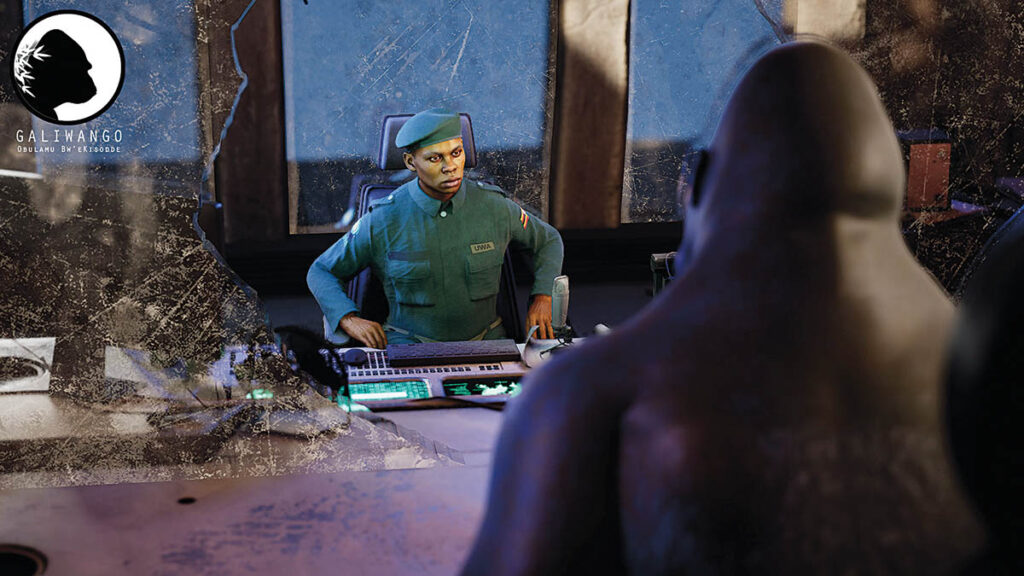
For nearly two decades, Solomon W. Jagwe has been waiting for technology to catch up with his vision for Galiwango, a 3D-animated fantasy short film about a former poacher-turned-wildlife ranger who interviews a talking mountain gorilla about his life and survival in Uganda’s Bwindi Impenetrable Forest. “I started off with Maya and 3ds Max to create the content, models and environments,” Jagwe, Co-Founder and Creative Director at Sowl Studios, remarks. “But when it came to the animation, it was Wonder Studio before Autodesk bought and transitioned them into their ecosystem as Flow Studio. I’ve been using that for pre-production. In the past, it wasn’t always feasible to get footage of an actor because I sometimes work with people overseas. A major change during the pandemic is that virtual-like productions became a thing. After 2020, you could work with people across the globe. I have a lady who does some of the voice-acting in the U.K. Now with Flow Studio, I’m able to get that footage from her, and it doesn’t even have to be great lighting. I’m able to use Flow Studio to do previs, after which I’m able to take that to Unreal Engine and render in the final setting.” Virtual reality has altered the workflow. “When Peter Jackson was making King Kong, he went away from traditional storyboarding to using 3D storyboards, and that gave me an idea. I’m a concept artist, but I can quickly concept out an environment in virtual reality. When I was working with my team member who made the environments in Maya, I went into my Meta Quest 3, and by using Adobe Medium, I was able to sculpt the environment the way I had it in my mind, even the roads and buildings. Rather than just being a 2D image of the concept, he has a 3D image or file of the concept itself and can rotate it or go into the buildings to see exactly what I have in mind.”
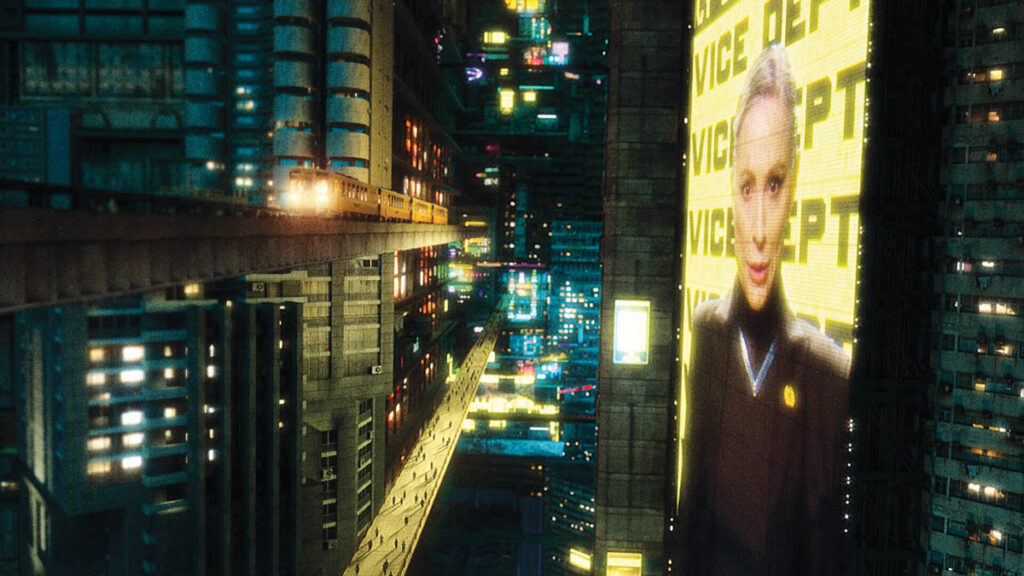
Musicians still recognize the value of visual effects in elevating their music videos and helping them stand out from the plethora of content online. “Visual effects were a fundamental part of the video for ‘Oh No Darling!’” singer-songwriter Sarah Kinsley states. The arcade machine is a central environment. “A lot of our references for the interior of the arcade machine were cavernous and abyss-like images. We had references of intense contemporary museum interiors or dark blue tunnels. We loved picturing the player inside the machine’s world, lit by tiny, bulbous, flickering spheres and walking for hours and hours in nothingness. Some of the visual effects we ended up with also fed into an ‘80s-styled world with the very pixelated background scenery and Pac-Man-esque screens.” Storyboards were essential. “Yes, I drew lots and lots in the early stages. It was super necessary for us to move forward.” The entire visual effects process was challenging given the small budget and big ambitions. “We spent most of the shoot using our imaginations for what the final result was going to look like. We wanted the visual effects to captivate in the way any arcade or casino does, where it makes the real world look bland and uninteresting.”

“I’m a concept artist, but I can quickly concept out an environment in virtual reality. When I was working with my team member who made the environments in Maya, I went into my Meta Quest 3, and by using Adobe Medium, I was able to sculpt the environment the way I had it in my mind, even the roads and buildings. Rather than just being a 2D image of the concept, he has a 3D image or file of the concept itself and can rotate it or go into the buildings to see exactly what I have in mind.”
—Solomon W. Jagwe, Co-Founder & Creative Director, Sowl Studios
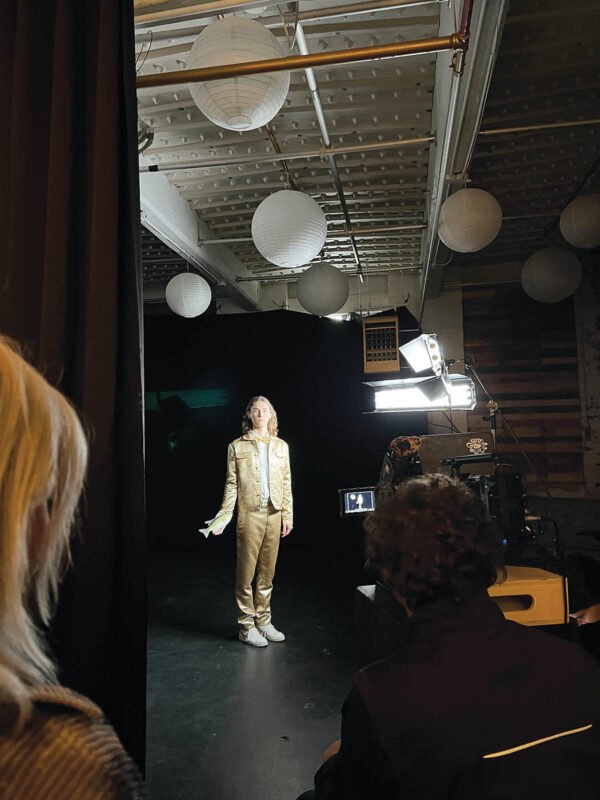
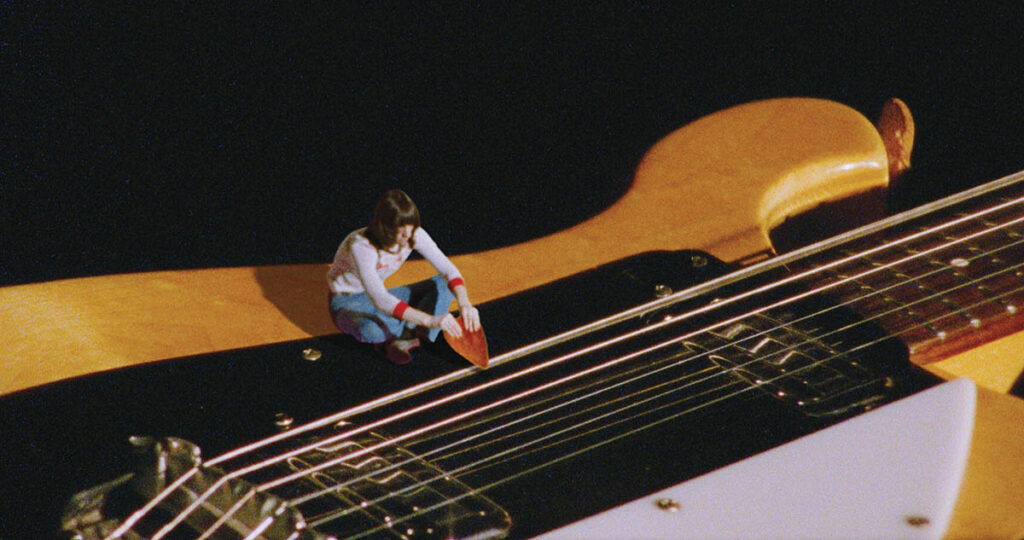
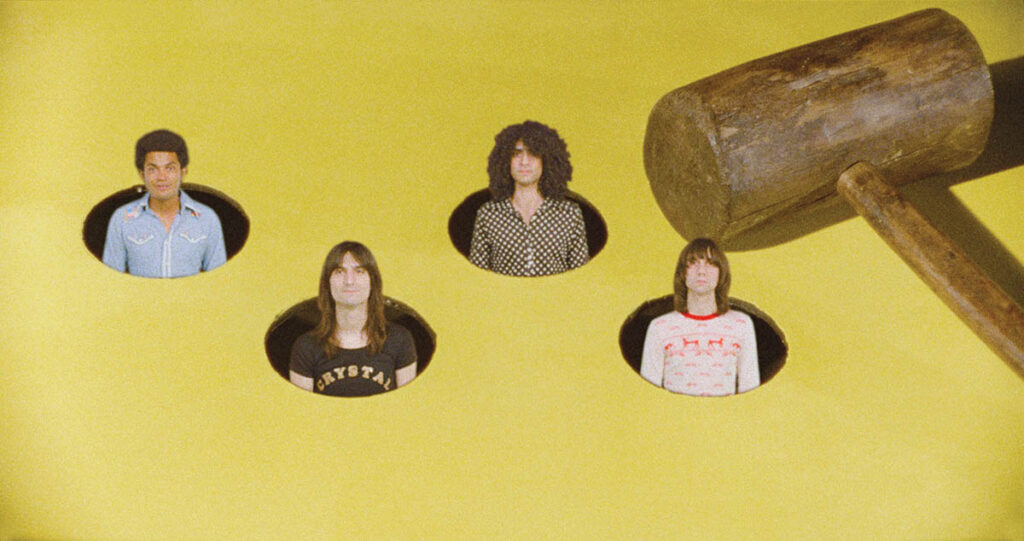
Being a visual effects artist and cinematographer influenced Maxwell Flick’s approach to shooting the music video for the Lemon Twigs’ “They Don’t Know How to Fall in Place,” directed by Ambar Navarro. “I try to shoot in a way that will make it easier on myself later on but also will add things to my workload to save time on set if something just isn’t working out as planned on the day,” Flick, artist, filmmaker and cinematographer, explains. “It’s a bit of a blessing and a curse knowing how to fix things in post.” Analog methods still remain important. “Ambar and I spent a lot of time talking through the entire video, watching films together, making a detailed shot list and schedule. There was always a notepad on the table during our meetings that we passed back and forth to do quick sketches to better understand what each other was imagining. By the time we arrived on set, we had pretty much formed our own language.” The Lemon Twigs were great to work with during a whack-a-mole-style sequence that required them to react to visual effects that would be added later. “They definitely had no idea what that stuff was going to look like in the end but still gave us a great performance – even though it must have seemed so silly to act like they were getting bonked. I ended up drawing out all the shapes and shot the piece of paper on film to keep it from looking digital.” In the video, an oversized love interest literally puts her foot down. “Anastasia from the band Tchotchke stopped by the set to film that shot of Brian D’Addario getting stomped out. It’s relatively simple to shoot those two things on a white cyclorama and composite together when the lighting matches. Then I used the Puppet Tool in Adobe After Effects to make him bend in the few frames where he makes contact with the shoe.”
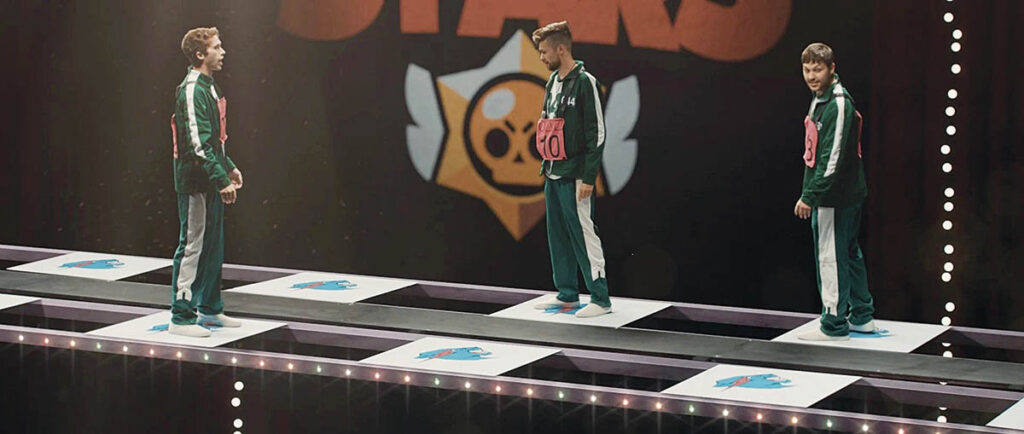
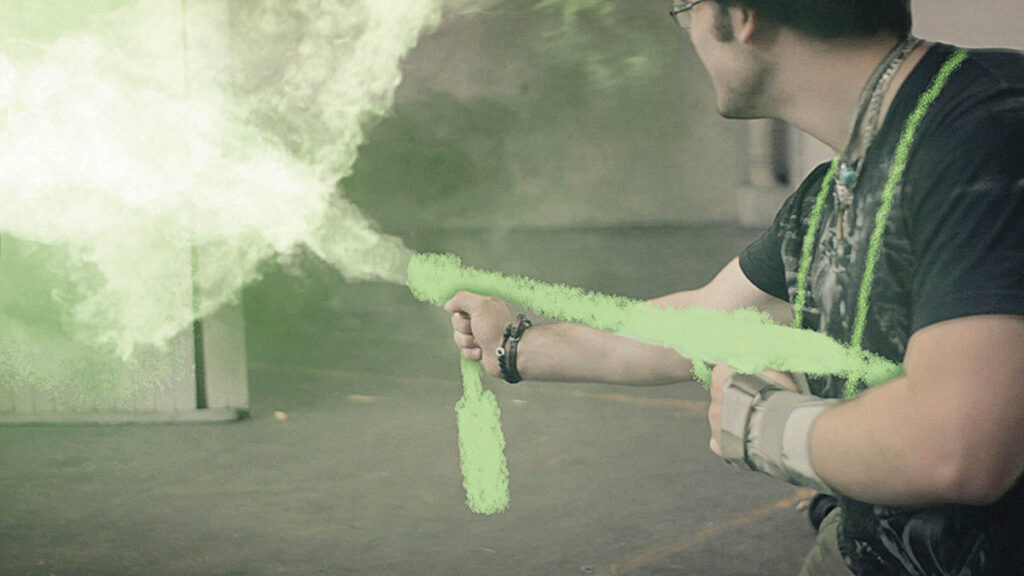
Sam Wickert, who works on both client and personal projects, founded the YouTube channel SoKrispyMedia, home to the web series Chalk Warfare. He also produced visual effects for MrBeast and created previsualization for Season 1 of The Last of Us. “When we started working with MrBeast, he was seen as a YouTuber. Flashforward five years, and he has one of the more successful shows on Prime Video,” Wickert, director and visual effects supervisor, states. “It’s funny to see how a YouTuber broke that gap and has become a leading figure in creating content.” The democratization of filmmaking technology has become a reality. “There are companies like Epic Games, which are big players in this space. They come from the game side of things, which is even more exciting because it’s driving the democratization of games, which is what we’re currently working on. You have this influx from all these different mediums that people can create content in, and it’s cool. Facial motion capture used to be insanely difficult: the rigging, skinning, getting quality facial animation, and piping it into a 3D program was near impossible. Now, with an iPhone, you can hold it up to your face, post-process it, and have it look beautiful with Unreal Engine, and also live-feed it into Unreal Engine so you can see the performance live. You’re also getting real-time feedback, which is insane in and of itself. This would have influenced the stories I was able to tell because I wanted to tell stories like that years ago. What is cool now is you’re limited by your ideas because you have all these tools available to you and the access to learn them with all the AI tools. There has never been a better time to be making something.”