Courtesy of Paramount Pictures & Framestore.

Courtesy of Paramount Pictures & Framestore.
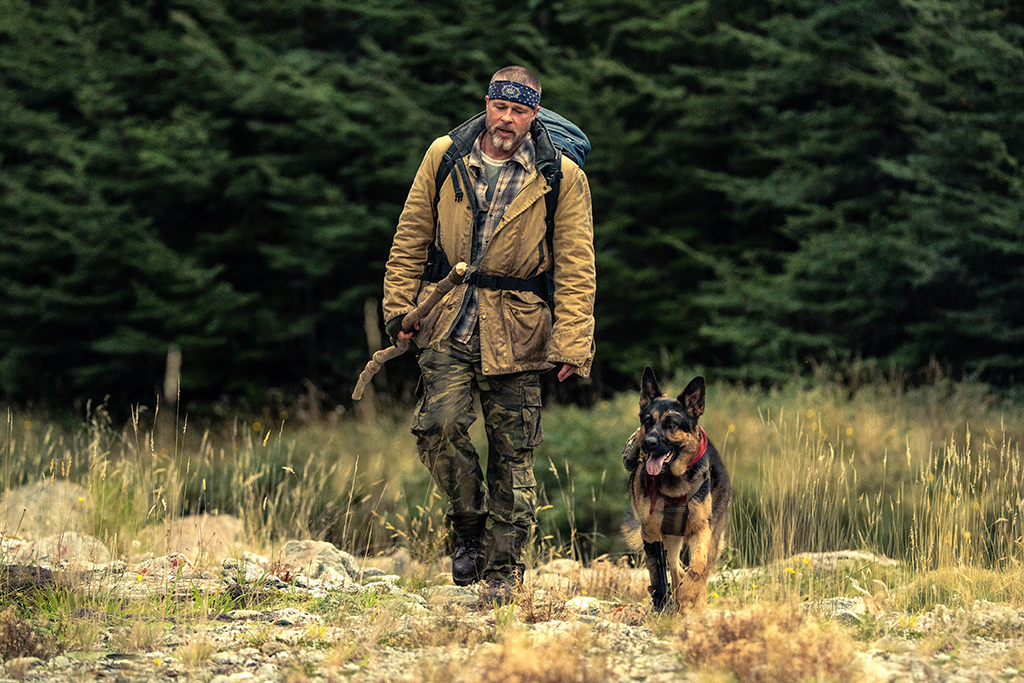
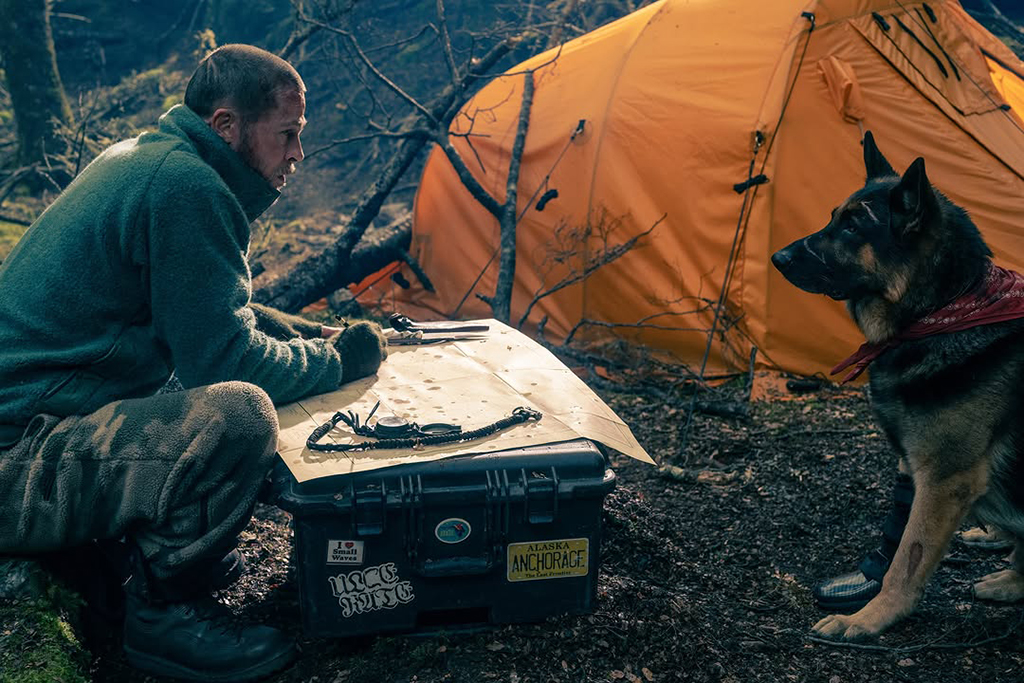
In Heart of the Beast, Special Forces veteran James Belmont (Brad Pitt) suffers a heart attack while piloting a Cessna bush plane, causing him to crash in the Alaskan wilderness. Accompanied by Odin, his former combat German Shepherd, both man and canine must contend with the elements, predatory animals and PTSD to survive. For the survival thriller, Visual Effects Supervisor François Dumoulin oversaw the delivery of seamless, photorealistic digital effects that couldn’t be achieved entirely in camera, including a realistic depiction of Odin as an amputee.
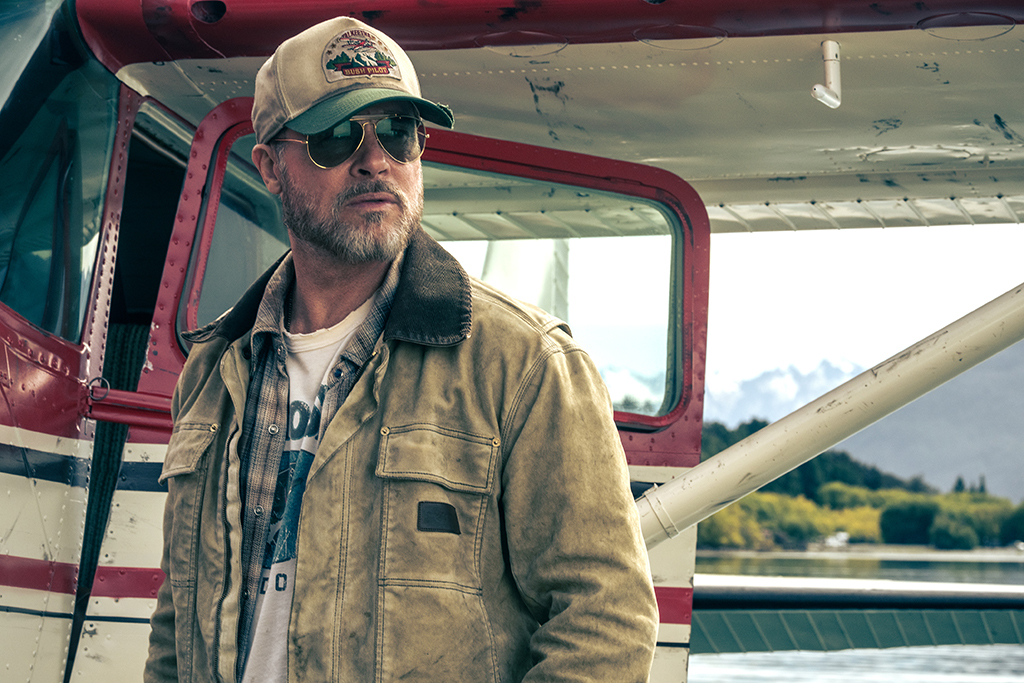
“Our dog is three-legged, which is part of the character and story,” says Dumoulin, whose credits include Lovecraft Country and The Sandman. “The prosthetic leg was practical and built specifically for our four dogs by Wētā Workshop. It looked fantastic, but in some scenarios, we could not use it because the terrain was too slippery or it would prevent the dog from running fast enough. There were a good number of shots where we had to add the prosthetic in post.” Another distinct physical feature required an entirely CG solution. “Our dog is wearing a set of titanium teeth on his upper jaw, and that would have been a mess to do on-set practically. We ended up doing the fangs in CG. One of the reasons we did that is the dog doesn’t show his teeth that often in the movie, so the volume was reasonable.”
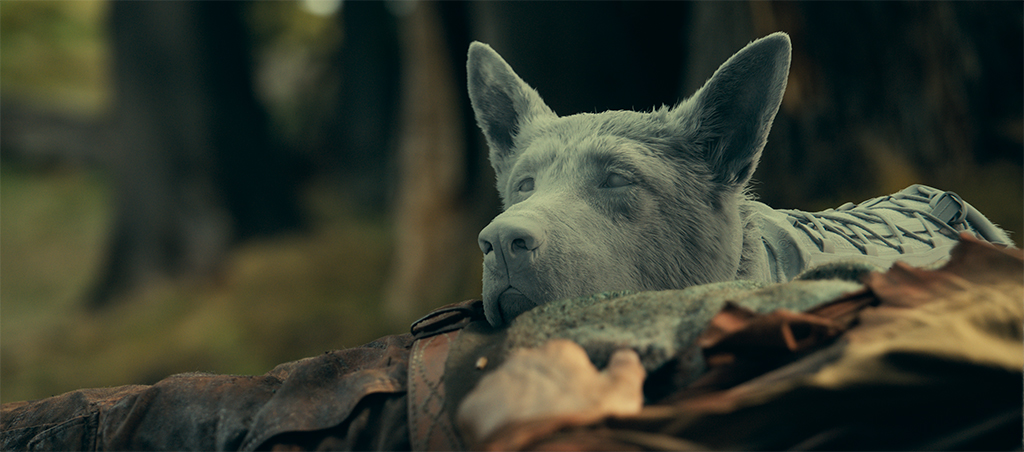
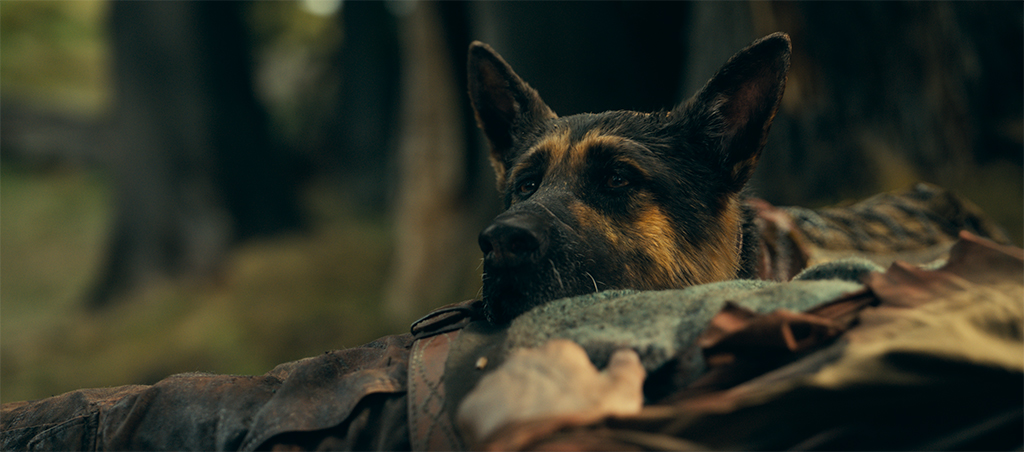
The performances of the different dogs had to meld seamlessly. “The name of our hero dog is Uber, and we based our CG dog on him,” Dumoulin says. “Makeup was applied to his face, as well as scars and discoloration on some parts of the fur. We also had three other dogs who were Uber’s sons. They were picked for their physical resemblance and because they got along with each other really well. We were using multiple dogs for a few reasons. If one dog stops cooperating, you get another one and try again. There are a lot of different scenarios. Some of them need a lot of facial performance. Others need more body and action performance. We trained different dogs for different purposes.”
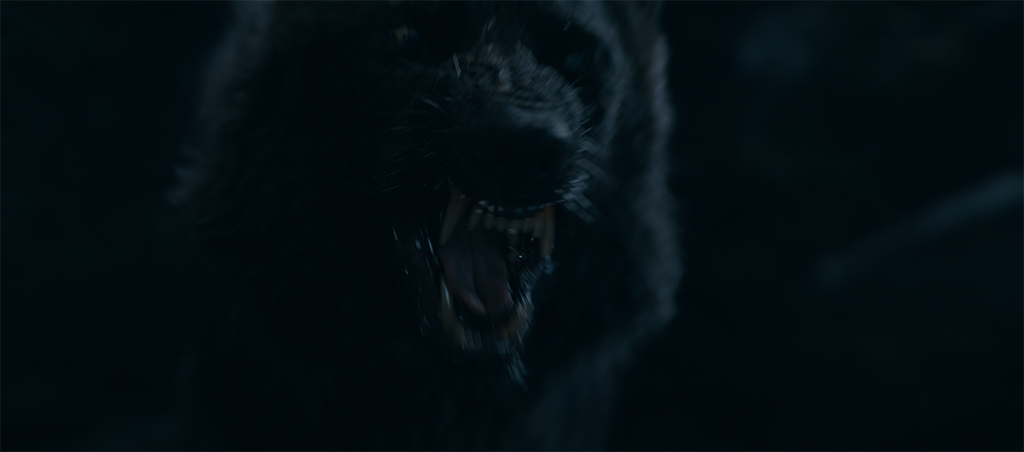
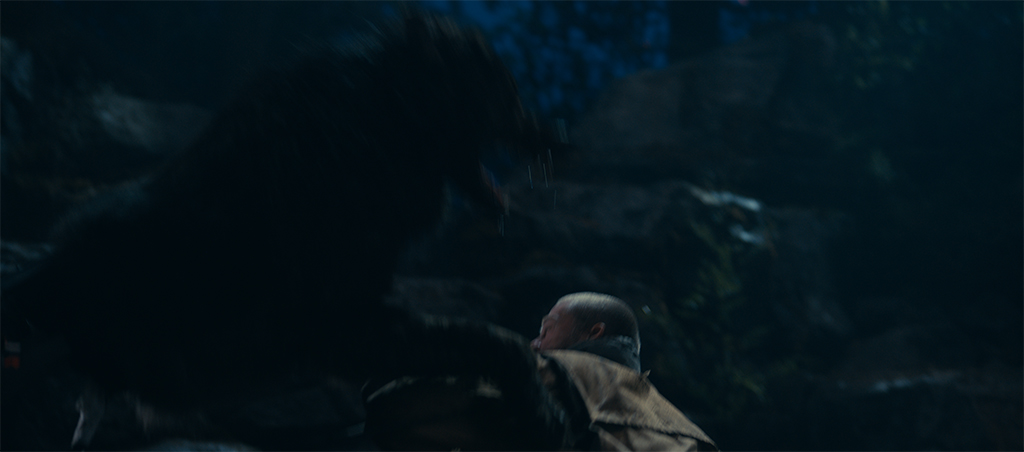
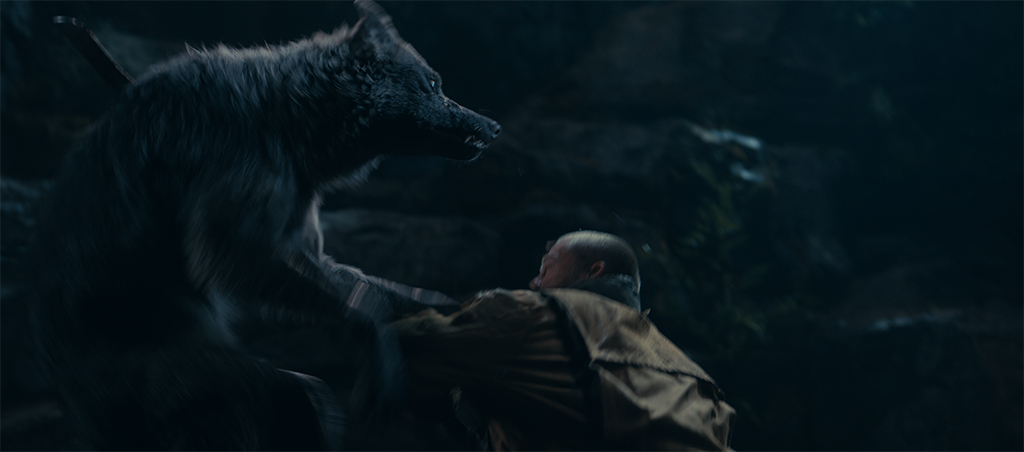
A wolfpack fight later in the film combined live-action performances with extensive CG work. “It’s a pivot in the movie, and the fight goes horribly wrong,” Dumoulin notes. “It’s like a nightmare sequence. Wolves keep coming from everywhere. When I read it, I knew the dog would not be able to do every shot because of the level of violence involved. We had a combination of a real dog trying to give us a representation of the action and a stunt performer on all fours pretending she’s a dog. You’re not going to launch a real wolf at Brad Pitt. It needs to be a human, and something where you can do it over and over again and hit your mark. When we’re doing these complex animated sequences, my job as visual effects supervisor on set is to ensure everything is interacting with the actor correctly. We were using fake wolf heads mounted on gloves so that we could do biting actions. I also needed to make sure that when Brad is looking at the wolf or the dog’s face, he’s not looking at the stunt guy’s face, because wolf eyes are actually right above the jaw. We were always trying to capture at least a reference plate with the real dog, so I could have a solid reference to compare apple to apple, see my digital dog in action, and compare it with the look of the real dog.”
“Sometimes, we would shoot over Brad’s shoulder and pretend he’s flying. Other times, we would shoot over the shoulder of the real pilot and try to avoid seeing his face. We could not bring the real dog into the Cessna, so we had a matching cockpit mounted on a motion base on a soundstage in Oakland, in front of a giant bluescreen with light rigs mounted on cranes that replicated the movement of the sun.”
—François Dumoulin, Visual Effects Supervisor, Heart of the Beast
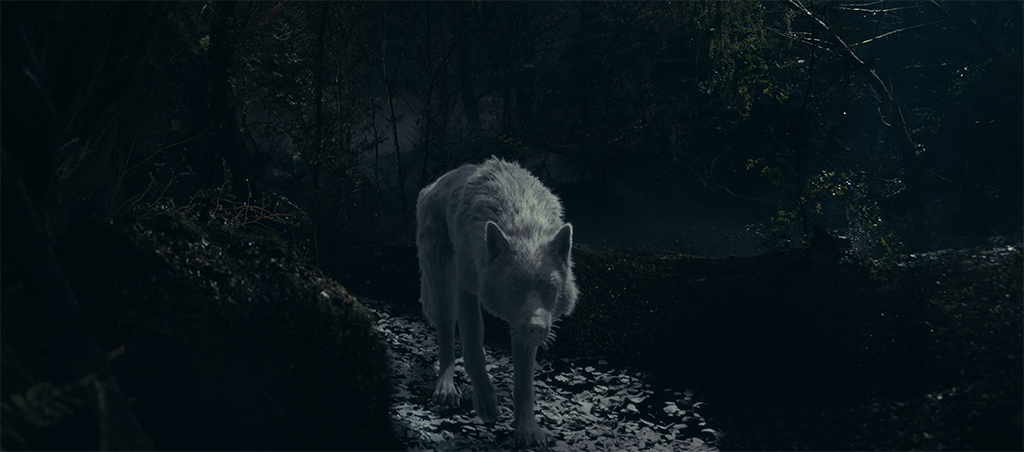
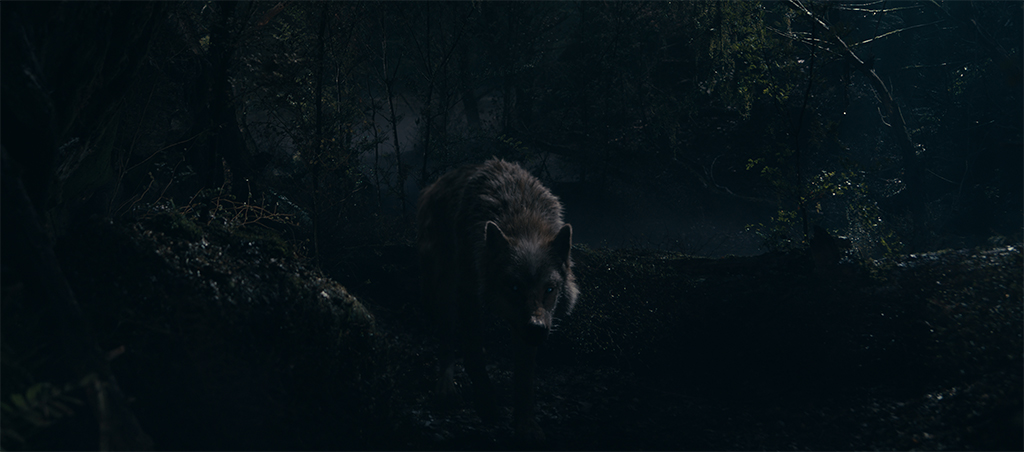
Director David Ayer pushed for a distinctive look for the wolves. “David felt our wolf looked too generic and vanilla,” Dumoulin says. “He wanted something more expressive, and that’s very telling of the movie we’re making. It’s grounded in reality, but slightly amped up toward something that is fantasy. Because at the end of the day, this movie is not a documentary; it’s a spiritual journey. In David’s mind, all of the animals embody some kind of spiritual quality. Our wolves are slightly exaggerated in their proportion and behavior. They’re extremely dehydrated, look sick and haven’t eaten in weeks. All of the wolves have patterns of dark and bright fur on their face. We ended up taking inspiration from Japanese kabuki theatre, where expression is embedded through markings. Some of them have a snarl. Others look like skulls because they have teeth in their fur. We had a lot of fun with that characterization aspect of the animals.”
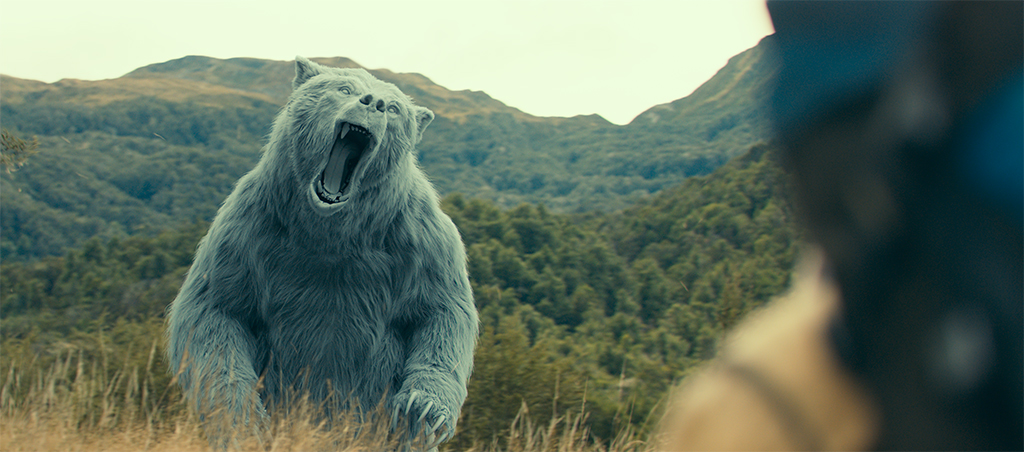
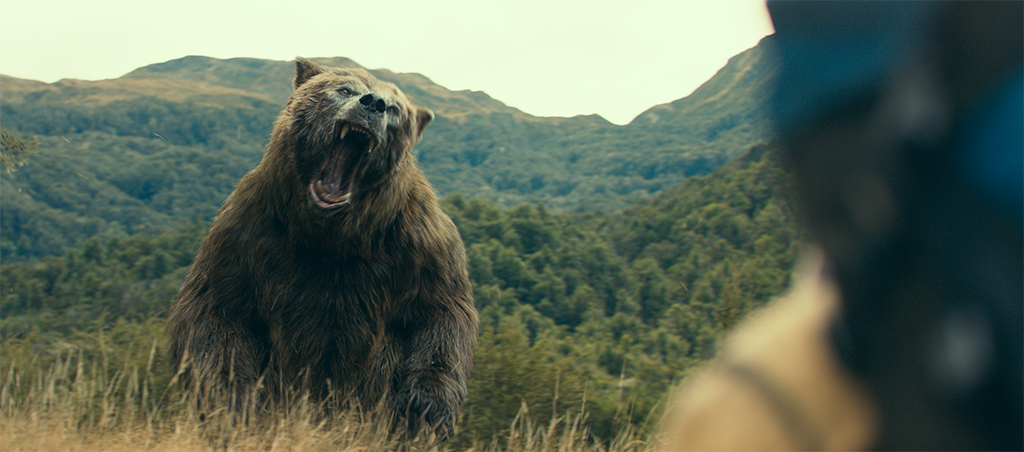
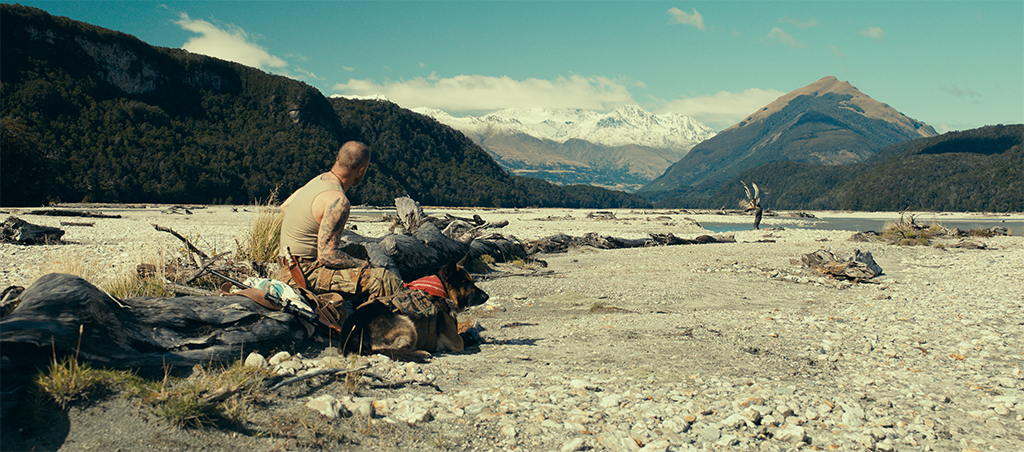
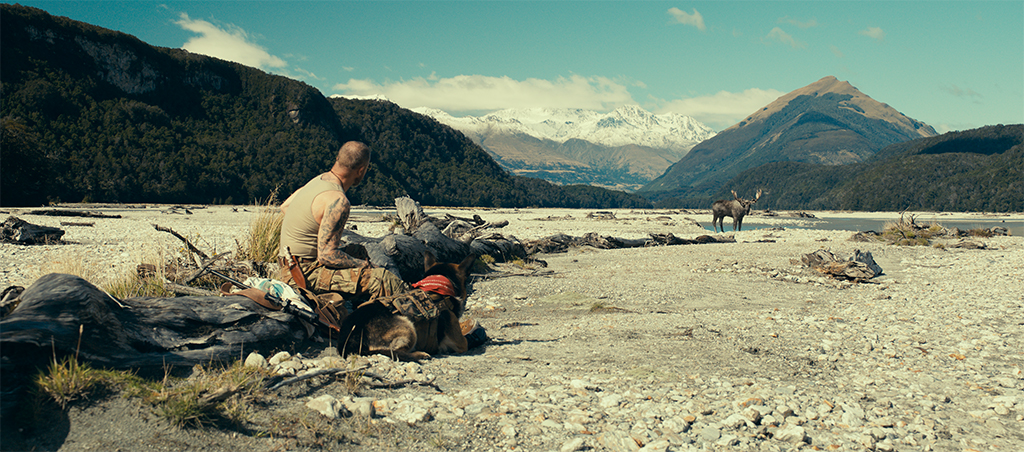
Principal photography took place in New Zealand, which doubled for Alaska, with the setting growing stranger as the story progresses. “I knew there would have to be some environmental augmentation, like adding snowy mountains in the background in the simplest way, because the New Zealand landscape is extremely spectacular,” Dumoulin notes. “However, New Zealand is specific in terms of its biome. It’s a country that has managed to get rid of all of its predators. Digitally, we had to do a family of moose [father, mother and a calf], a pack of wolves, a flock of birds and a giant grizzly bear. Our grizzly bear is a reflection of our main character in that he is covered in scars and muscular, but at the same time, age has taken its toll on his body.”
The war flashbacks take on a nightmarish quality. “The flashbacks play as visions that are abstract,” Dumoulin says. “There was actually a visual treatment that made them even more abstract, like the frame is slightly defocused, overexposed, and with multiple exposures. We did end up doing set extensions because we shot all of that in a backlot in Oakland, so there was bluescreen involved. We extended some streets, added buildings and a sense of landscape behind them, and augmented some of the explosions.”
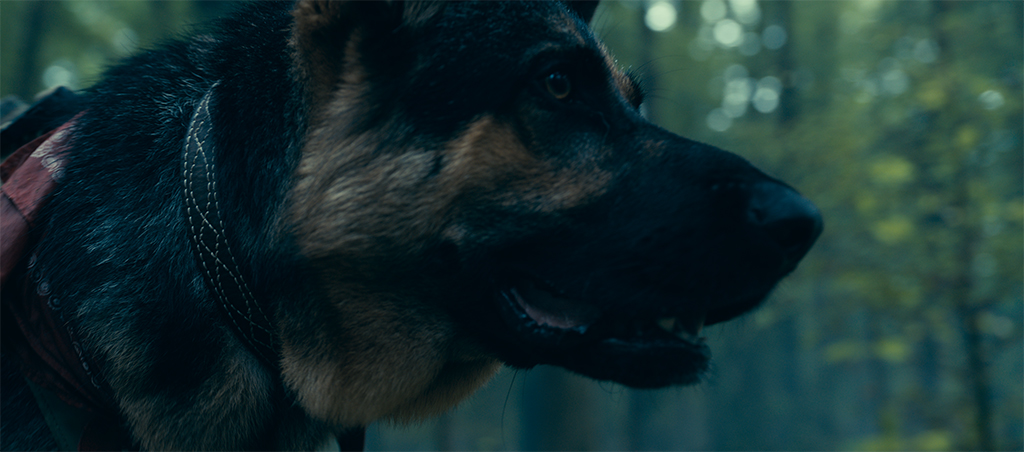
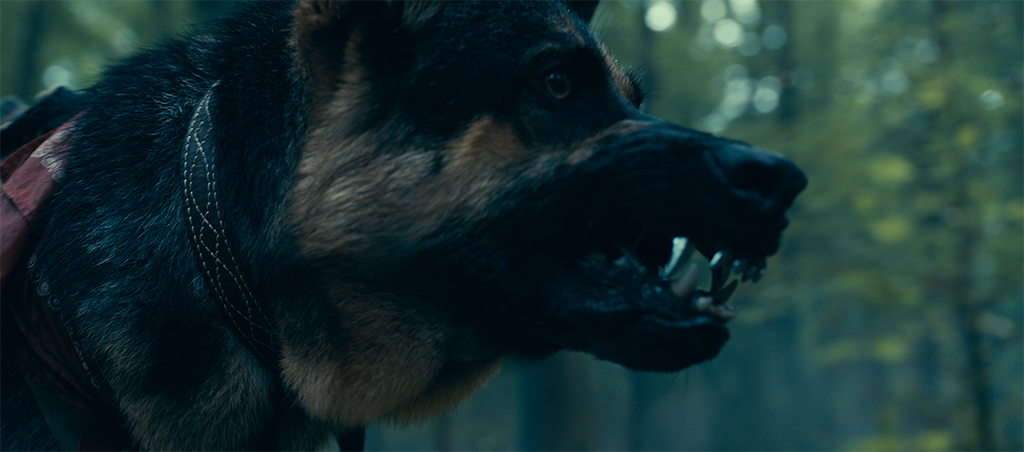
“Our dog is three-legged, which is part of the character and story. The prosthetic leg was practical and built specifically for our four dogs by Wētā Workshop. It looked fantastic, but in some scenarios, we could not use it because the terrain was too slippery or it would prevent the dog from running fast enough. There were a good number of shots where we had to add the prosthetic in post.”
—François Dumoulin, Visual Effects Supervisor, Heart of the Beast
Footage of a real Cessna bush plane flying over New Zealand was captured from a helicopter. “Sometimes, we would shoot over Brad’s shoulder and pretend he’s flying,” Dumoulin says. “Other times, we would shoot over the shoulder of the real pilot and try to avoid seeing his face. We could not bring the real dog into the Cessna, so we had a matching cockpit mounted on a motion base on a soundstage in Oakland, in front of a giant bluescreen with light rigs mounted on cranes that replicated the movement of the sun. Instead of rotating our gimbal, we rotated our lights, which is a fairly common process. I did two days of aerial photography with a six-camera array, which let us capture a 200-degree-wide field of view in one go and use it to replace the bluescreen background. For the plane crash itself, we had a hollowed-out Cessna mounted on a giant truss above a water tank surrounded by bluescreen. We crashed that shell of a Cessna into the water tank, which gave us a nice, juicy splash. We had to create the environment and extend the water. The shell of the Cessna was not performing at the right speed, so when the plane is going at full speed, it’s digital. At some point, we do a takeover to a real Cessna mounted on the truss as it crashes into the water.”
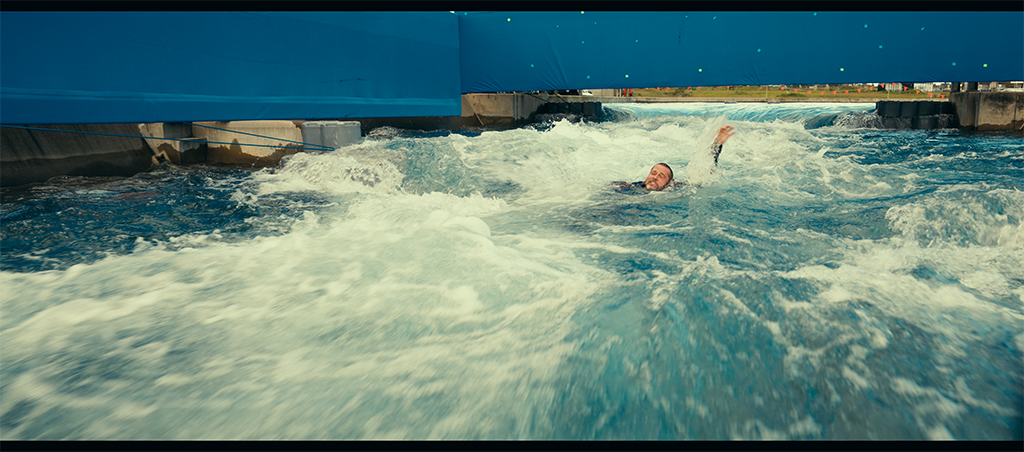
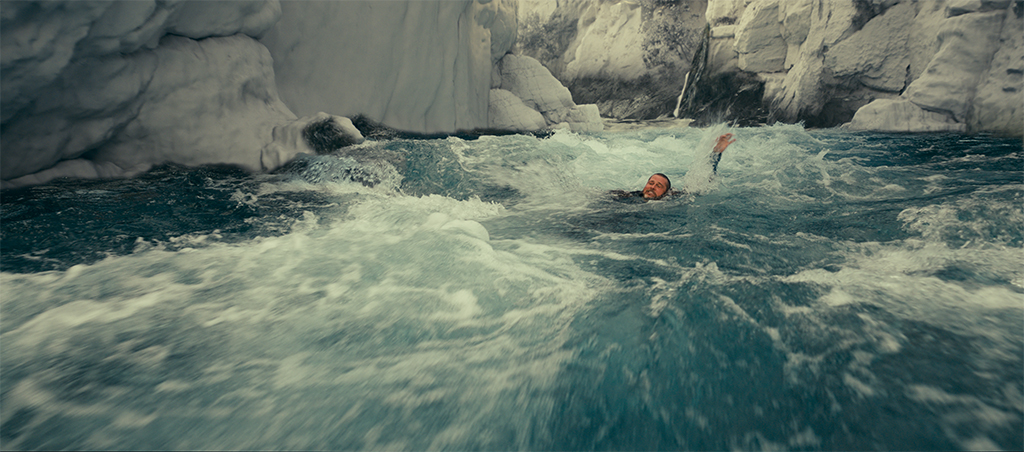
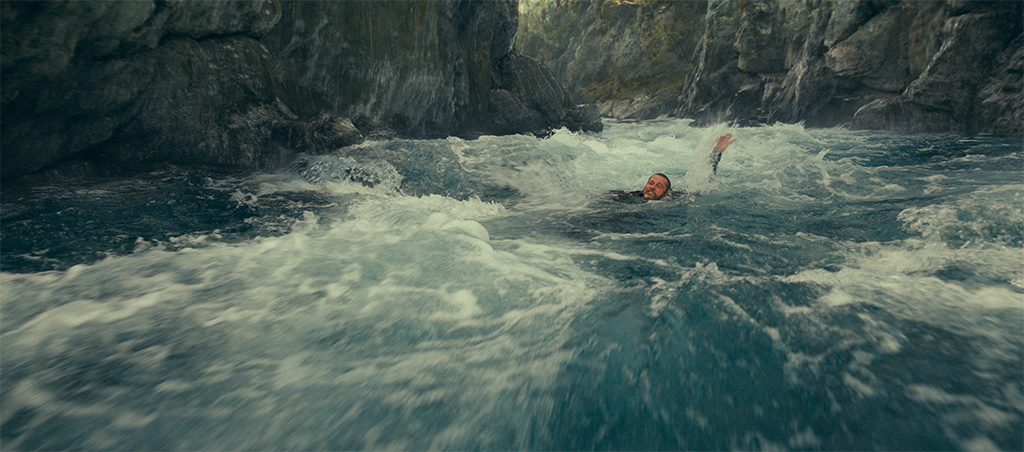
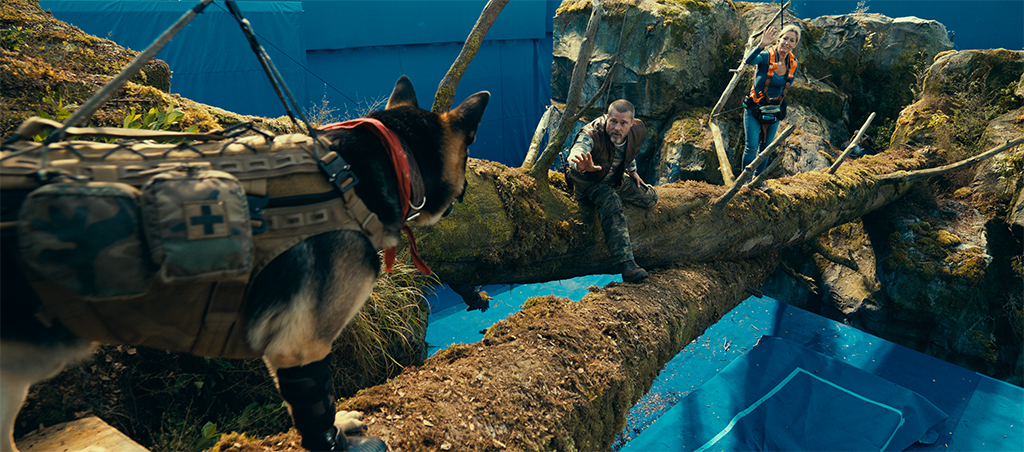
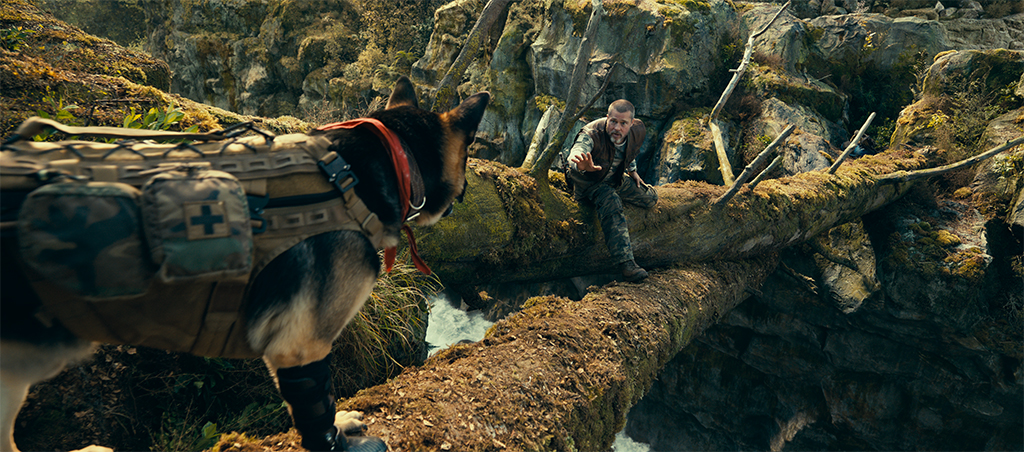
The team ultimately decided against using one major digital element. “CG water is complex, hard to nail, time-consuming, and often quite expensive. You need time to do it properly, and our initial post schedule was very compressed,” Dumoulin explains. “I knew that David would not be comfortable with a digital water simulation. I tried to capture elements for everything that involved water. The real challenging one, when it came to water, was the tree-bridge crossing. Originally, we were trying to find a real river with fast, dangerous whitewater, put a tree bridge there, and find some kind of stunt rig that would allow our cast to cross that bridge. We did find a fantastic location, but it was way too dangerous and extremely difficult to access. In the end, we took a hybrid approach. I went to a real river with the director of photography and the production designer, and we looked at how the sun worked there. ‘When we’re getting it nicely backlit, what time is it? What kind of light direction do we want?’ Then the visual effects and art department teams documented that location extensively. We scanned it and did a photogrammetry survey and drone capture. The production designer plugged his own tree-bridge design into that 3D model and 3D-printed the rocks. What we ended up with was a section of that cliff with the tree bridge on the backlot. We positioned our set so the sun direction matched [that] of the real location. We put a giant bluescreen behind and knew that our backlot design was matching one to one with that location.”
In another sequence, a stunt performer falls into the water. “We used a water tank at a waterpark outside of Oakland in front of a bluescreen, and we did face replacements,” Dumoulin remarks. “We trained the model to do some face-swapping between the stunt double and Brad’s face. Then we cut to Brad in the rapids. It’s a combination of the waterpark, with stunts doing the most complicated stuff, Brad doing a lot of it himself. Some of it was shot in a real river in New Zealand with a stunt double.”
Successful integration depends on collaboration. “The key was for every department to understand what’s going on,” Dumoulin says. “That’s true for the hybrid environments but also for anything that involved visual effects, especially the animals. My job is to make sure that everyone gets involved in a visual effects shot in the same way they would with a non-visual effects shot. I need the production designer to understand what the set extension will look like. I need the DP to know exactly where the bear is going to be standing and what the light on that bear is going to be. I always find solutions so that everybody has a representation on set of what the final product is going to be. When I’m dealing with animals, I have a puppeteer with placeholder puppets do a performance for us. [For set extensions], I insist that we find a good location that the director can sign off on. When we shoot the backlot, I even have a Gaussian splat on my phone that I can quickly scout and say, ‘That’s going to look like this when we put the set extension.’”
The film involved 700 to 800 visual effects shots, with Dumoulin collaborating with Framestore, Rodeo FX, Crafty Apes, Rebel, Opsis, BOT VFX and Soho VFX. He recalls a complicated editorial process in which the team worked on competing versions of the cut. “The person that I’m working with on a daily basis is the director, so I’m trying to be as faithful as I can to the director’s vision,” Dumoulin says. “But it’s a studio movie, so you also have the opinion of the studio. Brad Pitt was one of the producers, and he had a strong opinion on the story arc, the tone of the movie and the nature of his character. You have to respect that because, obviously, Brad is carrying the movie on his shoulders in every shot. Damien Chazelle [Whiplash, Babylon] is a filmmaker and also a producer. At its core, the story is about a man and a dog against the elements and nature. But the way the edits work, you can tell different versions of that character. The first question everybody wants to know is, ‘Does the dog live?’ That gives you an idea of the emotional intensity we’re dealing with.”