By CHRIS McGOWAN

By CHRIS McGOWAN
Over the last few years, the VFX/animation industry has contended with a pandemic, Hollywood strikes, the spectacular collapse of Technicolor and a roller-coaster business track. Yet, at the same time, the industry has surged forward technologically with AI, virtual production, real-time rendering, the cloud and more. Visual effects have been created for feature films, television series, live events, commercials, gaming, theme parks, augmented reality and virtual reality. “The VFX industry will continue to broaden its scope beyond traditional sectors, and VFX expertise will become increasingly integrated with other industries such as fashion, automotive and healthcare,” comments Ian Unterreiner, Executive Vice President of PhantomFX.
Unterreiner states, “This cross-industry collaboration will drive innovation and open new avenues for visual storytelling, experiential marketing and product visualization, making VFX an essential creative partner in a wider range of fields. Additionally, the perception of VFX studios will continue to evolve – from being seen as vendors to being recognized as true creative partners across both VFX and production. VFX artists and engineers are masterful storytellers whose contributions are integral to crafting on-screen experiences, whether from a technical or production standpoint.”
The up/down VFX/animation business grew 9.3% in the second half of 2024 and contracted -7.6% in the first half of 2025 for an overall 1.0% gain during those 12 months, according to the Visual Effects & Animation World Atlas 2025. India, France, Australia and New Zealand were the major Hollywood markets to show net growth over that period, and the top-five companies by head count were DNEG, ILM, Framestore, Wētā FX and Walt Disney Animation Studios, according to the Atlas.
In a time of great opportunity and uncertainty, here are some industry voices discussing the above and more.
FOUNDRY
Jody Madden worked at Digital Domain, Lucasfilm and ILM before becoming CEO of Foundry, based in London. “When I started, our industry worked primarily from VFX hubs in London and the West Coast of California, but now the talent is truly distributed around the globe. The advancements in hardware and software technology over the same period have made it possible for talent worldwide – from individuals to 10,000-strong VFX companies – to create groundbreaking visuals for our screens,” Madden says.
“The core philosophy behind our products has always been to enable artists to work on the most complex projects more efficiently,” Madden continues. “Looking ahead, we understand the pace of adopting new products and technologies is not one-size-fits-all. We’ll continue to support and deliver value to our customers in their existing pipelines, while building new products and workflows that enable the ways they’ll want to work tomorrow. We have to do both. For 2026, this includes a reimagined 3D system for Nuke, expanding our machine learning toolsets, further developments in our virtual production product, Nuke Stage, plus updates across Mari, Katana and Flix.”
Madden notes, “These new technologies provide an opportunity to work more efficiently and collaboratively, while providing more creative flexibility to artists when the tools that employ these enabling technologies are effectively implemented to solve real-world production problems.”
MATHEMATIC FILM
Olivia McLean, Executive Producer of Mathematic Film, remarks, “We’re continually chasing new efficiencies in this industry. Regarding cloud workflows, Mathematic is connected to the Sohonet Media Network, allowing us to connect directly to vendor platforms seamlessly. We also have a global file system called Hammerspace that can sync all the files directly to our Los Angeles office. As a company with its chief operation in France but an international client base, particularly for the U.S. market, we need to build an infrastructure that unifies our workflow and encourages virtual collaboration between our artists.”
Speaking of AI, McLean observes, “Beyond the acknowledgment of the general rise of AI’s impact across various sectors of the industry, more specifically, AI agents are starting to creep up, not only for personal assistance but, upon training, for further management and operational necessities. Optimistically, I believe the value of human connection and in-person mentorship will outweigh the pursuit of displacing production staff with a virtual agent. Still, it’s definitely a developing tech to be wary of.”
MILK VFX
Neil Roche, Deputy CCO and VFX Supervisor at Milk VFX, says, “It has been a challenging period, with the ongoing effects of the strikes and a noticeable strain on many established VFX houses; however, there’s a growing sense of momentum returning. The use of real-time game engines for VFX is very successful at Milk and Lola Post. Using Unreal for final-pixel VFX allows for more iterations and faster render times, which means our clients get increased productivity. Cloud workflows, particularly for rendering, are great for scaling up production without the need to overstretch the tech side of the company.” LED stages will continue to grow in importance. “Absolutely, they can be very cost-effective, even for simple things such as driving process sequences. The cost base for LED volumes seems to be decreasing, and the quality of in-camera content is also increasing.”
Roche notes, “Obviously, the big thing [from last year] has been advancements in AI and machine learning. The impact will be when the DCC software starts to use AI and ML in its tooling. Nuke already has a few ML nodes, and I’m sure this will increase. Increases in tax incentives, not only in the U.K but also in Europe, should also positively impact the industry.”

PHANTOMFX
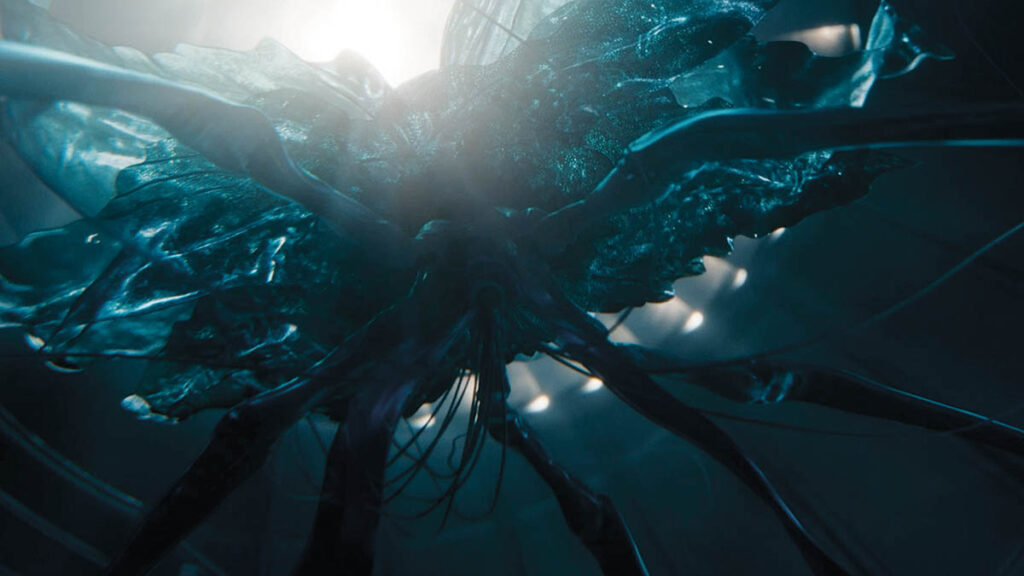
In 2025, Phantom Digital Effects acquired Milk VFX and Lola Post. According to Bejoy Arputharaj, Founder and CEO of PhantomFX, the addition “further solidifies the Group’s position as a global creative partner of choice.” He adds, “The VFX industry is undergoing a major shift as AI, machine learning and real-time technologies reshape how content is created and delivered.” For example, Tippett Studio [owned by Phantom] “is leveraging AI to produce Phil Tippett’s Sentinel, the highly anticipated follow-up to the cult phenomenon Mad God. By blending analog craftsmanship, cutting-edge CG and pioneering AI techniques, Sentinel pushes the boundaries of what’s possible in independent animation and genre storytelling.”
BASILIC FLY STUDIO
Balakrishnan R, Founder, Managing Director and CEO of Basilic Fly Studio, states, “There’s not just one tech breakthrough having the biggest impact right now or recently on the VFX industry. AI, real-time rendering and cloud workflows [are] all reshaping how we work. AI is doing a lot of the heavy lifting roto, clean-up and even some lookdev work, but it’s not about AI replacing artists. It’s about using it smartly so our teams can focus on the real creative stuff.”
He continues, “Real-time engines like Unreal are a game-changer, too. You’re seeing scenes live on set. What used to take days is now instant. It’s speeding up decisions and bringing everyone into the creative process earlier. And the cloud? Total enabler. We’ve got teams in different countries working like they’re in the same room. That kind of flexibility didn’t exist five years ago.” He believes “2026 will be a year of acceleration for the VFX industry. After a slower cycle in 2024–2025, we already see signs of production pipelines filling up again, driven by both streaming and theatrical projects. AI and real-time technologies will move from experimental to mainstream in VFX workflows, making production cycles faster and more collaborative. Studios with global reach, diverse talent pools and tech-enabled pipelines will have a clear advantage.”
CLEAR ANGLE STUDIOS
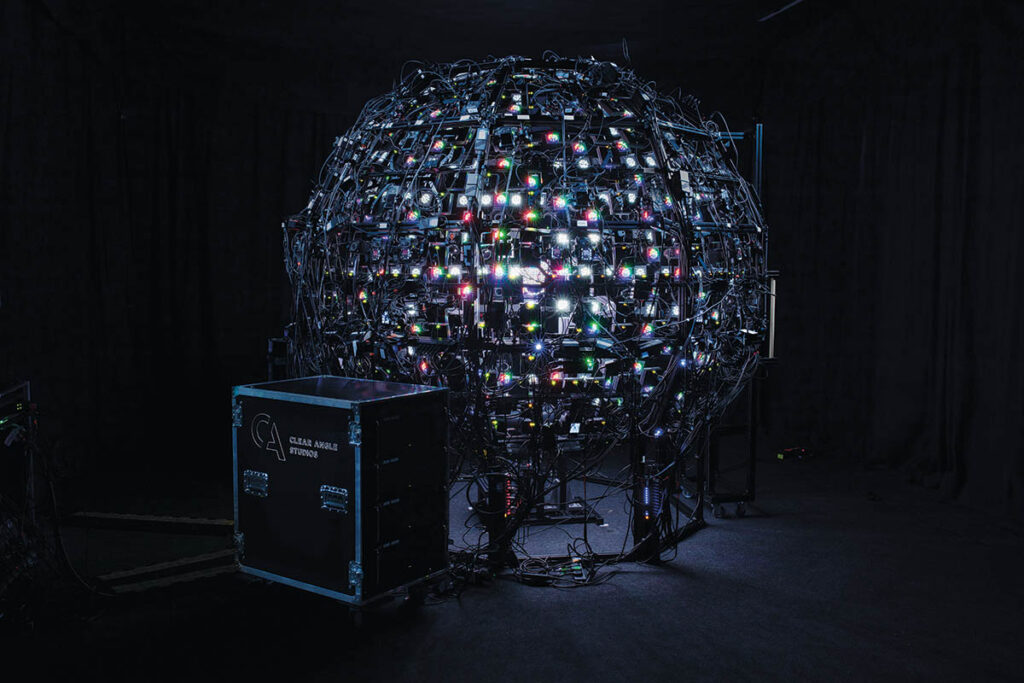
In 2025, Clear Angle Studios, a 3D capture and processing company, announced a strategic partnership with Robot Air, a specialist scanning company based in Cape Town, South Africa. “Productions shooting in South Africa will now have direct access to a full suite of globally recognized 3D capture services,” explains Christopher Friend, Director and Co-Founder of Clear Angle Studios. “These tools span the full scanning suite from character and costume scanning to LiDAR, props and full-environment capture. It’s the kind of solution that will remove logistical roadblocks that have been problematic for the international film landscape while empowering local productions to deliver world-class results.”
Friend adds, “As production locations diversify, having reliable, high-fidelity scanning capabilities on-site becomes a real strategic advantage for global teams. This move illustrates how the industry normalizes access to specialist tech in growing creative hubs like South Africa.”
Among tech breakthroughs that are having a big impact right now in 3D capture and processing and scanning, “Gaussian splatting is the current hot ticket,” Friend says. “It’s an amazing tool for capturing dynamic, high-detail environments and subjects that are quickly translatable into an immersive, interactive experience that can be rendered in real time.”
LUX AETERNA
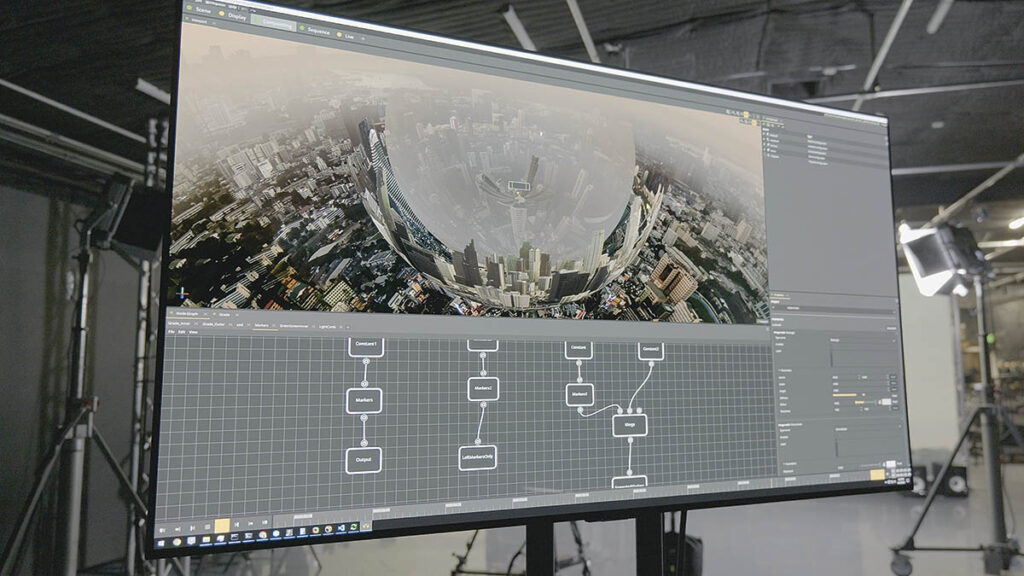
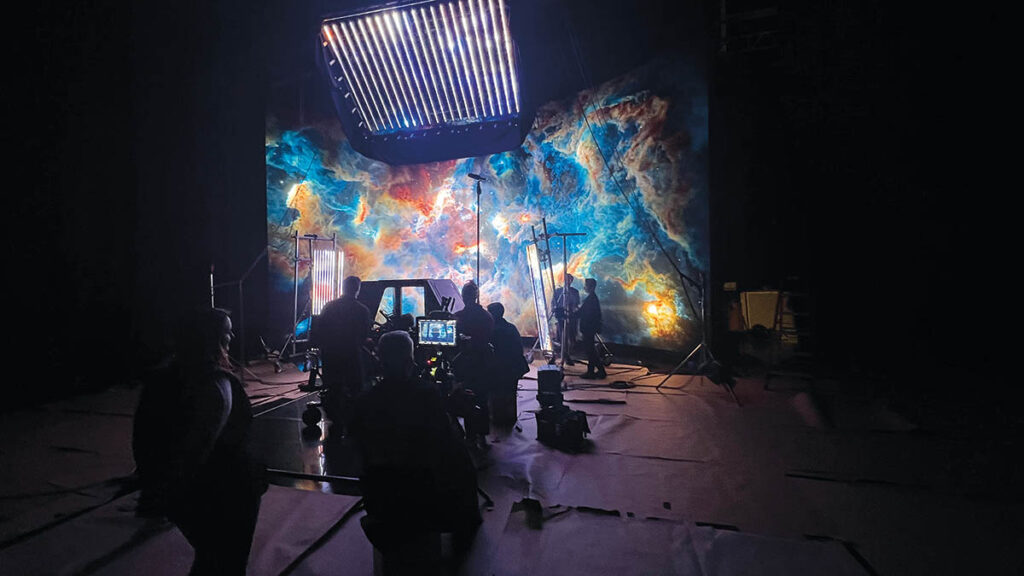
Rob Hifle, Co-Founder, CEO and Creative Director of Lux Aeterna, notes, “In these rocky times of late, we’ve had to think smarter at Lux Aeterna to navigate some of the stalling and non-commissioning of projects due to global economic uncertainty over the last two years.” Paul Silcox, VFX Director for Lux Aeterna, explains, “One of the driving forces enabling our flexibility is our investment into our Universal Scene Description (USD) pipeline; it means that we have been able to work quickly, efficiently and optimize management of assets and workflows.” He adds, “We’ve been forging into the virtual production and immersive sectors, creating more cinematic VFX work on large-scale global immersive screen projects and film stages. Working on these large-scale event spaces has been both liberating and creatively exciting.”
Hifle adds, “We’ve also seen huge cost-effective solutions with machine learning processes on some of Lux Aeterna’s more laborious VFX tasks. It’s been instrumental in clean-up and rotoscoping, reducing costs and speeding up turnaround times. Improvements to ML denoising algorithms have also sped up render times significantly, which has a direct influence on our efficiencies with regard to schedules, costs and our carbon footprint. We are seeing more real-time rendering tools such as Unreal Engine, in our pipeline. This is only going to grow in 2026. It’s helping manage and transform workflows and shortening production cycles. We are seeing more projects utilizing LED volumes with our immersive and film stage work.”
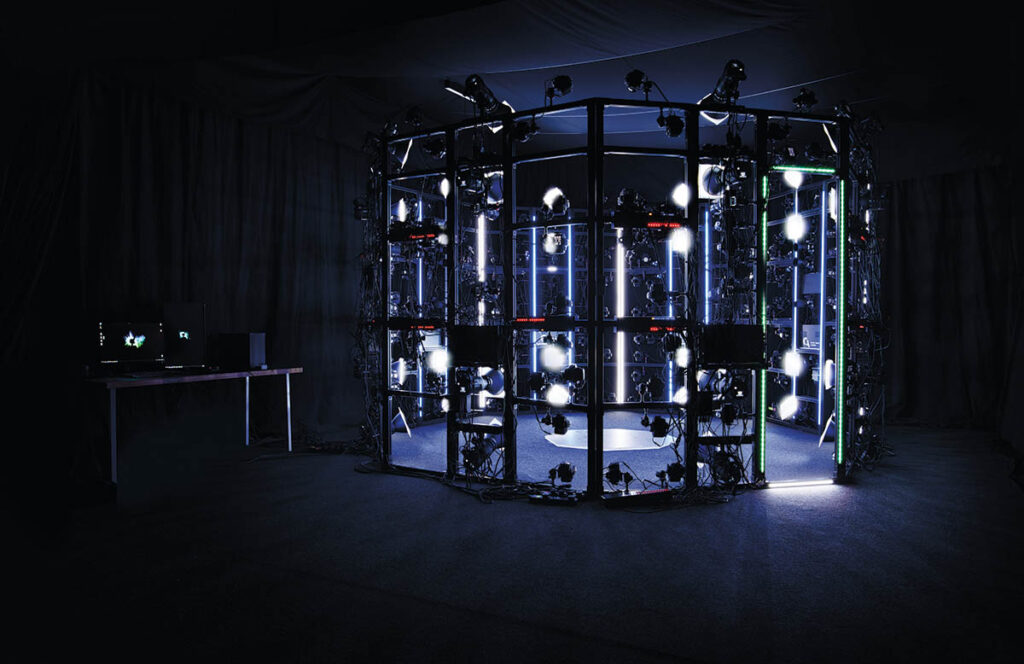
Clear Angle offers a full suite of 3D capture services. These tools span the full scanning suite from character and costume scanning to LiDAR, props and full-environment capture.
BEEBLE AI
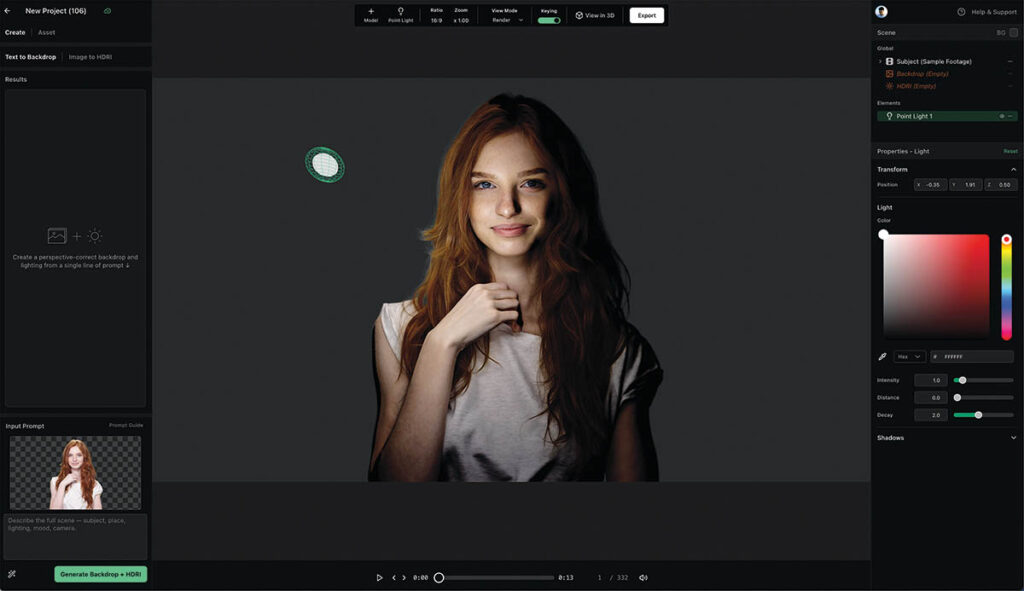
Beeble AI, based in Seoul, South Korea, specializes in AI-driven relighting technology. “At Beeble, we’re pushing the boundaries of what’s possible in visual effects by turning standard 2D footage into fully relightable, physically-based render [PBR] assets,” comments Hoon Kim, Co-Founder and CEO of Beeble AI. “This enables creators to relight actors in post-production as if they were shot on an LED wall, drastically cutting down costs and time while preserving full artistic control.” Kim observes, “One of the most impactful shifts in 2025 [was] the rise of hybrid workflows – blending traditional CGI techniques with AI-generated assets and enhancements. Rather than replacing artists or pipelines outright, AI is augmenting them: accelerating routine tasks, enabling creative iteration earlier in the process and opening new doors for storytelling.”
Kim foresees that in 2026, “VFX production will become more collaborative and web-native, powered by cloud rendering, versioning and shared asset platforms. The next generation of visual storytelling will be defined not just by realism, but by flexibility, speed and creative freedom. AI is helping us move beyond the constraints of physical production environments.”
RAYNAULT VFX
“Economic fluctuations, political uncertainty and the expectation that AI will reduce VFX costs could push studio heads to adopt tighter budgets,” says Mathieu Raynault, Founder and CEO of Raynault VFX. “Despite all these unknowns, including AI, I remain optimistic about the future of VFX and our company. I believe that by staying lean and flexible, we can continue to thrive, turning each of our artists into a creative powerhouse and multiplying our overall capacity exponentially.”
Raynault comments, “Generative AI tools and machine learning are clearly going to reshape VFX workflows. Right now, the flood of new tools is overwhelming, and they evolve incredibly fast. Our biggest challenge is figuring out which ones are ready, secure and legally safe to integrate. Over time, these tools will drastically reduce the time spent on tasks across our pipeline, letting our artists work more efficiently and focus on higher-value creative work.”
SPIN VFX
Neishaw Ali, CEO and Executive Producer of Spin VFX, observes, “The biggest technological breakthroughs impacting the VFX industry today are near real-time rendering and AI-assisted image generation. Tools like Unreal Engine for real-time rendering and AI platforms such as Midjourney, Adobe Firefly, Luma AI and others are transforming how we work. The ability to see changes instantly and generate compelling visual concepts in minutes means filmmakers, artists and production teams can align creatively at the earliest stages.”
Ali notes, “LED stages will grow exponentially in later years as technology matures with better panels, lower latency and more accurate color, coupled with a standardized workflow that is easier to drop into production without massive R&D and overhead. The biggest challenge we faced in 2025 wasn’t the technology itself, but the mindset shift. We need to commit to learning the tools and methods that will define the next decade, such as real-time rendering, USD-driven interoperability, AI-assisted automation and virtual production.”
“Simultaneously, we’ll see pipeline consolidation with cross-trained teams replacing siloed departments. Changing the mindset of our existing staff to help them let go of old habits and accept that the fundamentals have shifted will be as critical as learning the tools themselves. At the same time, we must push schools and universities to adapt their curriculum now, so graduates enter the workforce with the real-time, USD-based, AI-assisted, cross-disciplinary skills that will become the basic standard that the industry demands.”
“2026 is poised to be a year of evolution rather than explosion. The future looks bright, but it’s calling for leaner, smarter and more tech-savvy VFX.”
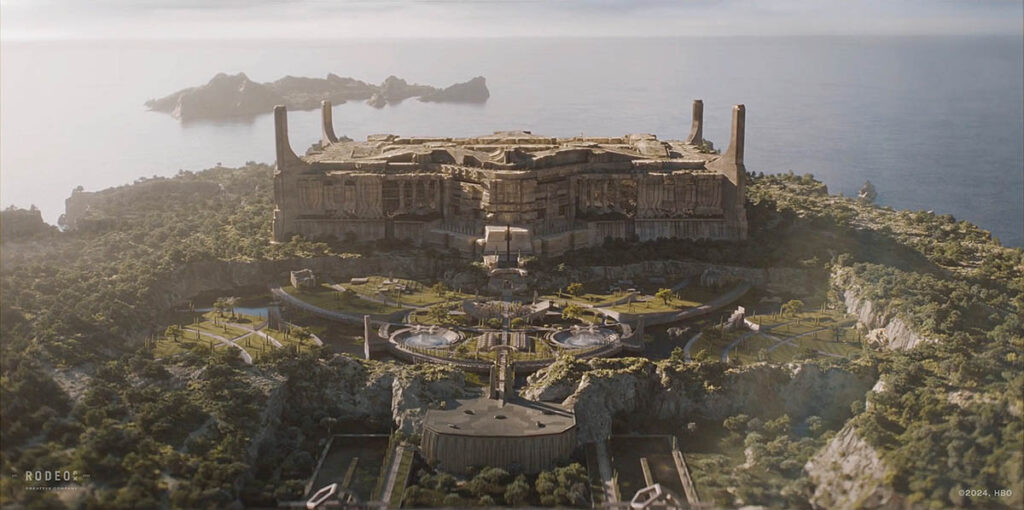
—Sébastien Moreau, Founder & President, Rodeo FX
RODEO FX
Martin Walker, Chief Technology Officer at Rodeo FX, states, “By leveraging the power of modern GPUs, real-time rendering engines, like Unreal Engine, can render complex, photorealistic scenes instantly. This means an artist can adjust lighting, swap materials or move the camera to explore new compositions without delay. This immediacy transforms the creative process from a linear, one-way street into a dynamic, interactive playground where artists can test dozens of ideas in the time it used to take to render one.”
Artificial intelligence is automating many of the most laborious tasks on the animation front, acting as the ultimate animator’s assistant. Walker says, “Instead of manually keyframing every subtle movement, animators can leverage AI to significantly speed up the process. AI algorithms can automatically clean up noisy motion capture data, saving countless hours of manual adjustments. Furthermore, new tools can generate realistic character animations from simple text prompts or video input, providing a high-quality starting point for animators to refine.”
Walker continues, “When combined, real-time rendering and AI animation create an incredibly powerful workflow. This synergistic loop of AI generation and real-time feedback allows creators to iterate on entire scenes – animation, lighting and effects – holistically and rapidly.”
Sébastien Moreau, President and Founder of Rodeo FX, notes, “The demand for high-quality content isn’t slowing down. Streaming platforms, global franchises and immersive media continue to drive appetite for VFX across film, television and advertising. However, economic headwinds mean many projects will come with tighter budgets. The silver lining? Technology is catching up. Real-time rendering, virtual production and AI-powered tools are helping studios speed up workflows and reduce costs. These innovations are reshaping how VFX is made, unlocking creative freedom while keeping bottom lines in check.”
Moreau concludes, “All things considered, 2026 is poised to be a year of evolution rather than explosion. The future looks bright, but it’s calling for leaner, smarter and more tech-savvy VFX.”