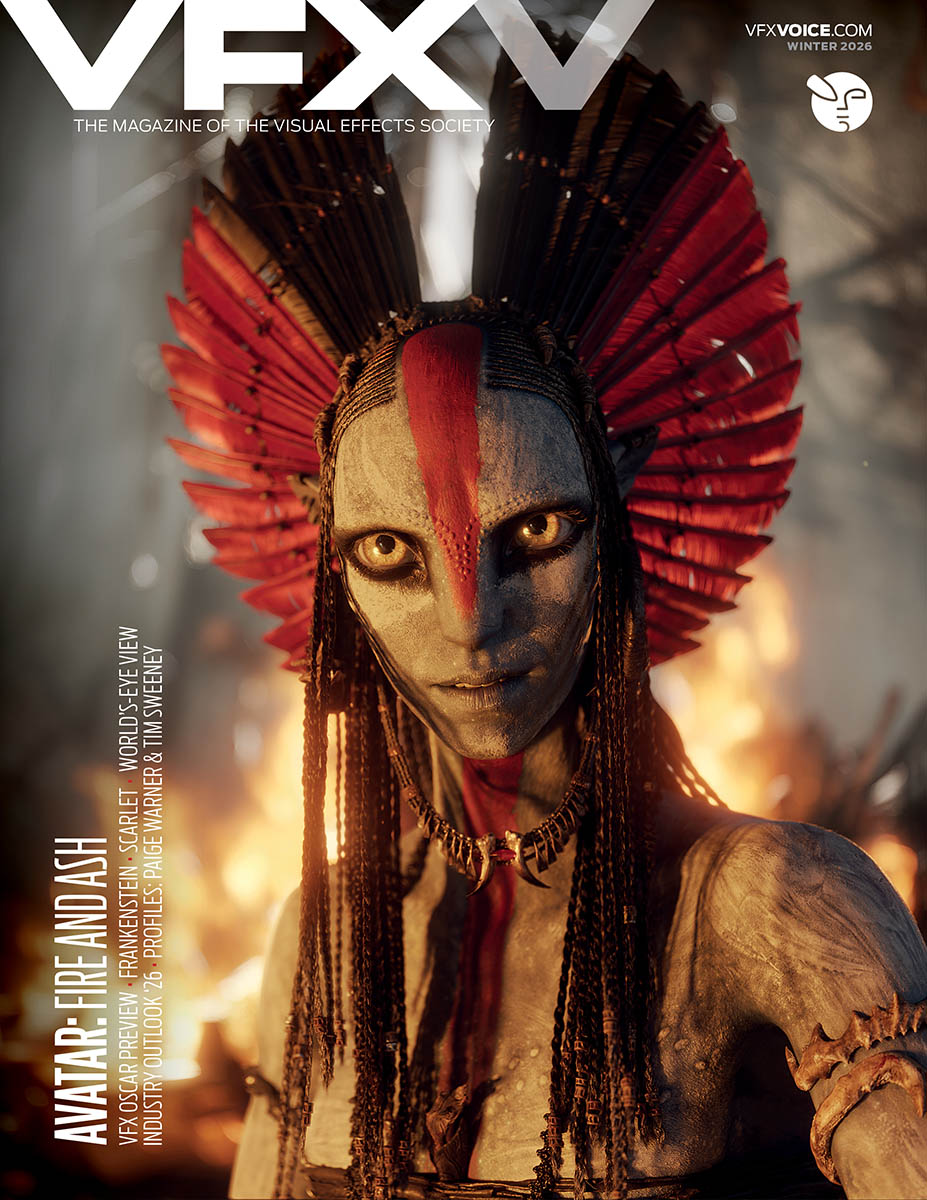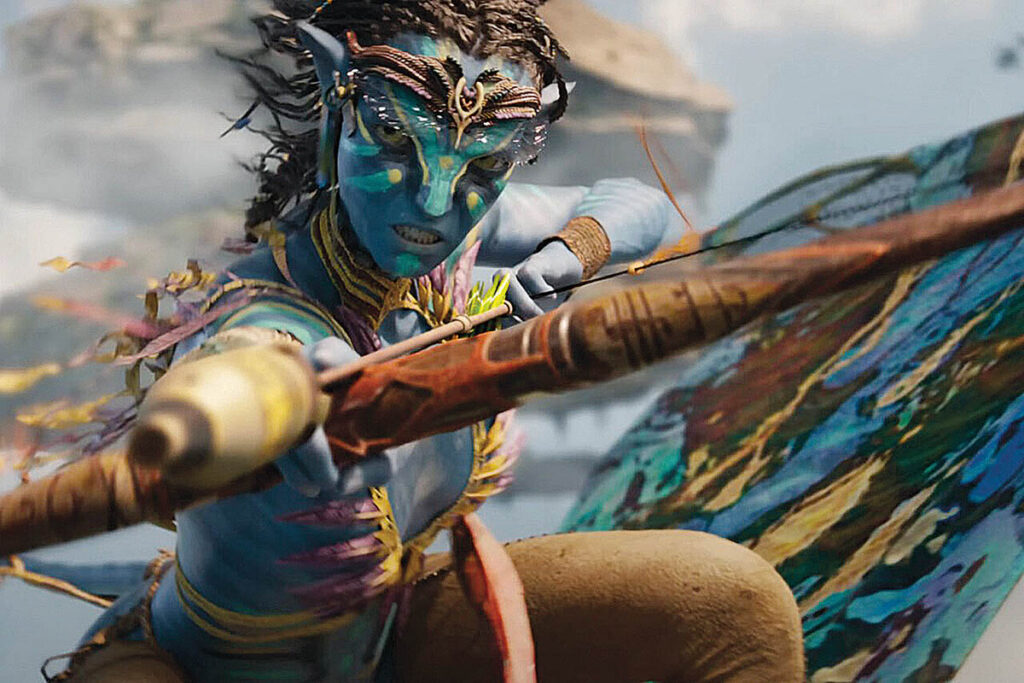
Directed by James Cameron, the entire Avatar series is fundamentally influenced by a cinematic drive for absolute immersion and technical innovation, building upon the grand scale of widescreen historical epics (Lawrence of Arabia, Dances with Wolves, etc.) and the high-concept visual storytelling of classic science fiction such as Star Wars and Cameron’s own The Abyss and Terminator 2, which pioneered digital performance and motion capture. The core VFX influence is the refinement of performance capture (mocap), evolving techniques pioneered for characters like Gollum to achieve unprecedented fidelity in real-time facial and body movements, and making the Na’vi characters the primary focus rather than a secondary element. Technologically, Cameron has pushed the industry with stereoscopic 3D capture (using his custom Fusion Camera System) and real-time virtual camera directing, allowing him to shoot within the digital world as if on a physical set, and the use of High Frame Rate (HFR) in The Way of Water to sharpen visual clarity, especially in fast-moving and underwater sequences. This ongoing technical ambition continues with Fire and Ash (see article, page 68), which introduces the fire-worshipping Ash Clan, demanding new challenges in volumetric rendering, fire simulation, and incorporating new, highly detailed environments that further ground the fantastical world of Pandora in photorealistic detail. In many ways, the Avatar series fundamentally redefines what audiences accept as “real” in cinema, proving that photoreal digital characters could carry entire films emotionally, not just technically. Cameron’s insistence on performance capture as acting – not animation – legitimized virtual production as a serious filmmaking tool and pushed the industry to invest billions in LED volumes, real-time rendering and neural rendering technologies. The films don’t just raise the VFX bar; they move it into a different arena entirely.