By TREVOR HOGG

By TREVOR HOGG
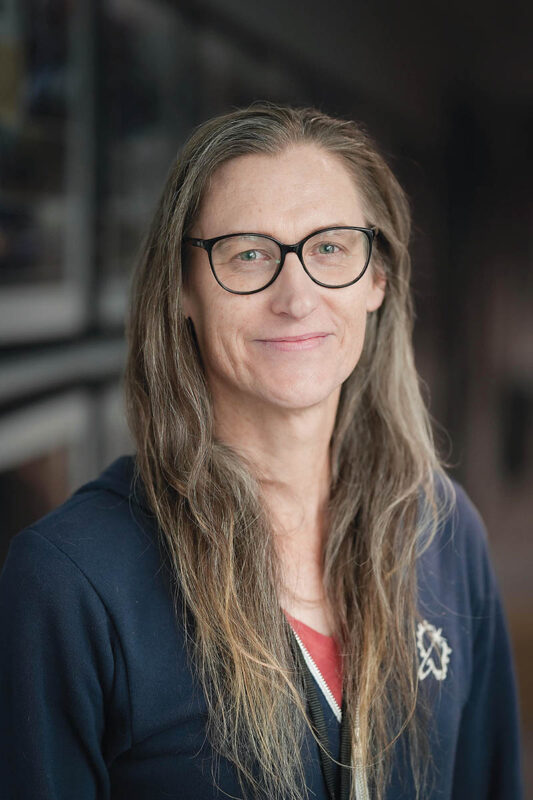
Paige Warner is not afraid to break things in order to press ahead. Her forward thinking paid off in 2017 when Warner, along with colleagues Kiran Bhat, Michael Koperwas and Brian Cantwell, received a Scientific and Technical Award from the Academy of Motion Picture Arts & Sciences for designing and developing a facial performance-capture solving system for ILM. The pathway to achievement walked by the digital artist was paved by being interested in both technology and artistry. “I bridge the gap, and that’s where I excel the most,” notes Warner, Digital Artist at ILM. “I have a sense of the artistic side but still have a heavy technical side as I like knowing how everything works, and I enjoy building the tools that we use. For me, one of the great things about the combination is that I’m using the tools that I’m also helping to develop, so the feedback is immediate as far as what works and doesn’t work.”
Initially, her ambitions were analog in nature. “I love working with my hands and making stuff, so as a youngster I hoped to become a modelmaker,” Warner recalls. “But as I was going through school, computers became a big thing. My dad got us a Macintosh Plus around 1989, and I started creating art on it, and that took off. Even more so in high school, doing graphics and whatnot. I helped to layout the school newspaper, as far as graphic design; how it should look and formatting text. All of that stuff led into a job at a newspaper after graduation.”
The conclusion of the original Star Wars trilogy made a lasting impression. “The key one for me was Return of the Jedi and seeing the speeder bike chase in theaters when that came out,” Warner states. “I was blown away by that and also knowing, through the grapevine or adults talking, that it was captured in Northern California in the redwoods. My family would throw a birthday party for me, and we would go to Samuel P. Taylor State Park, which is a beautiful park in West Marin; it’s all redwoods. I remembered seeing the same thing in Jedi, so that gave me a spark. Then, going forward, seeing more visual effects, and starting to see movie magic and the different shows that revealed the technology behind the scenes. The whole process fascinated me.”
Computer expertise came from personal experimentation. “I’m mostly self-taught,” Warner remarks. “I was able to get some software when I was getting close to graduating high school, and built a PC. I learned how to do that. I stayed up late every night, fascinated with the process of modeling and having a 3D environment within the computer that you could work with. That was exciting, and I wanted to continue pursuing that. I went to community college for a few years, and took classes related to computer graphics and things like that. But I learned more from doing it versus what was in school. And I got a lucky break getting my foot in the door at ILM.”
Ray Harryhausen inspired a project that served as a demo reel. “I did a vignette of a skeleton walking through the forest and having a sword fight with a friend of mine,” Warner explains. “I worked on that for well over a year. It was three shots. One big shot was the actual action scene, as it were, but that was enough to submit to try to get an internship at ILM. It ultimately landed on the desk of Keith Johnson, who was the head of matchmove at the time, which became the layout department. He saw that it wasn’t just animation but full visual effects. Keith gave me a call back and I had an interview with him, but they already had lined up an intern for the season. He suggested an entry level position as a technical assistant the way people typically applied. However, at the time, ILM filtered out anyone who didn’t have a degree. I didn’t get a job there but kept in touch with Keith. After the internship ended, the intern wanted to go back to school and finish their animation degree. ILM had turned that internship into a job, so I was hired to be a department coordinator, helping to organize all the on-set data coming in as Polaroids so it was available for the artists.”

“A pleasant surprise is when someone takes something you’ve built and makes something new with it. The other part I was inspired by early on was starting to write tools and seeing how much enthusiasm I got from artists that I was making something for them. That’s been a key for my career and always having it be the end goal.”
—Paige Warner, Digital Artist, ILM
Having an interest in learning how things work goes far back to when Warner was a child assisting her stepdad repair a vacuum. “I remember walking out and looking at it,” Warner says. “My stepdad was trying to figure out how he was going to make it work. I was like, ‘Why don’t you stick a little piece of wood in there?’ And he said, ‘That’s not a bad idea.’ And it worked! Ever since then, it’s always been something I’ve enjoyed, and that’s an important aspect of our process, our work. I share with John Knoll [Executive Creative Director & Senior VFX Supervisor, ILM] the idea of being able to take things apart and being somewhat fearless or confident enough that you can get it back together and keep things working. It is valuable in terms of understanding how these things work, tuning them and making all of our processes as efficient or productive as possible.”

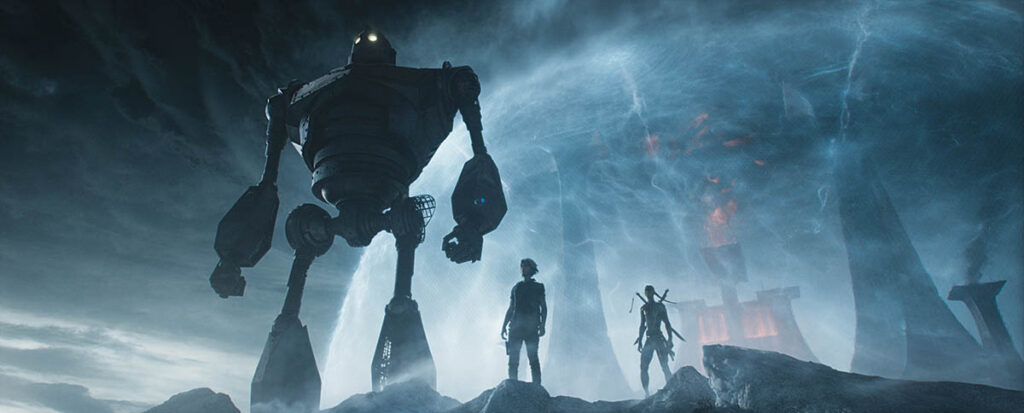
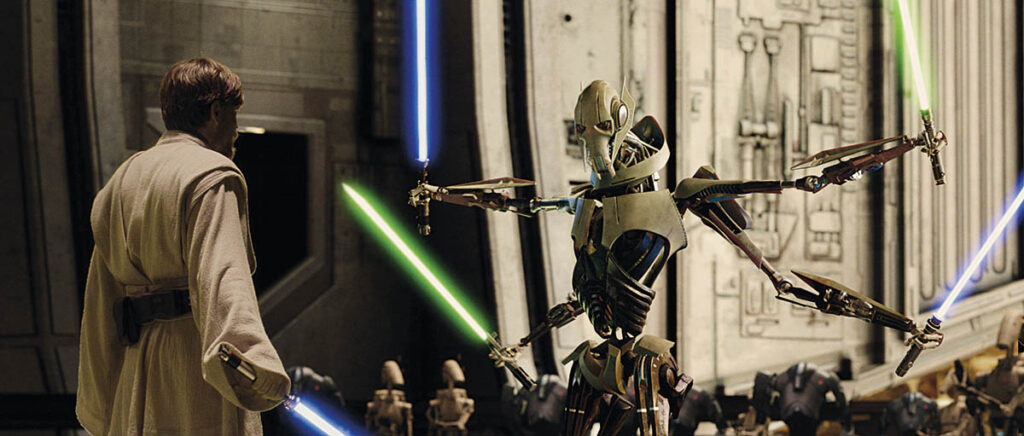
Failure is not something to fear. “I’m comfortable failing, and I fail a lot,” Warner remarks. “A lot of the failures, as I would put them, are the trial and error of trying to figure out how something works until you finally get to the point where, ‘There it is.’ That’s the combination I needed to achieve to understand what was going on, and now I can move forward. It’s the end result of all of that hard work that people see, and you are impressed with being able to figure that out. But I tried a lot before I got there. That journey of getting to that point of making those small mistakes, or things that don’t work before you get to a point that does work, is valuable in the long term, because it helps form your opinions. When new ideas are brought up, or different approaches, there is an extra knowledge. You can be, ‘I actually tried that, and there’s this problem that you might not have thought of. We should approach it this way because of that prior failed experience.’”
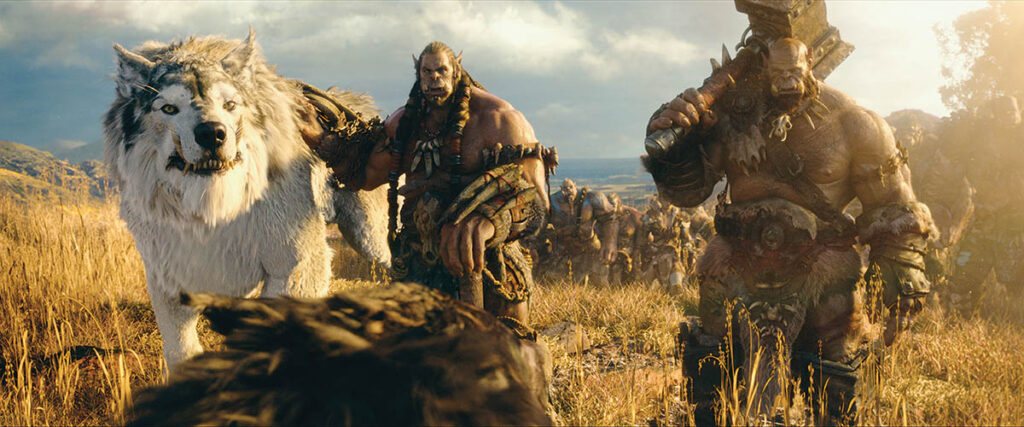
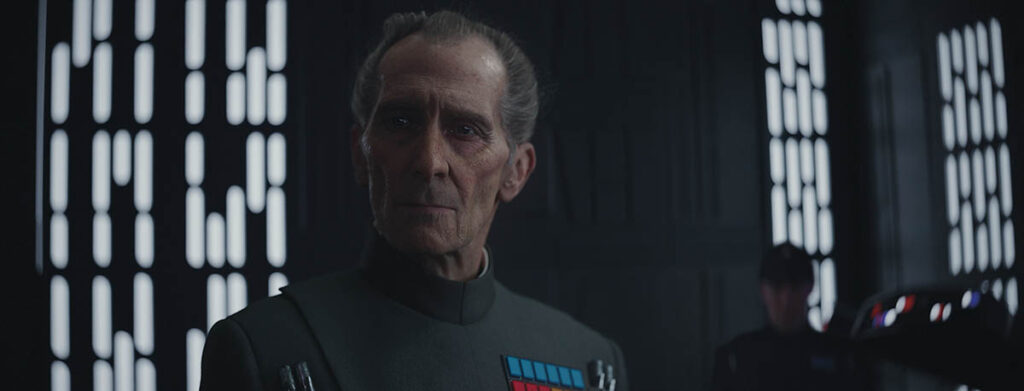
On a day-to-day basis, most of the time is spent on face capture. “I got roped into face capture because of prior work, as far as the folks I’ve been working with, helping build out a new pipeline for that process,” Warner states. “There were different points in ILM’s history where some face cap stuff would come and go. Warcraft was the first show where I focused on the workflow for face capture. What I find interesting with face capture is all of the different disciplines that are required. We’re using machine vision cameras to capture the face more often than not. But then you have to understand the involvement of creature development as far as the rigging of the face. There’s sculpting and the corrections that might need to be done to mainly fix the facial solve. There’s the process of taking a solve on an actor and re-targeting it to the creature or the character they’re portraying, and how we transfer that data; that is still an evolving process. It’s a tricky problem, and there’s no one solution that works in all cases.”
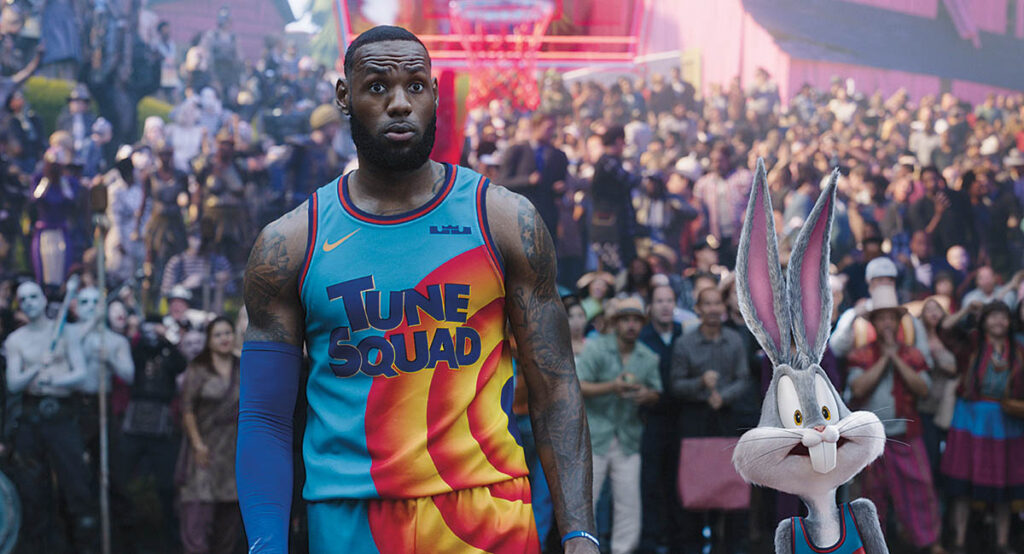
“The crazy part now is how big ILM is and how many projects we have going on at the same time. That has its own challenges, but it allows different experiments to take place, as far as how we approach that work and learn from that as a global studio, and to incorporate the best ideas we learn into the next project.”
—Paige Warner, Digital Artist, ILM
Tools have been personally invented. “I got into a side project where I developed my own iPhone app that resembled the way we capture on set where you’re using long exposure,” Warner explains. “It would accumulate the video stream and average out the images so you get a nice motion blur in a time lapse-type capture rather than being a quick clip with an intervalometer.” A key goal is to eliminate the need for artists to go between different applications to complete their work. “If you had to take one thing out of one package, export it and then import it to another package, it’s hard to manage and keep track of all that. [With Zeno, ILM’s proprietary 3D software package], we’re able to use one piece of software as the hub of that process and tap into different processes and different tools. As far as the underlying solver, we’ve done a lot of great work and are used to benefiting from Disney Research and a lot of the technology they’ve developed. It’s the same process of making sure we’re using their technology, but in the most efficient way possible that is geared towards production and large productions. Plus, being able to manage a large team of artists doing this work all at the same time, keeping track of that and providing a cohesive process for the artists to do the work. That way, they’re focusing on the important parts needing their attention and are not busy getting data from one package to another.”

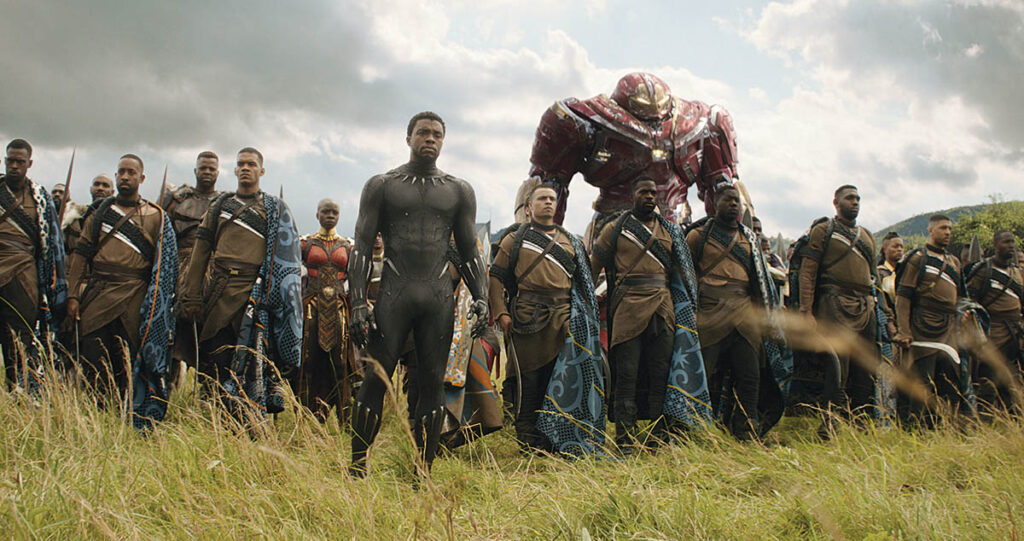

Big projects allow time for software development. “Big shows can afford to have more time spent up front trying to make a process, set that up and be ready for full production,” Warner notes. “Rango was special in that ILM brought its expertise to that project and brought a new visual way of storytelling that hadn’t been realized in animated features up to that point. Because the level of detail and photorealism that was applied with the juxtaposition of these wacky characters was cool. It was neat to be able to tell that ILM made it. It had the visual cues that we would apply to any project that we are set up to work on.” The final shot of Hulk stands out. “It was a neat experience because I worked on the matchmove as the camera starts pulling away. It’s the ‘Power of 10’ shot that had to go through a miniature shoot, so I had to work with the stage and help guide the modelmakers, as well as the DP doing the motion control move, on how that was supposed to work and be put together in a CG sense. At the end, I got to work on the composite and assist in putting the whole thing together; that was a great opportunity to see a shot through the whole process.”
There has been a backlash towards visual effects, leading to them being downplayed. “That’s something where you’ve seen discussions between different artists, as far as the marketing team will say, ‘We used practical effects,’” Warner observes. “But you can tease out that just about every shot has been touched in some digital way. Our work can be undermined in that way. It’s never bothered me too much given that my take on it from a young age was the point of visual effects was the suspension of disbelief and it not being there. You’re there to enjoy the story. In more modern times, we have a lot of projects where visual effects are a big part of the spectacle; that’s great too.”
Everything in the visual effects industry is project based. “We’re working on a project and when that one finishes, we deliver it and move on to the next one. The crazy part now is how big ILM is and how many projects we have going on at the same time. That has its own challenges, but it allows different experiments to take place, as far as how we approach that work and learn from that as a global studio, and to incorporate the best ideas we learn into the next project.”
“A pleasant surprise is when someone takes something you’ve built and makes something new with it,” Warner states. “The other part I was inspired by early on was starting to write tools and seeing how much enthusiasm I got from artists that I was making something for them. That’s been a key for my career and always having it be the end goal. The code is not important in how it works. What’s important is the experience of the artist using it and how well it works. Removing clunkiness or slowness or all the kind of things that can creep into something, that’s always an ongoing challenge. We’ve got this new feature, but it also throws something else off in the code and now operates slower. We always have to be mindful of those things as we move forward.”