By CHRIS McGOWAN

By CHRIS McGOWAN

The cloud is making remote collaboration practical and even essential for VFX studios, which are thriving with borderless work spread across the globe. “It’s become an essential part of how we stay flexible and deliver on time,” says Saker Klippsten, CTO at Zoic Studios. “Modern cloud platforms allow Zoic to maintain distributed teams across North America and beyond while providing them the same access to assets, tools and workflows as if they were in the same facility. Artists in different time zones can work on the same shots in near real-time, share high-resolution media instantly and conduct live review sessions with clients across continents without duplicating massive datasets locally.”
Klippsten notes, “Zoic Studios has come a long way since we first dipped our toes into cloud rendering in late 2015 with Google Cloud. I even gave a talk at Google Next in 2018, and since then, our cloud usage has grown by a factor of ten. While we still rely on a solid mix of owned and third-party co-location facilities in Vancouver, Los Angeles and New York for our core infrastructure, the cloud now plays a critical role, especially when scaling up fast to hit tight deadlines. For projects with unpredictable workloads or international teams, cloud compute can make up a big chunk of our total rendering time.”
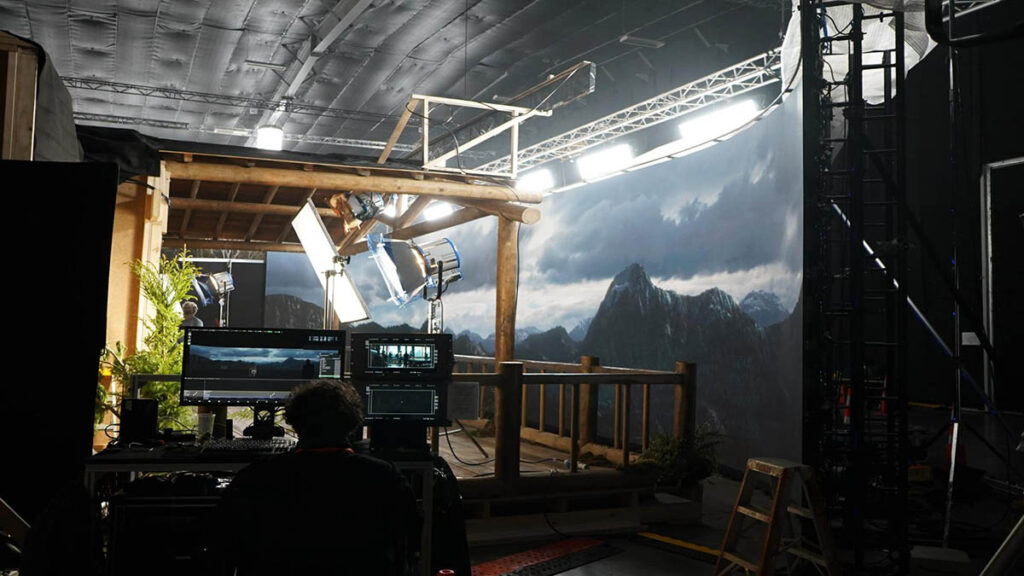
Since 2020, Crafty Apes has “embraced a hybrid model that maximizes its creative potential on a global scale and gives both our clients and our artists the flexibility they need,” according to CEO Alana Newell. “With creative hubs in Los Angeles, Atlanta, Vancouver, Montréal, New York, London and now Australia, we can shoot or creatively direct in one location and finish the work half a world away – exactly what we’re doing on a current series that’s filming in Vancouver, posting in L.A., and being worked on overnight by our Australia team.”
Newell continues, “Cloud-based infrastructure, reinforced by our own secure data-sync tools, allows artists from Texas to Taiwan to plug into the same pipeline in real time. The result is a faster turnaround for clients and better lives for VFX professionals. By meeting talent and filmmakers wherever they are, we deliver the same Crafty Apes grit and reliability on a truly global, people-first scale. We’ve found the combination of flexibility for our artists plus maximized geographic scale for our clients to be the right way forward for Crafty.”

Lexhag VFX completed its move to the cloud in 2020. Managing Director Tom Lewis remarks, “We’d already started migrating before the pandemic, but COVID accelerated the timeline. Since then, every project we’ve delivered has been powered by a fully cloud-based pipeline. Our artists work from wherever they’re based – some on-site, many remote – but the infrastructure ties everything together seamlessly. Our film and episodic work, immersive experiences and high-end VFX sequences have all been delivered remotely through our cloud pipeline. It has allowed us to collaborate in real time with clients, partners and artists around the world without compromising quality or creative control.”
The biggest shift for Lexhag has been cultural, not technical. Lewis notes, “Moving to a cloud-first model required everyone – artists, producers, partners – to rethink how we collaborate. There were engineering challenges, but the real adjustment was adopting new ways of working: distributed teams, live reviews and new asset management workflows. Once we embraced that shift, the benefits became clear. We’ve automated a lot of processes, built custom workflows around our needs, and created a pipeline that’s faster, more flexible, and ready for the scale of modern productions.”

“There are many moving parts that can push cloud adoption forward or pull it back. Things like tax incentives, tariffs, global instability – yes, even weather and wars – all play a role. That’s why I hybrid workflows – mixing on-prem and cloud resources – are here to stay for the foreseeable future.”
—Saker Klippsten, CTO, Zoic Studios
Lewis continues, “We can now assemble teams based on talent, not geography. Whether an artist is in London, Lisbon or Los Angeles, they can work in the same pipeline, reviewing shots and delivering assets in real time. Onboarding is seamless – spinning up machines and render nodes happens in minutes, not days – and we’re always working with the latest tools without heavy upfront investment. The result is more efficient workflows and the ability to take on complex, ambitious projects without the traditional physical limitations of a single studio space.” Lewis states, “Going fully cloud-native has transformed how we work. It has allowed us to move faster, collaborate more effectively, and focus on creative problem-solving rather than hardware management. We’re no longer limited by location or infrastructure, which opens up the kind of storytelling we can help filmmakers achieve.”
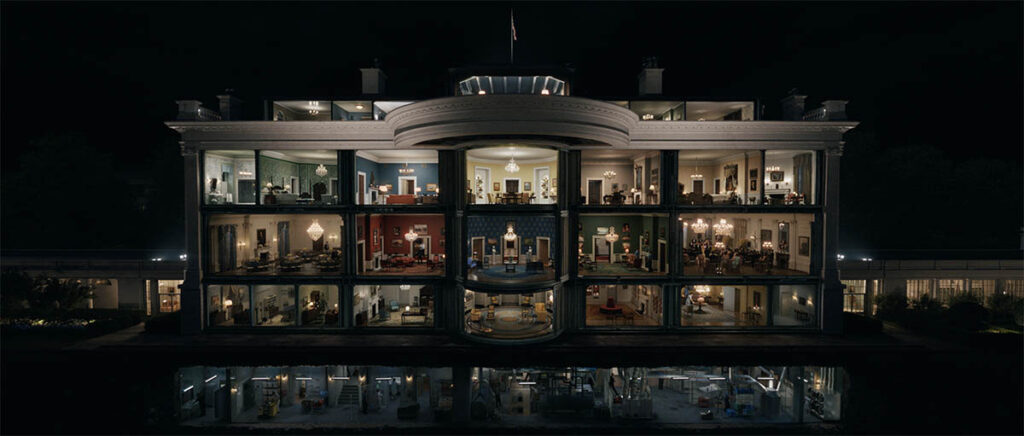
Several key advances have come together to make cloud rendering and remote collaboration feasible, according to Zoic’s Klippsten. “First, low-latency, high-speed internet to the home has been a game-changer. It’s not just about streaming Netflix faster; it’s the reduced lag between your home and your ISP’s core network that really matters for remote workflows. Then, there’s the rise of smart streaming protocols like Teradici PCoIP (now HP Anyware), NICE-DCV (Amazon DCV) and WebRTC. These technologies allow for high-fidelity, low-latency remote displays so artists can work from anywhere without sacrificing quality. Tools like Zoom, Teams and Slack are all built on WebRTC, and they’ve become essential for remote collaboration. On top of that, cloud-integrated collaboration platforms like Shotgun, Ftrack and custom review tools – paired with high-speed file transfer solutions like Aspera and Signiant – make it easy to move massive datasets and keep everyone in sync.” Klippsten notes that the cloud itself is built on virtualization and containerization technologies like Kubernetes. “These allow cloud providers to scale securely and efficiently, giving studios like ours the flexibility to spin up compute power as needed. We have taken that same approach and treat our on-prem and collocated infrastructure as a private cloud. We are building with a cloud-first mentality but on-prem, allowing us to scale to the cloud when needed and back down without maintaining two types of cloud platforms.”

“Cloud platforms are no longer just support tools: they’re the backbone of modern VFX production. The scalability, security and creative freedom they offer are enables studios to build more agile, inclusive, and truly global production models.”
—Alex Hatfield, Founder & CEO, Juno Innovations
Klippsten says, “If your pipeline is flexible enough, you can take advantage of cost savings across multiple cloud platforms. For us, that’s currently Google Cloud. However, many VFX studios still lean heavily on AWS. Others are exploring options like Oracle, Microsoft Azure and newer players like CoreWeave, which are gaining traction thanks to lower costs, cutting-edge GPUs, and a strong focus on AI workflows and support. We have always tried to scale where the talent is. 2020, with COVID, pushed this idea over the edge and, in many ways, made us more collaborative. One example is our global artist workstation system, where artists in Los Angeles, Vancouver and New York can log into high-performance workstations hosted in core locations. This setup allows them to access the same project data and applications without transferring large files between locations. We’ve run cloud-based dailies and review sessions with clients from Europe to Australia, streaming high-quality footage in real time with synchronized annotations, reducing turnaround times and avoiding the need for physical shipments or data duplication.”
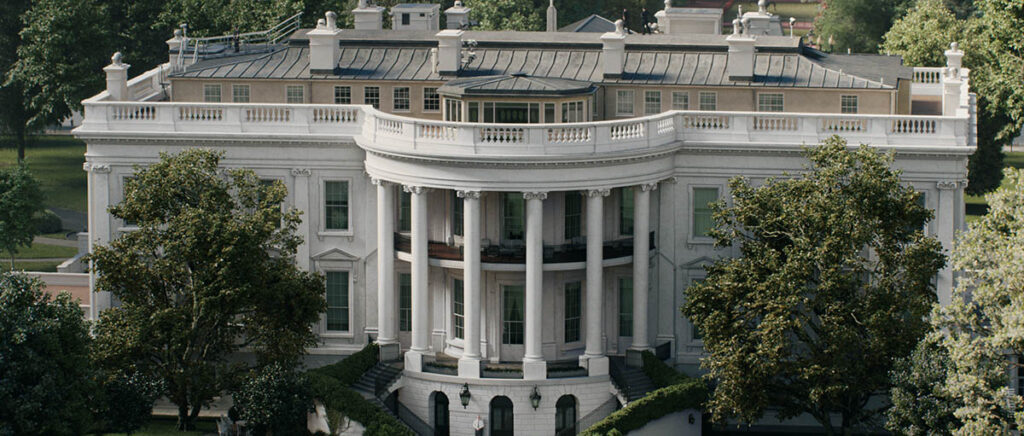
“We’ve seen firsthand how cloud-native workflows have transformed global collaboration in visual effects,” says Alex Hatfield, Founder and CEO of Juno Innovations. “What used to be a logistical challenge – coordinating across time zones, infrastructures and data silos – is now an integrated, real-time pipeline thanks to advanced cloud platforms.” Hatfield continues, “Modern cloud ecosystems don’t just provide storage; they enable live shot reviews, version control, real-time rendering and pipeline automation across teams in different hemispheres. Artists in Montréal can work seamlessly with compositors in Mumbai and supervisors in Los Angeles without sacrificing iteration speed or creative continuity. At Juno Innovations, we’re focused on building the cloud infrastructure that makes true global collaboration in VFX not just possible, but frictionless.”
Hatfield states, “Cloud platforms are no longer just support tools: they’re the backbone of modern VFX production. The scalability, security and creative freedom they offer enable studios to build more agile, inclusive and truly global production models.” Orion is Juno Innovations’ GPU-slicing orchestration platform, purpose-built to optimize cloud-based VFX pipelines. Hatfield says, “Unlike traditional cloud setups that allocate entire CPUs or GPUs per user, Orion dynamically slices compute resources based on the real-time demands of each artist or task. Studios can deploy scalable, high-performance virtual workstations that are right-sized for everything from asset-heavy 3D builds to lightweight compositing, delivering the performance artists need without over-provisioning.” Orion enables studios to truly operate a ‘studio in the cloud,’ not just lift and shift legacy infrastructure, according to Hatfield. “Workstations can be fully customized based on artists’ roles and pipeline stages, and Orion will automatically scale them up if greater compute is needed mid-session. This intelligent autoscaling, combined with deep integration into services like AWS, Kubernete and Qumulo, lets teams take advantage of the latest GPU hardware and storage solutions as soon as they become available.”
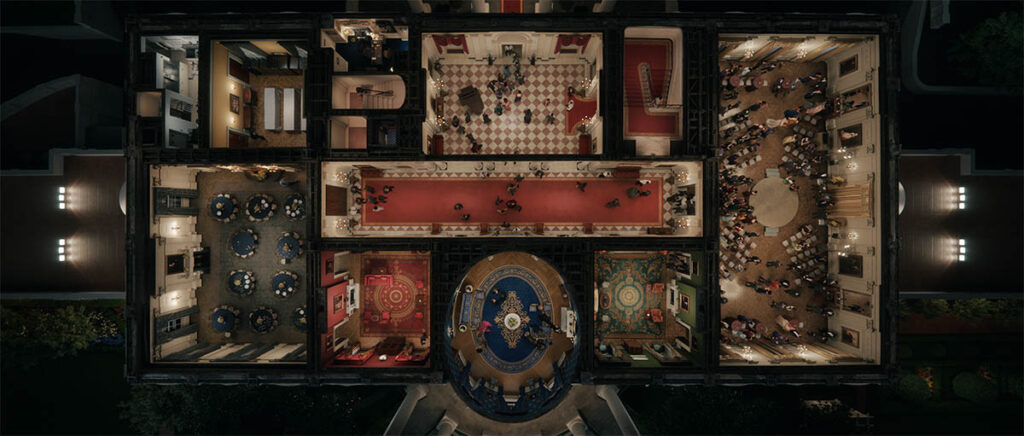
“Going fully cloud-native has transformed how we work. It has allowed us to move faster, collaborate more effectively, and focus on creative problem-solving rather than hardware management. We’re no longer limited by location or infrastructure, and that opens up the kind of storytelling we can help filmmakers achieve.”
—Tom Lewis, Managing Director, Lexhag VFX
Cinesite has fully embraced a flexible way of working, adapting to the new realities for workers around the world. “Our goal is simple: work with the best talent to make the best VFX and animation. The hybrid model of at-home and studio work is here to stay,” comments Sashka Jankovska, Chief HR Officer at Cinesite. “No matter which option our employees choose, they’ll always be connected to the team through all-hands meetings, seasonal events and other activities.” Chris Perschky, Director of IT Europe for Cinesite, adds, “Cinesite’s remote collaboration model is a sophisticated blend of on-premise and private cloud infrastructure, secure remote access and cloud-based tools. While we maintain physical studios for in-person work, our pipeline is designed to enable artists to work from anywhere in the world.”
Jankovska continues, “One of the benefits of a remote model is access to a global talent pool. Cinesite is no longer limited by geography; we can hire the best artists and specialists from any country where and when possible, leading to more diverse and innovative teams. This also gives artists the flexibility to work from their preferred environment, eliminating the daily commute and often leading to a better work-life balance. Furthermore, remote setups can facilitate a global 24/7 workflow, with teams in different time zones in our Montreal and Vancouver facilities as well as at our partner studios, seamlessly handing off projects to maintain a continuous production cycle.”
Going remote requires greater security. Perschky comments, “In order to offer successful remote working, we have to meet stringent client requirements to safeguard sensitive assets, and a remote workforce complicates this, demanding robust security protocols like VPNs and multi-factor authentication.” Perschky adds, “We currently work closely with both AWS and GCP to ensure we have the very best tools available to help us deliver our projects.” Cinesite’s remote working approach is based on artists using tools like HP Anyware to access powerful workstations located in the data center. The studio uses specialized tools like CineSync, SyncSketch and Academy Software Foundation tools such as OpenRV or xSTUDIO for remote dailies and review sessions. Cinesite utilizes Ftrack to coordinate hundreds of artists across multiple studios and locations. And, for day-to-day communication and project planning, Cinesite relies on Google Workspace [including Gmail, Calendar, Chat and Meet]. This suite of applications provides the basic foundation for communication, meeting planning and file sharing for a globally distributed team.” Perschky adds, “Our remote collaboration is a comprehensive system that involves secure remote access to powerful hardware, specialized software for real-time creative feedback, a robust production management system to keep track of a complex pipeline and effective communication tools to keep everyone aligned.”

Cloud adoption is not a straight line, Zoic’s Klippsten observes. “There are many moving parts that can push cloud adoption forward or pull it back. Things like tax incentives, tariffs, global instability – yes, even weather and wars – all play a role. That’s why hybrid workflows – mixing on-prem and cloud resources – are here to stay for the foreseeable future.”
Klippsten is bullish on the benefits of cloud adoption. “The shift toward cloud-enabled workflows has not only improved scalability and collaboration but has also enhanced security and disaster resilience. Assets can be stored with multi-region redundancy and strict access control, and production can continue uninterrupted even if a single facility experiences an outage. The key to success is maintaining a secure, hybrid architecture – leveraging cloud elasticity while retaining local capabilities for critical, latency-sensitive work. It’s all very exciting to see where things go from here.”