By TREVOR HOGG
Images courtesy of Lucasfilm.
By TREVOR HOGG
Images courtesy of Lucasfilm.
Star Wars: Visions Volume 3 comes full circle as the animated anthology returns to the Japanese anime studios behind the first season, with three of its nine shorts continuing earlier stories. The new chapters revisit the Ronin, R5-D56, F, Lulu and Lah Kara in The Duel: Payback, The Ninth Jedi: Child of Hope and The Lost Ones.
The Duel – from Kamikaze Douga with support from ANIMA – has already been given the sequel treatment with the publication of Star Wars: Ronin: A Visions Novel by Emma Mieko Candon. The story channels George Lucas’ deep love of samurai and Akira Kurosawa films and revolves around a former Sith named Ronin and his droid companion, R5-D56. With The Duel: Payback, the past comes back to haunt Ronin as an unhinged Jedi known as the Grand Master seeks revenge.
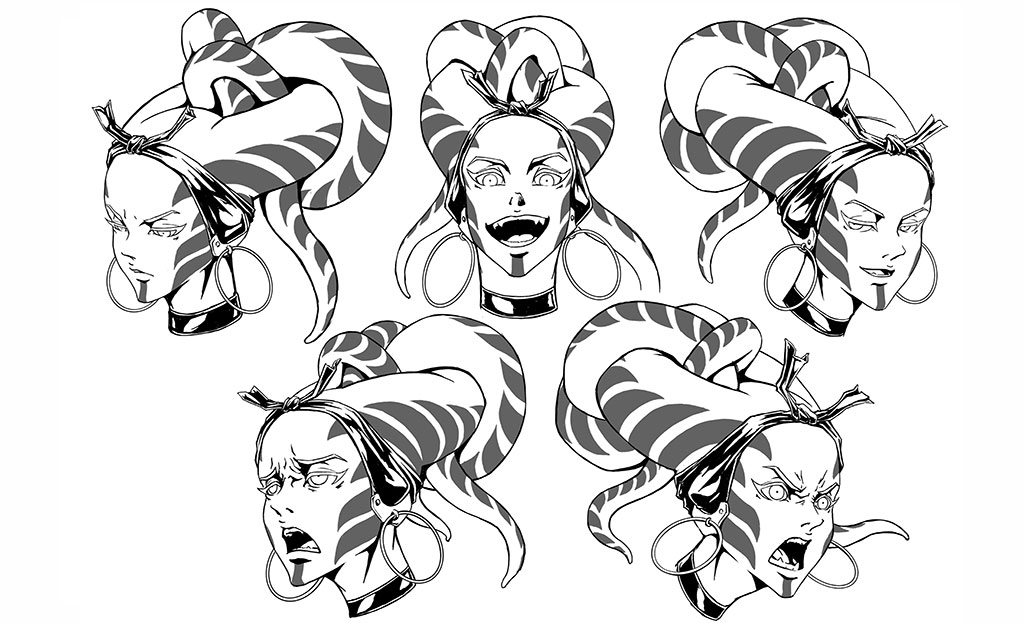
“As in the first short, it’s a challenge to express the relationship between a character as short-spoken as Ronin and a character like R5-D56 who doesn’t speak,” Takanobu Mizuno, Director of The Duel: Payback, notes. “Ronin, who cares deeply about R5-D56, is generally very composed and doesn’t let emotion show on his face. However, when R5 is involved, Ronin becomes more anxious and expressive. Hopefully, you can get the sense that R5-D56 tends to be a bit impulsive but is also very kind.”
“I started thinking about how to add effects that simulate the natural unevenness of hand-drawn art. Through that, I landed on what would become my current art style [while working on] a music video back in 2009. I’ve been refining features, like shading, over project after project ever since, bringing us to the work you see in this installment.”
—Takanobu Mizuno, Director, The Duel: Payback
Mizuno spent more than two decades using 3D CG to create cel-style animation, though capturing the charm of the hand-drawn anime he watched growing up in the ’80s proved challenging. Over time, he experimented with techniques to better replicate that look, eventually developing stylistic approaches that bridge the gap between precise 3D rendering and the natural feel of traditional animation. “In particular, details – like the way a character’s head turns when they move to look back – lose their appeal if they look too precise rendered straight in 3D, so I incorporated mechanisms to allow facial features to be adjusted depending on the camera angle. That reduced some of the incongruity between cel style and 3D, but since it can still appear unnatural in animation, it required further adjustment. I started thinking about how to add effects that simulate the natural unevenness of hand-drawn art. Through that, I landed on what would become my current art style [while working on] a music video back in 2009. I’ve been refining features, like shading, over project after project ever since, bringing us to the work you see in this installment.”
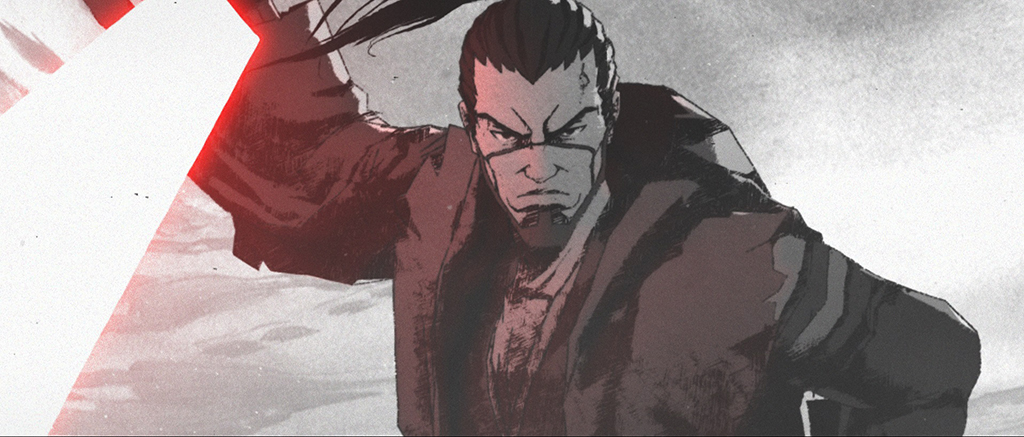
Movement impacted the linework and shading of the characters. “Since Ronin’s quick-draw Iaijutsu-style techniques are very fast, I was thinking about how to express the Grand Master’s speed of movement. I wanted to incorporate elements of feint moves rather than velocity alone,” Mizuno remarks. “That’s when I remembered the way a baseball anime I used to watch as a kid depicted the hero pitching a ‘magic ball’ [breaking ball]. Using that ‘magic pitch’ imagery as inspiration, we expressed the sense of a quick feint by rendering most of the lingering after-images as line art only and only fleshing out a few of them further.”
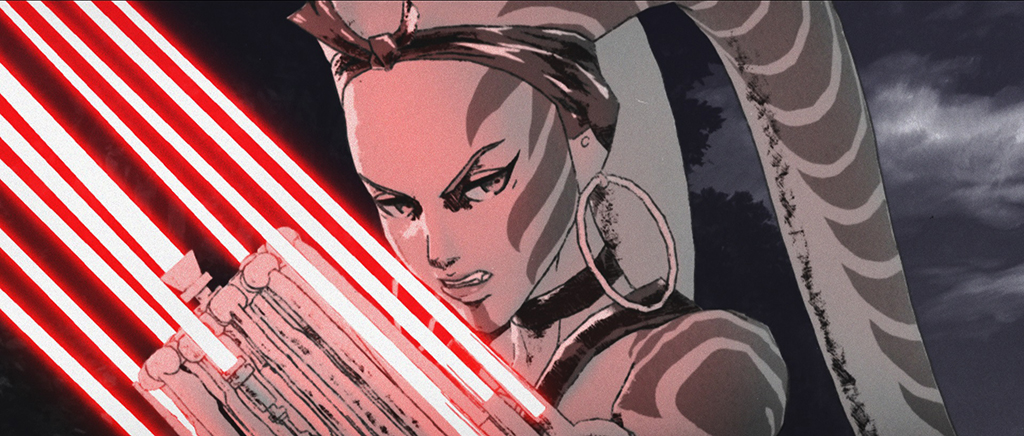
The black-and-white aesthetic is a fundamental part of the production. Mizuno says, “The character designs are not made in color and then desaturated for a black-and-white color palette. The entire color scheme is designed from the outset for viewing in black and white. I think this makes it similar to manga color design processes. We use hatching to express tonal gradations in shading, although the line color itself is pure black. As a result, backlighting will completely overshadow certain areas, so we needed to reintroduce front lighting to manually adjust the shadows and highlights. It’s all based on judgment by eye, meaning it can’t be automated and requires increased work time.”
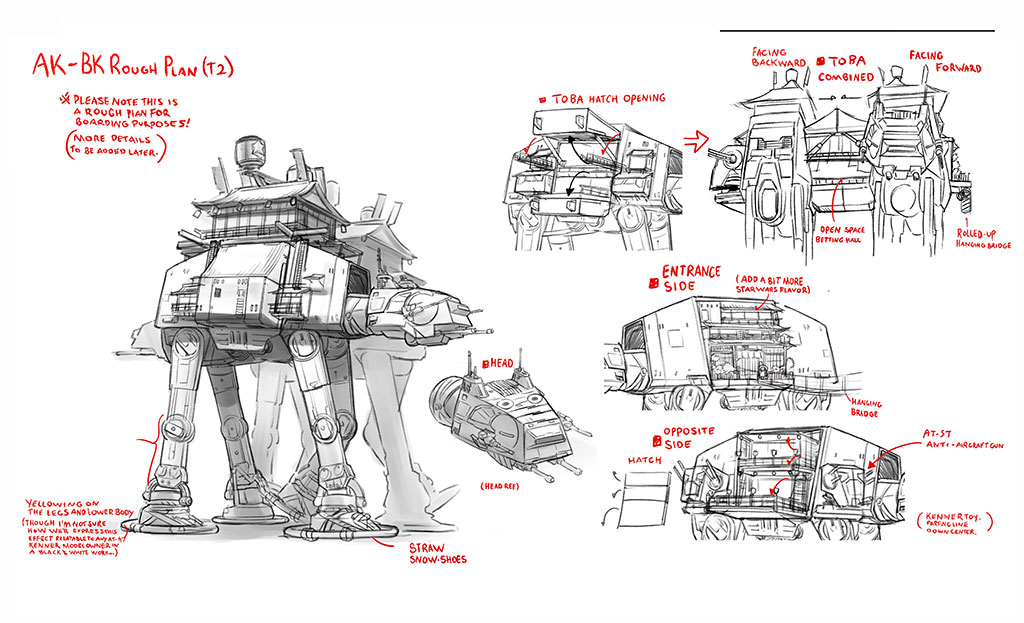
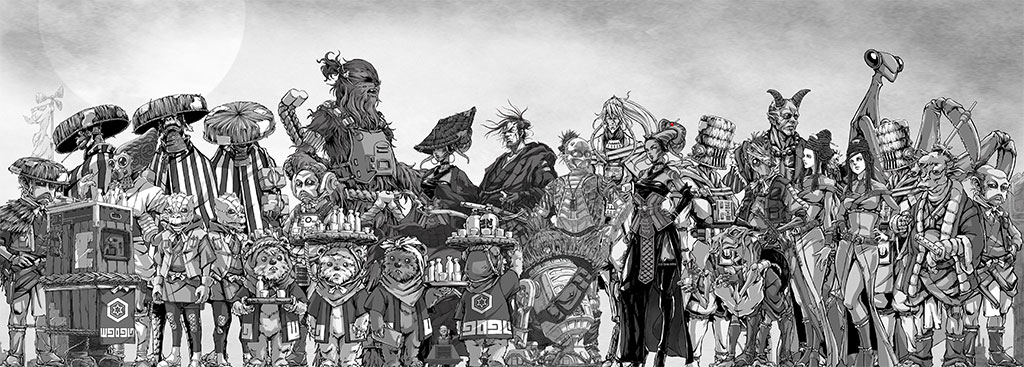
A snowy mountain landscape serves as the backdrop for an unusual gambling hall fashioned from AT-AT transport vehicles. “The idea is that Oyabun Que-Dama has modified the AT-ATs into the gambling hall’s ‘AK-BK’ [inspired by the traditional red wooden toy cow known as akabeko],” Mizuno notes. “We started by creating a rough 3D model of the AT-AT, then modified the body section, extending the roof and floor to form the gambling hall’s main hall, allowing the AT-AT units to connect and form a single structure. The central roof and floor can withdraw, allowing each unit to move independently. I think by creating an open-plan interior for each section of the hull, we gave it an authentic gambling hall atmosphere.”
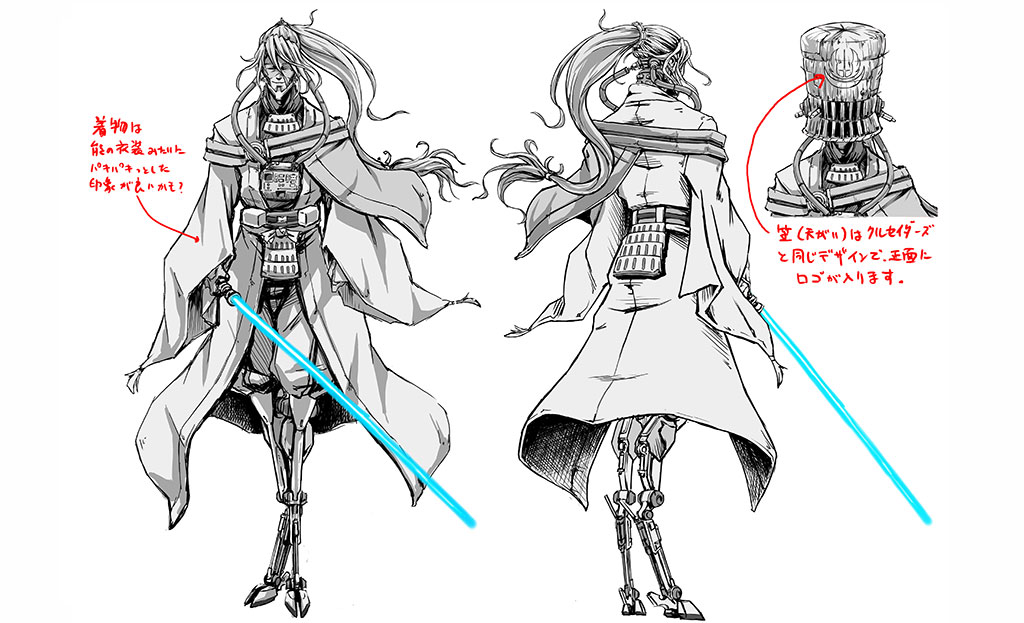
Having worthy adversaries in the Grand Master and Aneé-san was crucial. “These are both created by character designer, [Takashi] Okazaki-san. The initial concept [for the Grand Master] was ‘a white Darth Vader,’ so while Anakin turned to the Dark Side from his own sense of justice, the Grand Master’s extreme quest for ‘justice’ led him to become something of a Jedi fundamentalist. He manages to [remain] a Jedi by mechanically suppressing his own emotions, but is that really worthy of being called a ‘Jedi’? What even makes a Jedi? We hope this character leaves you pondering such questions.”
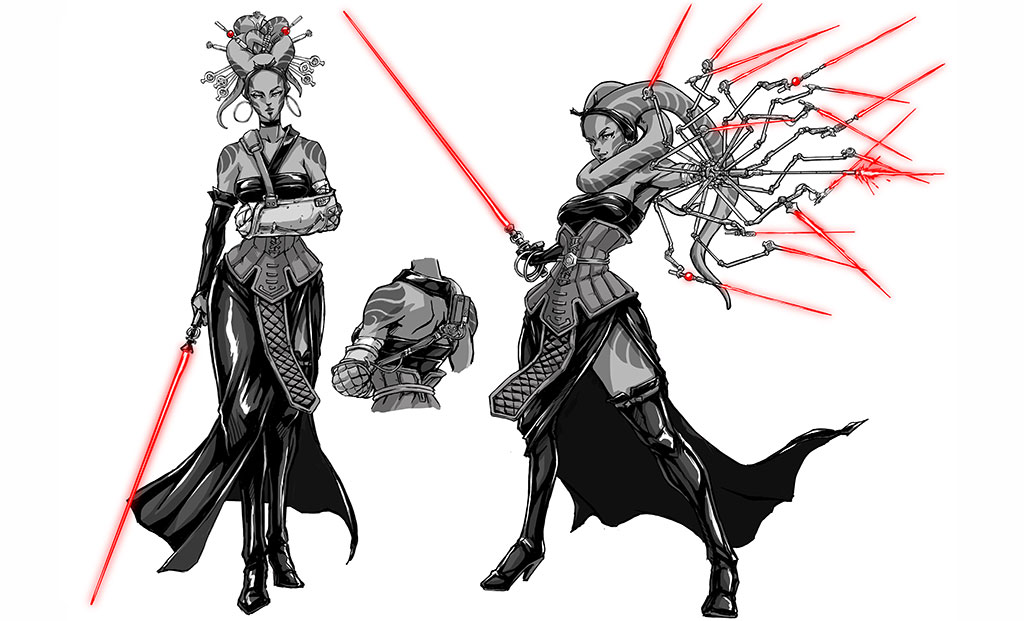
Augmented limbs are turned into lightsabers for Aneé-san, who loses her left arm and right leg during a fight with the Grand Master. “She borrows Ronin’s kyber crystals for her treatment under the skilled mechanical engineer Oyabun Que-Dama to use them for cybernetic enhancements,” Mizuno says. “The multi-bladed arm-saber functions as a shield against Grand Master’s swift attacks, giving her wider coverage. However, since it was made solely for the battle against the Grand Master, it’s a relatively flimsy construction with low durability. Her final trump card is the leg saber, which allows her to catch her enemy off guard. Because of the Grand Master’s speed, this was designed to be used as part of a coordinated strategy with Ronin.”
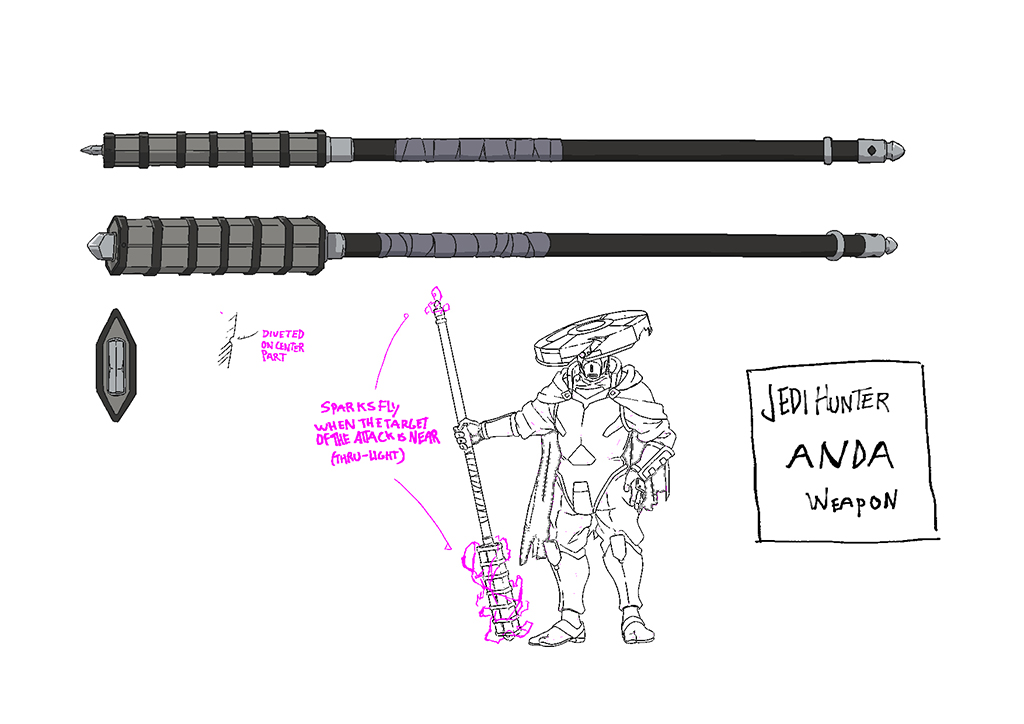
There is an art to designing lightsabers. “According to Takashi Okazaki – who designed the sabers – the umbrella-saber in the first short was inspired by the large ceremonial bangasa parasols traditionally carried by high-ranking oiran courtesans,” Mizuno explains. “For the multi-bladed arm-saber in this short, rather than looking at existing items, the starting point was asking, ‘What are the coolest actions and gimmicks?’ And then turning to our huge collections of Star Wars toys and books, constantly pondering what ideas would be cool to incorporate with everyone, and then step by step solidifying the final design.”
According to Mizuno, the sequence where the AK-BK falls in the mountains was the most complex part of the short, challenging everything from staging and timing to textures, effects and overall consistency. “We start in the cockpit where Oyabun Que-Dama is sitting. Then move through to the hall where R5-D56 exposes the rigged dice, then to where Aneé-san and Ronin appear, and their battlefield changes as the AK-BK units fall over. We were constantly adjusting the 3D CG to make sure everything stayed consistent from shot to shot,” Mizuno notes. “Also, since the best way to convey a sense of scale to mech, like the AK-BK, is to render them as part of the background art, we tried to incorporate that technique whenever we could. For the collapse of the AK-BK, we prepared a 3D model layout to serve as a guide for the background art for each shot. The complex movements across the 3D space required a lot of multi-plane layering across the background art elements. Then the avalanche effect adds an even higher level of complexity, requiring a combination of hand-drawn animation and CG physics simulation to get the result we wanted.”
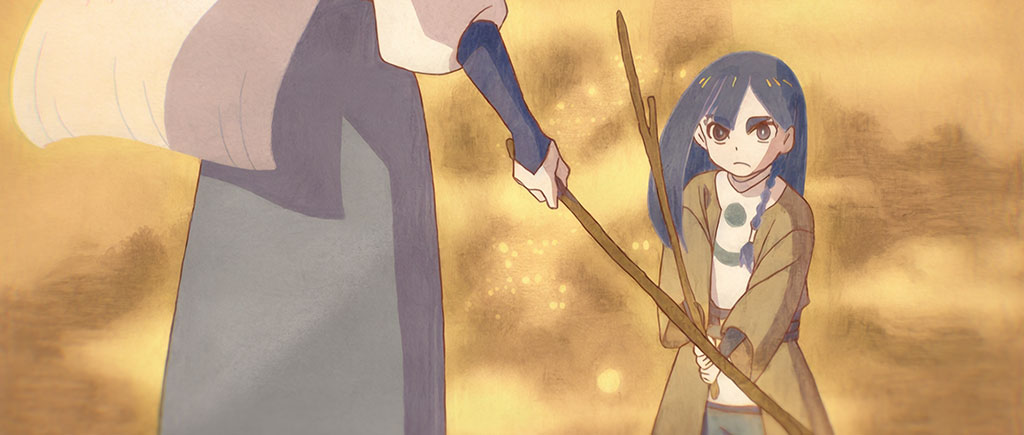
Adapted into a manga published by Square Enix, The Ninth Jedi introduces the sabersmith Lah Zhima and his Force-sensitive daughter Lah Kara. The Jedi Hunters abduct the patriarch, pushing his offspring to embark on a journey to master her raw talent as she sets out to find him. The storyline continues in the sequel, The Ninth Jedi: Child of Hope, and the upcoming long-form series animated by Production I.G. “My mission was to connect the story created in the first short to what the future holds,” Naoyoshi Shiotani, director of The Ninth Jedi: Child of Hope, states. “Naturally, my first step was to ask director [Kenji] Kamiyama, ‘What is The Ninth Jedi?’ and ‘What is that future?’ Hearing that, I felt the core of the narrative is that our bonds with others are what open the door to the future. From there, the story that became Child of Hope was born.”
The animation style mixes 2D and 3D. “We approached animation for Teto the droid entirely using 3D materials and textures,” Shiotani explains. “Kara, on the other hand, is primarily animated in 2D, but we did use 3D in certain cases where that proved to be more effective, such as wide shots and shots with 3D camerawork.” The animation process was basically the same. “I didn’t change anything in particular. If anything, I suppose it might have been the decision to use character models of our heroine and other main characters rather than dummy rigs in the 3D layout work, which allowed us to approach the final, more refined visuals at an earlier stage. Having the characters and the camera in sync improves the overall visual quality.”
In the flashback scenes, the characters’ cold breaths add a striking visual detail, which required careful animation techniques. Shiotani states, “There were two ways: 2D animation, and filters and compositing. In Kara’s memories with her father, we used 2D animation to control the form and make the striking impression of breath in cold air. In the surrounding shots, we used compositing techniques to get the right texture and nuance.”
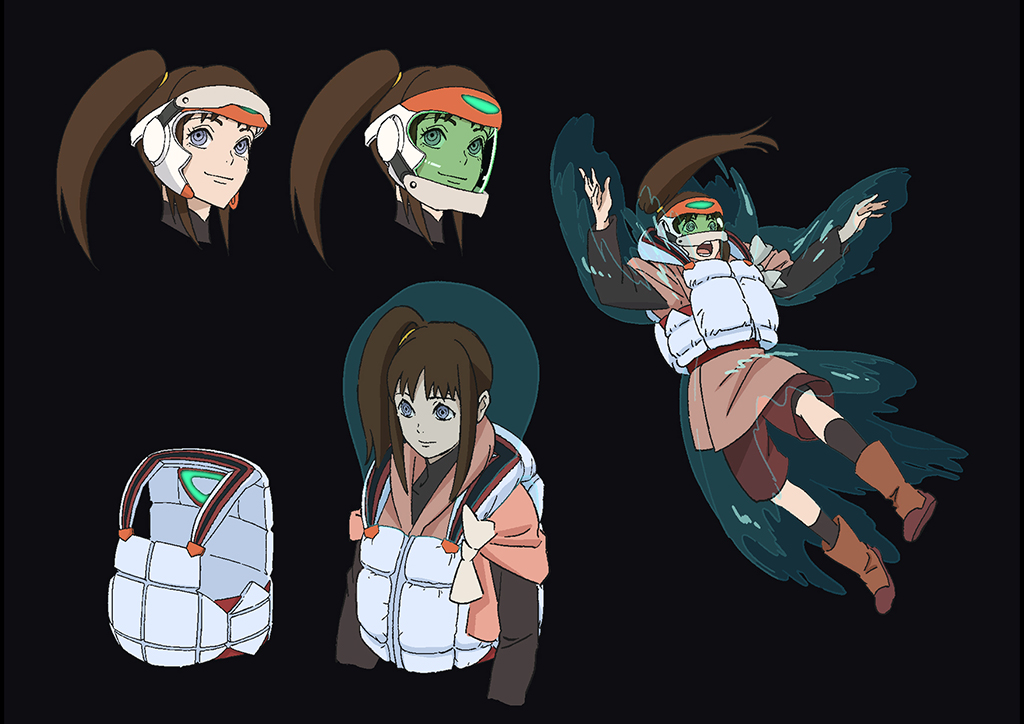
A Jedi spaceship being pursued by Jedi Hunters opens the sequel. “We started the story with the starship under attack to establish the enemy right at the outset,” Shiotani notes. “The starship battle felt like the best way to begin a Star Wars story [showing the influence of Episode IV], but I also think it has a universal appeal as the beginning of a story.”
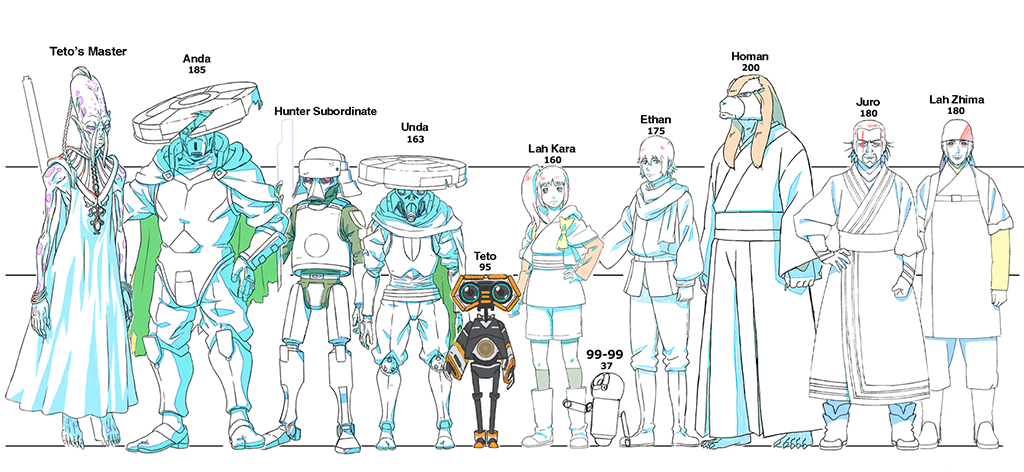
Separated from her Jedi colleagues, Kara is rescued by the droid Teto and brought aboard a drifting derelict spaceship. Alone together, she begins to confront her own insecurities and weaknesses, finding in Teto a companion she can trust and confide in. Shiotani observes, “At the end of the first short, we see that Kara’s journey with Margrave Juro and his party will continue. She’s the youngest of the group. Naturally, the others feel the need to protect her and are always looking after her. Kara herself knows full well that the others are taking care of her, but being so kind, she feels self-conscious about not wanting to be a burden to her companions. After traveling with these feelings building up, we see her meet Teto on equal footing in this work. Once they can speak [intimately], Kara can open up to Teto about the anxieties that she felt she couldn’t share with her comrades on her journey.”
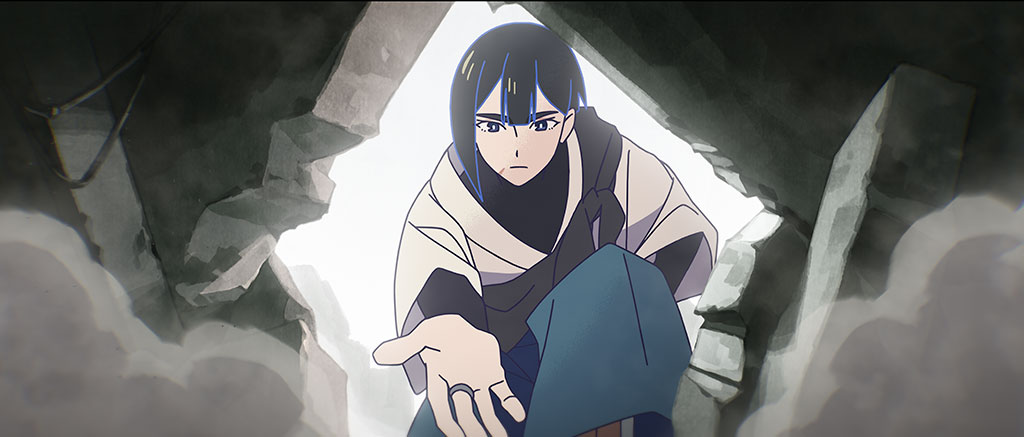
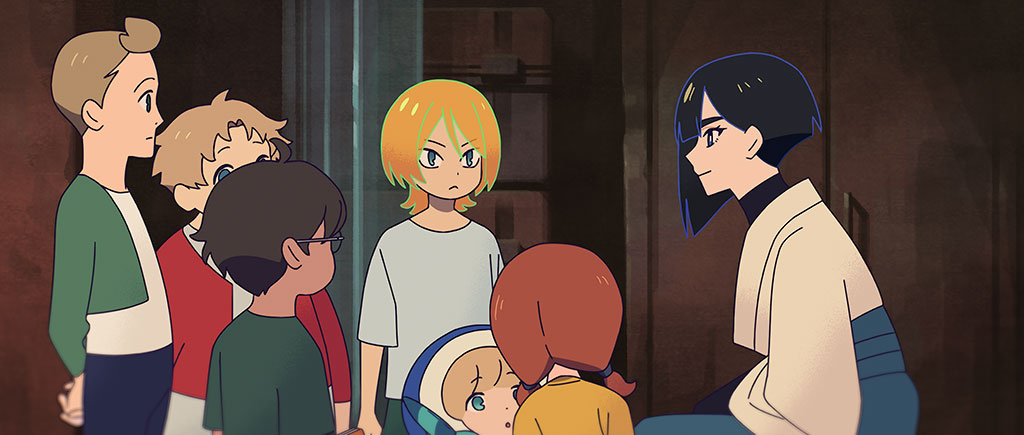
Serving as the director, writer, storyboard artist and concept designer for Kinema Citrus’ The Lost Ones, Hitoshi Haga is a 40-year anime industry veteran who wanted to push the character development of a Jedi haunted by her past, rather than the animation style established in The Village Bride. “The previous work got great feedback, and that actually gave me confidence to work on the next one,” Haga, director of The Lost Ones, states. “For the story, I wanted to display more of F’s feelings in this one. For the visuals, I wanted to keep them as simple as possible to retain the look from The Village Bride – 3D animation was confined to the machines, while everything else was done in 2D. The animation process was altered. In the previous movie, Ms. Tani created the characters, and Mr. Katô produced the image boards based on her work. But this time, Ms. Tani worked on characters as well as backgrounds, and then Mr. Katô created an image board from both of Ms. Tani’s designs.”
“My mission was to connect the story created in the first short to what the future holds. Naturally, my first step was to ask director [Kenji] Kamiyama, ‘What is The Ninth Jedi?’ and ‘What is that future?’ Hearing that, I felt the core of the narrative is that our bonds with others are what open the door to the future. From there, the story that became Child of Hope was born.”
—Naoyoshi Shiotani, Director, The Ninth Jedi: Child of Hope
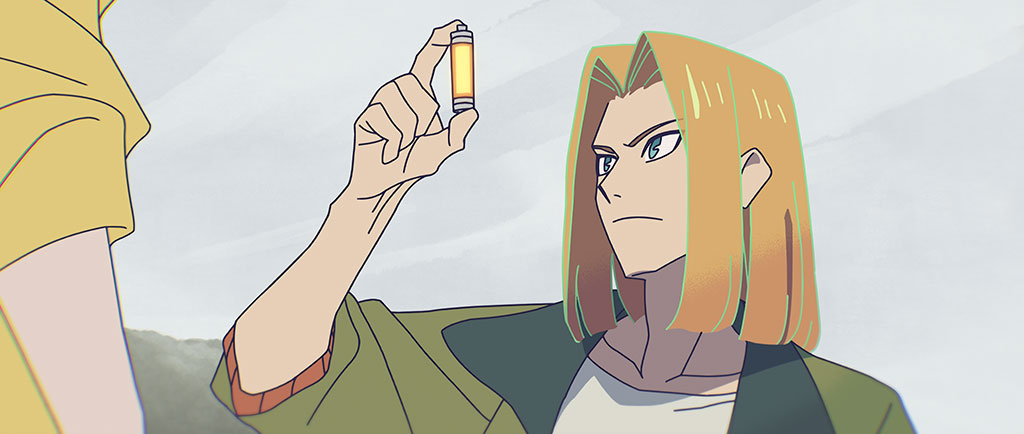
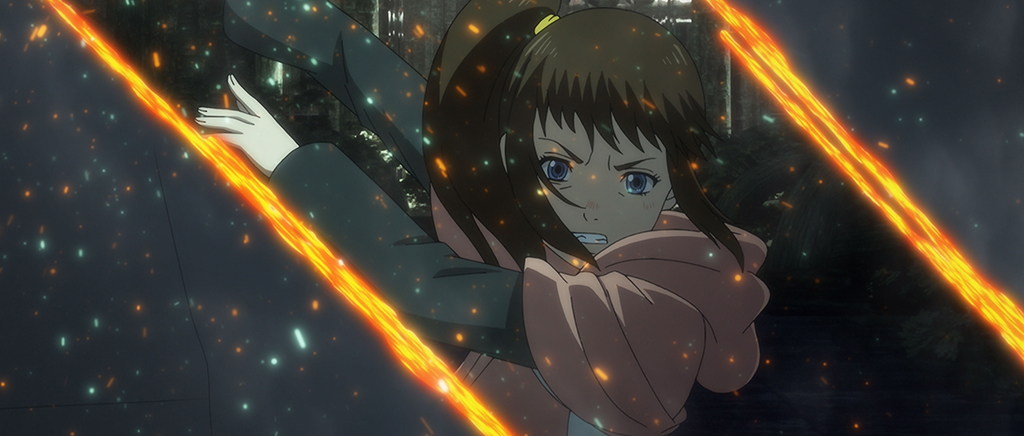
There has been an ongoing debate online as to whether F had a robotic leg in The Village Bride. “Actually, in the previous short, I hadn’t decided if her leg was a prosthetic or real,” Haga reveals. “But in The Lost Ones, she actually knew Joona before in the story. Because of the relationship between Joona and F, I decided to give her a prosthetic leg.”
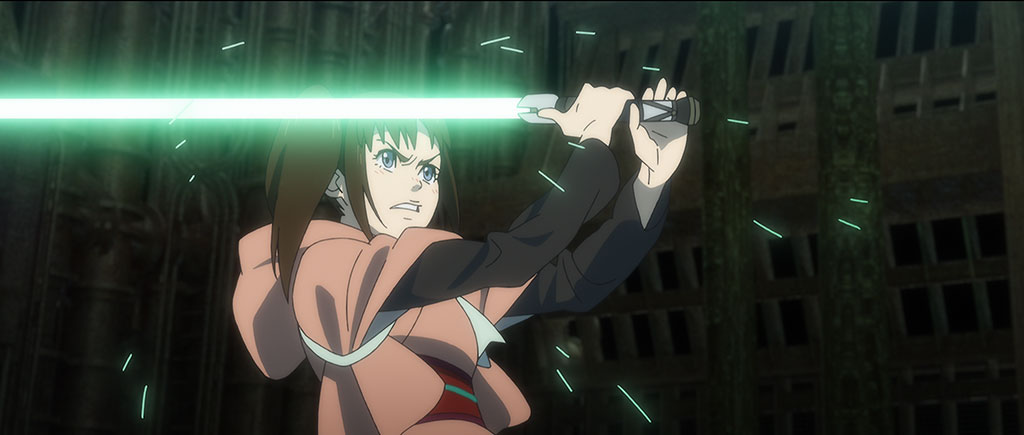
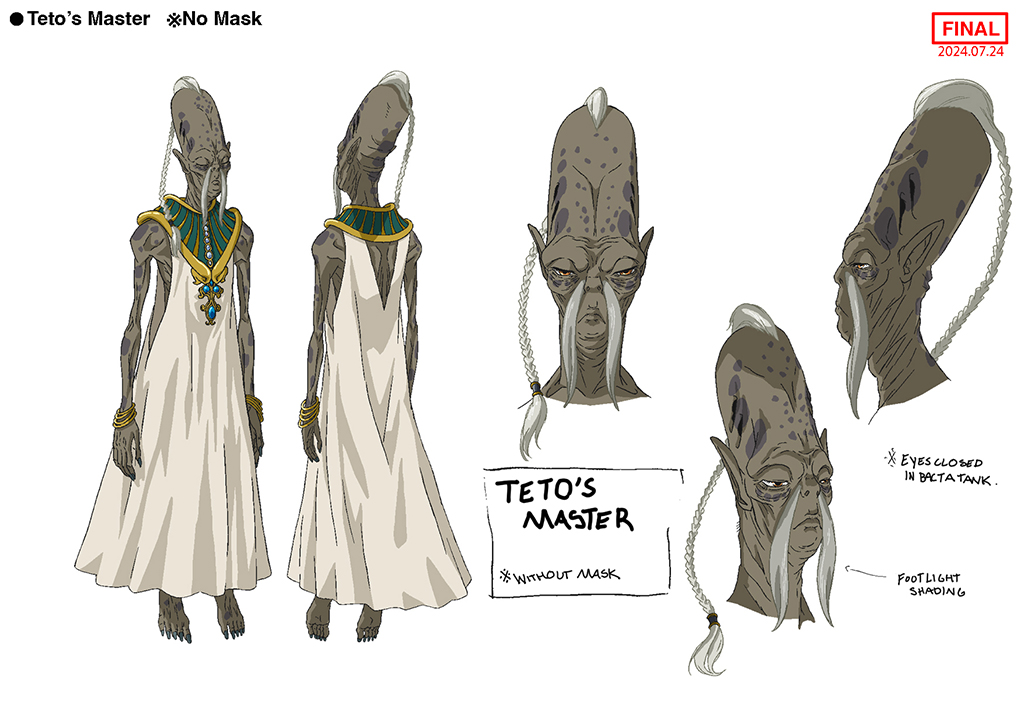
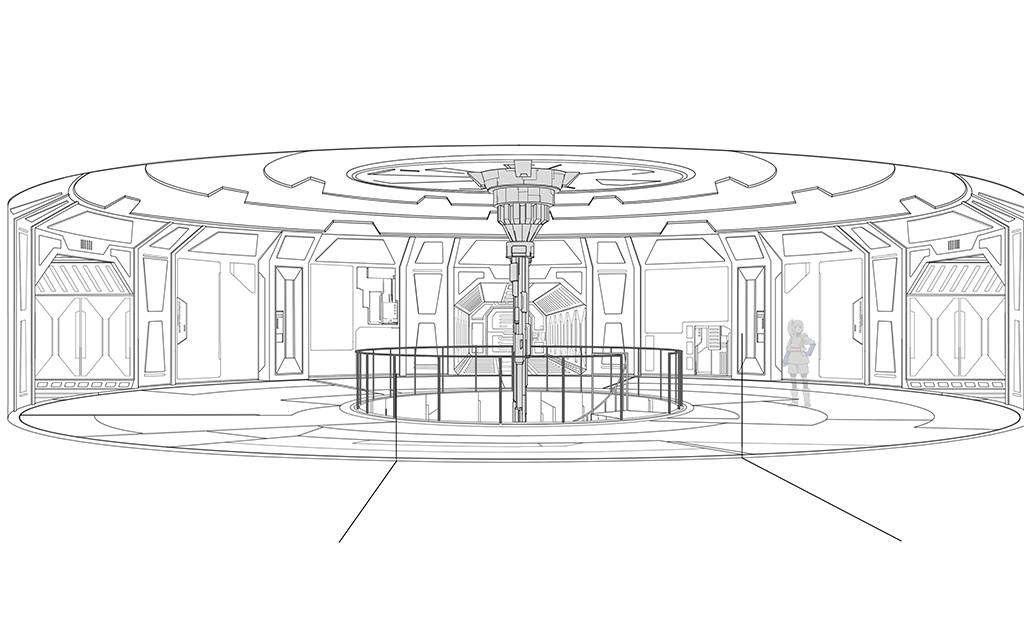
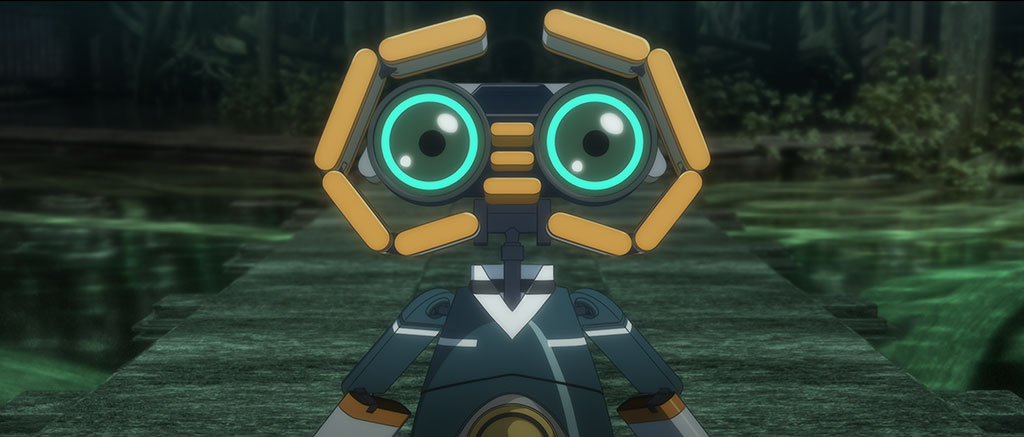
Lulu, Joona’s droid and an old friend of F, gets a redesign. “This could be a spoiler, but I had an inspiration from retro cars such as Messerschmitt or Austin-Healey. Those cars have Star Wars taste and design, so I incorporated the image into Lulu.” Haga had fun designing the refugee ship, which was inspired by manufacturing facilities, abandoned factories, large ships under construction and the USS Intrepid, an Essex-class aircraft carrier built during World War II.
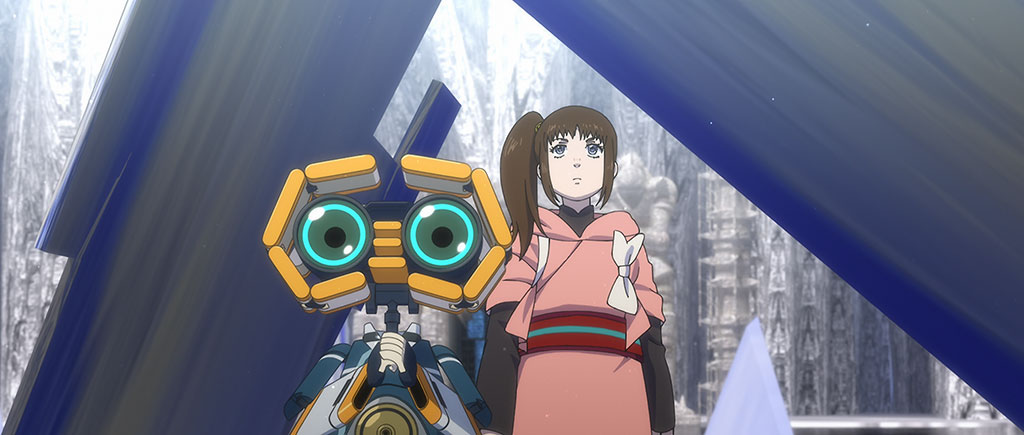
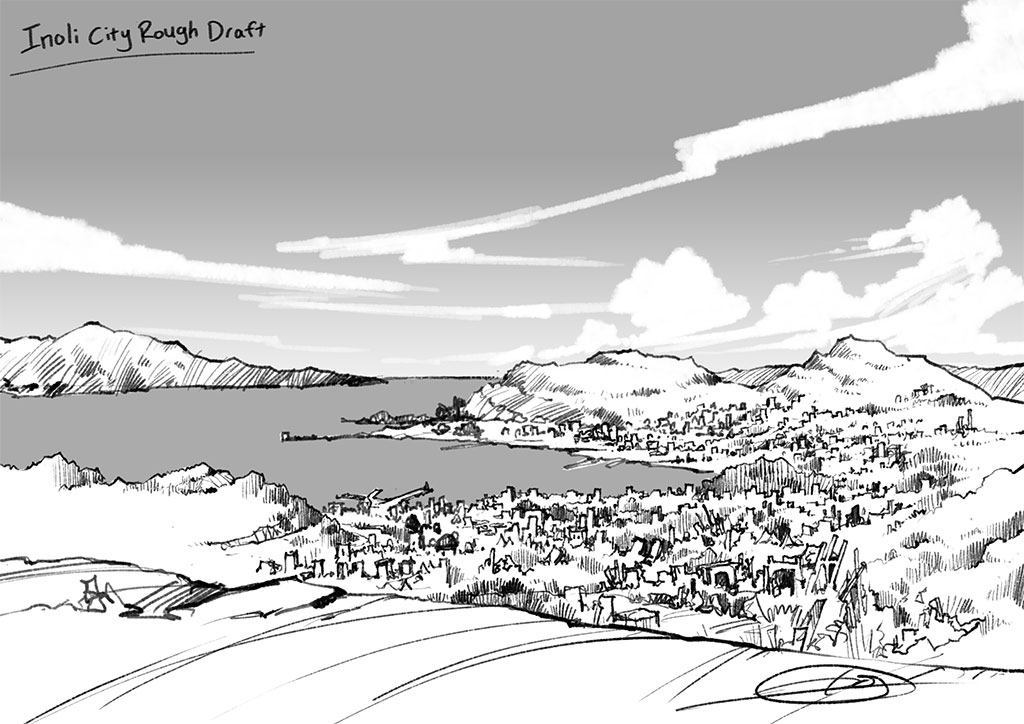
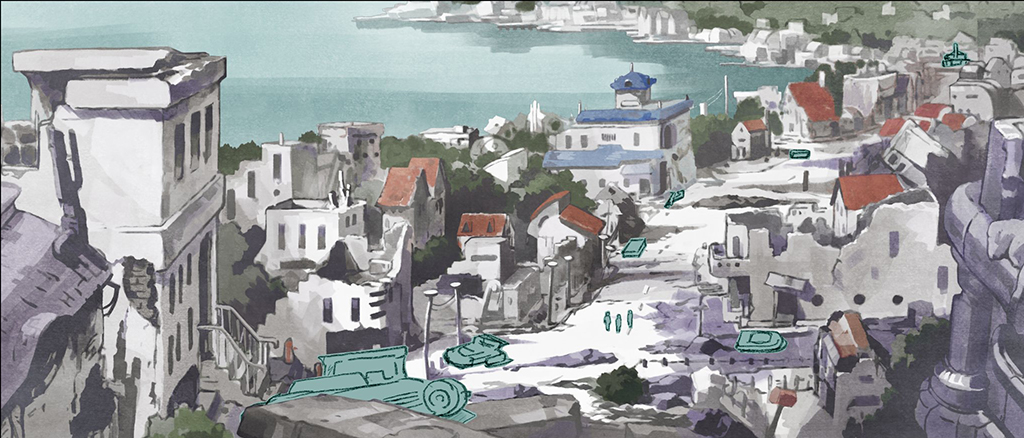
F finds herself on the terrestrial planet of Inoli, where earthquakes caused gas to escape from a carbonite mine, freezing the population. The design of the unnamed city on the planet was inspired by Northern European architecture, conveyed through watercolor backdrops. “The color palette was already decided, and Mr. Katô wanted to keep the linework of my layout design, so that’s how he decided on the painting style,” Haga explains. “In terms of carbonite gas, I wanted to make it look and move in a simple way. It has to embrace the object very slowly, so that’s what I wanted to make the animation.”
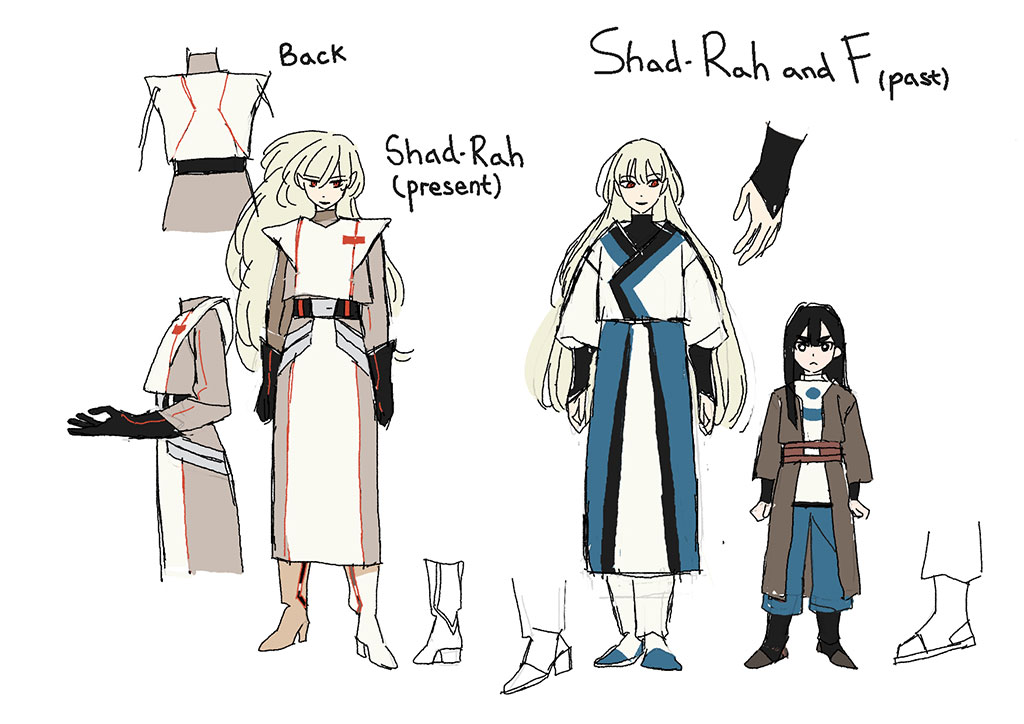
A different animation style was adopted for flashback sequences featuring F as a young Padawan with her Jedi Master Shad-Rah. “The flashbacks are actually a memory of F’s. Some parts are vague and beautiful, which influenced the color scheme of the imagery,” Haga notes. The props were not treated in isolation. “Shad-Rah’s lightsaber had to fit with his costume design.”
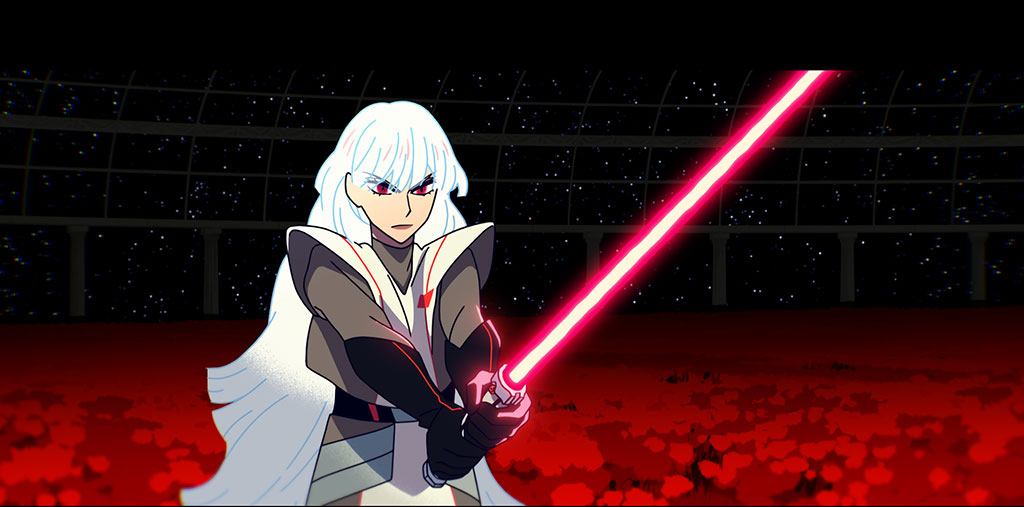
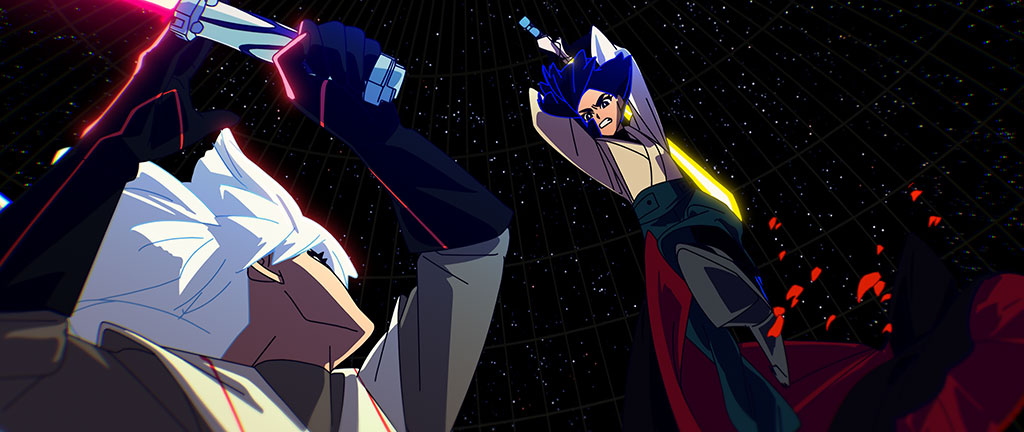
A conflicted F engages in a lightsaber duel with Shad-Rah, who now supports the Galactic Empire and goes by the name Zero. “F keeps avoiding Shad-Rah’s attacks, but later on her movement changes,” Haga states. “At the beginning, she still thinks he’s her master, but she starts to realize he’s no longer Shad-Rah. He is Zero. He is her enemy. She decides to fight against him. That has to be shown in her movement. F knows he’s undefeatable, so she has to calculate precisely how she can take extra steps to go a tiny bit [beyond] his power. First, she makes him cut her arm, then her legs. Those tiny steps are her calculating how to inject the carbonite gas into his body [as she leaps over him].”
The death scene is dramatic. Haga notes, “We have a rough backstory of Zero and when he was dying. We wanted to show that Zero is going back to what he was; he is glad that his Padawan has grown so much. Zero tells F how he feels and that he is glad about that. It gives F the ability to move forward in the future.”