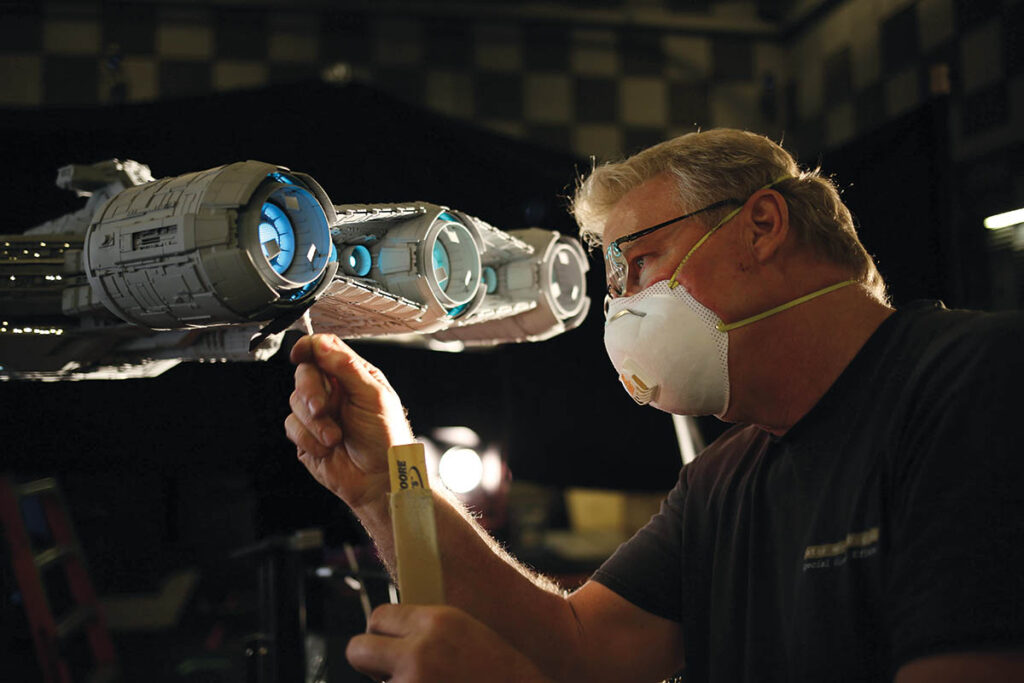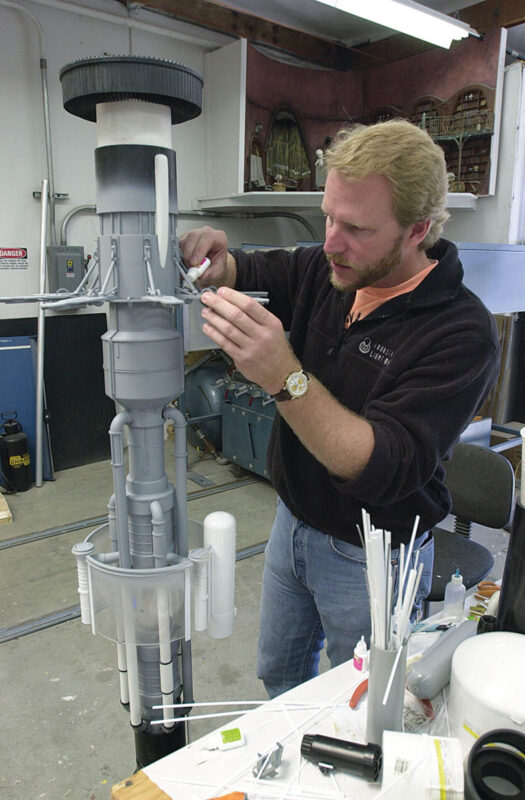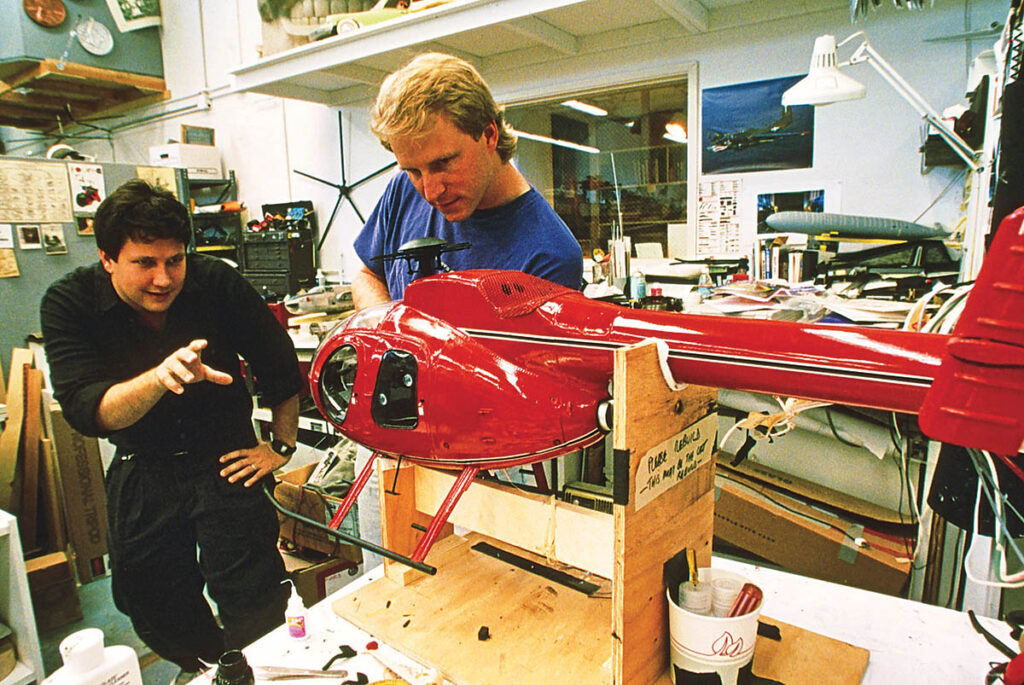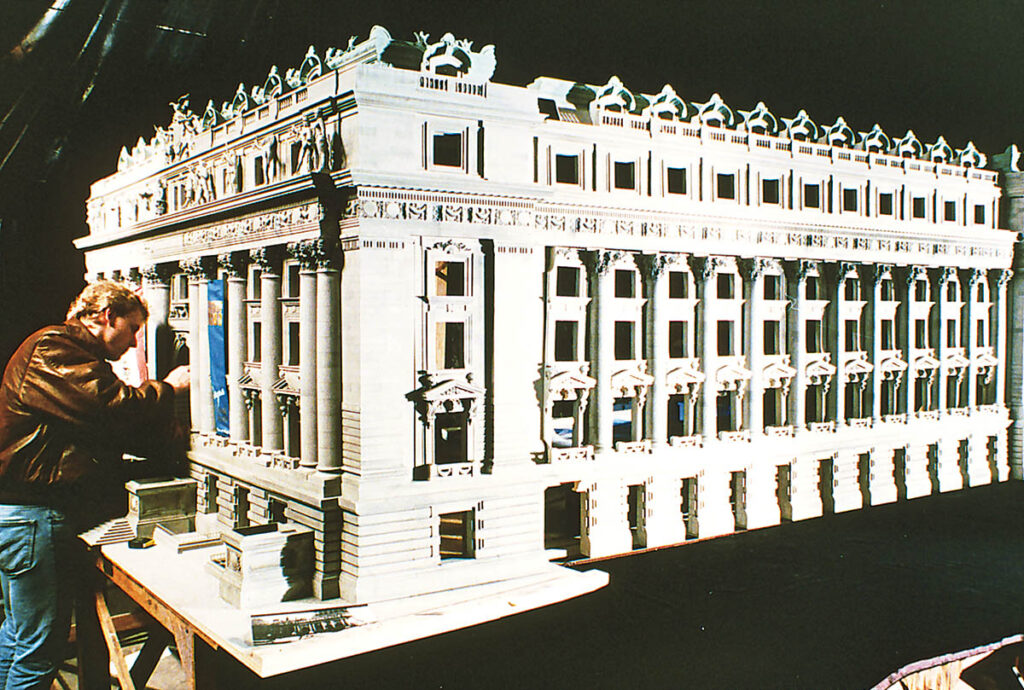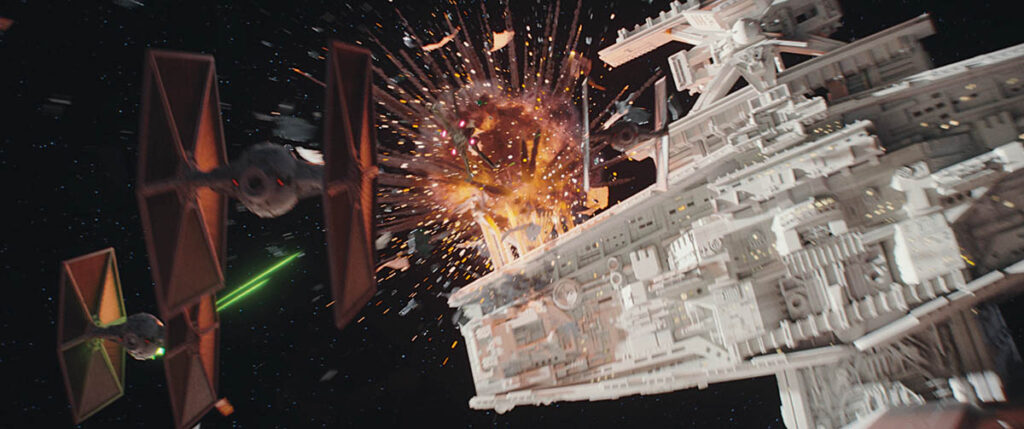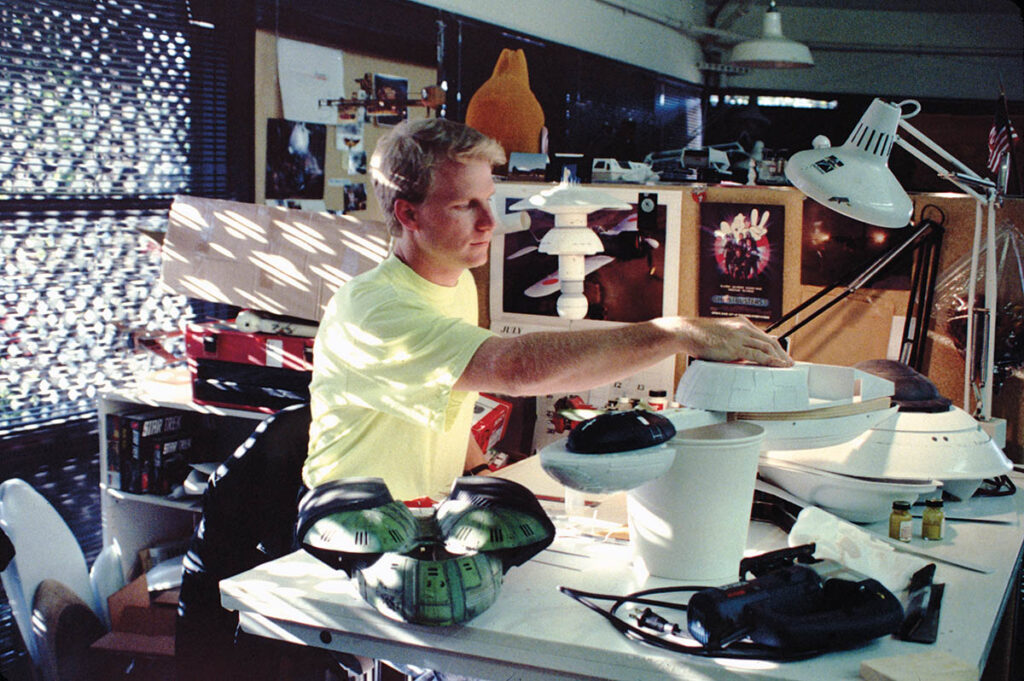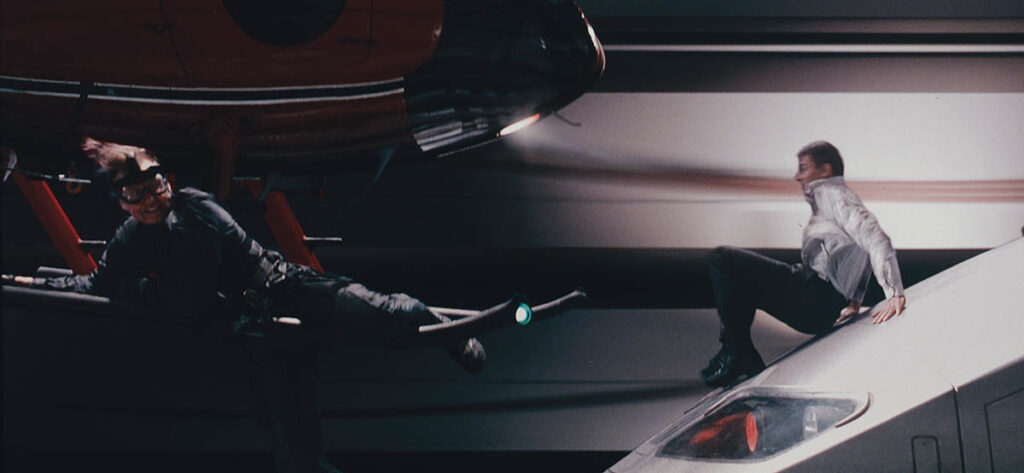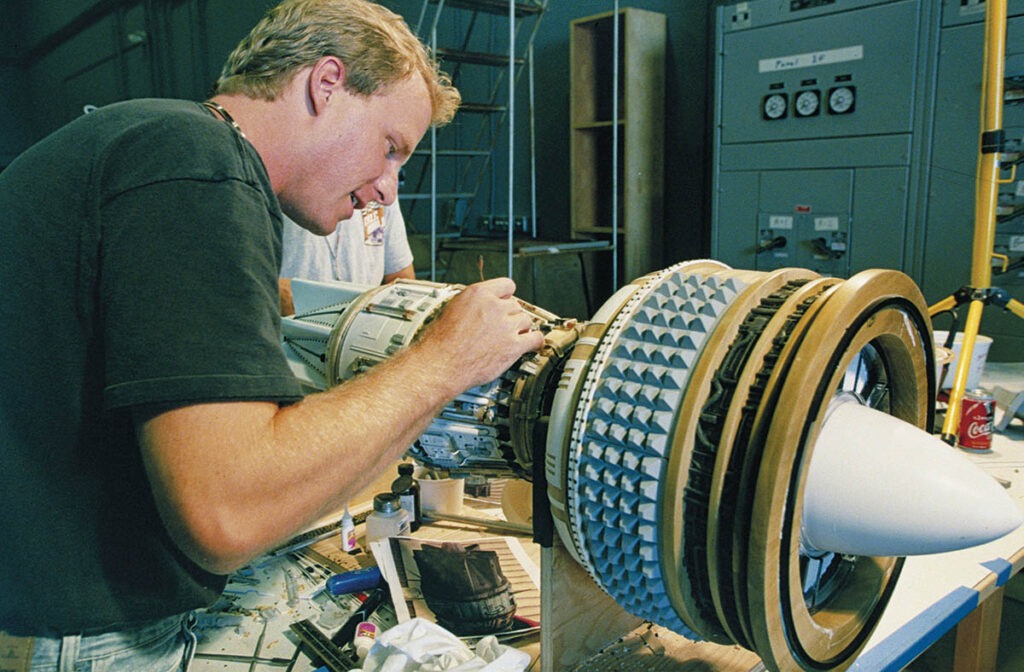

One of the most heartbreaking scenes in the Disney+ documentary series Light & Magic, which explores the history of Industrial Light & Magic, details the closure of the Model Shop. Long the heart of ILM’s practical effects operation, it laid the foundation for the pioneering visual effects studio that George Lucas established to create the space battles in the original Star Wars, which resembled the aerial dogfights of World War II. Among those affected was John Goodson, who rose from practical modelmaker to model project supervisor at the ILM Model Shop before transitioning to the digital realm.
“It was really brutal,” John Goodson, Digital Artist at ILM, admits. “The ripples from that are still happening because so many people didn’t make the transition. It is the story of technology. New technology comes in. Older jobs go away. New jobs are created. But for the people caught in the gears, it’s tough.” Goodson transitioned to digital painting. “You get a month’s worth of training, and I was put on the revisions for the special edition of Star Wars: A New Hope. I got to paint Luke Skywalker’s landspeeder. It had been painted in a program I wasn’t trained in. I only knew the one thing they taught me. I had to figure out how to make that work. It was a struggle the whole time I was there, but when we transitioned to a software called Mari, where you could paint in layers of materials, it was better than the real world.”
For Goodson, working at ILM was like going to film school. “I joined the Model Shop in 1988 and believed I knew how to paint. I remember looking at the models, which had this dull paint, and thought, ‘God, these things look terrible.’ But it was because that paint would not reflect bluescreen. If you reflected the bluescreen, that would become a hole in the model, so the shot wouldn’t work. In the Model Shop and Digital, I found people were good at sharing techniques or tips, and just by being in the environment you learned and developed your eye.”