

Financing movies and television programs remains expensive, prompting studios and production companies to take a more global view, with both positive and negative effects on the visual effects industry. No longer does one have to be based in California to find work, but reliance on tax incentives has also led to a more nomadic lifestyle for digital artists. “Despite the entertainment industry being consumed by everybody, it’s a very niche business in itself, and yet, the visual effects industry and post-production exist as a niche within a niche,” notes Will Cohen, VFX Producer, Executive Producer and VFX Consultant, who co-founded Milk VFX in 2013. “It’s a creative business, but also technology-driven, so it’s a lovely fusion of art, science, technology and craft to help create images. The movie business as we know it really starts in Hollywood with the studio system that grew out of it and with the global success of people going to the cinema as a premium form of entertainment. Within this studio system, the special effects departments build on Georges Méliès’s work. Then, in San Francisco, George Lucas and ILM revolutionized the special effects industry with Star Wars, John Dykstra, motion control, and a whole new wave of physical and optical special effects. At some point between the mid-1980s and mid-1990s, digital visual effects emerged. All of this is coming out of Los Angeles, and the first rival to the West Coast of America is London; that is born not out of any particular tax incentive, but from the creative industry, particularly music videos and commercials, and what was possible digitally. Clairol commercials with morphing people for hair products and Ridley Scott doing advertisements based on 1984 for Apple were huge events.”
The opportunity to expand the scope of storytelling was attractive. “The big expansion and taking on of Los Angeles on the West Coast came out of the artistic desire to do it,” Cohen states. “There were loads of brilliant artists in Paris at the time doing some great work. BUF was doing excellent work with David Fincher. This is because they want to participate in their artistry digitally within the premium entertainment format. Harry Potter put a billion dollars’ worth of visual effects work through the U.K. over a decade, creating regular work for companies to keep crews together and develop their capabilities. By 2008, Framestore was established. Mill Film is its own story. Cinesite is still there. Moving Picture Company has made inroads through Digital Film Company. DNEG is beginning. It was an exciting time.” The influx of visual effects companies, along with the increasing quality of digital augmentation, has led to a shift in attitude. Cohen observes, “Let’s say from Jurassic Park in the mid-1990s to 2010 is an era where people would come to see us from Hollywood, and they would say, ‘I’ve got this movie and a particular effects sequence. Are you actually able to do it?’ That was the question before it was, ‘How much?’ Between 2010 and 2020 came an era of people being in the game and the globalization of the industry. Money becomes this huge factor, and people stop asking, ‘Can you do it?’ They assume, if they’re talking to you, that you can do it.”
Tax incentives have spurred global growth. “In the early days, tax incentives helped build and grow some of these new territories and companies,” reflects Todd Isroelit, Senior Vice President, Visual Effects Production at 20th Century Studios. “For example, when I was first doing visual effects work in Australia, the tax incentives weren’t structured in a way that made sense to grow the visual effects business. There was a high minimum spend needed to trigger the PDV rebate with companies. You couldn’t see yourself spending that kind of money because they didn’t have the level of experience or resource capacity. Just through conversations with Ausfilm and the government and making the case for bringing these thresholds down, such as having the requirement to film there, allowed these companies to start growing and expanding their reach globally. That’s what happened with Rising Sun Pictures, Animal Logic and some of the smaller companies. It was a ‘build a better rebate and they will come’ approach.” This also started to bring in established visual effects companies from outside of Australia, and that in turn creates a stronger talent pool.”


One factor remains an important part of any tax incentives. Isroelit says, “The bottom line is it’s got to be the right creative team at a vendor. Sometimes a vendor will put up a team in Canada and Australia. We have to vet and decide which is the better leadership team for this scope of work. Once we have established that, we can figure out how to split the work across the same vendor to maximize both incentives and resources. Perhaps it’s a Framestore in Melbourne that’s the creative lead, but then they split some of the work with Framestore Montreal to help with resources and pricing, including the value of the native currency. Ideally, our team is just going to be dealing with the supervisor and creative leads in that one main award location.”
Because work is performed across different time zones, the visual effects industry has become a 24/7 enterprise. “Initially, it used to be considered a handicap, but now people have embraced it,” Isroelit remarks. “If you can structure it in the right way for the production team’s and the studios’ schedules, you can actually get more productivity. Production site teams may need to schedule their days and tasks accordingly, particularly when they require direct engagement from the filmmakers. At least from California you can manage the Australian and Asian vendors later in your day. Conversely, you can wake up and start with Europe, and then hit the East Coast. You can look at the clock across the globe and set up your schedules in a beneficial way.” The number of vendors influences the size of the visual effects team. “Definitely on bigger shows, like Predator: Badlands, you have multiple coordinators. One coordinator is in charge of vendors A and B, while another coordinator might be responsible for vendors C and D. In that context, you’re not overwhelming one coordination effort. Basically, you’re creating multiple pipelines within your own production. It becomes a delicate balance in managing the visual effects supervisor’s time across five or six vendors in different time zones. I’ve had those conversations with my production teams about making sure we don’t burn out. We have to find time for them to sleep, eat, and do their notes. To protect some quality of life for the long run of the schedule, it’s trying to figure out the right plan, then how to manage the vendors with little subsets of teams within the team.”

Circumstances are constantly changing and must be accounted for in advance. “When I first break down a script and turn in my budget, I’ll do a blended 25% tax incentive so that I can work anywhere in the world,” explains Kathy Chasen-Hay, Head of VFX, Paramount Features & TV at Paramount Skydance. “Because then, if you are a larger film or TV, you can say, ‘I’m going to spread the work around.’ It’s usually safer not to keep it all in one territory. We might do a little bit in Canada, Australia and the U.K. I realize that Ireland is offering this great tax incentive, but I want to go first and foremost where the talent is, and I want to go to a company that has done right by me, delivered good-looking shots on time, and treats its artists fairly. There are so many ways to pick a company or a team to do your work. A lot of it is based on relationships. You may have a team that doesn’t have the best rebate. An example might be Digital Domain, which among visual effects companies, still maintains a strong presence in Los Angeles. So, we might get a 22% tax incentive from them because they’re doing work in Vancouver and also work in Los Angeles and Montreal.” Even within the same visual effects company, studios must track how work is distributed across facilities to avoid tax incentive conflicts. Chasen-Hay remarks, “I remember when we first started doing the rebates about 15 years ago, there was a lot of confusion. But now, when you’re in the contract phase, you would say 90% of the work will be done in Toronto, and 10% will be non-rebate because all the vendors need flexibility to ship out roto, paint and matchmove to India or a different part of the world.” Chasen-Hay adds, “Our job is 50% accountant and 50% being up on all of the territories and what the incentive programs are.”

Having multiple visual effects companies working on the same shot not preferable. “We don’t like to do that because you’ve got to share assets,” Chasen-Hay states. “Some of the vendors, like DNEG, might share an asset between their territories because theoretically they are sharing their software live. What we try to do is have vendors work on their own sequences because then, if there’s anything that looks different, it makes more sense as there’s continuity and you’re telling a story within that sequence. But often, as the visual effects sequence grows, we have less time to deliver; that’s when we bring in vendors six or seven to incorporate into the pipeline, and that’s when you have to share the assets. I really noticed it in Australia and Vancouver, where you might have two companies, they’re talking to each other as if they’re working for the same vendor. Artists are constantly switching visual effects facilities, and many people are friends with one another, so it’s a collaborative field. If your neighbor’s shot doesn’t look as good as your shot, who knows whose shot it was, and you could get ridiculed for someone else’s work. It’s in everybody’s best interest for the work to look good. You try not to share an asset for the same shot.” Machine learning and AI will have global ramifications. Chasen-Hay notes, “Right now, you send all of your non-creative work, like roto, paint or matchmove, to cheaper countries to that type of work. But if you’re a visual effects facility using some software that is going to do that for you, you don’t necessarily have to send that work out. It will affect people in other countries and the lower-level jobs.”

Sharing work with multiple facilities and visual effects companies worldwide is hardly challenging. “Filmmaking is such a collaborative art form, requiring teams across different disciplines to be in creative sync,” observes David Conley, Executive Producer at DNEG. “Nothing will ever come close to surpassing the experience of being in a screening room with a team of artists working on a sequence. With increased pressure to deliver on global tax incentives, companies must build teams spanning time zones through video conferencing, data networking, and an international company infrastructure that supports the management of a diversified creative portfolio across multiple sites. Global visual effects production stress tests a company’s ability to seamlessly recreate the experience of being together in a screening room.” Dividing and conquering is a critical management issue for any global visual effects company. “Dividing the work among the facilities is primarily dictated by the rebates that inform the net target the filmmakers are looking to achieve. As a company, you work diligently to ensure you can support achieving the filmmakers’ financial parameters by developing a talent base at both the creative and production management levels that consistently achieves the high standards you set across all sites. This isn’t always possible due to capacity constraints in a particular territory. The consequence is that the creative output suffers when filmmakers can’t give a company the flexibility to place the work where the best creative talent is available.”

Each project has different creative needs. “Some projects have specialties like fire or water or effects simulations or creatures and types of creatures; we will look for vendors who specialize in that,” states Janet Muswell Hamilton, Senior Vice President of VFX at HBO. “We will know what is needed to hit our budget, but if we have a facility, for example, ILP in Sweden, there is no incentive there, but we used them a lot. We offset the fact that we’re not getting the incentive for a big chunk of work by using other incentivized countries or regions for work that isn’t as specialized as they’re doing.” Generally, there is a routine regarding how visual effects are distributed over the course of a season. “Normally, the first and last episodes are huge, and normally, episode seven or five or both are big. What we have to look at first is assets. Are these assets across the entire season, or are they different assets that we can assign to various vendors? A good example is It: Welcome to Derry. Because the creatures in the episodes were standalone, for the most part, we were able to assign those various types of visual effects to different vendors. We did that because the schedule is tight, so we have to ensure that the visual effects company handling episode eight isn’t backlogged by episode seven. Even if they can offer a big crew, you still need to balance that work because just getting it through the facility is difficult.”

Keeping track of the facilities being used within the same visual effects company is important. “A good example would be House of the Dragon,” Hamilton notes. “Pixomondo has been our dragon facility since way back on Game of Thrones, and we used three of their facilities in three different regions. We review which work is assigned to which facility and assess the incentives in those regions, as well as, the extent of outsourcing. If they’re outsourcing 10%, that’s 10% for which you will not receive an incentive. All of that has to be worked out. It becomes a complicated grid and a lot of discussion.” Templates have been implemented to make looking after the different shows more manageable and feasible. Hamilton says, “We use Flow [formerly ShotGrid] to track where we are with things. We have a whole system that scrapes the data up into an Airtable, so I don’t have to go and look at everybody’s Flow. I’ve got an overview that’s constantly being updated. What I’m mainly looking at is whether a show is getting into trouble. When I have 15 or 20 shows to look at, I can’t look at them differently. We try to make it as simple as possible. Everyone is satisfied with our financial tracking. If a show asks for a change and it’s a good idea, we will accommodate it then roll it out through all our other shows. We track all the places where we’re applying for incentives because there are rules governing that. Every incentive has a cost associated with it, so we have to make sure that is accounted for in the budget.”
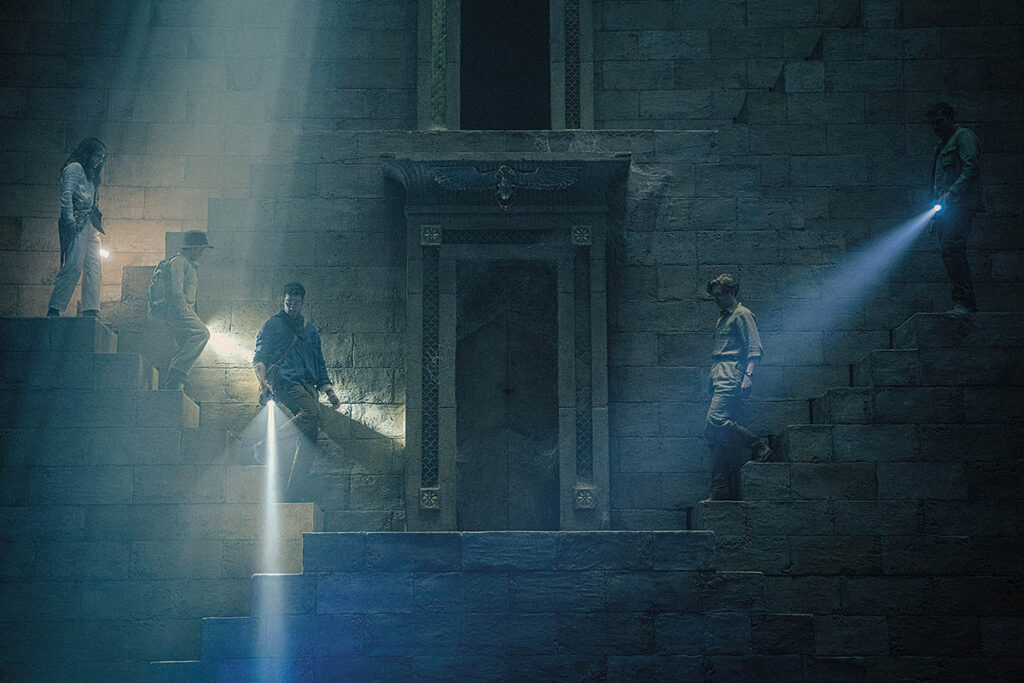

Each country has a unique culture that, in part, influences how visual effects companies operate there. “Understanding cultural differences is foundational to the success of any company,” observes DNEG’s David Conley. “Language and culture shape communication, leadership, teamwork and decisionmaking in multicultural, multigenerational environments within a global company. That said, watching Ted Lasso offers up some really great management tips on how to handle multicultural teams. Or Aliens, depending on how you view your clients!” Talent is not in short supply. “There is incredible talent worldwide that can be accessed through remote work or by encouraging relocation to different countries. Any perception of labor shortages can be attributed to the oversaturation of work being pushed into heavily subsidized regions and, unfortunately, to the loss of experienced artists moving into other industries. We really need to figure out how to protect our global talent base from the effects of downward financial pressures that are undermining the stability of our industry.”

Cloud computing, real-time rendering and AI/machine learning are leading the next wave of technological innovation. “All these technological developments are fantastic for creating a global multisite facility that can access artists worldwide,” Conley remarks. “These developments will be foundational in building a suite of tools to improve compute speed, designed to deliver images to a higher standard, and unite artists in sites around the world. But we need to be careful not to let discussions about technology minimize the artists’ contributions, which are more needed than ever.” The visual effects industry continues to evolve. Conley concludes, “What we’re seeing is that the economics of content creation are being challenged by the various distribution models that audiences around the world use to consume their content. As an industry, we need to adapt to those evolving models. But not at the expense of undermining our position in the filmmaking process. It’s essential that we continue to deliver visually groundbreaking work.”