

Everyone loves to hate Gen Z – I can say this; I’m one of them. Born between 1997 and 2012, Generation Z is making its mark on the workforce, prioritizing flexibility, work-life balance and job satisfaction and largely doing away with tradition. At least, that’s how the story goes.
In the VFX industry, young artists are shaking things up – but not as much as you might think. Some denounce artificial intelligence; others tout its efficiency. Some are wary of burnout, of being women in a male-dominated sector, of allowing themselves to log off and – to use their lingo – touch grass, but in general, they’re finding the industry both welcoming and creatively rewarding.
We catch up with seven young artists, working around the world, to explore the employee experience from their POV.
WHEN I GROW UP
When choosing a career, those who end up in VFX don’t just throw a metaphorical dart; they’re driven by a passion for film, animation and shared emotion. Take Jiwon Chun, now a texture artist at ILM, for example. As a kid, she spent her time immersed in sci-fi and fantasy films, watching VFX breakdowns and behind-the-scenes documentaries. “I was so curious,” Chun remembers. “I hadn’t realized, at the time, that I could do it as a career. When I did, it became a goal to work towards: to work in VFX.”
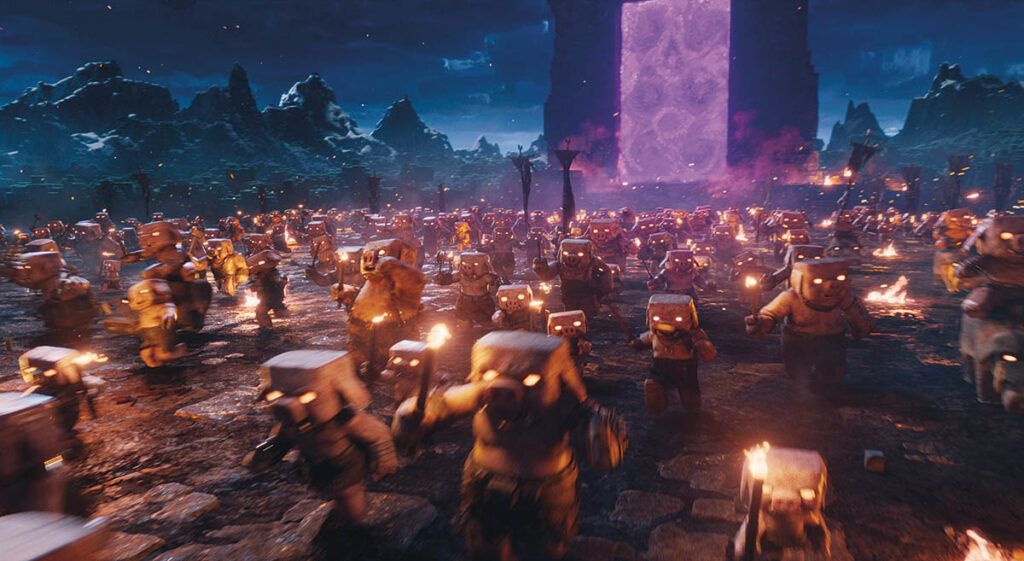
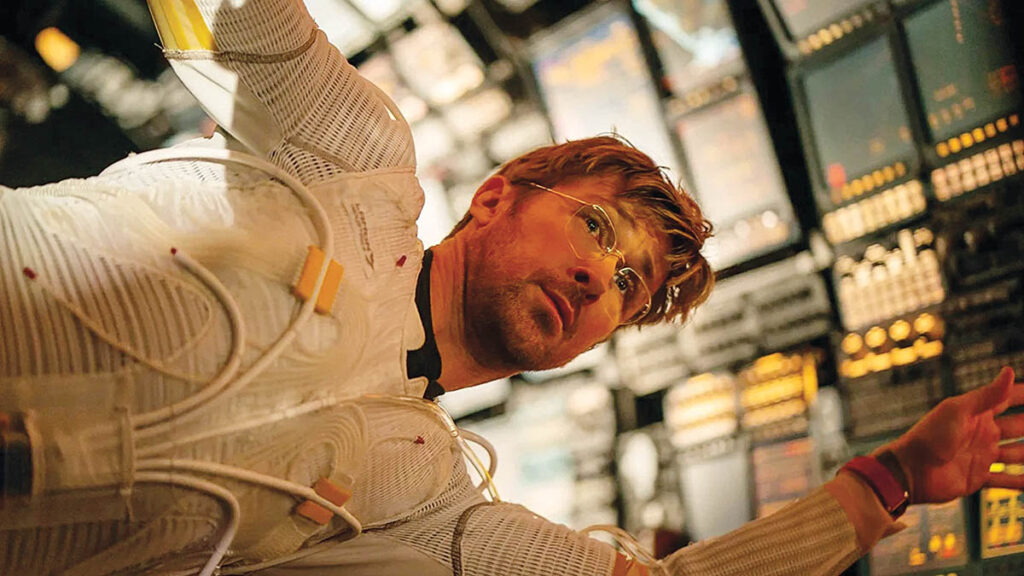
Balthazar Bourguignon, FX artist at DNEG, had a similar experience. “When I was 10,” recalls Bourguignon, “I watched Final Fantasy VII: Advent Children. I didn’t understand the movie, but it planted a seed in me. The battles, the magic, the explosions – I loved it. When it came time to choose a professional path, oddly enough, I didn’t hesitate. I knew that if I was determined, one day I could craft images that resonated with people the way they resonated with me.”
Francesca Armstrong, Lighting Technical Director at Wētā FX, stumbled into VFX accidentally. While studying computer science, she found that coding “opened the door to the VFX industry. I’ve always loved art and film,” she shares. “A career that combined science with the creative arts presented a new, exciting world where visually interesting work and technical problem-solving didn’t have to be mutually exclusive.”
Max Popovych, compositor at Digital Domain, had a parent in the industry. “I grew up around it,” he recalls. His father, also a compositor, would involve him “in small ways,” such as painting details or visiting studios. “At home, we watched films constantly, and over time, I became more interested in how those images were built. I started experimenting on my own – compositing images in Photoshop and trying to recreate what I’d seen. That early exposure made pursuing VFX feel like a natural direction.”

EXPECTATION VERSUS REALITY
Leaving college and entering adulthood is a tough transition for anyone, but for Gen Z, this period was marked by COVID, a stagnant job market, industry uncertainty and environmental, political and societal malaise. “When I graduated,” begins Camille Garlaschi, previs artist at Framestore, “I was confident that I would find a job quickly. I wanted to move to London. I finished school one year after COVID and Brexit, so the timing wasn’t ideal,” she describes. “I faced a recovering industry with very few job offers and even fewer for juniors, plus new visa laws,” which affected her, a French citizen.
Though disheartened, Garlaschi didn’t give up and was hired one year later. “I found an amazing team,” she gushes, and she considers herself lucky. “When the strikes happened, I saw a lot of fellow artists lose their jobs – which is especially hard on people who rely on a work visa.”
Armstrong, meanwhile, entered the workforce with some hesitation, cautious of the “negative legacies” that tint nearly every facet of Hollywood filmmaking. “The chance to work with top-tier creative and technical artists on the most cutting-edge projects was exciting, but would I work myself into burnout? Would I be taken seriously as a young woman?”
For the most part, Armstrong says, the industry has met her standards. “You need to advocate for yourself, but I’ve been fortunate to work on engaging, successful projects with people who are actively pushing the industry in a more encouraging, respectful direction.”
Chun also notes that while the VFX sector can at times feel like a male-dominated space, she feels valued as a young woman in the workforce. ILM offers a comprehensive mentorship program, including those specific to women employees. “I can tell that we value diversity,” she says – a dwindling reality in today’s political climate.
A few of our young artists have found that stability can be hard to come by. “It took me by surprise,” Léa Desrozier, environment generalist at DNEG, admits. “Things change, productions shift, and you have to roll with it. That wasn’t something we talked about in school, so I didn’t understand how unpredictable it could be. It was hard at first, but it allowed me to become more flexible over time.”
Popovych agrees. “I’ve learned that the industry is dynamic. Contracts are often short-term, and stability isn’t something you can rely on. It’s reinforced that consistency comes from how you show up, adapt and take ownership of your work.”
STRIKING A BALANCE
Instability can be a red flag for a generation that prioritizes work-life balance, but most young employees stand their ground when it comes to logging off. For Garlaschi, “it’s never been too complicated to switch off from work at the end of the day. I like doing different activities in the evenings and weekends; that way, I feel like I’m keeping work separate from my personal life.”
Older, more seasoned colleagues can also be a source of wisdom. “I’ve been told by those more senior than me not to overdo it and think of it as a marathon, not a sprint,” Chun says.
But work-life balance can be ambitious to achieve when the two begin to blend – a common side effect of remote work. That said, young employees seem to value flexibility, comfort and the ability to focus, which aren’t always given in an office job. For Bourguignon, remote work “is great when you need to fully lock in during a rush, when you’re feeling under the weather or when you’re simply too far from the office,” but “there’s nothing quite like” the social interaction that in-person work affords. “Sharing knowledge, building friendships, having a laugh – all of that comes naturally when someone is just a desk away.”

For Tivoli Mu, environment artist at Digital Domain, in-person work also provides valuable face time. “It allows us to receive feedback more quickly and gives us the chance to observe how senior artists approach problems,” she says – an opportunity that junior employees shouldn’t overlook.
Young people also express empathy for colleagues with spouses, children and other dependents. “I think it’s better to be flexible because – it doesn’t apply to me,” Chun says, “but if you had a family, that could be a challenge.”
Work-life balance isn’t easily quantified, Mu claims. “It’s not only about working a fixed number of hours, avoiding messages after work or making sure we have leisure time every day. Those things can be important, but to me, the deeper meaning is being able to maintain my health, keep growing as a person and take care of important relationships while staying fully committed to my work,” she describes. “I am still learning how to achieve that.”
MAN VERSUS MACHINE
Artificial intelligence is everywhere, and the hype has yet to die down. The Writers Guild denounced generative AI; the Academy Awards have banned it. Though unlikely, there’s a genuine fear that it could render VFX roles obsolete, but young people seem confident overall that a human touch will always triumph.
There’s a critical distinction between traditional AI – which can boost efficiency – and generative AI, which can mimic creativity. “I see it as a tool that is becoming part of the workflow,” Popovych says, “especially in early stages like look development and iteration. The fundamentals – having a strong eye, understanding light, integration and detail – still define the final result. I see AI as something that will reshape workflows rather than replace artists.”
Others take a stronger stance against AI. “While I know that AI can make my life easier,” Armstrong says, “I don’t morally align with its large-scale use. I’m open to being wrong, but the idea of replacing the human touch in cinema with prompt-generated iterations is pretty depressing to me – as an artist and a viewer.”
For those like Chun, Mu and Bourguignon, AI is just another tool in the arsenal. “At ILM,” Chun states, “we’re constantly introducing new technology to raise the bar,” like StageCraft, its end-to-end virtual production solution. “In the past 10 years, we’ve developed many artist-driven machine learning tools that our artists use to assist with repetitive technical tasks. These allow us to increase the speed and quality of our work,” she says.

Like some of her peers, Mu agrees that “AI does have a place in VFX” during the conceptual stages and to “support repetitive or time-consuming tasks.” That being said, she takes a positive spin, believing AI “encourages us to think more deeply about our own value as artists.”
Bourguignon also chooses to see AI as a potential tool and nothing more. “What is truly useful will naturally stick, and what isn’t will fade. As VFX artists, we already have a strong technical background that pushes us to adapt constantly. AI is no different.”
DONE DIFFERENTLY
So far, the next generation of VFX artists doesn’t seem all that different from those who came before. So, what separates them from the veterans?
Popovych believes it’s the amount of visual content they are exposed to from a young age, whether on social media or a TV screen. “People develop an instinct for what looks real much earlier, even outside the industry. Experimenting with images, cameras and online inspiration helped build that foundation early, and now it translates into a more intentional approach in my professional work.”
Chun argues it’s a resourcefulness that defines her generation. “Speaking from my own experience, I learned Adobe Substance Painter rather than Mari because it’s more affordable. Being exposed to all the free tutorials on Discord and YouTube also came in handy. I think this habit of self-teaching still carries on in my day-to-day job.”
While there are certainly themes – or stereotypes – that characterize Gen Z, Mu doesn’t espouse a strict generational boundary. “No matter when someone enters the field, everyone has to keep learning and adapting,” she says.
And for a generation that, by some, has been deemed lazy, these artists are anything but. They’re proud of their work, collecting credits and becoming more confident as they gain experience. “I didn’t go to the best schools or start VFX early,” Bourguignon admits, “so it was no piece of cake.”
Their time in the VFX industry thus far can be characterized by nonstop development. “The last few years have given me a basic creative and technical toolkit, but I think the area of growth I’m most proud of is learning to trust in my skills and instincts,” Armstrong shares. “I challenge myself to say ‘yes’ to professional opportunities that I would have previously felt underqualified for.”
Garlaschi, meanwhile, is proud of not giving up, despite her early struggles to get her VFX career off the ground. “I’ve managed to keep the spark that first drew me into this industry,” she says, avoiding the post-grad disillusionment altogether.
Mu also began her career with a “romantic impression of the industry,” and while she hasn’t lost that rose-tinted view, she’s come to appreciate the practical aspects of the VFX process. “Being part of an exciting film can be a dream and a passion, but the final result also depends on every team member dedicating effort to every single shot. Every person’s contribution is genuinely important,” she argues – whether they’re old guard or junior artist.