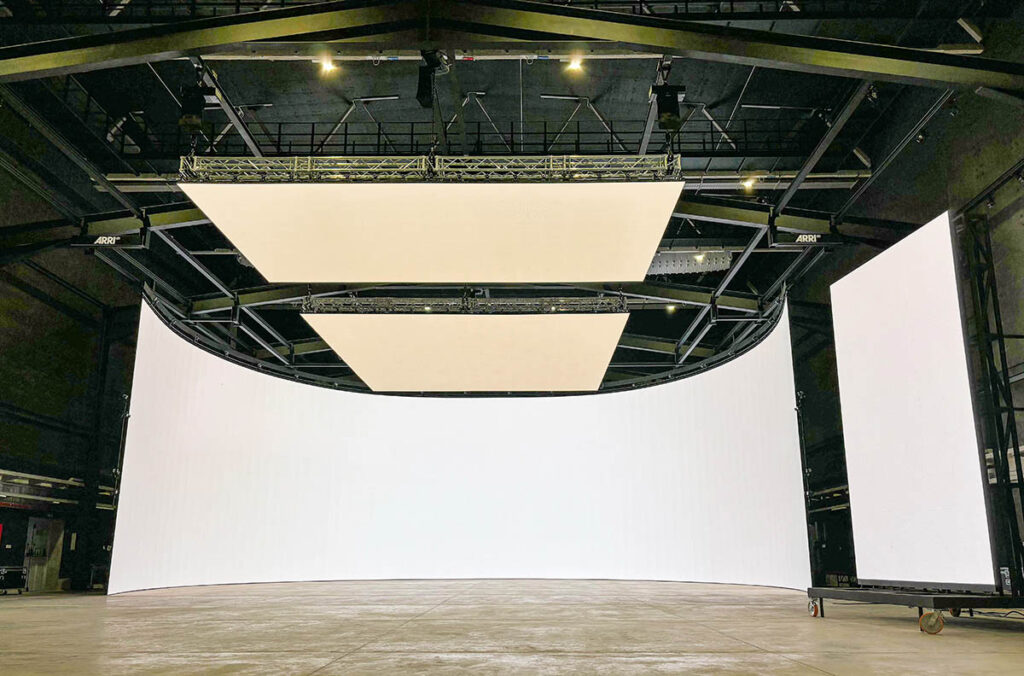

Virtual production stages are sprouting across the globe in well-established VFX territory as well as new destinations beyond the traditional pull of the visual effects industry. Driven by tech advancements, government incentives and growing demand, LED studios are expanding the reach of virtual production and generating new creative hubs out of locations like Belfast, Budapest and the Canary Islands.
“The market for LED stages and walls remains strong globally, even amid domestic challenges like industry strikes and evolving regulations. What’s most exciting is how broadly the technology is now being adopted – it’s no longer reserved for big-budget Hollywood productions,” observes Nick Jevons, Vice President of Business Development at ROE Visual, a global leader in LED screens and display products.
“A virtual production stage can become a creative hub for film, TV and gaming. It brings together directors, cinematographers, VFX teams and Unreal Engine artists in one place, making collaboration faster and more creative.”
—Melania Kulczycka, Founder & Client Services Director, VuFinder Studios
Two sites using ROE tiles illustrate the contrast of applications among VP studios. “Take Superman at Trilith Studios [in Atlanta], where LED volumes played a key role in bringing the film’s vision to life,” Jevons says. “On the other end of the spectrum, NantStudios recently partnered with EA and OS Studios to transform its El Segundo [California] campus into a live Battlefield 6 launch experience. Multiple LED volumes were configured to create an immersive keynote stage, a dynamic arena and streaming environment. It’s a perfect example of how versatile and creative these stages can be used, reinforcing that the LED stage market is expanding into entirely new dimensions of storytelling and audience engagement.” According to Olaf Sperwer, ROE Visual’s EMEA Director of XR Broadcast and Virtual Production, “We’re seeing growing adoption across XR broadcast studios, commercial shoots and immersive live events, even among influencers creating content on XR stages.”
Disguise works with a growing range of studios with LED stages. A few newer examples include: “Film Soho in London, La Planete Rouge in [Martigues] France, TRG’s new studio in Ohio, MUSHANG VFX Lab in Sydney and the TOEI VP Studio in Tokyo, plus others in New York, Atlanta, Reading, Milan, Dubai, Hong Kong, Beijing, Shanghai, Seoul and more,” says Andrew Amato, Creative Producer at Disguise. “Over the last few years, we’ve not only seen global adoption increase, but we’ve seen virtual production consistently expanding into other markets. LED-based VP [has been] famously rooted in film and TV, but is now [also] a staple of commercials, branded content, gaming, automotive, education and corporate events. In fact, we’re seeing a lot of growth in corporate, higher education and houses of worship.”
Jevons states, “Virtual production stages are reshaping the global landscape of creative hubs. Now, production is less dependent on having a large physical workforce or proximity to traditional infrastructure. With virtual production, you have specialized teams operating highly versatile studios that can support productions virtually anywhere. This flexibility empowers filmmakers and content creators in previously overlooked regions, from smaller cities to entirely new markets around the globe. The result is not only increased accessibility but also the emergence of fresh creative communities, bringing diverse storytelling voices and new opportunities to the forefront.”
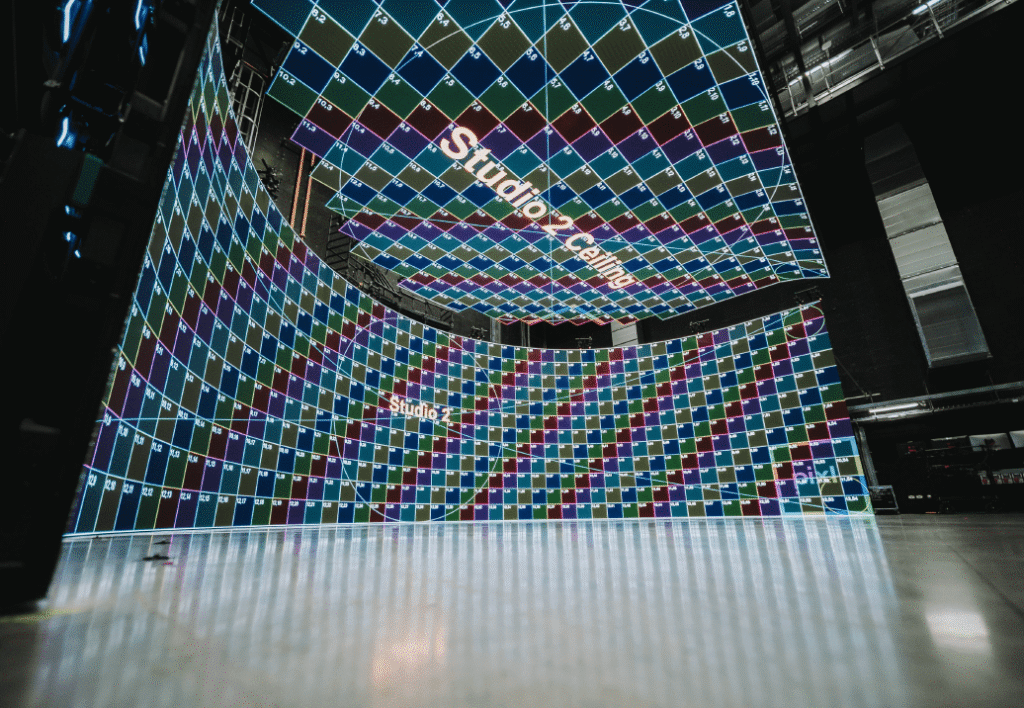
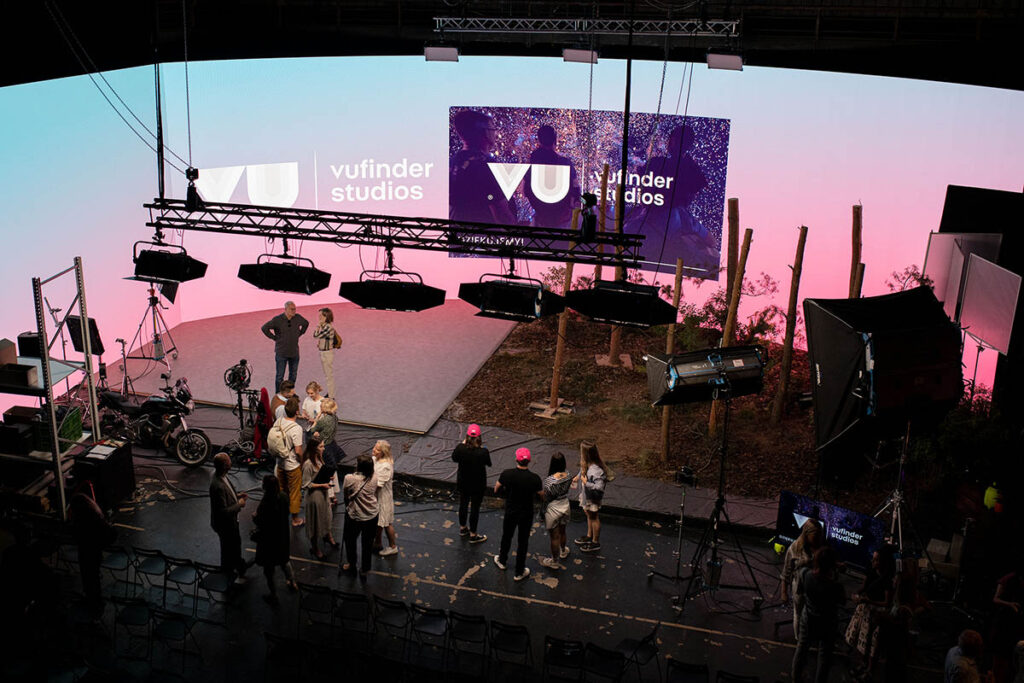
“A virtual production stage can become a creative hub for film, TV and gaming,” says Melania Kulczycka, Founder and Client Services Director of VuFinder Studios, a virtual production facility in Warsaw. “It brings together directors, cinematographers, VFX teams and Unreal Engine artists in one place, making collaboration faster and more creative.” She adds, “VuFinder Studios is not just a stage but a space where different creative industries connect.” VuFinder features a 700-square-meter studio equipped with three LED walls. Kulczycka notes, “The studio’s core technological strengths include ROE Visual LED screens, real-time rendered virtual environments powered by Unreal Engine, the Mo-Sys camera tracking system and high-performance graphic servers that enable realistic simulations of environments, lighting and physics.”
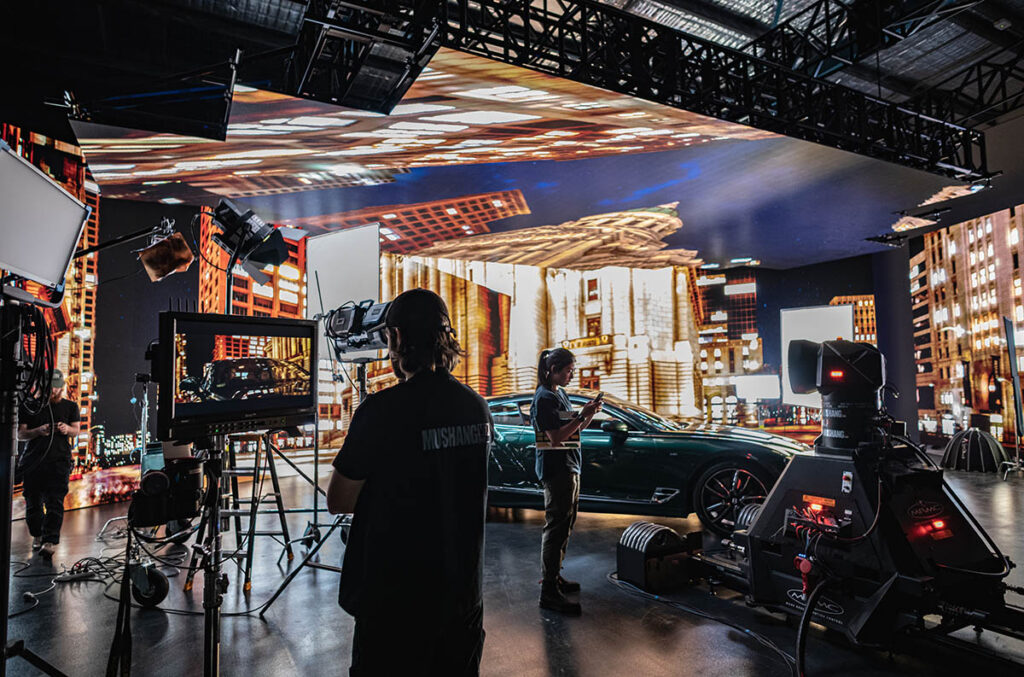
Kulczycka continues, “VuFinder Studios has supported global brands and international crews in creating complex shoots all in one location, without the need for travel or physical set construction. With tools for remote collaboration, cloud rendering and live compositing, VuFinder Studios is becoming a creative hub built for the future.”
“Virtual production is growing rapidly in Eastern Europe, propelled by strong market forecasts and major infrastructure investments,” Kulczycka notes. “The region is seeing major investments in LED volumes, real-time rendering and camera tracking systems, driven by growing demand for high-quality, efficient production. Studios are adopting cutting-edge technology, building dedicated VP stages and integrating Unreal Engine workflows. As a result, Eastern Europe is becoming an increasingly important hub for virtual production in Europe.”
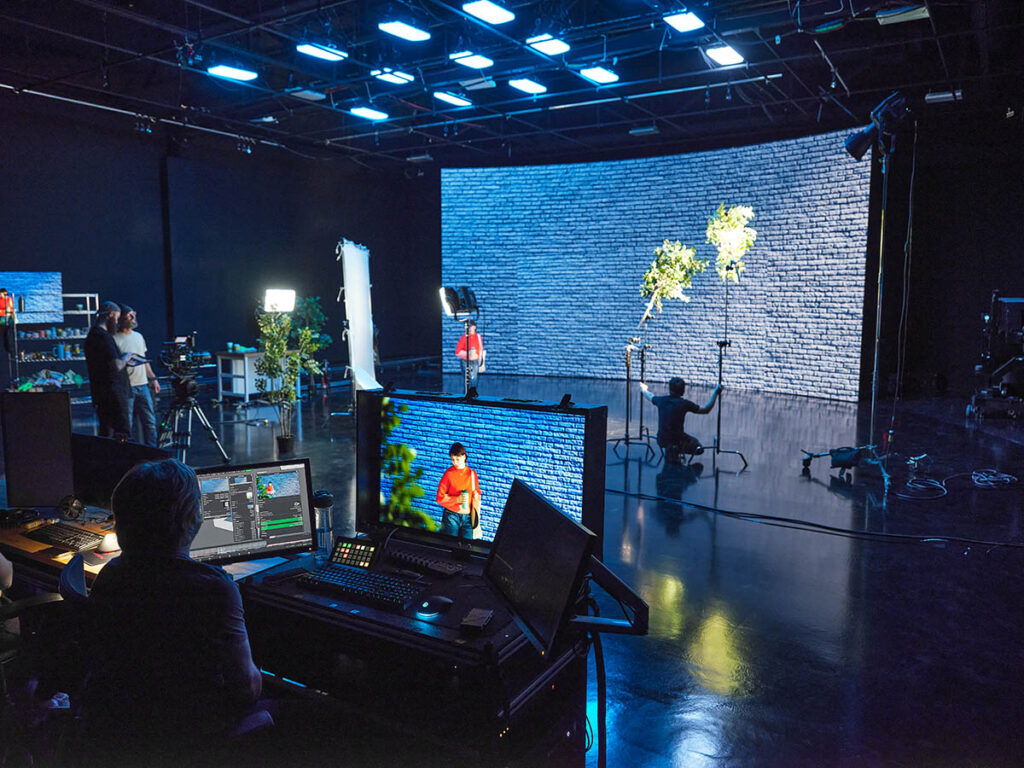
“[W]e’ve not only seen global adoption increase, but we’ve seen virtual production consistently expanding into other markets. LED-based VP [has been] famously rooted in film and TV, but is now [also] a staple of commercials, branded content, gaming, automotive, education and corporate events. In fact, we’re seeing a lot of growth in corporate, higher education and houses of worship.”
—Andrew Amato, Creative Producer, Disguise
DNEG 360 combines Dimension Studio’s expertise in real-time production with DNEG’s visual effects work. “The initial joint venture began in February 2021 to deliver virtual production, and in 2024 it expanded its partnership to include visualization, virtual production, content creation and development services,” notes Steve Jelley, Co-Founder and Co-CEO at Dimension Studio. The goal was “to provide clients with an end-to-end production solution and a seamless transition through development, pre-production and virtual production into visual effects and post for feature film and episodic projects, advertising, music videos and more.”
Jelley continues, “Dimension’s key service offering is our virtual production platform and pipeline of tools. Our technology workflow is designed to provide our industry-leading VP services within any studio with an LED volume where required. Delivery of this workflow has been expanded with our VP Anywhere solution, which takes its expertise to install and operate its virtual production services in any studio or location worldwide. This gives flexibility to clients with a ready-to-go team of virtual production experts under Dimension’s supervision and custom LED volume and mocap stage setups, in any location they choose.”
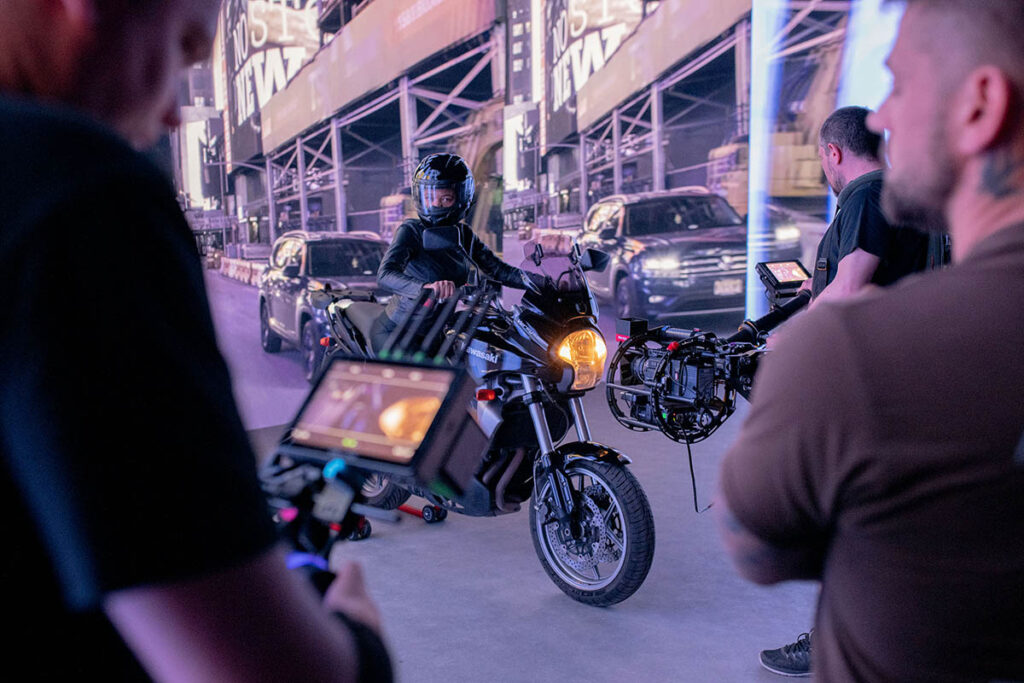
“Dimension’s VP operations, and the first VP Anywhere projects we’ve delivered, are great examples of establishing significant VP stages beyond the obvious locations in London or Hollywood,” Jelley says. “Virtual production and, specifically, shooting with an LED volume are a great way of democratizing filmmaking. That’s obvious from the regions that are really embracing the technologies. Aside from our work with Cinecittà in Rome, we’ve recently been working with media producers in China and Korea to ready their operations for virtual and real-time production because they’re seeing the huge opportunities that embracing these tools presents.”
Improvements in tracking technology have also made VP a smoother experience for VP veterans and newcomers alike. Last spring, Vicon debuted Active Crown, a virtual production camera tracking device. “Active Crown transforms unreliable tracking into robust, dependable motion data,” explains David Edwards, Vicon VFX Product Manager. He adds, “Our software platform Shōgun has remained at the core of our product development priorities. Recent updates have focused on enhancing virtual production capabilities. We continue to optimize Shōgun to provide the lowest possible latency for real-time applications. This ensures that all aspects of the virtual production pipeline – from full-body character tracking to camera and prop tracking – are as responsive and accurate as possible.”
Government incentives are instrumental in cultivating new creative virtual production hubs beyond traditional centers. Sperwer explains, “Take Studio Ulster in Belfast, for example – a world-class £72 million virtual production campus developed by Ulster University with substantial backing from the Belfast Region City Deal, the U.K. government, Northern Ireland Screen and Belfast Harbour. This facility has not only elevated the U.K. and Ireland’s creative infrastructure but is already attracting major international productions, boosting investment and creating hundreds of jobs.”
Meanwhile, in Spain’s Canary Islands, the Economic Promotion Agency of Gran Canaria (SPEGC) commissioned the development of Gran Canaria Studios, a cutting-edge virtual production stage built in partnership with ARRI, VCI and ROE Visual. Sperwer notes, “This project leverages generous local incentives – including low corporate tax, high audiovisual tax rebates, training support and flexible financing – to position the island as a compelling production destination for both indie and high-end international content.”
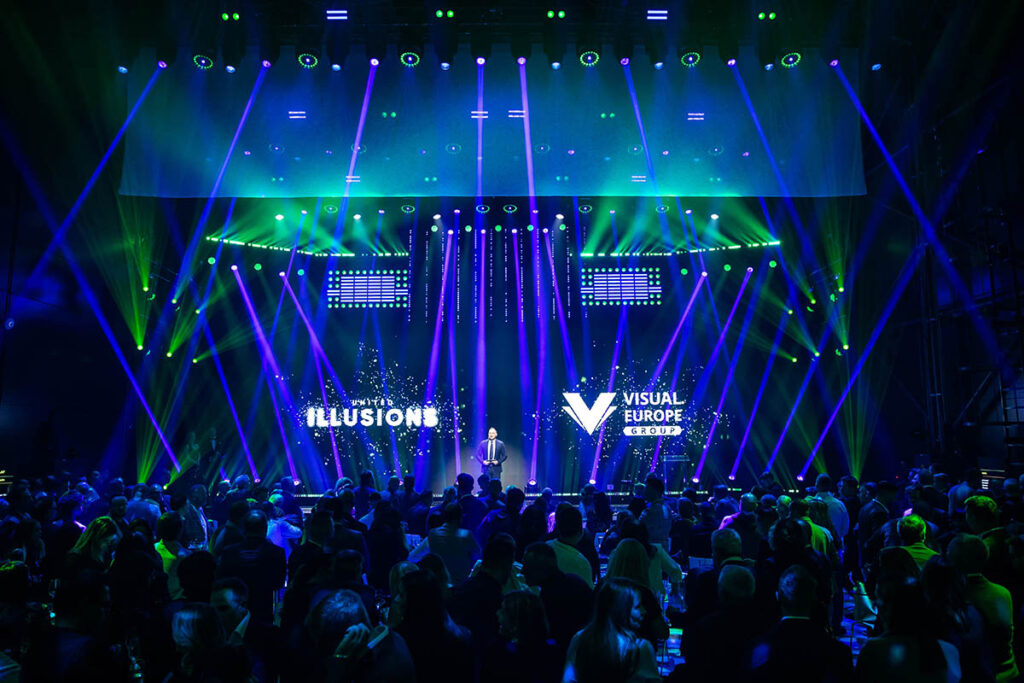
Sperwer adds, “In Hungary, the newly opened United Illusions Studio – Central Europe’s largest VP complex – leverages the country’s generous 30% film production tax rebate, making Budapest a compelling creative destination. And in Croatia, the Antitalent Studio Group won a public tender for a medium-sized virtual studio setup. These examples clearly illustrate how targeted government incentives are directly shaping the world’s evolving landscape of virtual production.”
Virtual Production is increasingly appearing in educational settings. The NYU Tisch Martin Scorsese Virtual Production Center in New York City is an example. Another is the CoStar Screen Lab project at Studio Ulster, which “marks just the beginning of a growing trend,” Sperwer says. “Academic institutions, including technical universities and film schools, are making strategic investments in virtual production to help train the talent the industry urgently needs. These polytechnics build strong academic networks and establish state-of-the-art production and research facilities, laying the groundwork for a sustainable talent pipeline and long-term industry growth.”
“We’re very optimistic about the continued growth and broader adoption of LED stages heading into 2026, especially given their versatility they across a wide range of applications. We anticipate less emphasis on massive, fixed volumes and greater interest in flexible, modular LED setups that can dynamically adapt to specific project needs,” Jevons states. “A great example of this trend is NantStudios’ Dynamic Volume System (DVS), which introduces a reconfigurable approach to virtual production. Instead of locking productions into a single static layout, this system offers more versatility and efficiency, making LED stages accessible to a wider range of clients while supporting a broader variety of creative needs.”
According to Jevons, “LED stages are evolving and becoming more intelligent. Smarter designs, improved integration and streamlined workflows are unlocking new levels of creativity and control for every type of production. While we might assume that LED stages are becoming significantly cheaper as technology matures, the truth is that overall costs have remained relatively stable. What has changed, however, is that studios now have a clearer understanding of what exactly they need for their creative applications, allowing them to optimize budgets more effectively. We’re seeing increased adoption among smaller-scale studios, enabling LED stages to serve a broader market beyond blockbuster film budgets.”
Disguise continues to enhance its VP offerings. Amato notes, “Our ecosystem offers pixel-perfect mapping with RenderStream, our proprietary architecture for controlling and visually integrating real-time content engines and other visual effects in our Designer software. In our latest Designer release, r31, we’ve now introduced a new local mode to RenderStream. This essentially facilitates real-time content without needing a dedicated render node – a huge benefit to smaller productions.”
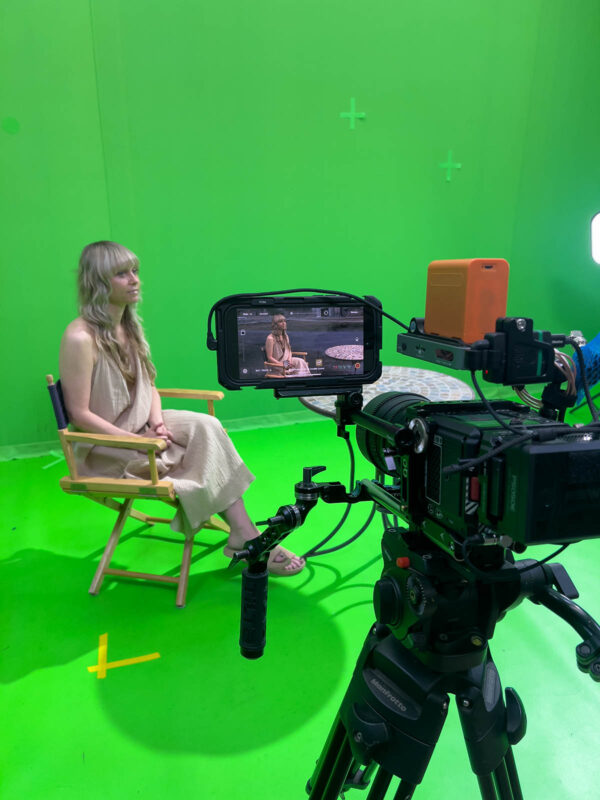
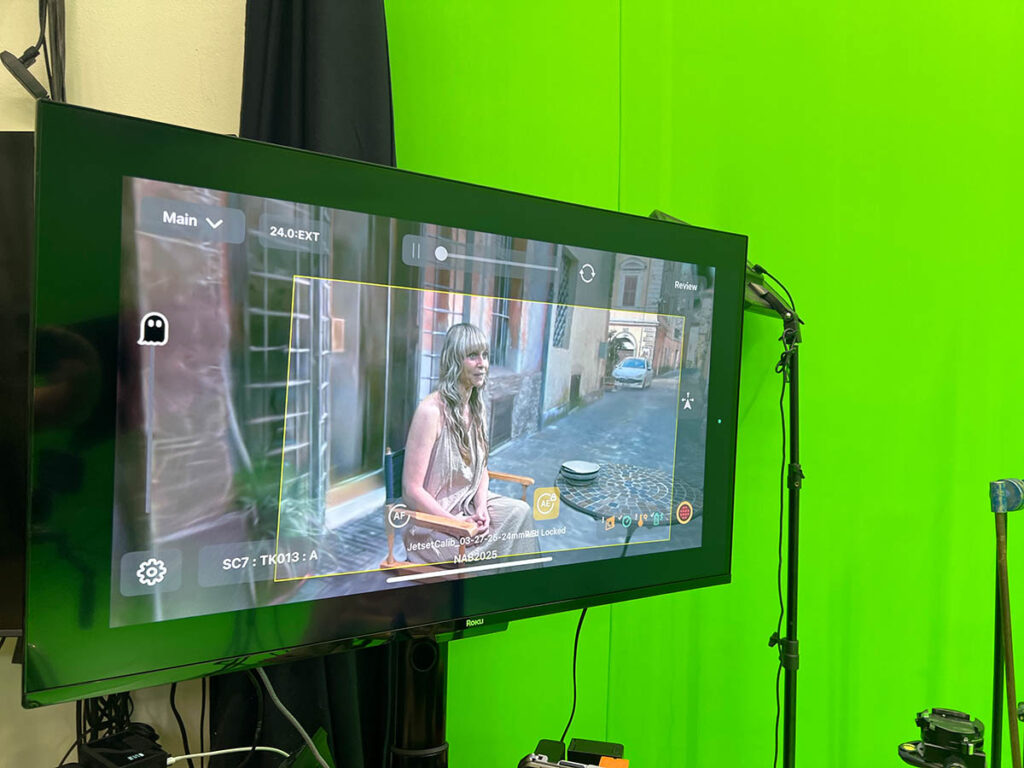
Lightcraft Virtual Production is designed as a complete, end-to-end connected system, starting with Lightcraft’s new Spark live collaboration tool. “Spark lets filmmakers load a script and a 3D scene or scan, then rapidly author simulated camera shots to ‘test shoot’ a production with real-world camera simulations. Next, the simulated scenes can be pushed easily to Jetset, Lightcraft’s iOS virtual production app,” explains Eliot Mack, CEO and Founder of Lightcraft Technology. “Jetset can calibrate and track the optics of production digital cinema cameras, and capture complete shot tracking metadata, including 3D set scans matched to the tracking coordinates. That captured tracking data can transform the traditional post-production process, making it possible to process hundreds of shots per day, with automated hooks working with AI relighting tools such as Beeble.ai.” Mack continues, “The biggest recent advances are in areas people don’t traditionally think of as virtual production, such as phone-based tracking, rapid Gaussian splat scanning of practical locations, AI-based relighting techniques and AI world construction methods. However, these pieces collectively can transform the ‘art of the possible’ in virtual production and bring imaging approaches that were previously prohibitive for small productions into direct use.”
“We see motion capture playing a central role in the growing trend of virtual production, where live-action performances are blended with computer-generated elements to create really dynamic storytelling experiences,” says Vicon’s Edwards. “Going into 2026 and beyond, at Vicon we see the VFX industry being less creatively constrained. The convergence of motion capture and real-time virtual production is really the key. The distinction between physical and digital worlds on-set will become even more seamless, and the continued tech advancements that enable teams to iterate faster and have a more fluid creative process will only get more refined. Less technical friction means freeing up more time for creative storytelling and performance.”
Edwards explains, “We also anticipate that the tools for on-set virtual production will become even more robust and integrated. New technology will further solidify the virtual production pipeline, making it a more reliable and efficient choice for a broader range of projects. This will ultimately lead more studios of all sizes to leverage the creative freedom that’s become within reach. This again speaks to the democratization of world-class technologies across a broader range of users, leveling the playing field and raising the bar on creative output.”