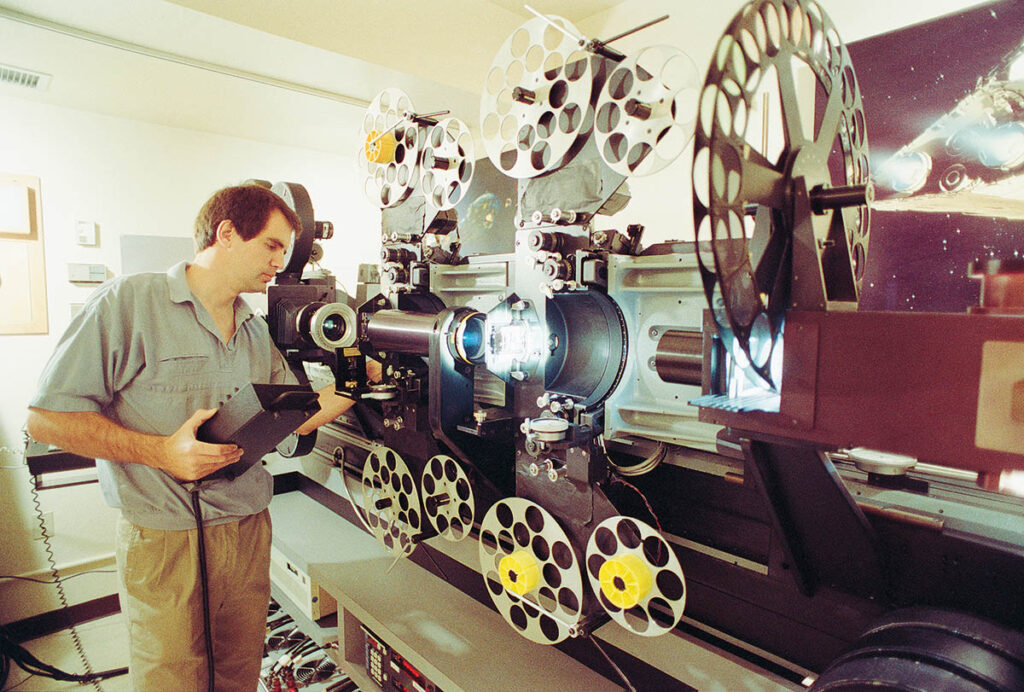

Every generation of visual effects artists has had its defining tool. The one that arrived and divided everything into before and after. In the 1970s, it was the optical printer, bending light and time in ways that felt genuinely impossible. The 1980s brought digital compositing and began reshaping an industry still rooted in the photochemical world.
The 1990s saw CGI cross the threshold from novelty to necessity, a moment most people date to a glass of water trembling on a dashboard in 1993. Each of these tools was met with the same mixture of excitement, skepticism and dread that accompanies any technology that threatens to change how the work is done and who gets to do it.
Few moments in cinema history rival the impact of the first fully digital dinosaur in Jurassic Park, a shot so convincing that Steven Spielberg reportedly abandoned his original plan to use go-motion puppets after watching the secret 3D test. What ILM’s computer graphics team delivered that day was both a visual effect and a proof of concept that changed the calculus of what was possible in filmmaking forever. The tool that produced it – an SGI workstation running proprietary ILM software – was, at the time, the most powerful creative instrument the VFX industry had ever held. Every AI pipeline, every real-time engine, every generative model in use today traces a direct line back to its emergence.
The tools discussed in this issue (see Roundtable: The Tools Shaping the Future of VFX, page 48) are different in degree but not in kind. Real-time engines, AI-assisted pipelines, Gaussian splatting, virtual production volumes – each one draws its own line between before and after. The artists and technologists in this Roundtable are living on both sides of that line simultaneously, an uncomfortable place to stand and a fascinating one to report from. The future of VFX will be built on tools that are questioned before they become indispensable. That’s the part that never changes.