
It’s impossible to define anything as distinctly European. On this continent, you can fall asleep on a short-haul flight, one that costs less than your average Los Angeles lunch, and wake up in a country with a different currency, language, legal system and/or dominant religion.
In a world of global platforms, local storytelling has become an important differentiator. “Audiences do not just want content they can watch; they want stories that reflect their culture, language and lived experiences,” says Christina Sulebakk, Managing Director of Warner Bros. Discovery in Germany, Switzerland, Austria, Benelux and Nordics, who oversees the company’s streaming, television and content operations. “That is why authentic local stories continue to resonate so strongly, both within their home markets and increasingly around the world.”
Unlike the U.S. or China, Europe is not a single market; it’s a patchwork of nations, regulations, systems and identities, often with little in common, bar geography. There are 44 sovereign states entirely in Europe, including three principalities: Monaco, Liechtenstein and Andorra, and two microstates, Vatican City and San Marino. The European Union is a political and economic partnership of 27 of those states that cooperate on trade, laws, travel, environmental policy, security and other key issues. In terms of travel, the European Schengen Area is a border-free zone of 29 countries that includes non-EU nations like Switzerland and Norway, but not actual EU members Cyprus and Ireland.
THE BIG THREE
A major catalyst in London’s emergence as a modern VFX powerhouse came in 1977 when Star Wars chose Elstree Studios as a production base. The film, and its sequels, followed by a succession of large-scale Hollywood productions, helped upskill crew and cement transatlantic production relationships. This laid the foundations that would later be reinforced by the Harry Potter franchise. These days, the U.K. is home to key VFX and animation studios, including global leaders Framestore, DNEG and Industrial Light & Magic.
The U.K.’s greatest strength, according to Union VFX Managing Director Lucy Cooper, is the depth of experience that has accumulated across the industry over decades. “Skills have been passed down over time, and we now have a strong global reputation.” Working on productions like Black Mirror: USS Callister and the VFX BAFTA-winning Poor Things, Cooper and the Union VFX team know the value of client collaboration. “Within London, most things are a walk or short tube ride away from each other, allowing for key in-person creative conversations.”
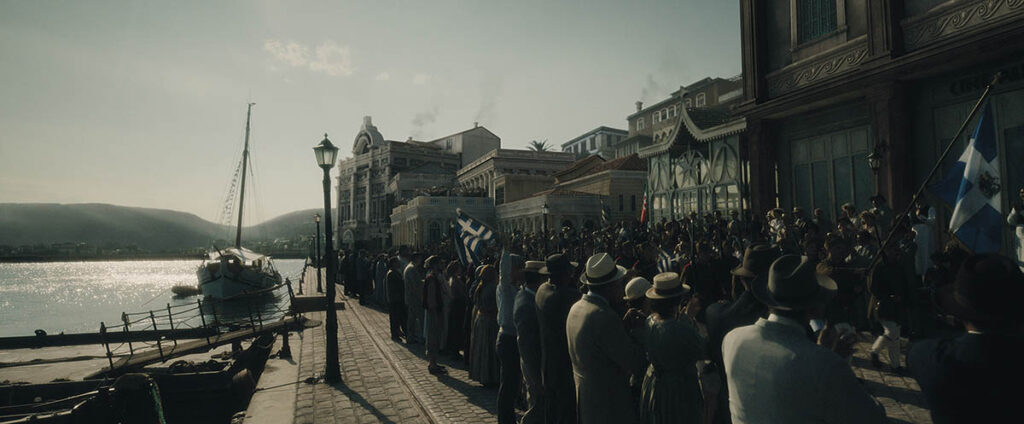
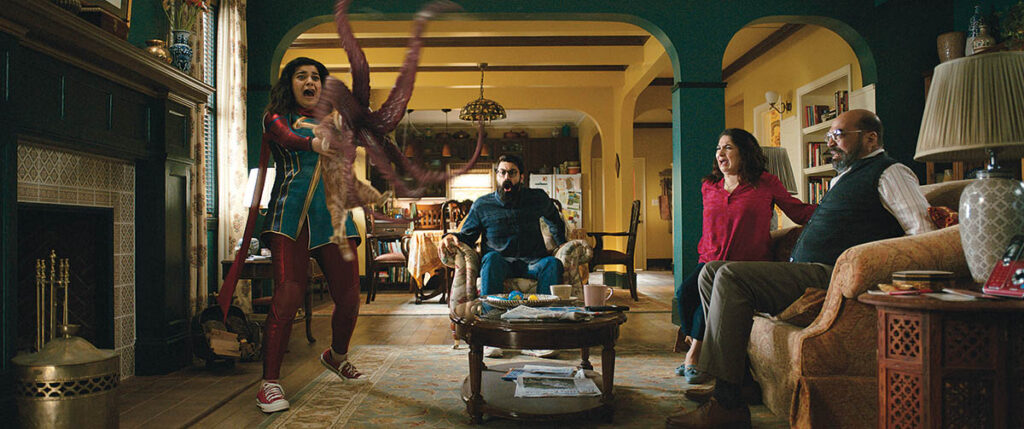
Germany’s VFX sector has developed a different identity, leaning toward an industrial, television-focused hub, with major activity spread across Berlin, Munich and several other production centers. Christina Caspers, General Manager and Managing Director of Trixter, shares how German studios continue to attract major international productions. The Marvels, The Sandman, Foundation and The Suicide Squad are just a few of the big titles to which they’ve contributed. “We have major clients from the U.S. who keep coming back to us: Disney, Warner Bros. and the major streaming platforms.” For Caspers, Germany’s competitive advantage lies less in scale than in adaptability. “One thing that makes Germany stand out is that we’re very good at building practical end-to-end solutions with the resources we have.”
Paris is arguably the birthplace of visual effects. In 1896, magician and filmmaker Georges Méliès famously discovered the creative possibilities of the stop-trick effect after a camera malfunction during filming. The discovery earned Méliès the moniker “the father of visual effects.” More than a century later, French studios continue to draw on that tradition of ingenuity. “He invented the idea that cinema could create tricks. And really, that’s still what we do,” says Béatrice Bauwens, Head of Film & Series at The Mill, and Co-President of France VFX, who understands the appeal of French companies that benefit from an ecosystem underpinned by robust public support for local filmmaking, a population with a deep appreciation for cinema, and a steady stream of international productions. “We have decades of experience working on ambitious national productions, strong track records and highly developed workflows. And, compared to some territories, labor costs remain competitive. It’s this combination of incentives, talent, experience, creativity and cost that makes France attractive.”


WORKING THE FINE PRINT
There are structural differences across the region. Rather infamously technocratic, the European Union does, in theory, allow the relatively free movement of goods, services, capital and people between its member states. There are grants, production loans, rebates and tax incentives aplenty for those who know where to look and are not afraid of extensive paperwork. The catch is navigating a handful of crucial details: different languages, legal systems, business customs and tax authorities.
Then there’s money and work-life distinctions. While the euro is used across much of the continent, the Eurozone only covers 21 countries. The remaining nations use a variety of currencies – meaning exchange rates, banking fees and plenty of mental arithmetic. Then you might have transatlantic colleagues out of office with automatic replies that likely reflect differing work-life cultures. Across much of Europe, employment protections are stronger and more formalized than in the U.S., with longer holidays, stricter limits on working hours, extended parental leave and stronger safeguards against dismissal. There’s an upside: healthcare is usually covered by the tax bill, and welfare supports are often provided by the state. France adds a distinctive feature here: its intermittent du spectacle system, which allows film, television and VFX professionals to move between short-term contracts while maintaining access to a dedicated unemployment support scheme between productions, helping companies scale workforces up and down as projects demand.
Time zones add a complicated layer to scheduling. Depending on location and daylight-saving schedules, the gap between the U.S. Pacific Time Zone and Europe can range from eight to 11 hours. Deborah Doherty, Managing Director and Executive Producer at Ireland’s Elephant Goldfish, and her team make it work. “Our workdays often stretch to suit U.S. clients, but our people don’t mind. The old nine-to-five model is gone.”
Thomas Reppen, Managing Director of Storm Studios, Norway, applies a different approach: “We’ve managed to turn that into an advantage. We take client calls in the evening, when necessary, but then we work while the U.S. sleeps. By the time clients wake up, we’ve already addressed their notes and delivered updated work.”

MONEY MATTERS
What do Das Boot, Poor Things and The Hunt have in common? Public money. Each benefited from state-backed funding mechanisms, whether through German and Danish film support schemes or broader European financing structures. Public funding has a long and intertwined history in European film finance, sometimes accounting for a quarter to nearly half of a project’s budget, depending on the territory and financing model. These mechanisms underpin Europe’s healthy co-production ecosystem, helping culturally significant and non-mainstream stories secure the resources needed to go into production and continue beyond. At the European level, Eurimages, the Council of Europe’s co-production fund, has supported more than 2,600 projects since 1989. With Canada also a member, Eurimages can be an especially useful financing route for transatlantic co-productions alongside Creative Europe MEDIA support.
European films or series that meet certain criteria can apply to the Creative Europe MEDIA fund, which provides grants for cross-border collaborations and financing for global distribution. Each participating country has on-the-ground support to guide applicants through the rather extensive process. In Ireland, this comes via Jules Ní Chonchobhair at the Creative Europe MEDIA Desk in Galway, who notes, “Rather than simply supporting development or production, these grants are available for distribution, training, innovation and international market access, which, in turn, helps European content compete globally. It’s a rapidly evolving industry, so within each funding round, MEDIA places a heavy emphasis on digital tools and innovative technologies.”



At the national level, most countries operate their own combination of grants, tax credits and rebate schemes. This is where a knowledgeable financial producer who excels at building relationships for co-production and knows the ins and outs of finances can play a vital role. Many of these incentives extend beyond principal photography and can also be applied to post-production, animation and VFX work. In the U.K., the tax credit is pre-corporate tax, effectively meaning the rate is lower. The tax credit system completely changed the game in France. For international film and television productions, there is a 30% tax credit. The Mill’s Bauwens adds, “If a production spends more than €2 million on visual effects work in France, there’s an additional 10% bonus. Once the €2 million VFX threshold is reached, it is applied to all French expenditure, including shooting costs. That means the tax credit can rise to 40%.” However, not everyone on the ground is a fan. Trixter’s Caspers speaks from a German perspective: “If I could wish for one thing, it would be a world without tax incentives. Then we’d all compete on talent, skills and creativity rather than what I call ‘funding tourism.’”
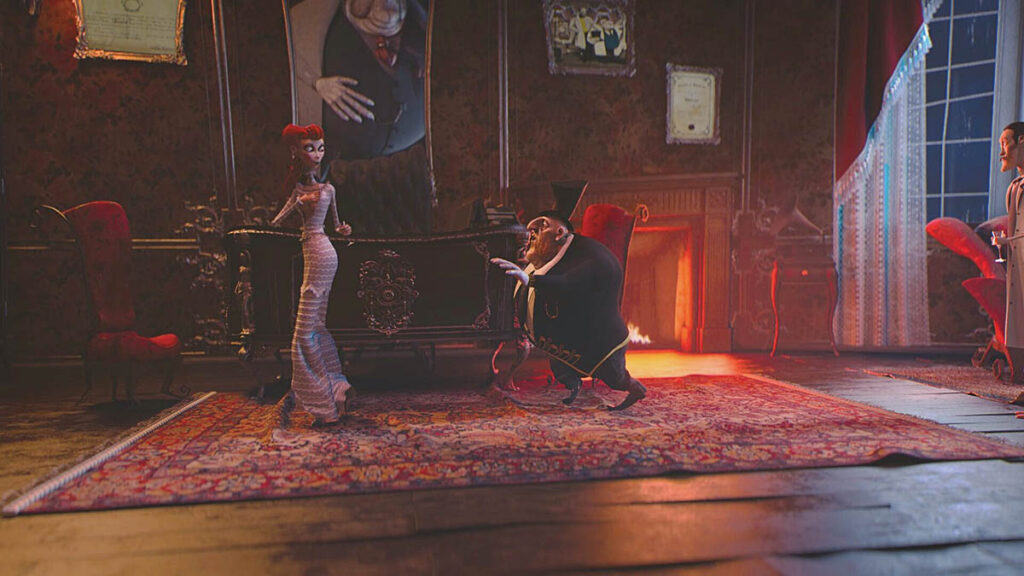
“Poland can’t compete with the incentives offered by places like Canada or Switzerland,” notes Adam Tunikowski, CEO and Co-Founder of Juice, which has credits spanning Fallout, films by Hirokazu Kore-eda and work with Oscar-nominated Polish filmmakers. “The worst part is that most incentives don’t actually go to VFX companies. They go to producers and streamers to lower production costs. The VFX companies still end up working on very thin margins. It becomes less about talent and quality, and more about which country can transfer the most taxpayer money into a producer’s pocket.”
THE NEW WAVE
Beyond Europe’s established nodes are smaller, emerging markets doing exciting work on the ground. While not as established as the “big three,” they often offer different advantages: competitive labor costs, specialized skills and strong creative traditions. Across the continent, countries such as Spain, Poland, Romania, the Czech Republic and the Baltic states are steadily expanding their influence, while the Nordic region continues to punch above its weight creatively. Some are attracting international productions through competitive incentives and growing infrastructure; others through technical expertise, digital innovation or strong histories of co-production.
In Ireland, animation has been thriving since Don Bluth brought All Dogs Go to Heaven and The Land Before Time to the country in the 1980s. However, it was the regal fantasy world of Game of Thrones (2011-2019) that upskilled crews and infrastructure across the whole island, including VFX. That momentum has seen steady growth in subsequent years. Dubliner Richie Baneham just nabbed his third Oscar for the Avatar franchise; SSVFX celebrated an Emmy win last year for their work on Shōgun; and Elephant Goldfish, founded in 2025 as part of the Molinare Creative Group, spent its first year working on Lee Cronin’s The Mummy, A24’s The Moment and more.
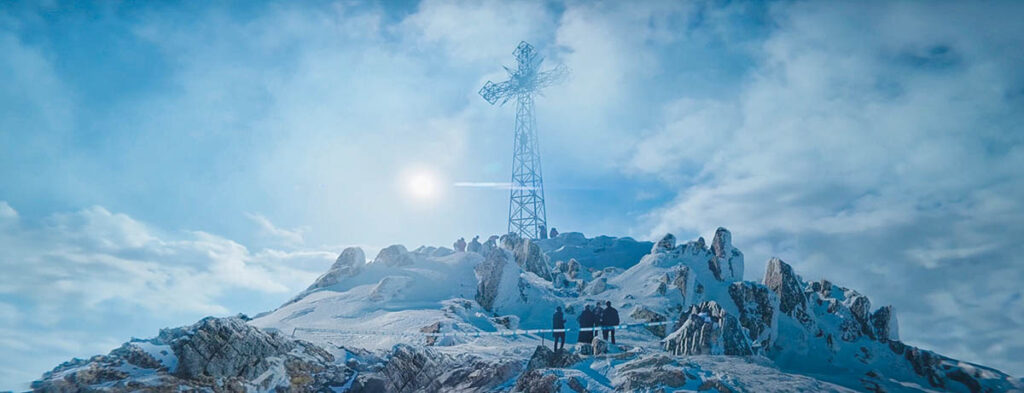
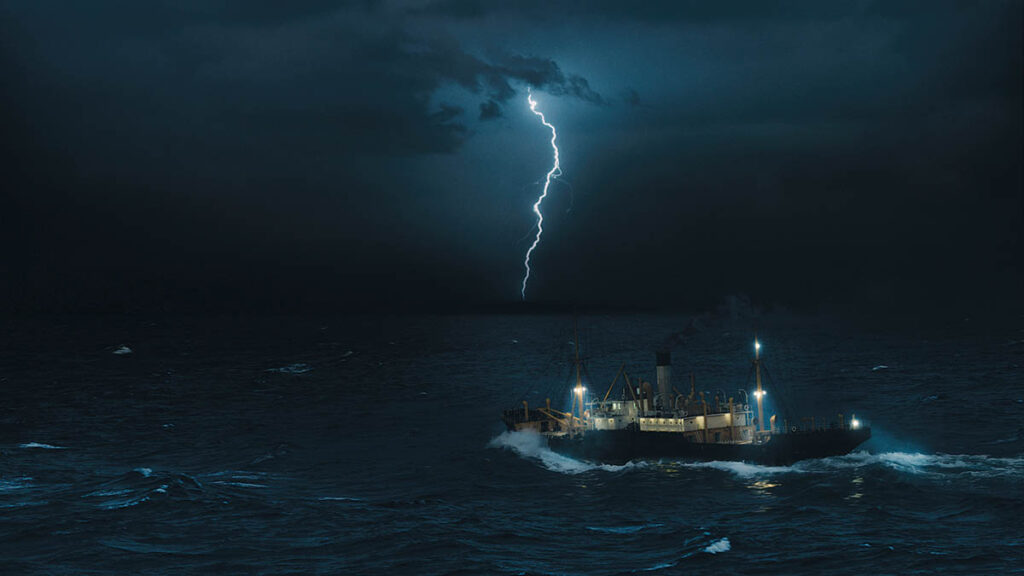
“Compared to the U.K. and Canada, we’re still very small,” comments John Kennedy, Managing Director and VFX Supervisor of Elephant Goldfish, on the emerging Irish landscape. Local artists are proving to be the real draw. “A lot of it comes down to people simply liking working here. Everyone who’s had a good experience making a film or television show in Ireland speaks highly of the crews, the work ethic and the passion.”
Poland is a fast-growing beacon in Central Europe’s production and post-production markets, combining a skilled technical work-force with already established experience in animation, gaming and visual effects. Now, studios such as Juice and Platige Image have built portfolios collaborating on larger-scale international productions. Juice’s Tunikowski traces that expansion back to Poland’s long-standing role. “We’ve been a service hub since the early 2000s. Because of the wage gap and lower living costs, it was relatively easy to build a business servicing companies around the world.” He also attributes part of that success to a dedication to professionalism: “We’re not afraid of work, and we’re not afraid of extra hours.”

“People who left to work in larger markets are coming back, bringing seniority, pipeline experience and studio-level standards with them. That’s the foundation of something real.”
-Alin Dumitru, Co-Founder, StaticVFX, Romania
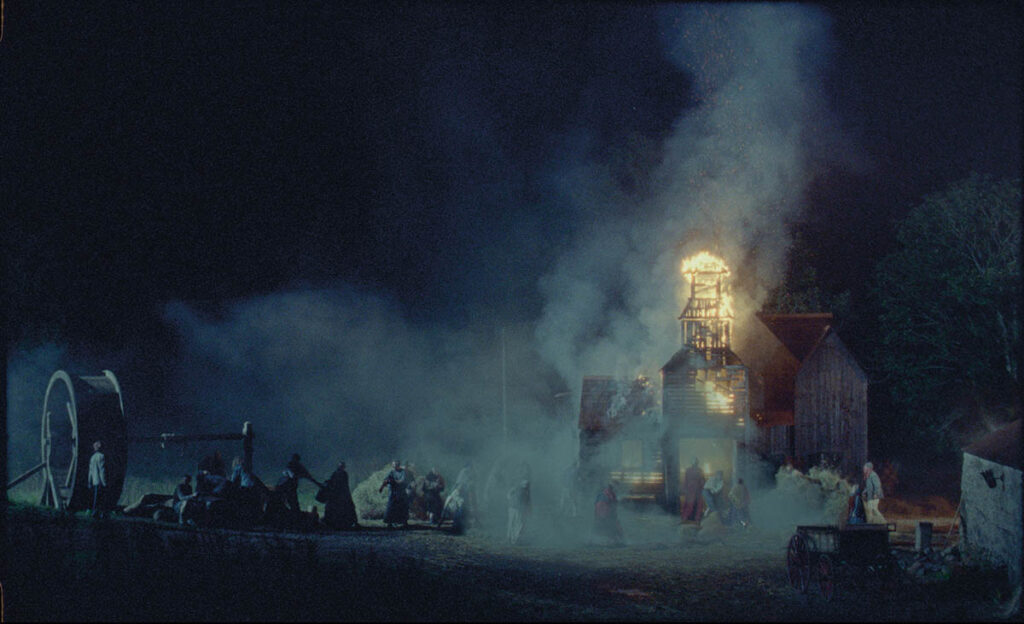
StaticVFX Co-Founder Alin Dumitru has seen Romania’s screen industry grow. “People who left to work in larger markets are coming back, bringing seniority, pipeline experience and studio-level standards with them. That’s the foundation of something real.” Dumitru highlights Romania’s established reputation for co-productions and cross-border partnerships, describing how “Romania can be an agile, creative environment for project development.” For his company, based in Bucharest, this collaborative model has seen Dongji Rescue earn a 2026 VES Award nomination for Outstanding Supportive Visual Effects in a Photoreal Feature. Dumitru observes, “Romania is growing alongside the awareness of what it actually offers: the talent, the facilities, the opportunities.”
The Nordic region, comprising Denmark, Finland, Iceland, Norway and Sweden, along with the autonomous territories of the Faroe Islands and Greenland (within the Kingdom of Denmark) and the Åland Islands (an autonomous region of Finland), has a long tradition of collaboration across the screen industries. In Oslo, Storm Studios has built a reputation for delivering visual effects on prestige productions, including Daredevil, Sinners, Invasion and The Last of Us. “Our first major show was Pixels in 2015. We only did about 25 or 30 shots, one small sequence,” recalls Storm Studios’ Reppen. “But that led to more work on Black Panther.” Part of the appeal, Reppen says, is a lifelong affection for American filmmaking. “U.S. culture has always appealed to me. Even when the films aren’t masterpieces in terms of story, they’re fun. They’re popcorn movies. We’re all fanboys too.”
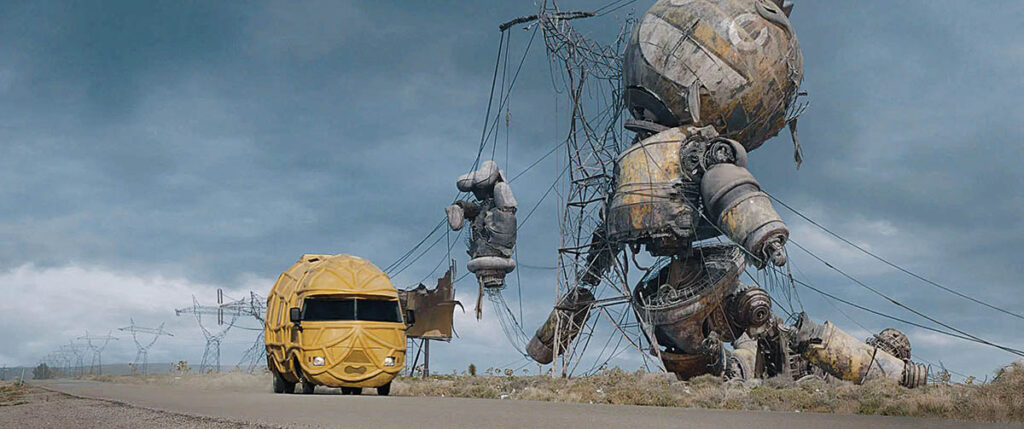
Greece’s Yafka is another example of how smaller studios are contributing to large-scale projects. Their professional portfolio includes marquee works like Westworld, The Magicians, Fallout, Castle Rock, Living with Yourself and, more recently, Nine Perfect Strangers and So Long, Marianne. On the latter, they were the sole vendor. “Greece’s relationship with storytelling is impossible to escape,” states Antonis Kotzias, Founder and VFX Supervisor. Kotzias weighs in on the importance of getting the storytelling right. “Even though modern artists are influenced by films from all over the world, we grow up surrounded by myths, drama and stories that have survived for thousands of years. That creates a natural respect for narrative, and in VFX, our job is ultimately to support that narrative rather than distract from it.”
THE CHANGING LANDSCAPE
The European VFX sector has spent the past few years adapting to a rapidly changing world, suffering many of the same blows as the global market. COVID, strikes and wider structural pressures have all left their mark, leading many key studios to close their doors in the past year or so. These include Scanline VFX shutting down operations in Germany, the shuttering of the Technicolor Group in Paris, Windmill Lane Pictures in Ireland, Axis Studios in Glasgow and Pixomondo in Germany. In London, several major VFX houses have also shut down or collapsed, including Jellyfish Pictures and Glassworks VFX, which closed in 2025 after nearly three decades in operation.
Brexit has also had an impact on the U.K. VFX industry, adding administrative barriers to the movement of goods, people and money. On the island of Ireland, the south is still an EU member, which puts Northern Ireland in the unique position of remaining part of the U.K. while following EU rules for goods. This is where RENDR Festival has been running since 2023. The annual gathering in Belfast focuses on creativity and technology, with past speakers like writer/director Fede Alvarez (Alien: Romulus), VFX supervisor Jay Worth (Fallout, Westworld), producer Mike Reiss (The Simpsons) and Netflix VFX executive Laura Livingstone.


Festival Director Michael Weir notes, “Our speakers and also our attendees, many of whom are freelancers, have noted that, structurally, finance models have shifted. It can be administratively more difficult. However, in Northern Ireland we are uniquely placed to access U.K. funding and incentives while retaining privileged access to both the U.K. market and EU single-market rules for goods. Since Game of Thrones, production and post capacity here is strong, particularly with regards to virtual production and the new facilities of Studio Ulster.”
Virtual production and AI are set to reshape the industry even further. While many studio leaders see AI less as a threat and more as the next evolution of the production pipeline, Storm Studios’ Reppen believes this will call for a recalibration: “The next few years will be about finding the balance between AI and traditional craft. I believe VFX is changing forever, and changing for the better. AI isn’t 10 times faster than traditional pipelines. In some cases, it’s 50 or 100 times faster.”
Elephant Goldfish’s Kennedy notes a similar trend: “What we’re seeing is optimization and efficiency. A lot of repetitive work: data management, media handling, QC, delivery processes, clean-up tasks and rotoscoping.” He notes how areas like look development and concept work are speeding up significantly. “It will change the landscape, but technology always changes the landscape.”
One of the biggest potential areas for disruption, however, is the prospect of escalating conflict. It’s been a little over four and a half years since Russia’s invasion of Ukraine. The further east you travel on the continent, the more this is felt on the ground. In Estonia, which shares a 300-kilometer border with Russia, preparations for war are now part of everyday life, which includes setting up short-term emergency shelters for 100,000 people, while key workers in kindergartens are receiving crisis training and emergency supplies. Last year, military spending by European NATO members rose faster than at any time since 1953.
“At the start of the Russian invasion of Ukraine, many companies across the industry made a conscious effort to help,” notes Juice’s Tunikowski, whose main headquarters are in Wrocław, Poland. “The focus was on supporting Ukrainian artists and their families in relocating and continuing their work safely in Poland.” As a nation, Poland has been supporting Ukraine’s defense, serving as a transit point for over 90% of military and humanitarian aid, mirroring developments in the VFX industry itself. “It was very much a solidarity-driven response. A lot of highly skilled artists relocated, and relationships between Polish and Ukrainian companies became much stronger.”
“If I could wish for one thing, it would be a world without tax incentives. Then we’d all compete on talent, skills and creativity rather than what I call ‘funding tourism.’”
—Christina Caspers, General Manager and Managing Director, Trixter
FOR THE LOVE OF CINEMA
Defying the notion that anything can be identified as distinctly European, markets across the continent are evolving at different rates; cultures, languages, histories and politics have contrasting – sometimes conflicting – differences. But these nuances can also provide a rich array of perspectives, each supported by the unique artistry that accompanies them.
Reppen and his team at Storm Studios brought a distinctly Norwegian viewpoint to their sequences in The Electric State. “We had the freedom to pitch ideas and be involved creatively,” he notes, still delighted that the film was shortlisted for the Academy Award for Best Visual Effects. “We went up to a lake in Norway to shoot background material for the VR world in the film. We rented a drone, drove out to these beautiful locations and captured material ourselves. Then we recreated and expanded those environments in 3D.”
Never underestimate the importance of storytelling – or its power to bring people together. Yafka’s Kotzias notes, “One of the fastest ways to travel, understand a culture and challenge your own stereotypes is through another country’s cinema.” Across all the companies, despite differences, the core motivation is to honor the work itself. Kotzias observes, “Film allows audiences to experience lives and perspectives they might never otherwise encounter, which is why storytelling remains such a powerful way to connect people across borders.” If there’s perhaps one unifying factor across studios in Europe, it’s the enthusiasm and passion for stories, and the drive to support work that is ultimately viewed by audiences around the world.