
This issue reunites a remarkable trifecta of VFX revolutionaries: Andrew Lockley, who bent reality for Inception; Douglas Smythe, who brought liquid metal to terrifying life in Terminator 2; and Erik-Jan de Boer, who made us believe a boy could survive the Pacific with a Bengal tiger in Life of Pi. Each one didn’t just raise the bar – they vaulted over it. (See article, page 42). What counts as a watershed VFX moment? That’s the kind of debate that could rage until the heat death of the universe. But here’s a lightning round of the undeniables:
1895: First Visual Effects shot in motion picture history, in Alfred Clark’s stop-action substitutions in Joan of Arc and The Execution of Mary, Queen of Scots, both filmed on the same day.
1933: Willis O’Brien’s stop-motion wizardry gave King Kong a soul, making audiences buy into a lovelorn ape scaling the Empire State Building.
1963: Ray Harryhausen’s skeleton army in Jason and the Argonauts took years to complete – a painstaking 13 frames per day – but that sword fight became the stuff of legend.
1993: Steven Spielberg and ILM unleashed Jurassic Park, creating the first truly believable CG creatures and launching three decades of digital dominance.
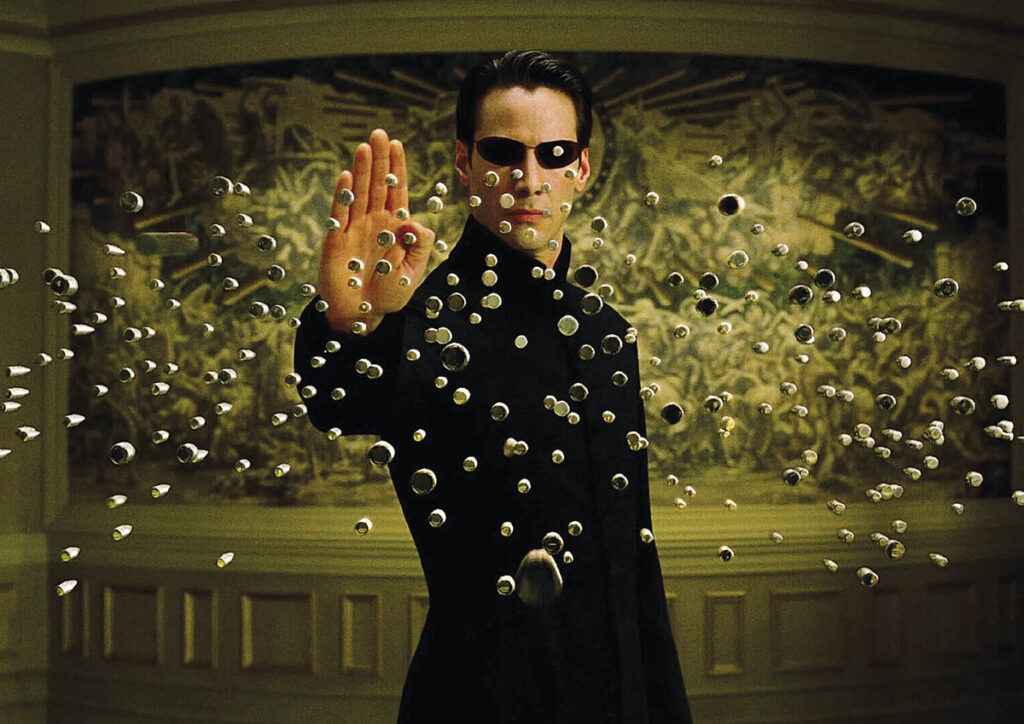
1999: The Matrix gave us Bullet Time – 20 cameras freezing Neo mid-dodge – and spawned cinema’s most shamelessly copied effect.
2002: Andy Serkis and Wētā Digital made Gollum matter in The Lord of the Rings: The Two Towers, proving digital characters could break your heart, not just your suspension of disbelief.
2009: Jim Cameron’s Avatar let directors see their virtual worlds in real-time, fundamentally rewiring how CG films get made.
2013: Gravity flipped the script entirely – roughly 80% CGI, choreographed in virtual space first, then actors filmed to match. Filmmaking in reverse.
2022: Cameron again, with Avatar: The Way of Water, solving underwater mocap in a 900,000-gallon tank because apparently regular innovation wasn’t challenging enough.
The list goes on, and everyone’s got their own picks. But one thing’s certain: VFX teams and artists don’t do fear. They do impossible.