Images courtesy of PFX and Paramount Pictures.

Images courtesy of PFX and Paramount Pictures.
Given that laughter reigns supreme in comedy, PFX discovered that the visual effects shots for The Naked Gun didn’t need to be pixel-perfect as long as the exaggeration or imperfection enhanced the humor. “I believe that doing a comedy changed everything, especially a comedy like The Naked Gun and its type of humor,” states Javier Menéndez Platas, Visual Effects Supervisor at PFX. “We got involved in the project during the pre-production process. Ashley Bettini [Visual Effects Supervisor and Producer] contacted us after the success of Winning Time: The Rise of the Lakers Dynasty, where we mainly focused on our crowd expertise. It felt like another nice crowd project, but after we started to do crowds for The Naked Gun, everything changed. We got along well with the client, which led to PFX being awarded many different shots. Making comedy was interesting. Sometimes the most photorealistic result is not the funniest, so finding that balance was a challenge.”
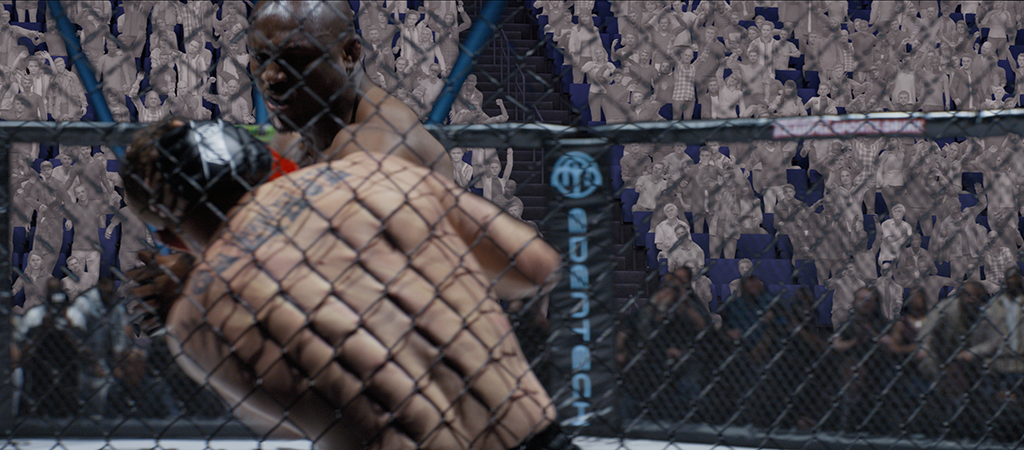
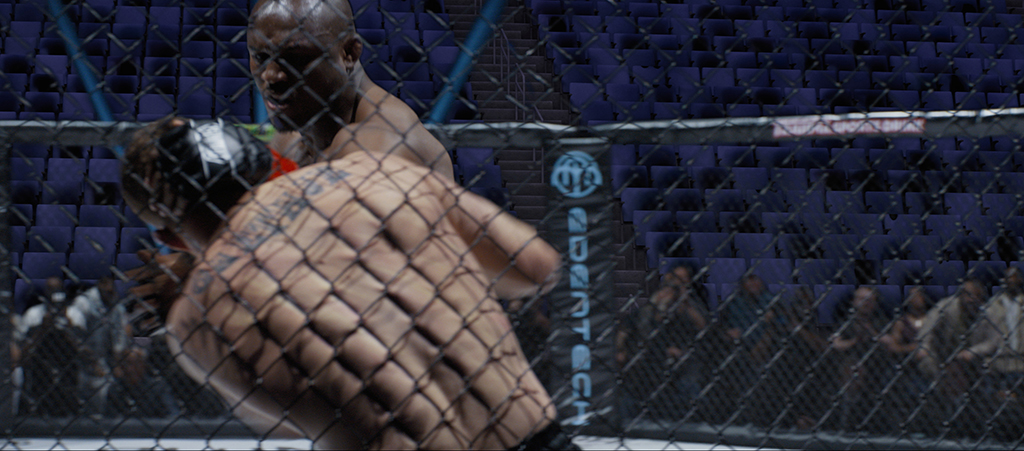
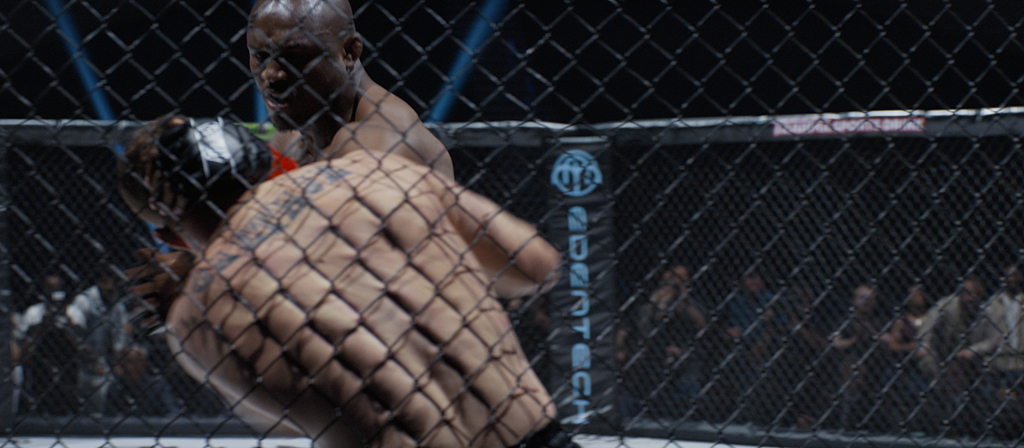
Previous installments of the franchise were not referenced in the visual effects work. “I did watch the previous films in order to understand what type of humor they portrayed and where the limits of that humor were,” Menéndez Platas notes. “After we started, Ashley left creative room for our team to create or propose things. Feedback was always constructive and open for discussion. Every call felt natural; a group of people working together to create something.”
The client’s trust grew throughout the production. “What was cool, specifically about this, is we started with crowd shots, but as the editorial was changing the cut, we were getting more work with other tasks,” notes Anya Vinnik, Visual Effects Executive Producer at PFX. “It’s great to see that the studio was happy with our work, and despite many other challenges that this project was going through, the atmosphere on the reviews was always great!”
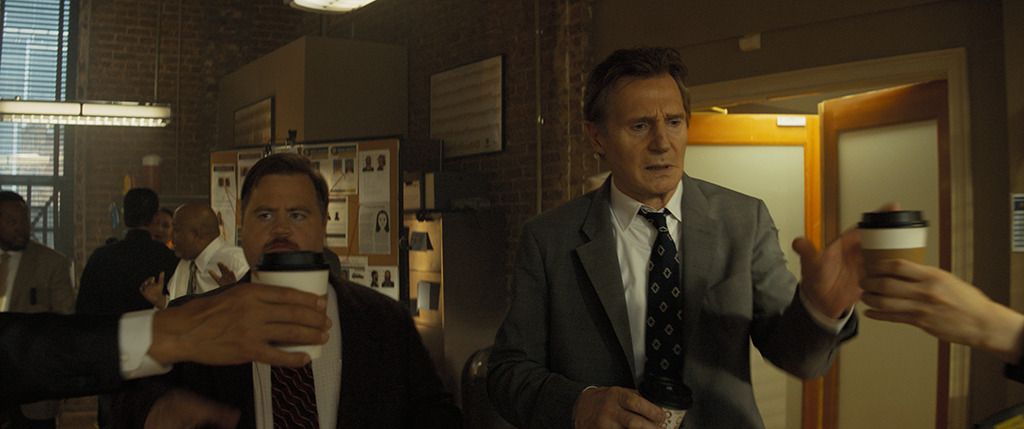
Post-production lasted for about a year. “We started working first on the crowds, but then, after some time, there was a re-shoot, so it extended our work a bit longer,” Menéndez Platas shares. “We finalized almost 100 shots. We didn’t share many assets with other vendors, but we worked on the same shots with different tasks for each of us, and the client was doing a great job coordinating all those efforts.”
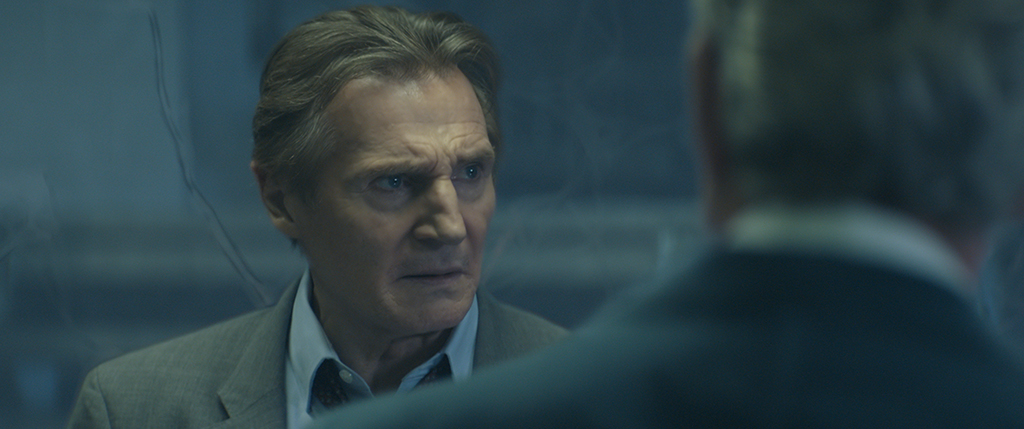
“[S]ome of the tasks were a bit bizarre. For example, when Frank hits a guy’s tooth, it flies into Frank’s gun, and he shoots it back into the guy’s mouth. It’s not the kind of shot you do every day, but I must admit that was fun because I am also a little bit of a joker myself. It was the perfect project for me.”
—Javier Menéndez Platas, Visual Effects Supervisor, PFX
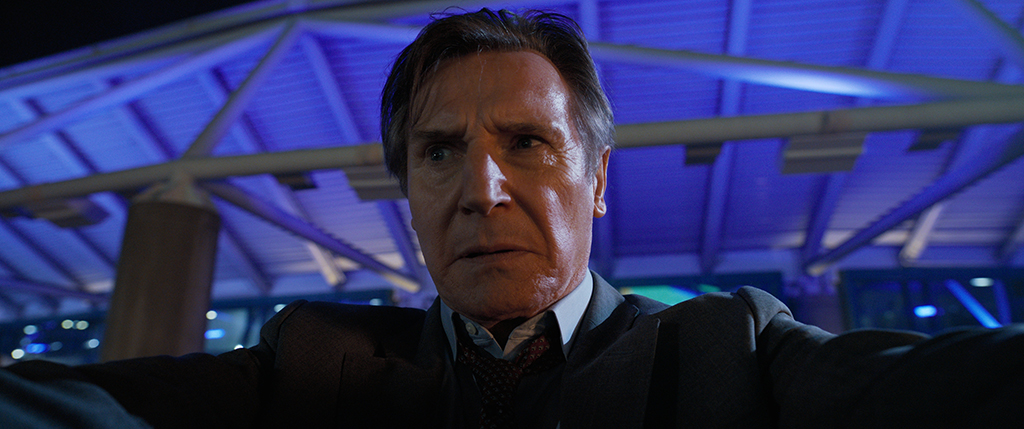
There was ample time to orchestrate the crowds. “For the crowd sequences, we had a lot of time to create the stands, the crowds and the mood boards, and we even had the chance to motion capture some of the crowd animations that the scenes required,” Menéndez Platas states. “But for the last sequences with the owl and the gun clips war, our time was more limited. Luckily, Ashley was always keeping us in the loop, even from the stunts’ first choreographies.” Crowds were done in Houdini. “We have an effective and customizable setup in Houdini and comped in Nuke,” Menéndez Platas notes. “We were doing two mocap sessions for the fighting and hugging scenes for the crowds. It was a lot of fun.”
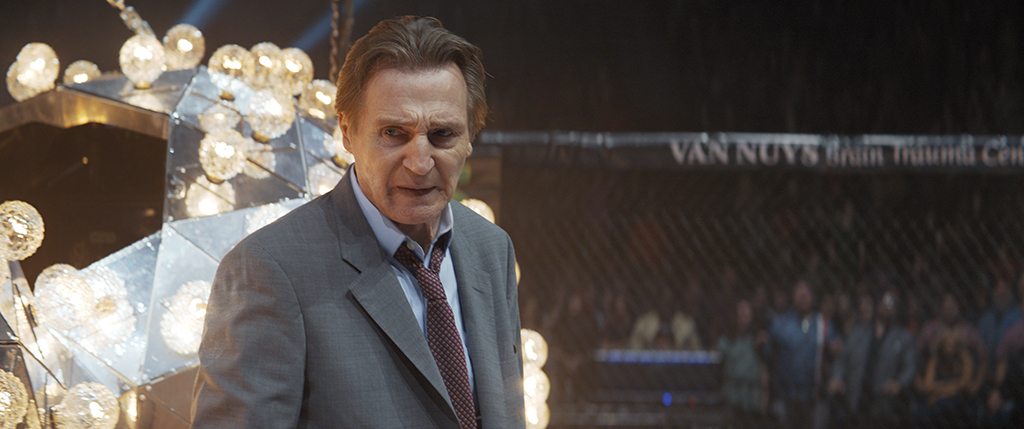
The team’s biggest creative challenge was balancing photorealism with what felt funniest. “For the owl sequence at the end of the film, for instance, we created a 3D asset for both Liam Neeson and the owl that we were ready to use,” Menéndez Platas explains. “But in the end, the director, Akiva Schaffer, decided to go with the practical puppet because it was funnier. Indeed, it was. Luckily, we used the 3D assets in a few shots, so the work was still useful. For us, it was a technical challenge to build the owl and its feather system because we built it in Yeti but then simulated it in Houdini. It was quite challenging to get all that technically correct and open for quick changes.”
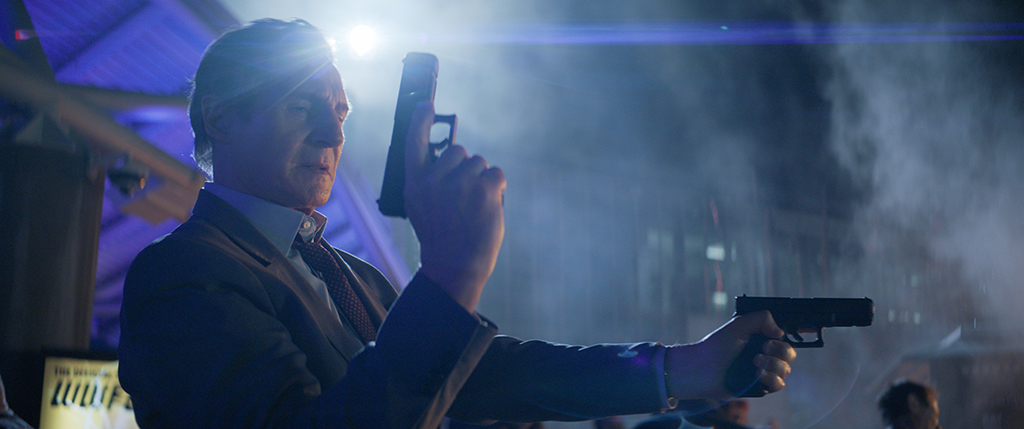
The film’s stylized approach opened the door to some delightfully strange tasks for the PFX team. “For me, this made the project fun but also sometimes challenging to brief the team on because some of the tasks were a bit bizarre,” Menéndez Platas observes. “For example, when Frank hits a guy’s tooth, it flies into Frank’s gun, and he shoots it back into the guy’s mouth. It’s not the kind of shot you do every day, but I must admit that was fun because I am also a little bit of a joker myself. It was the perfect project for me.” There was always room for creativity. “We had free range for many things,” Menéndez Platas says. “Ashley told us what she wanted, but was always open to something extra. We had some first calls at the early stages, showing our suggestions for the fighting mocaps. Basically, we filmed ourselves in the studio doing some comedy fighting. Some of the suggestions are in the film, while others were too much. Thanks to Ashley, we always found some limits.”
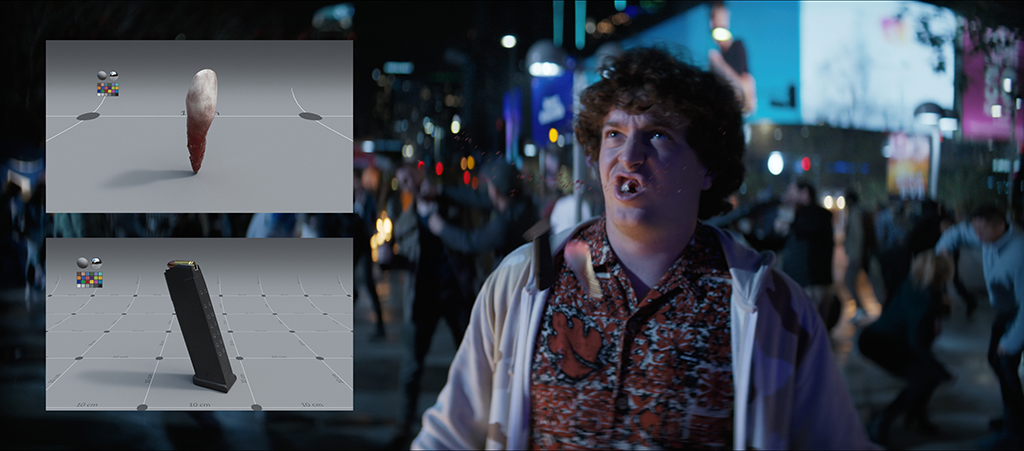
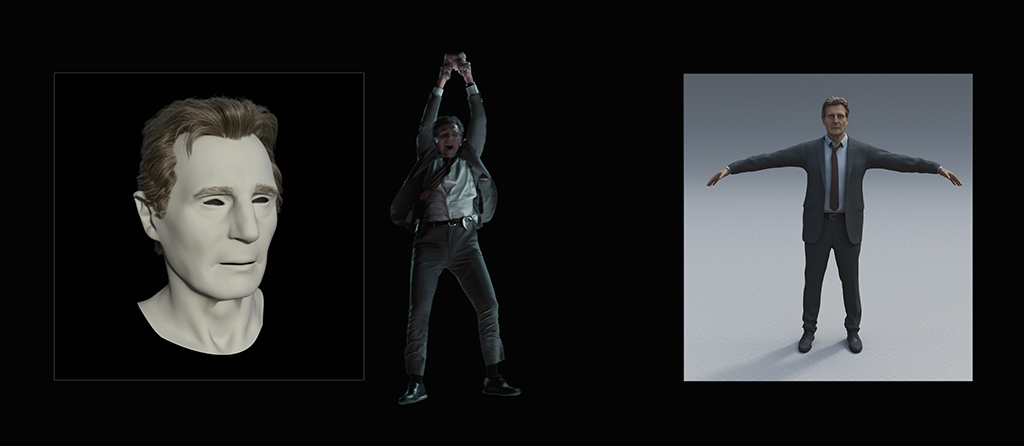
LiDAR scans were taken of the arena. “That was helpful to understand the set, build the 3D asset and track all the scenes with the real model,” Menéndez Platas notes. “We also had all the bluescreens for the owl sequence, which were helpful.” A digital double had to be produced for Liam Neeson. “It was challenging because Mr. Neeson didn’t want his body to be scanned, so we got his head and the body of his stuntman,” Menéndez Platas reveals. “We took four separate photogrammetry and combined them all into one single model. For the model cleanup, we used Maya and ZBrush, and of course, for the cloth and hair simulation we used Houdini. For a scene involving a rider’s decapitation, we used several plates provided by the client. Only the helmet was CG. In the gun clips scene, we modeled a generic tooth and tried a few different teeth.” But realism took second place if the solution was funnier.
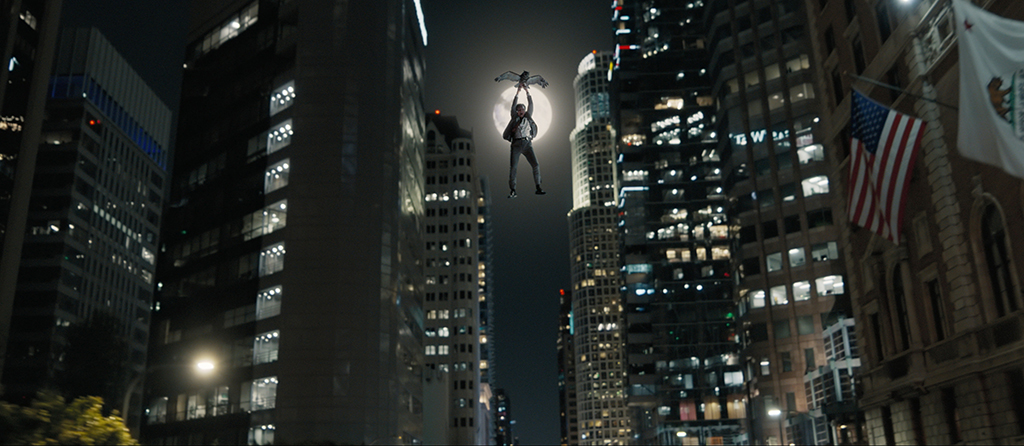
Lighting the crowd was tricky. “The stands on the plates had a dark falloff,” Menéndez Platas says. “Up from the fighting cage, we matched the plates, but then Akiva liked our crowds so much that he asked us to brighten them up. Look development was done in Houdini and rendered in VRay. The rest of the lighting was simple. The owl scene was quite well shot, with directional lights from the set easy to replicate. We faked a bit by adding some rim lighting to make the owl more visible.”
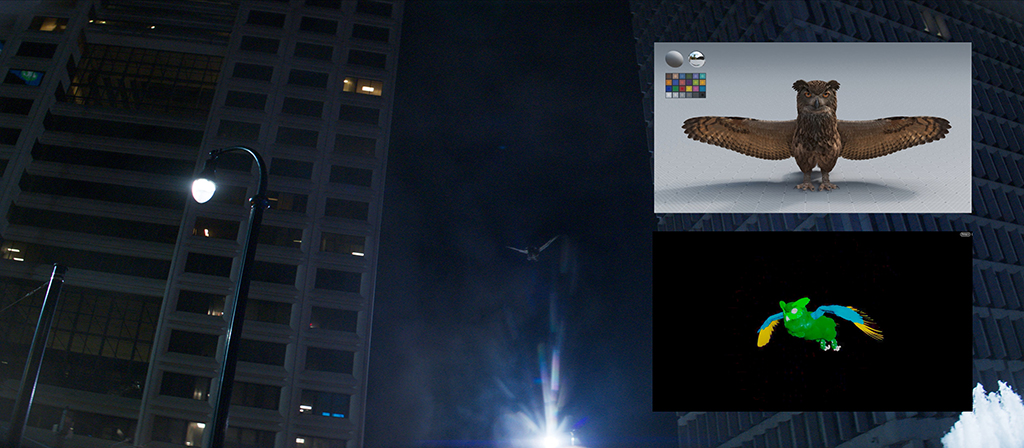
On-set reference footage helped inform the owl’s animation. “Rigging and animation were done in Maya,” Menéndez Platas describes. “We tested a few different speeds for the wings and some speed ramps, especially for the shot where the owl leaves the scene. Animation was more challenging on the gun clips sequence because the flying elements were a bit impossible. It was hard to find the balance between believable, fun and visible. Also, many shots were shot on high frames per second, and then some Timewarp was added in the editing room, so it was challenging to get all that right.”
The edit for the scene in which Lieutenant Frank Drebin summons the owl and flies off with it was not locked because of reshoots. “It was hard to be able to make quick changes and frustrating when suddenly an almost finished shot was removed from the cut,” Menéndez Platas says. “We were ready to use both CG owl and a digital double, but in the end, the client decided to work more with the bluescreen puppet. We did a lot of wire removal on the asset. Also, for us, it was hard to find the proper flying or levitating feeling for the bluescreens against the background.”
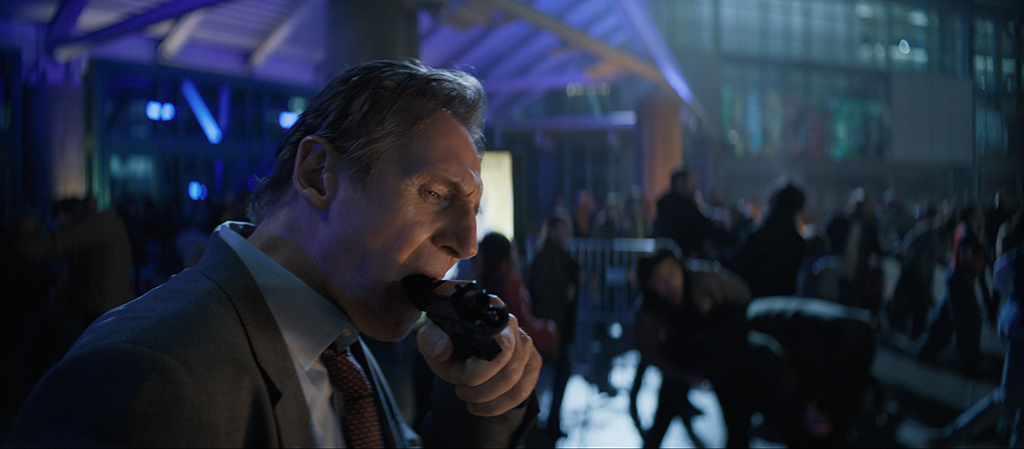
The team made last-minute alterations to the scene where Lieutenant Drebin does hand-to-hand combat with the goons. “In the sequence, we did complex cleanups and wire removal. They were demanding because the wires were everywhere, crossing with moving people. We had to fix some flickering in the big LED panels on the set because it synced with the camera shutter.” No bluescreen was utilized for the MMA cage match. “The masking was demanding because we needed to mask all of the fighters and the cage,” Menéndez Platas remarks. “Keying was the way for most of it, but a lot of roto was needed too. For the crowds, animation was the hardest part. We didn’t have specific fighting or hugging animations in our library, so we had to do a couple of mocap sessions.”
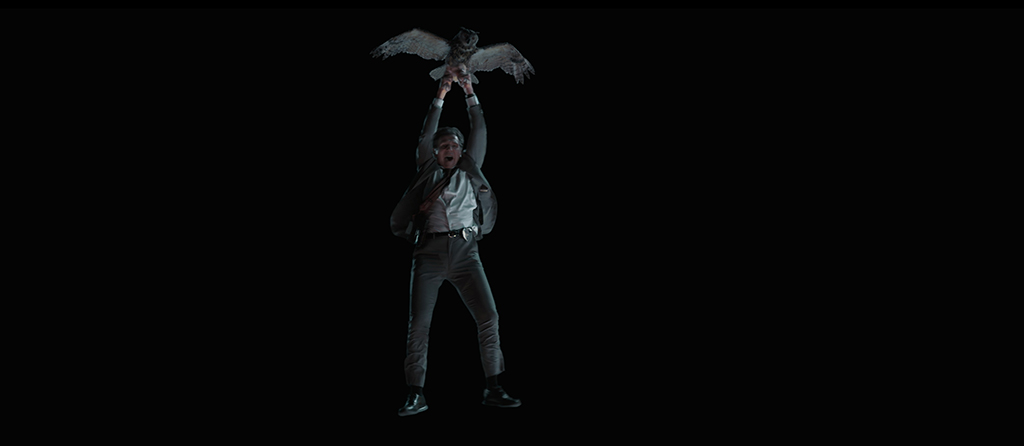
“Mr. Neeson didn’t want his body to be scanned, so we got his head and the body of his stuntman. We took four separate photogrammetry and combined them all into one single model. For the model cleanup, we used Maya and ZBrush, and of course, for the cloth and hair simulation, we used Houdini. For a scene involving a rider’s decapitation, we used several plates provided by the client. Only the helmet was CG. In the gun clips scene, we modeled a generic tooth and tried a few different teeth.”
—Javier Menéndez Platas, Visual Effects Supervisor, PFX
The last six weeks of production were hectic. “We got the last two sequences, so it was a bit of a wild ending,” Menéndez Platas notes. “This was our first cooperation with Paramount, so for us it was a challenge to do our best to show that we were ready to work in any production. We believe that the client is happy with the results, and so are we.”
Each sequence was different. “I am proud that we could do such a big range of visual effects tasks, and not just crowds,” Menéndez Platas states. “My favorite shot is the one when they extract a rifle from Pamela Anderson’s hair – that was fun!”