
Immersion, interactivity and personalization are transforming theme parks and location-based entertainment in malls, museums, observatories and entertainment centers, powered by XR formats – virtual reality, augmented reality, mixed reality and artificial intelligence.
“VR, AR and AI are playing a major role in the evolution of immersive attractions, expanding how guests engage with stories, environments and each other,” says Amy Naples, Chief Marketing Officer for AREA15 in Las Vegas. “These technologies allow location-based entertainment (LBE), including theme parks, to become more personalized, interactive and layered, blending physical spaces with digital storytelling in ways that weren’t previously possible. Rather than replacing traditional experiences, these tools certainly enhance them.”
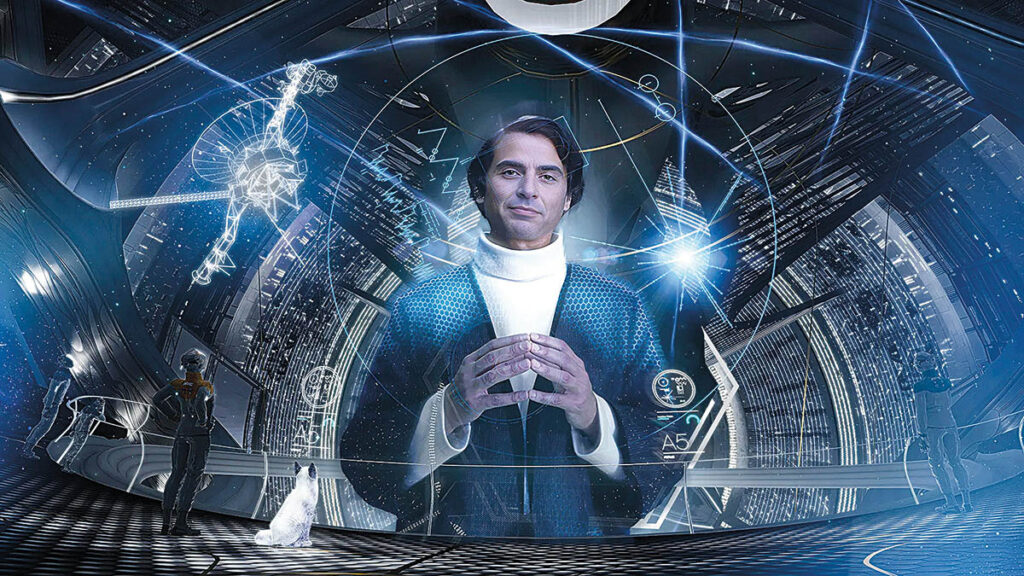
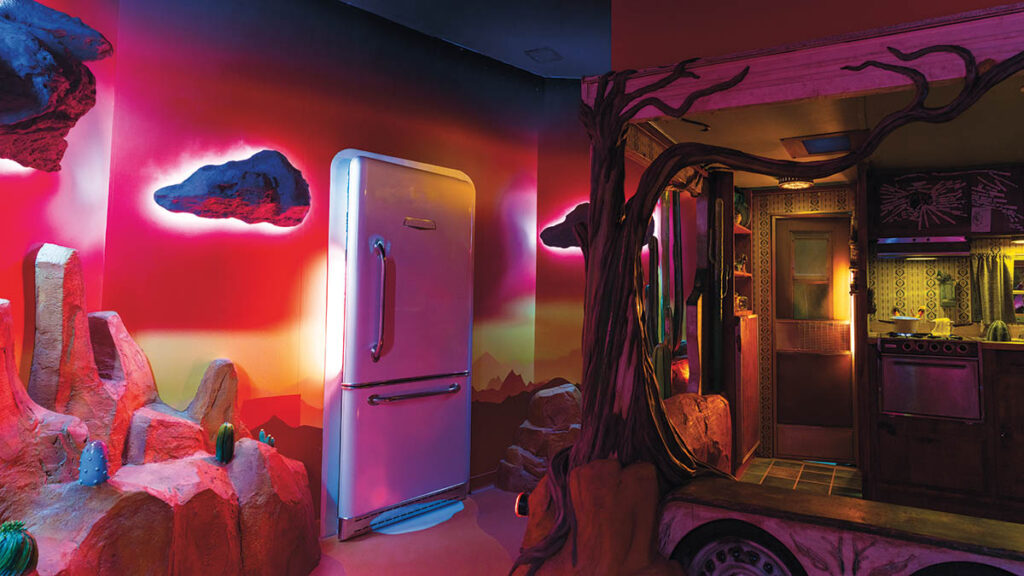
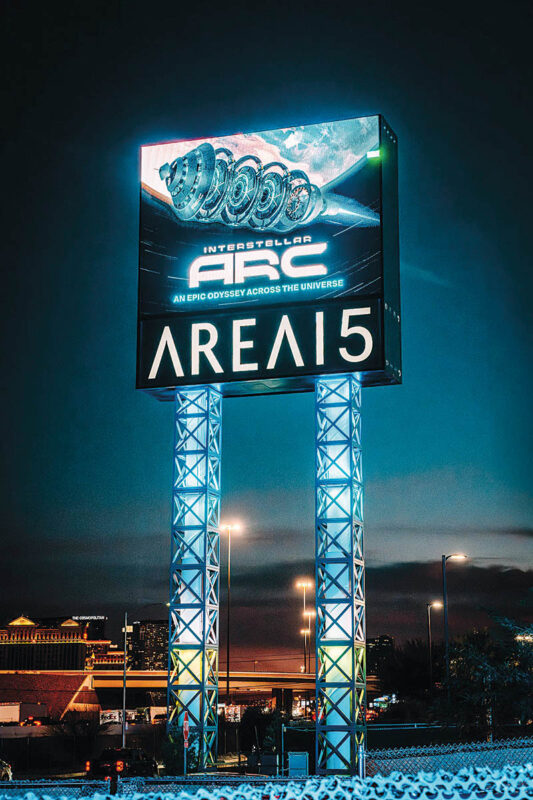
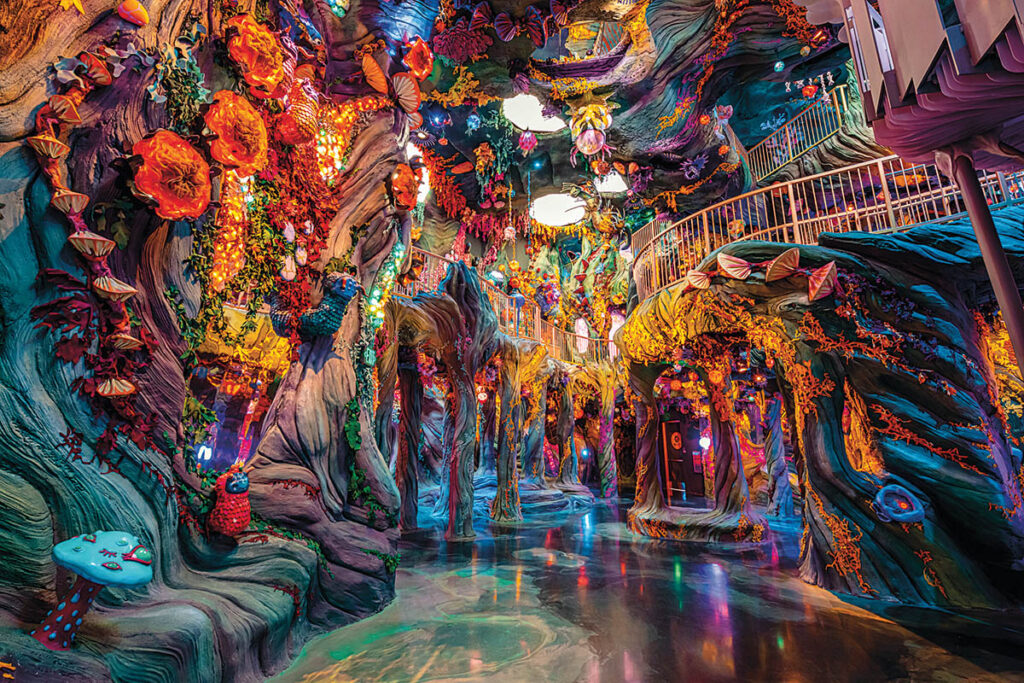
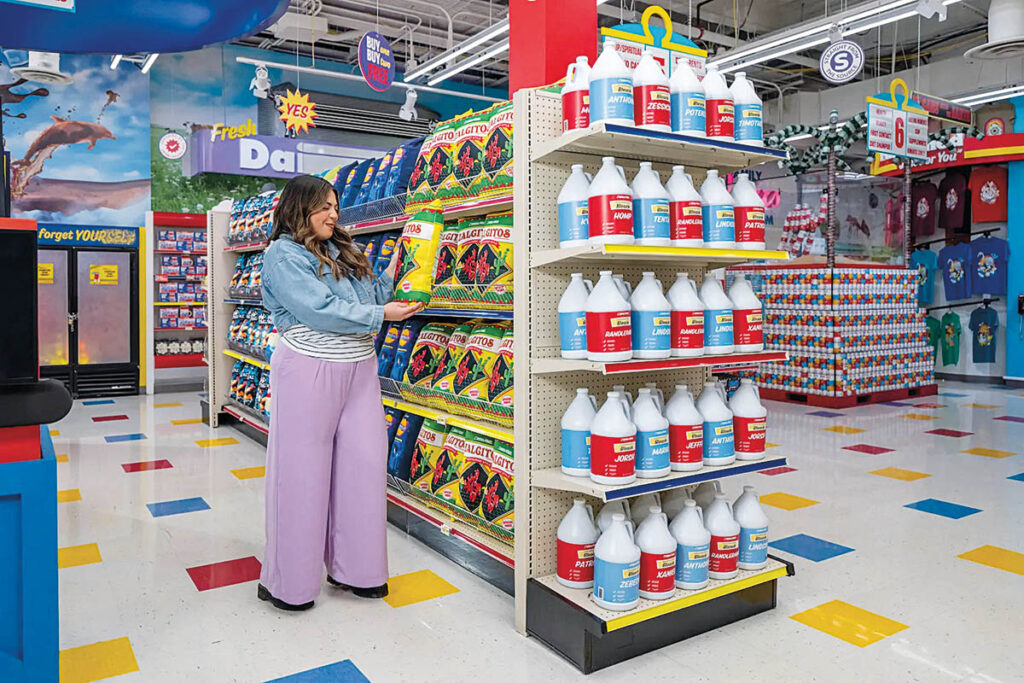
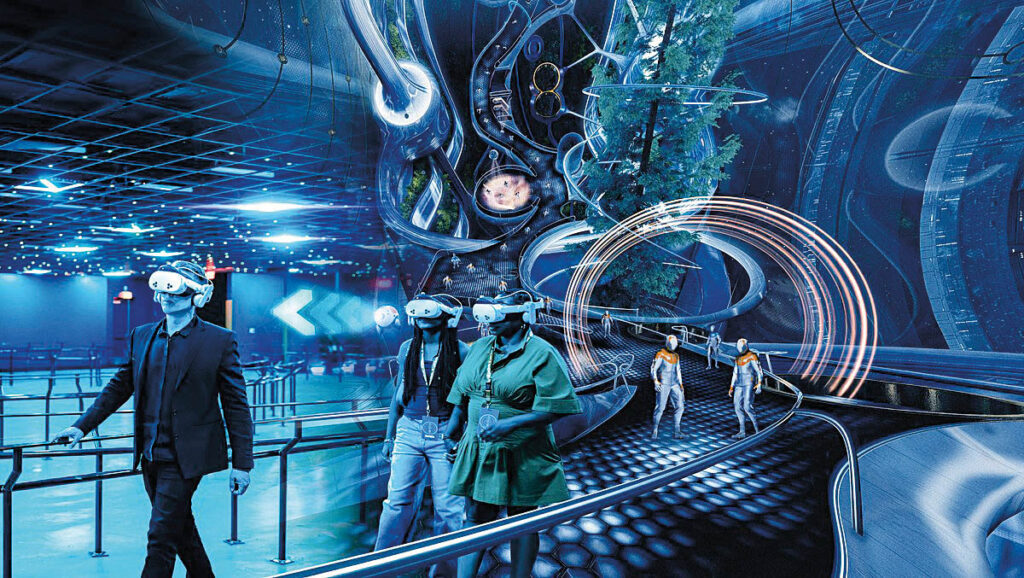
XR and AI can be found in abundance in AREA15, an experiential arts and entertainment complex in Las Vegas that is anchored by Meow Wolf’s mind-bending Omega Mart, a “supermarket” that sends participants on journeys through surreal worlds and immersive storytelling. One of AREA15’s various other attractions is the VR experience Interstellar Arc, from the Emmy Award-winning creators at Montreal-based Felix & Paul Studios. Guests are invited to embark on a journey set centuries in the future and light years from Earth. Naples comments, “With next-generation immersive technology, Interstellar Arc propels audiences into humanity’s future among the stars. The experience unfolds inside a 20,000-square-foot, custom-built venue featuring cutting-edge visuals, interactive environments and sensory world-building that push the boundaries of virtual reality storytelling.”
AREA15 incorporates AI in select experiences, including Art Quest, a self-guided journey through the district’s art collection. Naples explains, “While all artwork and original descriptions were created by human artists, Art Quest uses AI through its zany robot guide, Aria-15, to enhance the narrated audio descriptions guests hear during the tour as they explore AREA15’s more than 48 sculptures and 30 murals at their own pace.”
“AREA15’s popularity stems from its ability to meet growing demand for social, interactive and highly visual entertainment that goes beyond passive viewing,” Naples states. “Guests are drawn to experiences where they can actively explore art, technology, live events and attractions all in one destination. By blending elements of nightlife, immersive art, gaming and experiential retail, AREA15 offers a customizable, discovery-driven environment that continues to evolve with guest interests.”
Besides Omega Mart, Meow Wolf’s other exhibitions are House of Eternal Return (Santa Fe), Convergence Station (Denver), Radio Tave (Houston) and The Real Unreal (Grapevine, Texas), with locations due in New York and Los Angeles. Based in Santa Fe, Meow Wolf will soon spread its phantasmagoric realities across the globe via geospatial AR, thanks to a partnership with San Francisco-based Niantic Spatial, in what might be termed omni-location-based entertainment.
“This partnership is about breaking the four walls of the physical exhibition and layering in new experiences that continue to unfold over time,” explains Dennis Hwang, Niantic Spatial Vice President, Visual and Interaction Design. “Meow Wolf has spent years creating incredible, dense narrative universes inside their locations. Our goal at Niantic Spatial is to provide the technological connective tissue that allows those stories to be deeply integrated and present inside and out in the real world. We are combining their maximalist art and lore with our geospatial AI to turn everyday environments into gateways for the surreal.”
Hwang continues, “We’re looking to offer digital Meow Wolf experiences outside in the real world that can in turn unlock new experiences within a Meow Wolf location. We don’t want the Meow Wolf experience to end when you walk out the exit of Convergence Station or Omega Mart,” Hwang says. “Whether it’s choosing to unlock a digital portal on a city street or discovering hidden lore tucked away in a public square, we’re also making the Meow Wolf universe a persistent layer of the physical world.” The experience is now mobile-based, but it may manifest on AR glasses in the future.
With Niantic’s participation, the collaboration merges AR and VPS. “Our Visual Positioning System (VPS) is the engine under the hood with the capability to provide vision and AI-based localization, that powers centimeter-level precision so that digital and physical elements can interplay intentionally,” Hwang says. “With this creative capability unlocked, there is effectively no limit to where the Meow Wolf team wants to take its storytelling in the real world.”
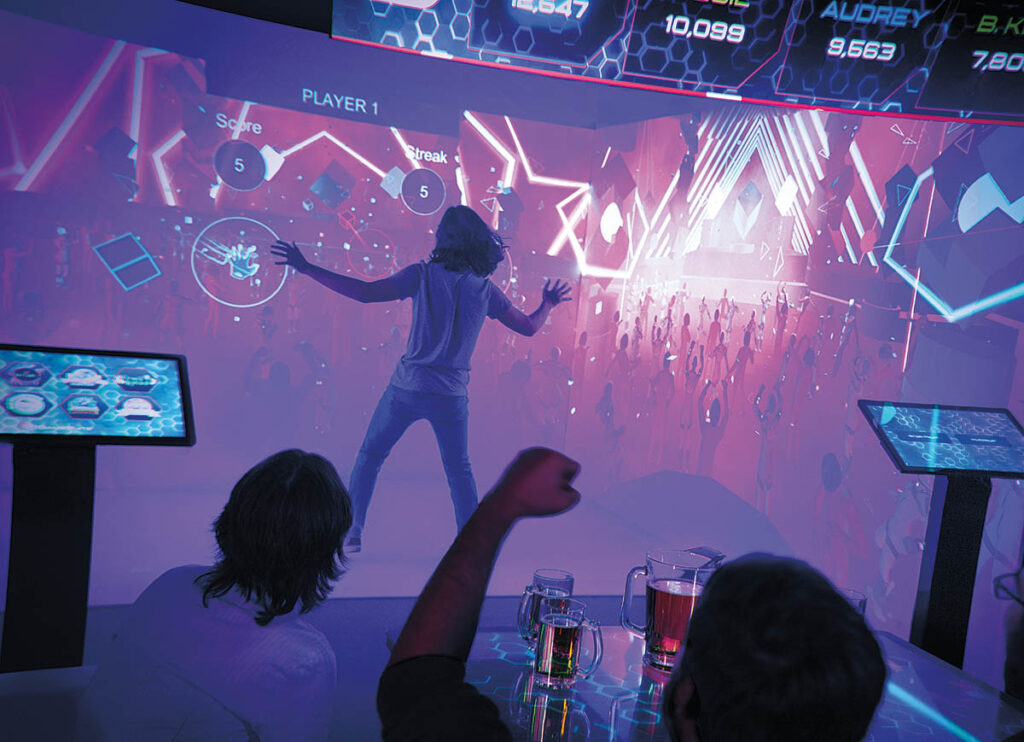
The collaboration may evolve into a multiplayer platform on a global scale. Hwang states, “That is the North Star. We imagine a massive, multiplayer canvas where users aren’t just consuming a story but participating in community world-building. We want people across the globe to contribute their own art, characters and quests to the Meow Wolf layer of our map. Together, we’re exploring a new way for the world to play and explore together.”
Falcon’s Creative Group is an Orlando-based experience design company that has worked on a wide variety of immersive attractions with AR and VR. In 2025, Falcon’s celebrated its 25th anniversary. “We’ve been collaborating with major IPs, including CD Projekt RED’s Cyberpunk 2077, to help bring their world into the themed experience market,” says Jason Ambler, Chief Content Officer for Falcon’s Beyond. In terms of VR and AR, Ambler notes, “It’s still operationally challenging to deliver a great experience with a headset. Mario Kart: Bowser’s Challenge at [Universal’s] Epic Universe is a great recent example of an AR attraction done right, because the technology was thoughtfully integrated into the attraction design and operations. The AR experience is then further elevated by some really clever interplay between the digital and physical content.”
Ambler notes, “On the development side, AR, VR and real-time tools are still very much a part of our daily workflow. They remain central to how we design, test and refine experiences before they’re built.” Ambler adds, “I think we will see a lot more AI coming to theme parks to deliver more personalized, adaptive and predictive experiences. We’re not chasing any one technology. We use whatever works to deliver the best possible experience. That could be AR, MR, multi-view displays, high-framerate projection, robotics and proprietary systems. Many times, we need to invent our own tools or interfaces to contend with heavy usage and harsh conditions.”
Ambler continues, “We’re starting to see AI, real-time engines and adaptive systems converge in powerful ways. When you connect those tools, you can create experiences that are genuinely personalized, responsive and different every time someone engages with them. This level of interactivity further suspends our disbelief and exponentially enhances the immersive nature of experiences. It means systems that understand context – who the guest is, where they are, what they’ve done, how they’re interacting – that can then shape a bespoke experience around that, all in real time.”
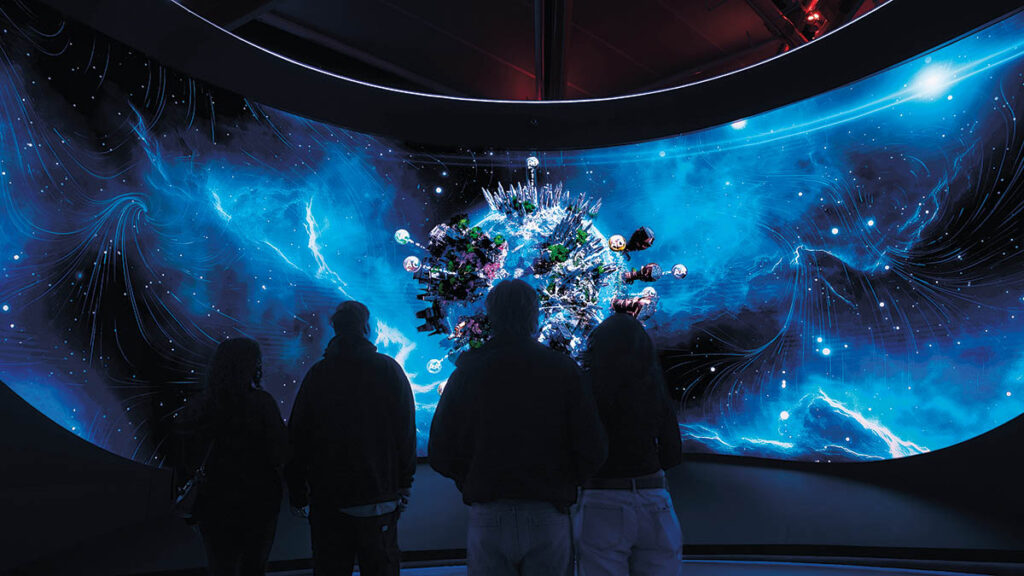
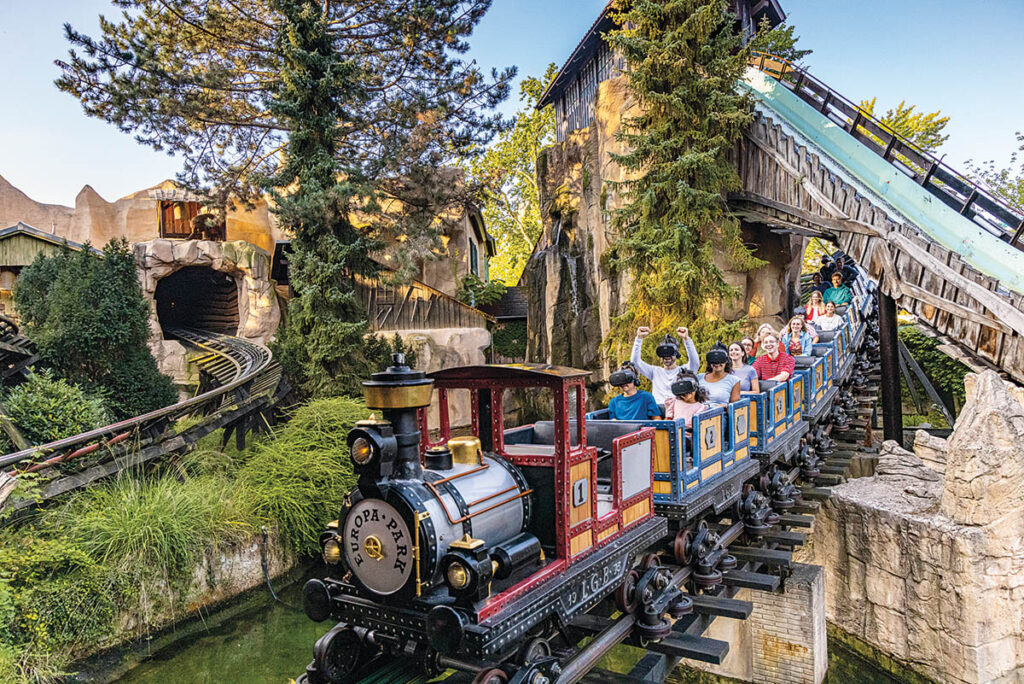
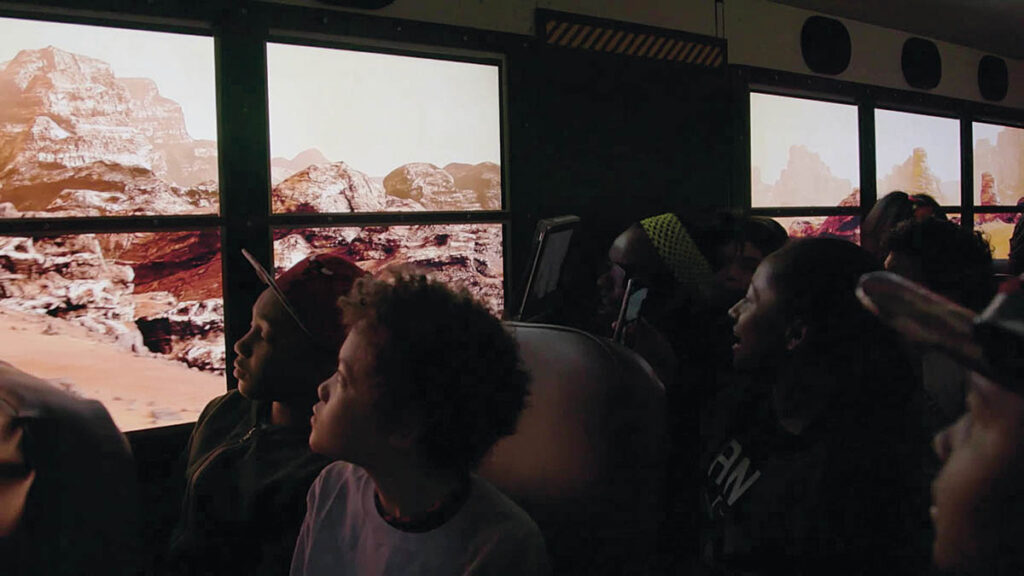
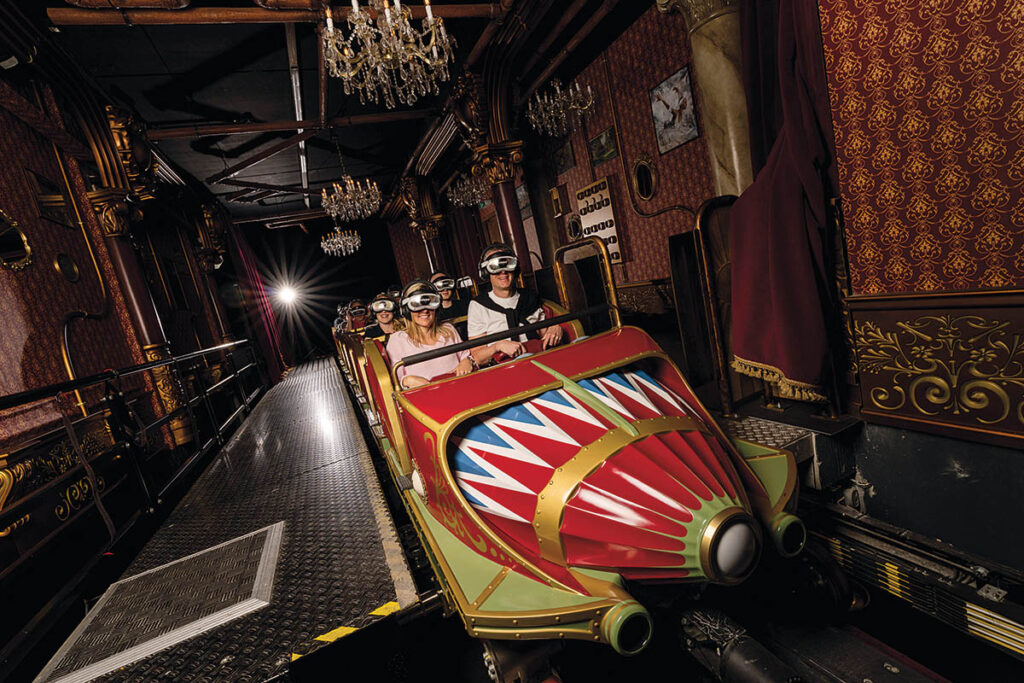
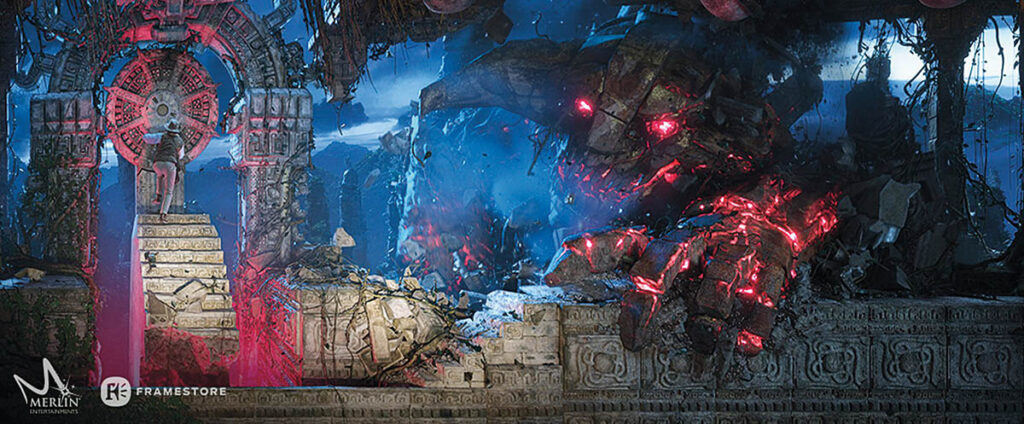
Framestore has incorporated XR tech into a number of LBE attractions. “The Twilight Saga: Midnight Ride for Lionsgate Entertainment World remains a strong example of a VR attraction that successfully immerses guests in its world,” explains Kevin Young, Creative Technology Director at Framestore. “Beyond that, our team has a long history of leveraging both AR and VR in LBE, including projects like Samsung’s A Moon for All Mankind and the One Strange Rock VR experience. These projects demonstrate how immersive technology can complement storytelling, deepen engagement and create memorable interactive moments for audiences.”
Young notes, “We also have some upcoming LBEs that incorporate subtle touches of AI for personalization, which I believe is where it works best, enhancing the guest experience without feeling intrusive. VR and AR play an important role in our creative process. To create compelling spatial experiences, we need to design within space itself. VR and mixed reality allow our teams to prototype and iterate inside environments rather than on a flat screen, which helps us refine scale, composition and interaction early on.”
Rich Hill, Chief Creative Officer for Jacksonville, Florida-based Sally Dark Rides, states, “When it comes to delivering immersive experiences, we have begun to play with non-traditional techniques, like motion-synched media, projection-mapped animated sets and scenery, lifelike animatronics that react to inputs from guests, augmented reality that mixes practical and virtual mediums [and] artificial intelligence that allows guests to create their own stories. With all of the new tech out there, a ride designer has tons of options for wrapping the story around the guest.”
Hill doesn’t favor VR in a commercial setting but feels the format can be highly effective as a storytelling medium. He notes, “I have a couple of VR headsets at home that are great to use for gaming or watching 360-degree animated movies. Those are mainly individual experiences though. Going to a theme park should be an experience shared with family and friends. Augmented Reality can do just that. Sally Dark Rides has developed an AR dark-ride concept that is very exciting. The ‘why’ is obvious: getting away from flat media screens and feeling more immersed in fantastical, real environments. Augmented reality is the key.”
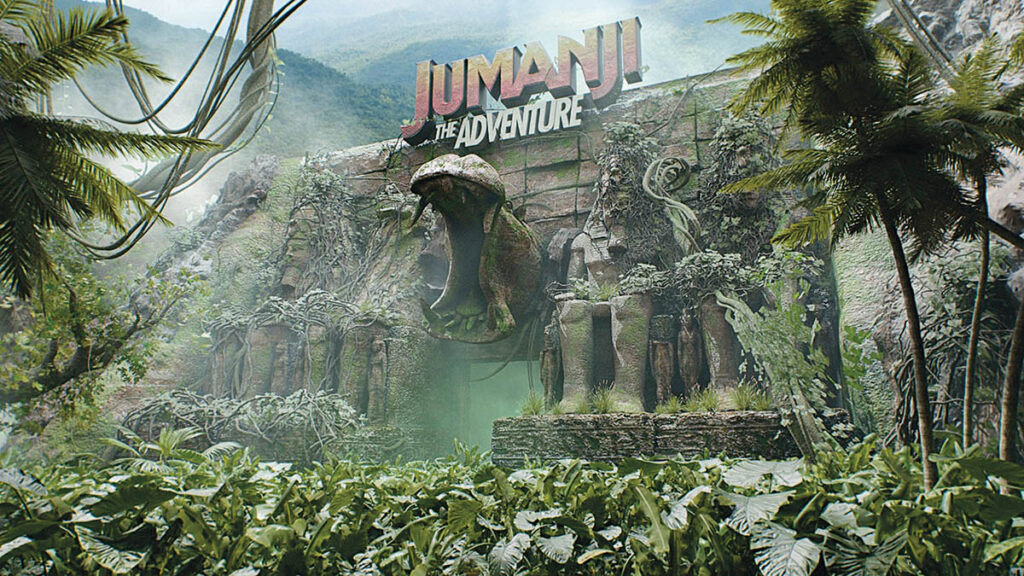
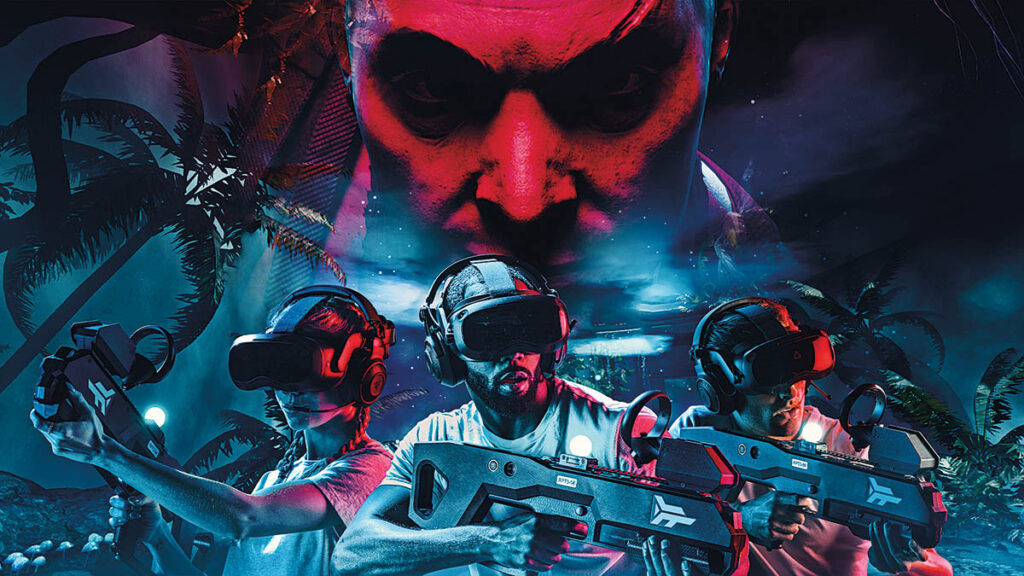
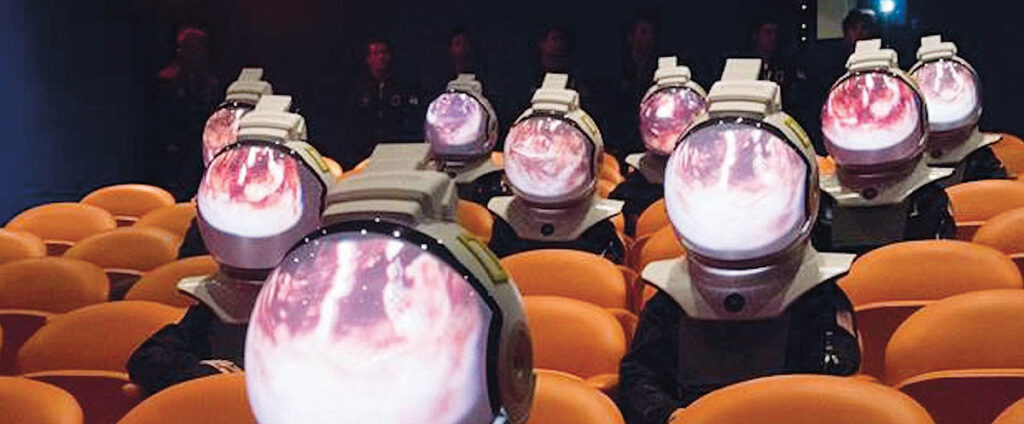
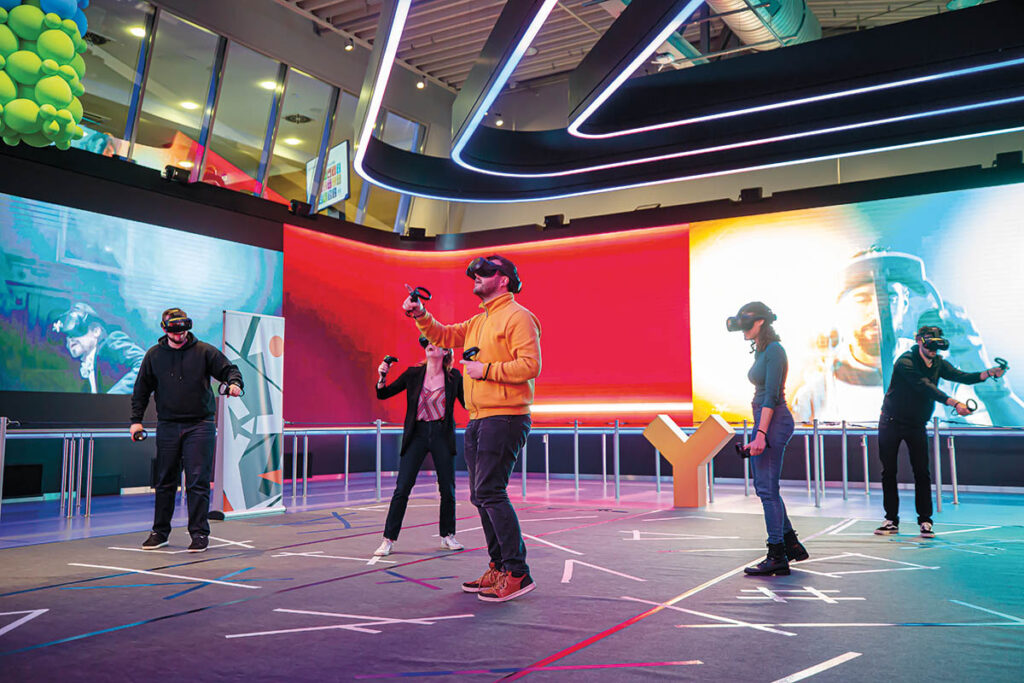
Zero Latency VR, based in Melbourne, is the largest free-roam VR network in the world, with a flexible licensing model for either standalone VR venues or use at a mixed-used entertainment site. There were over 5.4 million plays at more than 150 locations around the world as of the end of 2025, according to Luke Mitchell, PR & Communications Manager for Zero Latency VR. The company has 10 different experiences available, including three new releases. Mitchell notes, “First, we followed up Space Marine VR with Threat: Lethal. We also launched Haunted, a horror experience like no other, and Outbreak 2: Mall Mayhem, a beefed-up zombie survivor adventure. Coming up, we’re excited to work with Sony Pictures to bring Jumanji to our immersive VR platform, later in 2026.”
Zero Latency VR’s Generation 3 (Gen3) is a free-roam VR platform that eliminates backpack PCs for a fully wireless, 5K resolution experience. It utilizes HTC VIVE Focus 3 headsets and WiFi 6E technology, and it supports up to eight players in a 125+ square-meter space with superior tracking.
“We are combining [Meow Wolf’s] maximalist art and lore with our geospatial AI to turn everyday environments into gateways for the surreal.”
—Dennis Hwang, Vice President, Visual and Interaction Design, Niantic Spatial
Universal, Disney and LEGO’s theme parks, meanwhile, are boosting their usage of augmented reality. The aforementioned Mario Kart: Bowser’s Challenge incorporates AR goggles in Universal’s Epic Universe park and at Universal Studios Hollywood. The LEGOLAND™ Windsor Resort utilizes AR experience for the themed land LEGO Mythica: World of Mythical Creatures. And Disney is working on integrating AR and AI in its theme parks to achieve personalized and immersive experiences for its guests, led by Walt Disney Imagineering and the Office of Technology Enablement.
At the Europa-Park theme park in Rust, Germany, many attractions feature XR. One is YULLBE, a free-roaming VR/MR experience center. “In YULLBE, we introduced an XR maze in the latest edition of Traumatica, where guests could walk through in mixed reality and follow two different storylines,” explains Marcus Ernst, Creative Project Manager for MACK One (Europa-Park is a subsidiary of the Mack Group). “I am convinced that we will see significantly more MR content here in the future. Regarding AR, we are just starting exciting talks with industry innovators like Keiichi Matsuda, Niantic and Snap.
“VR currently remains our strongest asset, simply because of our heritage – we’ve been operating [the Alpenexpress] Coastiality [VR roller-coaster ride] for 10 years and YULLBE since 2019. However, MR and AR are extremely exciting as they enable completely new forms of storytelling by changing how we interact with the physical space. I am curious to see when we will establish our first permanent MR free-roaming attraction. Regarding AR, it is huge, but I believe where it really shines is on dedicated devices like the upcoming Snap Spectacles.”
AI is becoming a game changer in Europa-Park`s production pipeline – it helps its artists create assets faster and prototype ideas. Ernst notes, “Regarding the guest experience, we are working less on a single AI-driven attraction and more on a comprehensive AI Suite. This foundation allows us to derive a whole range of products, services and attractions. AI enables us to tailor experiences specifically to individual guests in ways that were previously impossible. The clear trend here is towards hyper-personalization, which is only made scalable through AI.”
Some cases start with MR and transition to VR. “We right now use pass-through (MR) primarily for safety and seamless onboarding, acting as a comfortable bridge before we switch to full VR,” Ernst says. “But it is clear that every modern and upcoming headset is effectively an MR headset. This global hardware trend shows where the industry is heading and will inevitably be reflected in our future immersive attractions.” Ernst adds, “For location-based entertainment, MR is fantastic because it allows social interaction while wearing the gear. You can see your friends’ real faces but wear digital armor. However, for storytelling that requires a totally different world – like space or fantasy – you still need the full immersion of VR.”
“AI is not only an incredible tool for helping streamline experience production and catalyze creativity, but it can also help drive personalization across themed attractions and location-based experiences to elevate the experience for visitors,” adds Ryan Brett. “From real-time visuals that respond to individuals’ details and preferences to AI-driven digital characters that can help IPs come to life in-park, there are so many opportunities to create customizable and tailored experiences that speak to guests on a deeper level, offering them an experience they’ll never forget.”
To help clients with its Designer software, Disguise offers Ask AId3n. Brett comments, “Ask AId3n is Disguise’s AI-driven workflow assistant for visual experience production. For instance, it can create a series of LED walls for you within Designer, ready to plan and visualize a dark ride, or link the speed of the video layer to an OSC message from show control. The whole purpose of Ask AId3n is so that Designer users can minimize time spent on repetitive tasks and maximize time spent on the creative vision – making the production process more streamlined and enjoyable.”
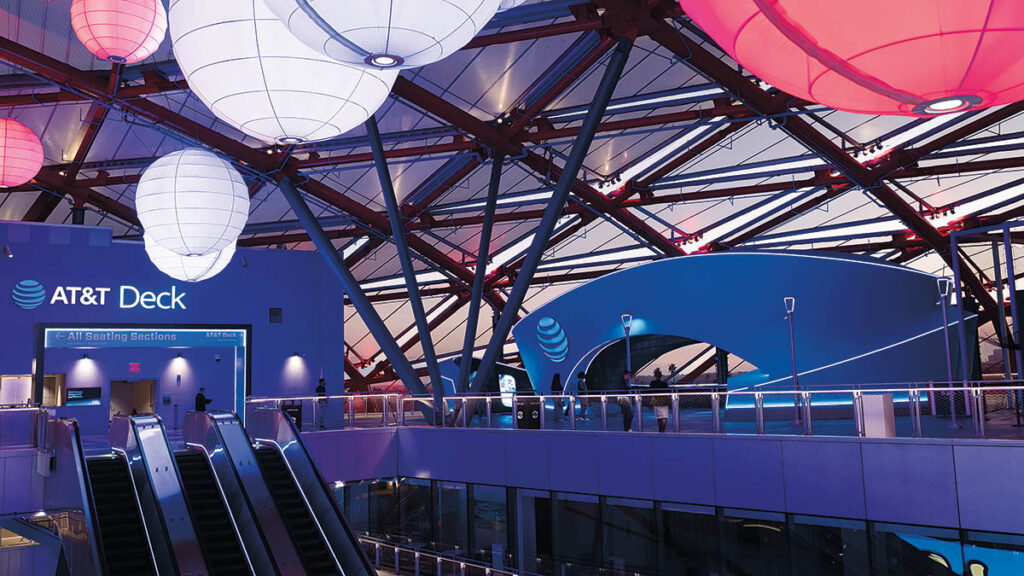
Luminary Design Co., based in Baton Rouge, built the Connectopia installation, with its world-building generative AI display, for AT&T at L.A.’s Intuit Dome. “Connectopia is the first real-time, large-scale installation of AI generative media and the first public installation to generate and feature cinematic 8K AI videos created in real-time inside a live venue,” says Brian Beyt, Founder, President and CCO of Luminary. “These videos are integrated into a shared, evolving world that’s featured on a 30-foot-wide parabolic LED display.” Beyt comments, “Connectopia is a living, interactive sculpture that reflects the real-time presence of guests. As AI models grow more powerful and AT&T’s networks become even faster, the system can generate more complex worlds, richer interactivity, and deeper mobile integration. In the future, fans could collaborate across multiple venues in real time, merging their districts into shared global worlds.”
Beyt continues, “Elements of Connectopia are sure to become the new norm for stadiums and live events. Fans now expect to be creators, not just spectators. Connectopia shows how venues can combine AI and connectivity to deliver personalized, shareable, large-scale experiences. As technology advances, these types of installations could become standard features of sports arenas, music festivals and cultural landmarks.”
Beyt adds, “Connectopia’s complex technical system architecture is designed to maximize AI video generation while ensuring stable performance across all elements of the system. Utilizing a network of custom-built servers with [NVIDIA] RTX 4090 and 5090 GPUs, the system produces immersive 8K cinematic experiences near-instantly and integrates them into a shared, evolving world. The system is entirely self-contained with no reliance on cloud connectivity. AT&T’s high-speed fiber and 5G capabilities are the backbone of Connectopia. This infrastructure allows massive amounts of data, including real-time 8K video and AI-generated assets, to move with near-zero latency. Without AT&T’s ability to deliver instantaneous connectivity and data transfer at scale, an activation like Connectopia would not be possible.”
Framestore’s Young feels that AR, VR and AI can be powerful tools for theme parks and LBE. He says, “The future of theme parks and LBE is still the same: creating engaging experiences for the audiences of today; the story and the way you engage with it is still the most important thing. What evolves are the tools we use to tell those stories. And exploring how to apply those tools thoughtfully is the exciting part.”