Images courtesy of Amazon MGM Studios.

Images courtesy of Amazon MGM Studios.
When it came to developing his second live-action feature, filmmaker Travis Knight had a particular tone in mind for Masters of the Universe (MOTU). The summer blockbuster follows an absent prince returning from Earth to reclaim the throne of Eternia and liberate his people from a skeleton-faced dictator. According to Rich Yeomans, Visual Effects Producer, Knight – who also helmed Kubo and the Two Strings and LAIKA’s upcoming Wildwood – emphasized early on that the film shouldn’t take itself too seriously. “In Travis’ words, ‘How can you with a six-foot man with muscles in a loincloth?’” Yeoman recalls. “Right from the outset, we had the blessing to lean into that. That was a great driver of everything we put into the visual effects.”
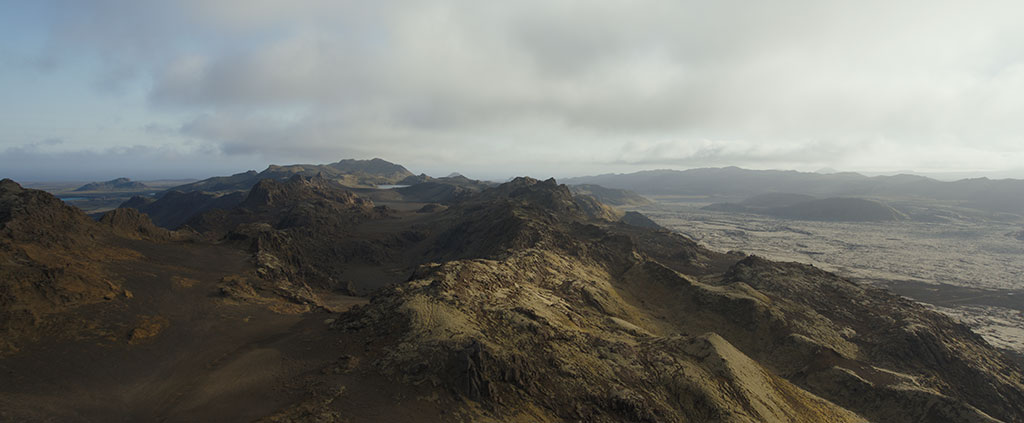
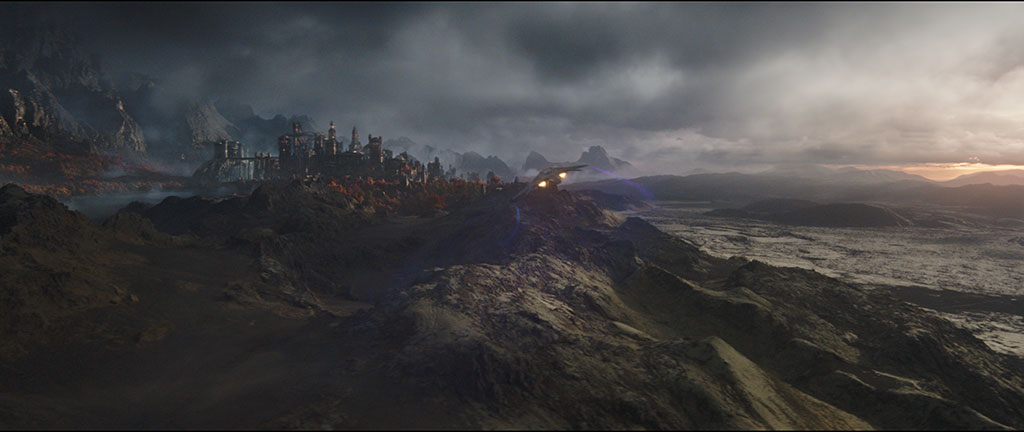
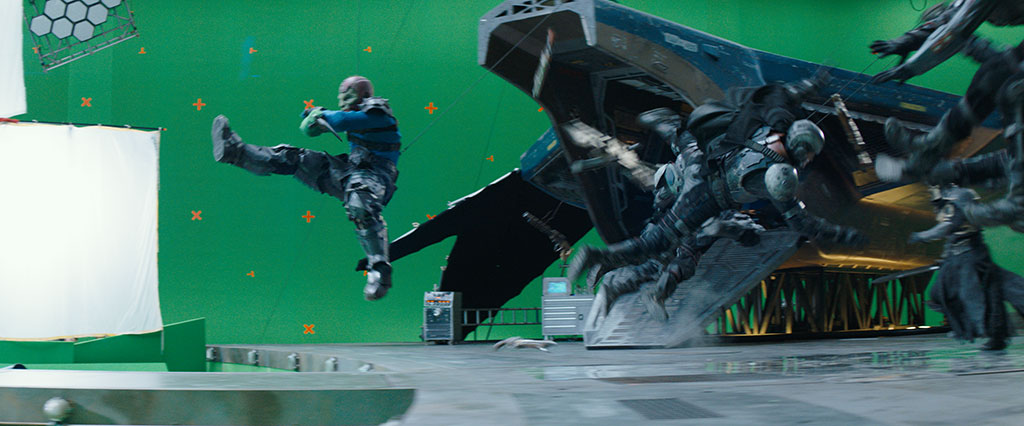
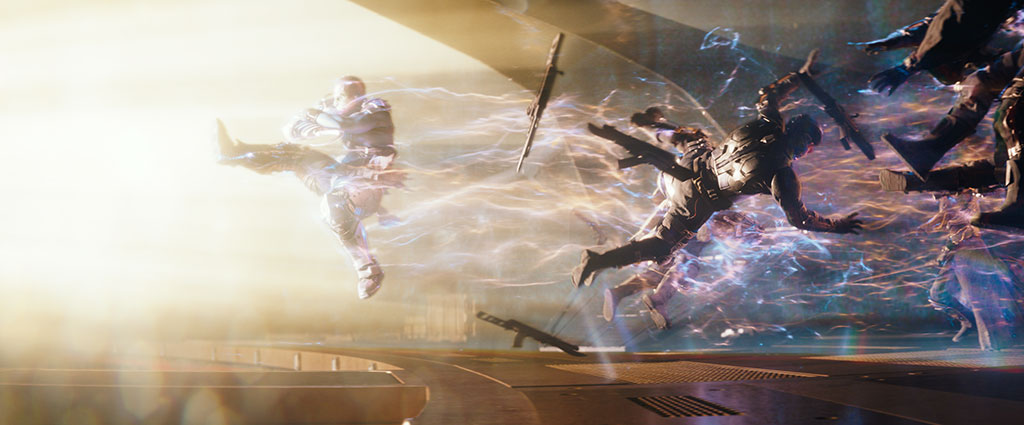
In total, 2,181 shots were either augmented or entirely CG. Tim Burke oversaw pre-production and production supervision, while David Vickery took over in post-production. Burke, who was on the show for 14 months and completed asset builds and look dev of the characters, as well as delivering post vis for the director’s cut, had to leave the show during post because of a serious medical condition that required urgent surgery. He’s recently recovered. Vickery worked with ILM, DNEG, Rodeo FX, Cinesite, Untold Studios and Host VFX to ensure they exceeded Knight’s vision, which was inspired by the colorful ‘80s MOTU cartoons. “The whole thing is massively flamboyant,” David Vickery, Visual Effects Supervisor, remarks. “It does mean you have to treat the visual effects very carefully, because you’re trying to find this rich, beautiful and vibrant palette in the world.”
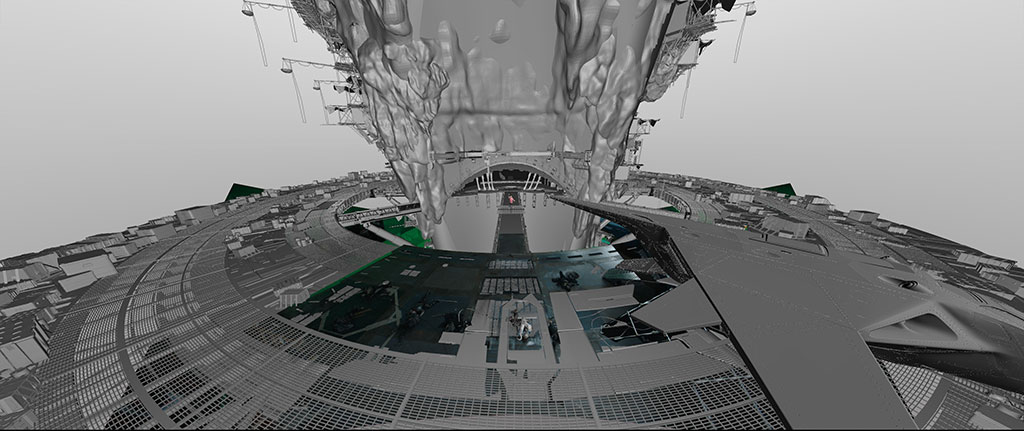
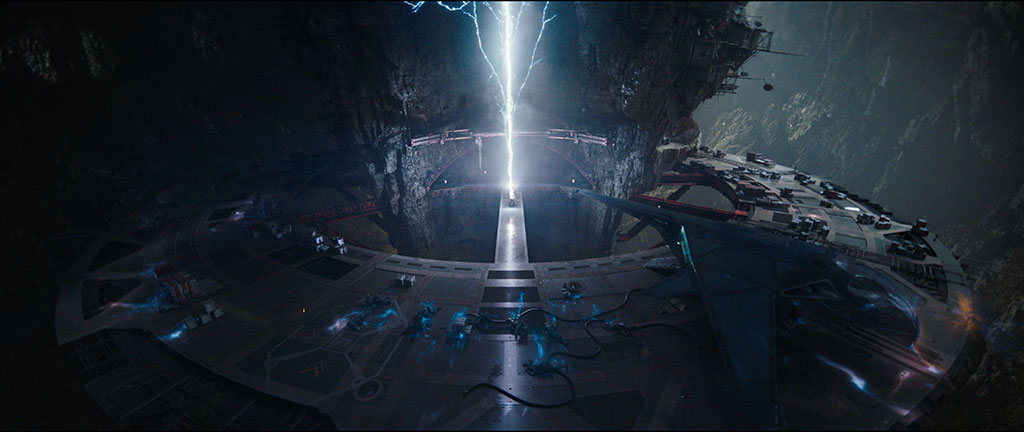
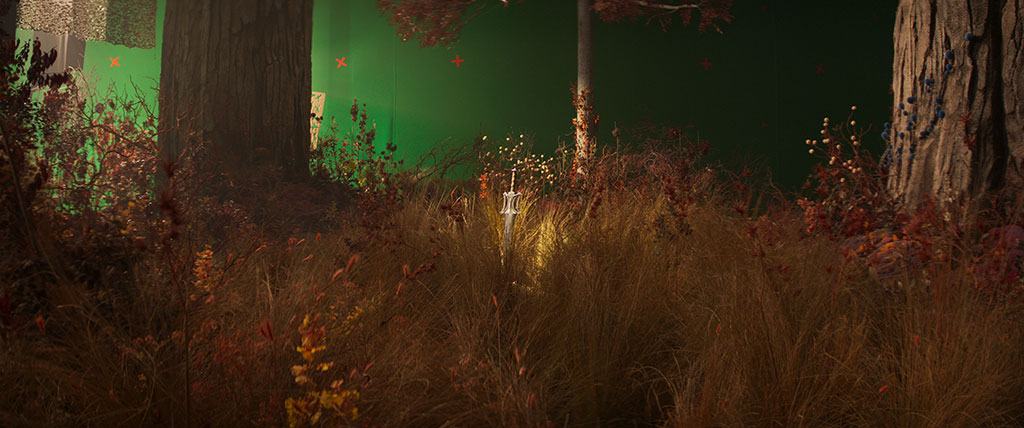
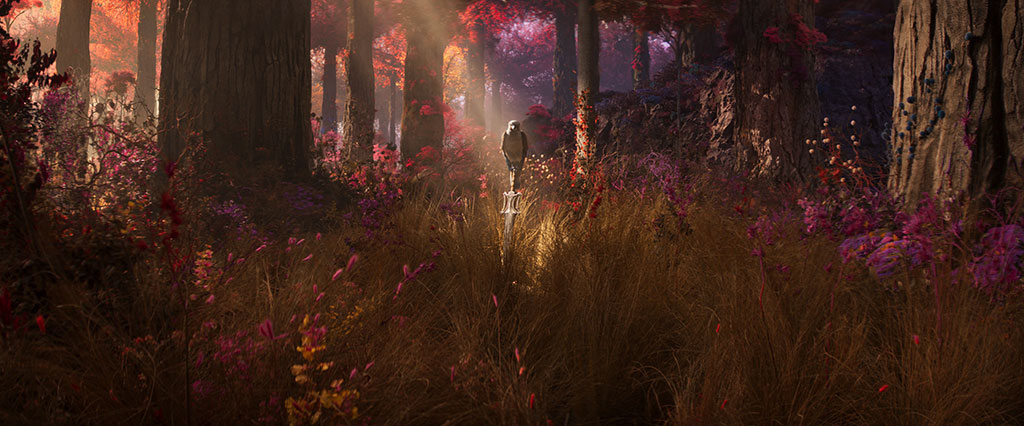
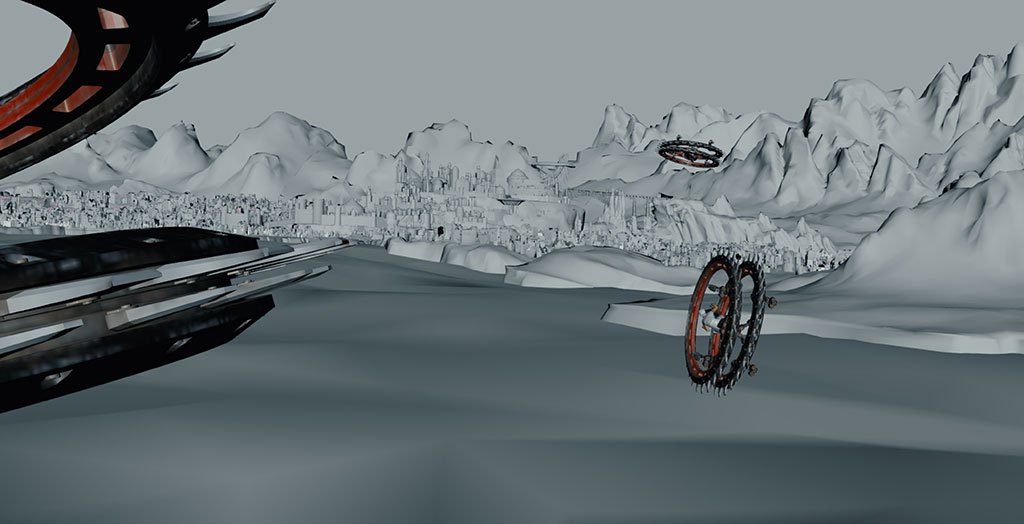
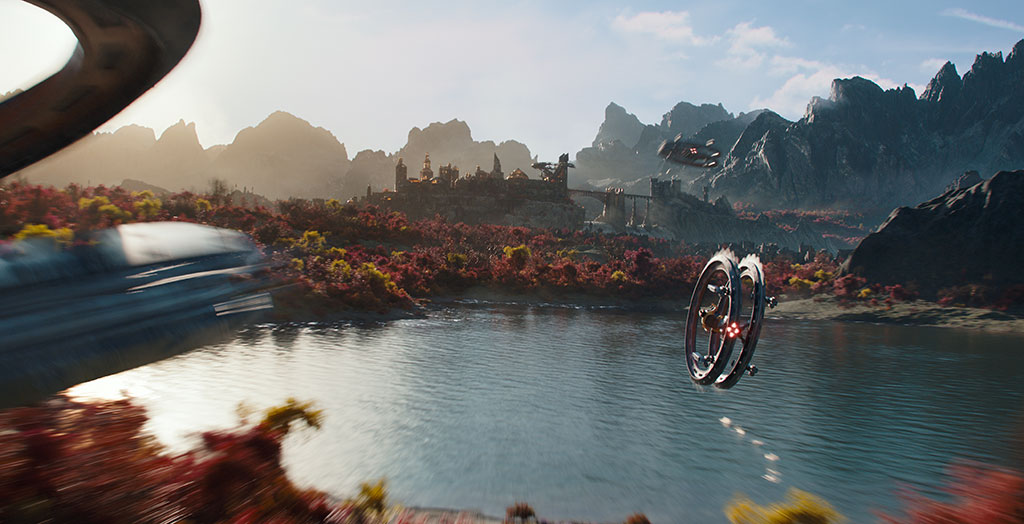
“Travis [Knight, director] storyboarded every single scene. And when I say storyboards, it’s not like a panel per shot. He was doing dozens of panels for every single shot, so you could actually play the storyboards like a loose animatic of the entire film. Travis would always say to me, ‘Go back to the storyboards.’ We had our previs team at Proof matching, looking at putting a block or a template of that Sky Sled Chase using animatic animation. We handed it over to Joseph Kasparian at Rodeo FX. Essentially, he mapped the entire chase linearly through the canyon, over the geothermal plains down into the forest and built a procedural environment that ran from one end of the chase to the other.”
—David Vickery, Visual Effects Supervisor, Masters of the Universe
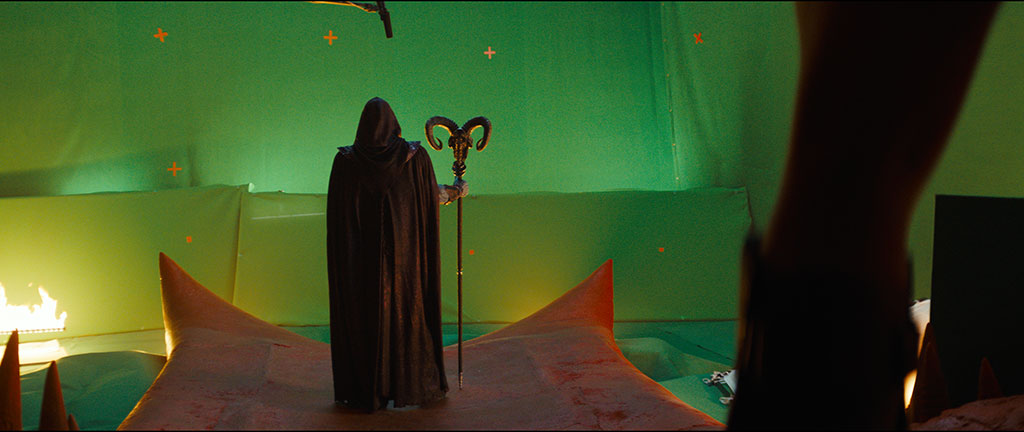
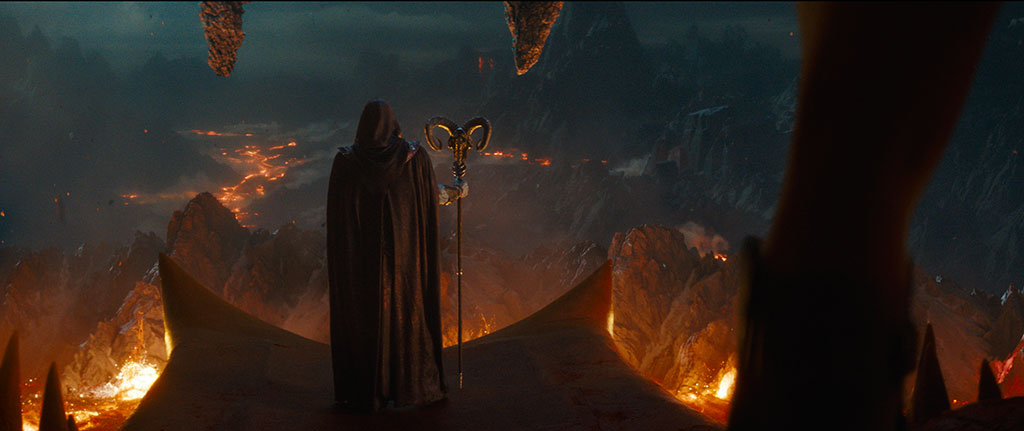
There is a common filmmaking methodology that runs through the animated features Knight has produced and directed for LAIKA, as well as his approach to live action. “Travis storyboarded every single scene,” explains Vickery, who also served as the Visual Effects Supervisor on Jurassic World: Dominion. “And when I say storyboards, it’s not like a panel per shot. He was doing dozens of panels for every single shot, so you could play the storyboards like a loose animatic of the entire film. Travis would always say to me, ‘Go back to the storyboards.’ We had our previs team at Proof matching, looking at putting a block or a template of the Sky Sled Chase using animatic animation. We handed it over to Joseph Kasparian (The House With a Clock in Its Walls) at Rodeo FX. Essentially, he mapped the entire chase linearly through the canyon, over the geothermal plains down into the forest and built a procedural environment that ran from one end of the chase to the other. Every time I got on the phone with Joe, he’d be like, ‘What do we need to do now?’ We’d choose some lighting scheme and direction. He would go, ‘Okay, great. I’m going to render the whole sequence out for you, and we’ll send it back tomorrow.’ I’m like, ‘That’s a bit quick.’ But he was able to do that. Joe had it set up in such a way that he could plot out a change within the sequence, then run the entire thing from one end to the other.”
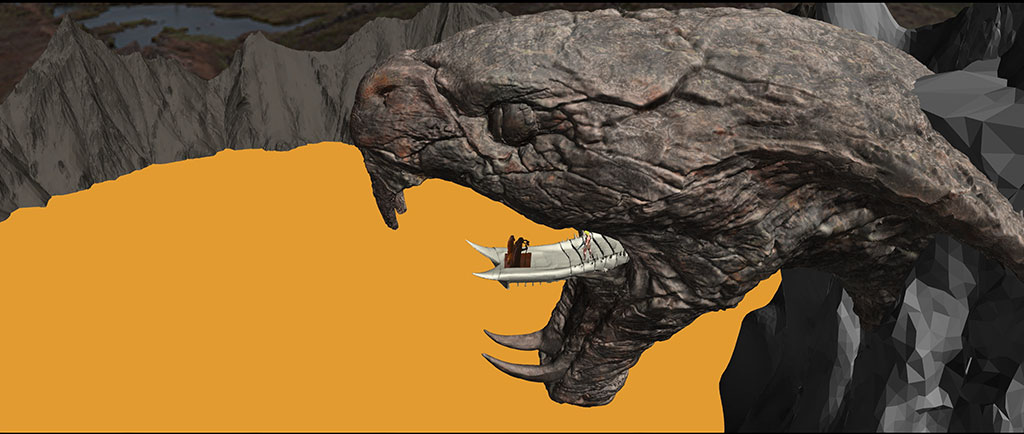
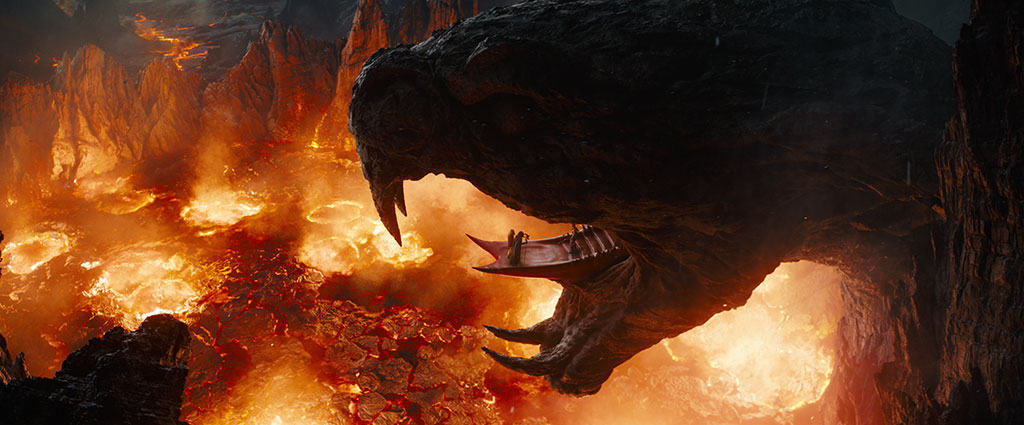
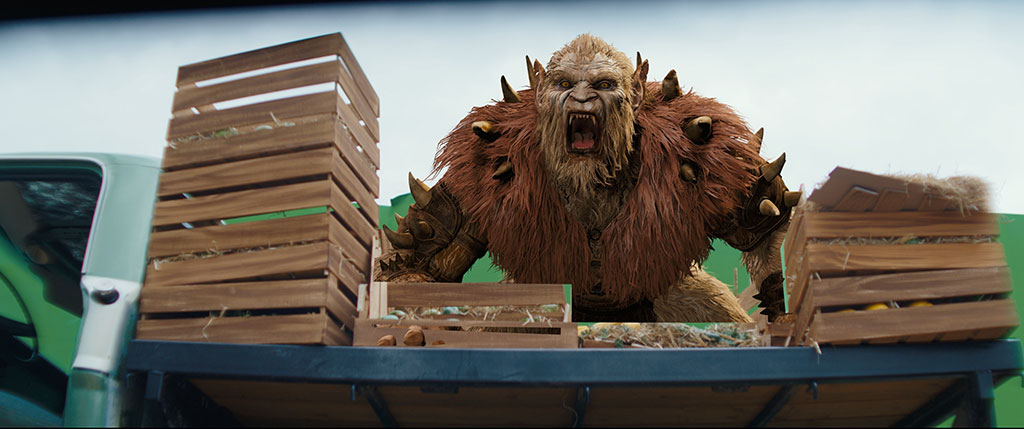
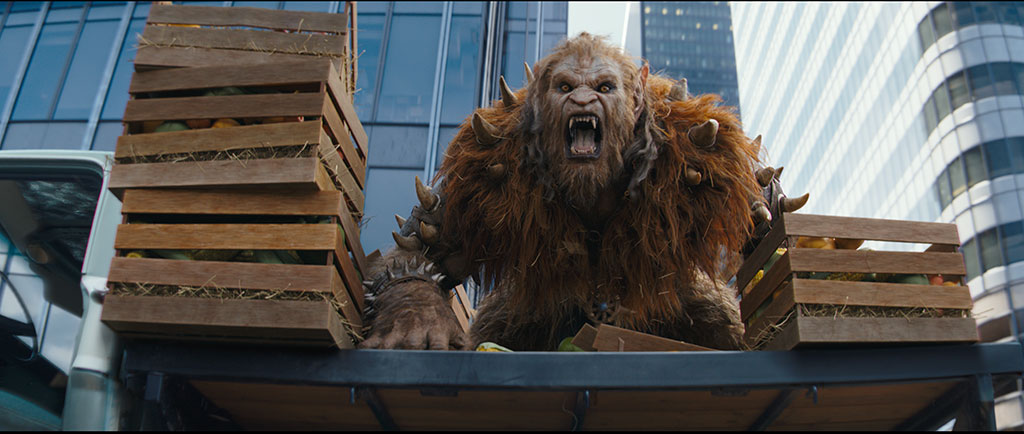
Whereas most of the action takes place on Eternia, a major pursuit occurs during a traffic jam on Earth. “‘Retrieving Adam’ was the name we gave to that sequence,” Vickery reveals. “Adam is in the police car, and he gets out; Beast Man attacks, Adam and Teela get on her ship and go into our version of hyperspace. The whole thing was shot in England on a disused runway in Boddington, painted to resemble an American road, with our concrete bollards on either side. The entire environment is digital, except for five or six cars ahead of and behind the main action. That was a huge effort for Pietro Ponti and the ILM team who faithfully scanned and rebuilt the entire Oklahoma environment using plates they got at Canary Wharf and location data.” On set, the stand-in for Beast Man had a shoulder and eyeline pole. “The character was entirely digital and keyframe animation,” Vickery notes. “That was an important thing for Travis because he didn’t want to use motion capture.”
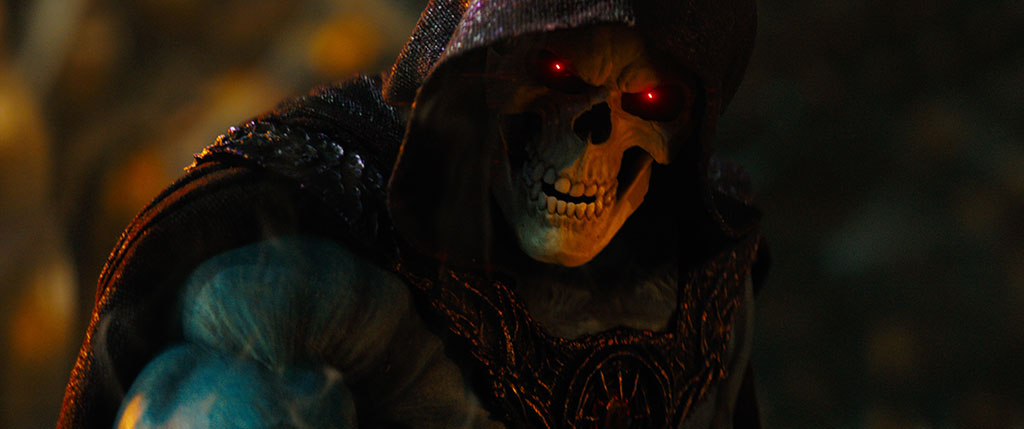
Given that Skeletor was the main antagonist, it was essential that the iconic villain could properly express humor, rage, inquisitiveness, cynicism and menace despite having a skull for a face. “We experimented with loads of different techniques,” Vickery shares. “Some of them were animating on twos at times or introducing subtle deformations in brows to introduce frowning or surprise. But we also ended up with subtle deformations in the jawline and the teeth line, specifically to create the phonemes we needed to have him read dialogue in a way people could understand and that felt in sync. Jared Leto gave an incredibly physical performance wearing the full suit, but he also had a beard. There were no tracking markers on his face, because Jared didn’t feel like that was part of the character and it would affect his performance. What we needed to do with the animation of Skeletor was capture the range of emotion and performance that Jared was giving us with keyframe animation, and sync was an incredibly difficult thing to get right.”
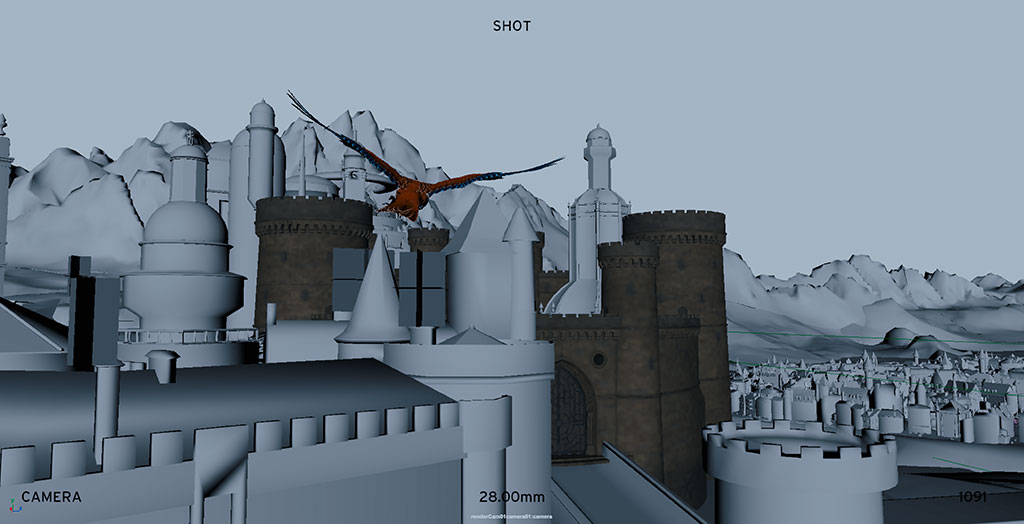
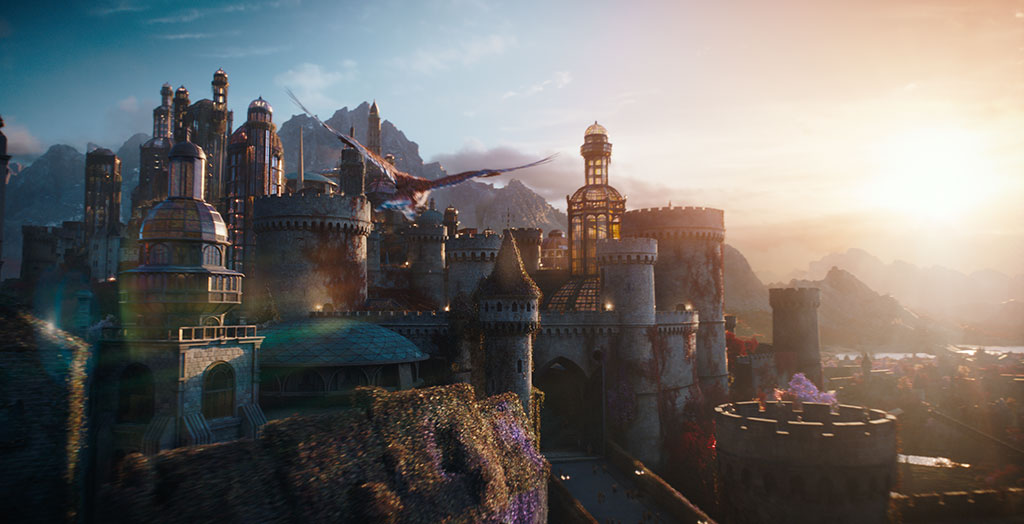
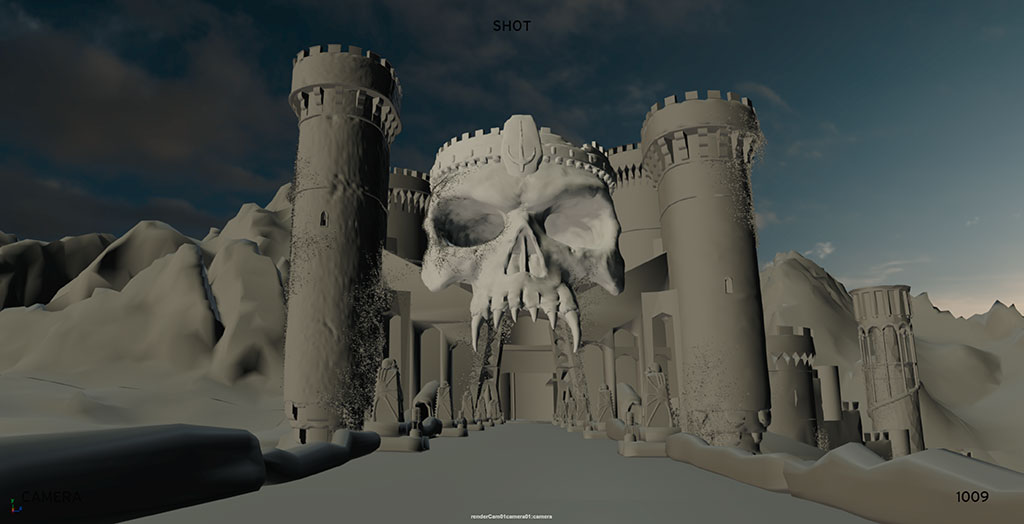
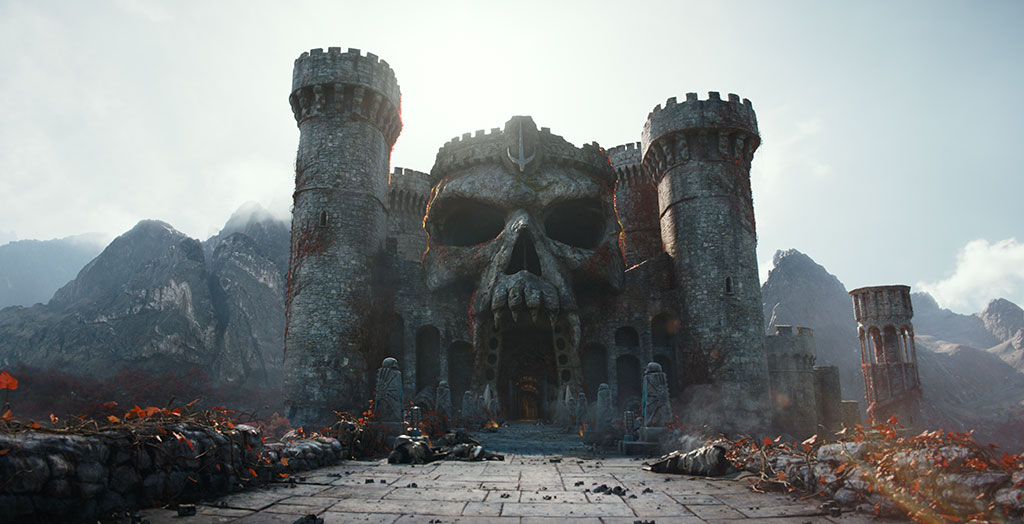
“The statues [on the bridge of Eternos] are all digital. There’s a little piece where the guards see Adam and Teela riding Cringer. But by and large, everything else we did was digital. What Guy Hendrix Dyas [Production Designer] and his team did was build most of Eternos, Grayskull and the bridge. We were sharing that asset between us and Proof right at the beginning, when we started off in previs. Guy worked it up to a high standard, and it fitted in with the sets that he designed and that they built. Then that was handed off to DNEG to polish over the following months.”
—Rich Yeomans, Visual Effects Producer, Masters of the Universe
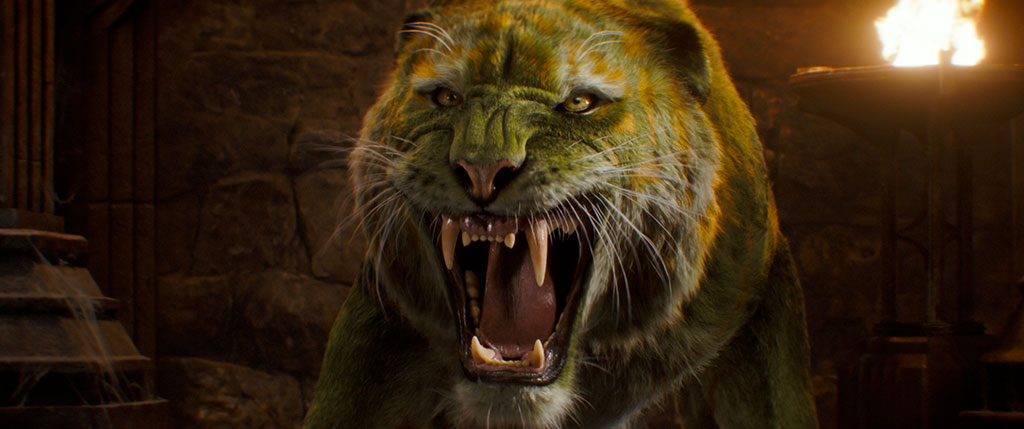
A traditional CG creature workflow was used to create the green tiger known as Cringer. “We had a puppeteer with a green head on-set so the actors had eyelines,” Yeomans states. “We replaced our CG over that. Roboto was about trying to learn that language of how to make her speak. The shoot was traditional in the sense that we had a performance artist there with a backpack and the props guys made us her head so we had that on a stick.” The lack of lips made it hard to convey that the dialogue was actually coming from Roboto. “Obviously, Roboto has these four lights and a visor in the middle,” Vickery says. “Now the visor is supposed to be the eye and the lights are supposed to be the mouth.” Depending on which lights were illuminated, the visor could appear to be either the character’s eyes or mouth, creating a constant challenge for the animation team.
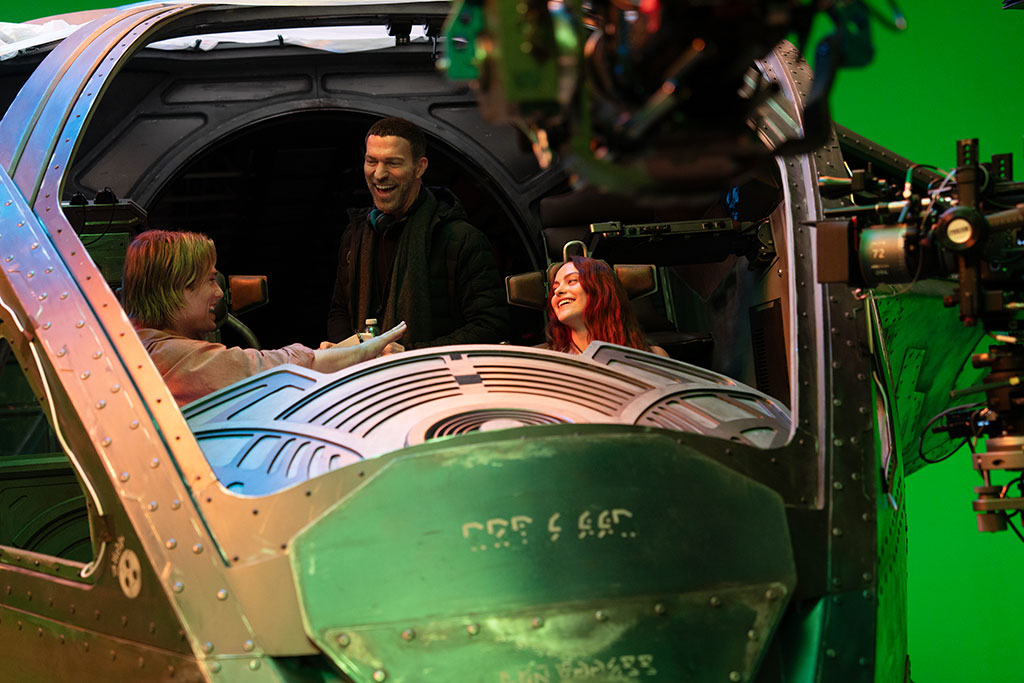
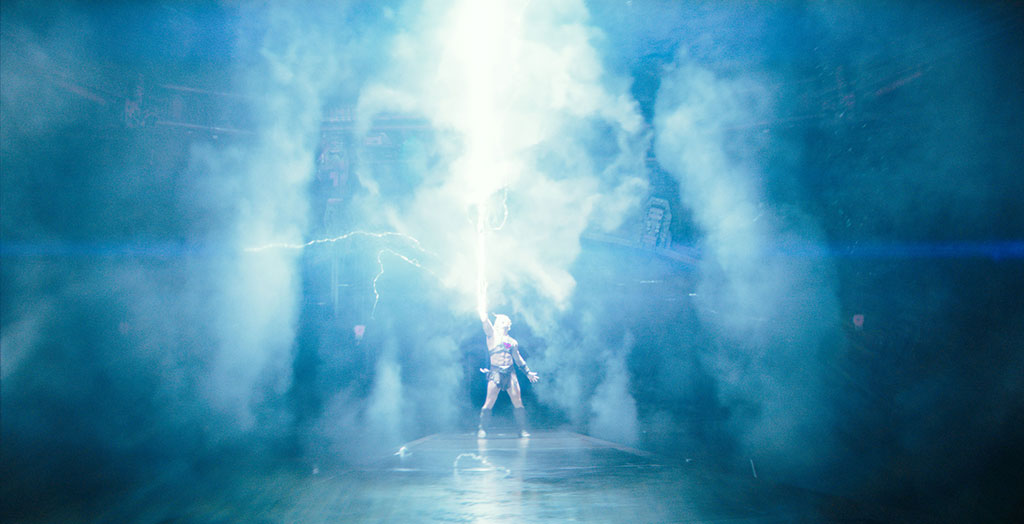
The capital city of Eternos was a significant environment build. “The statues [on the bridge] are all digital,” Yeomans notes. “There’s a little piece where the guards see Adam and Teela riding Cringer. But by and large, everything else we did was digital. What Guy Hendrix Dyas [Production Designer] and his team did was build most of Eternos, Grayskull and the bridge. We were sharing that asset between us and Proof right at the beginning, when we started off in previs. Guy worked it up to a high standard, and it fitted in with the sets that he designed and that they built. Then that was handed off to DNEG to polish over the following months. In terms of real estate, not much was built at Elstree Studios, largely because of the size of the backlot and the stage space being used by other areas. It was a challenge. But it’s funny, because everyone agreed on the size of the bridge. Then you get into layout when we hit our first turnover with Travis, and he’s like, ‘The bridge needs to be way longer.’ We’re extending it another 250 meters in virtual space in the computer. You’re like, ‘This bridge is way long, but it has to be because they have to run here and there and all of this has to happen. It was an interesting process!”