Images courtesy of Warner Bros. Pictures.

Images courtesy of Warner Bros. Pictures.
Blending the inescapable dread of “Hotel California,” the sacrificial cultism of The Wicker Man and Tarantino-esque ultraviolence, They Will Kill You is an action horror-comedy directed and co-written by Kirill Sokolov. Asia Reaves, played by Zazie Beetz (Bullet Train), embarks on a mission to find her estranged sister Maria (Myha’la), who works as a maid at The Virgil, an exclusive New York City high-rise. Upon tracking her down, Asia unwittingly encounters a group of immortal Satanists led by the building’s unflappable superintendent.
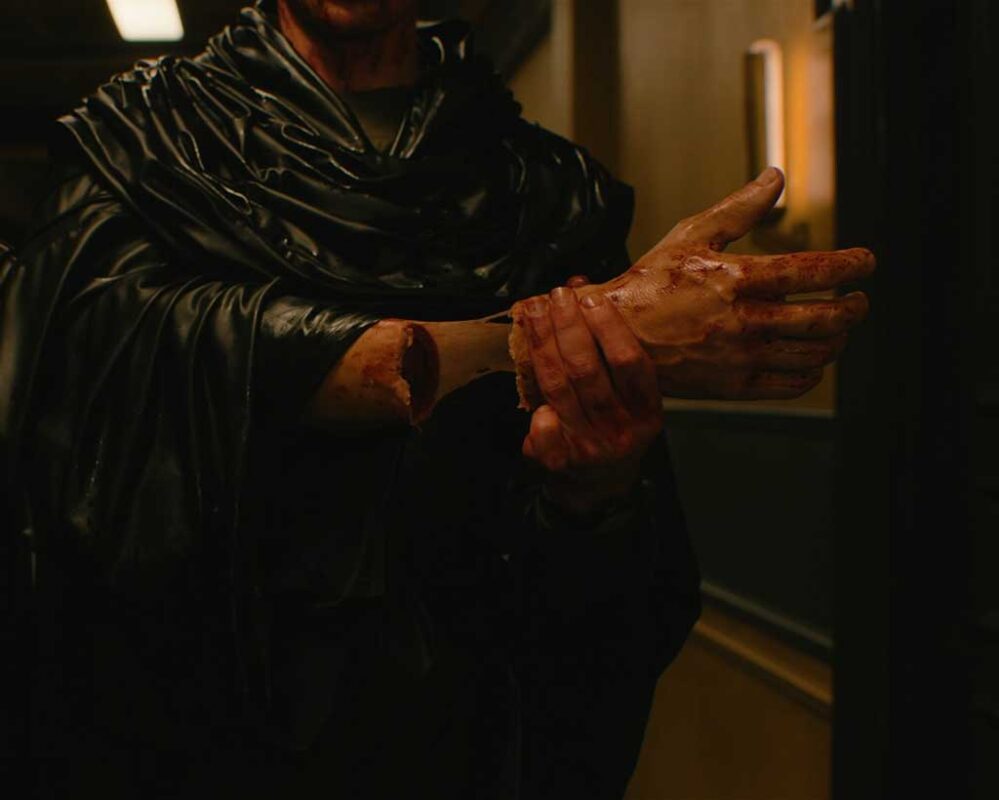
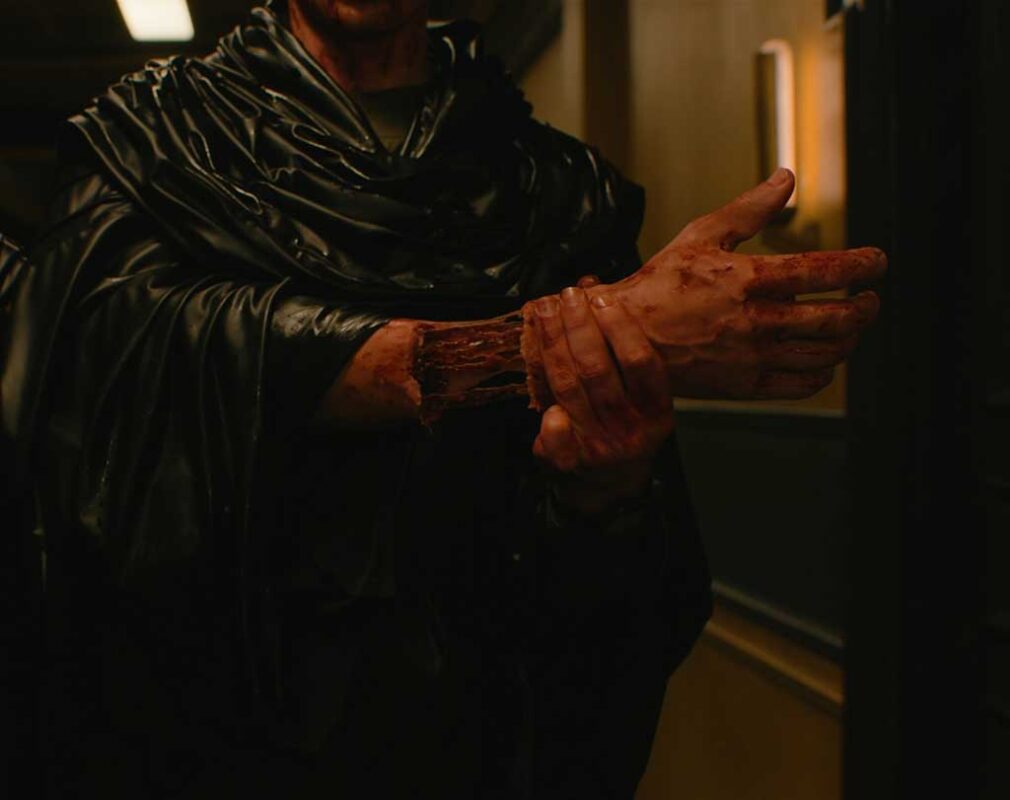
“Kirill Sokolov is excellent at picking the moments where he wants a laugh or shock value,” Marc Smith, Visual Effects Supervisor, They Will Kill You, states. “The whole movie was storyboarded front to back, so we knew ahead of time where these big parts would come in. We discussed quite extensively in prep and before we went to South Africa to shoot this: ‘Is this going to be a stunt? Will this be special effects? Will this be visual effects? Will this be prosthetics? Is it a mix of all of them?’ With the blood effects, we considered using CG, especially where Tom Felton’s head is decapitated, and the fountain is quite over-the-top and fantastic. There was so much interaction and spray with the other characters that I said to Kirill, ‘You best keep this practical, and let’s make a big thing about it.’ Everyone’s covered in blood as well, so it’d be too much to try to reconcile in visual effects.”
At the hotel, Asia slices up two henchmen – known as Tall Steve and Short Steve – when she rolls on the floor. “That shot was actually built off of six or seven plates,” Smith reveals. “We had a clean plate with the camera move. We had Zazie roll a couple of times to have a different take. We had the prosthetic there, and we shot that a few times clean without the spray of blood. We got the real guy in there to step in and grab it. And then the last take was all the blood effects because we had carpeting in there. The blood was very red and stained quite a bit. There were a few takes we might have wanted to use where the action was better. There’s a bit of paintwork to paint out the blood spots, and a heal-and-reveal where they came back after the blood was sprayed. But for the most part, it’s all about the planning and the different segments: ‘What’s going to be the most destructive to set? Let’s get the Zazie stuff out of the way. Then she can go break for lunch. Then we can shoot this part.’ And for the last take, you leave all the blood because that’s going to cause the most issues at the end.”
“Most of that scene was Zazie with a real fire ax, and she really hit the stunt performers with fire. If it was a great take but one or two stunt performers didn’t catch on fire when she hit her with the ax, we added CG fire onto that. It was fantastic because it was practical fire. The set was so dark, and we had the perfect reference for the heat values or how big the fire should be. We matched it to plate fire, and it was perfect.”
—Marc Smith, Visual Effects Supervisor, They Will Kill You
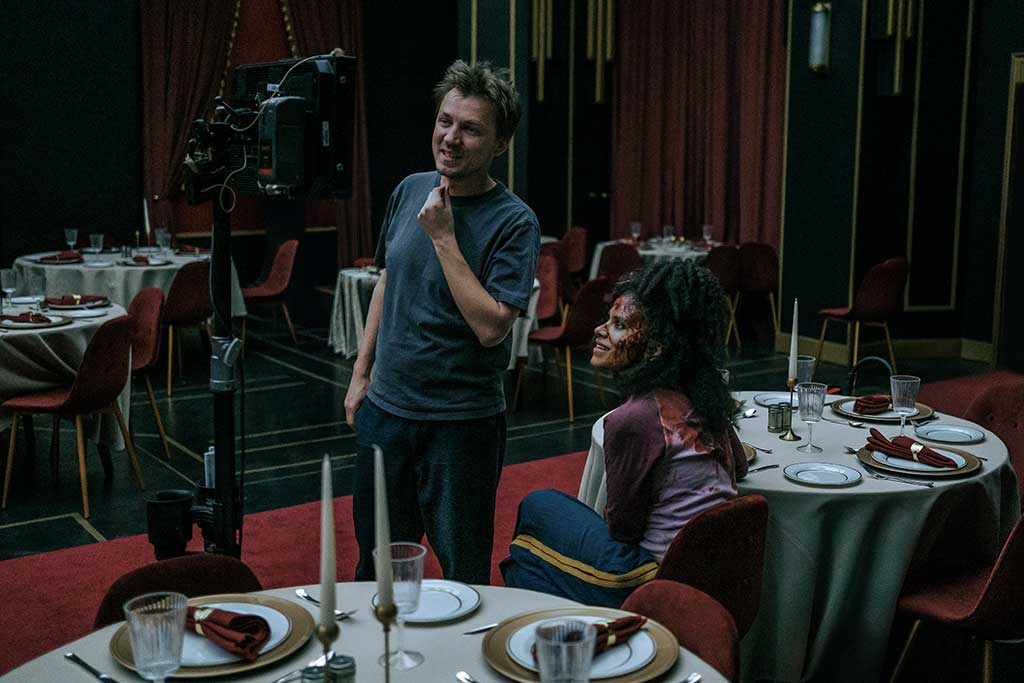
A couple of takes were quite lengthy. Smith says, “There was a section where Zazie hits six guys, and we did that in one take. Stunts had their ropes ready to go and yanked them. We had the flame bars going and had them all doused with accelerant. Zazie leaned into the stunt coordination and choreography for that.” The fire ax sequence is an audience favorite. “Originally, we did a bunch of tests in prep where we had the stunt coordinator Kerry Gregg, Zazie’s stunt double Katharyna Araújo, and an ax with LEDs,” Smith remarks. “I asked for LEDs because throwing practical lights is always going to be a lot easier than trying to put in firelight afterward. We did a few tests, and it worked great. We did some tests with our CG fire through effect simulations, which Crafty Apes does exceptionally well. But in the end, Zazie, being the badass that she is, wanted to do it practically. Most of that scene was Zazie with a real fire ax, and she really hit the stunt performers with fire. If it was a great take but one or two stunt performers didn’t catch on fire when she hit her with the ax, we added CG fire onto that. It was fantastic because it was practical fire. The set was so dark, and we had the perfect reference for the heat values or how big the fire should be. We matched it to plate fire, and it was perfect.”
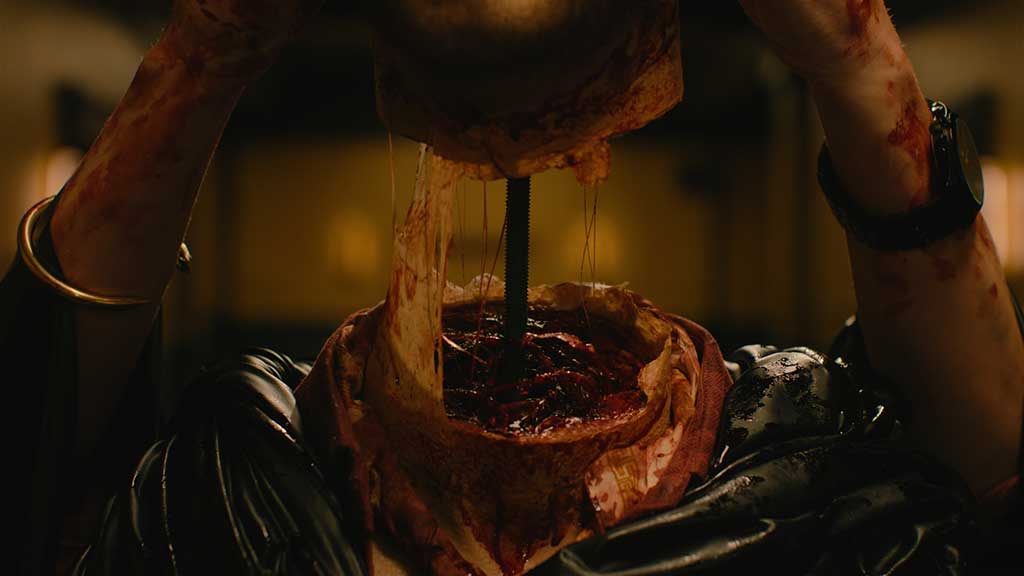
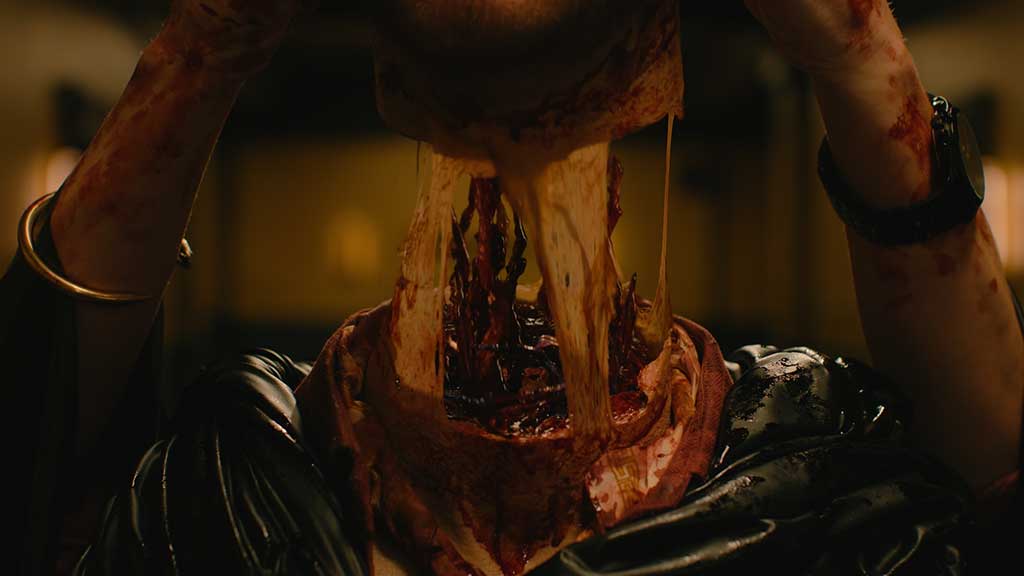
Things go from bad to worse for Asia when she discovers that her assailants have the ability to regenerate, thereby making them immortal. “When Tom walks out with his head tucked underneath his arm, that was obviously a big comedic moment and reveal,” Smith explains. “We leaned into a lot of practical things. We got this material from special effects that was like latex, but if we sprayed some kind of solvent on it, it dissolved. We put the neck piece on top of the head prosthetic and had a shoulder prosthetic. We sprayed this skin-like material and pulled the head up, but it was on a metal dowel, so we could keep the head straight while lifting it off. We shot it at 120 frames per second and reversed it so it looked like it was coming back on, with the skin then rejoining. I was given two days and shot about 150 elements. I got the prosthetics guys to give me veins and muscles, and we started shooting them against greenscreen, pulling up through levels so we could separate them and have all these different components coming back in between the skin parts. It was probably like another six or seven plate comps for our compositors. Then, to add some nice touches to sell it. Because it was a reverse shot, you get a little bit of a weird shake, so it was stabilized. But we added some blood dripping down, so you get the gravity and the dynamics of it closing back up.”
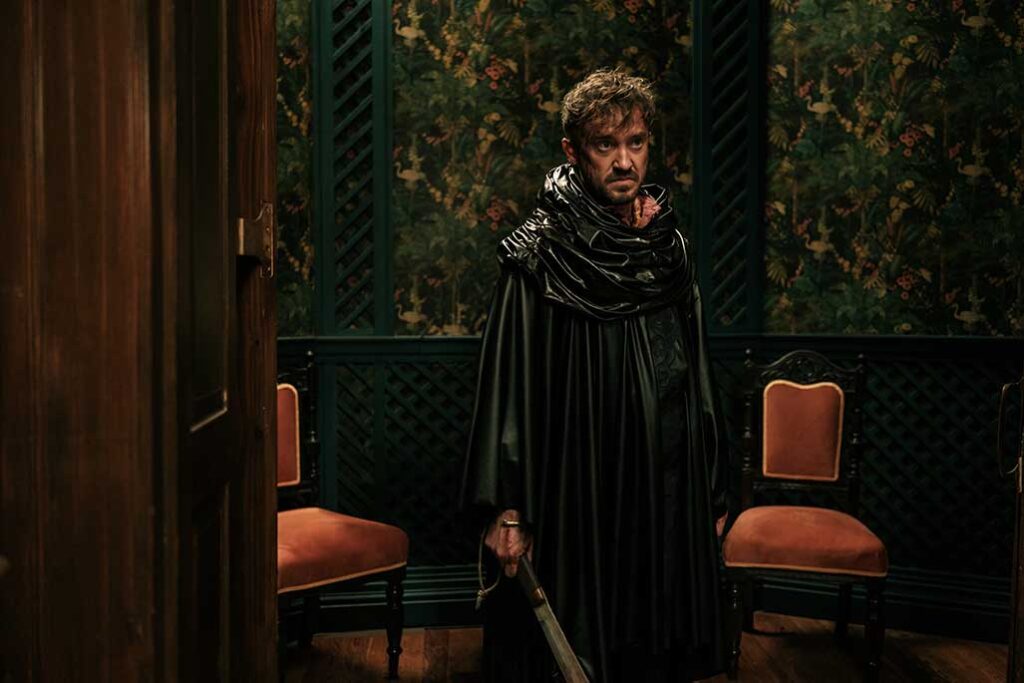
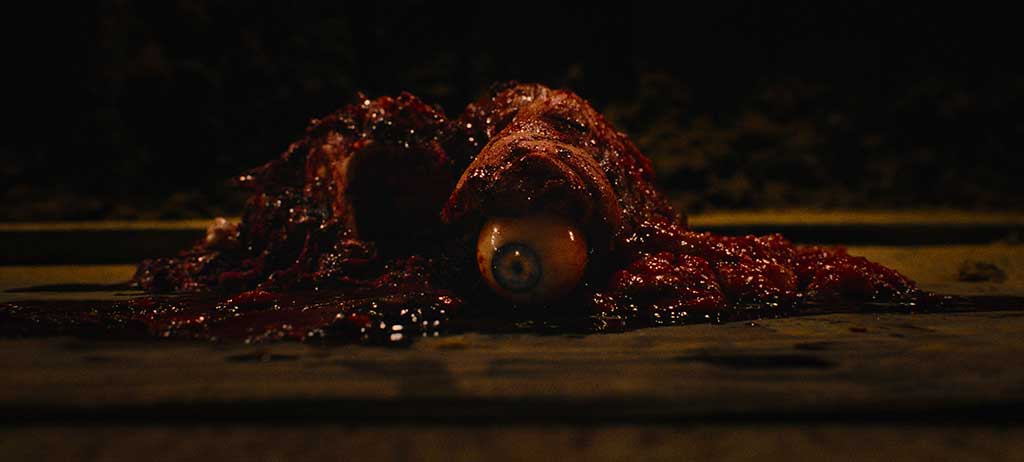
A wayward eyeball belonging to Sharon Vanderbilt (Heather Graham) follows Asia through the maze located underneath the hotel’s floorboards. “We did the spider on the eyeball of Sharon,” Smith chuckles. “I enjoyed that spider because it’s an eyeball, but the eyeball is still scared of the spider. It made me laugh. In that sequence, it was impossible for the camera to make the moves and follow Zazie as she made 90-degree turns. We took the entire side off the underground area so the camera crane could get in and make several moves. We replaced the entire interior of one of the sides to the point that when we put it in, Kirill said, ‘This is fantastic. This is how you do that camera move.’ To see that joy and amazement on the director’s face, knowing this is what we did, and he knew that we did it because we told him how we would fix it. That was exceptionally good. It’s one of those things that flies by, and people don’t even realize it, which is the whole point of visual effects. You’re not supposed to see it as a visual effect.”
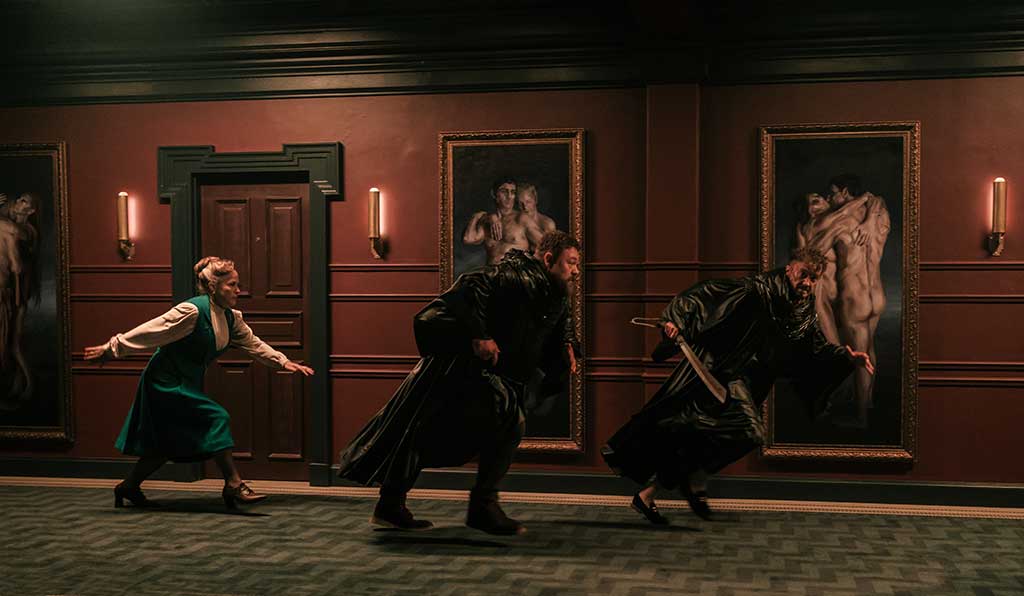
“The pig is a character in itself. … Because the proportions of the pig and human face don’t match, the animation team had to add micro-movements and twitches. There’s never a still frame on-set where there was a pause in the vocabulary. The ear twitches. The devil is in the details. You need to add these subtle nuances to sell the idea that this pig is alive. When he’s not having this big dialogue moment, he’s in the background and is alive back there. The pig is always doing something. He’s not just sitting there as a pig on a stick that’s dead.”
—Marc Smith, Visual Effects Supervisor, They Will Kill You
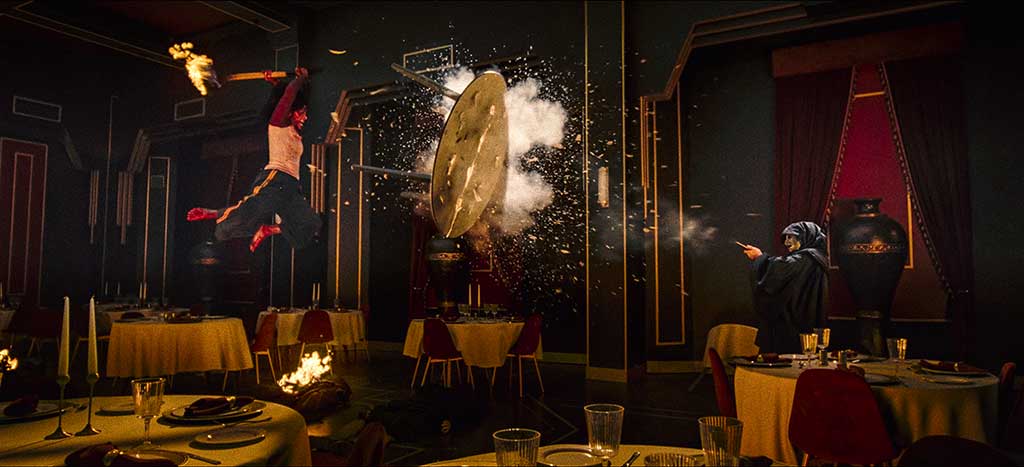
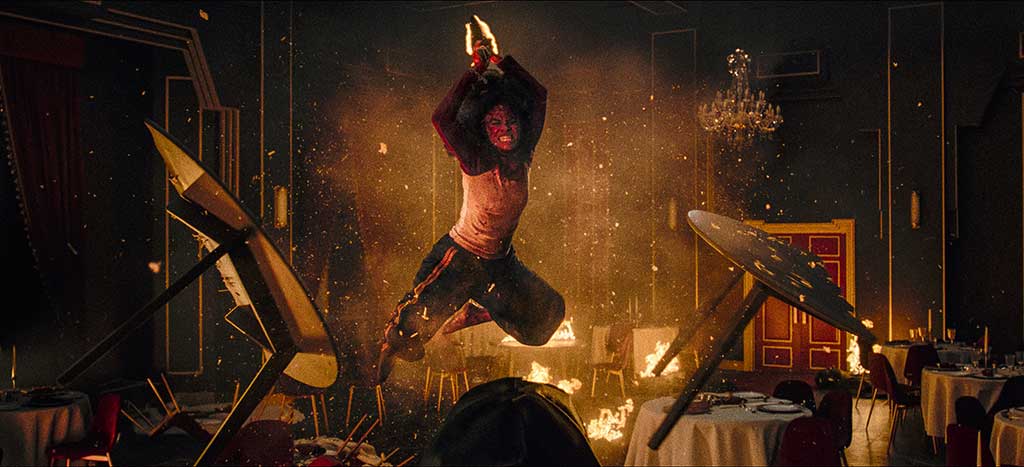
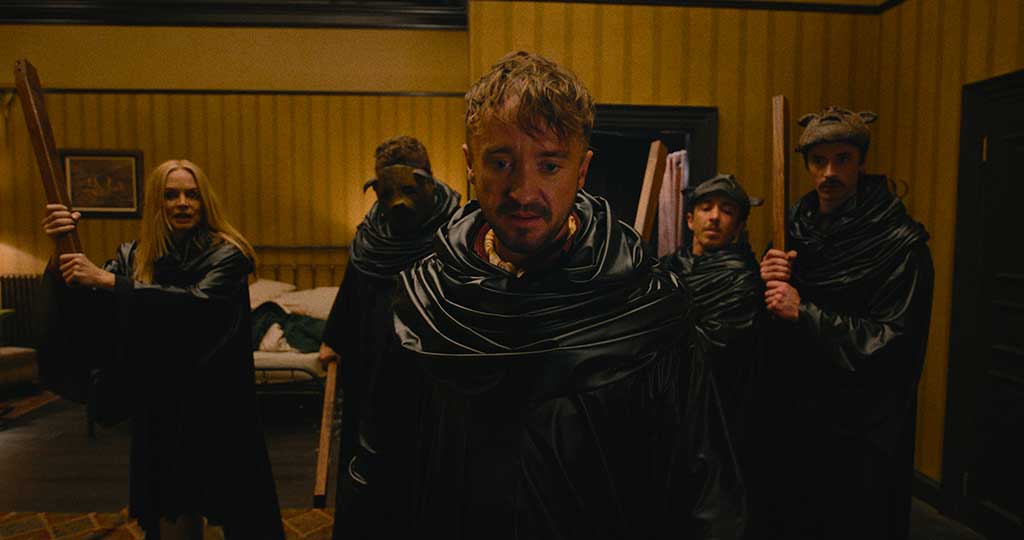
Satan manifests through the severed head of a pig that can talk. “The pig is a character in itself,” Smith notes. “There was a point where the pig was funny; however, it didn’t play well. It became more sinister and then sarcastic and sullen. Every time the dialogue changed, we talked to Kirill and asked, ‘Is the pig annoyed? Is he angry? Is he nonchalant? Is he sarcastic?’ We would get great feedback from Kirill on the pig’s exact demeanor. Then it went to our animation team. Roane, J. Griffin and Paul Zeke nailed it every single time. We did a bunch of mocap, recorded the ADR footage, and mapped it onto the pig using a face-tracking system and MetaHumans, which got us about 65% of the way. Because the proportions of the pig and human face don’t match, the animation team had to add micro-movements and twitches. There’s never a still frame on-set where there was a pause in the vocabulary. The ear twitches. The devil is in the details. You need to add these subtle nuances to sell the idea that this pig is alive. When he’s not having this big dialogue moment, he’s in the background and is alive back there. The pig is always doing something. He’s not just sitting there as a pig on a stick that’s dead.”
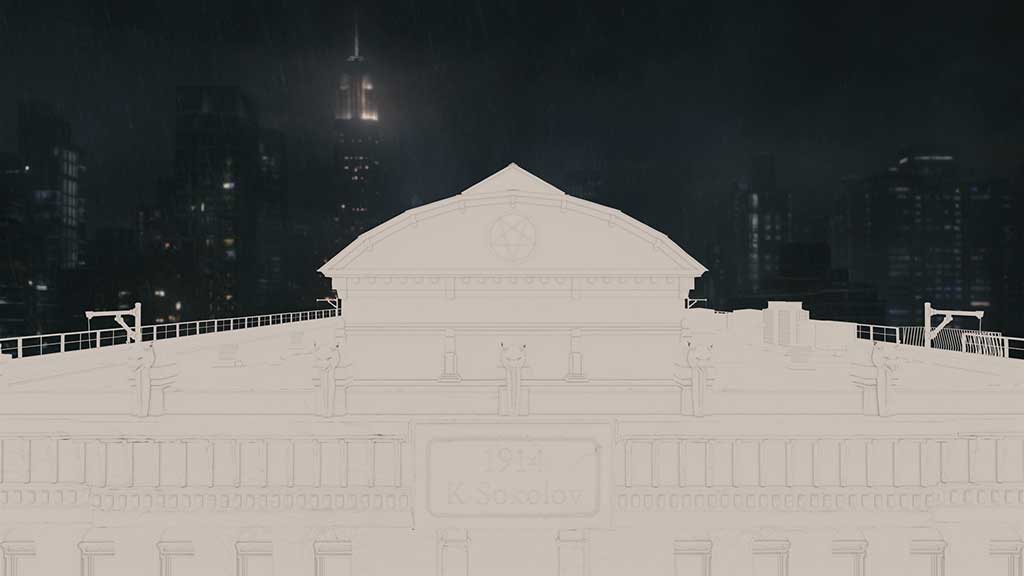
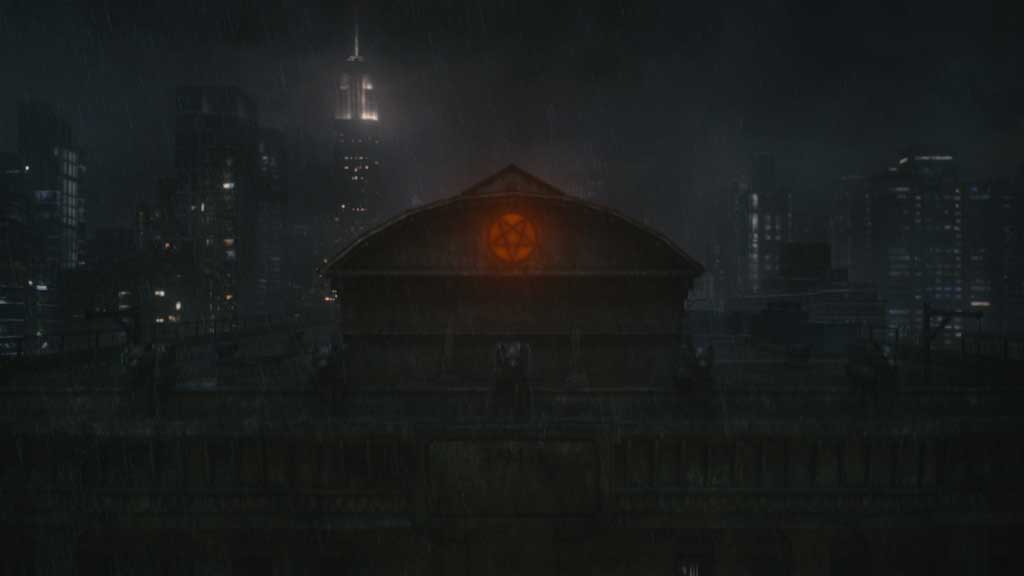
The Virgil may exist in the fictional Big Apple, but it was created by enhancing a Cape Town location with visual effects. “When Zazie arrives at The Virgil, that’s on location,” Smith shares. “We built a façade, which was the first two windows and the main door, and everything above that is a CG extension from us. We had to do a lot of environment work to make it look like high-end New York. The Virgil was designed by the art department, and we got some of the looks and things that Kirill liked. There are these little things you might not notice when you look at it for the first time, like little pig gargoyles on the top of the roof.”
As the sole vendor, Crafty Apes worked on 700 to 800 visual effects shots, including re-edits, retakes and reshoots. “I’ve got pages and pages of shots on ShotGrid of things that we were 85% to 90% there, then it got cut, changed and swapped out. It was close to 500 delivered shots, and a lot of those were CG pigs at the end. The Lily-Pig fight, which was all CG head and pig on a stick, took a big portion of that; that was the biggest sequence we worked on as far as CG. But from start to finish, we touched a lot of shots, even if it’s just a bit of clean-up here and there, which we don’t necessarily call a visual effects shot. But we did a lot of work on that movie.”