Images courtesy of Lucasfilm Ltd.

Images courtesy of Lucasfilm Ltd.
It was only a matter of time before one of the shorts from the animated anthology series Star Wars: Visions became a full-fledged spinoff. The Ninth Jedi first appeared in Vol. 1 and introduced sabersmith Lah Zhima and his daughter Kara, with the latter going on a journey to rescue him when he is abducted by Jedi Hunters. The story continued in Vol. 3 with The Ninth Jedi: Child of Hope, which finds Kara pursued by Jedi Hunters before she boards a drifting starship. Star Wars: Visions Presents – The Ninth Jedi, an eight-episode limited anime series, brings Lah Zhima and Kara back together while expanding Lah’s backstory and revealing how it connects to the motivations of the main antagonist, General Nawaam.
“When creating the short films, we developed detailed settings for the characters’ backgrounds and interpersonal relationships, even for the parts that weren’t explicitly shown onscreen,” explains Kenji Kamiyama, Supervising Director of Star Wars: Visions Presents – The Ninth Jedi. “That became the foundation for building the full series. As for the lightsaber combat action, our experience from the previous two shorts served as a helpful guiding benchmark for the animators who joined the project for this series.”
Since everything was building toward a family reunion, the scene between Zhima and Kara had to resonate emotionally for the viewer. “I wanted to structure the narrative arc so that during her journey, Kara learns about the events in her father Zhima’s past, realizing that the relationship between Jedi and Sith, or good and evil, cannot be described through simple dualism,” Kamiyama explains. “Through facing her nemesis, Kara discovers an answer that neither her father Zhima nor Master Juro could reach, and her father witnesses that growth firsthand. I kept that specific progression in mind while designing the scene.” At one point, Kara gives in to her rage and appears headed toward the Dark Side of the Force. “Typically, a protagonist starts out incomplete and weak, gradually growing over time. However, I chose to portray Kara as strong from the start to make the audience imagine what she must have experienced up to that point. On top of that, to embody the core theme that justice and evil, the Light Side and Dark Side, are two sides of the same coin, we put her through a massive setback and a fall to the Dark Side. This challenge pushes her toward a realm that no one before her had ever reached.”
Redemption is a prominent theme throughout the Star Wars franchise. “Justice can sometimes become evil, and there are moments when evil appears to be justice,” Kamiyama remarks. “In modern times, where good and evil can no longer be discussed in simple dualistic terms, we need to re-examine our past actions, even if that means making choices that temporarily look like taking the side of evil. To do that, one must constantly evaluate oneself from multiple perspectives.” One particular idea influenced the world-building. “I wanted to rebuild the Jedi – who felt like they had become bound by rigid rules and struggled to act like true heroes – back into cool, heroic figures that audiences could admire once again. This wasn’t easy and took a lot of trial and error, but we strived to depict the Jedi as authoritative figures who could decisively pass judgment to maintain fairness in the world, even if it meant striking down an enemy.”
“When creating the short films, we developed detailed settings for the characters’ backgrounds and interpersonal relationships, even for the parts that weren’t explicitly shown onscreen. That became the foundation for building the full series. As for the lightsaber combat action, our experience from the previous two shorts served as a helpful guiding benchmark for the animators who joined the project for this series.”
—Kenji Kamiyama, Supervising Director, Star Wars: Visions Presents – The Ninth Jedi
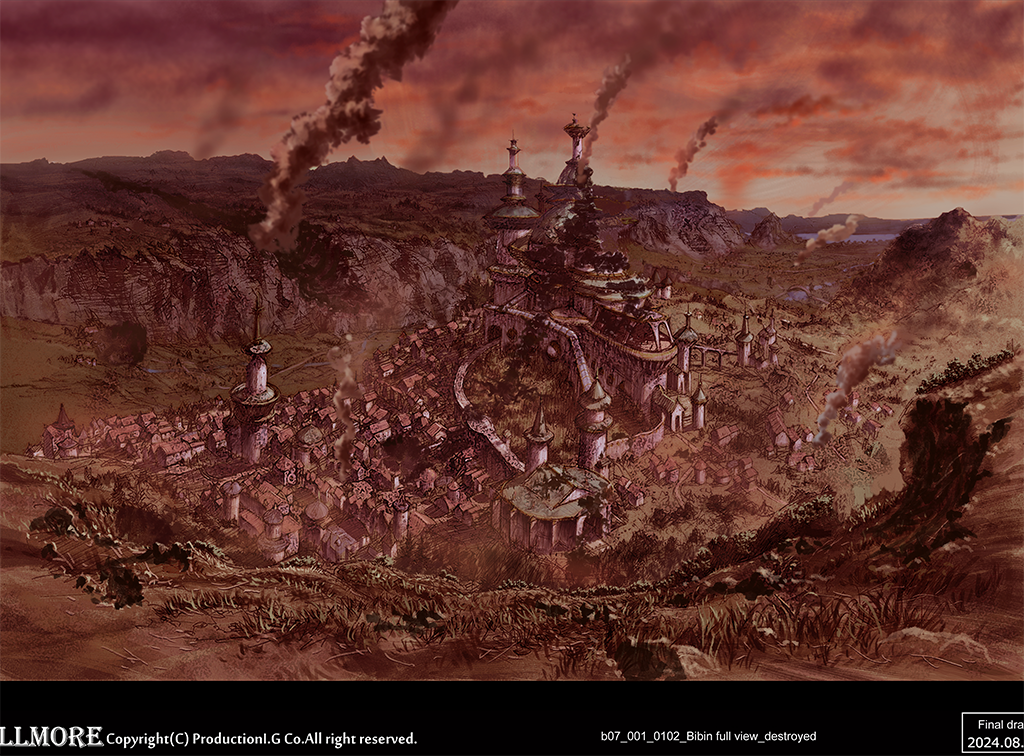
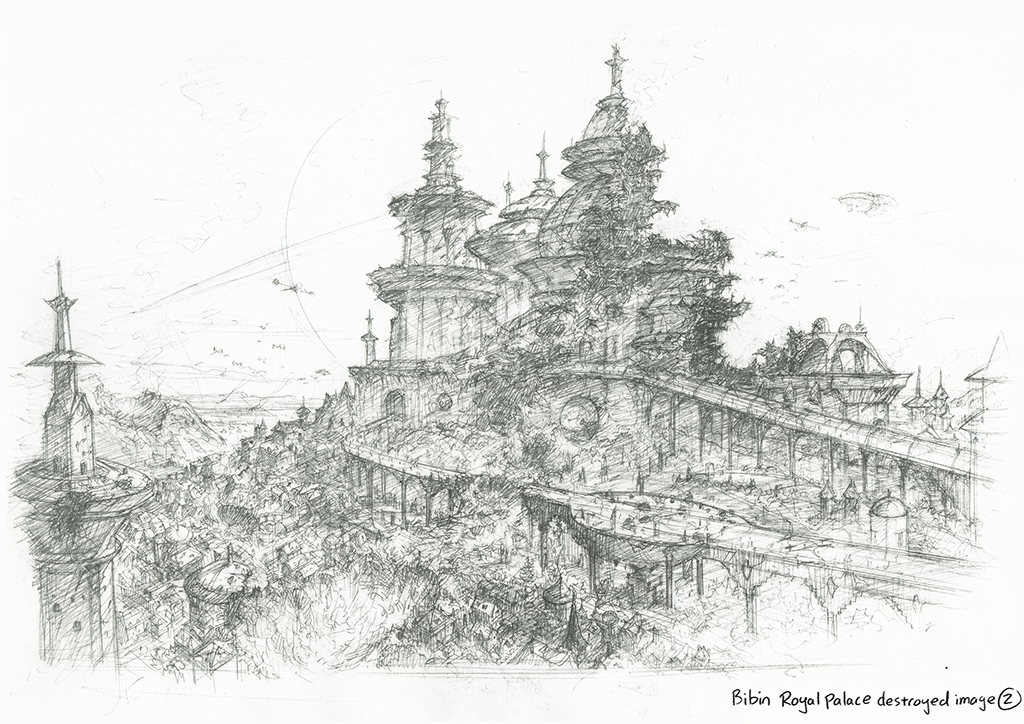
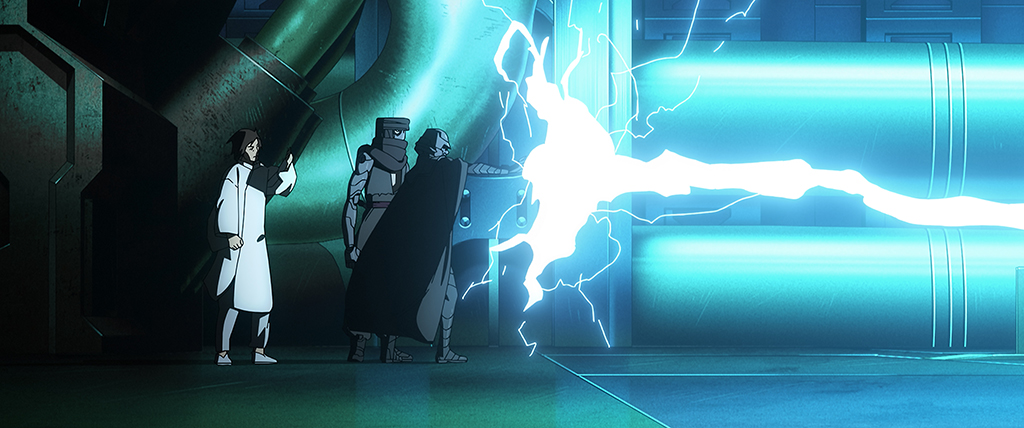
The team used 2D and 3D animation purposefully. “We used 2D animation for elements that intentionally required stylization or exaggeration, such as the characters, while using 3D animation for elements where we didn’t want to convey organic warmth,” remarks Shunsuke Tada, director of Star Wars: Visions Presents – The Ninth Jedi. “Decisions were fundamentally made based on directorial requirements.” One of the series most devastating moments occurs when the kyber crystal cannon misfires but still causes serious planetary damage. “We represented the collateral damage by having gas [from the gas giant that Bibin orbits] solidify in outer space and rain down onto Bibin’s surface. The most complex part was creating the visual effect for the blown-off gas solidifying.” The original Star Wars also served as a visual reference. “My request for the hologram design was to give them a look reminiscent of low-tech gadgets from the Episode IV era as much as possible!”
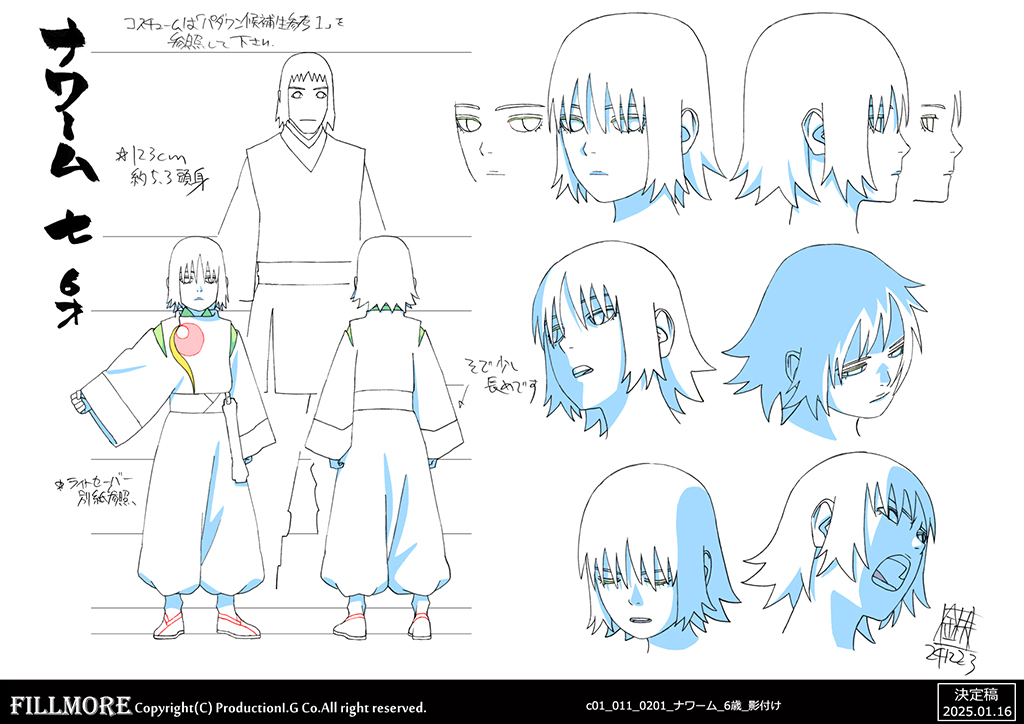
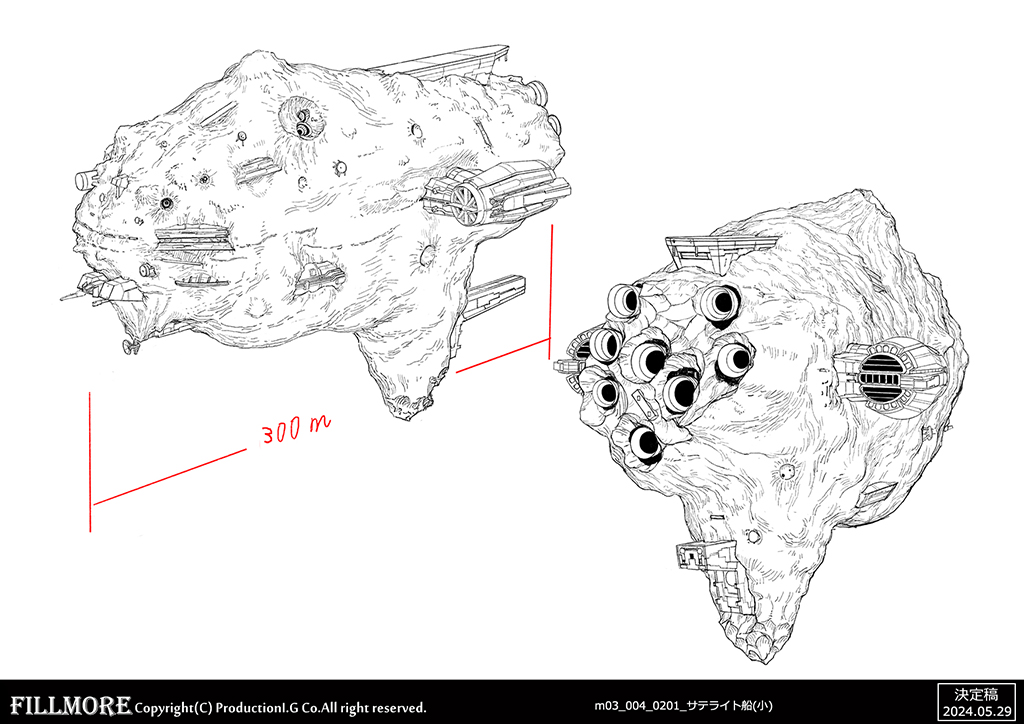
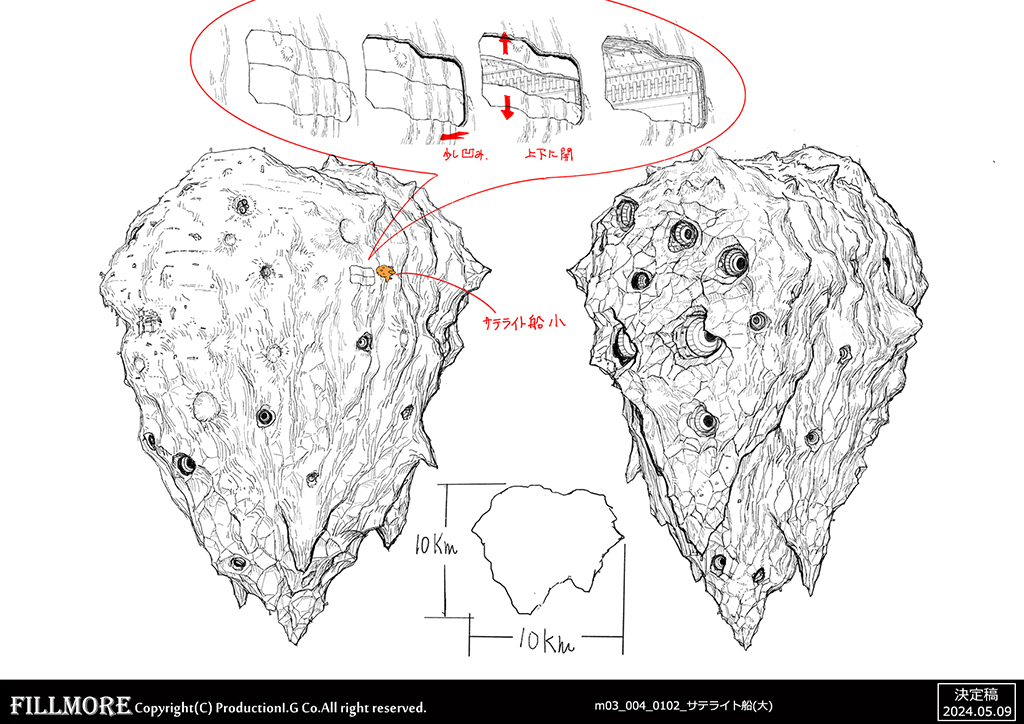
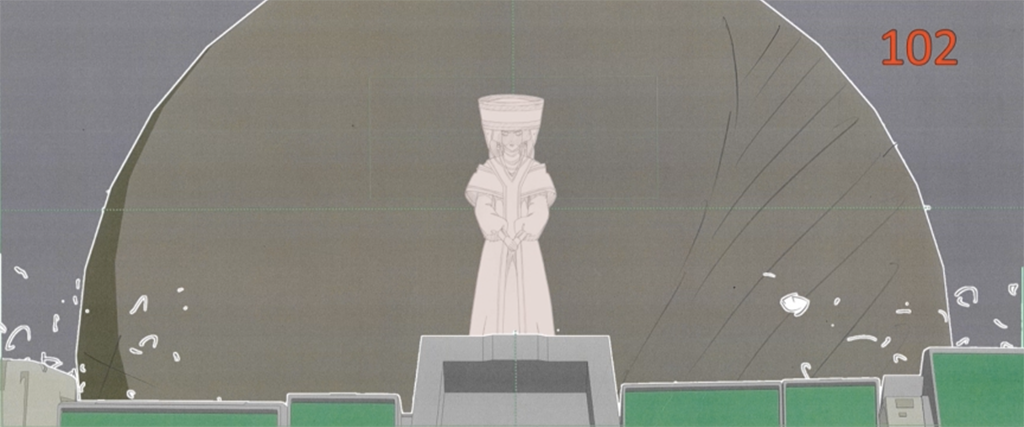
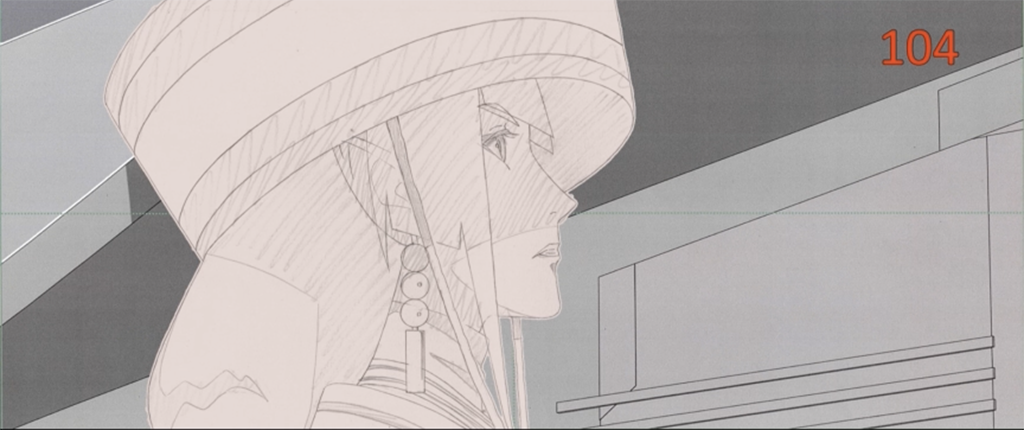
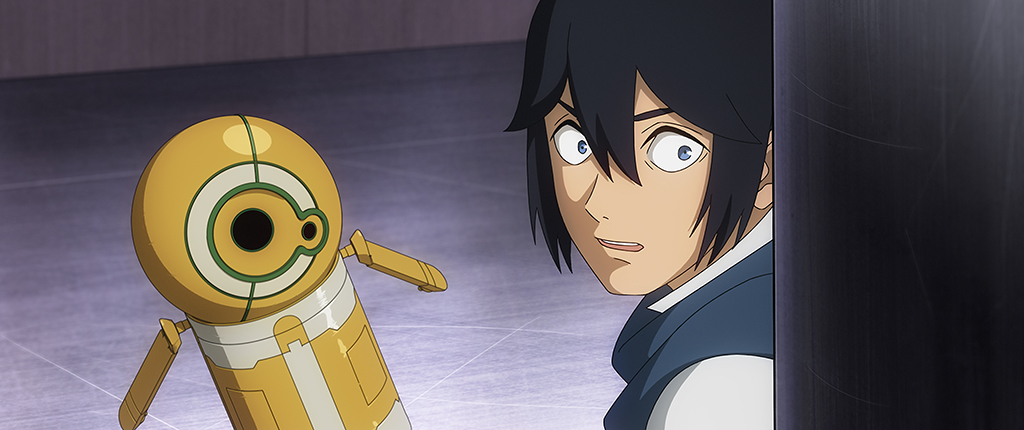
Prominent characters include Nawaam, Lady Tafflah and 99-99 aka Four Nines. “Through design and movement, we aimed to express Nawaam’s presence and swordsmanship as the ultimate knight and charismatic young general,” Kamiyama notes. “We also wanted to convey Tafflah’s dignity and poise as a princess of a long-lived species and Four Nines’ role in the lineage of R2-D2 as a ‘cute and clever partner to the protagonist.’” The asteroid vessels are an unusual addition to the Star Wars catalog of spaceships. “It came out of exploring what kind of starship would fit a mining planet,” Kamiyama explains. “And how we could give it a strong sense of uniqueness.” Another spaceship also stands out. “My favorite is the cargo ship that appears at Makoma Ko,” Tada states. “In the final episode, we had this cargo ship join the battle equipped with weapons it wouldn’t normally carry.”
“We used 2D animation for elements that intentionally required stylization or exaggeration, such as the characters, while using 3D animation for elements where we didn’t want to convey organic warmth.”
—Shunsuke Tada, Director, Star Wars: Visions Presents – The Ninth Jedi
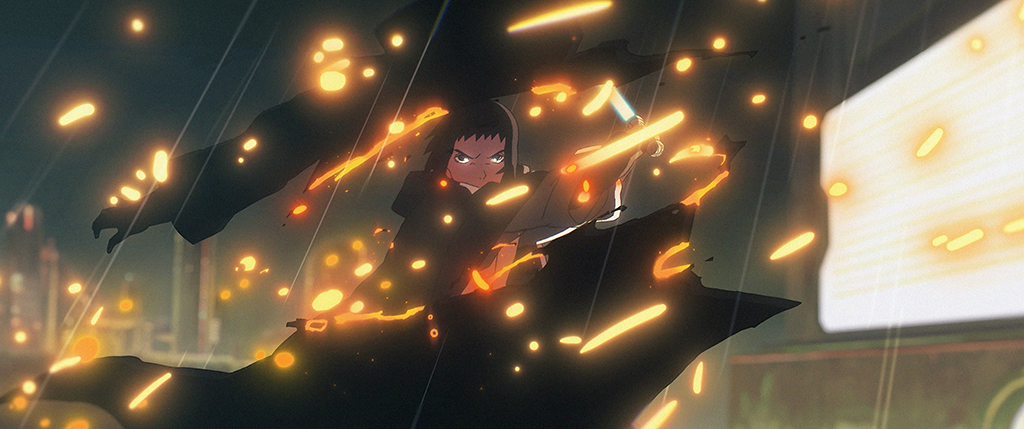
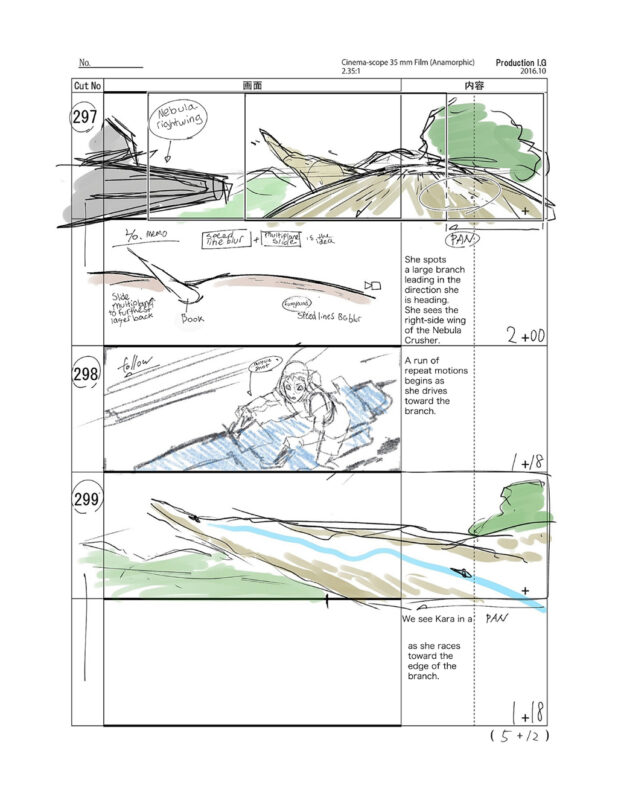
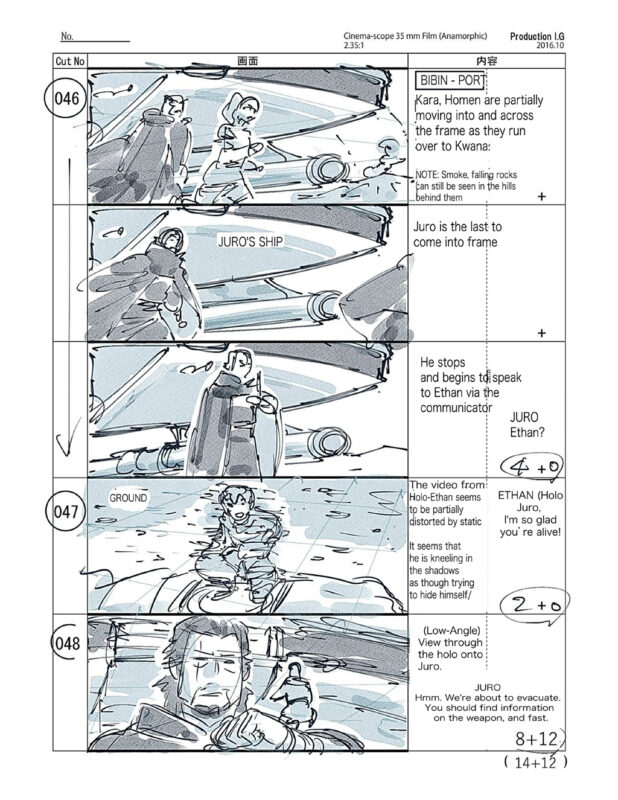
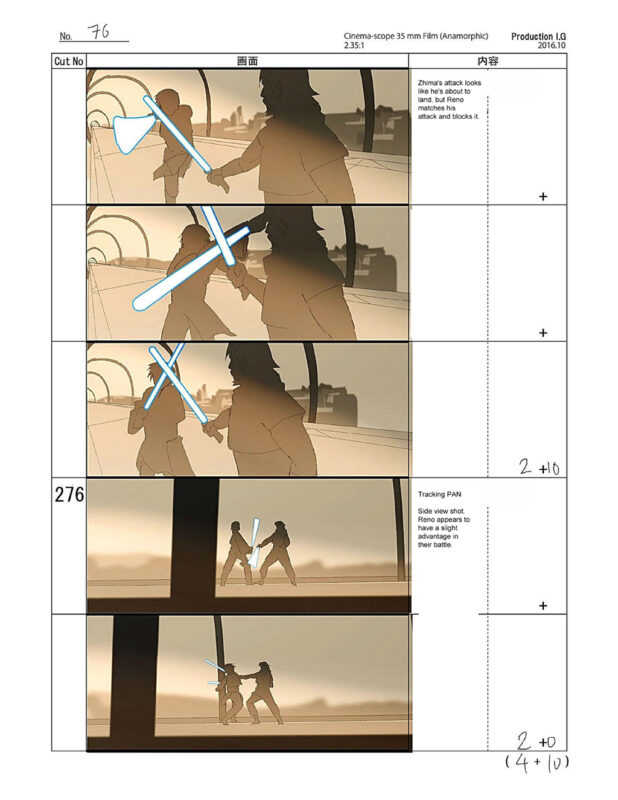
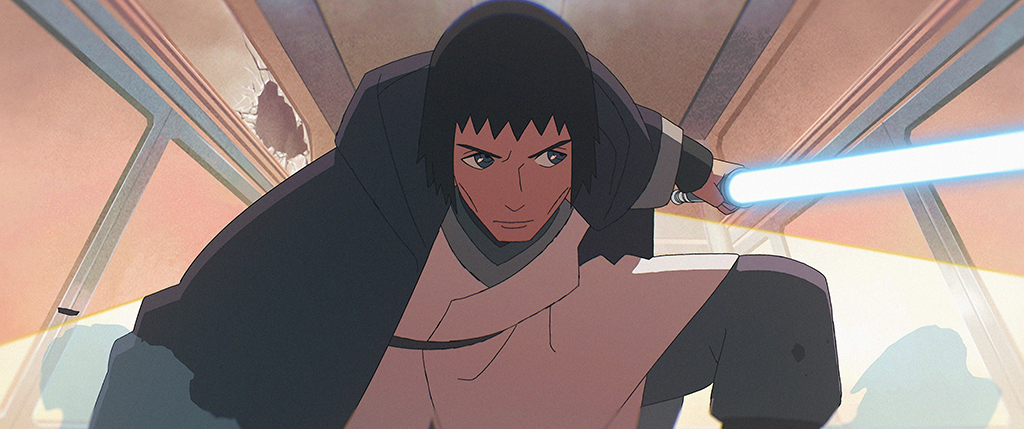
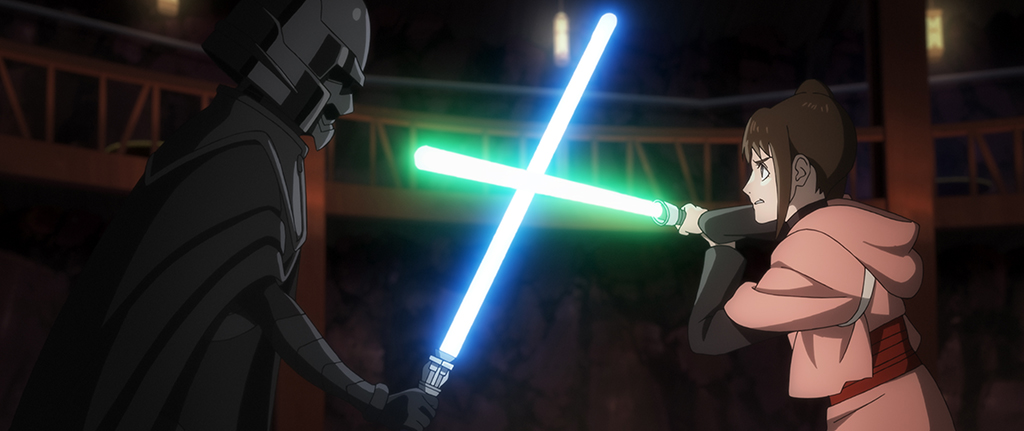
Lightsaber hilts and the color of the light they generated were key visual elements. “For the new lightsaber designs introduced in this series, I consulted with our prop designer and went through a process of trial and error, taking inspiration from traditional Japanese swords [katanas], spears and other weapons,” Tada reveals. “The most crucial part was deciding on the light for the silver saber blade, which represents a state of selfless clarity [mu no kyōchi]. This was necessary because, in this lore, the wielder’s Force shapes the color of the lightsaber blade through the kyber crystal.” The lightsabers then take center stage. “As a fundamental rule, the characters assume a mid-level posture [seigan no kamae] when confronting each other. Once the distance between them closes, I directed the action in a way that incorporated each animator’s individual ideas. Of course, the overall progression of the duel was carefully mapped out during the storyboarding stage.”
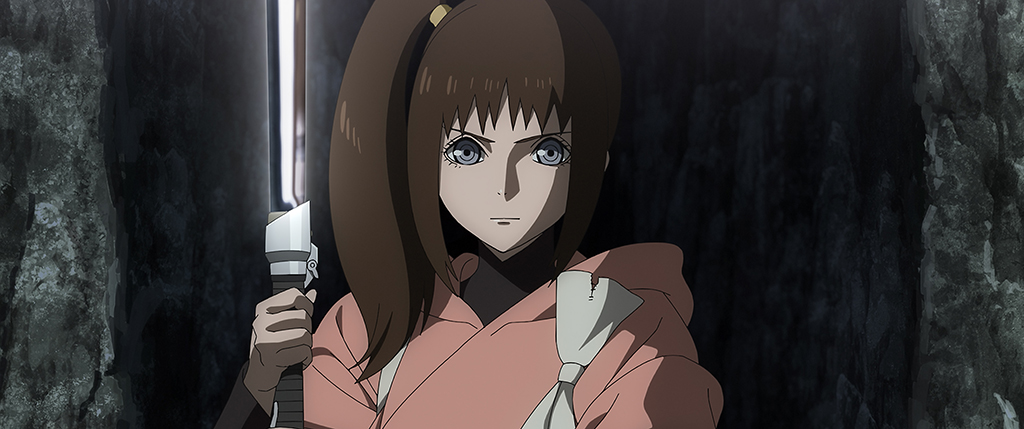
A pastel color palette was used for flashbacks of Zhima. Tada states, “Since this sequence was assigned to a single artist who handled everything from animation and background art to compositing/post-processing, I explained my directorial intent and gave them the freedom to craft an original look.” Kara is featured in the most complex sequence to execute: “The series of shots where Kara’s saber turns red out of anger toward the Nawaam forces and then changes to silver as she fights with a clear, selfless mind.”
The biggest challenge was thematic. “Moving past the binary idea of light versus dark and good versus evil and figuring out how to convincingly portray the Jedi Order as judges or enforcers of global fairness – charismatic heroes akin to Japanese samurai generals,” Kamiyama observes. Picking a favorite shot or sequence is not easy. “All of them!” Tada laughs. “But if I had to choose just one, it would be Episode 108. Kara and the others live in a galaxy imagined to be set roughly 200 years after the era of Luke and Leia. I hope viewers enjoy it as a story about Kara and her companions living in a world where neither the Jedi Order nor the Empire exists.” Joining forces with other creatives and artists was central in making the project a success. “This gem of an anime series was brought to life by many exceptionally talented creators who poured every ounce of their effort into participating in the beloved Star Wars universe,” Kamiyama remarks. “I sincerely hope as many Star Wars fans as possible get to watch and enjoy it.”