By TREVOR HOGG
Images courtesy of Studio Chizu.
By TREVOR HOGG
Images courtesy of Studio Chizu.
A prevailing theme during the 50th Toronto International Film Festival had to do with William Shakespeare’s story about a son seeking vengeance against the uncle who killed his father to usurp the throne of Denmark. There was Hamlet, Hamnet (which deals with the origins of the play) and Scarlet, in which a poisoned Danish princess finds herself in the afterlife determined to assassinate the conniving relative responsible for death of the king and herself.
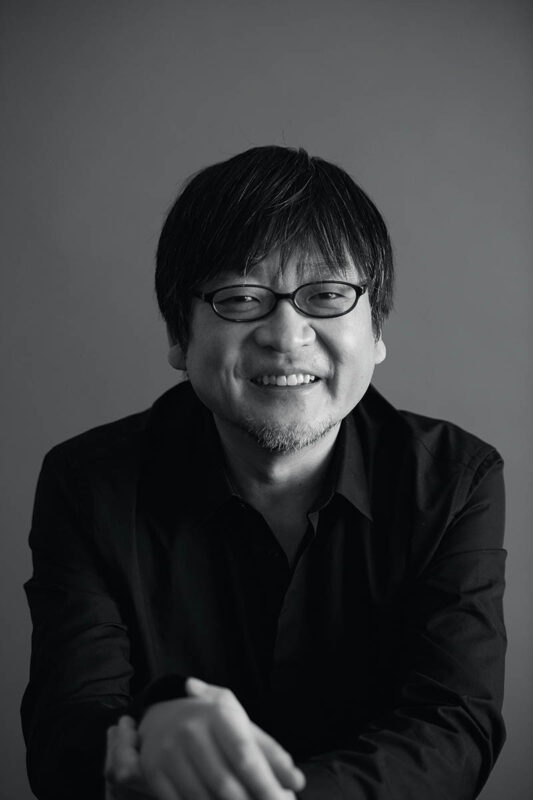
“When I think about Hamlet, the theme of revenge and the difficulty for someone to forgive, I see that a lot in today’s social climate,” explains Mamoru Hosoda, Director and Writer, while attending the North American premiere of Scarlet at TIFF. Studio Chizu, Nippon Television Network Corporation, Kadokawa Corporation, Sony Pictures Entertainment and Toho Co., Ltd. joined forces with Hosoda to make his eighth feature film. “I wanted to interpret Hamlet from 400 years ago and see what that would look like now. Would Hamlet still have to die or would he have more options?”
A great deal of thought went into deciding on the animation style. “2D is a primary form of art in animation in Japan versus 3D, which is more prevalent in Europe and North America,” Hosoda notes. “I thought maybe it would be better to mix these forms of art within Scarlet. I took inspiration from different kinds of styles, like Spider-Verse in the United States or Arcane in Europe. For Scarlet, I wanted to use more of that CG look to make the 2D come to life.” Establishing the hybrid animation template was Belle, which transposed Beauty and the Beast into the metaverse. “I thought I would use a similar approach where I would split the Otherworld into CG style and the modern world into 2D. We often think that CG is futuristic or smart, but how I utilize it in Scarlet is to portray the raw emotion of a human being, which adds a different spin on the use of CG.” The Otherworld transcends time and space, enabling a medieval princess to interact with a modern-day nurse, and challenges the rules of perception in regard to what is actually being seen. “When Belle is riding the whale, we may have assumed that it was inside of the virtual world, but maybe it could have been a reality. What is actually real differs for each audience member. I like to use this kind of spin on imagination in Scarlet. What we see on land might be perceived as water, or what we perceive as water could be the sky. I always like adding the different layers of perception and putting that into the artform and animation.”
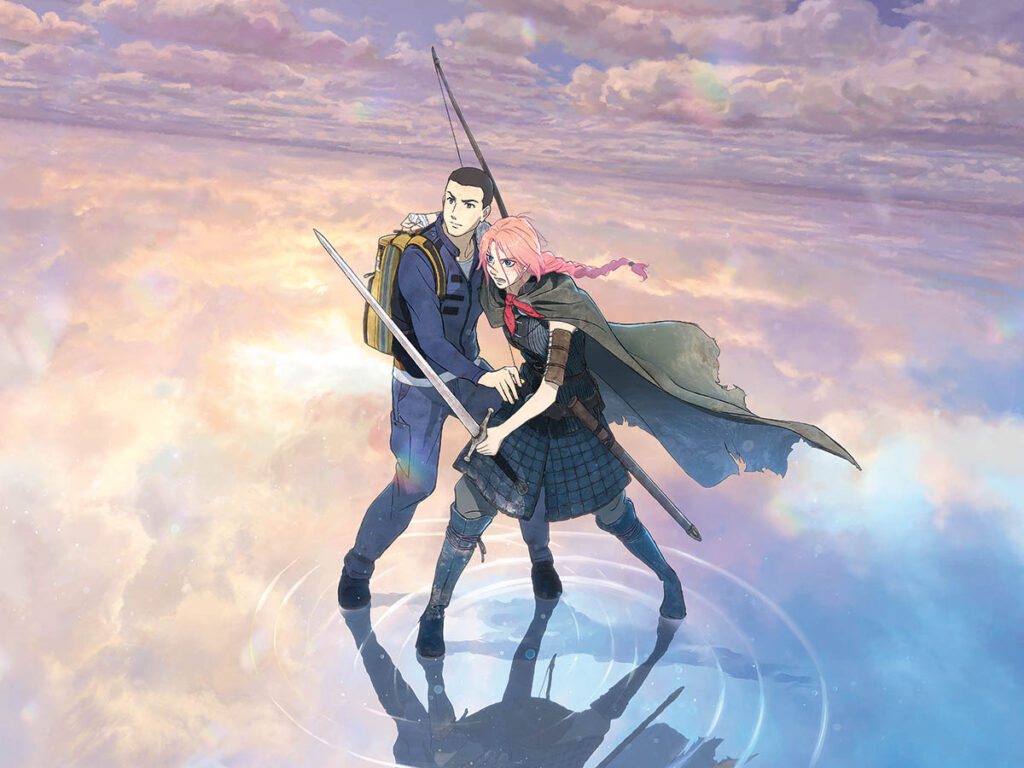
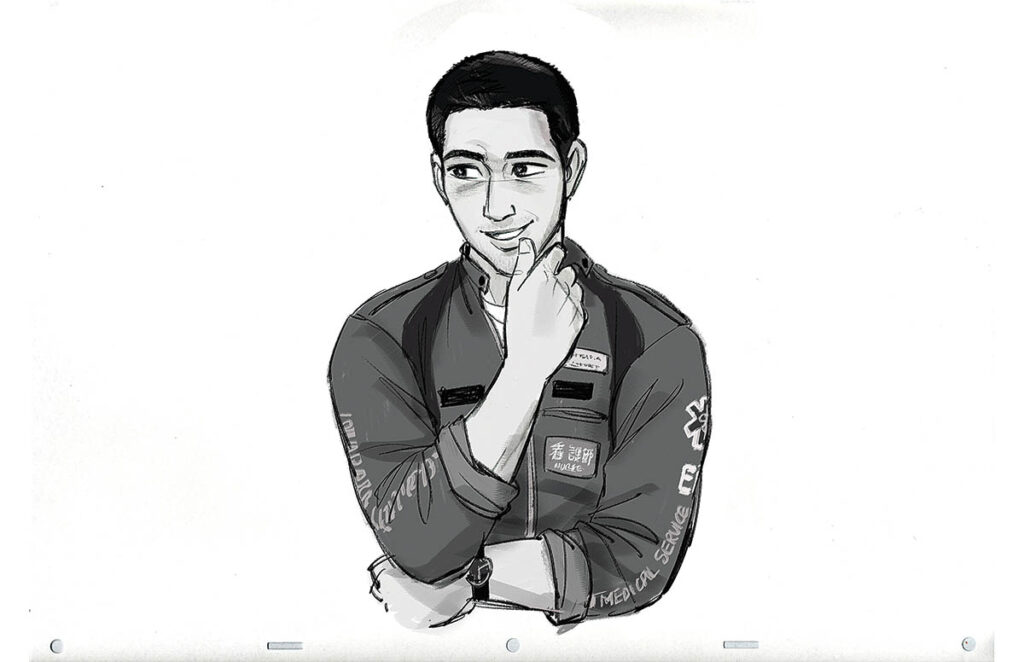
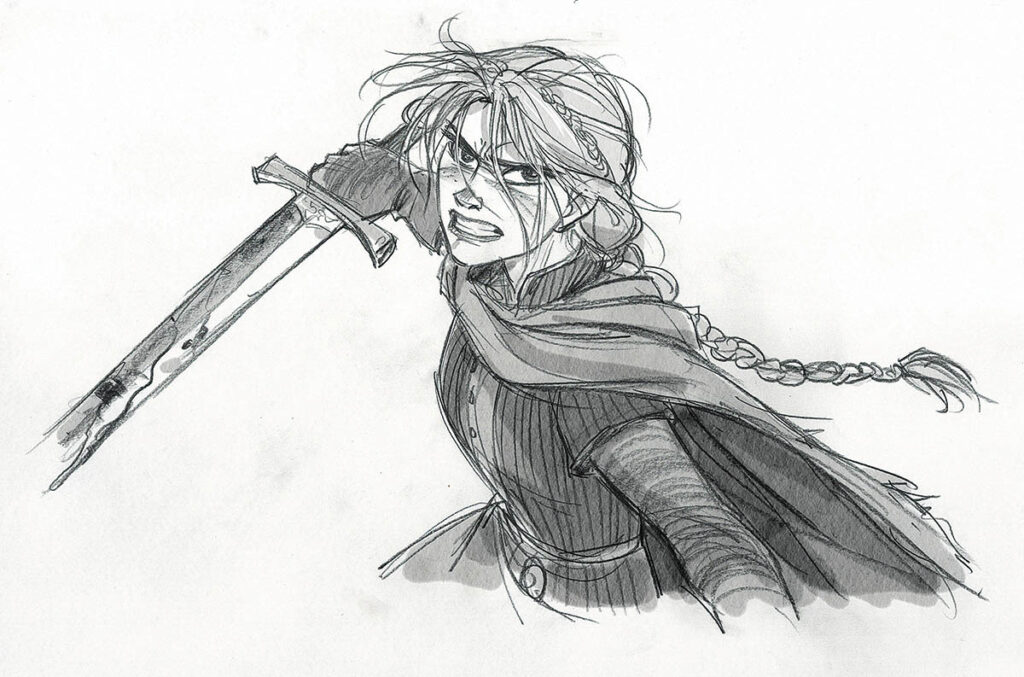
Designing Scarlet was surprisingly straightforward. “This was largely because the director unexpectedly suggested using the design from his previous film, Belle, almost entirely as-is,” states Jin Kim, Character Designer. “The main reason was probably that Belle and Scarlet share significant character traits.” Extensive research was conducted. “For this project, I researched medieval clothing, armor, swords and hairstyle. I also referenced many live-action films based on Hamlet. For Hijiri, I needed to study various styles of nurse or paramedic uniforms and the traditional Japanese bow he would use. To design his well-built physique and attractive face, the first image that came to mind was Shohei Ohtani, the world-famous baseball player for the Los Angeles Dodgers. Even in the final design, you might sense a slight resemblance to him, except for the hairstyle. To further contrast the characteristics of the two characters, Scarlet was given very messy hair and a complex silhouette, while Hijiri was given a short haircut and a simple body silhouette,” Kim notes.
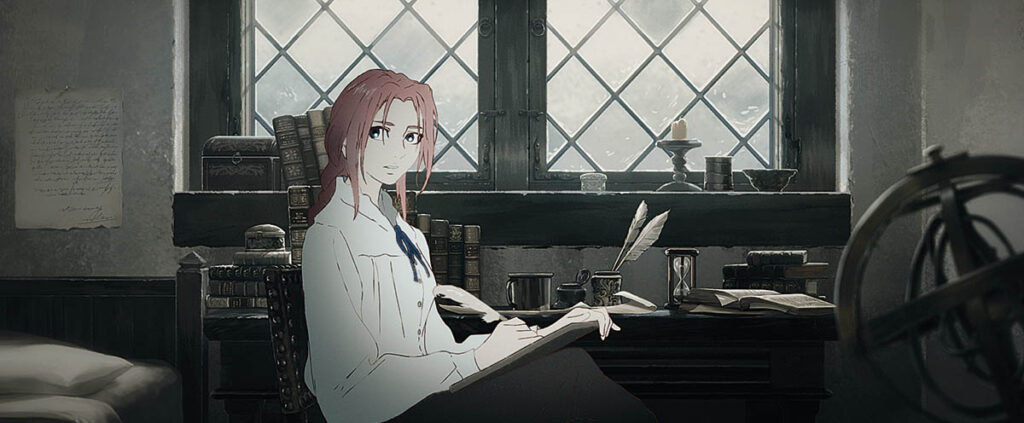
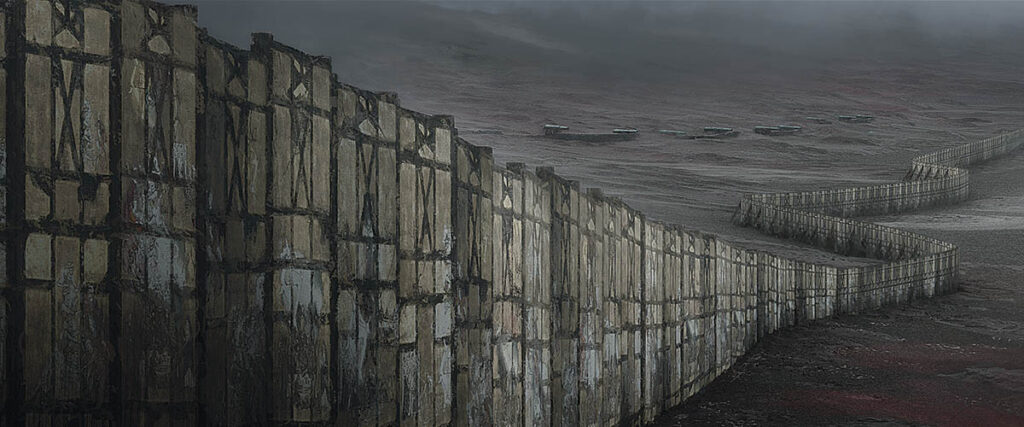
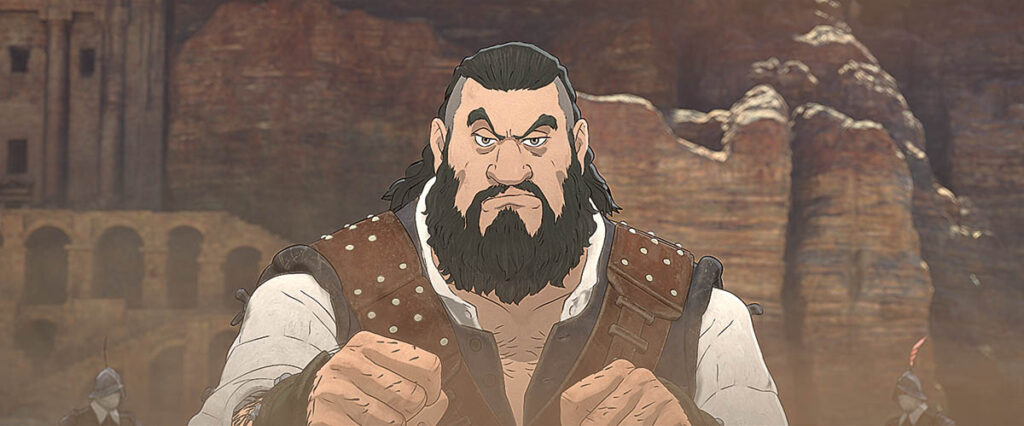
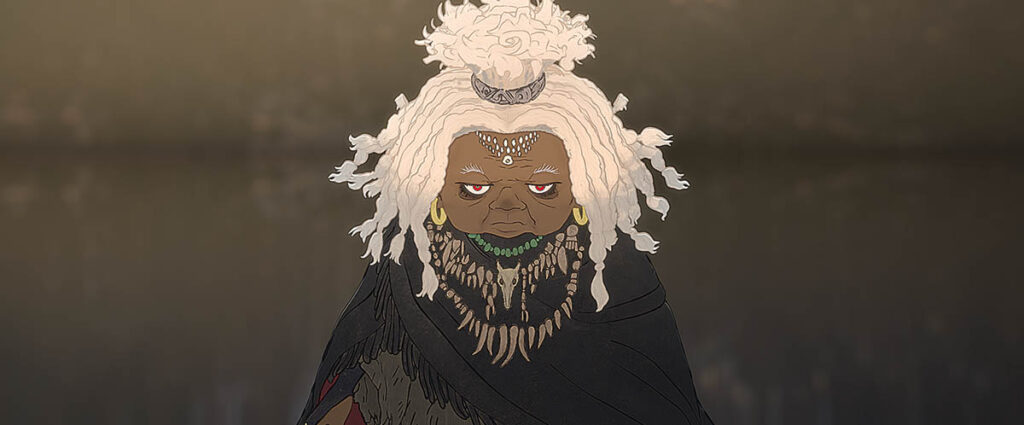
Conceptualizing the supporting characters varied in difficulty. “It was enjoyable work to differentiate the various types of male characters, but for some characters, I couldn’t see the right approach and it took time,” remarks Tadahiro Uesugi, Character Designer and Production Designer. “Amlet resembles his younger brother Claudius, yet his personality is the complete opposite. My initial conception of Gertrude was influenced by past films and such, which differed from the director’s vision. The Mysterious Old Woman allowed for many interpretations, so it took time to align our visions.” The theme of revenge was kept in mind. “Since there are many antagonists, I aimed to make them appear more hateful and formidable as enemies.” The biggest design challenge was not character related. Uesugi states, “It is the gate to the unseen place. As the entrance to heaven, I had to consider what design would be convincing. If the design were just odd, it would make the entire story seem ridiculous. It must maintain a level of realism, yet be compelling, and not be a place beyond imagination.”
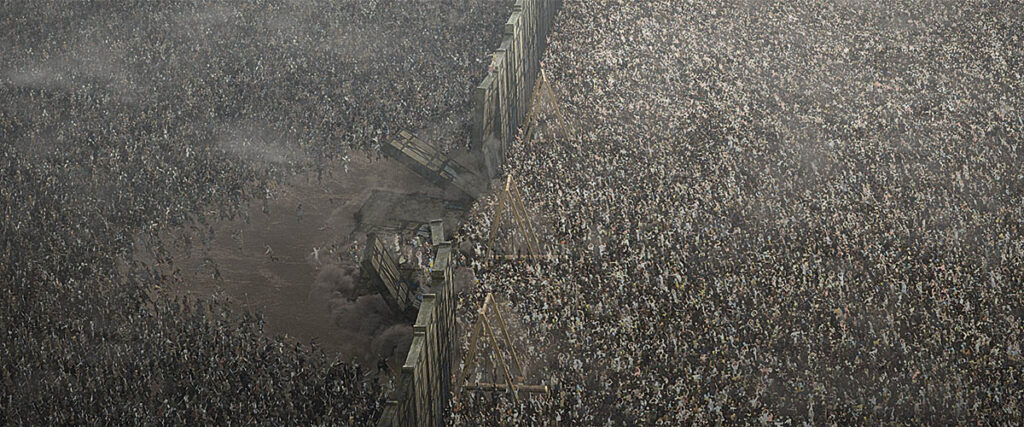
Motion was treated differently this time around. “While the director often used 8fps before, this time 12 frames per second were more common to match the smoothness of the CG,” observes Takaaki Yamashita, Animation Director. “Belle had about equal CG and hand-drawn animation, but it used eight frames per second more often. Since Belle’s U world and Suzu’s reality existed in different dimensions, and Suzu and Belle were distinct characters, matching frames wasn’t necessary. This time, however, while the world changes, Scarlet remains the same character. I think the director wanted to maintain continuity in the smoothness of the movement.” The basic direction was laid out in the storyboards. “More often than not, it was the content of the shot itself rather than the character that influenced the posing.” Crowds were complex to execute. “Throughout the entire film, not just specific scenes, there were an overwhelming number of crowd shots that were by far the most complex. I truly admire how the key animators meticulously drew each and every one by hand,” Yamashita says.
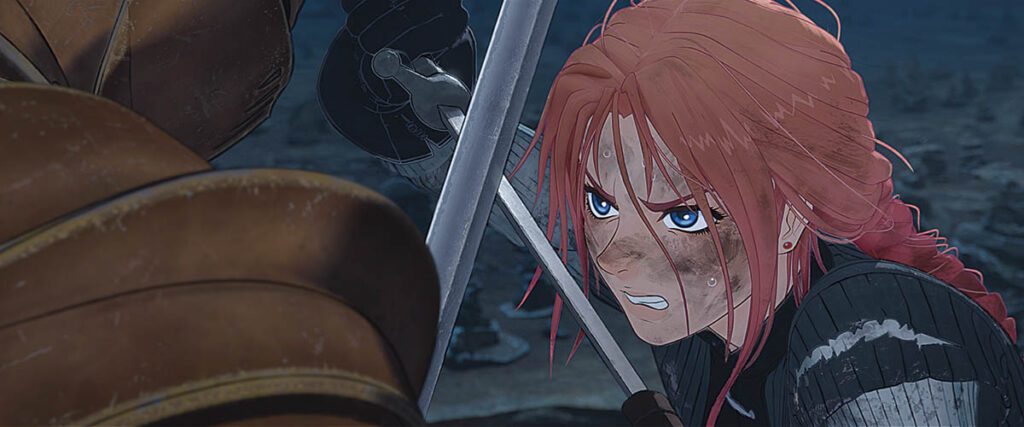
Stuntvis and motion capture assisted with the dance and battle scenes. “For the action scenes, Kensuke Sonomura, the Stunt Coordinator, supervised the creation of live-action video storyboards,” states Yasushi Kawamura, CG Director. “For the dance scenes, Tomohiko Tsujimoto oversaw the choreography, and motion capture was conducted under the director’s supervision. Afterwards, the animators adjusted the movements to resemble traditional 2D animation.” The best of 2D and 3D animation were applied to get the desired form of emotional expression. “Subtle emotional cues, like the delicate movement of the eyes and eyebrows or the slight shifts in the mouth and shoulders to convey breathing or pain, are techniques rarely used in traditional hand-drawn animation, but they are areas where CG excels. At the same time, we also incorporated traditional animation techniques such as held poses, intentional omissions, and animating by 12 or 8 frames per second. These methods rely on the viewer’s imagination to fill in the gaps, a hallmark of classic anime expression. By fusing these two techniques, CG’s subtle precision and the brain’s ability to fill in expressive gaps, we were able to achieve a distinctive style of facial animation in this film that balances delicate nuance with suggestive abstraction.”
Scarlet went through the most revisions because of her wardrobe and continuity reasons. “Her outfit changes multiple times throughout the film, and she accumulates dirt and injuries during battles, so we had to create a wide range of model variations,” remarks Ryô Horibe, CG Director. “Her companion on the journey, Hijiri, also posed unique challenges; his simple shaved hairstyle made it particularly challenging to balance the proportions of his face and head, requiring numerous adjustments and refinements.” There were no major problems when modeling the dragon that dominates the sky. “In order to match the silhouettes depicted in the storyboard, a single model was not sufficient, and we had to adjust its shape for each shot. This dragon is an enormous creature, stretching several kilometers in length, so we had to pay close attention to many aspects, such as its movement speed, the size and motion of the surrounding clouds and the subtle atmospheric gradients, during compositing to convey depth and scale. Cloud placement and layout, in particular, received extensive feedback from the director, and we made numerous revisions accordingly.”
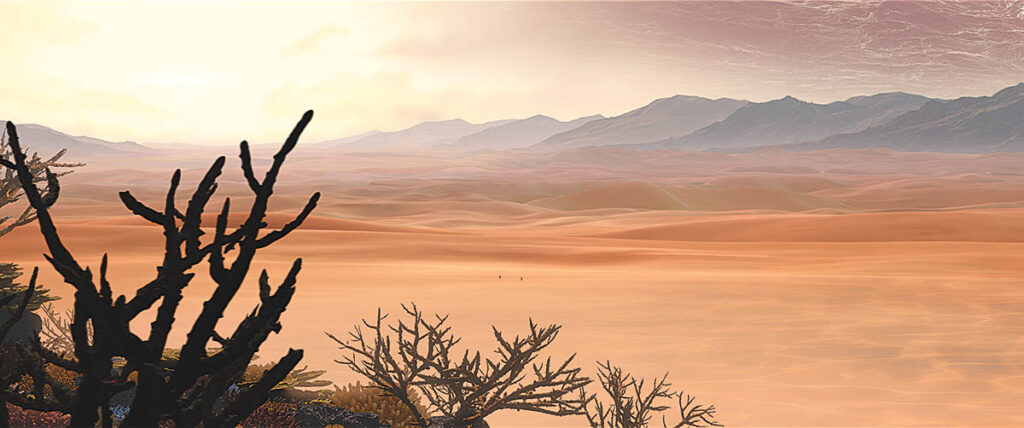
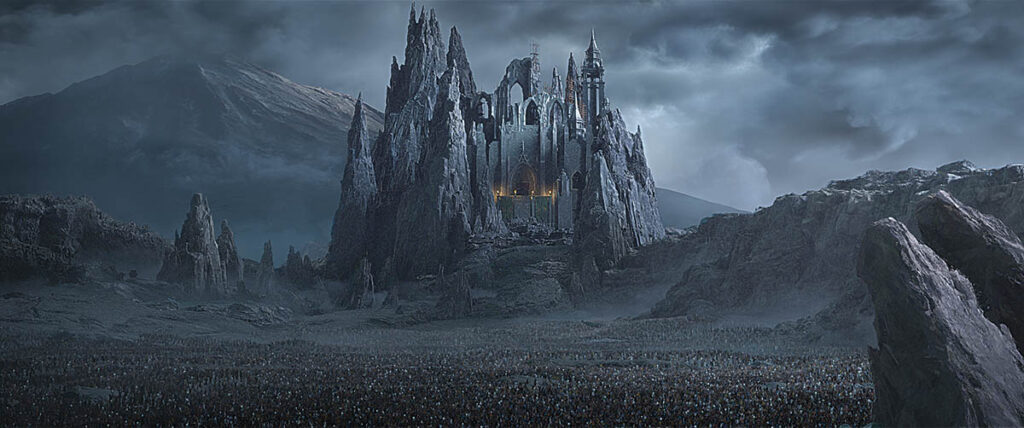
CG was relied on to create the Otherworld except for a few parts. “Since the environment features many natural landscapes such as rocky terrains, we were able to effectively utilize Megascan’s assets,” remarks Yôhei Shimozawa, CG Director. “For deserts and uniquely shaped rocks, procedural modeling with Houdini proved especially useful, allowing us to efficiently produce numerous cuts within the same location. When it came to animation, particularly in action scenes, we defined the stage in 3D and roughly determined the camera positions for each cut in advance. This approach helped streamline the animation workflow and made the process smoother.” Rough previs animation was created for the wormhole sequence. Since the sequence relied heavily on visual effects and had to sustain viewer interest over a long duration, we had to be creative, especially because the director prohibited any swaying motion to avoid causing motion sickness. We designed the visuals so that flames would gradually transform into various elements, eventually becoming abstract beams of light, aiming to convey a sense of super-human speed. We also varied the spatial scale depending on the elements used. The production was based in Houdini, with additional use of After Effects plug-ins such as Trapcode Tao and Mir. Multiple artists were responsible for different components, so we paid close attention to the assembly process.”
Breaking from tradition was the way the imagery was composited. “Previous Studio Chizu works featured a ‘shadowless’ look with relatively light compositing, allowing the cell and background materials to appear largely unaltered,” explains Akiko Saito, Compositing Director. “I believed this project would follow that approach, but the director wanted a different expression. While keeping the fundamental animation techniques unchanged, I was asked to create a different visual style. The challenge was determining what techniques to use for this new look.” A certain key term described the visual aesthetic for 16th century Denmark. “During screen tests where both the hand-drawn and CG parts were previewed simultaneously, we held discussions and then finalized decisions after further talks with the director. The director initially suggested the keyword ‘like watching a medieval documentary film.’ Using that as a hint, I aimed for a simple yet densely packed visual style. While maintaining our usual aesthetic, I consciously pursued a slightly grainy look even within the cel-shaded look.” The opening scene was treated as archival footage. Saito remarks, “The grainy, rough texture of the image conveys Scarlet’s fixation on vengeance. In contrast, the final scene, where she has come to terms with her feelings and appears refreshed, minimizes grain processing to express this difference. The final scene also felt like a return to the ‘usual Studio Chizu style.’”
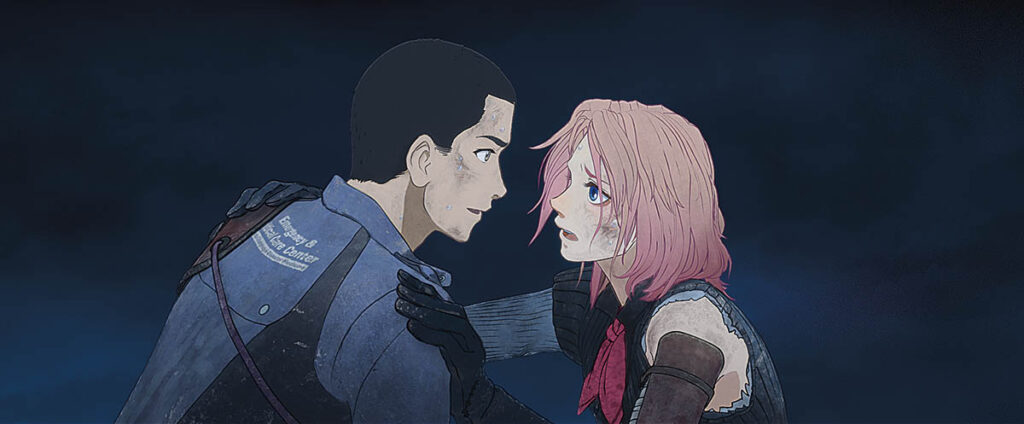
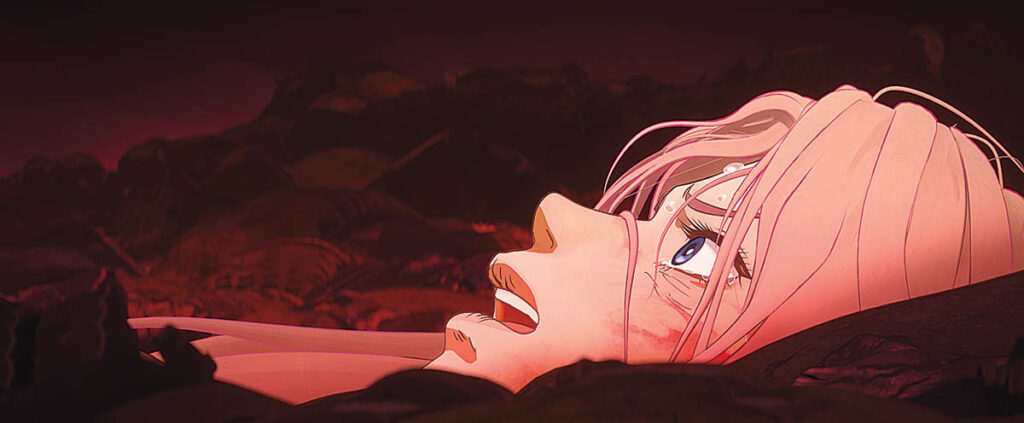
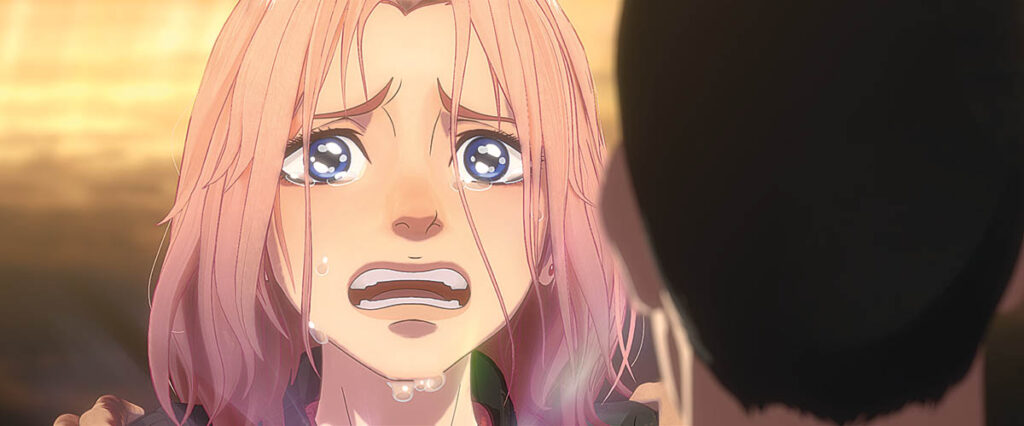
An incredible amount of care went into crafting every single shot in order to meet Hosoda’s vision. “If I had to pick a few highlights, I’d point to the early horizontal shot in the red-hued scene, where the princess’s expression of sorrow and despair is especially striking,” Kawamura states. “The action sequences featuring the princess and the soldiers, as well as the horse scene in the middle of the film, are also visually dynamic and worth noting. The vast desert and barren landscapes of the Land of the Dead, evocative of Lawrence of Arabia, offer a powerful road-movie aesthetic.” Kawamura continues, “In the latter half of the film, the subtle emotional shifts between the princess and Hijiri are beautifully portrayed through a series of intimate bust shots and a memorable dance sequence. Honestly, the list could go on and on, but the crowd scenes, the volcanic eruption, the stairway in the sky, the lightning and the dragon are all spectacular and packed with visual impact. In the end, I’ve pretty much mentioned most of the sequences!”
Of all the characters, the protagonist is the most fascinating. “If I had to choose, I would want to meet Scarlet,” Kim notes. “Of course, it’s an adaptation of Hamlet’s story, but she is essentially Hamlet. Who wouldn’t want to meet a character like Hamlet? I want to meet her and comfort her for the anguish and suffering she endured. I pay my respects to director Hosoda. He conceived and executed the idea of adapting Shakespeare’s classic Hamlet into an animated film. Many directors likely never even considered such a thing.”