By TREVOR HOGG

By TREVOR HOGG
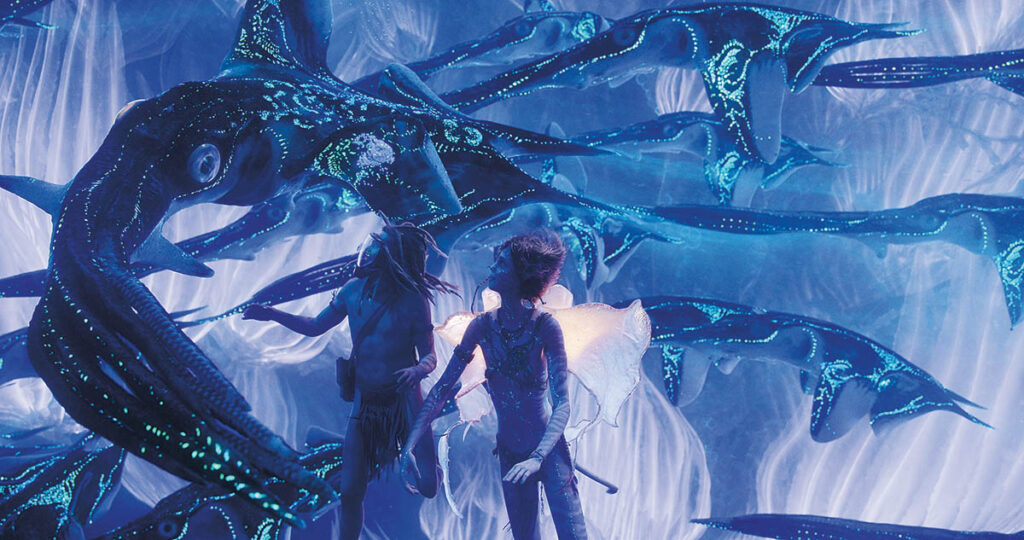
Creatures are considered bread-and-butter visual effects work, whether the request is photorealistic or stylized. While the pipeline is updated to accommodate technological advances, such as AI-enhanced motion development or the use of game engines for previs, the fundamentals remain the same: to create something that can believably perform within the world it inhabits.
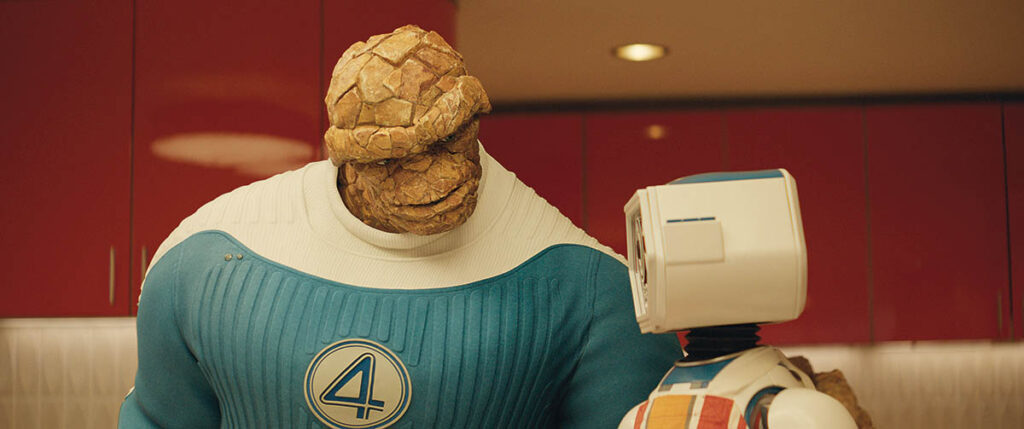
Every creature needs to have its own history and a reason to exist. “It is important to understand how the creature came about, what life experience it has had so far, and you want to show this story in its details,” remarks Jan Philip Cramer, Visual Effects Supervisor at Digital Domain. “It is essential to have a good muscle/deformation solution. This goes hand in hand with a fur/ hair system. In addition, it helps to have a good understanding of faces. For our creatures, we tend to have simpler facial setups, but it is a big help to be able to utilize our human face setups [Thing and Thanos]. At Digital Domain, all downstream departments, after animation, work in Houdini. This is a great help to integrate the muscle and fur with additional effects for saliva and character-specific ideas, such as fire, acid, or other elements that define the character.”
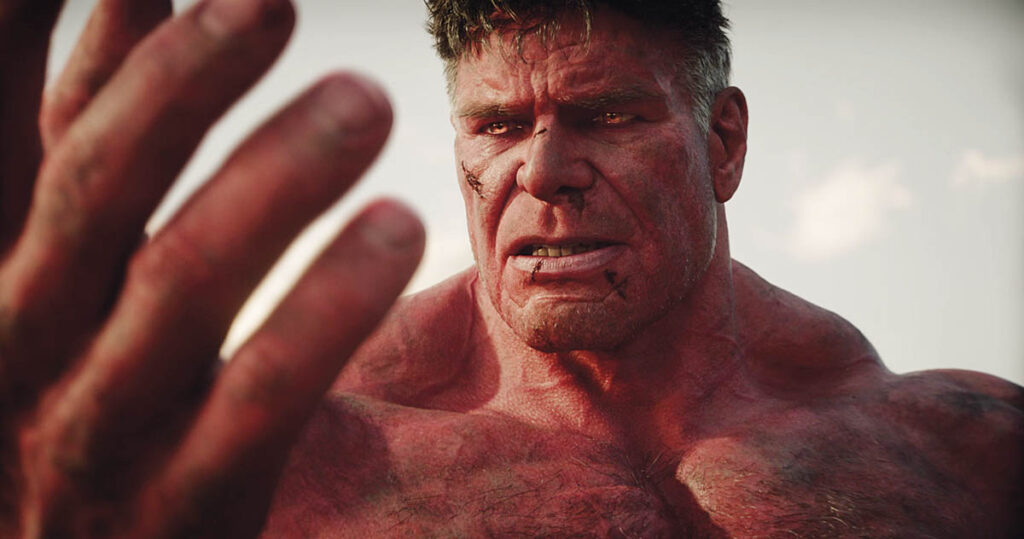
Ricardo Gomez, Creature Supervisor at Digital Domain, concurs with Cramer. “The shift to Houdini and Solaris has also helped streamline the process of creating and implementing complex groom and feather systems for creatures, allowing us to achieve the desired look that was more challenging to produce in the past.” Several types of facial rig systems are deployed. “Which one is being used is usually dictated by the type of performance being given,” notes Ron Miller, Asset Supervisor at Digital Domain. “Creatures will usually leverage a traditional FACS rig, as it’s incredibly flexible and art-directable. However, any performance where the actors’ likeness is essential [She-Hulk and Thanos] will use our Masquerade pipeline or a combo of both.”
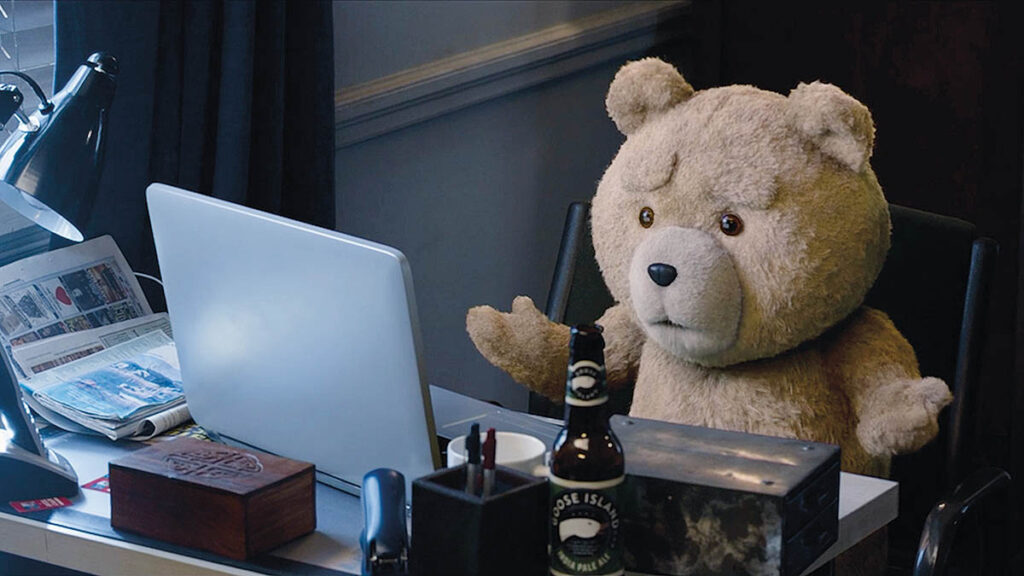
“For most creatures, clear, well-registered anatomical structures that make sense are super important,” states Gios Johnston, Head of Creatures and Virtual Art Department at Wētā FX. “We want these structures to be physically functional, whether for animation, articulation, skin deformation, or shading and lighting purposes. For example, we will often go through a few iterations, making sure that the anatomy sits where it needs to be to allow an appropriate range of motion. This includes ‘in-motion’ tests to work through locomotion; how heavy a creature might feel or look. We’ll ensure that the anatomical underpinnings will functionally work. For alien and fantastical creatures, this can be an additional challenge! In these cases, we often need to pull from nature to find aspects of bugs, animals, insects, or even plants that we can use to tie back in and make certain aspects of a creature work functionally.” There is room for improvement. “One space we can improve is to strive to provide animators a closer representation of the final product. Animators often must use stripped-down puppet representations for scene performance reasons. Still, we are getting closer to providing accurate skin deformation and even dynamics, allowing animators to finesse performance with better knowledge of how dynamic elements will behave. Historically, there has been a disconnect between what they see when animating and the ‘final’ result. Closing that gap is important. Accelerated simulations that allow creature artists to achieve realistic results faster will enable faster delivery and potentially higher fidelity as well.”
Scheduling and budgets have to be kept in mind. “We are definitely trying to be smarter these days in terms of how much time and money we invest in building assets ahead of time,” remarks Pierre-Loic Hamon, Head of Creatures at Framestore. “The more information we have for the context, the better because it helps us to tune the functionality and the quality of the build to fill those needs. We have a target for what matters, whether it’s the way you see it move or perform, or the angles or proximity to the camera. All of that ends up mattering because we constantly reassess the show’s needs, and we’re on the edge of spot-on, slightly more, or a lot more. Overbuilding happens faster than you think. There are so many levels of making good judgments about where effort is most important. It varies literally from creature to creature and show to show, so you have to be able to adapt. In recent years at Framestore, all the teams have been so strong that we have good artists at all levels and specialties, so we tend to be quite well-tuned. We know what is expected, build to a certain level based on our understanding of those needs, and then refine. The most important aspect of creature-building is the ability to refine continuously, and you want to do this efficiently.”
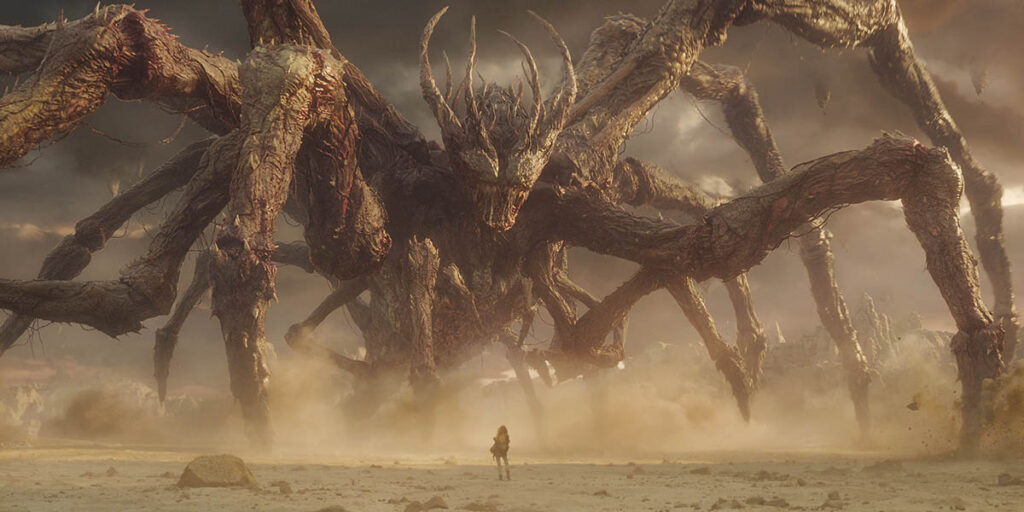
Unreal Engine assisted in choreographing the fight between Harmada and Nemesis in Rebel Moon – Part One: A Child of Fire. “It was actually stunts who came and said, ‘We want to try to use this in Unreal Engine. How can we accomplish this?’” recalls Marcus Taormina, Visual Effects Supervisor for Rebel Moon – Part One: A Child of Fire. “We actually brought in a couple of artists to help with stunts and put them in the stunt stage with computers. An asset was built, but it was a preliminary asset, obviously, a spider you can only deviate so much from in terms of the body shape. We also scanned Jena Malone upfront, placed her body onto the spider, and gave it off to that team. They were able to use Xsens suits or inertial suits, and bring that back through Unreal Engine. Because the space was so small, I laid out a piece of paper, and said, ‘This is how big the spider is.’ Stunts went back, and we had them constrain it to the 3D model of that space, which was being built. All the performances were driven by a stunt performer and handed off to Jena. But it was also true to the set size. For that, we were able to plot out, ‘Where’s our camera going to be?’ They did a couple of crazy sweeping moves, and we’re like, ’That’s a digital shot because we can’t do that camera move.’ But it really helped because that sequence was shot over three days, plus one second unit. It’s a slim time to shoot that amount of action. Once they got it through Unreal Engine and the editor created a cut, I would go through it shot by shot and put all of the breakdown notes on it so we knew, ‘That’s going to be a swivel rig or the cantilever coming down.’ It was much more efficient.”
Animation requires more flexibility in the creature toolset than live-action, which aims for photorealism rather than stylization. “We actually have a modular rigging system that we use for both, but the needs are different,” states Hank Driskill, Head of CG for Feature Animation at Cinesite. “In animation, your character designs themselves are quite caricatured because there’s a shape language to that movie. Part of the fun of animation is that no movie is a cookie-cutter copy of the one before. Every movie has its own set of challenges. There’s a movement style to the movie as well. We do physically-based things, like cloth and hair simulation, but we do them on characters that don’t move in physically correct ways. In animation, there tends to be more punctuated motion, so characters accelerate from a stop and come to a stop in non-physical, non-realistic ways; that can play havoc with things such as simulation. The characters have a foundation in reality, but if you put them against reality, you see there are distinct differences.”
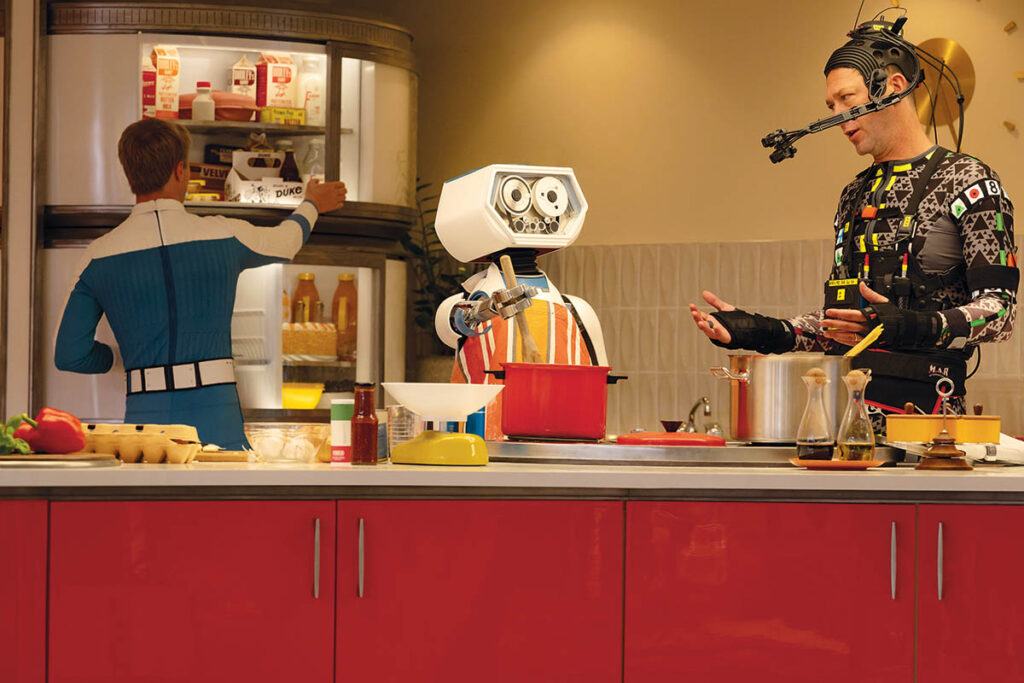
AI and machine learning help maintain consistency in how characters and creatures are animated. Driskill says, “When I was at Blue Sky Studios, we built out a rigging thing where the riggers built their controls for the characters exactly the same way. There is a set of deformers and a whole bunch of mathematical stuff that warp the character frame by frame as the animators toggle through their controls. The set of controls the animators were presented with was exactly the same. In between those two, an AI was trained to understand how that rig was behaving, so that when you moved a particular control, it knew what it did to that mesh, that character shape, and then the AI replaced the rig. While the individual people’s jobs were exactly the same, the rig was literally 20, 30, 50 times faster.”
Changes are inevitable and can be accommodated with a parallel workflow. “When teams can move forward simultaneously, with the right safeguards and communication in place, it becomes much easier to absorb changes without bringing everything to a halt,” remarks Josée Chapdelaine, Head of Groom and CFX at Rodeo FX. “Timeframes are always tight. You cannot afford to spend a week pushing a small modeling change through every stage of the process. A strong creature pipeline is not just about producing beautiful assets; it is about creating a structure that supports collaboration, adaptability and speed while maintaining quality across all departments.” Special effects teams construct physical replicas from the conceptual 3D models, allowing for better integration between practical and digital elements. “This greatly enhances on-set interaction, generating accurate shadows, eye lines and contact points while also serving as a valuable visual reference for the DP to plan lighting better,” states Jean-Sébastien Guillemette, Head of Operations 3D and Assets at Rodeo FX. “The resulting footage then becomes a strong reference for all creature departments, helping to faithfully represent the director’s and DP’s vision as established on set.”
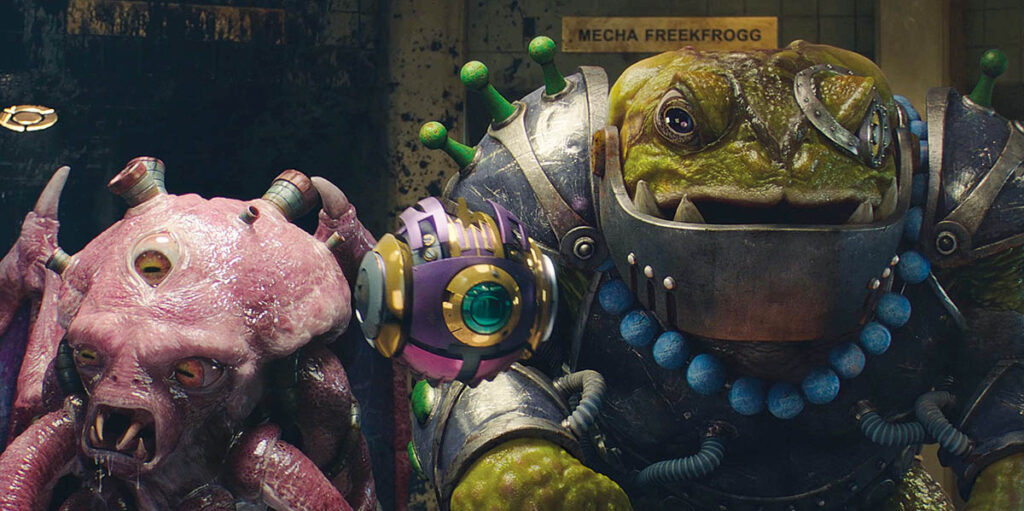
The convergence of physically-based rendering and anatomical simulation effects within a single software package, such as Houdini, has advanced creature work. “This democratization of tools helps us push the creative aspect much further than before,” Guillemette notes. “Our capacity to simulate layered skin, muscles, fat and fur with physically accurate light response has been greatly increased in the past decade. Combined with procedural workflows and more responsive renderers, such as Arnold or Karma, that have shifted creatures from visual spectacles to believable, emotionally-driven characters that integrate seamlessly into live action.”
Performance and facial capture have been a game-changer. “It keeps getting better and better,” notes Mark Dubeau, Senior Art Director at Tippett Studio. “And, as it does, you can preserve more and more of the character of the performer. It does need a lot of post work to nail it, and that needs to be recognized a bit more than it currently is. There’s no way you can map a human performer to a gorilla and have it look natural out of the gate; there’s still a lot of artistry that goes into it. They’re a partner in performance.” Proper rigging provides a solid foundation. “At Tippett, we have developed a robust puppet system in which jiggle and muscle blend shapes that can be activated directly by animators, rather than automatically or through the effects department,” explains Tom Gibbons, Animation Supervisor at Tippett Studio. “This does add time to the animator’s schedule and gives them more responsibility to understand biomechanical and physics-based performance aspects, but it has also allowed us to rely more on artists instead of integrating very expensive software and depending on a technical process that may be more opaque than working directly with a person.”
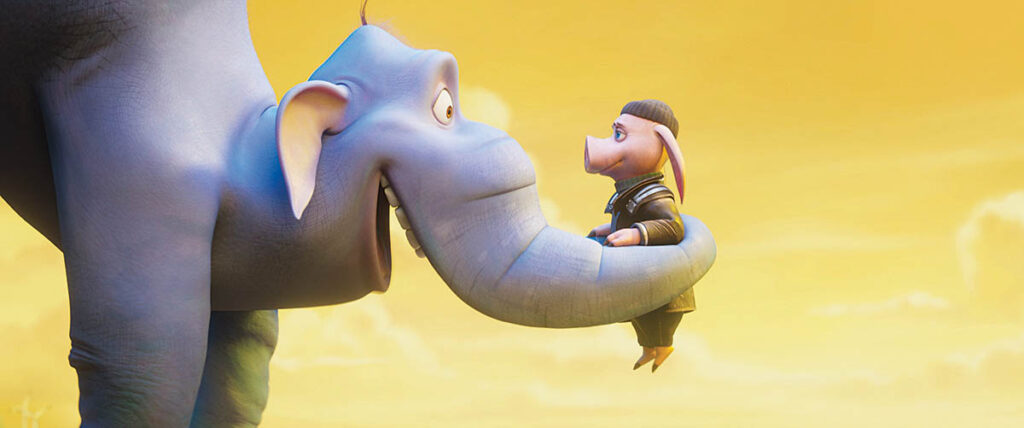
A current trend involves machine learning-driven deformers. “A creature’s skin responds dynamically based on trained models rather than predefined behaviors,” remarks Bala Murugan, AI Research & Development Supervisor at PhantomFX. “We’re also seeing the rise of digital twins; practical puppets scanned with such precision that the transition between physical and digital becomes nearly imperceptible. More broadly, the industry is shifting from building creatures shot-by-shot to designing intelligent systems that allow them to perform consistently across an entire production. In the end, everything is about generating an emotional reaction from the audience.”
“It always starts with story and purpose,” states Anish Sreedhar, Head of CG at PhantomFX. “If you don’t know why the creature exists and what it needs to make the audience feel, the design won’t land. Ultimately, if the audience can describe how the creature feels rather than how it looks, you’ve succeeded.”