Images courtesy of Universal Pictures.

Images courtesy of Universal Pictures.
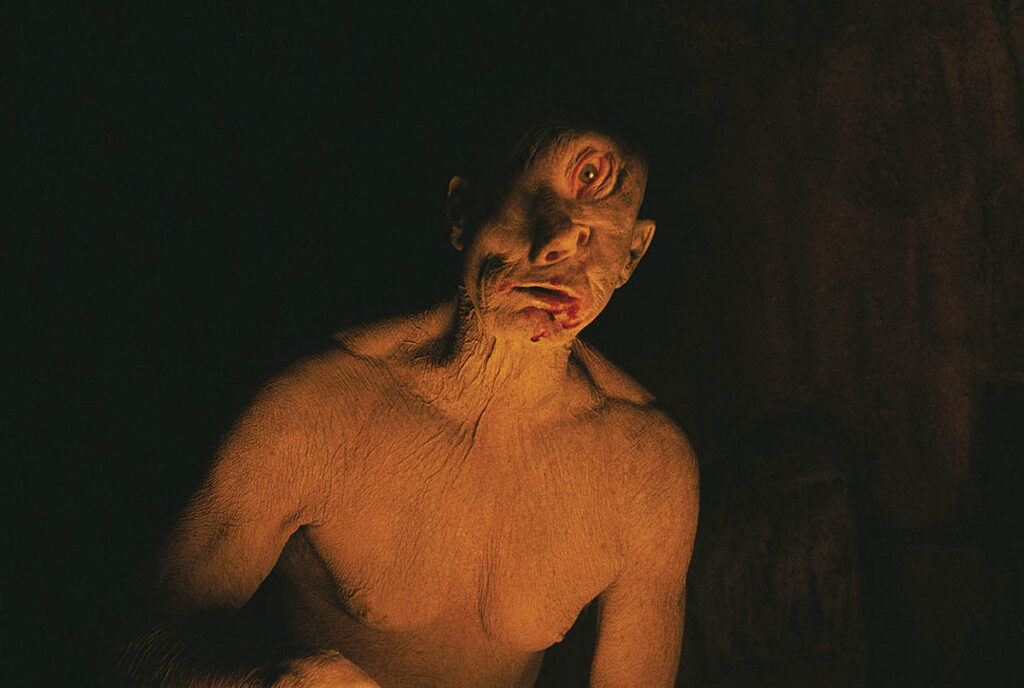
Given that Christopher Nolan has explored cloning in The Prestige, conjured a dream version of Paris that folds into itself in Inception and devoted an entire trilogy to a bat-obsessed billionaire vigilante, the prospect of him venturing into the fantastical world of one-eyed monsters and six-headed creatures hardly feels like a stretch. It was the missed opportunity to direct Troy that laid the foundation for the acclaimed auteur’s eventual adaptation of The Odyssey, an epic tale that echoes a recurring theme in his work: the importance of family. After the Trojan War, Odysseus spends a decade trying to return to his wife Penelope and son Telemachus, enduring a series of island adventures involving gods, monsters and mythical perils that have come to define Greek mythology.
“I’ve always enjoyed science fiction because it’s one of the most cinematic of genres,” states Christopher Nolan, Writer and Director of The Odyssey. “We treated The Odyssey like a science fiction film. We look at the world-building and the fact that we have to create everything. We couldn’t do everything from research because very little is known archeologically and historically of the Bronze Age, so you had to do world-building in the manner of a science fiction film and obviously with visual effects and creatures. The same with the methodology. It was not dissimilar. I’ve always enjoyed horror and the chance to try use that language in the storytelling. I got to do that with The Odyssey.”
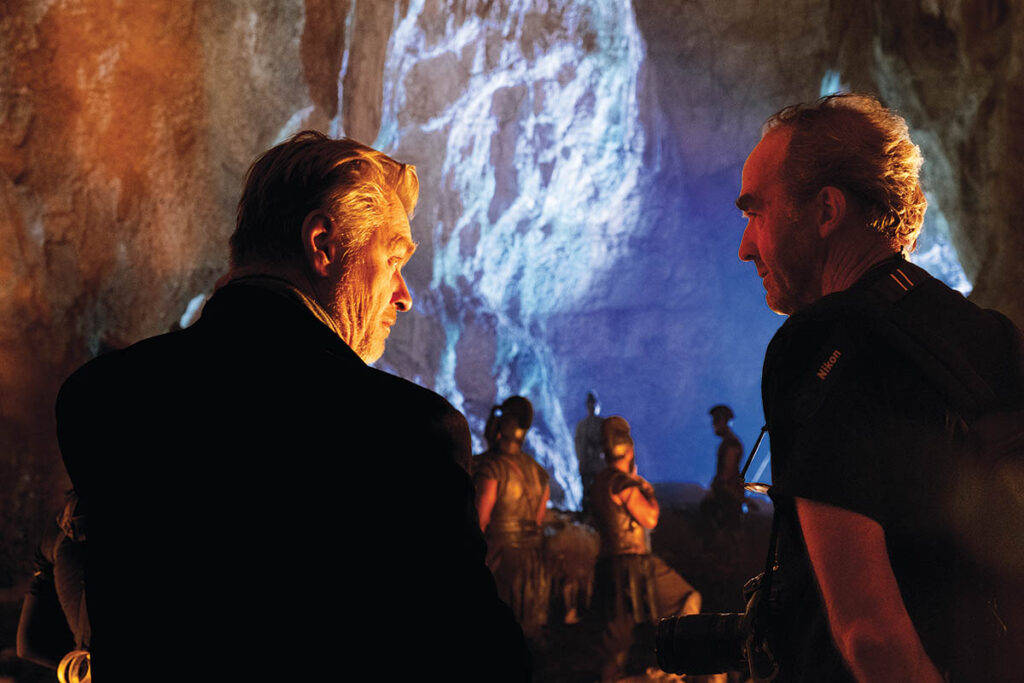
“When it came to the gods and the idea of the divine, what I found in the poem to be the most interesting approach for me was to look at it from the point of view of the human characters,” Nolan explains. “And the human characters encounter the divine in the world around them, in nature, the state of the sea, the wind blowing the pines, thunder and lightning, these things. And they’re not ambiguous in any way. They are evidence of divinity. That relationship with the gods is part of the world that they live in. That was an interesting approach to me because, in the poem, the real encounters with the gods tend to be through the gods disguising themselves as human beings. I wanted to try to have the audience look from the point of view of somebody at that time who is feeling the gods speaking through nature and is perhaps seeing gods represented in the people around them.”
The fantastical elements were embraced visually and narratively. “The challenge for Andrew Jackson [Visual Effects Supervisor] and Scott Fisher [Special Effects Supervisor] and their teams was how to create fantastical imagery within the tone of the rest of the film,” Nolan observes. “That’s the big brass ring of visual effects. That’s when the visual effects and special effects artists are working at their best in creating imagery that is seamless with the rest of the film.” Part of the believability equation is tactility. “Andrew, Scott and I spent a lot of time talking about Ray Harryhausen’s stop-motion or Rick Baker’s makeups or Rob Bottin’s sculptural makeup. The one thing all these different techniques shared is a strong sense of the tactile.” There is also a cinematic truth that needs to be respected. “The audience wants to invest in the story and to believe in The Odyssey. You have to give them a reason to believe.”
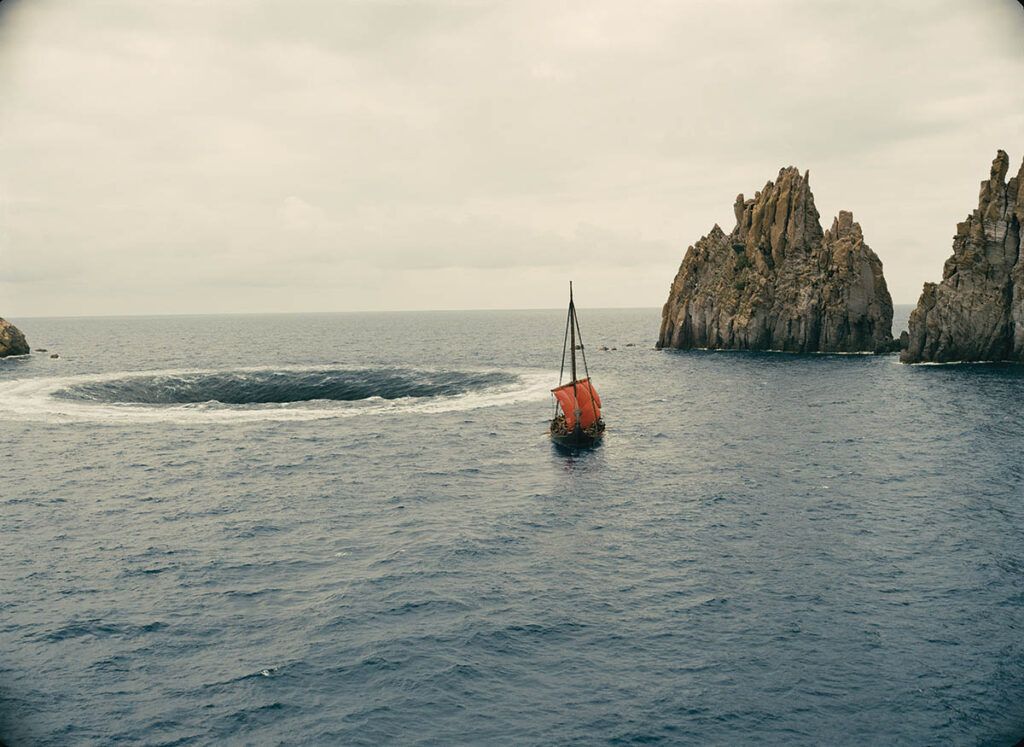
“We wanted everything to be mythological and fantastical, but grounding it so you weren’t thinking twice,” says Ruth De Jong, Production Designer, The Odyssey. “For instance, when you get to Circe’s stone house, or when you land in the woods with the Laestrygonians in Scotland, you aren’t thinking, ‘Wait, Odysseus is no longer in the Mediterranean.’ The goal was to have the audience so embedded in the journey that they’re not even realizing he’s as far north, south, east or west. The point isn’t even to [define] which direction Odysseus is or isn’t going. Based on the IP, it doesn’t tell us a whole lot. No one can tell us where his journey was. There are so many counter opinions and versions. He never left the Med; that’s based on what? Chris wrote his Odyssey, and that is how we were able to come up with these creative freedoms to free us from any ‘We can’t leave the Med.’ Plus, that look for an entire movie would have gotten boring!”
Placing a sunken Trojan Horse on the beach was a deliberate creative choice. “Chris had zero interest in depicting the horse in the common ways you typically saw it on wheels in front of the gate,” De Jong notes. “There was a big interest in him completely rejigging that methodology and [adding] more mystery and happenstance. In terms of the horse’s design, Chris and I leaned into the fact that the Greeks were excellent shipbuilders and wood-workers. They were sea people, and their boats were impeccably built. That’s where the whole concept of building this shiplap Trojan Horse [with] finely tooled head and legs came up. It’s a bit more refined than we’ve seen in the past from various illustrations, books and film interpretations.”
Principal photography took place across Morocco, Greece, Italy, Iceland and Scotland. “It’s less even about the name of the country or as we know it today,” De Jong notes. “Chris and I knew that we wanted varying and specific looks. He had this keen idea about these lodgepole-type pines being as high as the sky, but also going right up to the ocean, which is a visually unique look. You don’t find many forests abutting oceans when you think of the Mediterranean. It just so happened that Scotland gave us that look.” An art department was established in every country. “You had to be disciplined. All the departments essentially became one department. Yes, we had our scope of work within each one, but the crossover with myself, Andrew Jackson, Neil Andrea [Marine Coordinator], Scott Fisher and Hoyte van Hoytema [Cinematography] meant that we were in constant conversation, and all our teams in all those countries were in sync too. That’s the only way I know how to do a film of this scale and scope.”
Special Effects Supervisor Scott Fisher states, “It’s fun for us. It’s a different movie experience working on Chris’s movies because you know you’re going to do a lot of things practically, and then he allows us some leeway to try to figure out the best ways to do it. Andrew Jackson and I collaborate and discuss different ideas and things we have done or that have been done, and whether they would be a good fit for this movie. We work our way through each of the things. All the stuff in Troy, Cyclops’ cave, whirlpool and Scylla, you start breaking each one down into elements we can film. Is it going to be visual effects or a combination of the two? Chris doesn’t like throwing everything to a CG solution. It’s always, ‘Let’s see what we can come up with. Where we can get to practically and then we’ll fix or expand or improve it with the CG option.’”
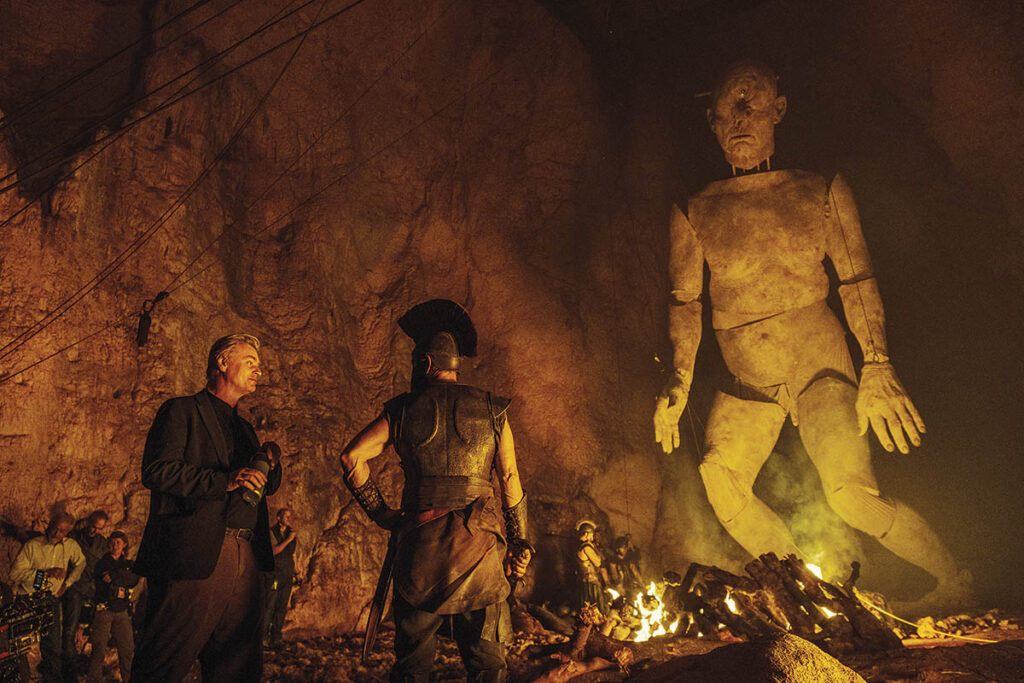
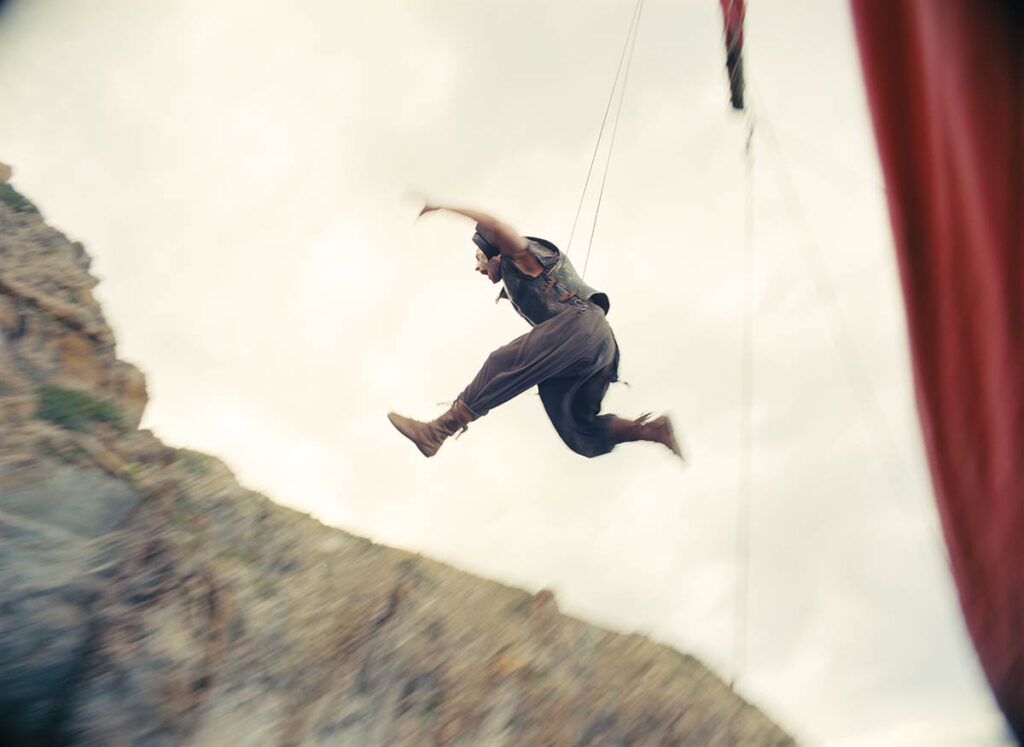
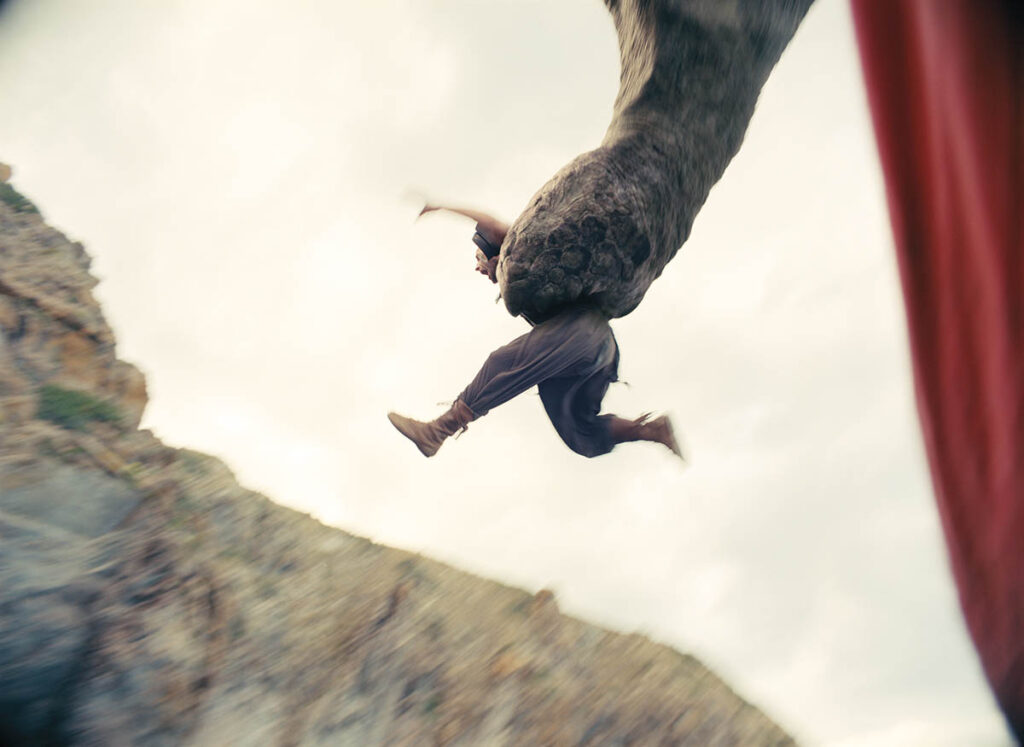
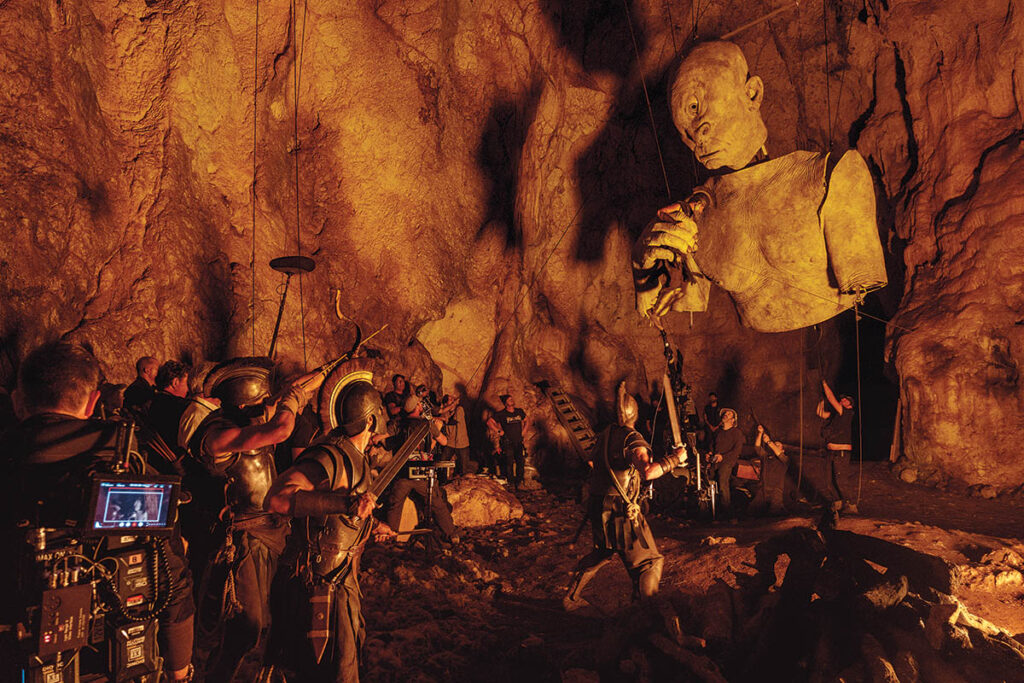
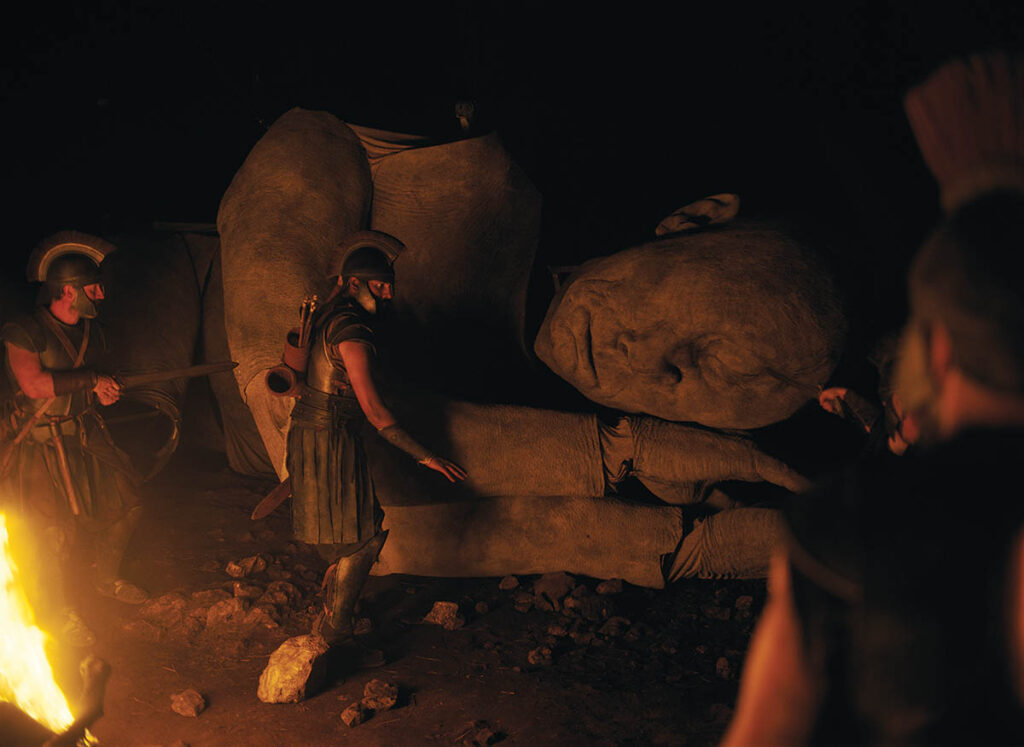
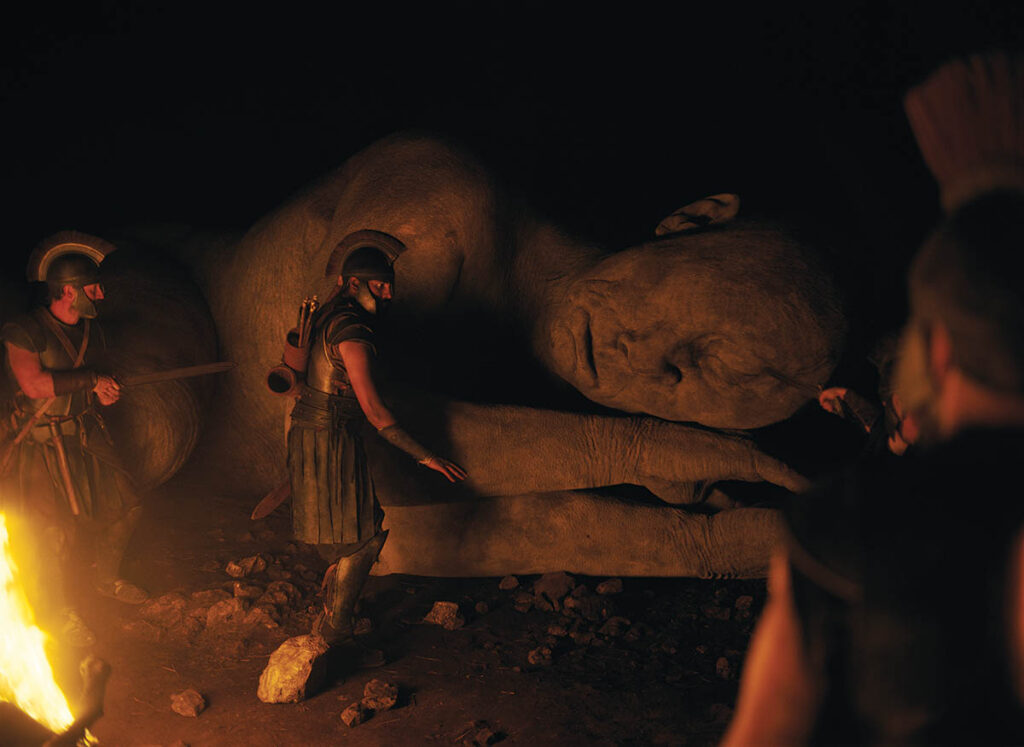
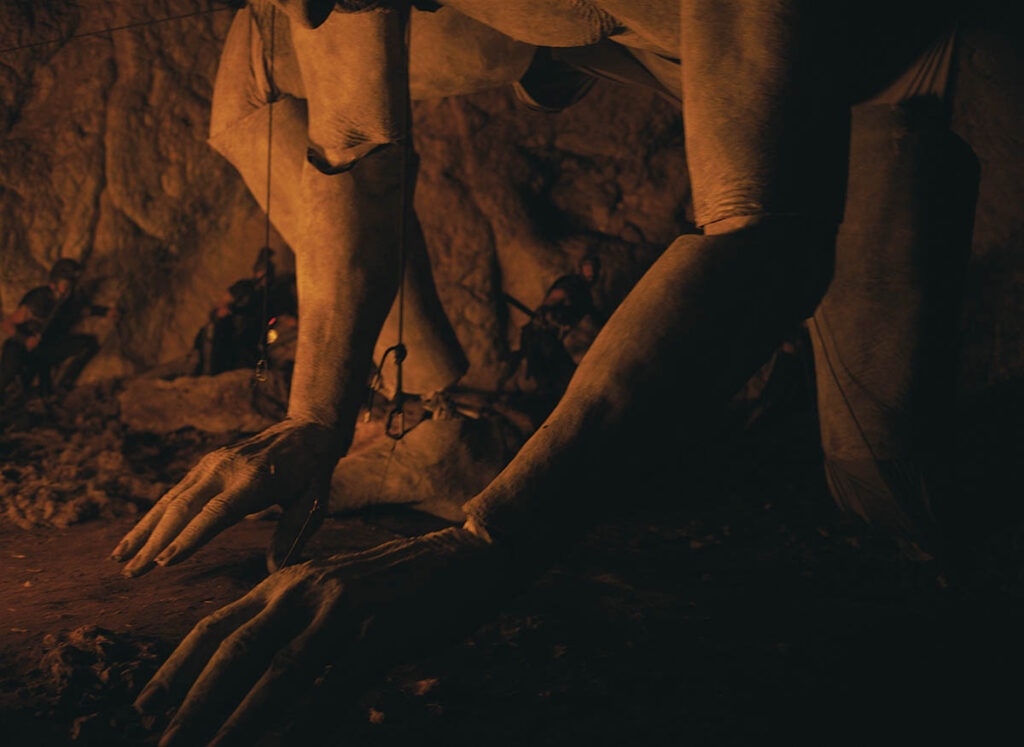
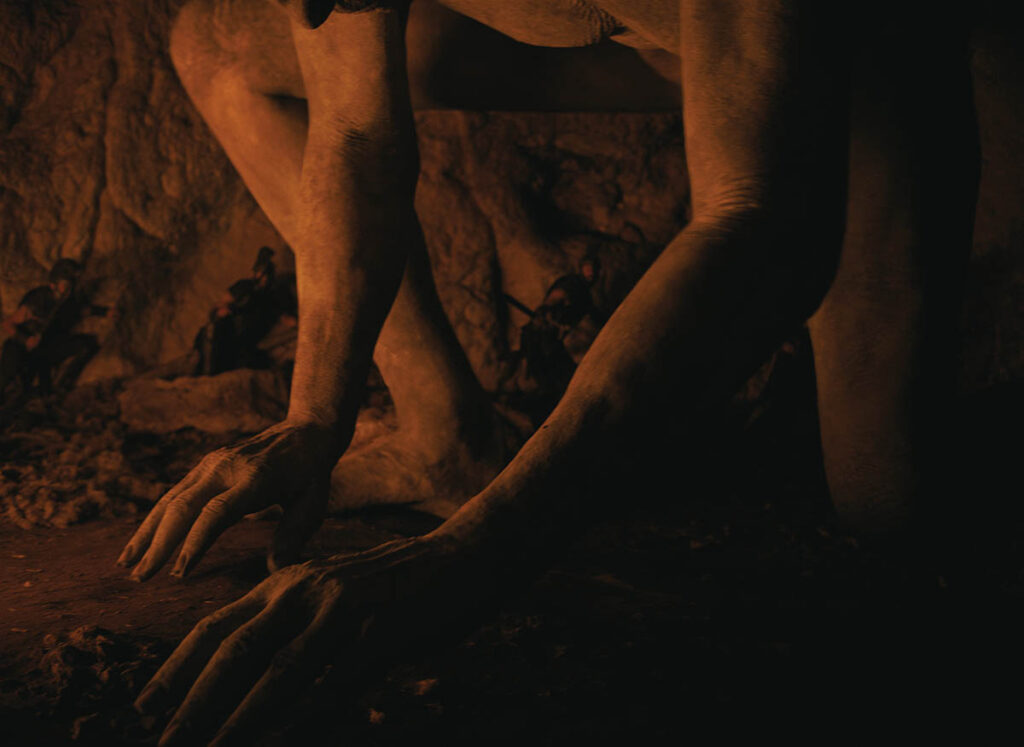
This hybrid methodology was utilized for the Cyclops. “We built a big stick figure that was the correct scale, 36 feet tall, and started with that,” Fisher explains. “It was extremely light, so it was easy to puppeteer. In France, they have these gigantic puppets in parade style. We looked at some of the ways they did that. Guys jumping off ropes and using their weight. As soon as you get something that big, weight becomes a factor. We built it in the lightest, simplest form first, got it moving, and then figured out what we could get from that. When we built the one with skin, dimension and size, obviously the weight went up, but we stuck to our core research of how it would move [using] counterweighting, ropes and guides. Then we built a whole hand for picking up people and feet for specialty things. They were all full-sized. They all needed some CGI fixes and repairs.”
“[I]n the poem, the real encounters with the gods tend to be through the gods disguising themselves as human beings. I wanted to try to have the audience look from the point of view of somebody at that time who is feeling the gods speaking through nature and is perhaps seeing gods represented in the people around them.”
—Christopher Nolan, Writer and Director, The Odyssey
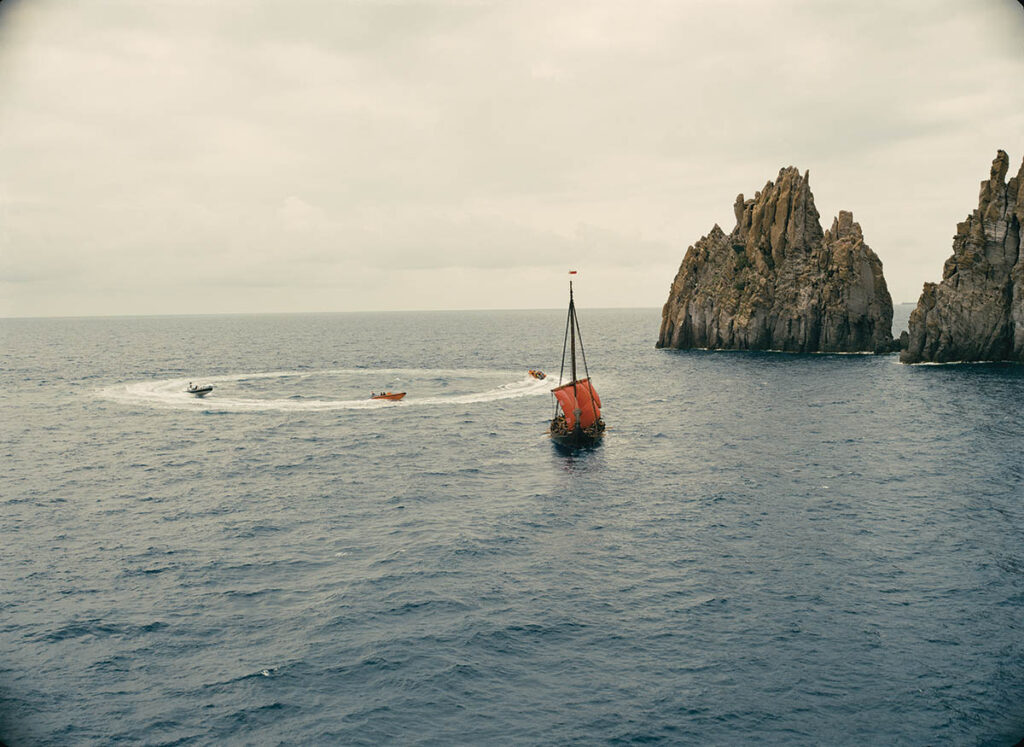
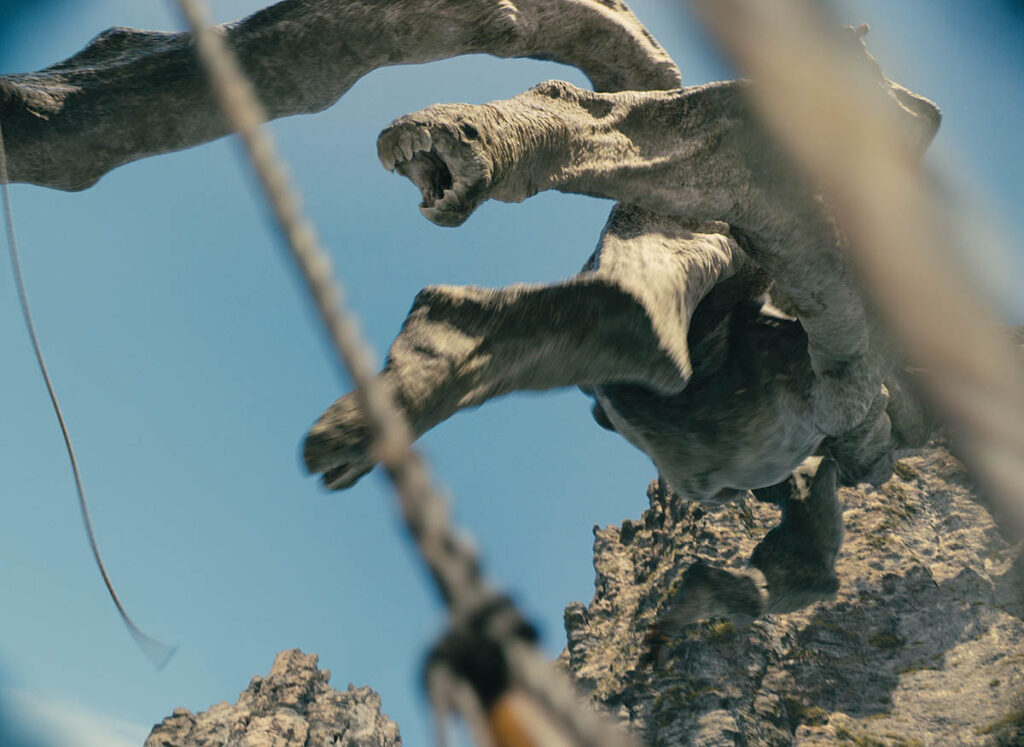
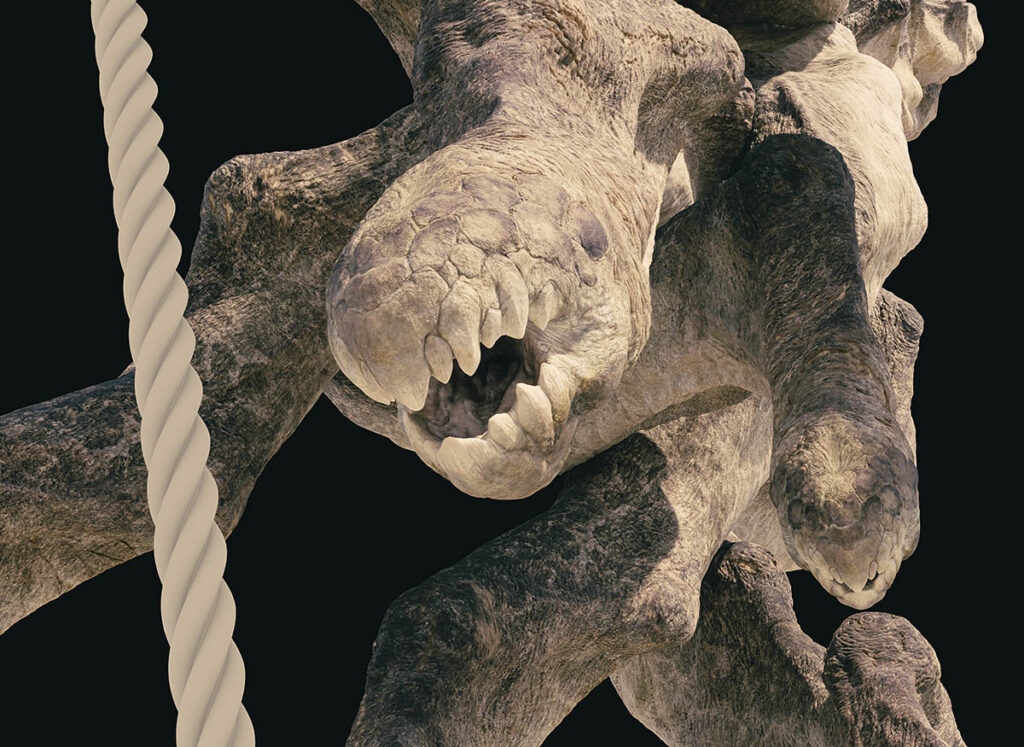
A single practical head was created for the six-headed Scylla. “There was more development on that,” Fisher reveals. “Someone had to figure out what it looked like before we could build the practical thing. Once we built the giant foam puppeteered version, we could work with stunts, use it on wires to grab and pull people, and destroy breakaway items and the boat. We could use that to interact with people because those are the hardest bits to get in CGI.” A practical component was incorporated into the Charybdis, which takes the form of a whirlpool. “It’s all about getting things scaled up to the right proportions for the boat and scene. We did a lot of tests with boats. You see these big ferries and how they churn the water? That’s basically what we did on a bigger scale but in the open ocean. We used a lot of boat-like thrusters to try to get this big disturbance as large-scale as we could in the open ocean.” Water simulations were needed to make the Charybdis look believable. “There are a couple of higher shots where we do see down and how deep the whirlpool is; those were the ones that we affected more with CG.”
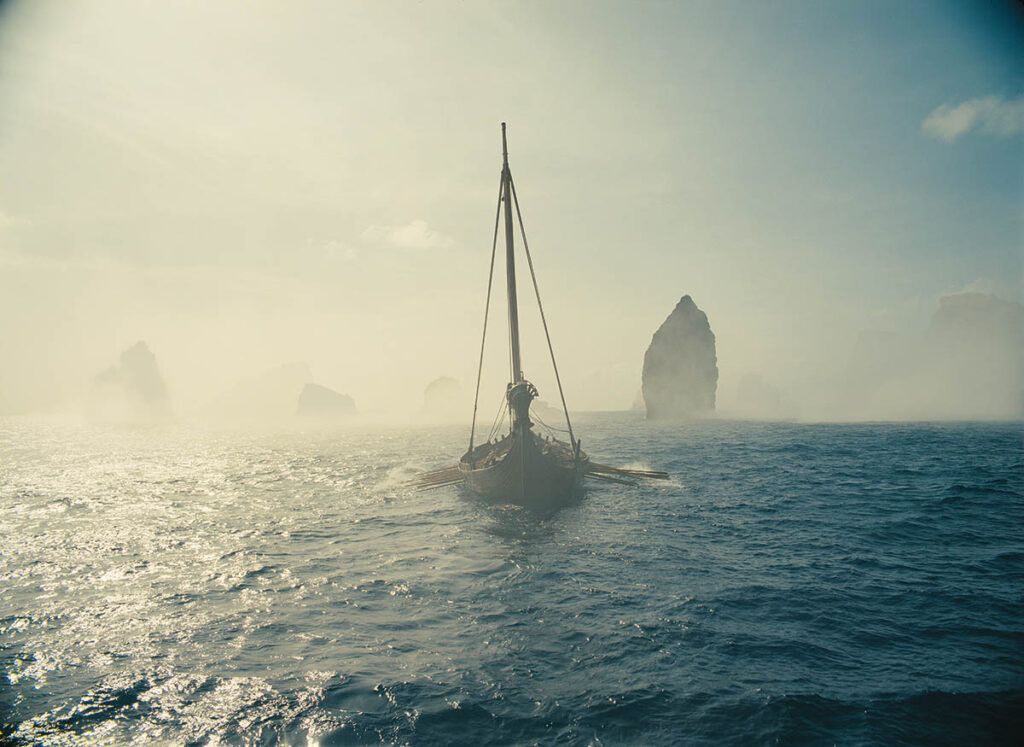
At one point, the Wrath of Zeus causes a violent storm at sea. “Some of the days, we would go out where there was definitely inclement weather, raining, heavy overcast or rough seas,” Fisher shares. “Then we had fireboats, like the big fireboats you see blasting water in New York. Whenever Matt Damon saw the fireboat, which was the main one, he wasn’t happy!” Some tank work was shot at Falls Lake on the Universal Studios Hollywood lot. “We had a six-axis motion base that was underwater with a big section of ship on it. There was some stuff, like the dropping of the mast and the ship breaking; we had to make sure we were able to hit those moments, and they fit in with everything already shot on the open ocean.”
Approximately 400 visual effects shots appear in the final cut of The Odyssey, created by DNEG, with extensive use of postvis. “Because it’s largely 2D work and we have multiple elements, we were experimenting with ways of putting that together to achieve the effects we wanted,” Jackson states. “We do that quite a lot in conjunction with Chris and editorial. It’s more quick versions of the shot. Once we get to the point where Chris is happy, we have to stick exactly to that layout and plan and execute that at a higher level.”
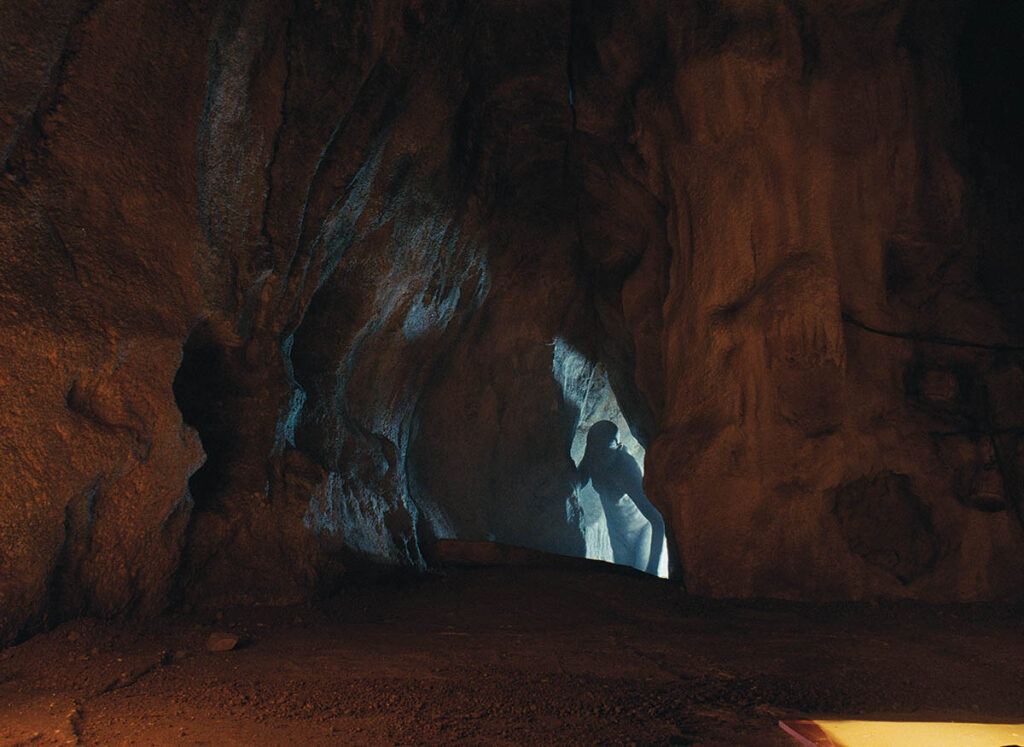
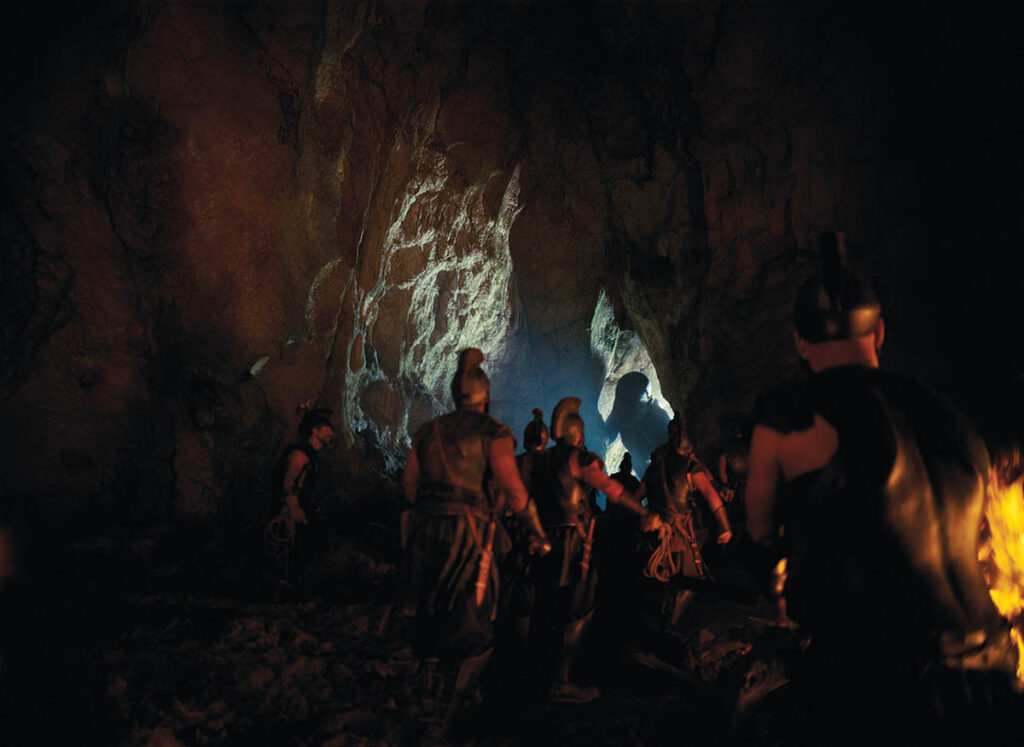
Solving the cyclops was the primary concern for the visual effects team. “Early on, it was going to be filmed at the end of schedule in Los Angeles in a cave set,” Jackson explains. “But then during one of the location surveys, Chris found a cave in Greece that he felt was perfect for the cyclops scene. Because Greece was shooting in February, the shooting schedule for building this puppet moved from six to seven months to two. Everyone was freaking out and saying, ‘This couldn’t be done.’ In hindsight, looking back at it now, that cutting down on the time forced us to cut back on what was possible. It was so lightweight and the joints were very simple. The whole thing moved in a way that would have been quite hard to achieve with a full animatronic version of the same puppet. Some of the action was too complicated for a puppet to do, so we had a person in makeup doing some of that work as well. In some cases, we had to augment the miniature version of the cave to match the full-sized one.”
Crowd simulations were not a necessity. “Chris tends to have enough extras so he doesn’t need any crowd simulations,” Jackson remarks. “We did some work, but it was largely in-camera for the Circe scene where all the men turn into pigs. We built faces that were half pig, half man and could transform in-camera. The whole American Werewolf idea was there, but we hadn’t built and tested that because of the time scale for the whole movie. We were working on how to solve that face transition for a long time during the shoot and trying to come up with solutions. But once we found a solution, we were all happy. There were a couple of face replacements for stuntpeople here and there, but not much. It’s like all the other films I’ve done with Chris where we spend a lot of time finding approaches that give us either a finished effect in-camera or something close to finished in-camera.”
Nolan is not married to a specific methodology, as demonstrated by how the cyclops sequences were assembled. “When my editor, Jennifer Lame, and I were in the edit suite, we actually needed visual effects to do rough composites for all the dailies so we could cut the sequence as if we were cutting the real beast,” Nolan explains. “That presented huge challenges for Andrew and his team to make those composites fast enough and deal with a massive frame count so we could edit with them. It was an unbelievably complex process!” Visual effects are an indispensable tool. “I’ve been a student of visual effects since I was a small boy. I love it. I know an enormous number of things about it. I’ve used it in my work to great effect. My films have won three Oscars for visual effects, which I’m proud of. I’ve worked with amazing visual effects supervisors. Too often, where the confusion comes in is people these days conflate CG with visual effects. Computer graphics is just one part of the spectrum of visual effects techniques that we use.”
“You try not to be self-conscious either about repeating yourself or deliberately not repeating yourself,” Nolan reflects. “You want to do what’s right for each project individually. The relationship between Dunkirk and The Odyssey is interesting because at the end of The Odyssey, it was apparent to me how much I had been influenced in Dunkirk by elements of The Odyssey. Sometimes consciously and sometimes not. For example, the sequence where the guys almost escape and are down in the hull of the ship where everybody is feasting. There’s this ominous sense of them being locked in there. That was specifically me thinking back to the cyclops episode of the poem of The Odyssey. There are commonalities in various points. Not just Dunkirk but in a lot of my work as well. Interstellar, in particular, was another where we were conscious of the parallels with The Odyssey. But one of the things that I love The Odyssey is it embraces all these different stories.”