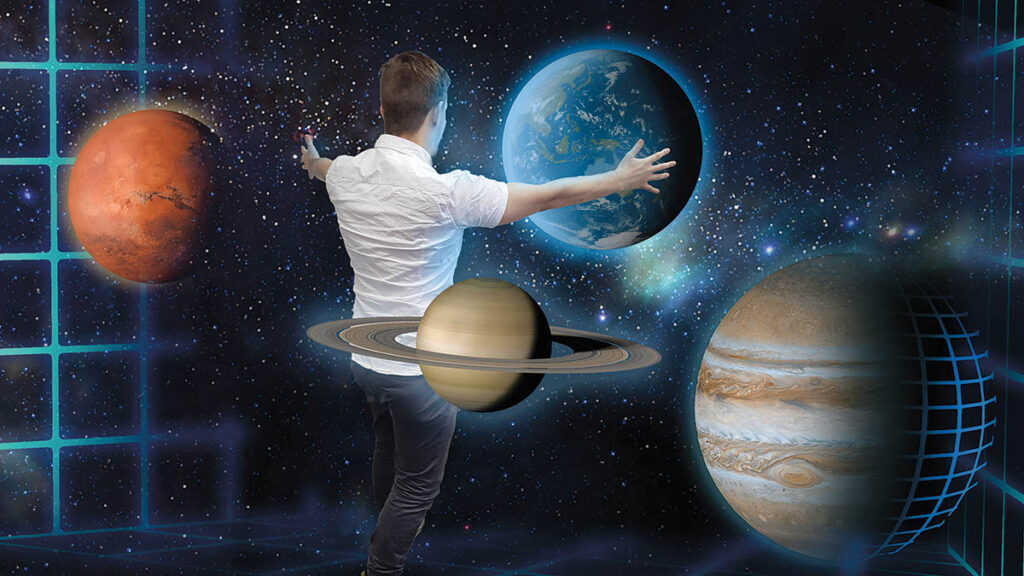

Although holography dates back to Gabriel Lippmann’s use of lightwave interference to capture color in photography in 1886, there is still considerable confusion about what constitutes a hologram, which has led to it becoming a catch-all term. “A lot of what gets marketed as ‘holographic’ is just clever 2D display work, projections, screens and visual tricks dressed up to look three-dimensional,” explains Jeff Barnes, VES, Founder of Maginera, which provides consulting for visual effects and immersive media experiences from Santa Barbara, California. “A true hologram, in the optical sense, recreates a ‘real image.’ It delivers an abundance of viewpoint-dependent information so the scene changes as you move your head or shift position. This includes proper motion parallax, near objects sliding faster across your view than distant ones, correct occlusion of background objects by foreground objects, and physically correct reflections and refractions. When those cues align, your brain perceives a real three-dimensional scene, as in the real world. Achieving that level of realism requires a display that serves high-resolution scene data that updates with both angle and location as the real world does. There’s also the eyeline rule: a genuine holographic object can only appear in the sightline between your eyes and its light source. If something seems visible outside that geometry, you’re looking at a cinematic illusion, not a hologram.”
Based in Brooklyn, New York, Looking Glass Factory began by releasing a desktop holographic development kit and later introduced a personal holographic display called Glass Portrait, as well as enabling hologram sharing on the Internet via the Looking Glass Blocks platform. Most of the questions revolved around solving the problem of presence. “How do you make a person or a character feel more like they’re in the room than they would feel on a 2D display?” questions. Shawn Frayne, CEO and Co-Founder of Looking Glass Factory. “Either it was the shark in Back to the Future II that gobbled up Marty McFly or the holodeck in Star Trek; each of them has a different flavor and perspective on how a human computer interface fits into the future. The holodeck, for example, is a room you have to go into, but in that room, anything can happen. You can create anything. In the case of Marty McFly being gobbled up by the holographic shark, the view of the future is that holograms are not confined to one place but are pervasive, like 2D displays are today. Of course, physics comes into it at a certain point when you want to make something real.”
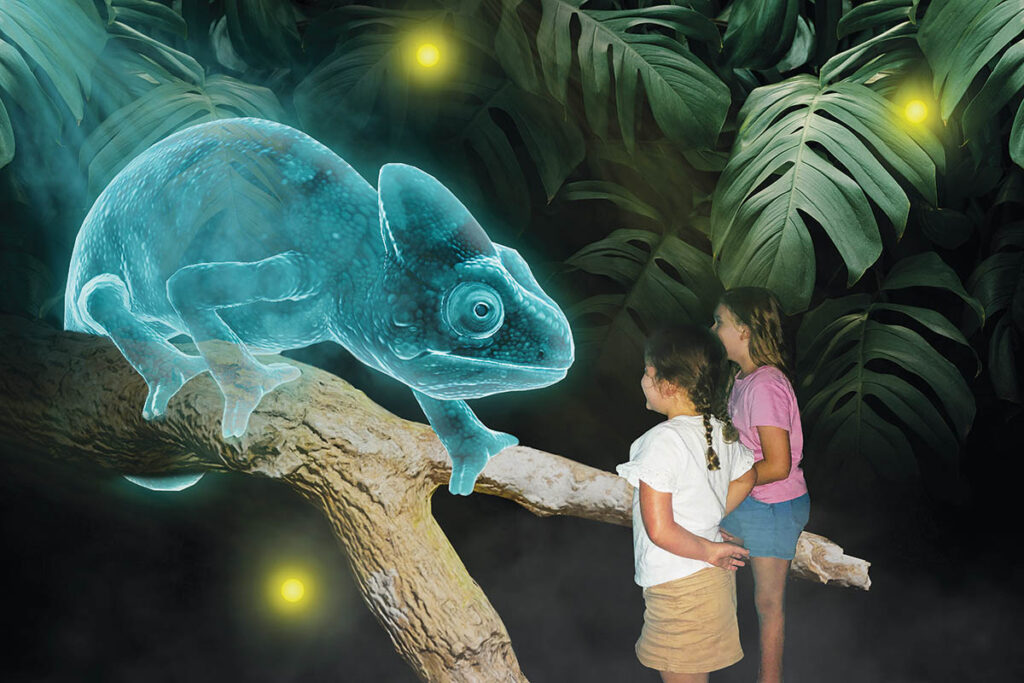
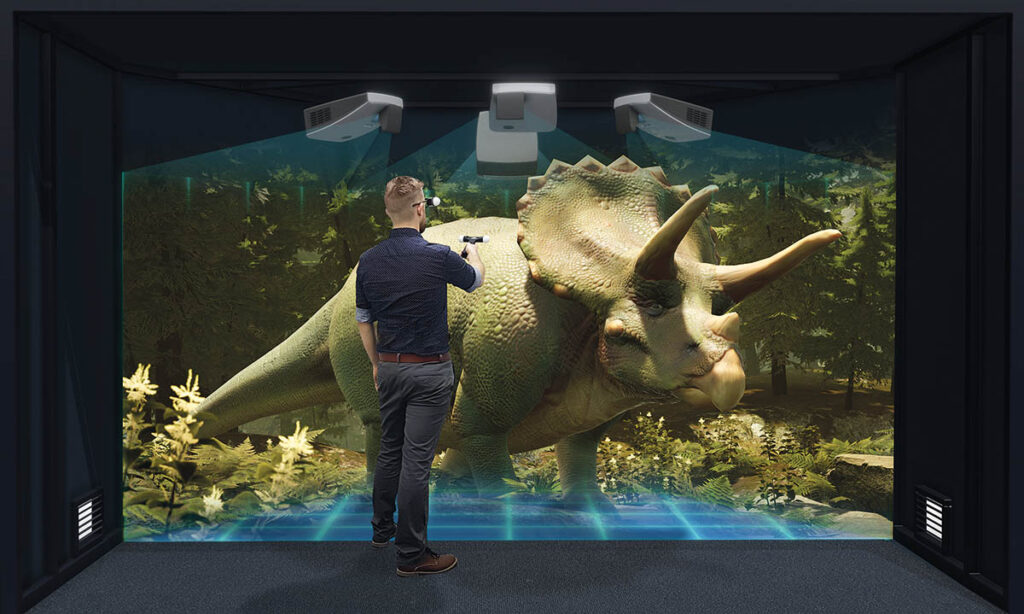
Axiom Holographics, based in Murarrie, Australia, has developed hologram zoos and holographic devices ranging from rooms, tables and walls to tunnels, as well as real-time projections for stage performances. “We’ve done the hologram zoo entertainment chains, and that’s the fastest growing entertainment chain in the world – 45 centers in 16 months,” states Bruce Dell, CEO of Axiom Holographics. “They’re popping up all over the world, in Mongolia and Nepal, as well as all the proper places in Europe and America. It’s like a normal zoo, except you go there and all of the animals are giant projections. You can see them from the front and from the other side. They come off the walls and fly around with people. Things that people haven’t seen before. Children are laughing and screaming because dinosaurs come to try and eat them, and they’re life-size. At the moment, the belief is that it could be the future of entertainment.”
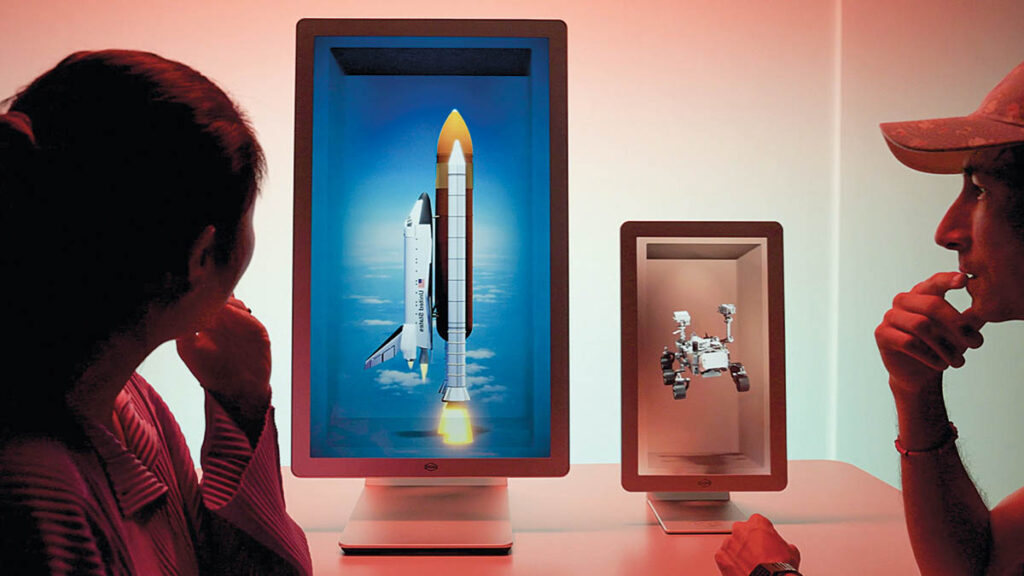
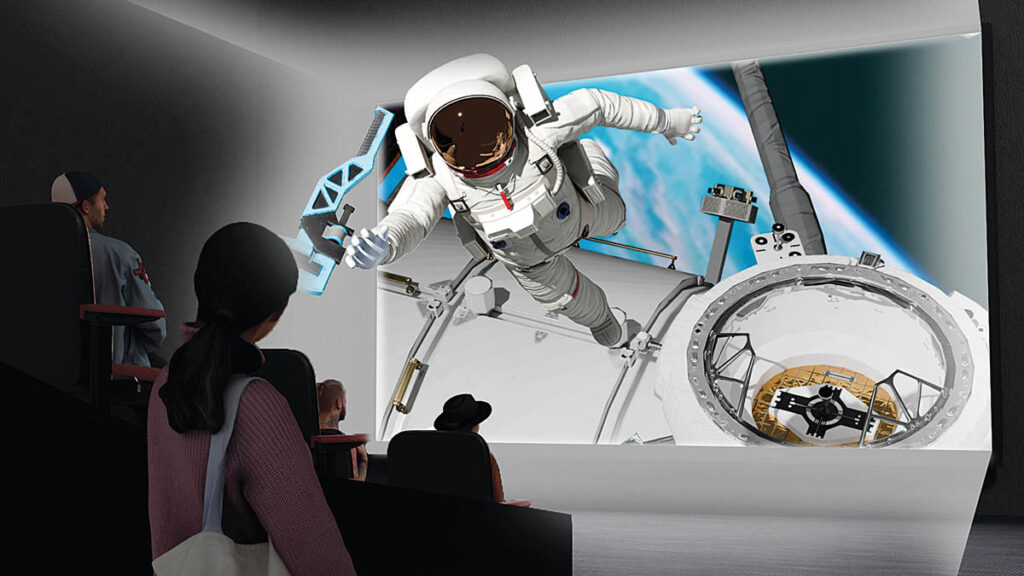
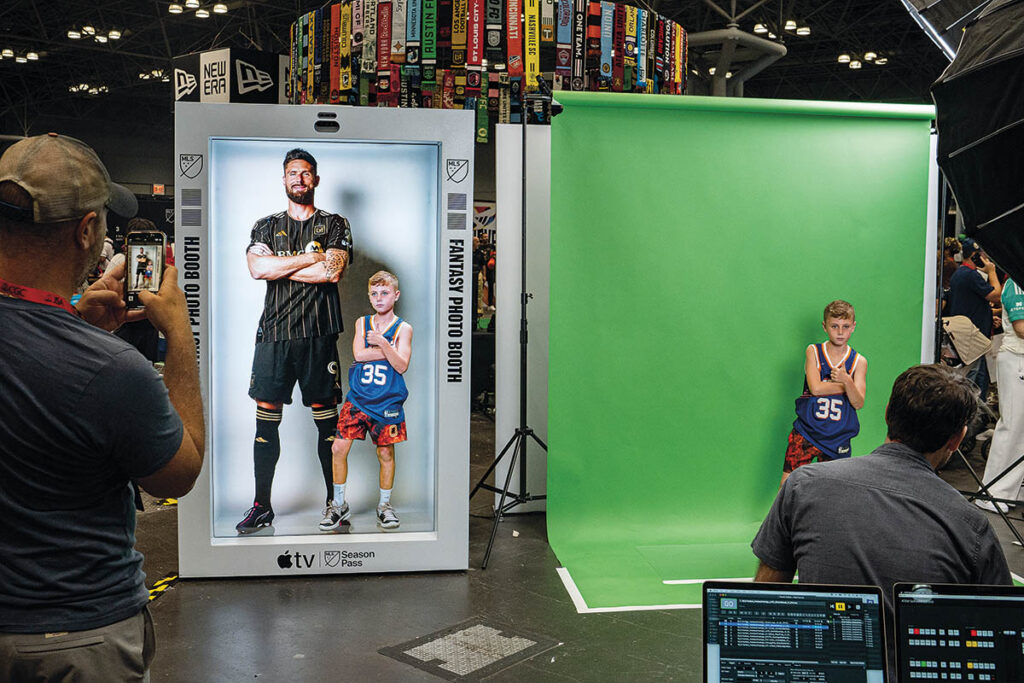
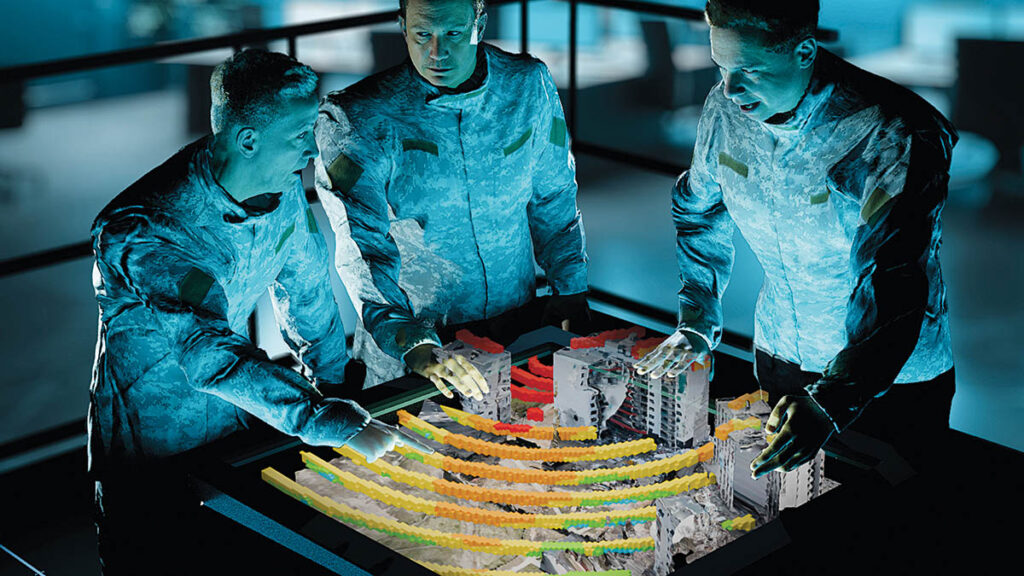
Headquartered in St. John’s, Newfoundland and Labrador, Avalon Holographics produces a holographic table display called NOVAC that can turn digital twins, AI or 3D environments into holograms. “I don’t necessarily care whether the photons are being generated from the screen out or whether they’re being reflected off the screen from a projector somewhere else,” notes Russ Baker, Vice President and Co-Founder of Avalon Holographics. “What I care about is the direction the photons go as they come off the screen. The density of the individual light sources is probably the single most important thing.” Everything comes down to time and money. “There’s nothing at a physics level stopping you from getting to a point where you could eventually build these incredibly dense arrays of light sources at scale, which means you can get the cost and power consumption down and do them using manufacturing technologies that allow you to compress everything. It’s a long tech cycle, but it is possible. Our technology is still in the first stage.”
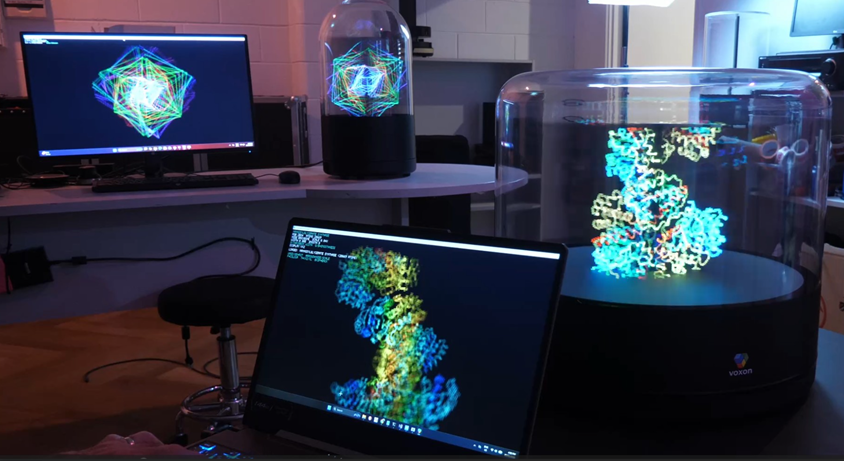
Located in Adelaide, Australia, Voxon employs VLED technology to produce real-time interactive volumetric holograms with millions of points of light floating in 3D space. “The closest we have to the concept of the holodeck is putting on a VR headset and being able to step inside,” observes Will Tamblyn, Co-Chief Executive Officer of Voxon. “VR has done a good job of creating that single-person experience. You’re standing inside, looking out at the world, whereas our technology does not require headsets. You walk up, and it’s there; you’re outside looking into the world. Holographic display technologies have used either the glasses or a two-dimensional screen to simulate a three-dimensional volumetric scene through a window. But our technology physically creates that scene in three-dimensional space. It’s basically 3D printing with light. It offers a different interaction to anything screen-based because you can walk 360 degrees around it, and it physically occupies that volume, and you can have what we call a ‘campfire experience.’”
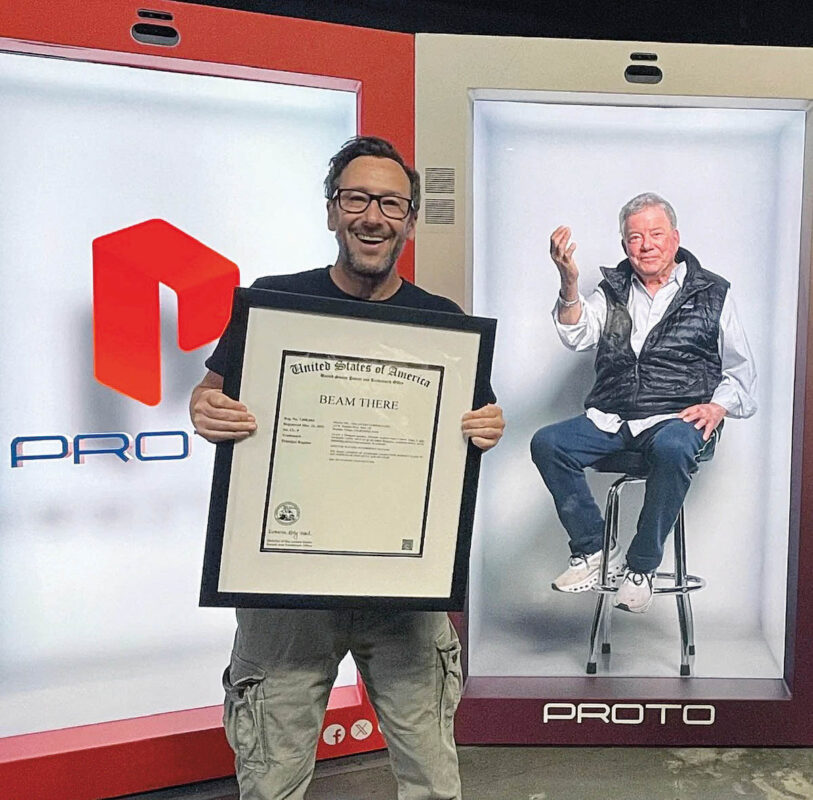
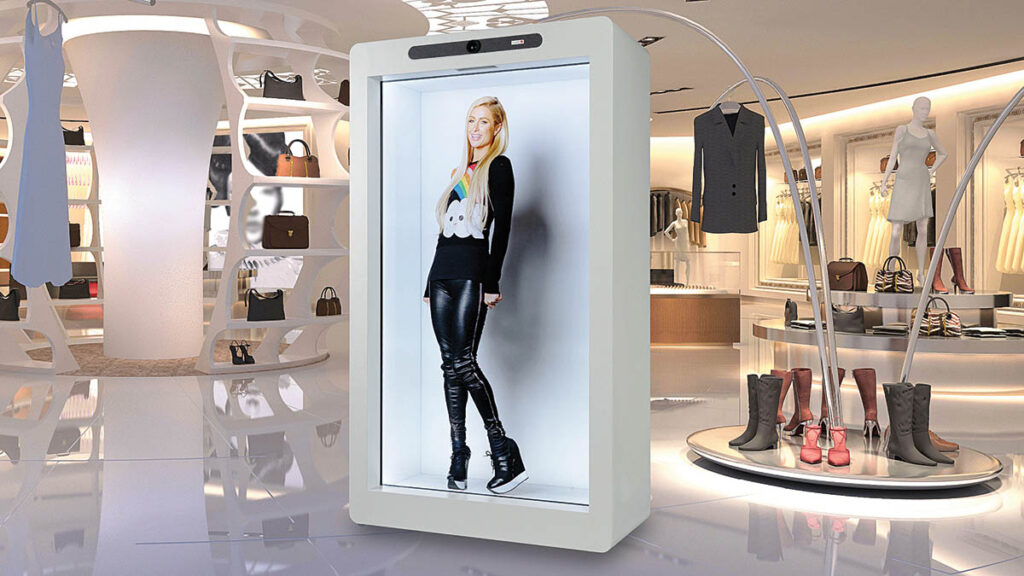
Based in Van Nuys, California, Proto Hologram enables the creation, management, delivery and playback of interactive human-AI experiences through the life-sized holoportation device Proto Luma and the tabletop-sized Proto M2. “We’re being used quite a bit at universities,” states David Nussbaum, Founder of Proto. “Professors and teachers from all over the world are beaming into universities in dozens of countries. We’re at the University of Central Florida, Duke University and MIT, and they’re being used in seminars and training, medical schools, and even for remote diagnosis to train future healthcare providers.” Connected to education is healthcare. Nussbaum says, “because our HIPAA compliance oncologists are beaming from the large hospitals into small rural clinics miles away to have encrypted and private one-on-one consultations with their cancer patients.” Merchandise, such as shoes, can be spun around and zoomed in and out, courtesy of the touchscreen. “We’re in about 100 malls right now, and it’s being used a lot for advertisements, clothing and brands.” Deals have been struck with celebrities such as William Shatner and Howie Mandel [an investor in Proto] to appear as AI avatars, and a studio promotional campaign featured cast members of Now You See Me 3 taking selfies with fans. “You walk into the movie theater, tap the screen, and whoever is standing there takes a selfie with you. What’s so cool about it is that they’re the ones who are taking their phones out and taking the selfie.”
Holographic Studios, the world’s oldest gallery of holography, is situated in New York City. Its founder views the idea of directors being able to walk through volumetric environments and adjusting effects in real-time without headsets as more fiction than science. “A hologram is an optical recording of an image stored in a field of interfering light waves,” states Jason Sapan (aka Dr. Laser), Founder of Holographic Studios. “The basic theory has remained the same, but the technology and techniques have evolved with the introduction of digital.” As for what is involved in producing a holographic set, Sapan responds, “A typical hologram utilizes laser light to illuminate an object and then creates interference by having that reflected light-pass meet up with pure light from the same laser. The phase displacement is captured on a photographic medium and stores the full three-dimensional map of the original object being recorded.” There will come a time when holograms can appear outdoors, much like an AR application. “It’s a two-step process. If you use data recorded outside in a manner that can capture parallax, such as recording a file or video on a rail, this can then be used to recreate that information as a hologram back in the lab.” Real-time game engines and machine learning/AI are emerging technologies for creating and executing holograms. “It is still currently in the early stages,” Sapan says.
Directors being able to walk through volumetric environments and adjust effects in real-time without headsets is something else entirely. “You’re referring to the fake CGI that we see in sci-fi movies,” Jason Sapan (aka Dr. Laser), Founder of Holographic Studios. “Holograms do not work like that. If you stand inside a holographic image, you wouldn’t see it.” The notion of a holodeck is based on misconceptions. “Think of a hologram as a sculptural mold. It has recorded shape within that mold.” The current state of holographic technology has strengths and weaknesses. “Currently, motion has limitations. We can film a motion image hologram, but the vertical motion must be slow or the image smears. Holography excels in its detail since our ‘pixel’ is a light wave; therefore, you can actually magnify the image to see fully dimensional views.” Projection technology has limitations. “While projection technology has improved dramatically, it will never be capable of the fine resolution intrinsic in holograms.” Sapan does not have a favorite hologram. “Since there are many different types of holograms. I do not have a single favorite image, but I love seeing artists explore the medium in nontraditional ways.” Holograms are part of the ebb and flow of technological innovation. “I have always felt that holography is a bridge to future visual media in the same way as black-and-white photography was to color. Eventually, a newer and totally different process will be able to breach the limits of this technology.”