By TREVOR HOGG
Images courtesy of BBC Studios and Apple TV.
By TREVOR HOGG
Images courtesy of BBC Studios and Apple TV.
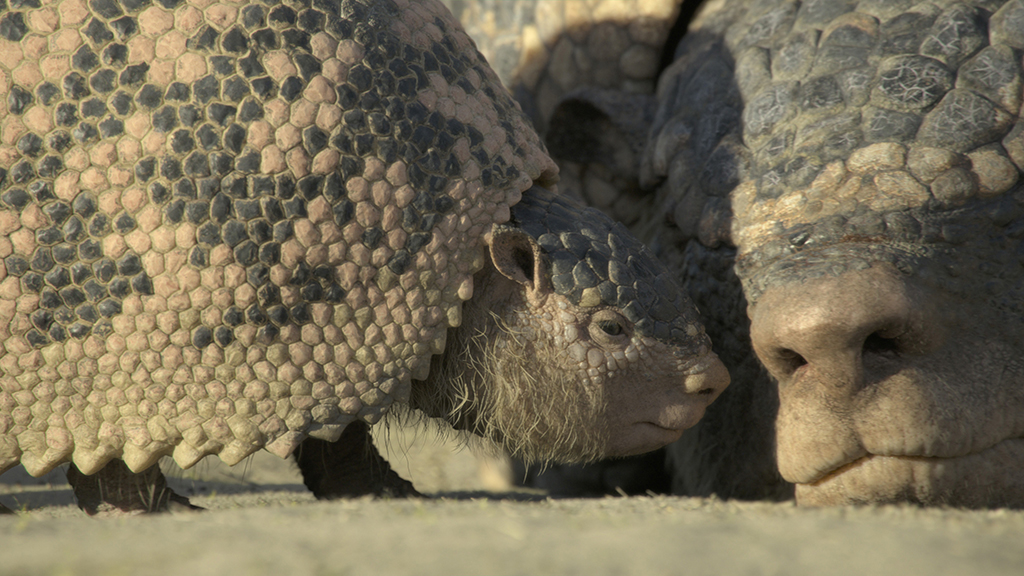
Prehistoric Planet has gone beyond dinosaurs for Season 3, exploring what life was like long after their extinction, when a quarter of the Earth was encased in snow and ice. Prehistoric Planet: Ice Age consists of five episodes. In “The Big Freeze,” the docuseries explores how mammoths and saber-toothed cats survived the frozen terrain. “New Lands” examines the impact of falling sea levels and shifting continents. “Desert Lands” shows how water shortages transformed regions into barren landscapes. “Grass Lands” highlights the expansion of the grasslands and the giant herbivores that once roamed them. Finally, “The Big Melt” portrays the end of the Ice Age as temperatures begin to rise again.
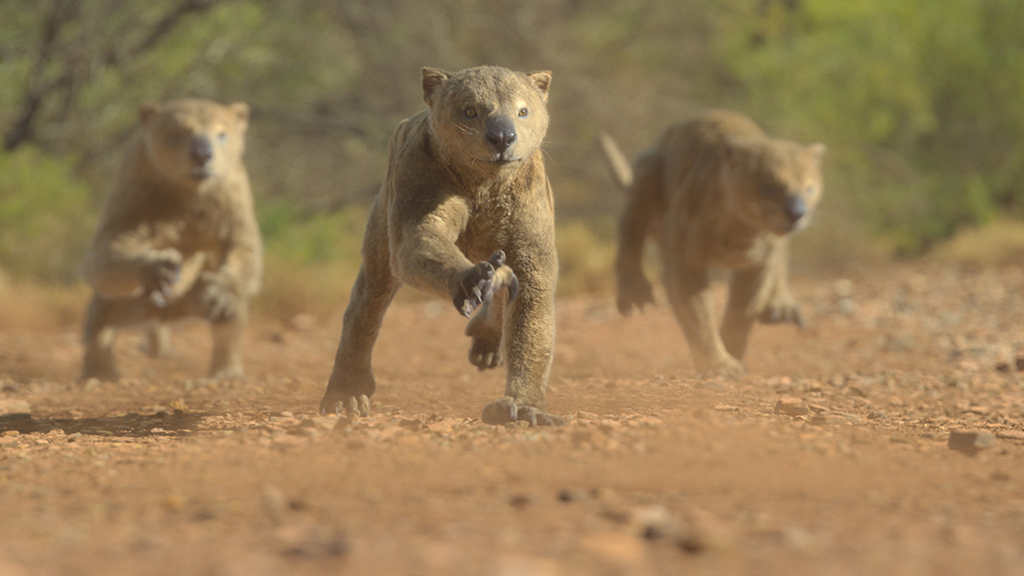
While BBC Studios and Apple continue their collaboration, Sir David Attenborough passes the narration baton to Golden Globe and Olivier Award-winning actor Tom Hiddleston. Framestore takes over the creature work, following in the footsteps of MPC. “Mike Gunton, who created the series, always had half an eye on what would come next after the dinosaurs, and the Ice Age was a natural follow-up,” Matthew Thompson, Series Producer, states. “It was an amazing show. The sheer biomass of the creatures alive in the Ice Age. The huge size of the herds. The grasslands had come into their own for the first time in the history of the planet, at the scale they reached during the Ice Age. All of these animals had evolved to make the most of these new resources, and it was peak mammal.”
The series also addresses misconceptions surrounding the period. “It was not the Ice Age really because there was this roller-coaster of temperatures climbing and falling over a couple of million years that had all sorts of consequences for life – not only evolving to survive the cold,” Thompson notes. “One of the big follow-ups to that is if the Earth only contains a certain amount of moisture and so much more of it is locked up in ice, it draws it out of the rest of the atmosphere, so it’s basically a dry world as well as being a cold world; that had surprising consequences over the rest of the face of the planet. Some deserts grew to five times their pre-Ice Age size. The reason why grasslands became so important is that grass is a plant that does well in arid conditions.”
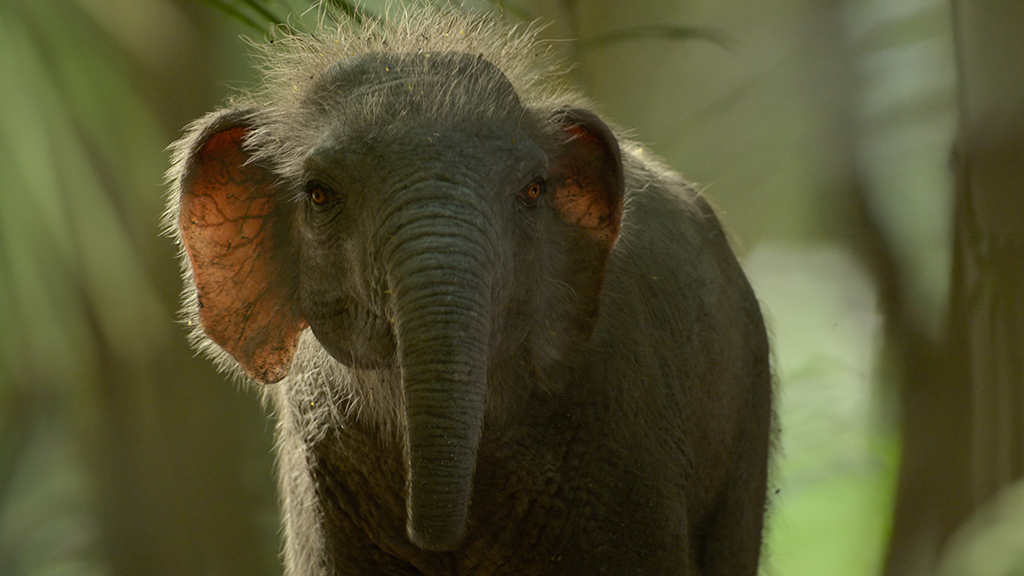
“We wanted to have the obvious showstoppers but also show some of the stranger creatures. To a certain extent, we were driven by the science that was out there, so when there was a new story or [discovery] in paleontology, that was a good reason to bring an animal to life. A good example of that is the giant storks we brought to life with the baby Stegodons.”
—Matthew Thompson, Series Producer
Having overseen the visual effects for HBO’s His Dark Materials, Russell Dodgson is well versed in creating a range of creatures. “Fundamentally, His Dark Materials was a lot of mammals and trying to find a way to bring them to life in a naturalistic way while also using them to tell a story,” Visual Effects Supervisor Dodgson remarks. “Ironically, I had conversations with Mike Gunton at the beginning of Prehistoric Planet because I have a connection with the Natural History Unit [at the BBC]. My cousin was an editor there. It always seemed like an exciting project to do, so having finished His Dark Materials and doing nothing but mammals and puppets for five years, it was funny that this reemerged straight afterwards as another mammal and puppet show!”
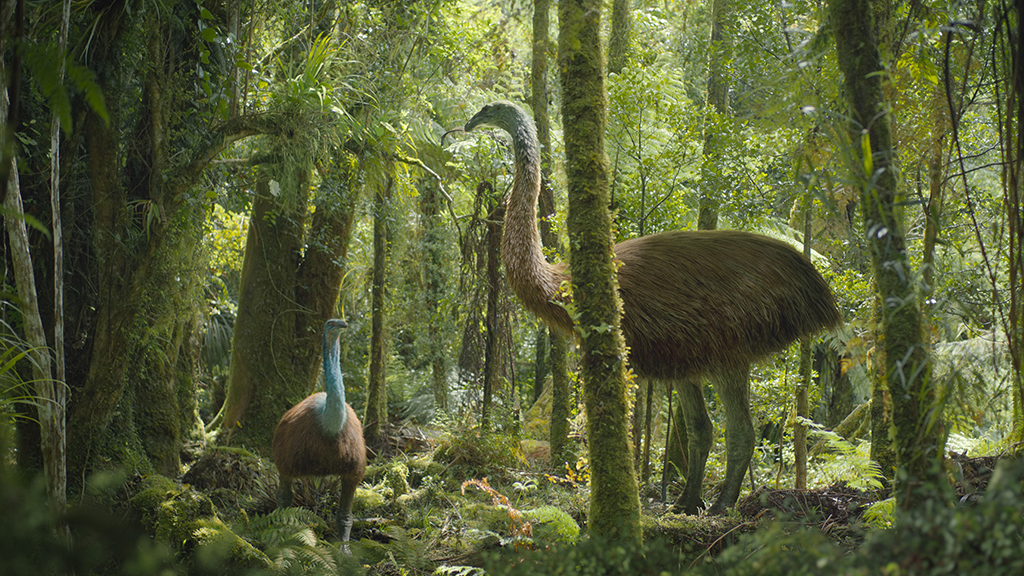
When selecting creatures to spotlight, the team considered audience expectations. “We wanted to have the obvious showstoppers but also show some of the stranger creatures,” Thompson states. “To a certain extent, we were driven by the science that was out there, so when there was a new story or [discovery] in paleontology, that was a good reason to bring an animal to life. A good example of that is the giant storks we brought to life with the baby Stegodons. The giant storks were so big that paleontologists previously thought they were flightless birds, stuck to certain mainland locations. But it was recently discovered that they would most likely be able to fly, allowing them to reach these islands. That immediately gave us a reason to [depict] them as possible predators for these baby Stegodons.”
Weight and scale became issues given the creatures’ massive size. “Weight is an interesting one because it is an animation component,” Dodgson notes. “It’s staying on top of how the mass moves. Framestore had gone through rebuilding their fat and muscle pipeline, which had reached a new level when this show started. Sometimes, having long fur helps give you a sense of mass because it creates a nice overlap with the movement and physicality of the body. Scale is difficult without people or anything that tells you how big something is. A lot of that had to do with camera position and relative performance. Also, we would animate in real-time and against reference, but review and render it at 30 frames per second to give us the slight slow motion you get in Natural History, which also meant we needed to take that into account with all of our simulations.”
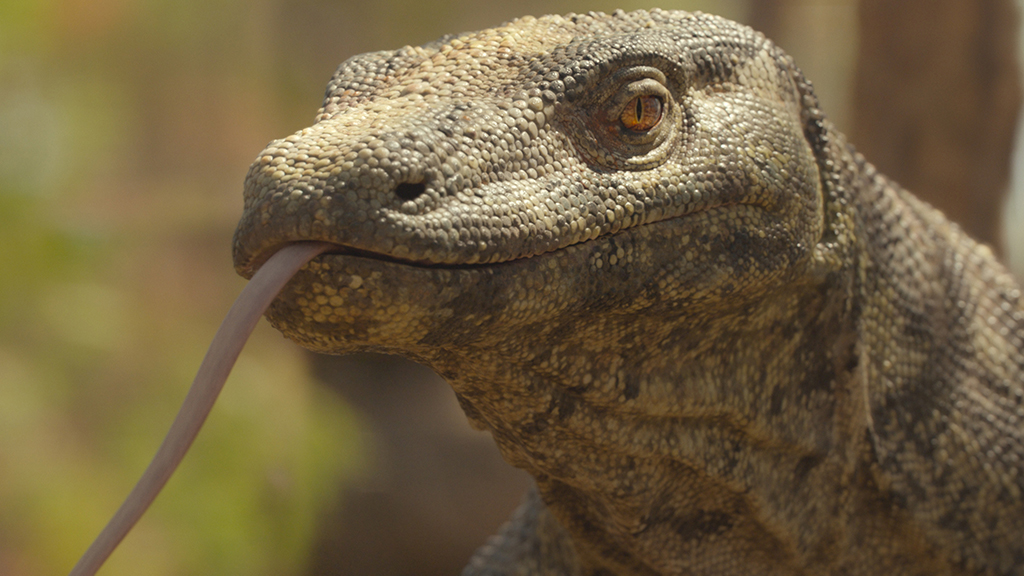
“One of the hardest challenges across the show was fur-on-fur. People find it hard to understand the technical reason, but when you realize we only simulate every nth fiber of fur and everything between gets interpolated. Normally, you can get away with that because the edits are fast. But the whole point of this show is to hang out with the creatures for 300 to 500 frames at a time.”
—Russell Dodgson, Visual Effects Supervisor
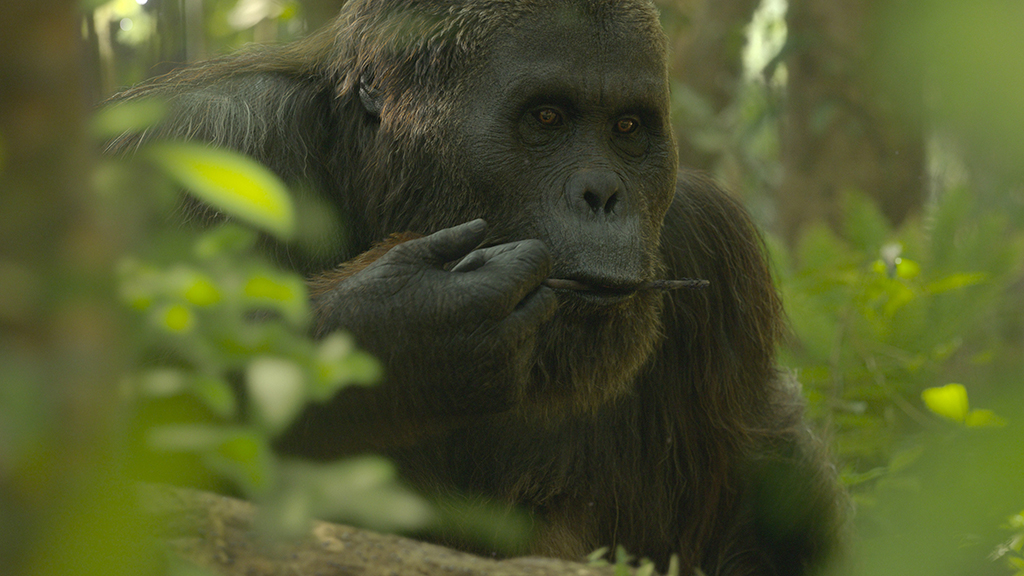
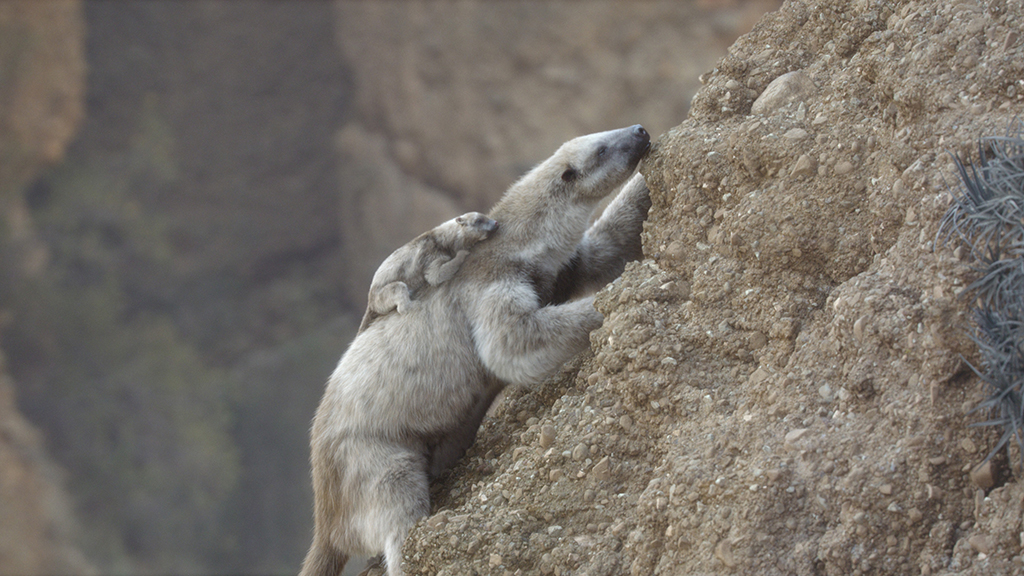
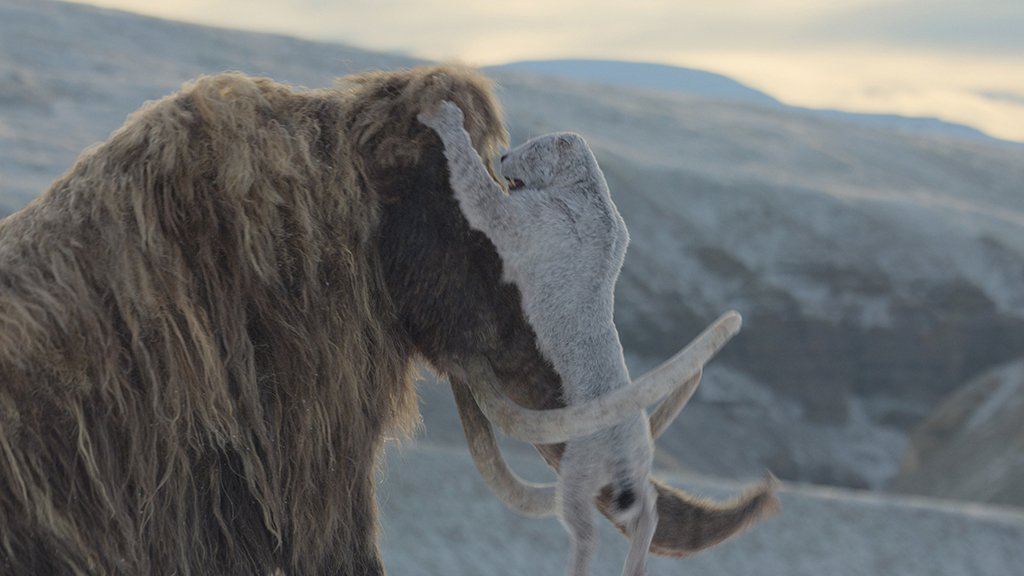
Creature interactions range from otter cubs playfully wrestling with each other on land to a predatory saber-toothed cat jumping onto a mammoth. “One of the hardest challenges across the show was fur-on-fur,” Dodgson reveals. “People find it hard to understand the technical reason, but when you realize we only simulate every nth fiber of fur and everything between gets interpolated. Normally, you can get away with that because the edits are fast. But the whole point of this show is to hang out with the creatures for 300 to 500 frames at a time. We had to pay attention to the interactions between the characters. One of the first sequences we did featured a sloth climbing up a cliff with a baby on its back. It wasn’t a big dramatic sequence, but just getting that to behave and the amount of high-resolution simulating almost every fiber of hair that we had to do on this show was big. Actually, I would say that getting the cats to jump all over the mammoths was slightly more forgiving because of the speed, power and energy of the scenes than some of those delicate sequences – like the snow sloths climbing over each other – because fur interacting with snow is complicated as well.”
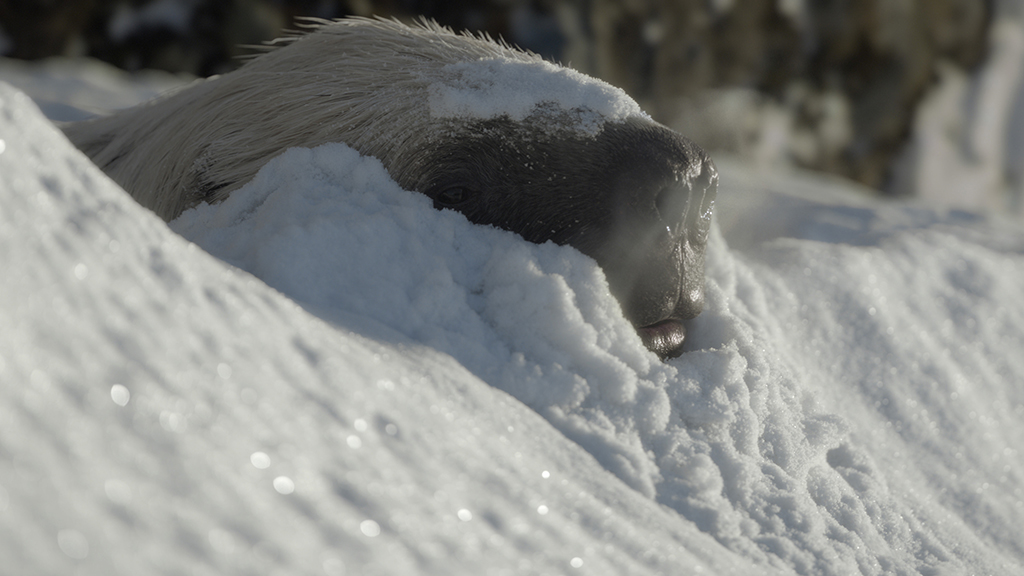
Present-day descendants informed the depictions of their ancestors. “In many ways, it’s easier with Ice Age than it was with the dinosaurs. You can legitimately look at the behavior of the most closely-related modern animals and find [commonalities],” Thompson states. “For instance, the snow sloths rolling around in the snow and cleaning their fur. Polar bears do that; they’re not exactly the same, but similar environments and similar creatures with shaggy coats, so that’s plausible. There are lots of other examples of that.”
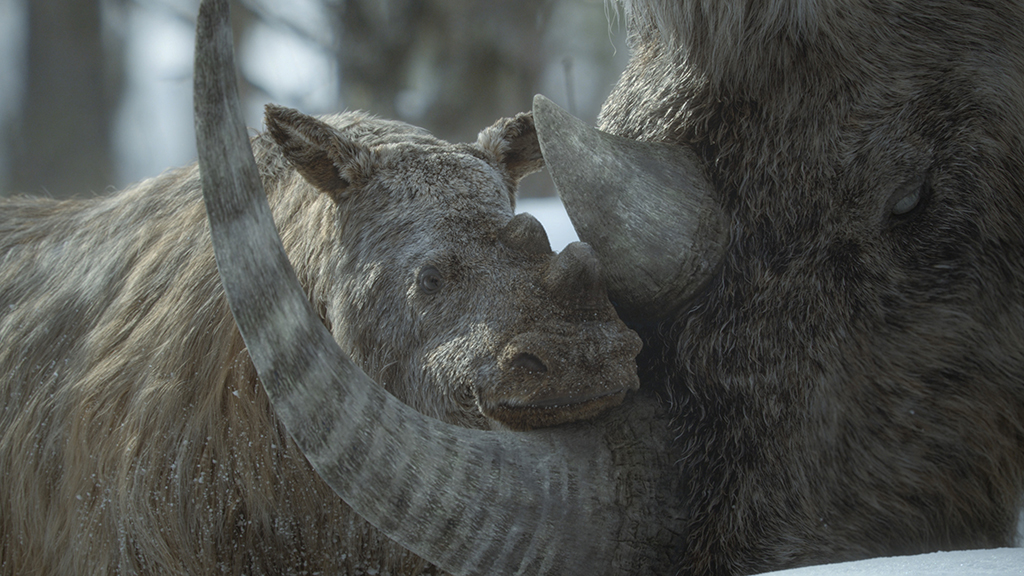
Natural History is about capturing creature behaviors in the moment, whereas CG requires advanced planning. “It’s a complicated process bringing that all together, and everything has to be right,” Thompson explains. “A lot of Natural History is shot with a single camera. The camera operator will move around several times and shoot it again from a different angle, but it won’t be the same action and will probably be shot over days, unless it’s a specific thing, like a predation. Obviously, we can have perfect continuity; however, it has always been the intention with this series that we don’t have perfect continuity in the same way that a Natural History camera operator would have found true continuity. It’s about finding that balance where there are imperfections, but when people are cutting a real Natural History show, they try to minimize those discontinuity moments. They’ll try to make it feel like they had multiple cameras there, even though they didn’t.”
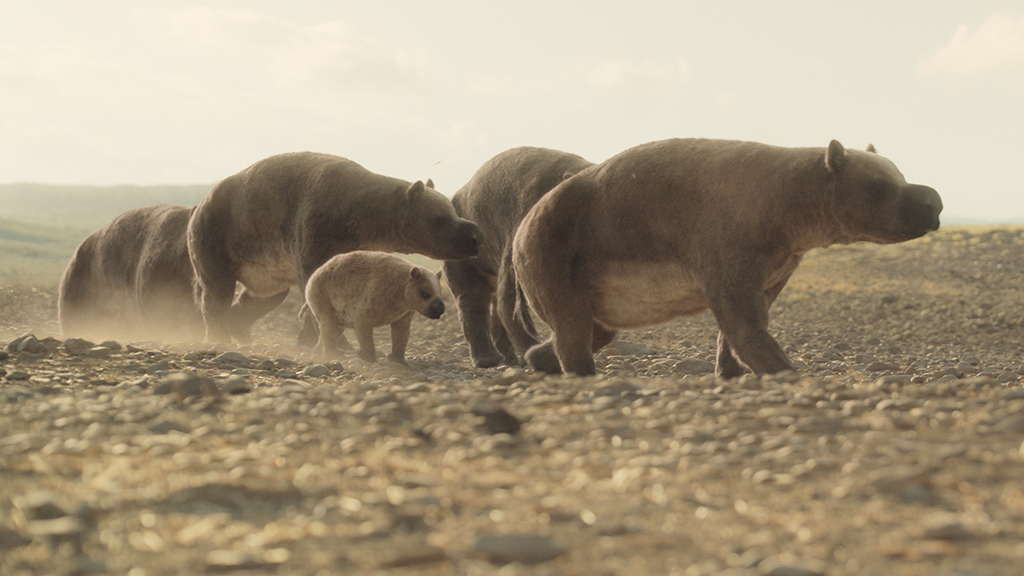
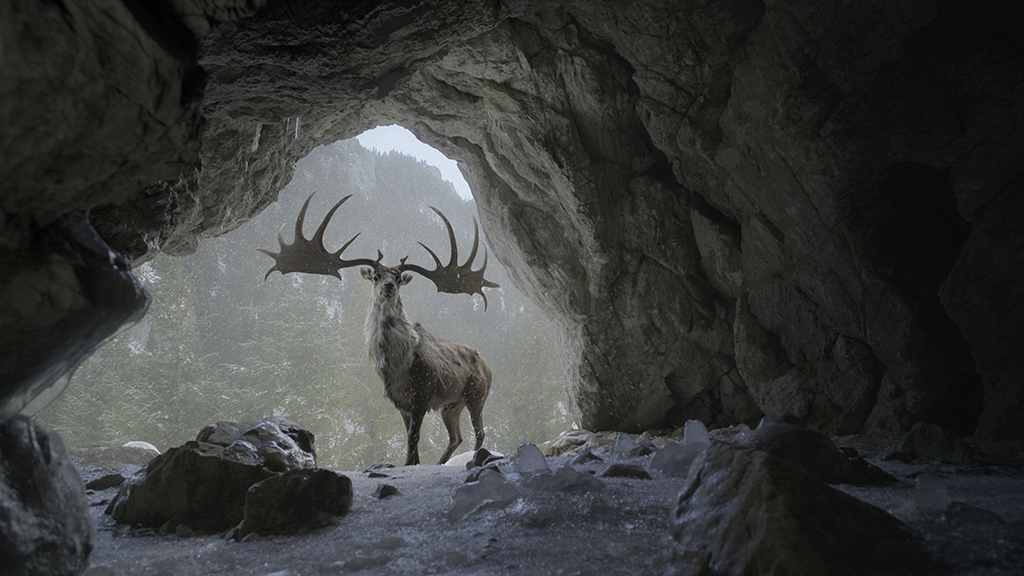
World-building was a major component, especially for the wide establishing shots. “There was a range of work, and we were keen to make our lives hard in the quest for authenticity,” Dodgson reflects. “There’s a temptation to make everything happen in one place, so you only have a single set of things to deal with. But the truth about Natural History is that it unfolds over time and across distance. Some of the stories took place as we were filming them, over three or four kilometers of travel. We would shoot on 1000mm lenses, which are a nightmare to film with, but we would use the same lenses as in Natural History. Depending on the environment, we would need to own areas of it completely and create a complete reconstruction in CG. Certain sequences, when we’re in a blizzard or a cave system, are entirely CGI. For the forests, we would use a lot of bluescreen element layers and CGI. If you’re on a 1000mm lens, you’ve got 300 meters of vegetation in front of you, so we would use those bluescreen elements to stack that up and do CGI for where the creature interacted with them. Everything together made it feel as naturalistic as possible.”
Each episode concludes with a segment called “Under the Ice,” designed to provide factual insights about the Ice Age that viewers might be curious about, without weighing down the main stories. Thompson explains, “For the one where the animals were brought back, it was a reaction to that sense of how difficult it is to show the real scale of animals when you’re filming them [without] people in the shot. We thought, ‘Wouldn’t it be fun to show how big they are?’ And the only way we could do that was by putting them in the modern world. You might have watched the Gigantopithecus and thought it was the same size as a silverback or a mountain gorilla. But when you see it alongside people, you realize when it stands up, it’s literally in a different league in terms of its height and how big it is. When the Gigantopithecus is sitting down, it’s taller than a person. That was the idea behind it. It was a bit of fun that was nice for people to see and helped them to appreciate the animals.”
“It has always been the intention with this series that we don’t have perfect continuity in the same way that a Natural History camera operator would have found true continuity. It’s about finding that balance where there are imperfections, but when people are cutting a real Natural History show, they try to minimize those discontinuity moments. They’ll try to make it feel like they had multiple cameras there even though they didn’t.”
—Matthew Thompson, Series Producer
At its heart, the production experience was defined by the challenges and excitement of learning a completely new way of telling stories, one shaped as much by unpredictability as by intention. “The most interesting thing about doing this show, from my perspective, was learning an entirely new filmmaking language,” Dodgson reveals. “In drama, which is what I’m used to, it’s a bunch of people who have an idea of what they want and going and getting it. Natural History is a reactive process. You have an idea of what happens in nature, based on observations, then film it – but you get what nature gives you. From there, you craft the most cohesive narrative possible. You’re storytelling in reverse. We examined every single micro data point that we could find that defines Natural History filmmaking. That includes things like a camera operator deciding to pull focus from one eye to another, or the fact that unpredictably they thought that’s where the camera should go; however, the creature went the other way, so it actually goes a bit soft and catches.”
As Dodgson explains, “It was getting the camerawork to feel reactive,” a principle that shaped every technical choice in the production, from the use of puppets to the subtle vibration of the lens to mirror real environmental forces. Dodgson adds, “The camera operator actually reacted to the performances. It’s paying attention to the fact that you get heat haze even when we’re in temperatures that are -40 degrees because of the sun reflecting off the snow. There is a sequence where we show a mammoth and her baby suffering in a blizzard. We noticed – from watching the reference and from filming – that whenever the wind blows at 1000mm, it shakes the camera. It’s important when you’re doing Natural History to feel like the camera operator is actually there with the animals. Every time the wind blows the fur, we vibrate the camera to connect it to the characters, so everything is connected to the audience. It is probably one of the most data-point-driven projects I’ve done, where the language is all about trying to create a feeling of something familiar for people to watch, which is Natural History.”