Images courtesy of Columbia Pictures.

Images courtesy of Columbia Pictures.
There is a new genre emerging from the tradition pioneered by George Romero, where disease transforms the living into homicidal creatures rather than undead beings wreaking havoc on the world. This approach can be seen in The Last of Us, where a parasitic fungus decimates humanity, and in Danny Boyle’s seminal post-apocalyptic horror film 28 Days Later, where a highly contagious bloodborne pathogen drives the Rage Virus outbreak in England.
The franchise is in the midst of releasing a new trilogy, with the middle chapter titled 28 Years Later: The Bone Temple, which picks up immediately after the events of 28 Years Later. Taking over the directorial role from Boyle is Nia DaCosta (Candyman), who reunites with Visual Effects Supervisor Dean Koonjul (Poor Things), following their collaboration on Hedda, alongside Union VFX.
For the critically acclaimed film, the VFX team created 380 digitally enhanced shots, spanning everything from establishing shots, a burning head, weapon extensions, to blood hits, eye color alteration, rewilding and aging environments.
“The Infected have evolved from 28 Days Later,” Dean Koonjul, Visual Effects Supervisor for 28 Years Later: The Bone Temple, notes. “You still have your standard Infected coming after you. Then there’s the Alpha, but his story is different from the setup in 28 Years Later; he’s becoming more humanized in The Bone Temple. It was interesting having a character arc within the Infected where they’re not just monsters but are starting to have personality and a nature of their own.”
Prosthetics were always the basis for the wounds and gore. “On set, we had two approaches,” Koonjul explains. “We would either do a pass with blood and then a clean one, or start off clean and then add a bit more blood. Depending on which performance they picked in the edit, we would either roll back on some of the blood that we added if it was supposed to be an earlier portion of the sequence, or add blood to what was there for later on. There was quite a bit of making the blood deeper or more visceral, like wetter and vibrant.”
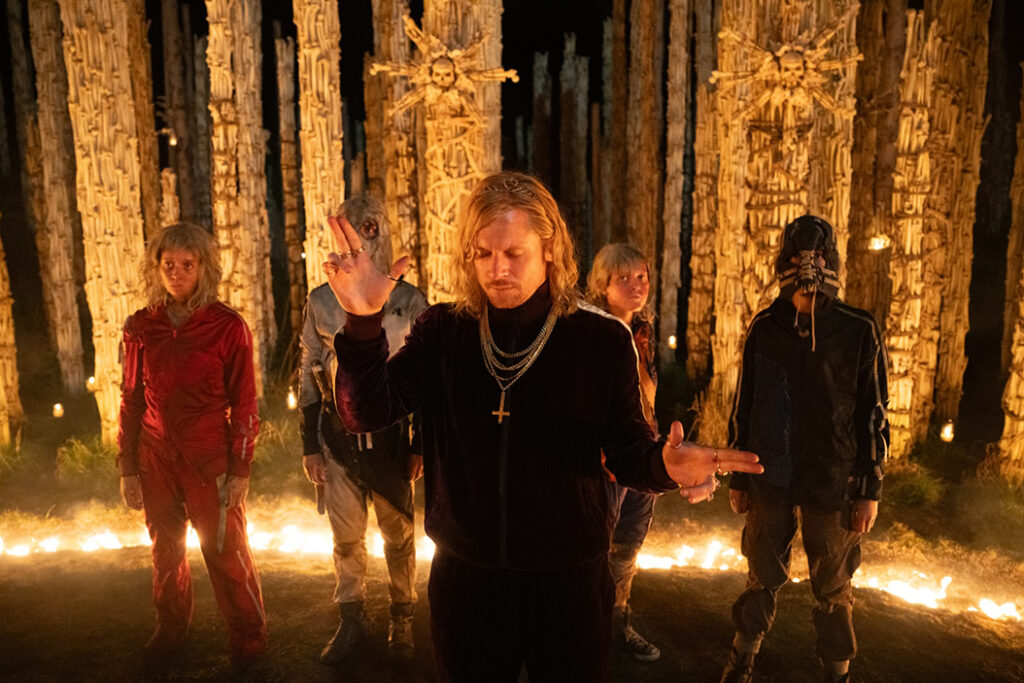
The four stages of infection were reflected in the contact lenses worn by the cast. “We had to scan all of those to make sure we could match them because they couldn’t wear the contact lenses all of the time,” Koonjul says. “We would step in and add them in post. Although we did have different stages of prosthetics on set, we pushed Samson’s progression further in post. We amped up what we called ‘the Infected scary Samson look.’ In visual effects and DI, the team also boosted Dr. Ian Kelson’s orange coloring, the result of iodine applied to his skin. “At the start of the film, there was quite a heavy contrast between the two of them, and as their relationship develops, their skin tone moves closer and closer together as Samson becomes more humanized in his manner and appearance.”
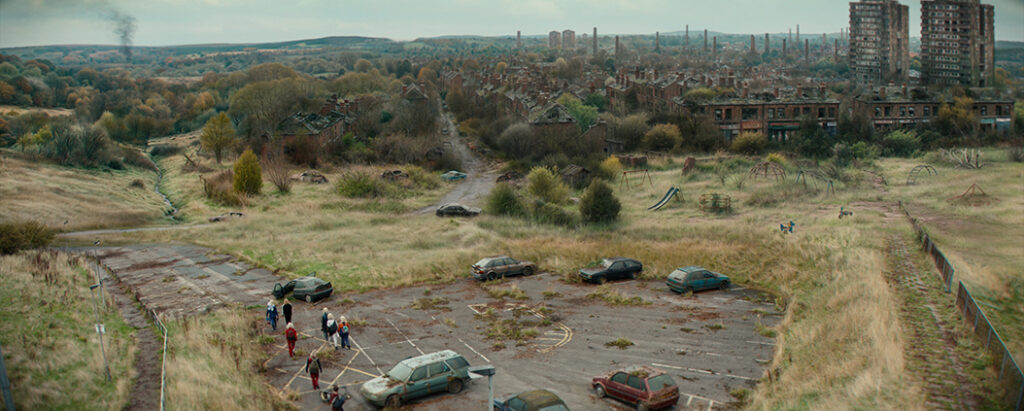
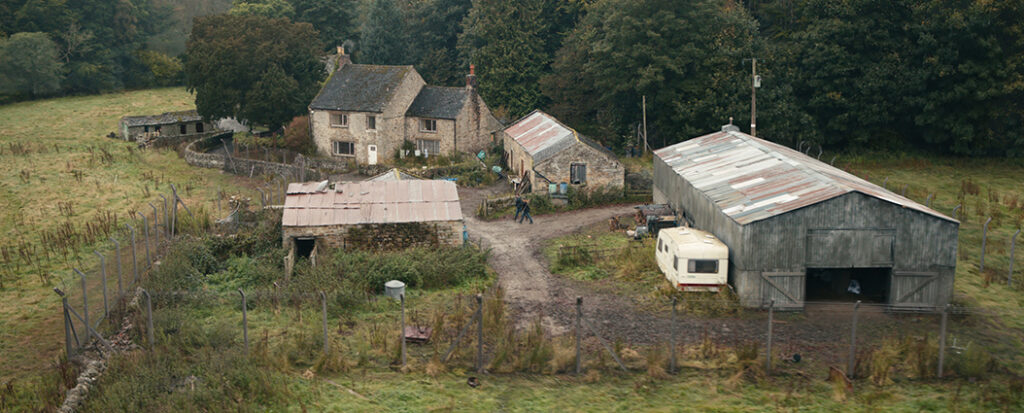
Real locations were found in rural Northern England. “For the forest scenes or around the Jimmys’ camp, the greens team would come in and dress everything, add more vegetation and age stuff to make the settings more consistent,” Koonjul states. “For any wider shots where we see more distant rural landscapes, we removed any trails that were visible as well as pylons and any sort of modernization that may have happened in the last 25 years.”
Six locations had to be integrated into a single setting. “After the first cut of the edit, one of our briefs was to add additional establishing shots that physically connected the locations. For example, in the train scene, we added a wide where we see the part of the forest where Samson is and pan over to see the train to connect those two scenes together. Another example is where we see Jimmy Ink walking from the field – where she has just killed one of the Infected – towards the Bone Temple location, where she pops up later.”
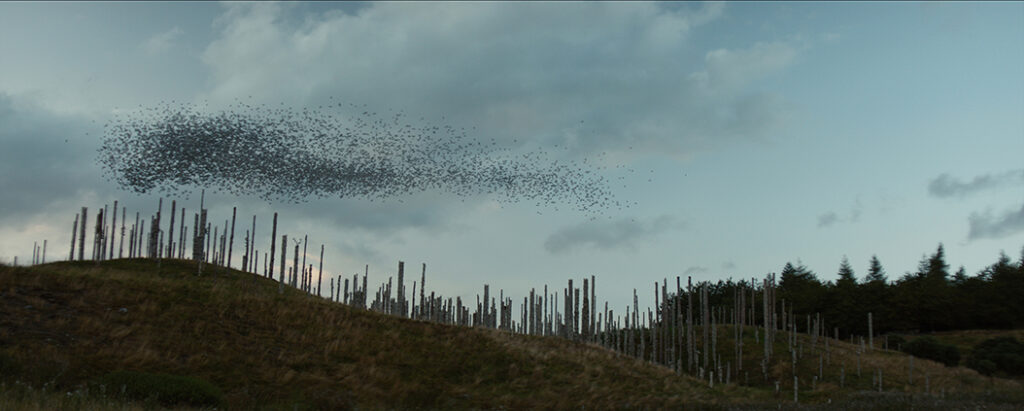
The discovery of an abandoned leisure center in Bradford led to a script change. “In the original script and storyboard, the scene was actually set on the road with the Angel of the North as a backdrop,” Koonjul reveals. “But when that location was found, they decided to set the action for the opening fight scene in an amphitheater-type setting. It was a no-brainer to relocate to that spot. It had been closed down for over five years, so the grass and terrain around it was already an overgrown, rewilded and reclaimed area. We dressed the foreground with old cars and extended the environment beyond. I remember when we went on the recce, we all had to wear hard hats for health and safety. It felt so great for the story, and we had to make it safe to film in there. They tidied it up a bit and redressed it to feel more abandoned.”
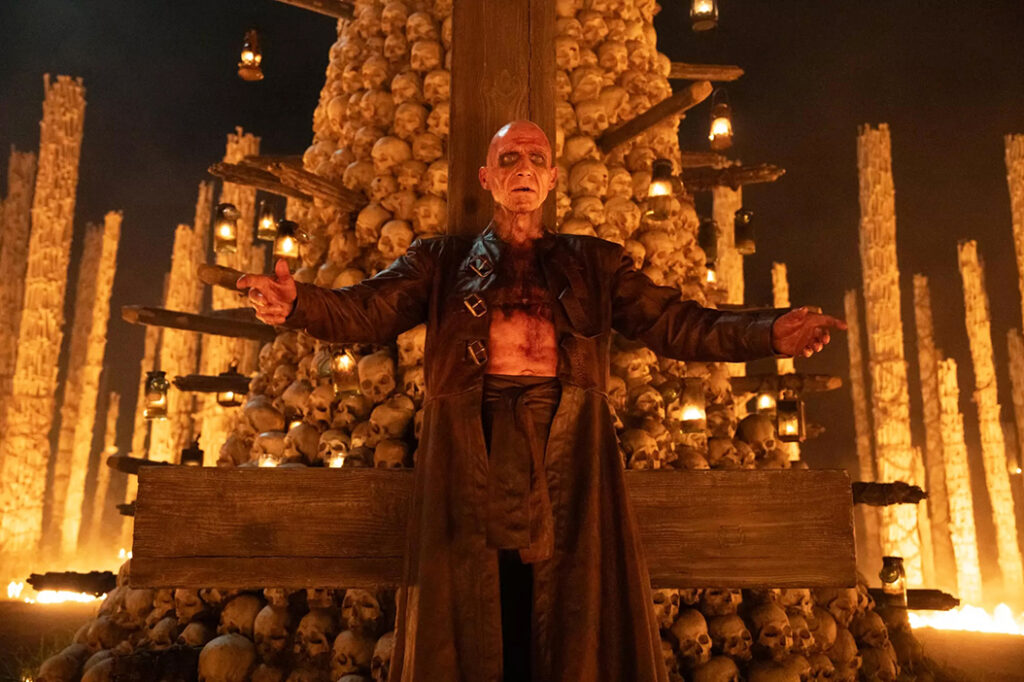
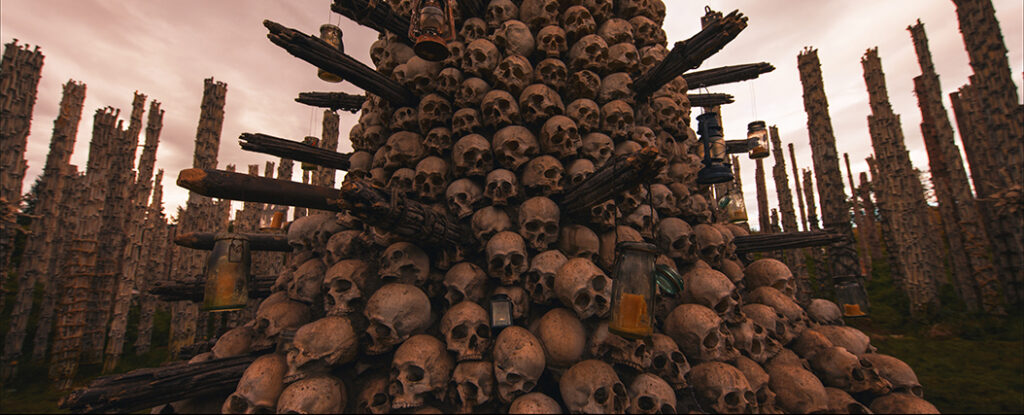
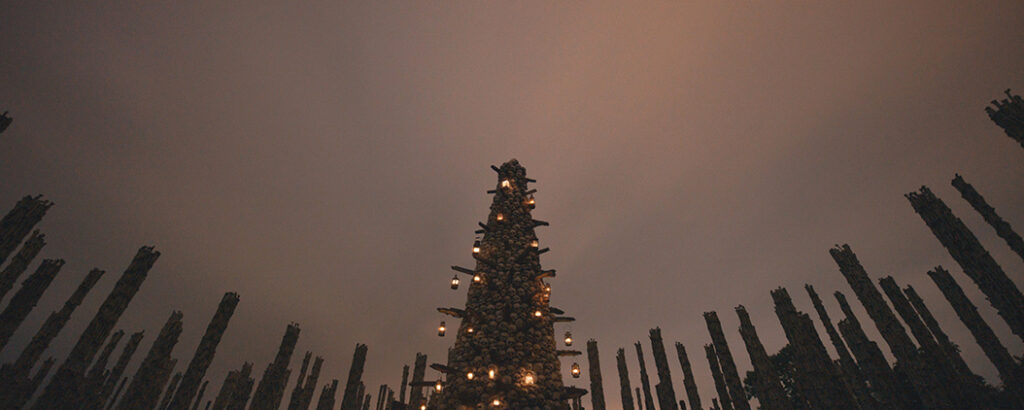
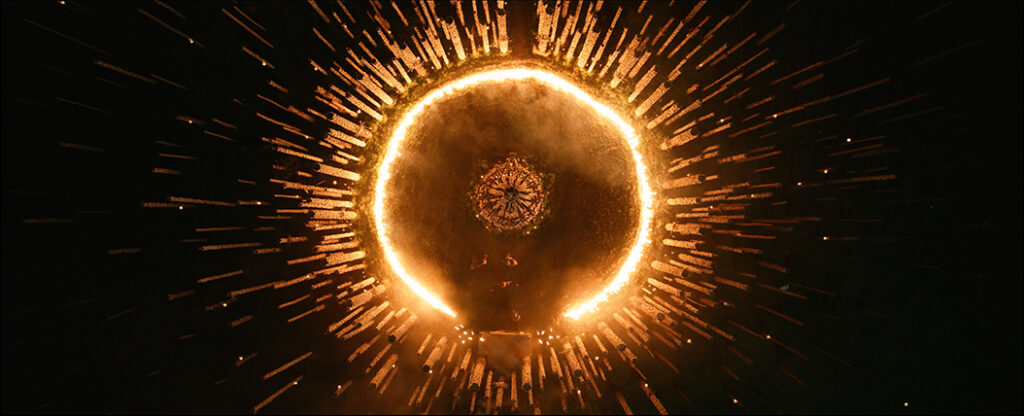
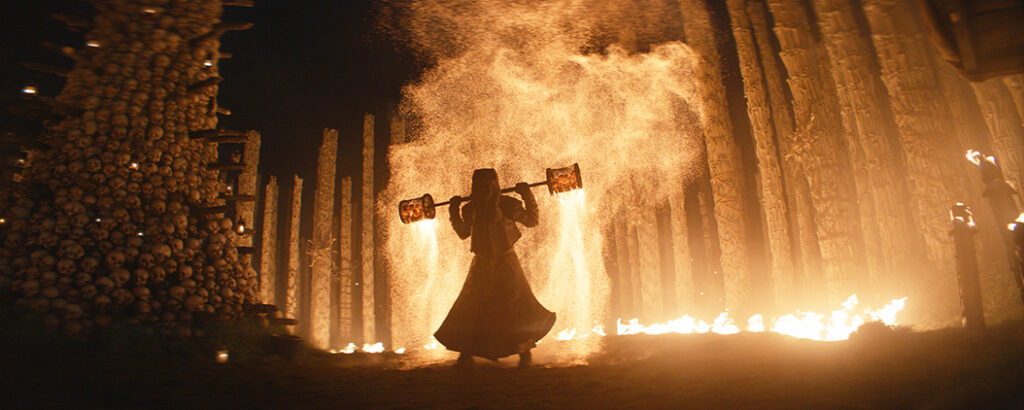
“There is a spire of skulls in the center with the columns of bones going around it. That part was an actual set, and we didn’t have to do any kind of extension to that. We did, however, enhance some of the posts that were planted and added bone cladding, but we didn’t have to create any sort of CG environment in that location. We also enhanced some of the fire and replaced sky elements. In the crucifix in the Bone Temple scene, we needed to clean up some areas, as you can see through it from most angles. This meant the roaming camera showed details that weren’t required in the final shot. The set was as impressive as it looks on screen in real life.”
—Dean Koonjul, Visual Effects Supervisor, 28 Years Later: The Bone Temple
In one scene, the camera and characters circle Spike inside an empty swimming pool. “The director didn’t want to keep stopping and starting for each moment of visual effects and knife action because cleaning up and resetting after every take would have taken far too long. They opted to shoot the whole scene without any effects, with all the blood tubes, but without actually capturing arterial spray from Jimmy Shite’s leg. Then they would shoot the blood moments and decide which takes to use in the edit. For some takes, we added blood to clean plates, and for others, we cleaned up the rigging. There were also cases where we were replacing entire weapons, while for others we were replacing the blade or cutting it to the length of what was wanted.”
Scenes at Dr. Kelson’s ossuary for 28 Years Later (2025) were shot as production was concluding, overlapping with the start of filming on The Bone Temple. “There is a spire of skulls in the center with the columns of bones going around it,” Koonjul notes. “That part was an actual set, and we didn’t have to do any kind of extension to that. We did, however, enhance some of the posts that were planted and added bone cladding, but we didn’t have to create any sort of CG environment in that location. We also enhanced some of the fire and replaced sky elements. In the crucifix in the Bone Temple scene, we needed to clean up some areas, as you can see through it from most angles. This meant the roaming camera showed details that weren’t required in the final shot. The set was as impressive as it looks on screen in real life.”
“For the Jimmy Jimmy burning head shots, a stunt double was wearing a mask on set, and we had to do a face replacement. We didn’t go for a full CG replacement because we knew that we would be adding more fire and burning his skin, so we took an almost 2.5D approach. There are moments where we catch a glimpse of the face in full scream, and we needed to make it feel convincing. This involved bespoke and strategic placement of the flames to reveal the face. The mask was based on a static mold of the actor’s face, completely emotionless and expressionless. We did a replacement to re-animate it.”
—Dean Koonjul, Visual Effects Supervisor, 28 Years Later: The Bone Temple
In the film, Samson, an Alpha in the brood of the Infected, has a close connection with the moon. “That was something we highlighted by adding the moon to several shots, as well as enhancing starry night skies,” Koonjul says.
The collapsed bridge and train crash site were also revisited for the follow-up film. “As that’s a real location, they had to move the train and bring it back between shooting both films,” Koonjul reveals. “Because of the way they wanted to shoot it, there was some artistic license in terms of the level of vegetation in each film. For the fight scene in the train, they wanted more light penetration, so we stripped back some of the moss and vines from outside of the train.”
In one action-packed scene, a group of Infected battles Samson in an abandoned school bus. “That was one of the sequences that was storyboarded to help plan within the confined space. That plan allowed us to take the roof off, bring in a Technocrane and shoot more interesting angles. It was meticulously choreographed, with many tight shots of the fighting action. There were additional gore and clean-up. Some of the stunt rigs needed some clean-up, and we had a few prosthetic limbs flying around as well! We wanted to make it all seamless.”
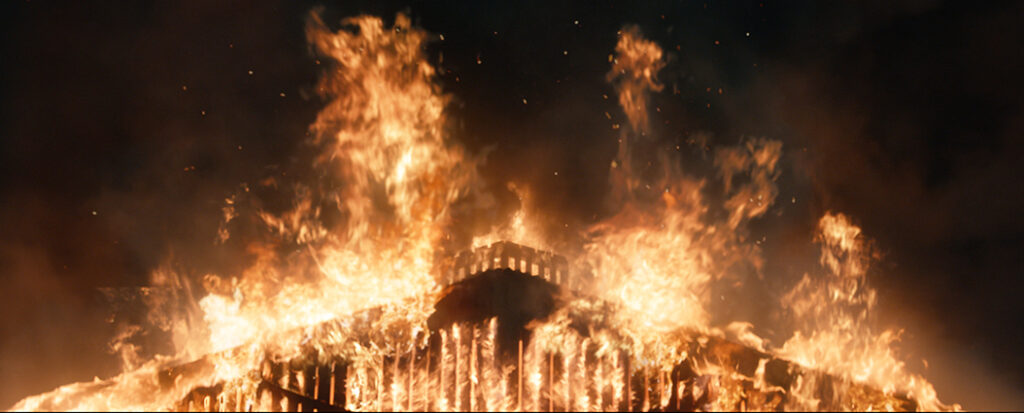
Fire is a major component in the film. “There were a couple of set pieces in the barn and the Bone Temple that revolve around the fire,” Koonjul remarks. “We shot all that in-camera, then enhanced the real fire in post. It was very helpful having a real fire to build from. We filmed our own plates of the fire on set to try to avoid having to arrange an additional element shoot later. Shooting outside involved a level of wind interaction with the fire, and it is always difficult to match the conditions of the day during a separate element shoot. We would capture elements between takes with our own cameras, and we shot lots of plates of fire. Where possible, we used special effects fire from the shoot day. We always anticipated that we might have to add CG fire and create fire simulations, but we didn’t know the extent to which we would need to build out the fire for all the scenes. Our initial approach was to block it all out using 2D elements in some of the plates and see what happened – a kind of postvis. We had a temp version of everything with placeholders with 2D elements, but the elements we shot held up well, and we were able to use those.”
In the barn scene, one member of the Fingers gets set on fire. “For the Jimmy Jimmy burning head shots, a stunt double was wearing a mask on set, and we had to do a face replacement,” Koonjul reveals. “We didn’t go for a full CG replacement because we knew that we would be adding more fire and burning his skin, so we took an almost 2.5D approach.”
It’s a dynamic action sequence choreographed frame by frame. “There are moments where we catch a glimpse of the face in full scream, and we needed to make it feel convincing. This involved bespoke and strategic placement of the flames to reveal the face. The mask was based on a static mold of the actor’s face, completely emotionless and expressionless. We did a replacement to re-animate it. The head is bigger than a normal head once you put a mask on top of it, so there was some subtle warping and molding to make sure it remained as close as possible to the size and shape of the actor’s head. There are strategic moments within the action where we would either reveal or obscure the face. Once we had established that this guy is on fire, we were able to cover the head with flames for some of the later shots.”
According to Koonjul, the true star of the scene was the stunt performer. “Hats off to the stunt guys on this show because we make it up and they do it for real.”