By TREVOR HOGG
Images courtesy of Netflix.
By TREVOR HOGG
Images courtesy of Netflix.
Frankenstein has long been a passion project for Guillermo del Toro, which is not surprising as he has mastered the art of creating a beautiful, grotesque Gothic aesthetic and has a deep fascination with monsters. Thus, he was the perfect choice to adapt Mary Shelley’s story, in which a scientist obsessed with defying death attempts to turn a creature assembled from various human body parts into a living being.
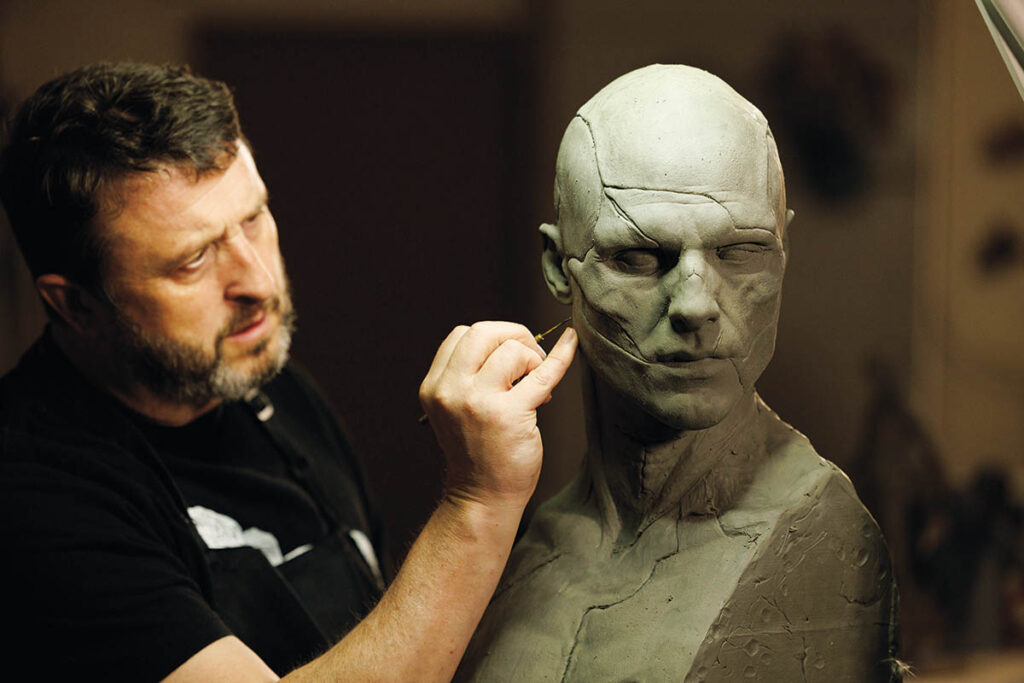
“[Monster stories] are excellent parables about the human condition,” states Guillermo del Toro, Producer, Writer and Director. “They tackle things that can be discussed without absolutes, so they have a symbolic power. You don’t have to talk about a middle-class father who is hard on his son wanting to be a rock ‘n’ roll star. You can actually talk about a father creating his son, and the son basically being crucified for the sins of the father. It is metaphorical and real at the same time; that’s what is fantastic.” The creature determines the cinematic environment. “It’s like visually creating a terrarium. In terms of tone, you need to create a movie that allows the creature to feel real, not like visual effects, makeup, a combination of both or an actor wearing silicon prosthetics. The design of Frankenstein is more operatic, theatrical, and pushed so that the creature can exist there. You design the creature around the body and bone structure of the performer because it’s a character, not a monster.”
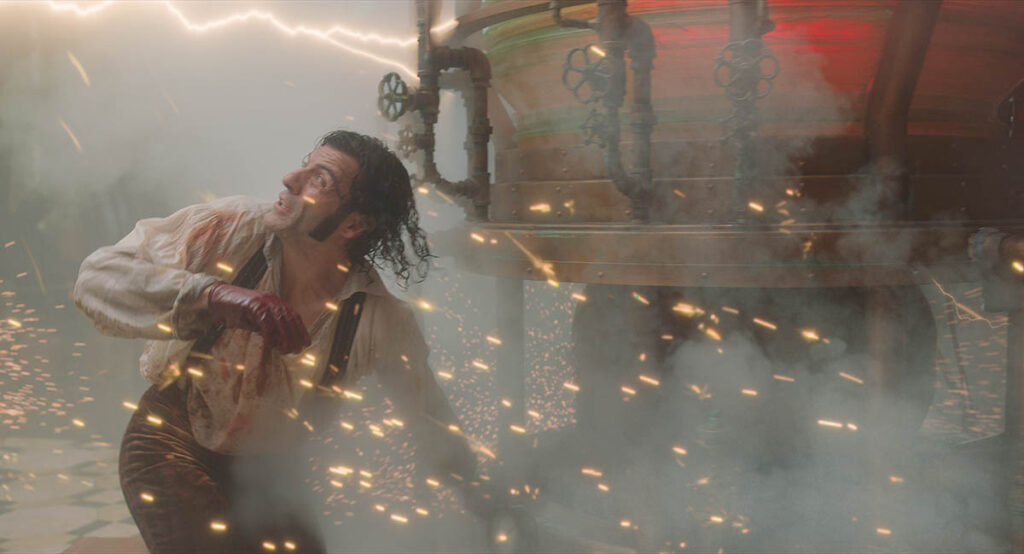
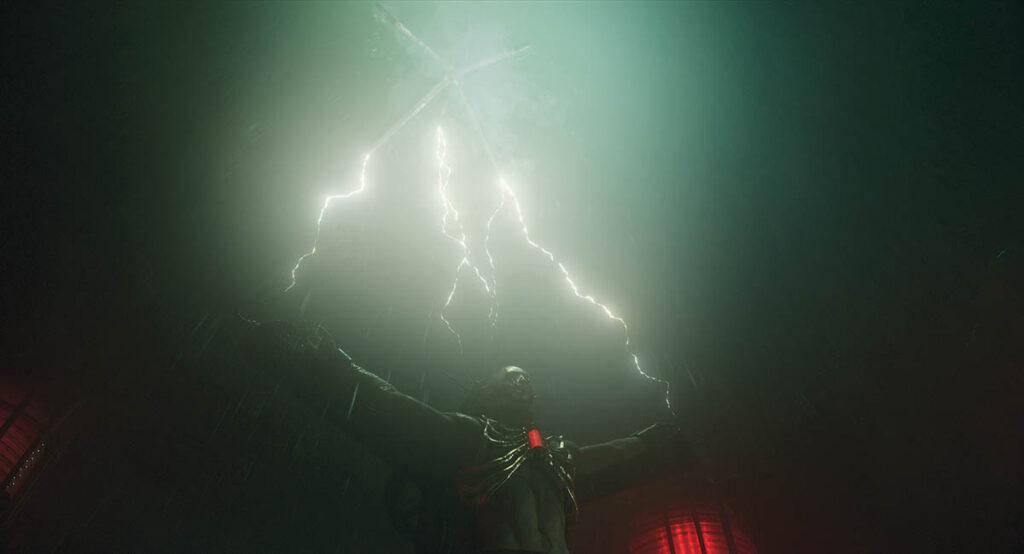
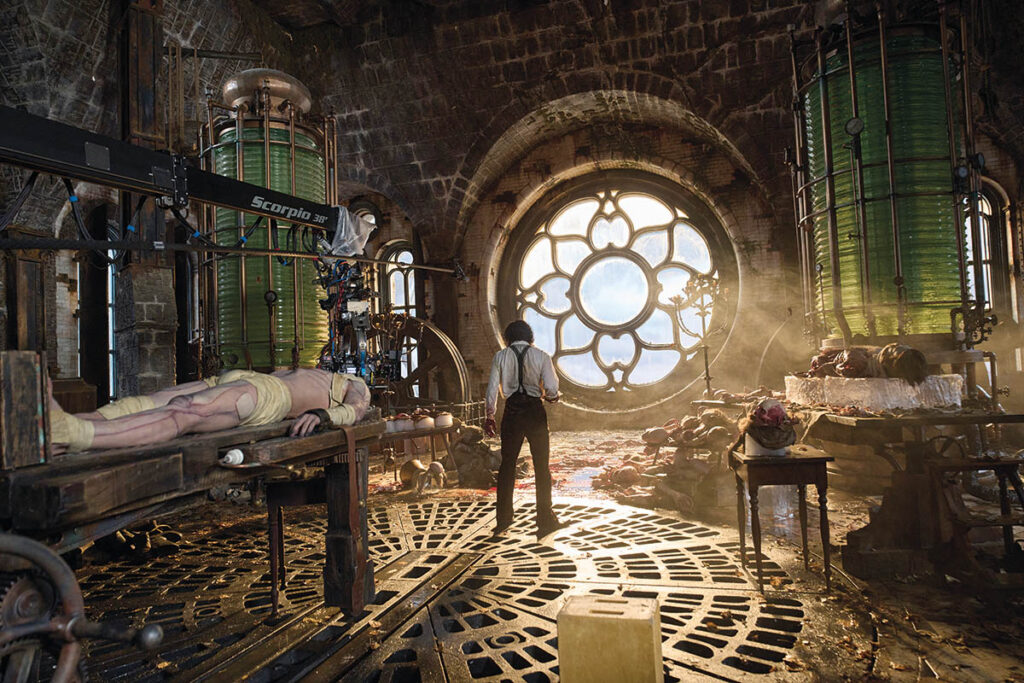
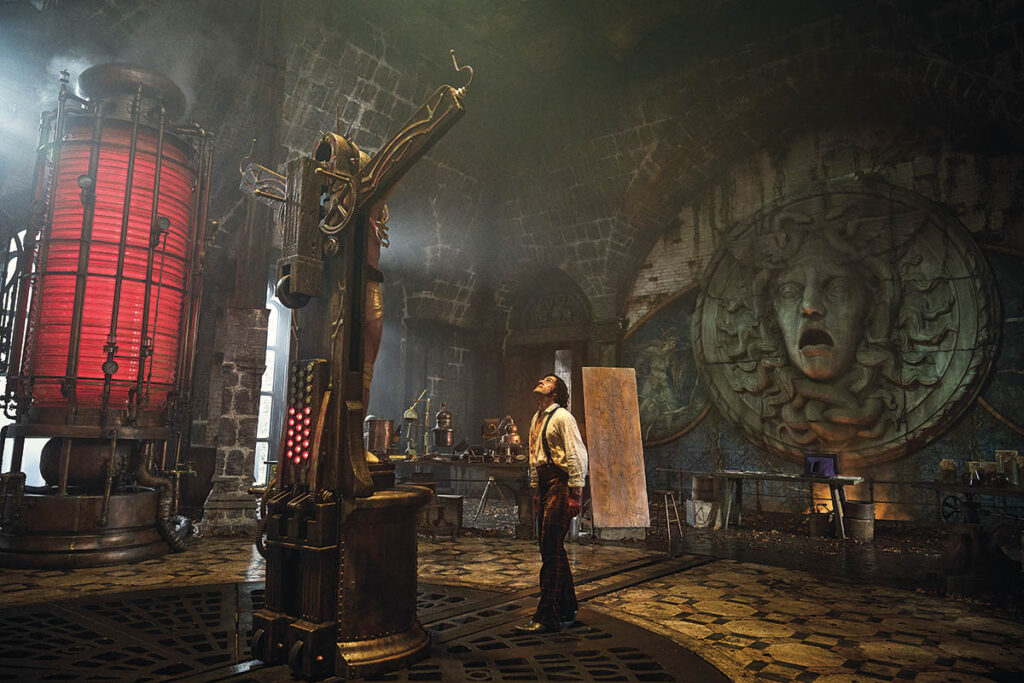
The iconic creation scene offers something different from previous film and television adaptations. “What you have almost never seen before is the actual anatomical putting together of the Creature,” del Toro remarks. “That is pretty goddamn new because most people just skip through it. You just see the Creature receiving the electricity. I wanted to shoot it as a joyous moment. We have this waltz that is celebratory as part of the score by Alexandre Desplat [Composer]. Victor Frankenstein is happy being alone, sawing, patching and designing. It’s somebody who is hard at work doing what they love to do. Then, what I tried to do with the creation is to make it very hard. Normally, what you get is the electricity, the Creature comes to life, and that’s it. But I wanted everything to go wrong. Victor has to climb a tower and put on the lightning rod. He has to come down. One of the parts bends. Everything starts to explode. Harlander dies. Machines are breaking up and releasing steam. The battery may not charge, and the Creature seemingly doesn’t come to life.” Despite the fantastical premise, there is a heavy reliance on earthly restrictions. “I believe that visual effects should only take over when physical reality doesn’t allow tangible things to exist. That’s why we combine every trick in the book. I was an effects technician for many years. I know the language and the tools, so I understand where to draw the line between one boundary and another. We use physical miniatures of large-scale [sets], we use makeup effects and huge set construction, then when the need arises, we seamlessly do a relay race with visual effects.”
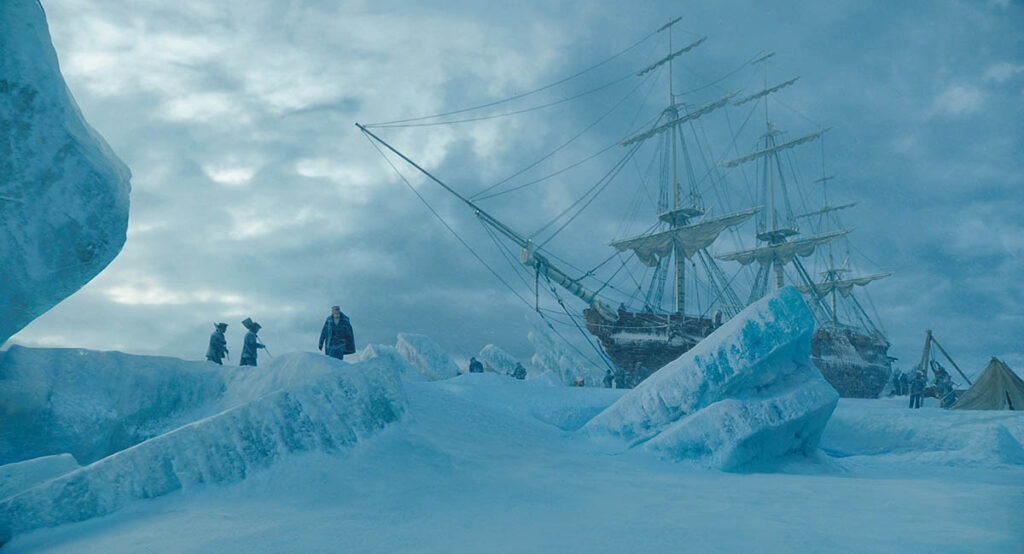
For the Arctic sequences where Victor Frankenstein takes refuge on board an expedition ship trapped in the ice and is hunted by his creation, a real ship was constructed, and lanterns were set aflame in a parking lot in Toronto. “Once we designed the ship, it had to be redesigned with the gimbal in mind,” explains Production Designer Tamara Deverell. “We had a Class A engineer who does a lot of film work with us to approve the whole thing because it’s a big engineering feat to move the whole ship. You’re seeing the ship from the port side. On the starboard side, it was completely open with access to the gimbal. It was quite incredible. We built a giant riser for the icefield and brought it right up to the ships’ edge. Not only did we have the gimbal, but we also had to allow space for it. Then we had to build a pool for when the Creature sinks into the water; that was another level of engineering.” A 3D model of the ship was created to fill in the physical gaps. “We only built it up to about two-thirds of the highest mast height. Visual effects used our model for all their work afterwards because we had designed the entire ship right up to the crow’s nest of the highest mast; they also used it to make sure that Guillermo del Toro and Dan Laustsen [Cinematographer] were framing for the full height of the ship’s masts. Dennis Berardi [Visual Effects Supervisor] had done some ship stuff already, which he shared with me and was an inspiration. Dennis had added all of the ropes, masts, rigging, and this and that. Now we had a lot more than we physically put on our ship. That was helpful as we were breaking it down early on to see what Dennis was capable of, what was in his head, and what we had to do.”
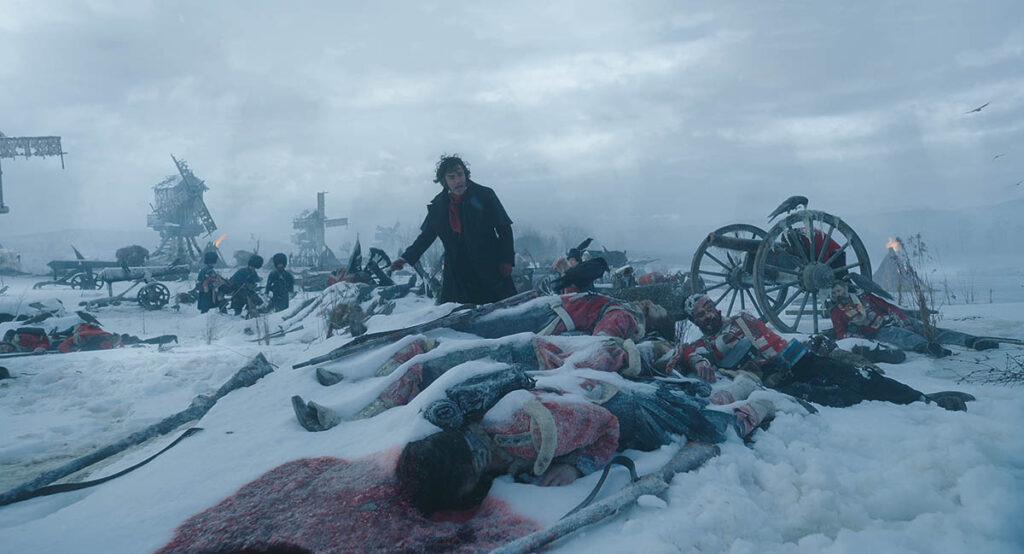
Victor Frankenstein scours a frigid, wintry battlefield looking for human body parts to assemble into the Creature. “That was shot in an old parking lot somewhere in Toronto,” Laustsen recalls. “We were lucky with the weather. We didn’t have any lights on that, just negative fill behind the camera. That’s a seamless shot with four setups and a big wide shot craning in. Dennis did a lot of work on that. He made the snow. Then we color corrected to the cold side to make it even colder.” There were times when bluescreen had to be deployed, in particular for the scene where Victor climbs to the top of the water tower to place the lightning rod. “The challenge was to make the light soft enough to have this feeling about magic hour, and we have the lightning strikes coming in and a lot of rain. The key for the bluescreen was to keep it as dark as you can; however, you still need to be able to key it to see the blue, but you don’t want to see blue everywhere. Dennis is cool about that. And because the camera is moving so much, we could not have negative fill there because we shot 280 degrees. The only thing we couldn’t solve was where a crane was coming in.” An innovative lighting trick involved a specific atmospheric and prop. “Our batteries have to go from green to red, but I didn’t want to only put a light into the battery. We also had steam put into the battery, so the light was not clean. When it’s becoming red, we put in more steam. For the batteries, we did a lot of tests because we wanted to be sure that the color was right,” Laustsen says.
Editorial turnovers happened quickly. “Herne Hill Media /Mr. X was on the film from the very beginning and had built all of these environments in Unreal Engine,” explains Evan Schiff, Editor. “If we were adding the Swiss Alps or something like that in the background of a shot, within a few days after shooting and editing it together in the scene, Dennis gave me back temp comps. Normally, we do a lot in Avid Media Composer temp visual effects, and when we start to get real versions back from the vendor, we replace those.” Having practical elements in the frame made cutting scenes easier. “One example would be in the wolf attack. There are two shots stitched together, where the Creature throws one of the wolves up against the fireplace, another comes into frame, and the camera pans. Dennis and I worked together on, ‘What is the timing of that stitch?’ Initially, the camera was panning ahead of the wolf that came in, which felt like the camera was leading the action in a way that didn’t make any sense. Dennis and I got together and said, ‘We need to delay this a little bit. Let the second wolf come in, run through the frame and be the reason the camera pans to the left back to the Creature, rather than leading the action.’ Sometimes, it’s the little details that make a big difference in how you perceive the scene. Getting together with Dennis talking through how to make the most impactful shots was useful,” Schiff states.
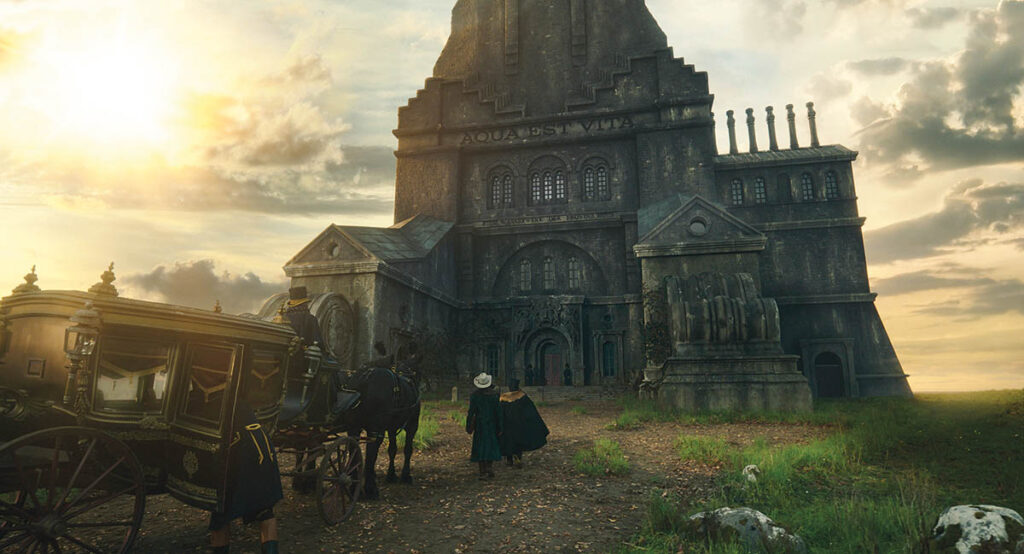
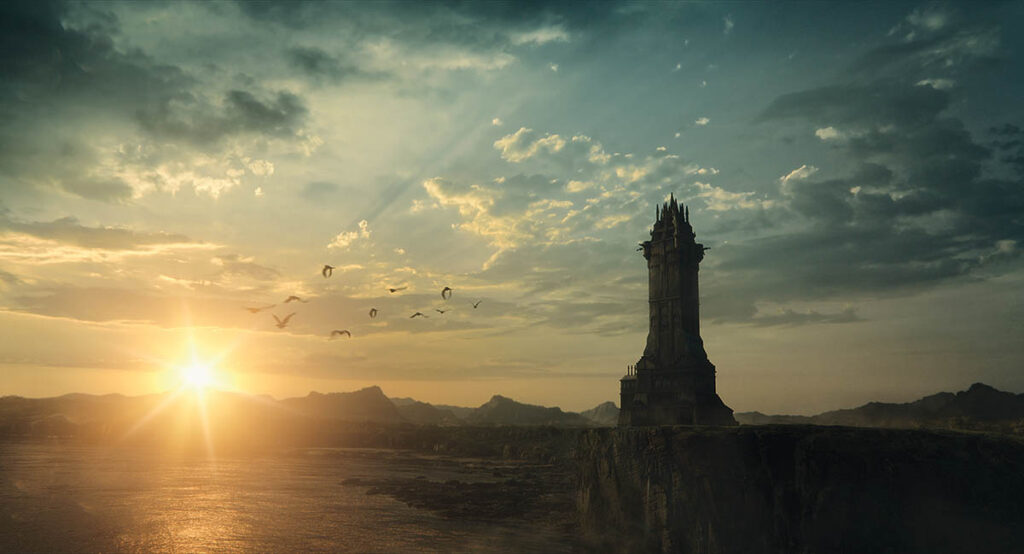
Herne Hill Media/Mr. X was responsible for 950 of the 1,200 visual effects shots, while ILM created 150, and Ticket VFX produced 100. “The old water tower only ever existed as a partial build in the Markham Fairgrounds just north of Toronto,” Berardi remarks. “We built the first 15 feet of it, dressed snow around it, and digitally extended the top of the tower. We had the Magic Camera Company in the U.K. working with us for the explosion and the collapse moment, as well as a wonderful miniature effects artist, José Granell. We previsualized the whole sequence, modeled the tower, got signoff from Guillermo, put it all in Unreal Engine, and got Guillermo to approve it all. Then, José and the Magic Camera Company built the 1/20th scale version of the tower. Guillermo designed exactly how the tower was supposed to collapse. José achieved that silhouette by carefully putting the detonating cord in and weakening parts of the tower miniature so it would fall exactly in the right way. We shot it outside, which was great. It became a good reference for us. It mostly ended up being digital, although there are a few shots where the miniature plays with digital fire enhancement and debris.”
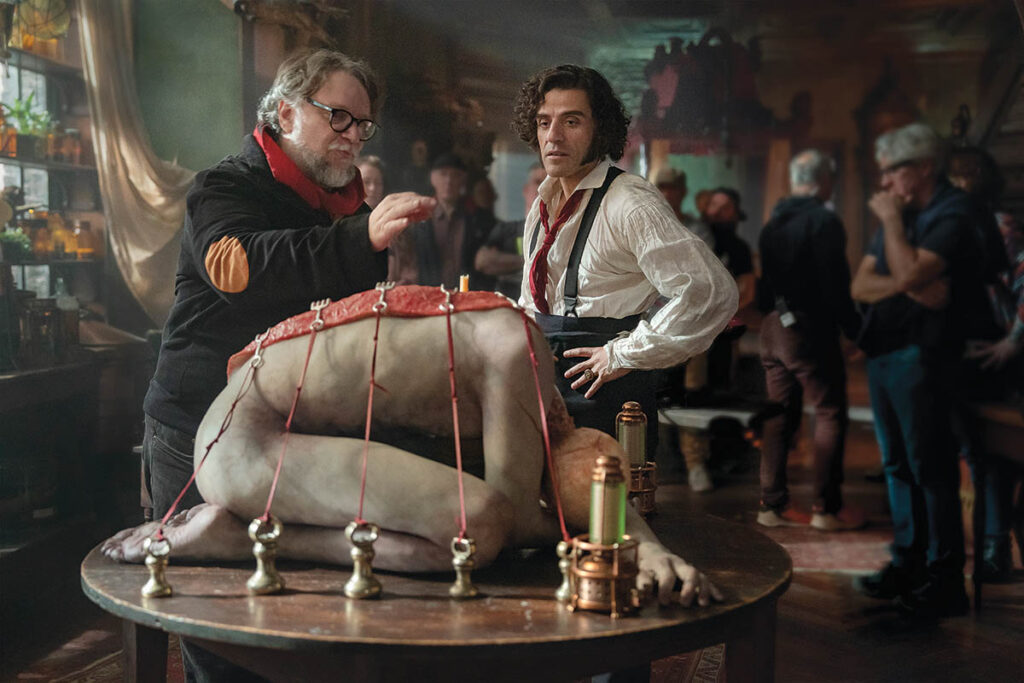
An outstanding scene is when Victor does a presentation to the Royal Society of Edinburgh with the torso of a corpse. “Mike Hill, the incredibly talented makeup effects/special effects creature designer on the movie, deserves a lot of credit,” Berardi notes. “Mike and Guillermo designed this mostly dissected half corpse, where you literally see the heart and lungs. That was basically an articulated puppet. We had a rigged table in front of the puppe-teers, who were all in bluescreen suits. As the corpse does this ‘Aaaah” as it animates to life, that was physically animated by a puppeteer. We removed them from all the shots and brought back the rest of the lecture hall they were occluding. We did a digital table to replace the partial table that was built. We enhanced the half corpse where Guillermo wanted to sweeten or touch it up. We worked on the crown where the brain was exposed to make it look wetter. We did work on the cross-sections and some of the silicon folds to clean those up. When Victor throws the ball, the puppeteers really catch it. There was a rig that came off the hands and attached back to the elbow and shoulder. It was real hands, digital forearm to elbow, then back into real from the bicep up to the shoulder. We replaced the section of the arm that didn’t line up with the real puppeteer’s hand to catch it.”
Simpler effects appear. “The captain’s quarters on the ship was shot on a stage,” Berardi remarks. “If you focus and look out the window, it should feel like an Arctic icescape. I didn’t want to spill blue into that beautiful set, so we did white screen on that. But then you look at something like the butterfly, which is a beautiful moment between Victor and Elizabeth Lavenza. We did a deep dive into butterfly anatomy, how they move and catch little wind currents. I’m hoping that stands the test of time.” Rodents are drawn towards the Creature. “He’s at one with nature. The mice pitter-patter all over him, and he even holds them at one point. It’s telling the story that he’s a gentle soul. We shot the scene as if the mice were there. Then we did an editorial pass with Evan Schiff and turned it over to ILM for blocking and animation passes. There were many invisible visual effects, like the skies, and some of the work with the Creature’s eyes. For all the exteriors, we we added horses, carriages and people in the background.” The director found himself in a dangerous situation. “One of the mandates we had was we’re going to shoot every shot with the real wolves and use it as reference for the animation,” del Toro states. “We combined both hand puppets for the biting heads and mechanical puppets for the launching of the wolves,” del Toro notes. “We did a complicated rig model for the wolves and a good grooming system for their pelts. Wolves in the winter have several layers of pelt, one that is denser and closer to the body, and one that is fluffier and dirtier outside, so you have to do a good grooming system. Shooting them with the real wolves in the real set was harrowing because no matter ‘how trained,’ wolves are feral animals. I’m a fat guy, so I didn’t want to be perceived as a snack!” Themes of Frankenstein are relatable. “It’s a movie that is extremely biographical for me,” del Toro reveals. “Elizabeth is me. Victor is me. Harlander is me – or the studio, depending on the scene!”