Images courtesy of Cinesite and Angel Studios.

Images courtesy of Cinesite and Angel Studios.
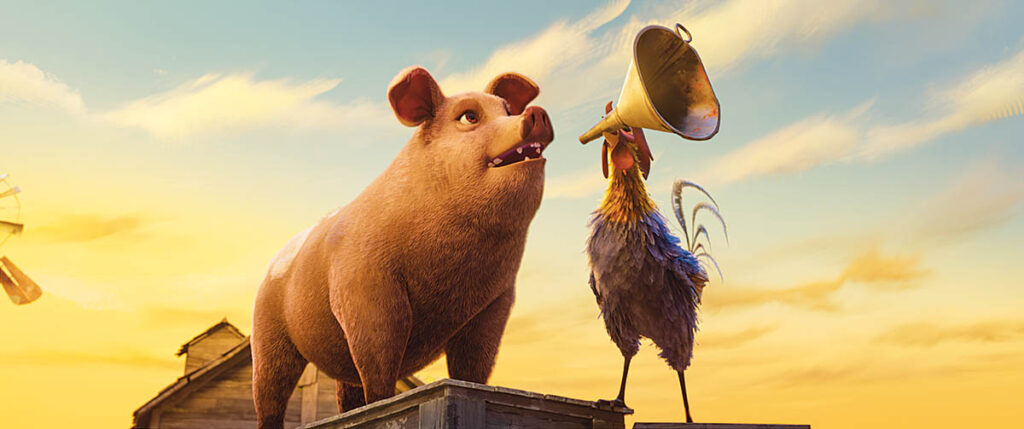
We don’t know how George Orwell would have reacted to the CIA making his seminal novel about how power corrupts part of their anti-communist propaganda during the height of the Cold War by releasing an animated feature. However, he did not think well of colonialist Rudyard Kipling, who explored the same theme to the point of writing a damning essay about him. Seven decades later, a consortium comprising Aniventure, The Imaginarium Studios, Cinesite and Angel Studios has decided to produce its own animated reinterpretation of Animal Farm under the direction of Andy Serkis and has adopted the tagline “A Cautionary Tail,” which reflects the adaptation’s desired tone.
“In the barn where they have these big meetings with all the animals… Whenever the camera turns, you’re always seeing a whole bunch of stuff. That’s where having a library pre-built enabled us to move quickly and populate shots that needed that scope of animals doing their thing without stopping us and slowing us down. Having a pre-made library was a huge plus.”
—Eamonn Butler, Associate Director
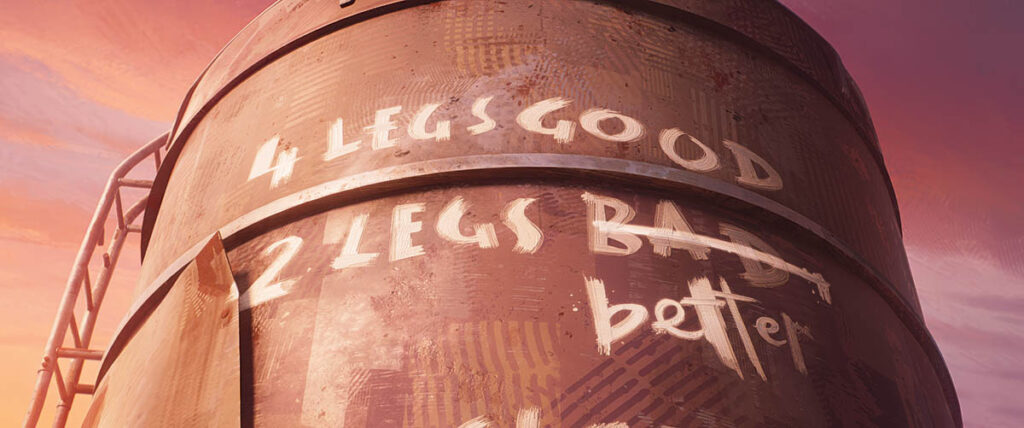
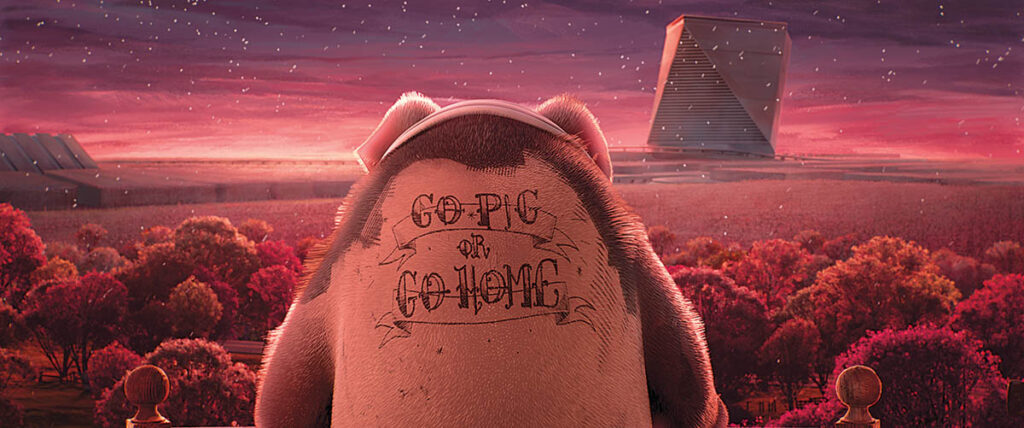
“Big, heavy themes are at play here,” states Eamonn Butler, Associate Director of Animal Farm, when discussing the farm animal uprising that leads to their liberation from human subjugation, which then transgresses into a totalitarian dictatorship. “Focusing on trying to make this accessible to the family audience was the key thing. Once we started playing into keyframing characters, and leaning into design and our themes of naturalism versus artificiality, which came out of our initial look development phase. That opened us up to ask, ‘Okay, naturalism. What does that mean?’ That meant leaning into analog filmmaking techniques, such as using real lenses and the look you see in movies like Days of Heaven, The Natural and Field of Dreams. Beautiful, gorgeous films that were shot with real lenses on film. That gave us a strong foundation for the world the animals wanted and believed in. For artificiality, we used anamorphic lenses and much more sterile artificial lighting. We found that it was a great route for us to play into all of the themes. We didn’t want to be pointing the finger at modern political situations, but rather remind people to think about their situations and make sure that they use history as a lesson and even potentially a warning. By using our brains, we can look to the past to help us make decisions about what’s right for us in the future.”
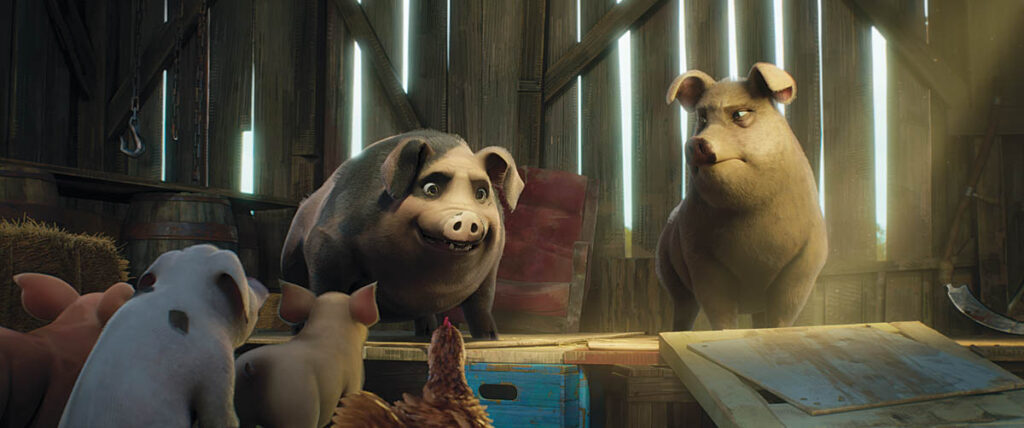
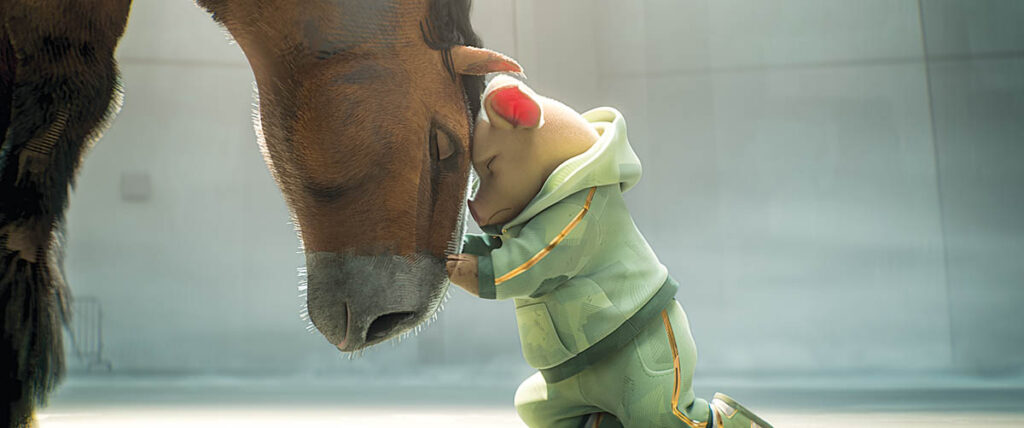
Stylization assists with the suspension of disbelief. “It allows you you to cross that barrier to accept that animals can talk, and eventually pigs can stand on their back legs and do what they need to do in the story,” Butler notes. “We didn’t want to lose their humanity in that, and also their ideology was quite simple. We wanted people to believe that this is exactly the world animals would want to live in. However, there’s a turning point when the animals, particularly the pigs, start to walk on two legs. We looked at that and did some testing. For example, a pig’s leg or an animal’s hind legs: their ankles are quite far from their toes, and if we plop them down like human feet, they start to look like clowns. We pulled it back. They’re still walking on their hooves. They’re still animals trying to behave like humans, but at no point are they actually humans.” Two separate rigs were created for the pigs. “We tried to create one rig that could do everything, but it became too top-heavy. The more controls you put in a rig, the more sophisticated it becomes, and the slower it is to use. You’re trying to find a balance between providing artists with what I call a sketch mentality or a sketch arena, where they can rough stuff up quickly and come up with an idea. If they’re using heavy or slow tools, it can stop them taking artistic risks and trying out original ideas. Early on, we decided, ‘Let’s have two separate rigs.’ Then, we fudged when they went from being on fours to being on twos, but we separated them; that was a turning point.”
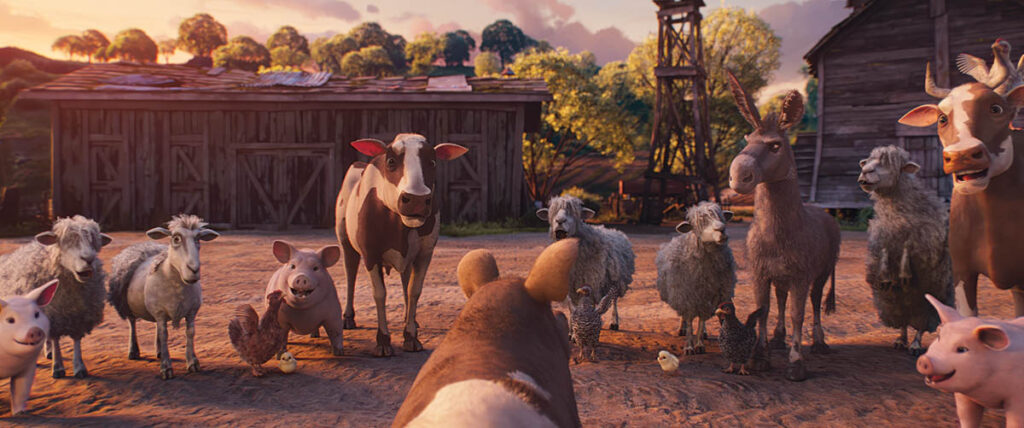
A unique approach was implemented for the character designs. “We were trying to think in 3D and find that spot between the photorealistic and stylized, as well as find the appeal of the characters,” notes Amos Sussigan, Production Designer. “I gave everybody the same character. David Colman is an amazing character designer who specializes in straight National Geographic animals, but he also has a background in animation, so he adds that appeal and cuteness. David would also do quick sketches to see how they would run on two or four feet. We would take that and give it to Véronique Comeau, an amazing designer who only works in 3D; she would select a group of sketches and cobble them together into a 3D version of the character. We would take those and give them to Adonay Cordero and Sergio Mancinelli. Adonay Cordero is a straight character designer, which means he has an amazing hand. He would draw on top so we could figure out the design of the folds and how the facial expressions would work. Sergio Mancinelli is an impressionistic painter and would do a pass on that. It would come to me, and I would do a pass on top. Then, we would have a character, if Andy liked it.”
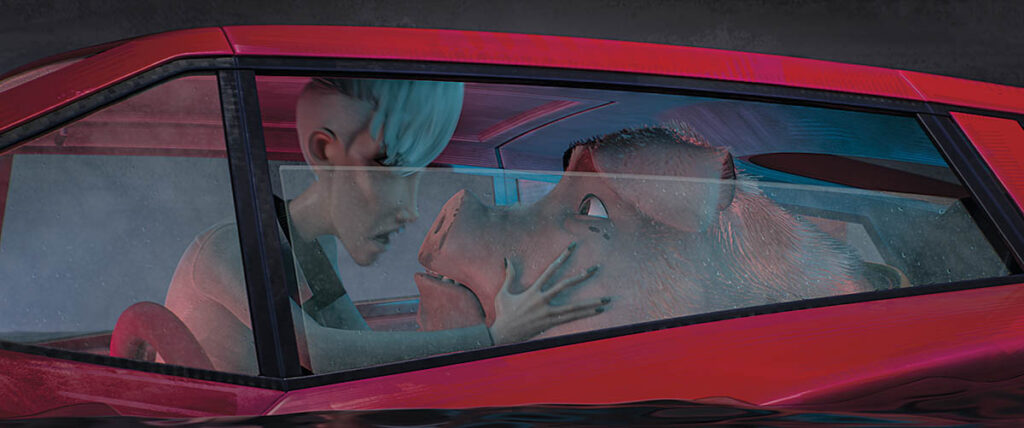
Numerous characters had to be created. “There were so many, and they were all different animals,” Sussigan notes. “There are a lot of pigs, but they’re all different. And then crowds. It’s hard especially when you’re working with a smaller budget, and less time handling crowds is hard because it takes an incredible amount of computing and a system that is already set up to create multiples of something. Fur was another thing that worried me because we were trying to find that look that would react to light but was impressionistic, so we did a lot of testing.” Humans make an appearance. “There’s a slightly grotesque nature to some of those characters,” Butler remarks. “Freida is very slim and is a result of the world she has created for herself. The world she lives in is artificial. Her movement came from the design. We always start with the design, and that inspires animators to go, ‘She’s very lean, slim, tight-fitting clothing and very upright.’ You get cues for performance based on Amos Sussigan’s design and all the amazing work they did. Other characters, for example, Mr. Whymper, we had more latitude there; he was broader in terms of physicality but much like his name. He’s a slimmer, weedier kind of character, but we had more room to play with his performance, physically.”
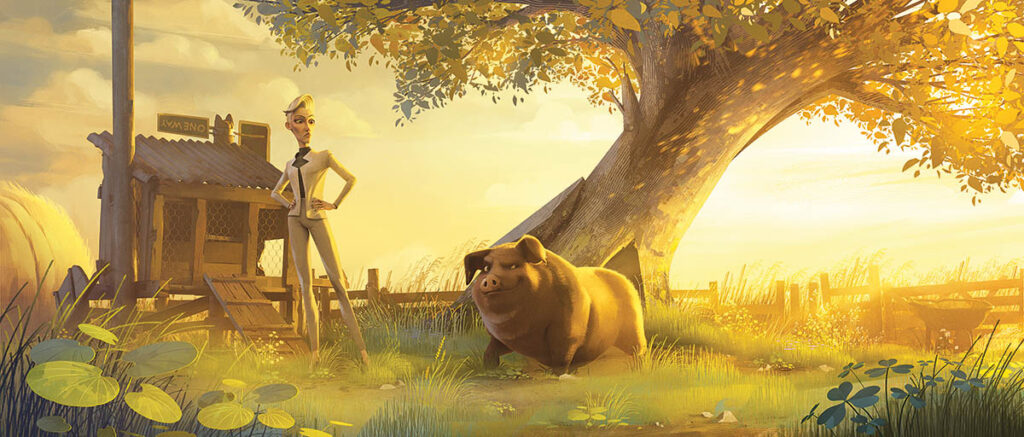
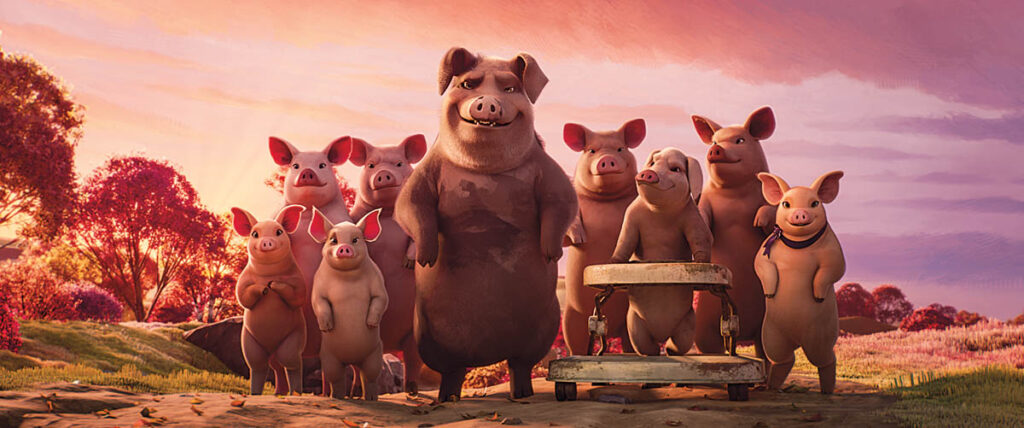
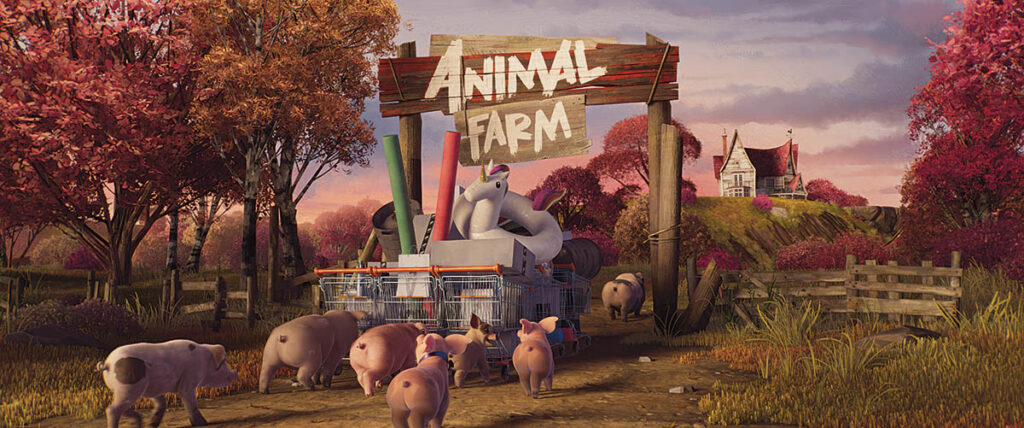
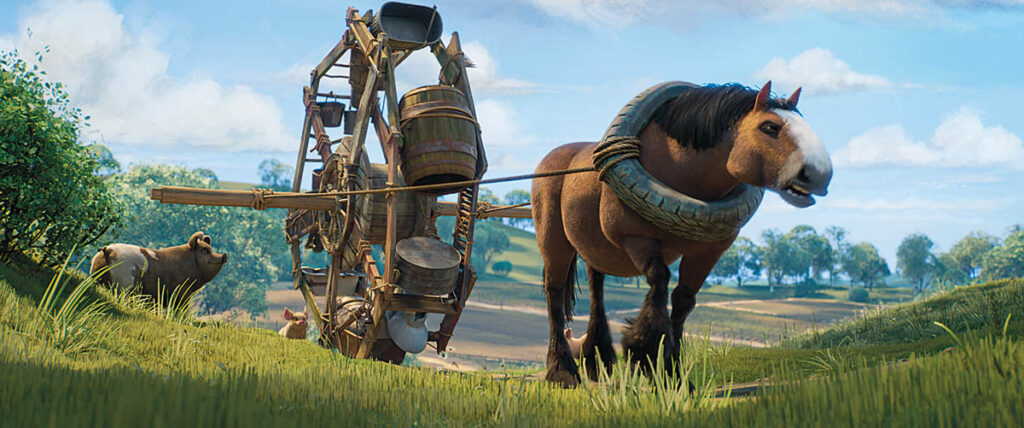
The reliance on natural lighting and the progression through all four seasons had to be taken into account, particularly when developing the color palette. “One of the things I was attracted to from the beginning, from a lighting, cinematography and color standpoint, was that we were going to have the seasons,” Sussigan states. “Since we were going from natural towards artificial, I thought it would be interesting to see the corruption of the seasons as well. We start in spring with the yellows, earthy tones. Then, we go to summer, and it’s this blue-green. It’s the moment when everybody is the happiest on the farm. I also wanted to see a color transition as the pigs get corrupted. When we get to fall, it’s never just red. It’s always a magenta. It’s the introduction of purples and all of these artificial colors. The same thing went for winter. Winter is a dramatic part of the movie, and when I was describing the snow, I said, ‘It’s always greenish acidic or slightly more yellow compared to the bucolic snow that you would have in a movie like Frozen, for example.’”
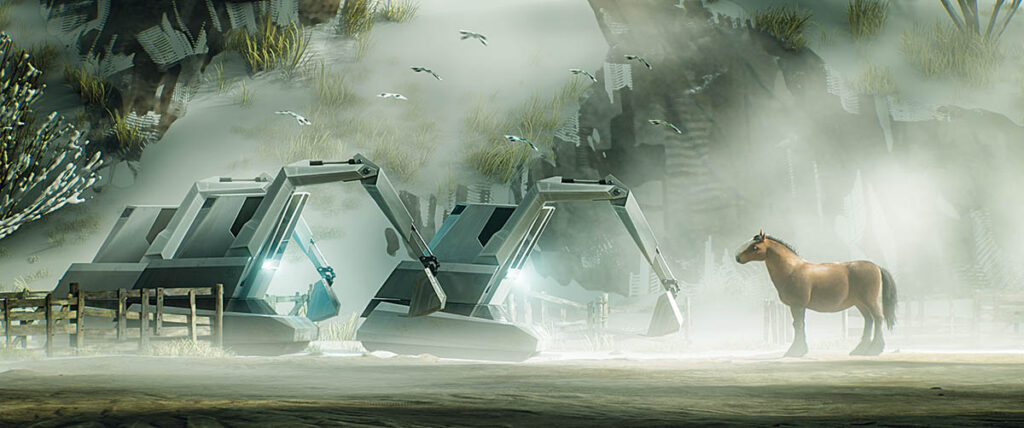
Given that the story unfolds on a farm, vegetation had to be treated in an efficient, creative, technical and financially sound way. “We used particular techniques where we can take one particular design and alter it slightly so that you buy that separate piece of vegetation,” Butler reveals. “We ended up with a library of bushes, trees and foliage. Also, you have the set dressing. When they go inside the house, for example, every bottle, can, every item you see has to go through a design phase, be modeled, textured, painted, and then examined rigorously on turntables. I can’t tell you the number of times I’ve sat here and watched a tree go round and round slowly as we examined it from every particular angle. But you have to find smart ways to populate those worlds and focus on what you can see. We were constantly managing the complexity and richness of that environment for the camera. For example, the farm went through a lot of planning. Literally, it looked like an architect’s plan for the entire area where the cameras could look, and what parts of the building you could see. The main house, for example, was well designed from the front, and at the back there are no windows because we never put the camera there. Then, you’ve got the interiors, and the interiors were a little bit of a cheat because once you go inside the farmhouse, it needs to be big enough to allow those scenes to play out. They would often not correlate with the building itself. But overall, the basic layout would match the building.”
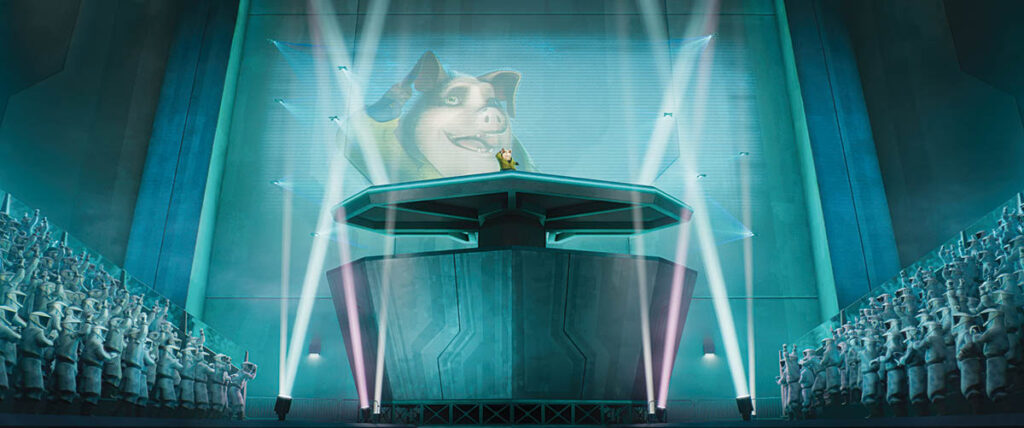
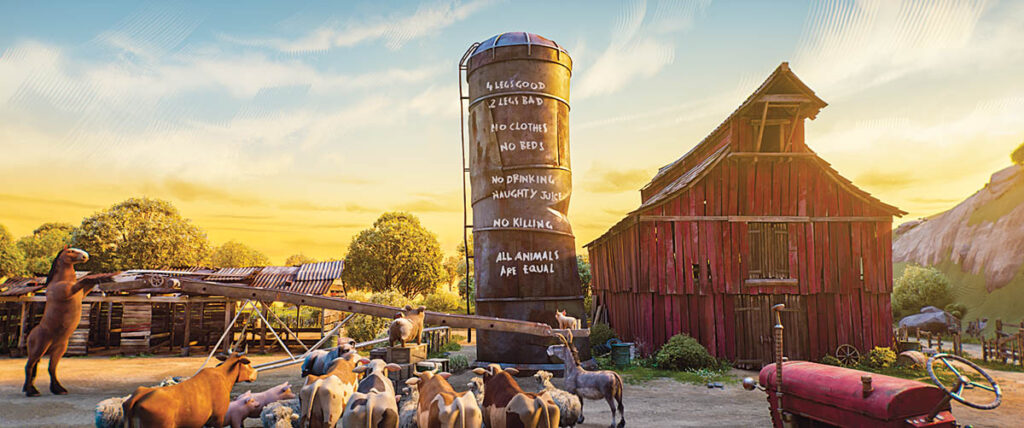
The world had to feel populated. “Crowds were the bane of our lives,” Butler laughs. “Andy always wanted to have a sense that the farm was vibrant and there were animals everywhere. We had crowd-heavy shots, so we built a library of animation behaviors and cycles for each animal that was both specific and all-encompassing. They could walk, graze, play, frolic, sit down and enjoy the sun. It was a whole list of stuff. Animators were able to bring in cycles to populate the background and to do more performative work whenever needed. They could break out of that cycle and add those performances on top of what was already there. For example, in the barn where they have these big meetings with all the animals. Whenever the camera turns, you’re always seeing a whole bunch of stuff. That’s where having a library pre-built enabled us to move quickly and populate shots that needed that scope of animals doing their thing without stopping us and slowing us down. Having a library pre-made was a huge plus.”
Cinesite made no major technical alterations. “There’s a lot of scope in this film, especially when you’re outdoors; you can see quite far, so we can figure out how to render and manage those renders to camera when you could see for miles into the distance,” Butler states. “We changed how we manage things, as opposed to the underlying software. We leaned heavily on Houdini for effects, such as water and destruction. That was really helpful and is a tried-and-tested visual effects tool. We definitely were trying new things, but not new in terms of the company as a whole, but in terms of other aspects of our company bringing them in.”
Andy Serkis was collaborative. “His direction was clear, but he always left the door open for new ideas,” Sussigan remarks. “I was never afraid of pitching him something new or slightly different from what he pitched and seeing if he liked it. That’s how you get the best work. I personally loved that he was into this live-action type of lighting – often quite theatrical, especially in the second part of the movie. I liked that we could go there. Sometimes, animated movies try to make everything saturated and poppy colors, so Animal Farm was the perfect canvas to experiment with something more restrained and bolder.”