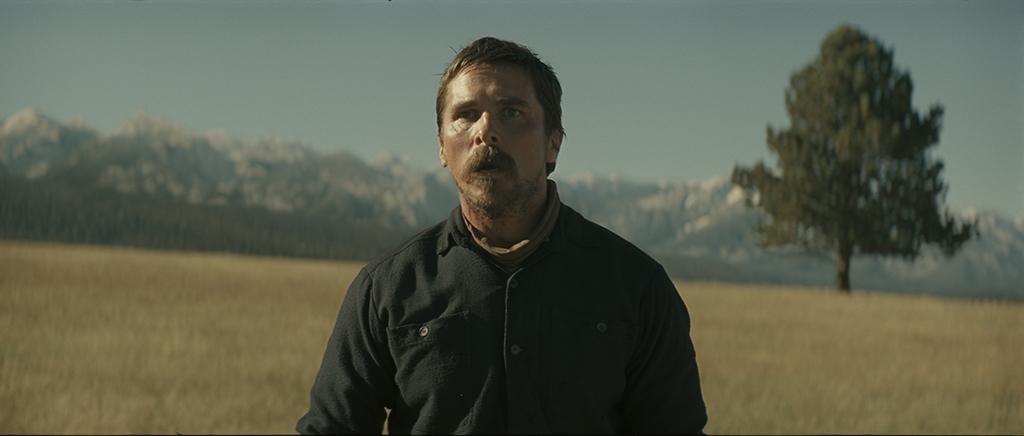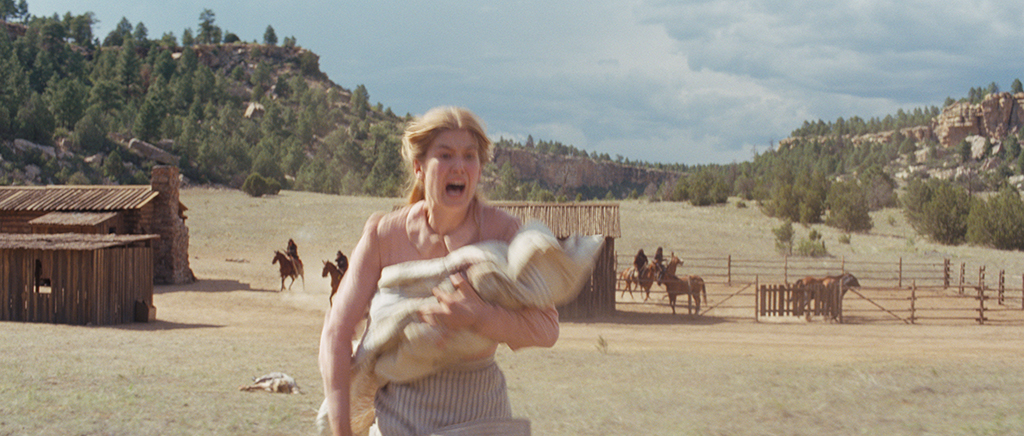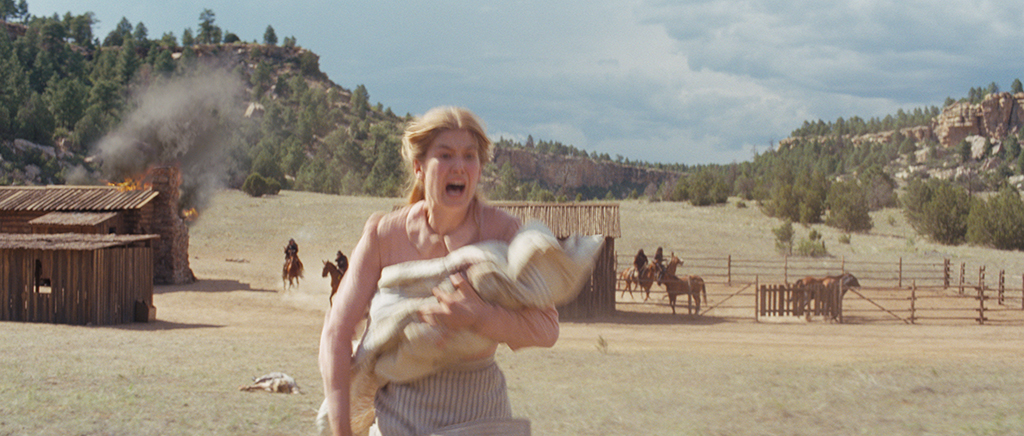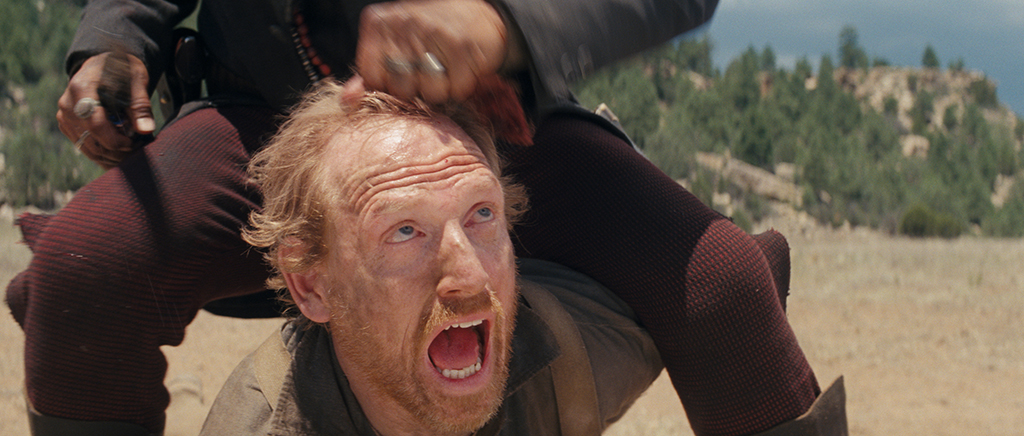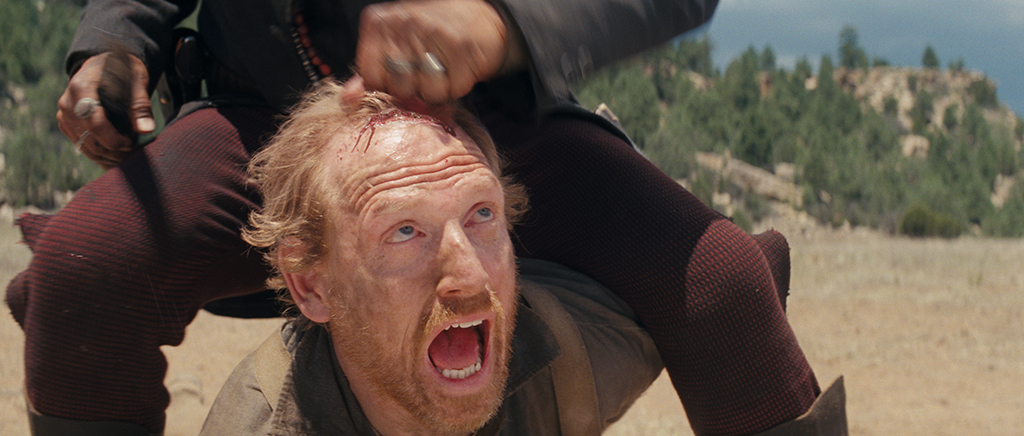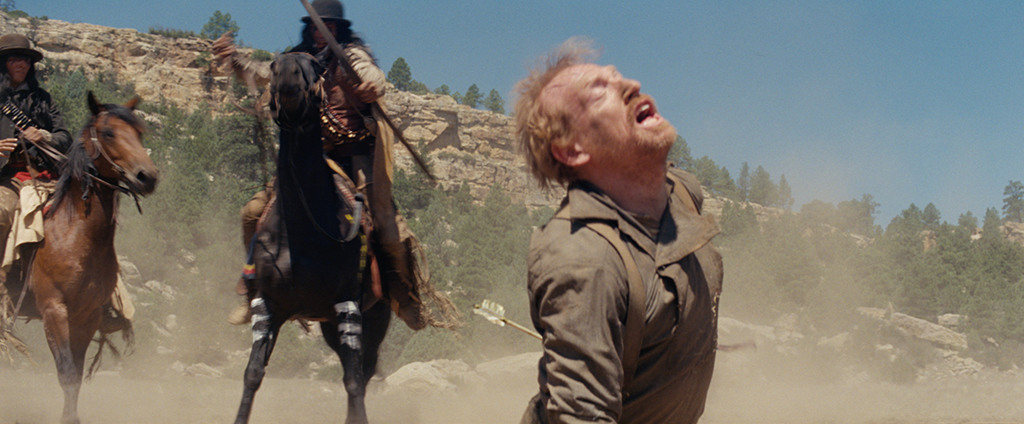
The arrow Wesley Quaid is shot with is a digital creation.
As the actors were rehearsing, Doug worked with them to come up with a reaction that made sense for how and where they were shot. I really can’t overstate what a huge part of selling shots like these lies in the actor’s performance. For most shots the actors had a few tracking markings affixed to their wardrobe, not solely for tracking purposes. We found that giving an actor a visual representation on their body for where the wound was [located] was helpful.
At the end of the shooting schedule I shot a variety of squib elements, blood, bone and dust elements matching angles for key gunshot wounds. I’d say that 90% of the blood is a filmed element. There were a few cases where the size of a gunshot or wound was re-conceptualized in the edit, and for those we sim’ed a CG blood hit.
VFX Voice: The film also includes several matte paintings. What was the process of scouting for reference and imagery like?
Braver: We had a couple of key locations. For Fort Berringer, my first day of real prep was spent in a room with Donald Graham Burt, the Production Designer, figuring out that tricky balance of how much set he could build and how much set we could extend.
The set that Don ended up building was actually pretty massive when you were walking around it. What Don did that was so smart was he didn’t build anything the camera wouldn’t see from most of the routine coverage. This saved us countless VFX shots.
What that did mean for VFX was a lot of roofs and chimneys needed to be added, fences completed, walls extended, and in wide shots, whole buildings and areas of the fort added. We did a pretty extensive Lidar scan of the practical set, as well as a texture shoot, to capture as much of the detail as we could of the amazing work the art department did. Again, we didn’t use any green or bluescreens for any of these shots, so it was all essentially roto, except for the few wide shots that had pretty clean matte lines.
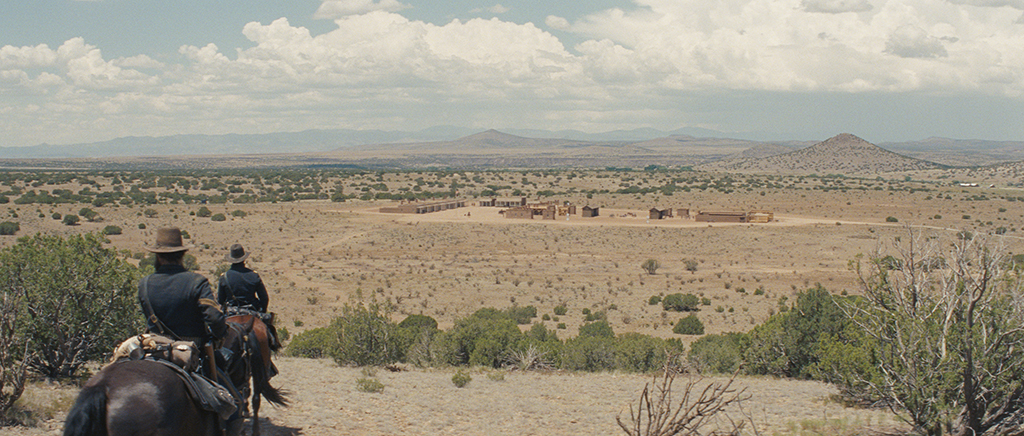
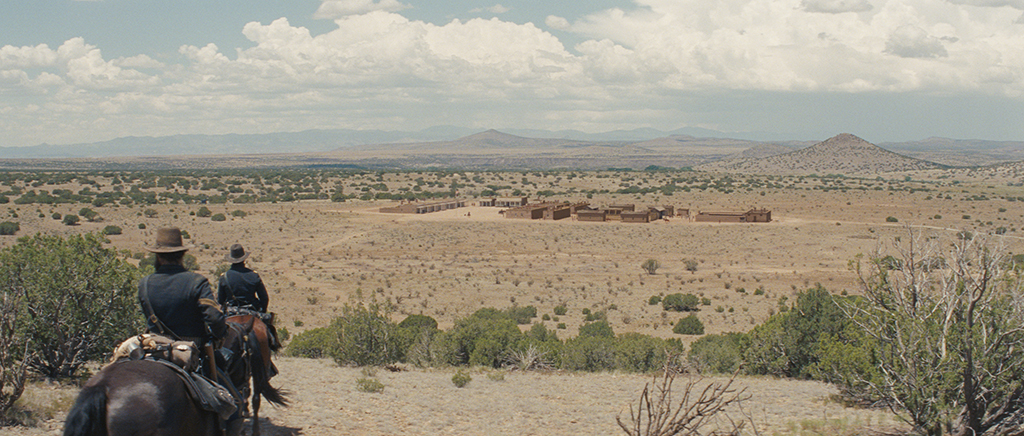
Captain Joseph J. Blocker (Christian Bale) and his troops arrive at Fort Berringer. The visual effects team made minor augmentations to a practical set.
“We did a pretty extensive Lidar scan of the practical set, as well as a texture shoot, to capture as much of the detail as we could of the amazing work the art department did. Again, we didn’t use any green or bluescreens for any of these shots, so it was all essentially roto, except for the few wide shots that had pretty clean matte lines.”
―Jake Braver, Visual Effects Supervisor
Then there was Fort Winslow, a place we wanted to be at the base of the Colorado Rockies. In reality, it was shot in New Mexico. Again eschewing greenscreens, a lot of detailed work went into the rotoscoping of the actors and horses here. Luckily, a lot of the actors wore hats, but the whipping horse tails – that’s another story!
To capture the backgrounds for the scene, I had a little unit when we were shooting other work in Colorado, and I made it our mission to make sure to get some great plates of the Rockies. We ended up using those plates along with a bit of matte painting to bring the practical location a bit more in line with the plates.
Another location is a place called the Valley of the Bears in Montana. The whole journey of the film leads us to this sequence. We ended up playing a location on the border of Colorado and New Mexico for Montana. We decided that about 180 degrees of the Valley location would play practically, aside from some non-period removals, and 180 degrees would be augmented with a rather large matte painting that Double Negative made. The layout of the mountains was influenced by some of the scout photos that were actually taken in Montana.
I did a few concept photoshops for Scott to sign off on a look, and passed the winner off to DNEG. The sequence was a challenge because it was shot over a week with all natural light. That meant that the lighting of the matte painting had to be just adjusted almost shot to shot, to match the ever-changing light in the foreground plate. Luckily, we had the chance to get a lot of great lighting reference during the shoot.
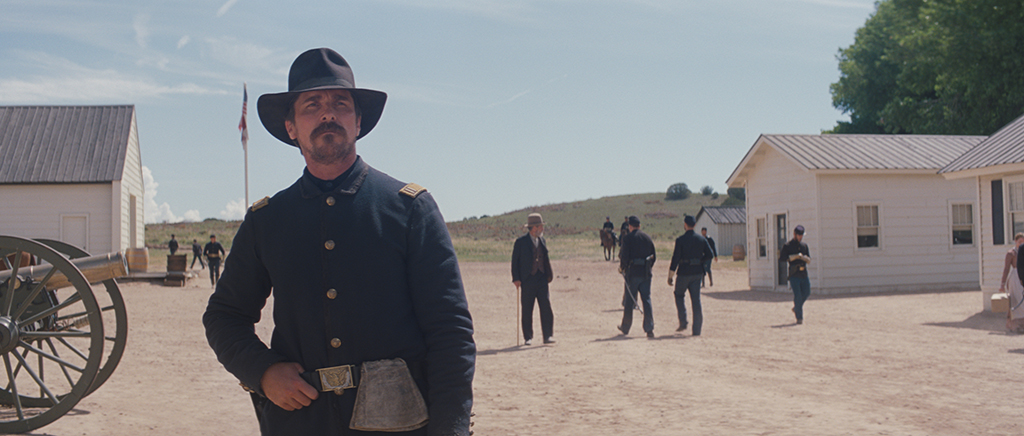
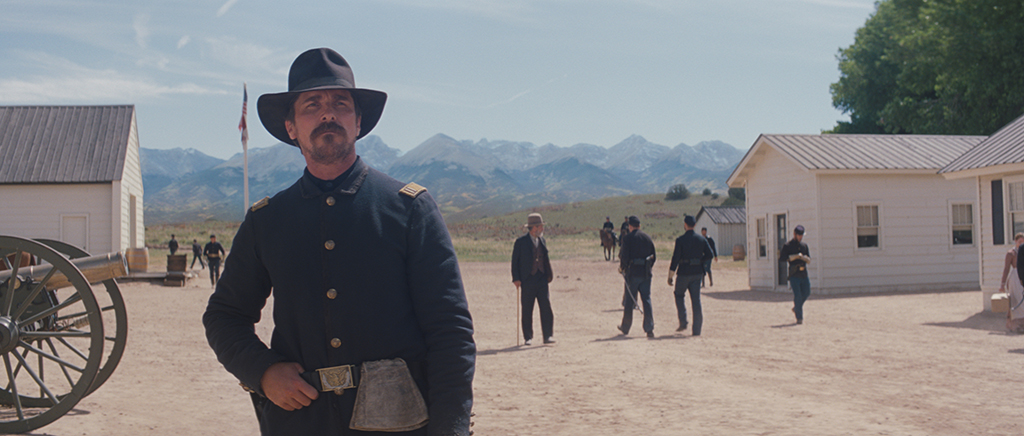
Captain Joseph Blocker watches his troops mount up at Fort Winslow. A significant amount of rotoscoping was required to insert mountains and other landmarks into the shots.
VFX Voice: What was your toughest shot to pull off?
Braver: I don’t know that there was one ‘toughest’ shot. Since the film is so naturalistic and real, a lot of work went into matching the photography as closely as possible. We did switch from finishing the film in 2k to 4k with about six weeks left of post. We swapped all our scans, re-did a ton of matchmove and roto, and added more detail to a few DMPs. That was an insane thing I hope to never, ever do again.