Images courtesy of Netflix.

Images courtesy of Netflix.
Stranger Things takes its final outing seriously, with supersized episodes and a feature-length finale, where Eleven and her friends battle Vecna in the Upside Down as his demonic army seeks to conquer a quarantined Hawkins.
The eight episodes of Season 5 were released in three volumes and required the creation of 5,844 visual effects shots, with 1,456 appearing in Episode 508 alone. Under the supervision of Betsy Paterson, Wētā FX and ILM led the visual effects work alongside Eyeline, The Yard VFX, Accenture Song, Rodeo FX and BOT VFX.
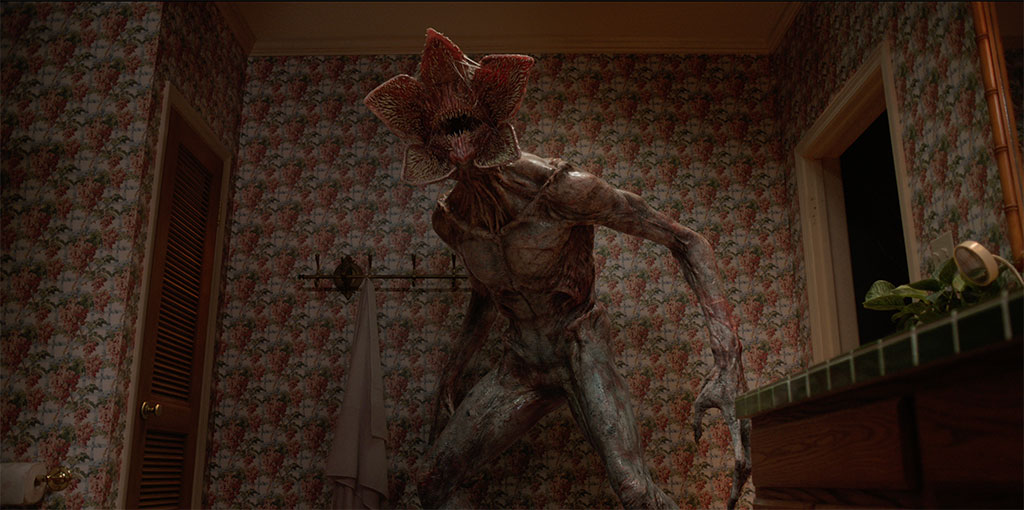
“There’s an established language, but we were pushing everything much further,” Betsy Paterson, Visual Effects Supervisor, Stranger Things S5, states. “We’ve seen the Demogorgons for years, but this time, they had to be onscreen a lot more and do crazier things.” The staggered release schedule only provided an extra month for post-production. “We had to be working on all of it the whole time, especially the big set pieces. It was a relief to get Episode 504 out of the way because that was the first half, and we were building to that huge scene in the MAC-Z.”
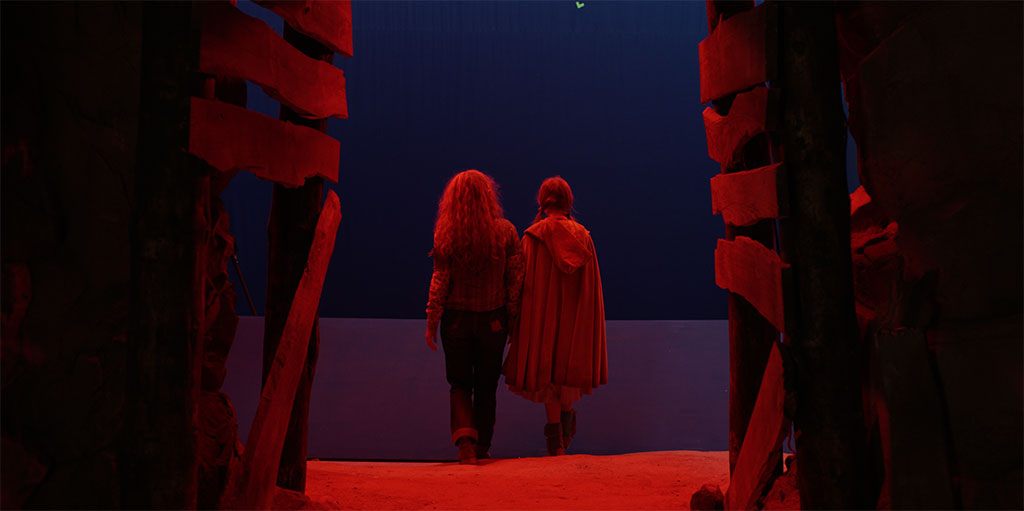
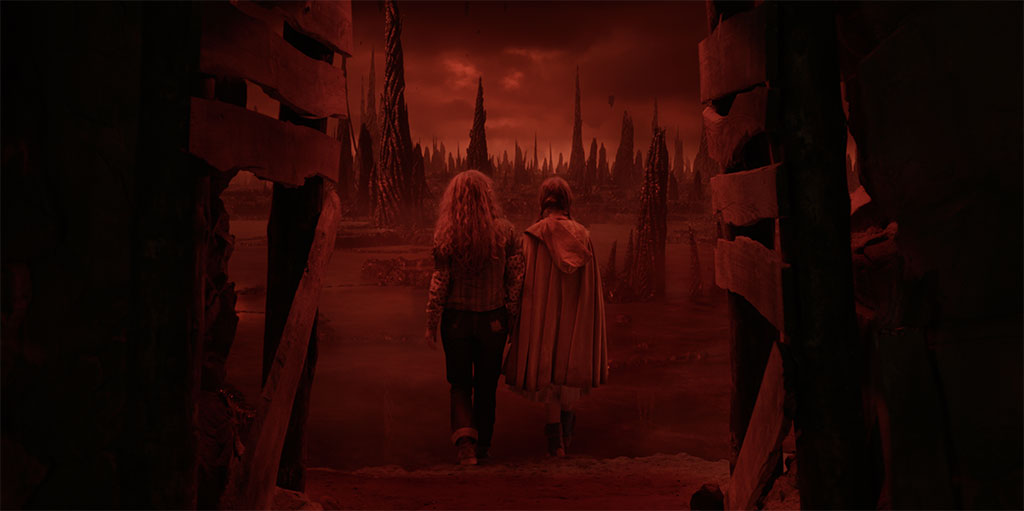
Pre-production, principal photography and post-production each lasted one year. “It’s always important to me to make sure we have the design down as early as possible; my goal during prep and the shoot is to figure out and set expectations for what these various things are going to look like and the tone of each scene,” Paterson says. “We were lucky. We had some great previs and postvis. We figured out the intricacies of each of these crazy set pieces as early as we could so that we could spend as much time as possible polishing and making sure that the final product looked as good as possible.”
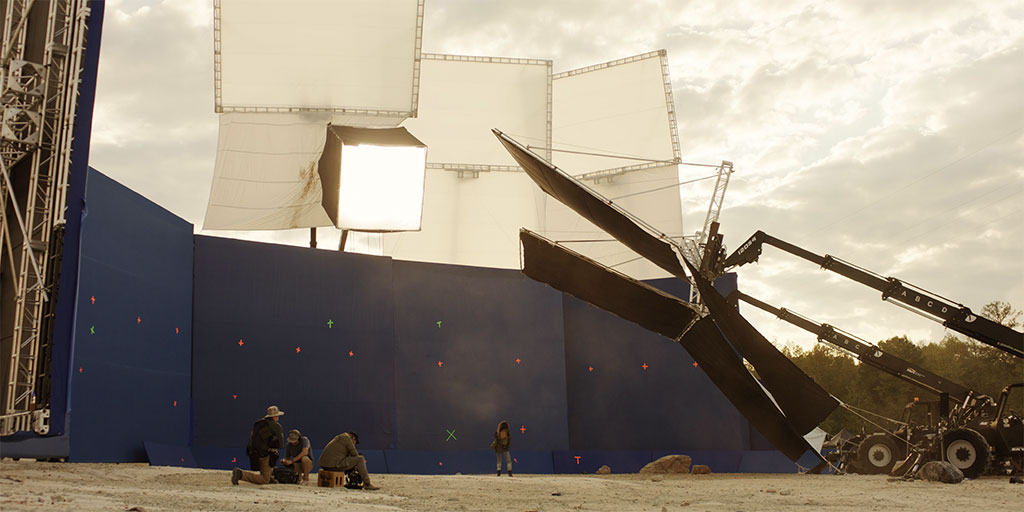
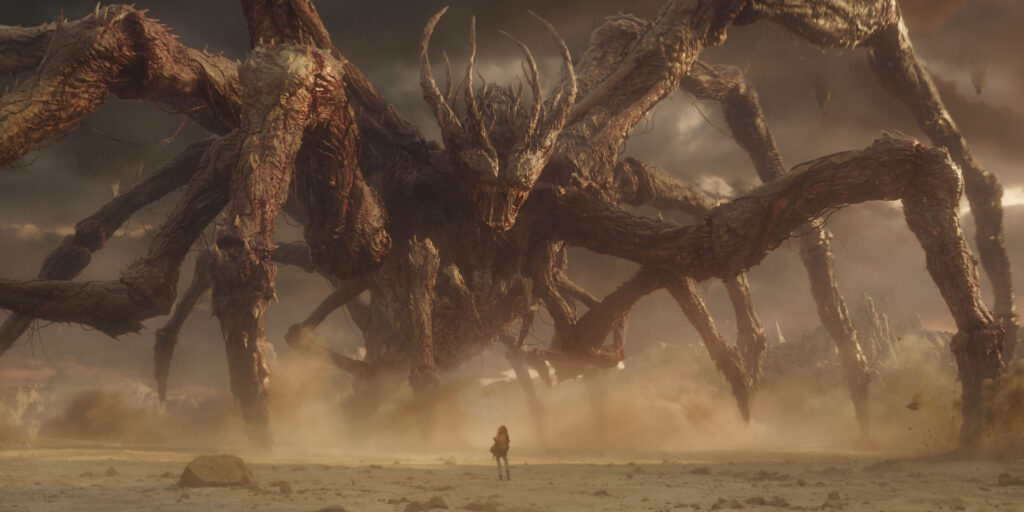
With each season, the team’s confidence in creating the creatures has increased. “You can see it in the earlier seasons that they were being more cautious with what they showed onscreen and what the creatures were asked to do,” Paterson remarks. “Whereas now, in the final season, it’s like, ‘We know we can do this, so let’s just go for it.’”
Technically, a hive mindset prevails for the Demogordons. “There’s not that much difference between them, but we track each one. We know that’s the one who got stabbed in the face by Karen, so we’re going to track his little scar on his pedal all the way through.”
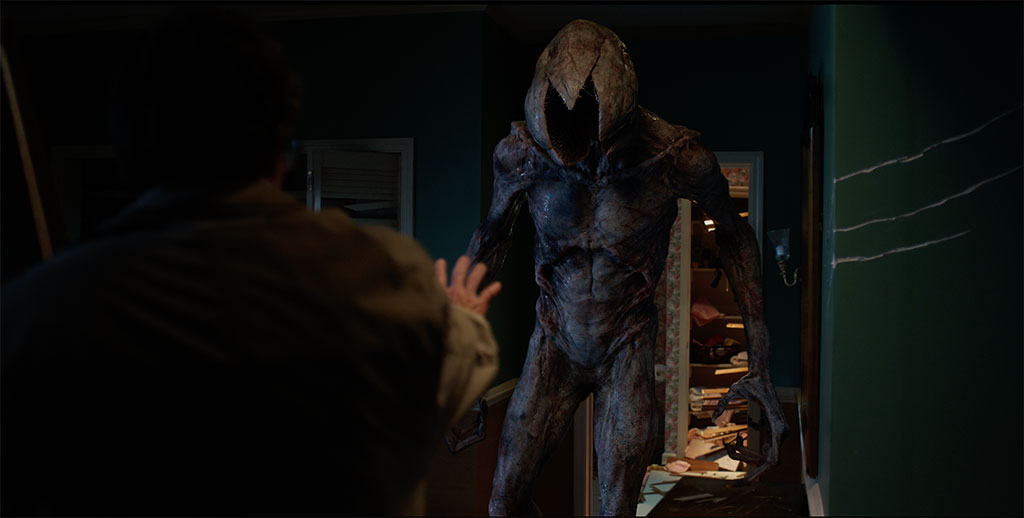
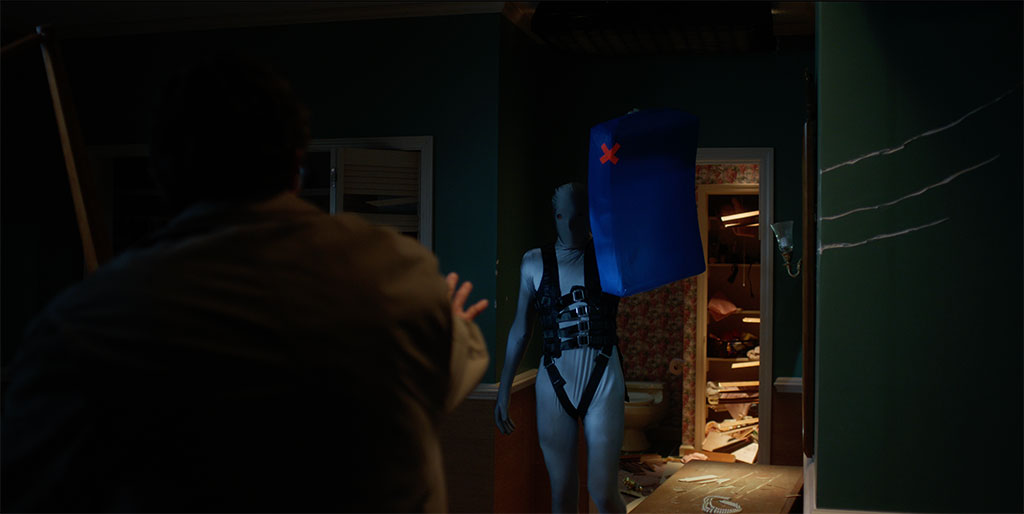
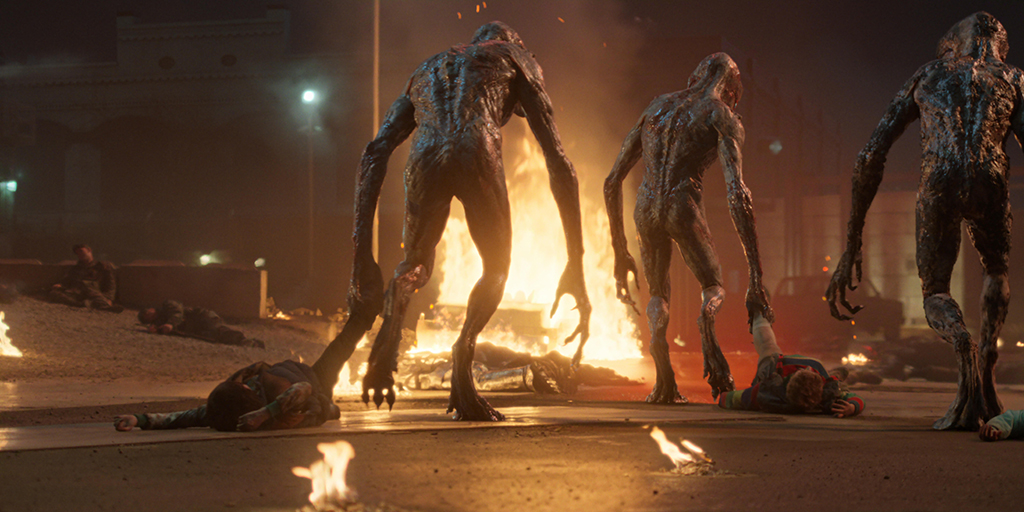
Along with the Demogorgons, the Demodogs were upgraded. Paterson says, “We started with the same model, and Wētā FX went in and sculpted a more extreme version of them. We wanted them to be closer to human size so we could have real stuntmen running around on all fours to help ground the scene.”
“There’s an established language, but we were pushing everything much further. We’ve seen the Demogorgons for years, but this time they had to be onscreen a lot more and do crazier things. The staggered release schedule only provided an extra month for post-production. We had to be working on all of it the whole time, especially the big set pieces. It was a relief to get Episode 504 out of the way because that was the first half, and we were building to that huge scene in the MAC-Z.”
—Betsy Paterson, Visual Effects Supervisor, Stranger Things S5
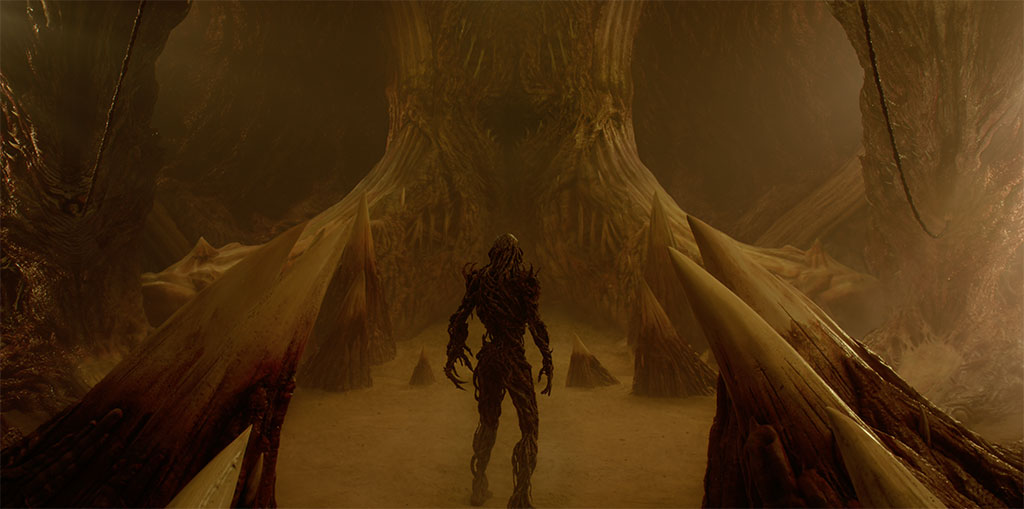
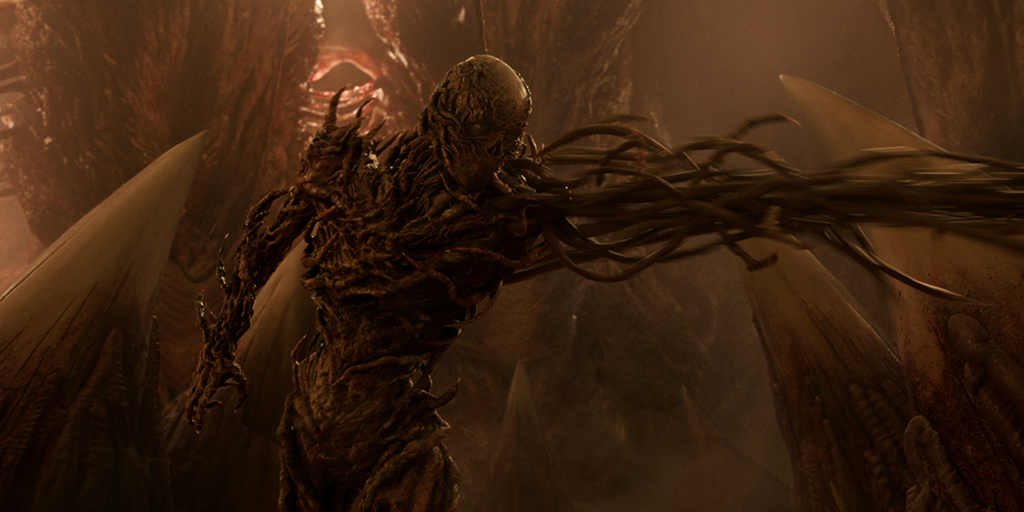
The biggest challenge for the climactic battle was dealing with the kaiju-sized Mind Flayer. “It took a long time to decide exactly what size the Mind Flayer would be because he had to be as impressive as possible and as large as we could make him,” Paterson explains. “We started quite a bit larger than that, but at the same time, it needed to be believable that these kids could take him down. We wanted to feel like he’s lumbering because he’s so big and heavy, and that’s why they’re able to outrun him. He couldn’t be so huge that he could take one step and cross the whole desert.”
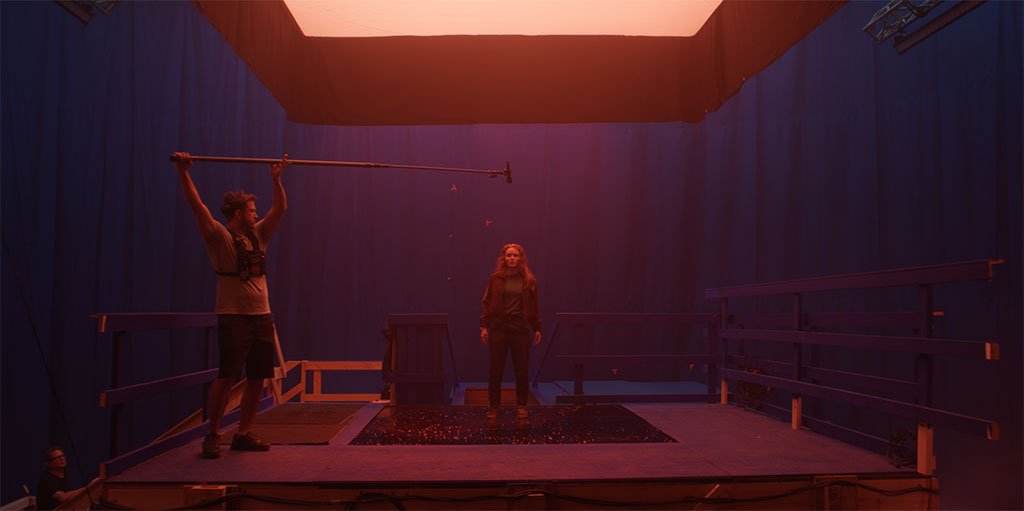
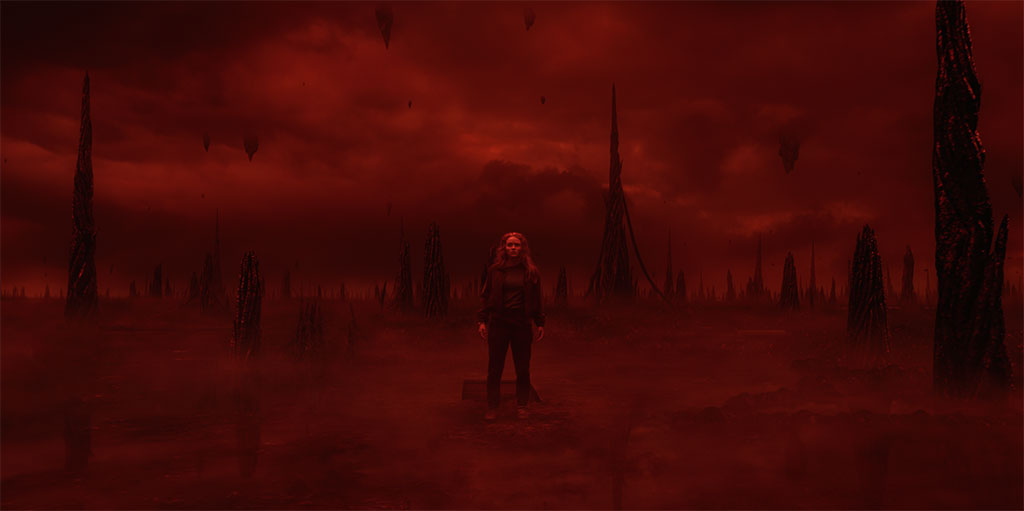
Practical sets were constructed for the Upside Down. “We try to get as much real as we can, but there’s all of these long walks through the Upside Down forest, so there’s only so much practical set dressing they can do,” Paterson notes. “They would do practical vines and stuff around, up to 10 feet or so on the trees closest to the actors. But everything else we end up doing in post. We also need to even out the atmosphere. They’ll put in atmosphere and smoke on set, but the wind kicks it out. It all blows away. The continuity on it is difficult. We try to find the best practical shot and then match all the others to it. Ninety-nine percent of the spores are CG.”
It was surprisingly difficult to get the balance right for the spores. “The spores have to feel like you’re almost in a snow globe. They must have the perfect float. It’s a bit of trial and error, and saying, ‘This shot looks good. Let’s match all the others to this shot.’ It’s not an automatic process. We were going over every single one of those shots. Obviously, there’s an automatic generation for the spores, but you’re constantly tweaking the algorithm to make sure it has the right feel for the scene, then going in and saying, ‘Let’s paint out that one because it goes weird over his eye. And let’s paint out that one because it blocks this.’ There’s a lot of hand detail work that goes into all of those Upside Down shots.”
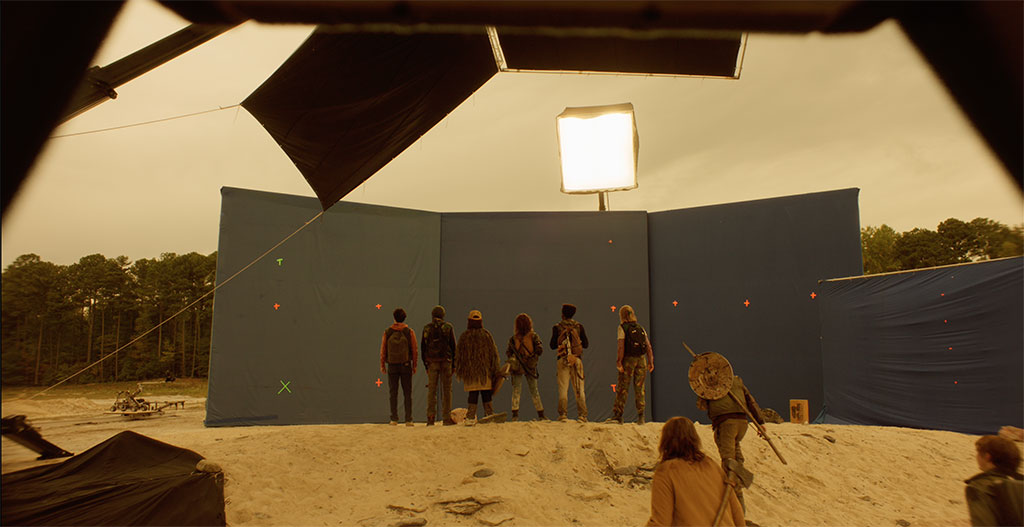
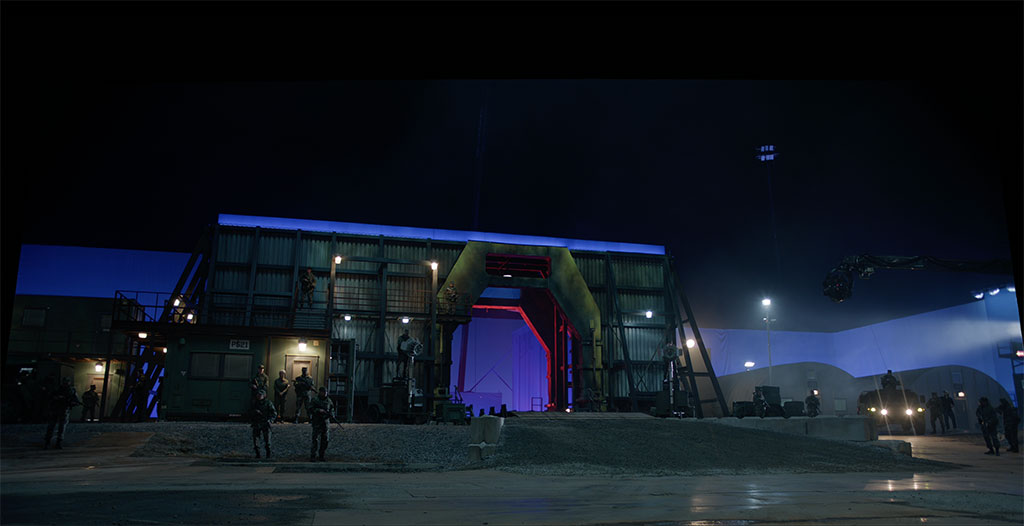
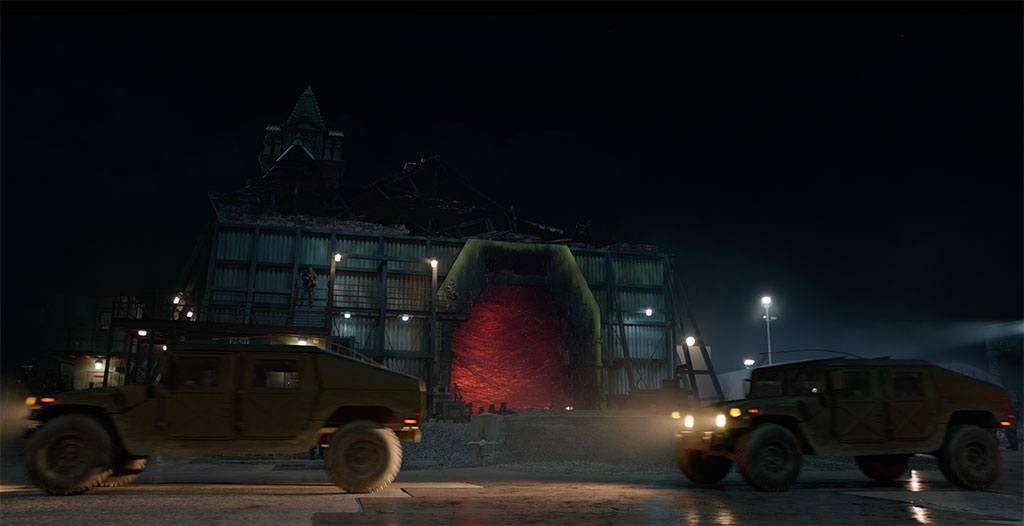
For the bulk of the series, the fictional town of Hawkins, Indiana, was shot in Jackson, Georgia. “Hawkins has been shot in the same small town in Georgia since the beginning of the show,” Paterson observes. “But for this season, we realized we’re going to be trashing this whole town, and we can’t set up shop in the middle of a real town for that long. It’s destructive to the people who live there. We built a big backlot that was the whole center of the town. They did a great job matching what was really there. In the Right Side Up scenes, when there’s not a lot of action happening, that’s the real town. But when we start going into the military base and the library is trashed, and the Demogorgons start coming up out of the ground, that was all a backlot. Everything was built between 15 and 20 feet, so anything over that height we completed in post.”
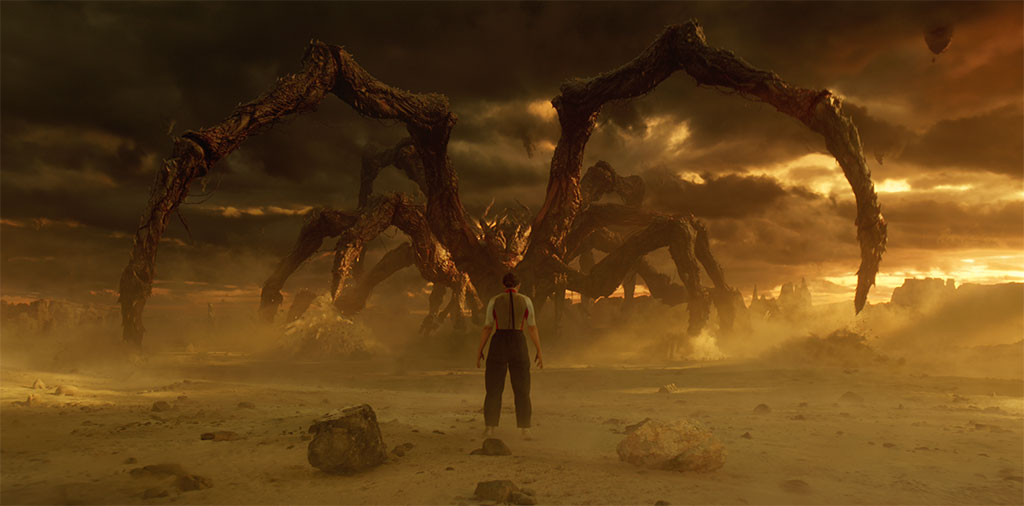
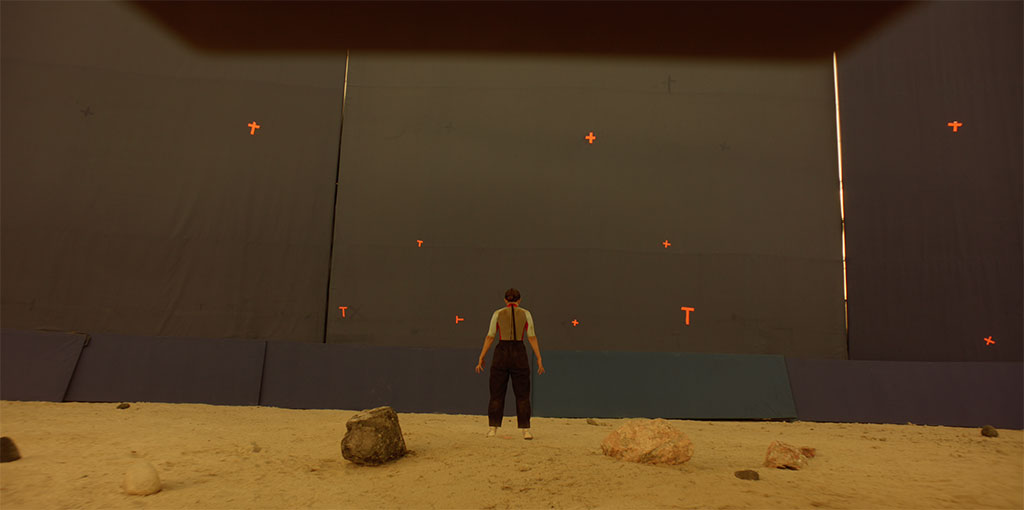
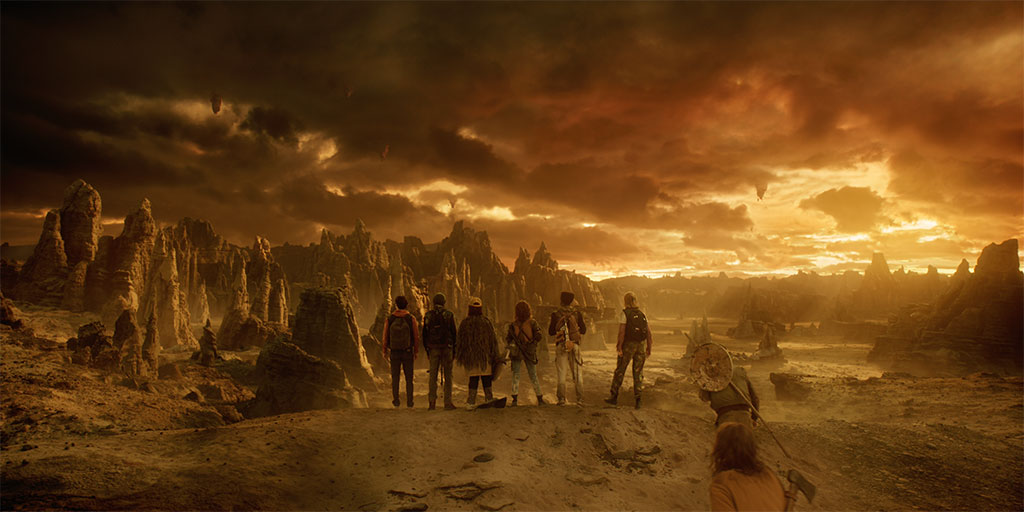
Some environments were entirely CG. “The Abyss, everything in the final battle, and the big walk through the Abyss, once they get to that level, were CG. The ground they’re walking on is real, and a few of the rocks close to them, but everything else is CG. Anytime you see Hawkins lab or Hawkins itself, even the town from a distance, we’d shoot drone shots of the real place, but we had to change so much that they ended up being full CG shots. For the whole rooftop with the sphere, there’s a fairly large set of the roof, but everything else around it is CG.”
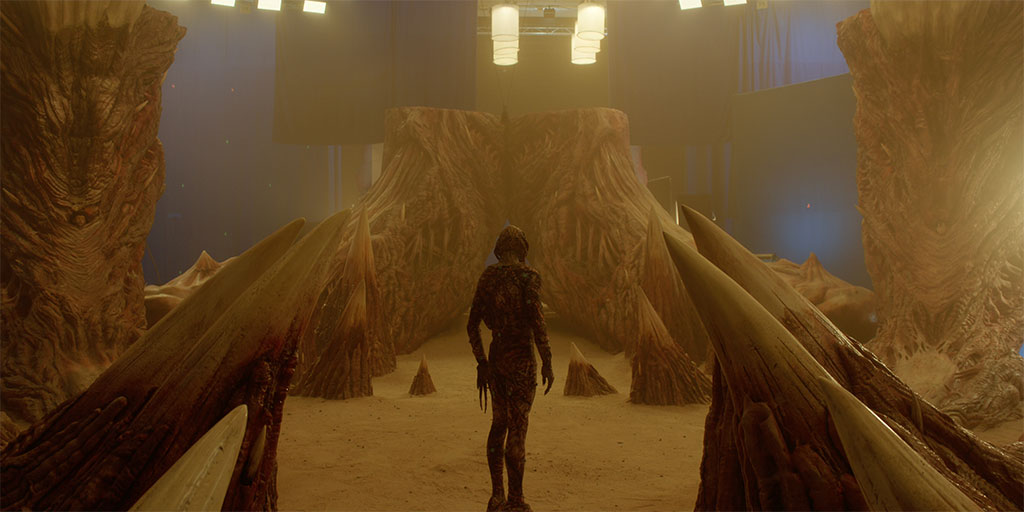
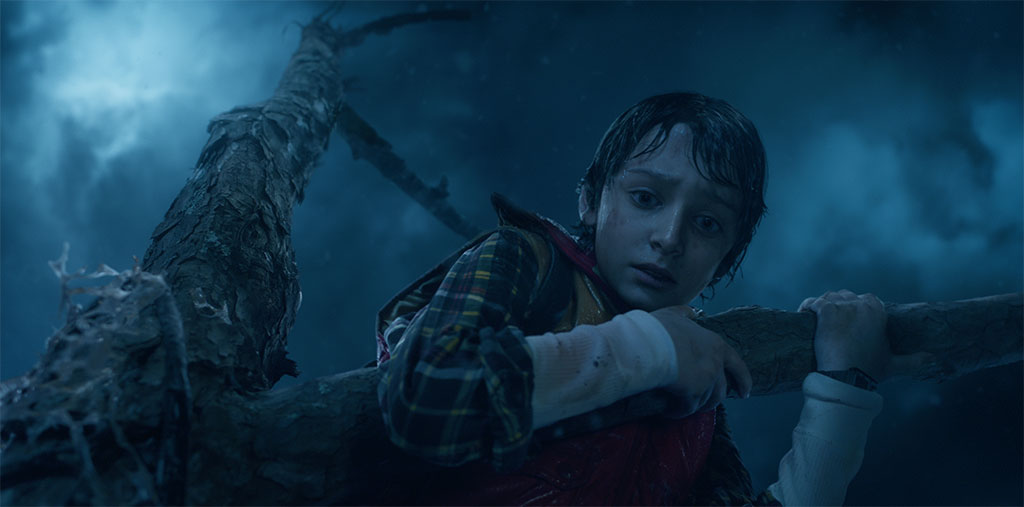
Recreating young Will was the hardest task as he appears in the opening scene of the final season. “It’s highly detailed, super close-up work of Noah Schnapp that doesn’t exist anymore,” Paterson says. “He’s 22-years-old now, and we needed him to be able to do this whole performance at 11. Pulling that off was the thing I was most worried about, so it was what we dove into first. We worked closely with Wētā FX in getting as much back-and-forth and advice as possible on how to pull off the shoot. They sent some supervisors over to help us with special camera equipment and helped with the casting of the stand-in. We found Luke Kokotek, who had similar features and size to Noah at that age. Noah worked with him a lot on the performance. Luke did the whole scene, and then Wētā FX replaced his whole head. The main trick to that was to have as many witness cameras as possible so we could get every angle on Luke and make sure we had a solid, tight match to bring in the new face. You want it as close as possible. We even had two cameras attached to the main movie camera so that you’re getting micro angles on the face; that allowed us to pick up every nuance of the performance.”
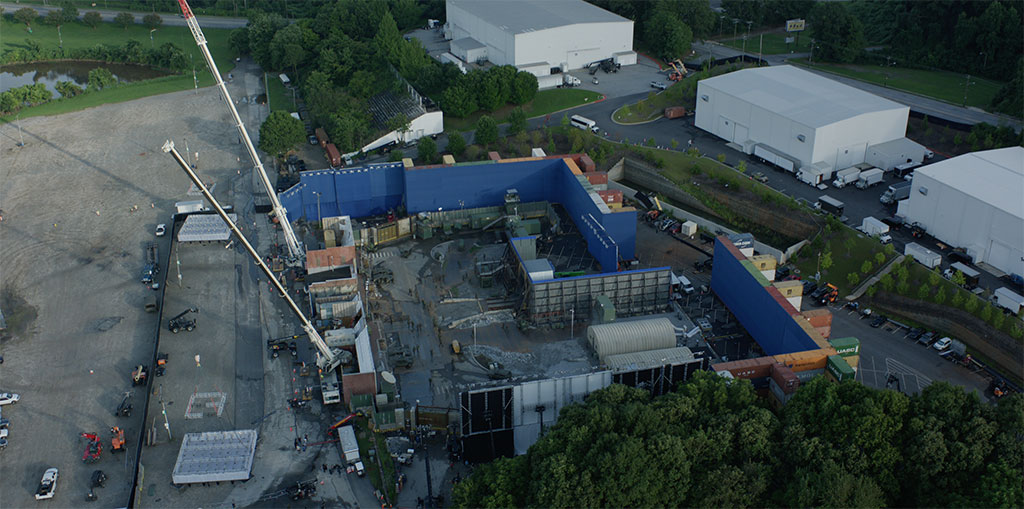
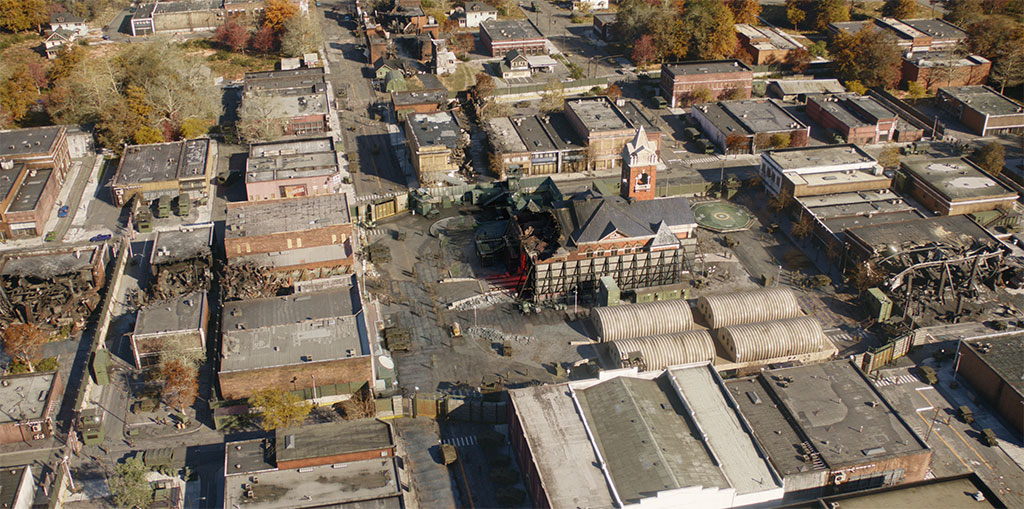
One extremely complex shot to execute was the two-minute oner of the battle in the MAC-Z. “Demogorgons are bursting out of the ground and killing people and hundreds of extras and kids – everybody’s running around,” Paterson remarks. “It was a oner following them through the battle and following some of the Demogorgon actions that was extremely difficult. We needed to collaborate closely with stunts, special effects and ADs to keep the extras and the stunties moving through the scene with the camera, and to figure out ways to do invisible seams. A lot of work went into that one shot. We probably could have rendered it all, if it was all CG, but it’s so much live-action, and we’re bringing in the CG with the Demogorgons and also the set extension. Anytime the camera looks up or follows a Demogorgon through the sky, that’s a great place for a stitch, because once we’re looking away from the people, everything is CG. Some of the rooftops of the library and the higher places in the MAC-Z were also CG, so those were good places to hide stitches. Sometimes, we’re hiding little speed changes or making this camera go faster, but we have to keep the people moving at the same speed, because all the people are real. We didn’t use CG stunties in that.”
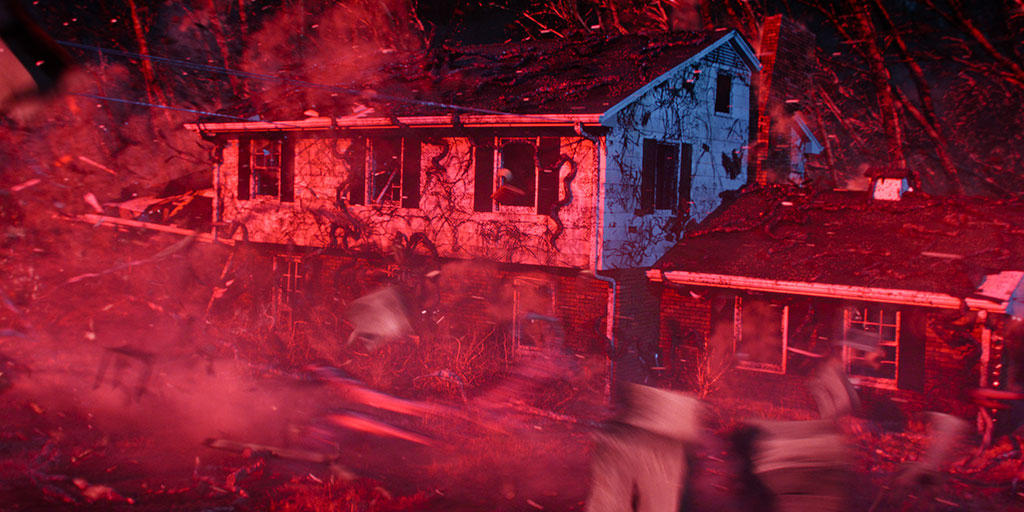
“The spores have to feel like you’re almost in a snow globe. They must have the perfect float. It’s a bit of trial and error, and saying, ‘This shot looks good. Let’s match all the others to this shot.’ It’s not an automatic process. We were going over every single one of those shots. Obviously, there’s an automatic generation for the spores, but you’re constantly tweaking the algorithm to make sure it has the right feel for the scene, then going in and saying, ‘Let’s paint out that one because it goes weird over his eye. And let’s paint out that one because it blocks this.’ There’s a lot of hand detail work that goes into all those Upside Down shots.”
—Betsy Paterson, Visual Effects Supervisor, Stranger Things S5
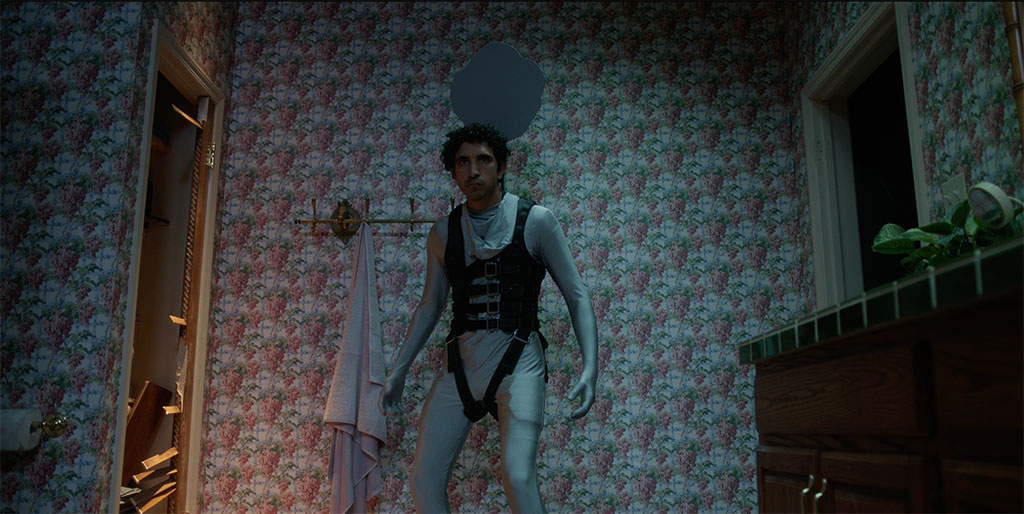
Highly detailed assets had to be constructed for the destruction scenes. “We might have seen the building on the outside, but they went in and built lots of detail on the insides of the buildings so that when the Wheeler House’s walls get ripped off, we see inside of it,” Paterson states. “The same with Hawkins Lab and the high school. There’s so much detail in those shots. It’s amazing.”
There is subtle visual effects work. “Even the real Hawkins shots ended up with quite a bit of CG that I don’t think anyone would ever be able to tell. A lot of the establishing shots, even those that start with a big crane shot, and then you end up going up and seeing the whole town and the kids riding their bikes. There’s a lot of work that went into those shots that don’t have any supernatural elements. It’s just a landscape that didn’t exist in real life.”
The scope of digital augmentation was as epic as the storytelling. “Twelve hours of content [was created] for this show. It was a giant undertaking, but that’s what made it satisfying. The MAC-Z battle and then the final battle were the centerpieces of the show for us.” Happy accidents occurred. Paterson adds, “Especially, the Demodogs scenes, the animators brought a lot of personality and tiny moments that made us all happy with those scenes. It was a great effort from all the vendors. It’s some beautiful work.”