

An unprecedented convergence of the film/TV and video game industries is providing new content for Hollywood, advancing visual effects technology and creating new career paths and workflows.
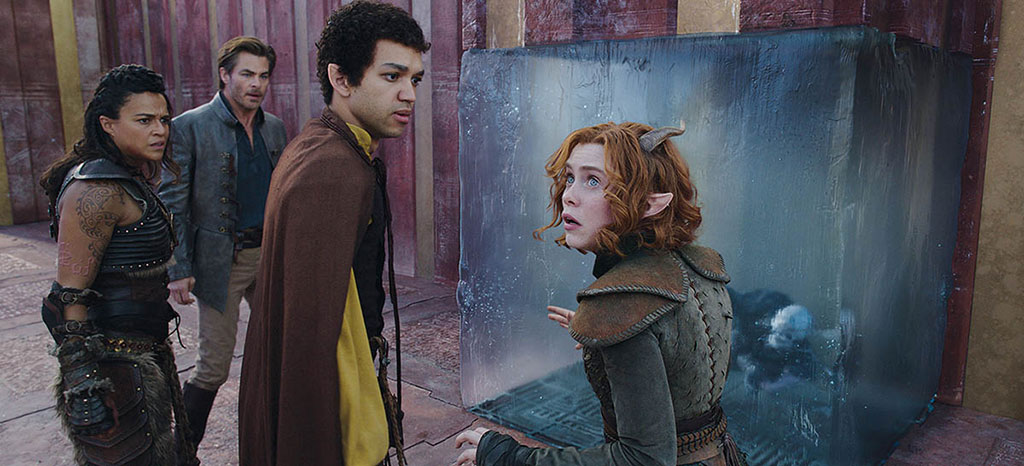
HBO’s hit series The Last of Us, a live-action video-game adapta-tion, launched its first two seasons in 2023 and 2025 and is a recent example of this confluence. It is the first such adaptation to receive major awards consideration, including eight Emmy awards and a nomination for Outstanding Drama Series. The video game was developed by Naughty Dog and published by Sony International Entertainment. Other recent examples of games adapted for series include Netflix’s The Witcher and Arcane, Amazon’s Fallout and Paramount’s Halo. According to IMDb’s Box Office Mojo, other recent movie adaptations of games include Universal’s Five Nights at Freddy’s 2 ($233 million), Paramount’s Sonic the Hedgehog 3 ($463 million), Warner’ Bros.’ Pokémon: Detective Pikachu ($450 million), Sony’s Uncharted ($407 million), Paramount’s Dungeons & Dragons: Honor Among Thieves ($207 million) and Warner Bros.’ Mortal Kombat 2 (set for this year). More movie/series adaptations of games are currently in production.
“Recent years have demonstrated a notable trend of popular games inspiring or directly spawning high-profile television series and feature films. At their core, both games and movies are story-telling mediums, just expressed through different formats. Given this synergy, we anticipate continued growth in adaptations, further blurring the lines between gaming IP and screen content,” says Jason Johnston, VFX Director and Principal Artist at Beyond-FX, which specializes in real-time visual effects development – most frequently for video games but also for live/interactive exhibits and XR experiences.

“If there’s a good story to tell and an already existing fan base, it just makes sense to tailor it to a broader audience,” according to mocap supervisor/3D animator Eric Leidenroth. “It’s the same logic as adapting a comic book or a novel. The advancements we’ve made in virtual production, performance capture and VFX have made it more achievable while already having an existing visual blueprint to work from.” Leidenroth has worked as a motion capture editor and supervisor on games such as Halo 4, GTA 5 and Red Dead Redemption II, and on movies such as Avengers: Infinity War and Napoleon.
“The Last of Us is our first example of this convergence that has been met with universal critical acclaim,” says David Johnson, CEO and Creative Director of Undertone FX, a studio devoted to real-time visual effects for video games and VR/AR. He has worked on games such as Call of Duty: Modern Warfare, Halo 3 and Shadowrun. Johnson says, “Credit to the good folks at Naughty Dog for making a game ripe for this conversion. Because the game leaned so heavily into dramatic character relationships rather than just action, a television conversion was primed to succeed.”
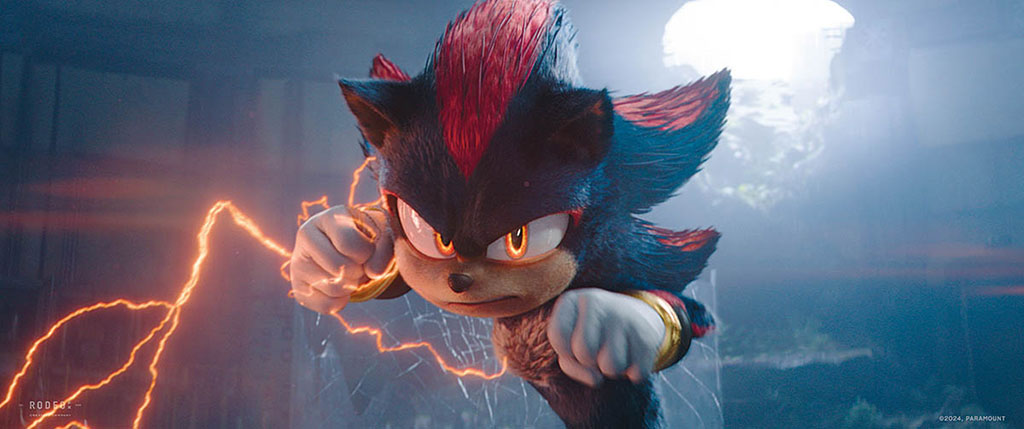
Sonic the Hedgehog is one of the most iconic video game characters of all time and has been featured in three major motion pictures. Sébastien Francoeur, VFX Supervisor at Rodeo FX, worked on Sonic the Hedgehog 3. He notes, “Learning to animate Sonic was a creative challenge in itself: his movement, his attitude, his facial acting; everything had to feel true to the character fans know while still belonging to the more realistic world of the film. We spent a lot of time refining his physicality and expressions so that he remains a stylized icon but feels grounded in live-action shots. That process didn’t only apply to Sonic. Each character has its own personality and animation rules. Understanding the nuances, from how they express emotions to how they interact with their environment, was essential to bringing the whole cast to life authentically.” He adds, “Overall, the Sonic films have evolved into their own universe, one that respects the games without being limited by them. That said, the dynamic and high-speed pacing surrounding Shadow in Sonic 3 definitely takes inspiration from the gameplay experience.”


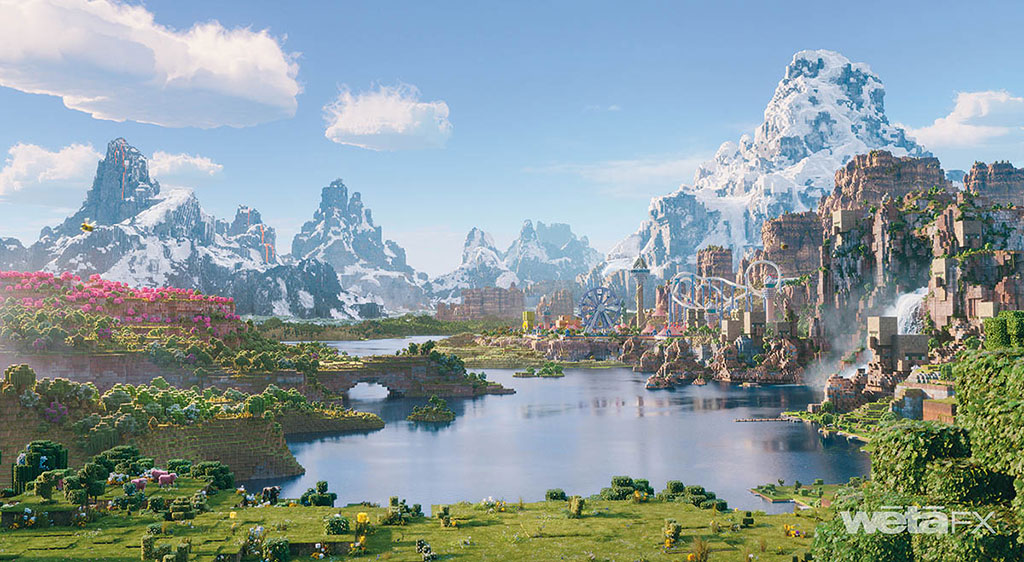
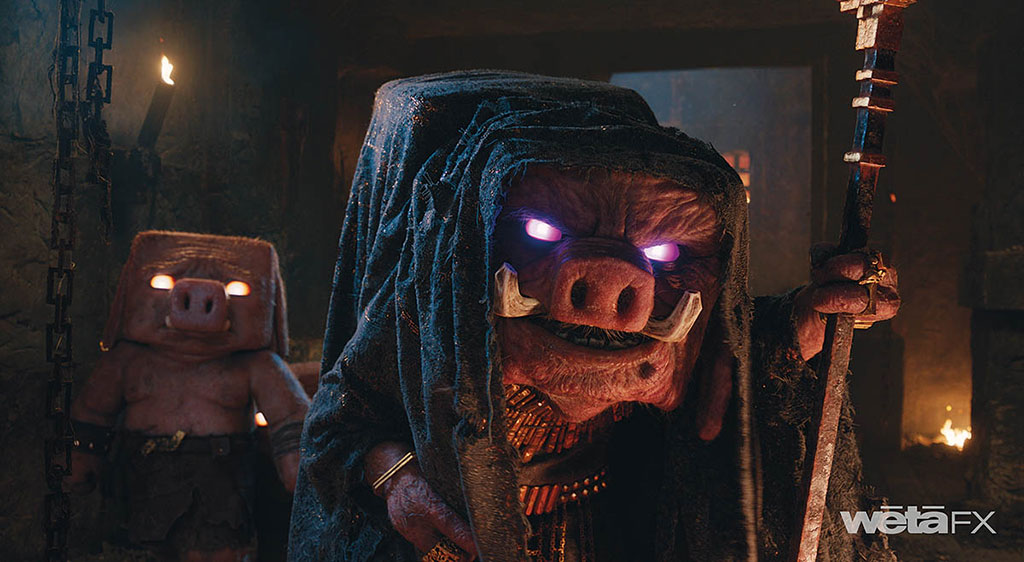
Wētā FX’s VFX Supervisor for A Minecraft Movie, Sheldon Stopsack, comments, “The biggest challenge by far was adapting the inherently stylized and somewhat simplistic look of Minecraft’s expansive world into a live-action setting – one that would feel like a natural playground [in which] our actors could plausibly exist.” A Minecraft Movie fused the artistry and tech of visual effects for movies and video games. Stopsack explains, “We initially approached world- building much like you would in the game. We created an inventory of building blocks made from various material types, and our basic environmental assets were essentially constructed from these resources – just as you would in Minecraft. In some cases, we even sourced specific creations from a production-provided Minecraft server. On a more technical level, I’d highlight our use of real-time game engines. Unreal Engine was used for pre-visualization, virtual scouting and during principal photography, providing a fast and interactive preview of our world.”
Stopsack adds, “I see a clear trend where the line between the two worlds [movie and game] is increasingly blurred. Technologically, we’re seeing far more crossover, and that shift is also influencing the visual language of both areas. I believe this is a two-way street, though I can only speak from the film perspective. Game cinematics and in-game references are being incorporated into film more frequently than ever before. This is especially true for a project like A Minecraft Movie, but I’ve also seen similar examples in more traditional VFX work for other film productions.”
“The overlap between film and games is growing because both industries are now using many of the same tools, technologies and workflows. Game engines like Unreal aren’t just for gameplay anymore; they’re driving real-time characters and environments for previs, performance capture, virtual production stages and even live-camera compositing on film sets,” Leidenroth remarks. “The impact has been transformative [for VFX professionals and studios]. Recent advancements have lowered barriers to entry, empowering artists to produce high-quality, visually compelling content rapidly,” explains Keith Guerrette, Head of VFX & Founder of Beyond-FX. “The convergence of tools used across film, TV and games fosters cross-pollination of techniques and knowledge, ultimately elevating the craft in all areas. Many workflows previously exclusive to offline rendering in film are now feasible in real-time, opening exciting new possibilities for VFX professionals and studios alike. The industry is moving forward at an accelerated pace, benefiting both creators and audiences.”
Francoeur says, “There’s a clear convergence happening between film VFX pipelines and video game technology. Tools like real-time rendering are moving our industry closer to the fast-feedback processes that games have relied on for years. We’re not fully in real-time rendering yet, but with every new project, we’re making real, measurable progress in that direction. Faster visual feedback means artists can iterate more creatively, take more risks and ultimately deliver better work on screen. It’s something we’re genuinely excited about because the closer these worlds get, the more we unlock new forms of storytelling and visual innovation.”
Johnson notes, “Most recently, with the advent of virtual production, the talents and people of games and film/TV have come ever closer together. Using video game technology, live on set with actors, to create living, changeable locations and lighting conditions has had a large impact on how film and television are made today.” Nick McElmury, VFX Director and Studio VFX Director, explains, “Real-time technologies, including virtual production techniques, are increasingly being integrated into film and television workflows – even if initially as background or supporting elements. Perhaps more importantly, virtual production is driving the evolution of real-time engines like Unreal Engine to become more user-friendly and artist-centric. This shift is streamlining what was once a highly complex process, enabling creators to build intricate scenes and visuals directly within game engines with unprecedented speed and fidelity.”



“Technologies like LED volume stages and real-time rendering, largely driven by game engines like Unreal, are rapidly closing the gap between film/TV VFX and game development,” says Sara Bennett, Production VFX Supervisor at Milk VFX, which worked on The Witcher S3. “These tools can create near-photoreal digital worlds and allow filmmakers to interact with virtual environments almost as if they were physical sets. The result is a more immersive, flexible and efficient creative process.” Leidenroth adds, “When it comes to virtual production, a lot of game VFX techniques are being used because everything has to perform in real-time. Assets need to be optimized and brought into an engine, shaders adapted, lighting created and environmental effects added to breathe life into the scene, all of which is second nature to game environment artists.”
Movies and TV are increasingly impacting games as well. Bennett says, “With game-engine technology becoming a part of the VFX pipeline, the influence now moves in both directions. Real-time tools are helping filmmakers create visuals more quickly and interactively, while the high-end quality and lighting standards of film and episodic VFX are pushing games toward increasingly realistic, cinematic imagery. The two industries are now feeding each other creatively and technologically, raising the visual bar on both sides.” Johnson notes, “For quite a long time, the game industry has tapped the VFX industry for trailers and TV commercials. Essentially, short animated films that set the tone of the game are often the game’s introduction and frequently serve as the vehicle to market it. In some games, more animations like this, created by VFX facilities, are sprinkled throughout games to help advance the story.” Leidenroth observes, “The crossover is also happening in motion capture, which is just as technical but in a different way and very much part of my background. Characters’ performances have become much more realistic over the years, appearing more fluid and lifelike. Video games are evolving to feel more cinematic, and game artists are taking cues from film artists.”


The visual effects merger is creating new career paths and/or workflows. Johnson says, “The film/TV industry is certainly creating new jobs and opportunities in the virtual production space for people savvy with Unreal Engine and Unity – people able to code for real-time engines.” Stopsack comments, “The next logical step is the merging of talent pools. More and more artists are now able to service both domains, and that’s where the creative overlap becomes most evident. In addition, we can see a shift that opens up novel use cases. Virtual production on LED stages, immersive scene scouting and real-time visualization on set, just to name a few. I believe we’ll continue to see even greater alignment between the two worlds, both technically and creatively.”
“This convergence is absolutely creating new roles and new ways of working,” Bennett says. “At Milk, we now have a dedicated Unreal team that is collaborating with our traditional VFX departments. And with USD, we can move assets seamlessly between both workflows. It’s opening up hybrid skill sets, new specializations and much more flexible, interconnected workflows.” On the flip side, game cinematics have become so advanced that some studios are hiring camera special-ists with traditional film backgrounds to elevate their storytelling. According to Leidenroth, “Even on the performance side, some motion capture stunt performers regularly move between game and film shoots. That crossover is becoming normal, and I think the lines between the two mediums will only get more blurred in the years ahead.”
Leidenroth agrees that a merger of visual effects is creating new career paths and workflows. “Since I started working in motion capture, I’ve been able to work in film and games fairly seamlessly. The core technology has essentially been the same in both mediums for years, even if the tools, pipelines and final outputs differ. With virtual production and real-time engines becoming standard across the board, we’re already seeing new hybrid roles such as real-time artists, virtual camera opera-tors and virtual production TDs who can contribute to both industries. I think that overlap will only continue to grow.”
McElmury notes, “As the technology underpinning both indus-tries evolves, we see an increasing overlap in the tools, workflows and creative approaches used to achieve compelling visuals. The boundary between film and games is becoming more permeable, with VFX artists frequently moving between the two sectors. Additionally, the specialized knowledge of each is cross-contaminating toward a mutually beneficial result, with film pipelines focusing on speed and iteration efficiency, and game pipelines on standardized pipelines and output quality. These new shared standard toolsets of both industry standard DCC software and game engines have made these crossovers more accessible than ever before.” Stopsack concludes, “The two worlds have moved much closer together and continue to do so.”