This article contains mild spoilers for The End of Oak Street.

This article contains mild spoilers for The End of Oak Street.
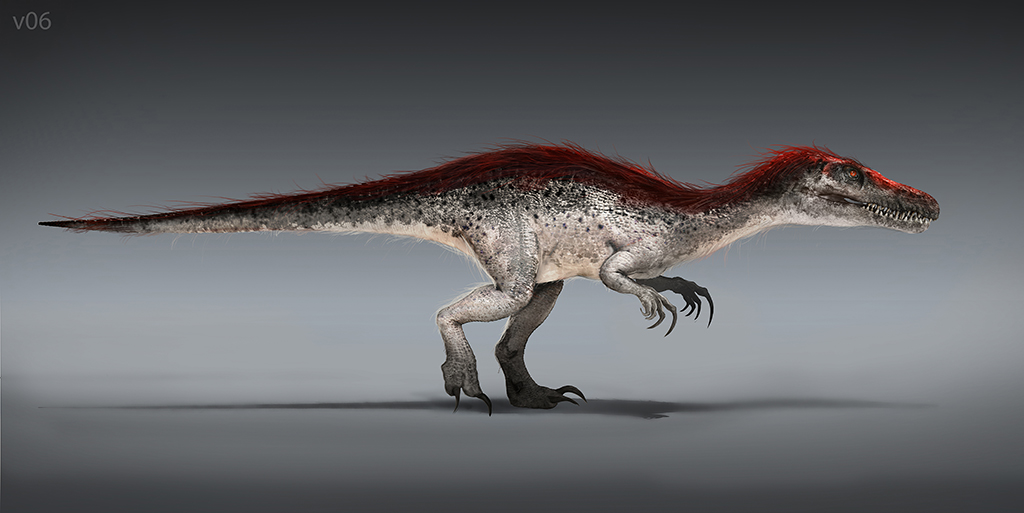
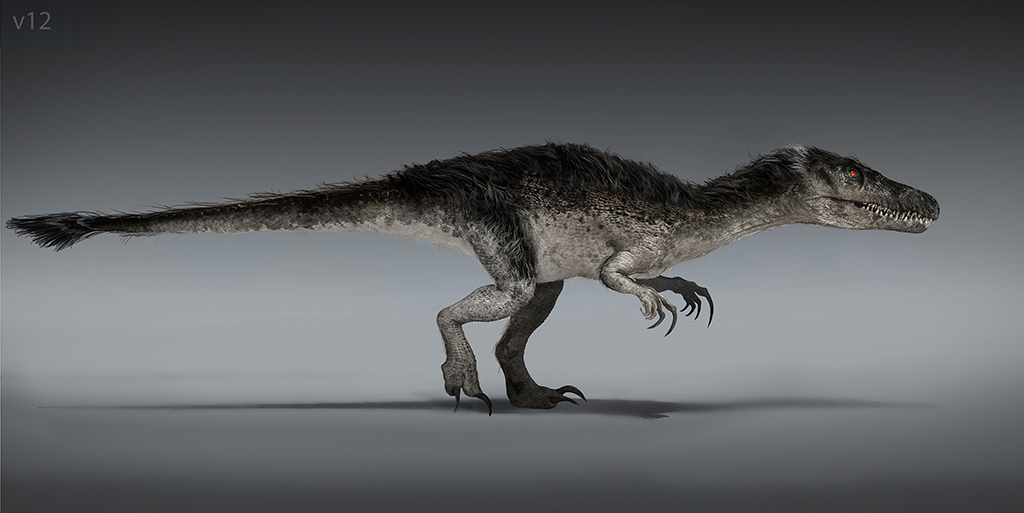
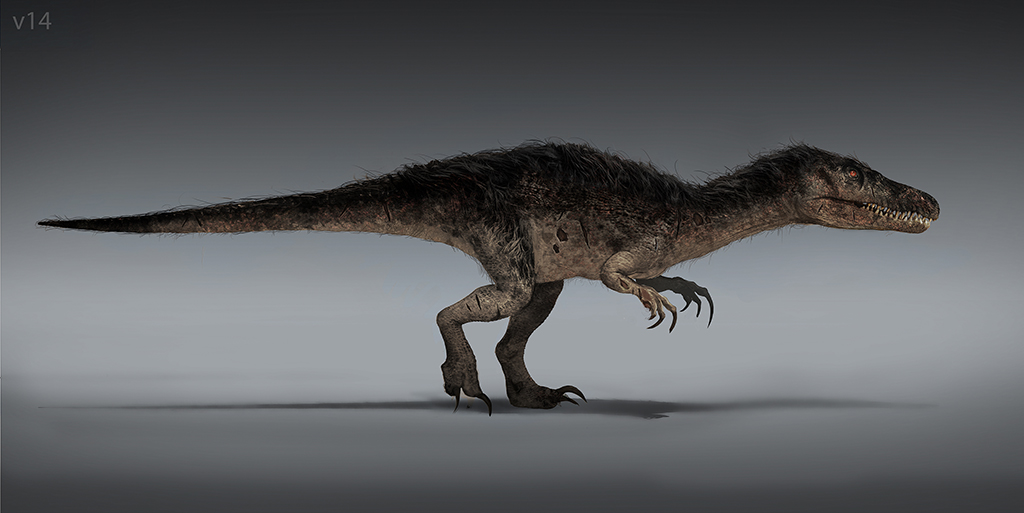
Rather than bring prehistoric creatures into the present day through the power of DNA, filmmaker David Robert Mitchell uses a mysterious cosmic event to transport an entire suburban neighborhood into a prehistoric world in Warner Bros. Pictures’ The End of Oak Street. Visual effects were an essential storytelling tool for building the desired environments of the film and integrating the dinosaurs with the live-action cast.
The premise raises an intriguing hypothetical question: “What would one do if a dinosaur suddenly appeared on the ninth hole of a golf course?” asks Jay Cooper, Production Visual Effects Supervisor, The End of Oak Street. “I would get out the 1-wood! It would have to be a big club, for sure.”
The sci-fi thriller offered Cooper, who joined ILM in 1998, two appealing creative opportunities. “I don’t think I’ve ever done a 1980s pastiche type of thing. And we haven’t been given as much rein to do creature design before. Those are two elements I found to be exciting and enticing about this project. The ability to look at what others had done for dinosaurs, do some fun research, introduce fantastical elements and make them grosser, muddier, dirtier and wounded.”
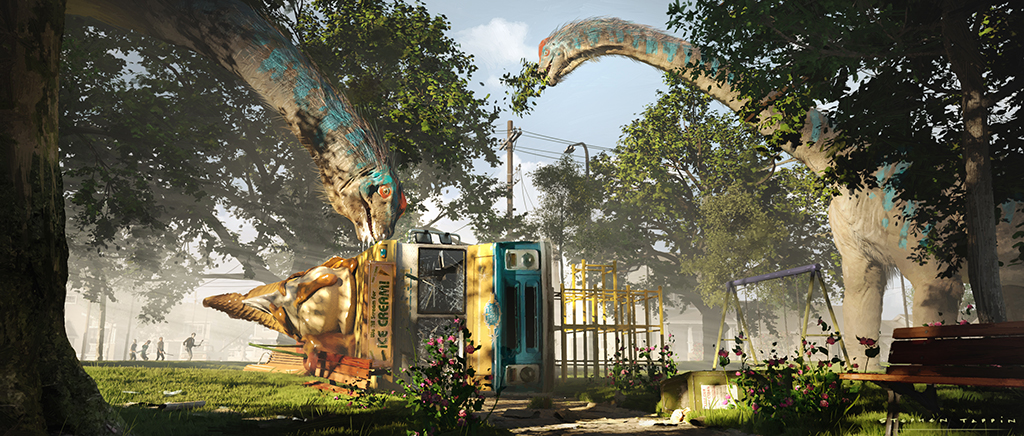
One of Mitchell’s visual inspirations was a dinosaur rummaging through suburban garbage. “As the movie developed, we kept looking for more ways to integrate the dinosaurs into this world,” Cooper says. “Trash cans, breaking houses, depositing dino dung and dead dinosaurs, it all became part of the filmmaking. It was not always planned. Sometimes we would look at a frame and wonder if there were other things we could do to increase the sense of foreboding and danger to the environment without interfering with what was in a scene.”
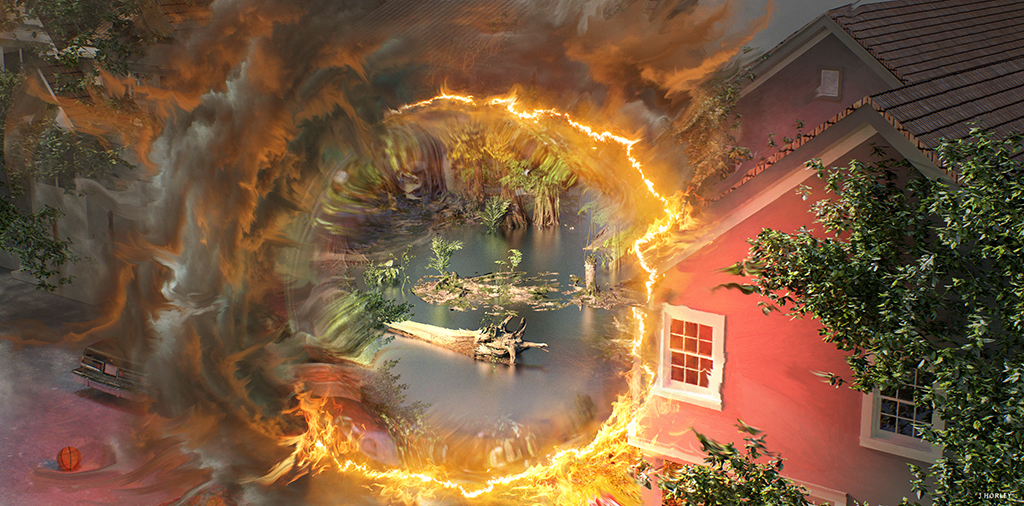
The cosmic event seen from inside the house evokes an ‘80s horror classic. “Poltergeist was a touchstone for David and J.J. Abrams [Producer], and they discussed it early in preproduction. The idea of a portal is a funny one because we have done so many of them over the years. I’ve worked on a number of Marvel Studios films, and the portal always seems to come up. It was important to me that the portal not be a traditional cloud. I wanted to make sure we didn’t do something that we’ve seen many times before. I liked the idea that it was tactile and somehow less ethereal. We came up with this idea for water bubbles, which undulate and throw off mist.”
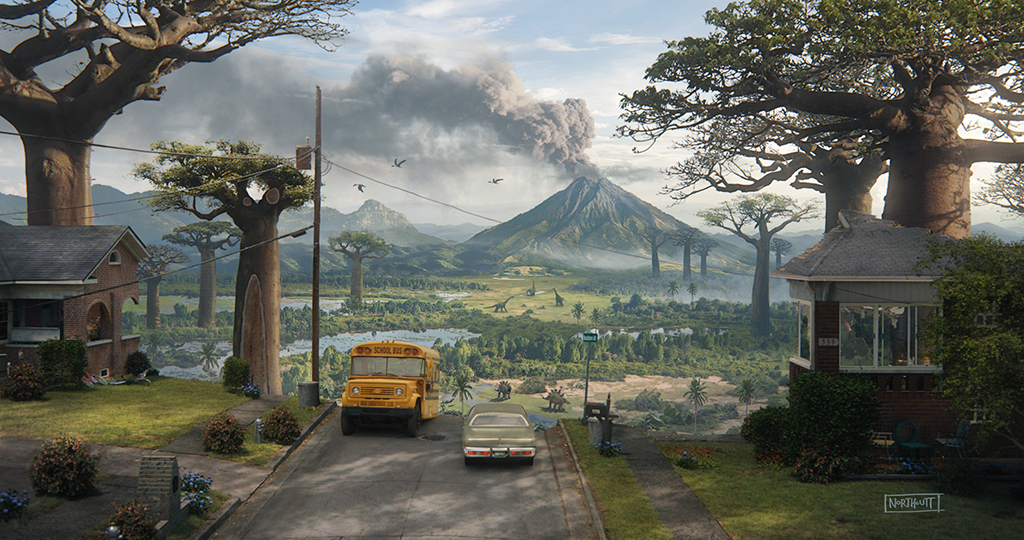
“Anytime you’re seeing houses on a hill or looking down from houses into the valley, those are digital recreations. That is one level of difficulty… There is no wide shot that sells the geography of this movie. It’s an important storytelling point because you need to know that if you go down this street, you hit water. If you go this way, there is a big cliff edge. One of the hard parts is you take all of these ideas, and then you have to find out how it all fits together.”
—Jay Cooper, Production Visual Effects Supervisor, The End of Oak Street
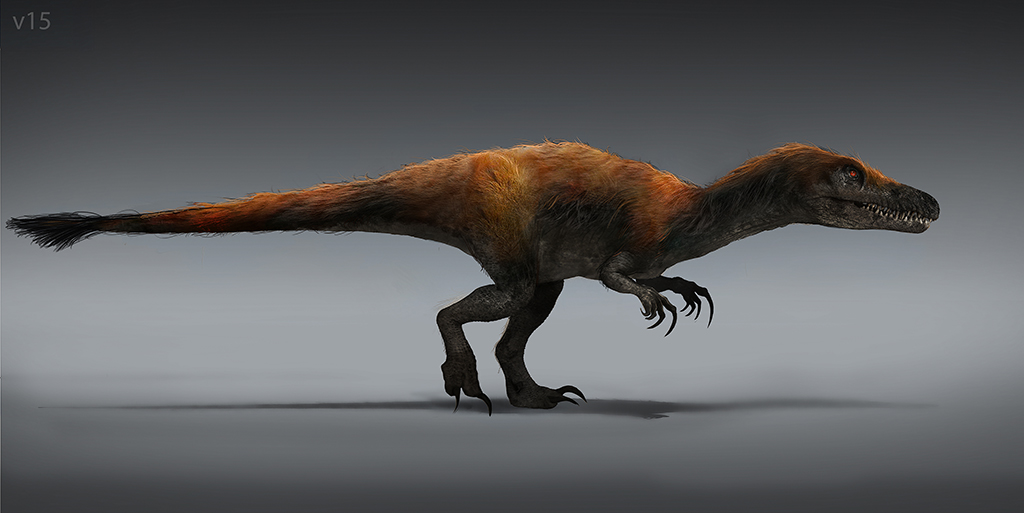
Mitchell determined which dinosaurs would appear in the film, including the Allosaurus, Coelophysis, Stegosaurus, Camarasaurus, Pterosaur, Ornithosuchus and Ornithocheirus. “To take the Coelophysis as an example, we spent a lot of time thinking about what that was,” Cooper says. “There is a lot of ongoing research about dinosaurs, and the most recent research [mentions] the heavy influence of bird ancestry. We wanted some aspects of emus, ostriches and chickens. Even when the Coelophysis first confronts Ewan McGregor’s character, we wanted a moment where we’re not sure it’s looking exactly at him, like a side-eye thing. If you have spent any time chasing birds in a park, there is a moment when you think you’re getting close to a pigeon, and you’re not sure if it’s clocking you. That’s the part I wanted to imprint. We had a fantastic Animation Supervisor, Kevin Martel, who was leading the charge on that front.”
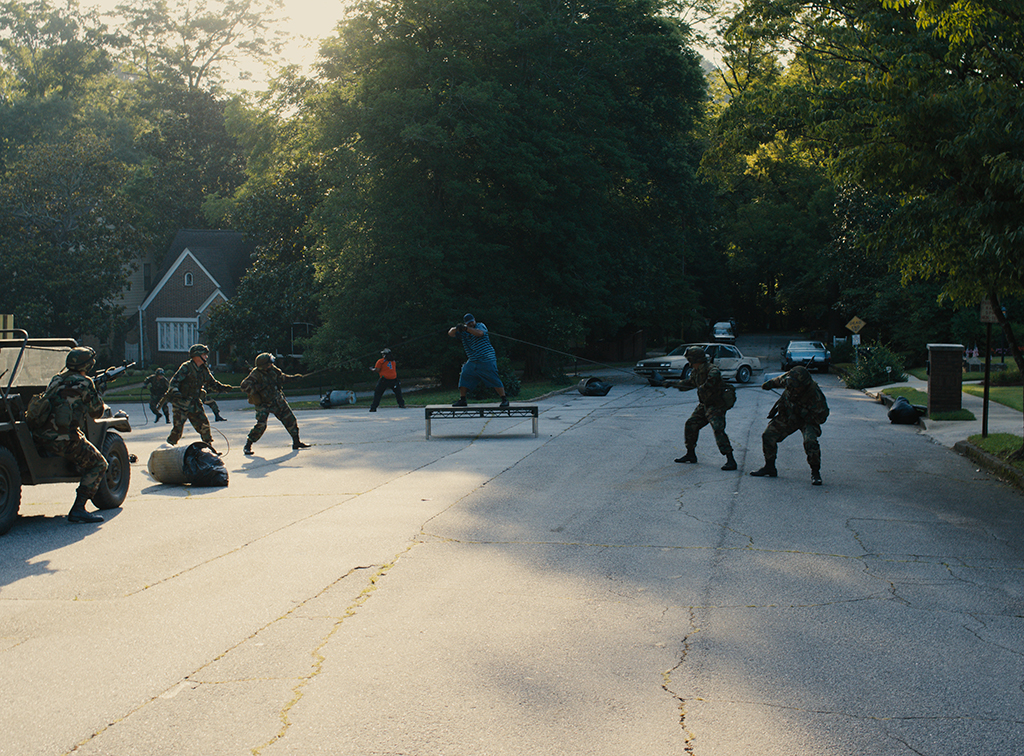
Stand-ins gave the actors physical reference points for interacting with the CG creatures and environments. “It was the usual bag of tricks,” Cooper says. “We had a Coelophysis head on a pole that our stunt team held and waved at our [actors’] faces. For example, when Anne Hathaway is on the porch, the stunt team has a proxy that they push against her so she kicks against something physical. The same with Ewan when he is being chased through the neighborhood.
“Going back to Mrs. Huddleston’s house with the Ornithosuchus, we had our stunt team wearing helmets with the head of the Ornithosuchus on it. When she throws a plant and a chair, not only are they breaking on something that occupies a physical dimension of the dinosaurs, the dinosaurs can react to her. There is a level of performance that comes in that moment. This isn’t anything new, but it makes it a lot better for the actors and [the VFX artists] later. It is a pain in the neck to remove but makes for a stronger movie. One of the hardest ones was Ewan getting picked up by an Allosaurus and being thrown around; that was a mixture of him on a wire rig and a digital double.”
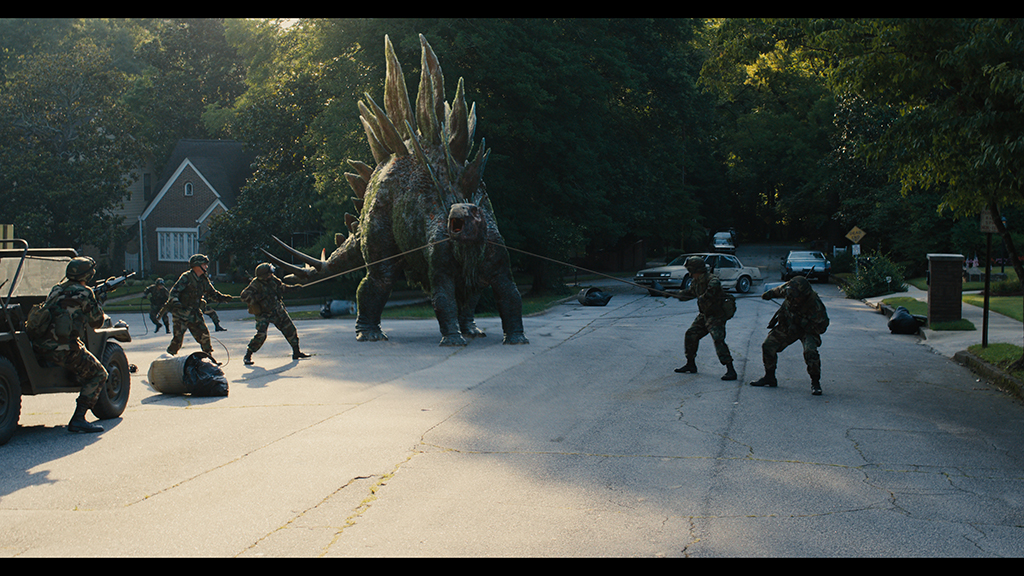
Paleontologists might not be entirely pleased with some of the creative liberties taken in favor of the cinematic experience. “The good thing is this is a movie, not a nature documentary, so I don’t feel too broken up when the feathers are coming off of the wrong part of the body,” Cooper says. “We’re working to build something to affect. To me, the most fun is when it’s something you haven’t seen before, something interesting, evocative, scary, lived in, dangerous and gross. All of those elements were important to me as an artist and collaborator with David.”
The dinosaurs have a distinctly different feel than their Spielbergian counterparts. “Unlike the Jurassic movies, this is not a movie that has that awe and majesty idea. They’re usually always threatening and creepy. We don’t have the John Williams score where you go, ‘Look at the grandeur of this dinosaur.’ From the get-go, they’re digging through the trash and chasing Ewan and the townspeople. They’re knocking them down the street or pulling them out of the yard.”
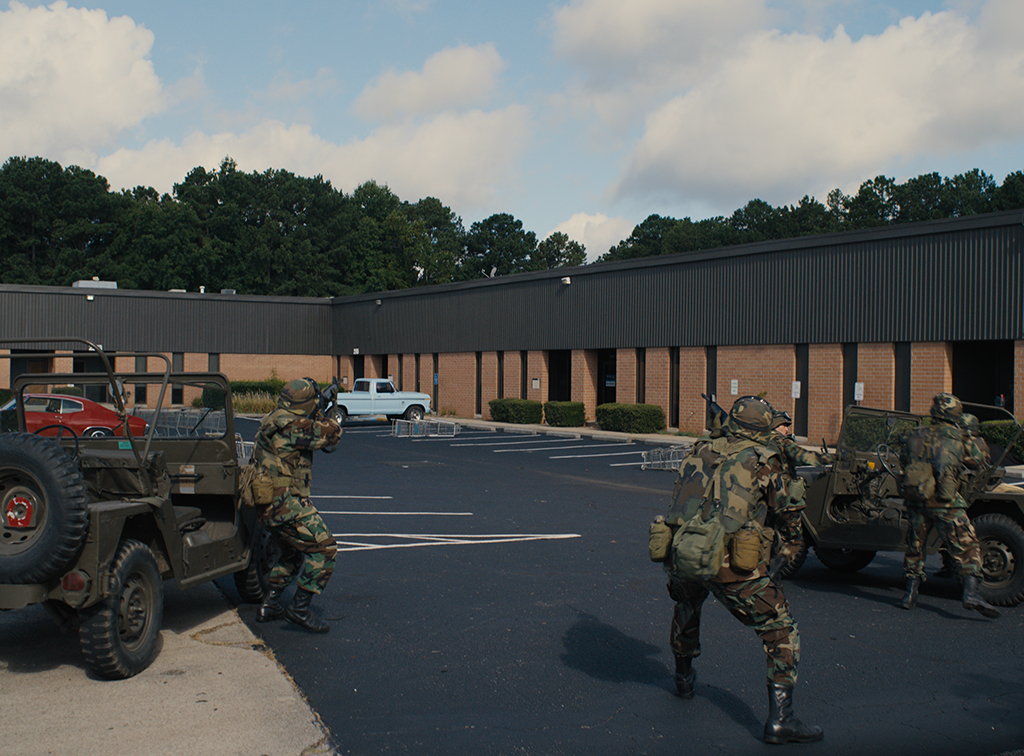
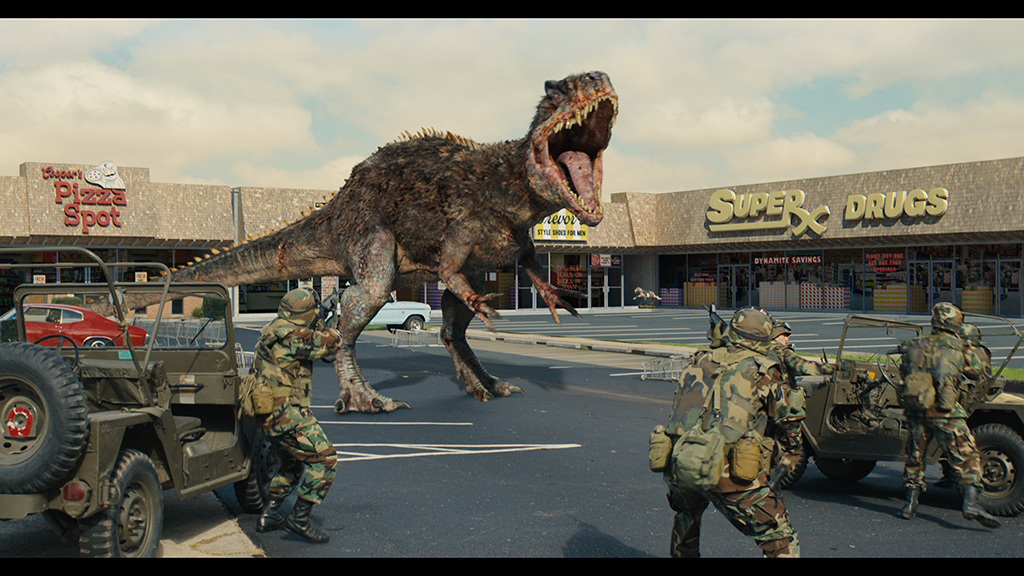
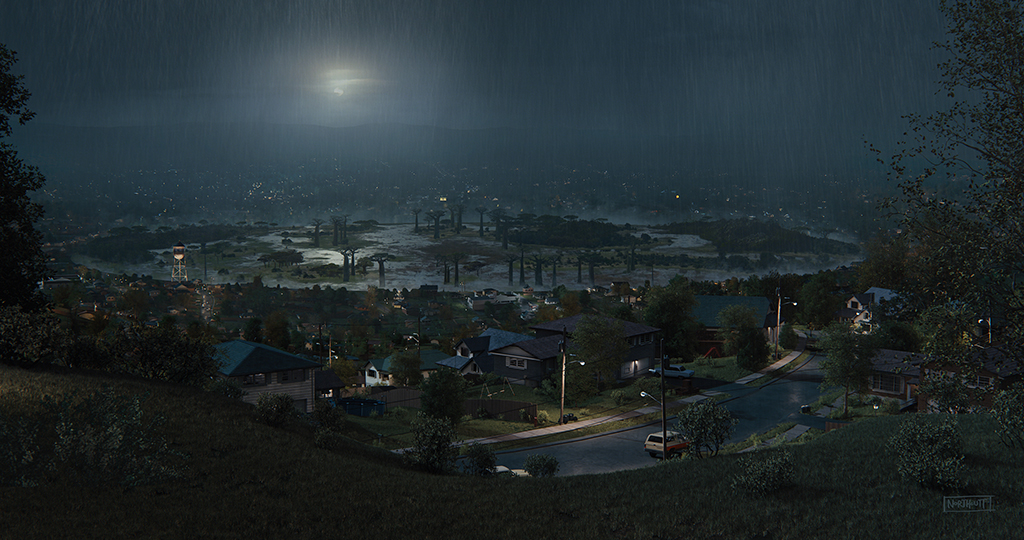
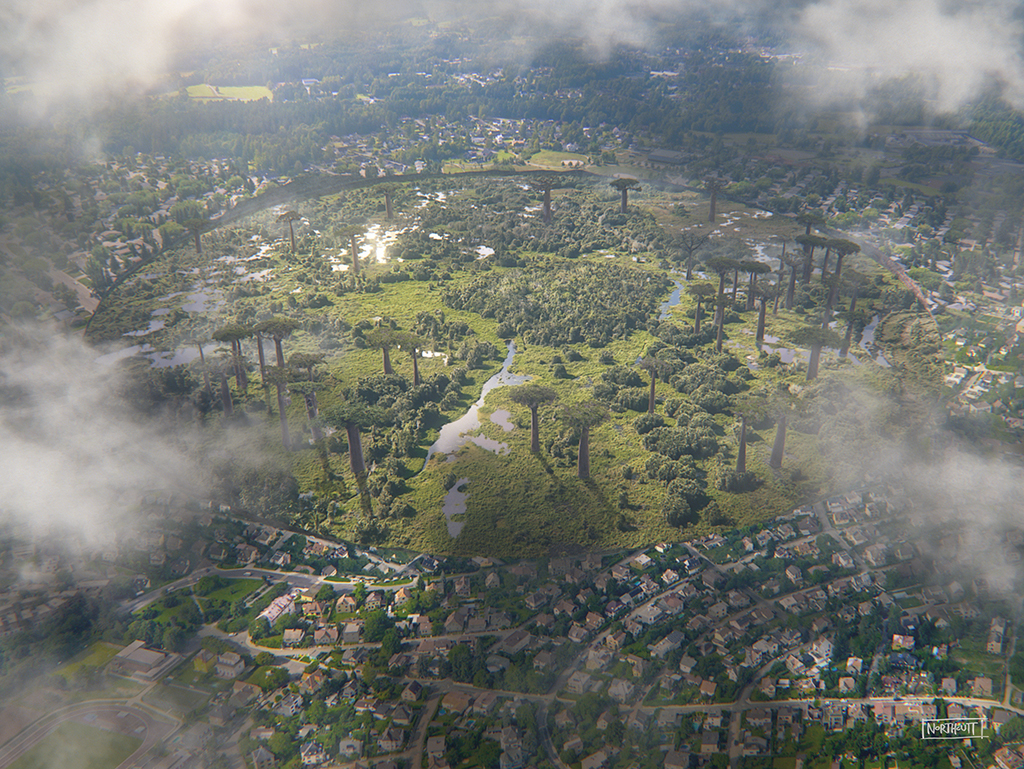
The biggest monster to tackle was the neighborhood itself, pieced together from multiple locations. “Filmmaking is a magic trick,” Cooper says. “We shot primarily in a particular part of Atlanta that had the type of houses that David wanted. But that only established the first 200 feet, and then it’s not hilly like our story needs. Anytime you’re seeing houses on a hill or looking down from houses into the valley, those are digital recreations. That is one level of difficulty. The other thing is there is no wide shot that sells the geography of this movie. It’s an important storytelling point because you need to know that if you go down this street you hit water. If you go this way, there is a big cliff edge. One of the hard parts is you take all of these ideas, and then you have to find out how it all fits together.”
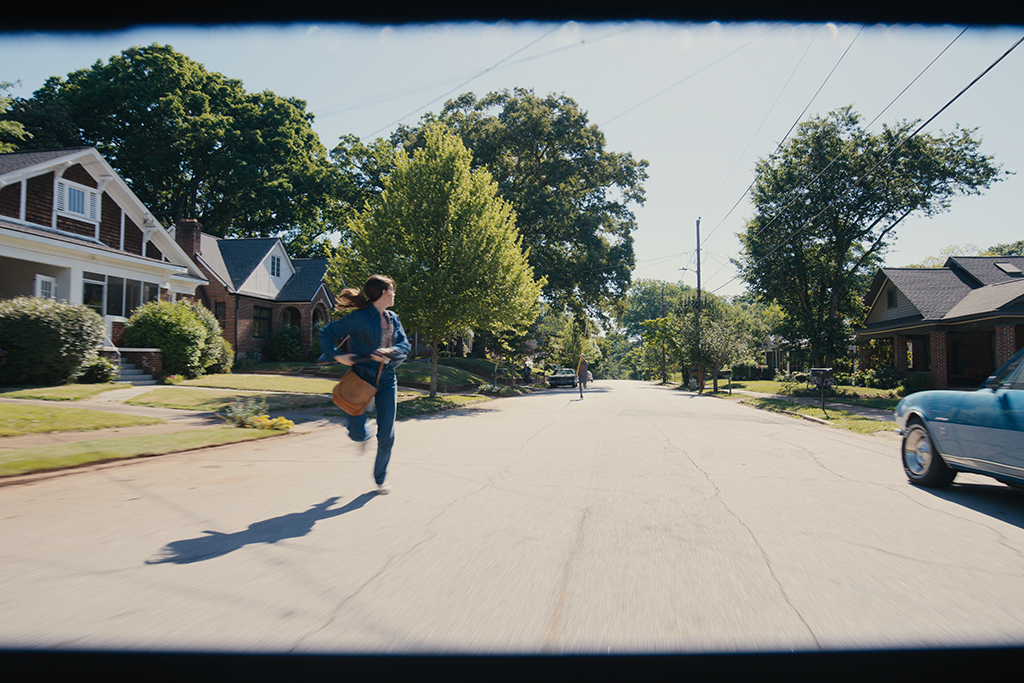
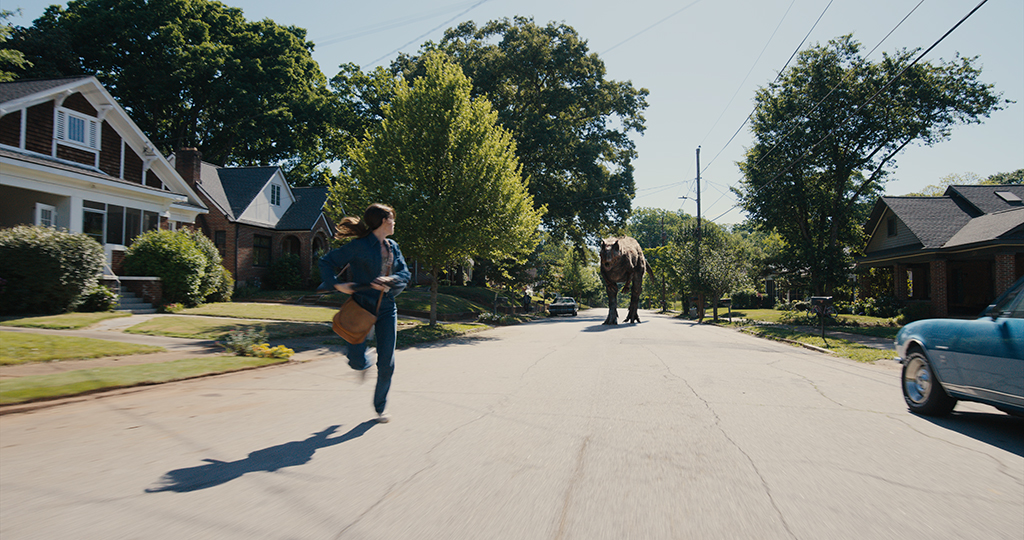
“We did a lot of concept work and pitched a number of ideas of how things fit together…There is this idea: when you’re telling stories like this, you want to communicate it within two and a half seconds, so it needs to be graphic and apparent. There were many times when we took liberties, adding water here or increasing the size of a cliff edge there just so it reads when the audience sees it for two seconds. Storytelling usually wins out over accuracy.”
—Jay Cooper, Production Visual Effects Supervisor, The End of Oak Street
Solving the geographic jigsaw puzzle started with concept art. Cooper says, “We had some phenomenal concept folks at ILM with David Ratajczak and Kouji Tajima. We did a lot of concept work and pitched a number of ideas of how things fit together. It’s funny because it’s not always what is physically accurate. It’s what’s correct for the movie. There is this idea: when you’re telling stories like this, you want to communicate it within two and a half seconds, so it needs to be graphic and apparent. There were many times when we took liberties, adding water here or increasing the size of a cliff edge there just so it reads when the audience sees it for two seconds. Storytelling usually wins out over accuracy.”
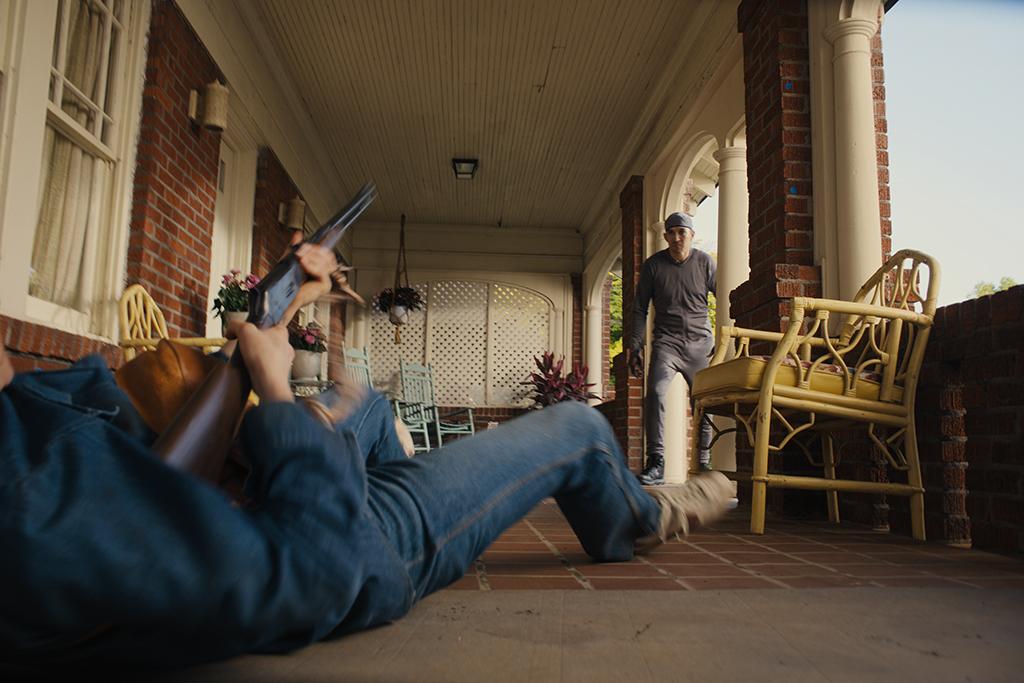
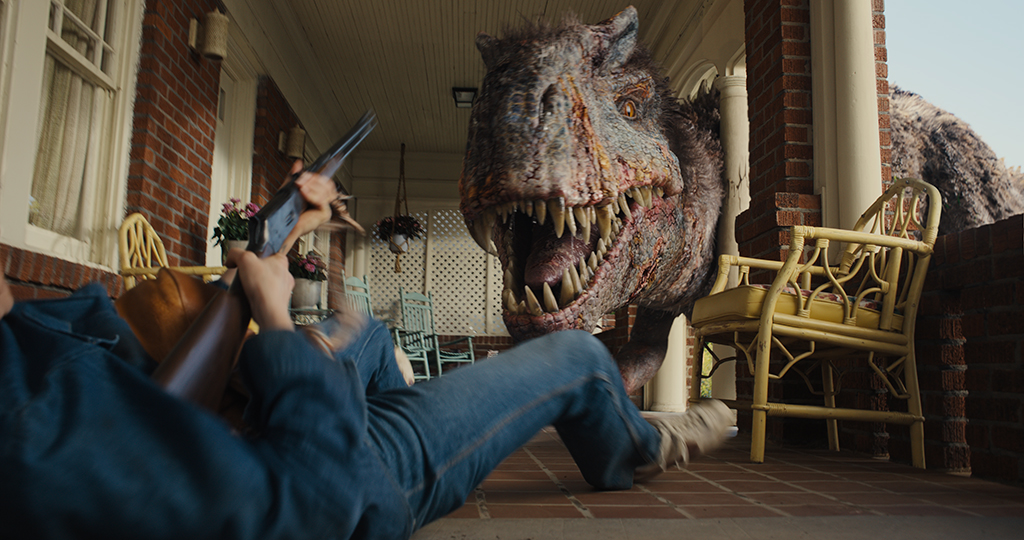
The dinosaurs’ rampage called for a mix of practical and digital effects. “We were fortunate enough that the house, which the Spinosaurus throws the Platt car through, was actually a set built on a lot in between two real houses in Atlanta,” Cooper reveals. “That one was great. But what often happens is that it becomes a half-digital, half-practical endeavor. You replace the lawn and add additional elements. Filmmaking is usually strongest when there is collaboration between departments. This is a perfect example. Working with our Production Designer, Maya Shimoguchi, and Special Effects Supervisor, J.D. Schwalm. [They] were phenomenally helpful.”
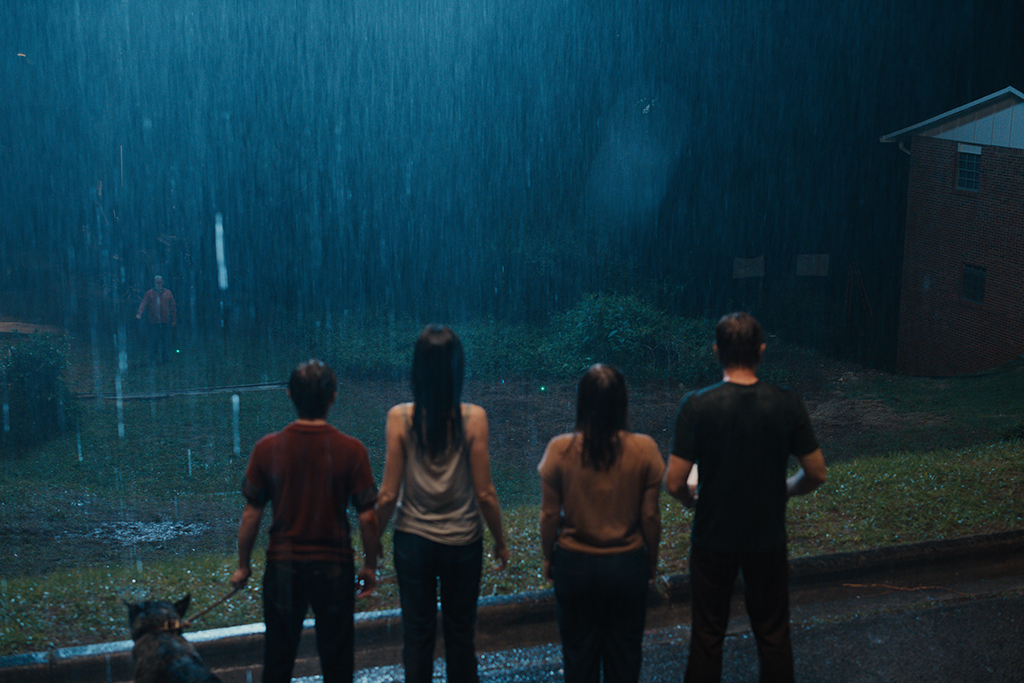
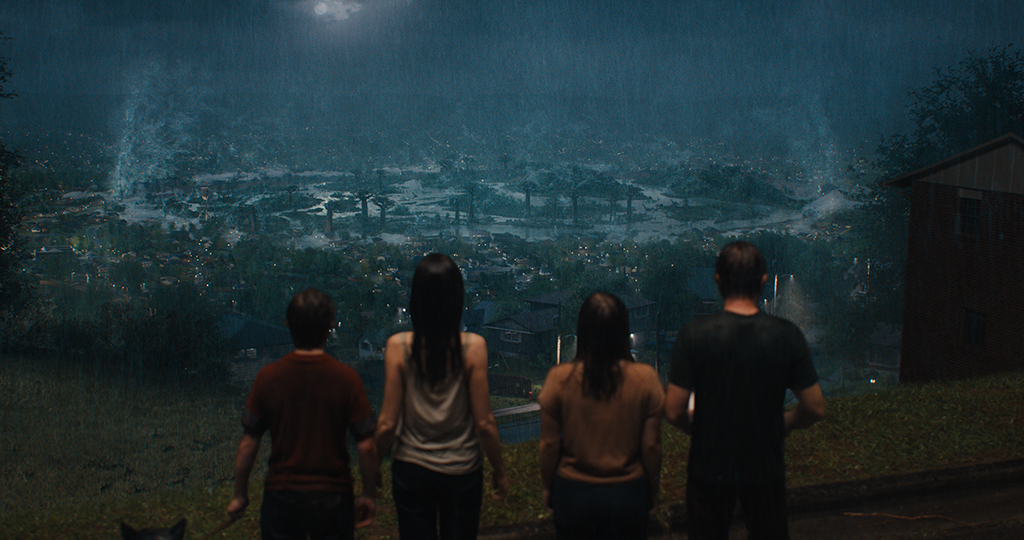
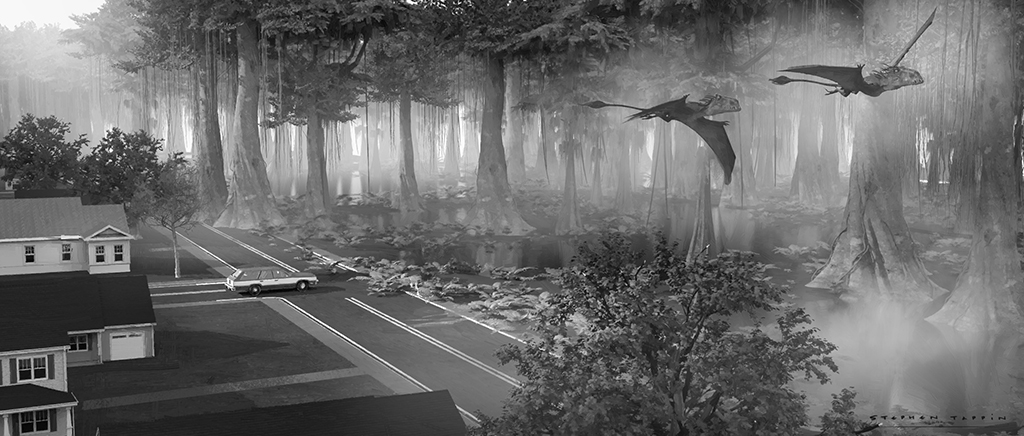
The prehistoric setting called for period-appropriate vegetation. “What constitutes a prehistoric tree, and how do you sell that to your audience?” Cooper asks. “I did some research and found various types of odd plants that had different silhouettes. [The idea] was to find things that were outlandish but real. Maya and her team in preproduction had already done a bunch of research about weird plants, odd-shaped ferns and oversized things they could use. The hard part is trying to sell the scale. If it’s a small thing next to something large, you get a sense of scale. But there are elements of our world today that have some of these things. We were in Hawaii, and there are definitely jungles where you feel like you’re stepping back in time.”
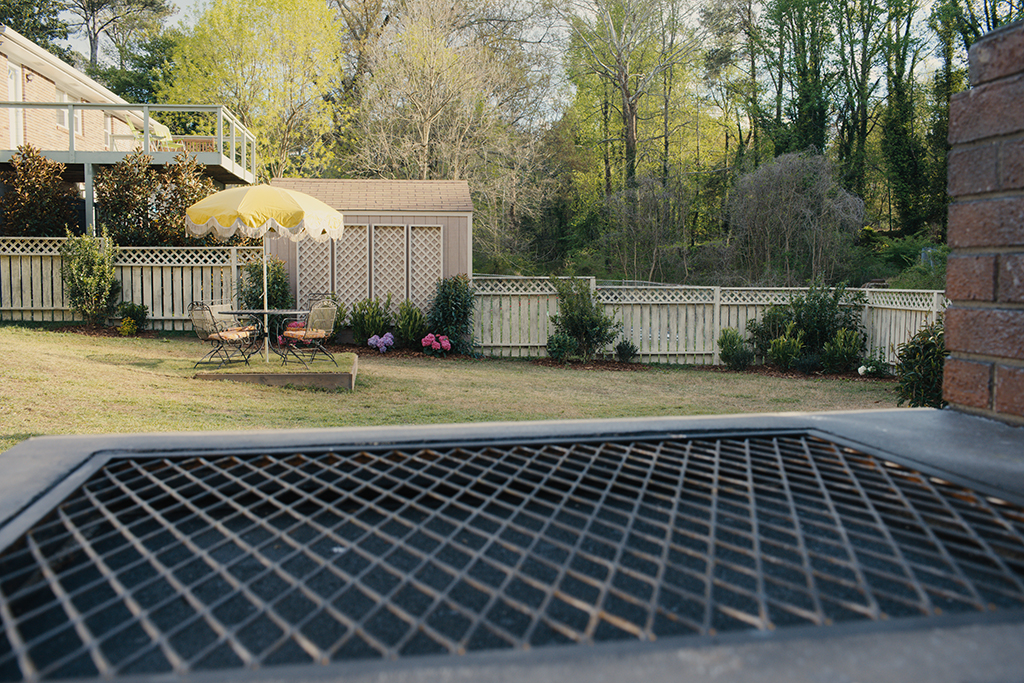
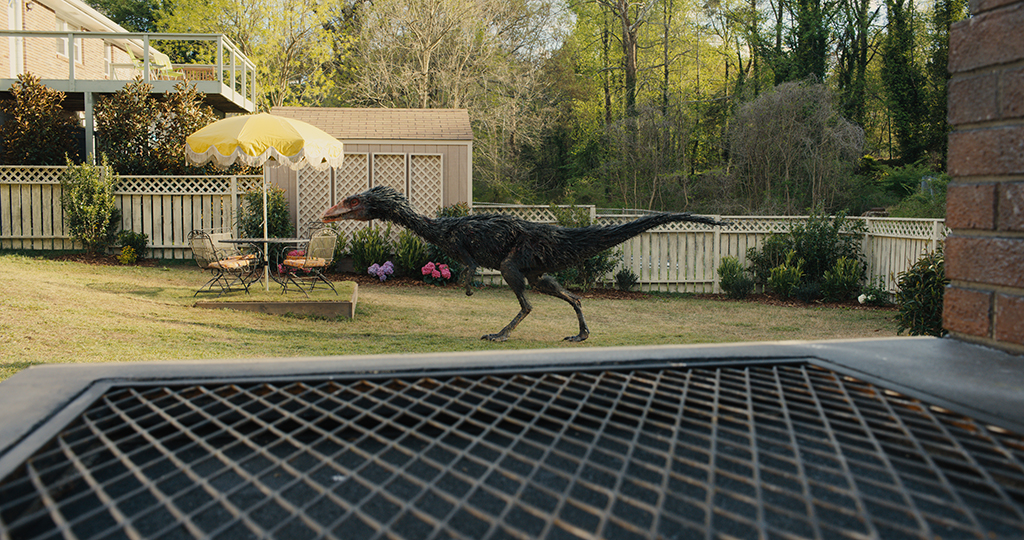
The film’s predominantly green environments made it difficult to establish the geography of each shot. “The question becomes, ‘How do you sell distance and scale when all of the visual cues add up to a mush of green?’” Cooper asks. “‘How do you do it in the context of a two-second shot?’ Anne Hathaway has a POV in the back of Mrs. Huddleston’s yard, and you have to understand that what she’s looking at is foreign [compared] to what was there previously. It’s a challenge to do that.”
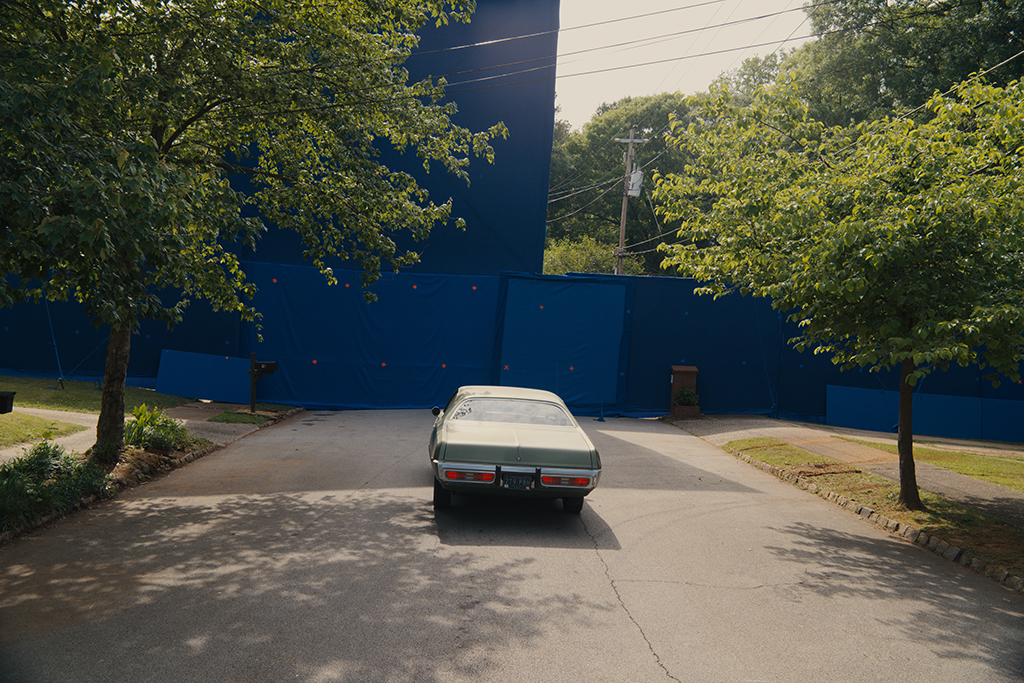
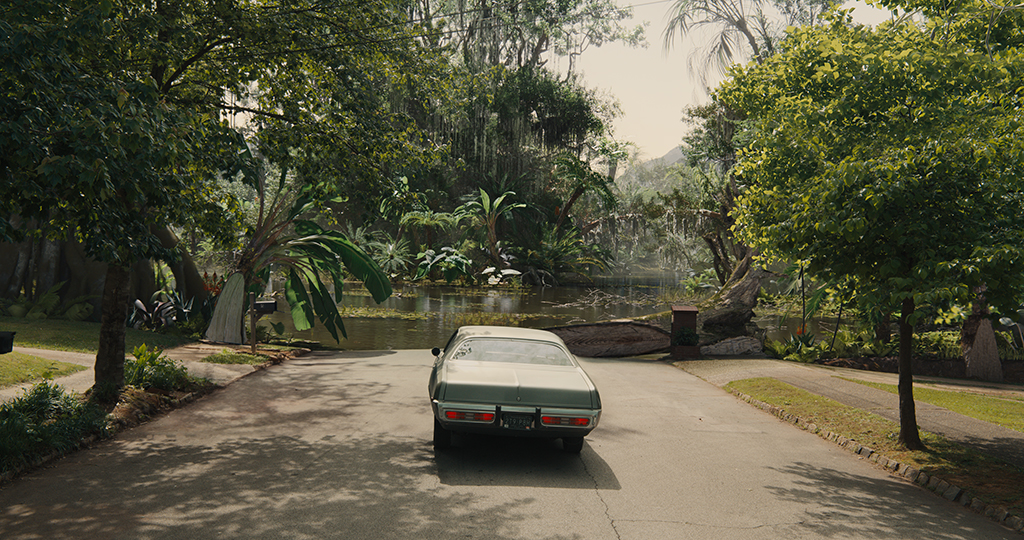
Shots of the edge of the neighborhood presented their own issues. “You’re trying to tell a story of depth and something that is foreign to most people. You see a 200-foot cliff face and our touchstones for what that might look like are sinkholes and places where there are rockslides. But those are all organic moments. This is supposed to be cut from a gigantic portal, and there’s no precedent for how you carve off a slice of cake and how that edge is cut. It’s a difficult sell when you’re trying to sell a new visual idea that no one has ever seen before.”
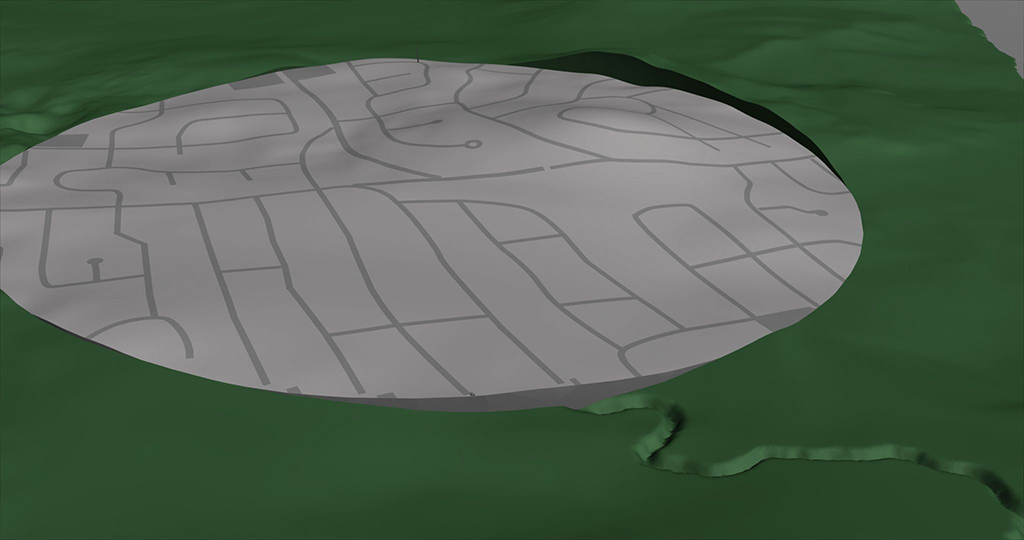
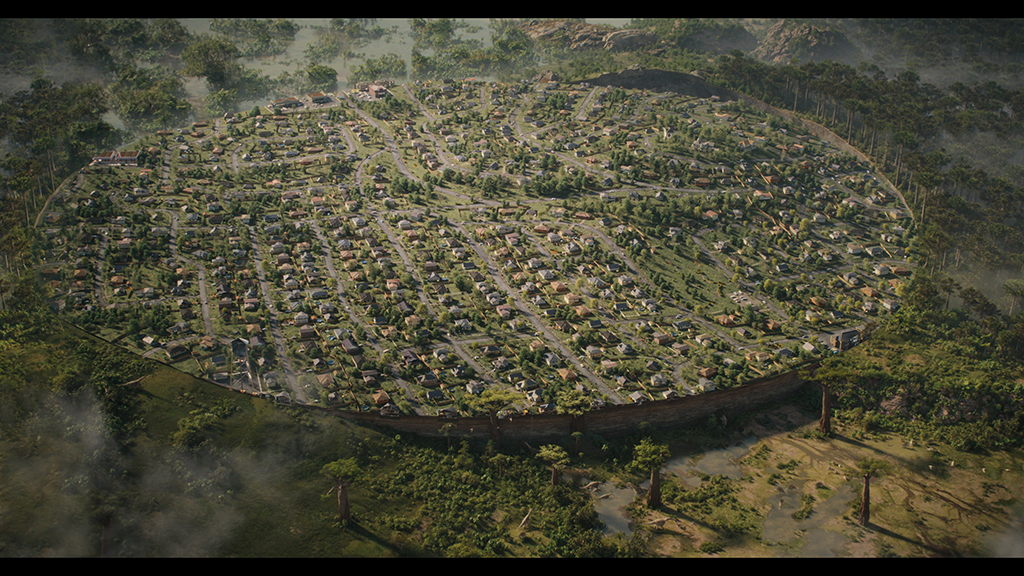
Approximately 700 visual effects shots were created by ILM, with additional contributions from Lola VFX. Cooper says, “The budget for this movie is much smaller than a Jurassic film and part of the challenge is: How do you make something that is tremendously impactful when the audience has seen everything? One of the things that David did, which was smart, is find moments that are close to the characters, and there’s a high degree of character interaction; he is also using sound and the claustrophobic nature of the house to [good] effect.”
ILM used Helios, its proprietary real-time renderer and engine, to help the writer-director stage shots. “You play with motion capture or real-time motion capture dinosaurs and combine that with either a Gaussian splat for your environment or traditional Unreal Engine assets,” Cooper explains. “Then what we gave David was the opportunity to stage the shots in an interactive way. We did a bunch of previs with that methodology.”
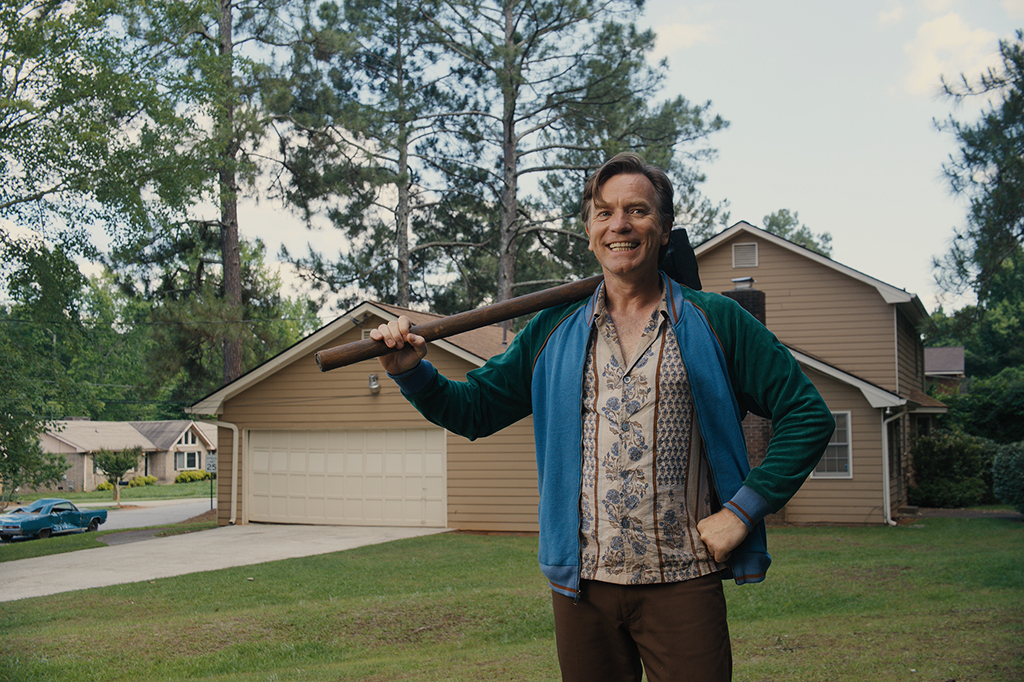
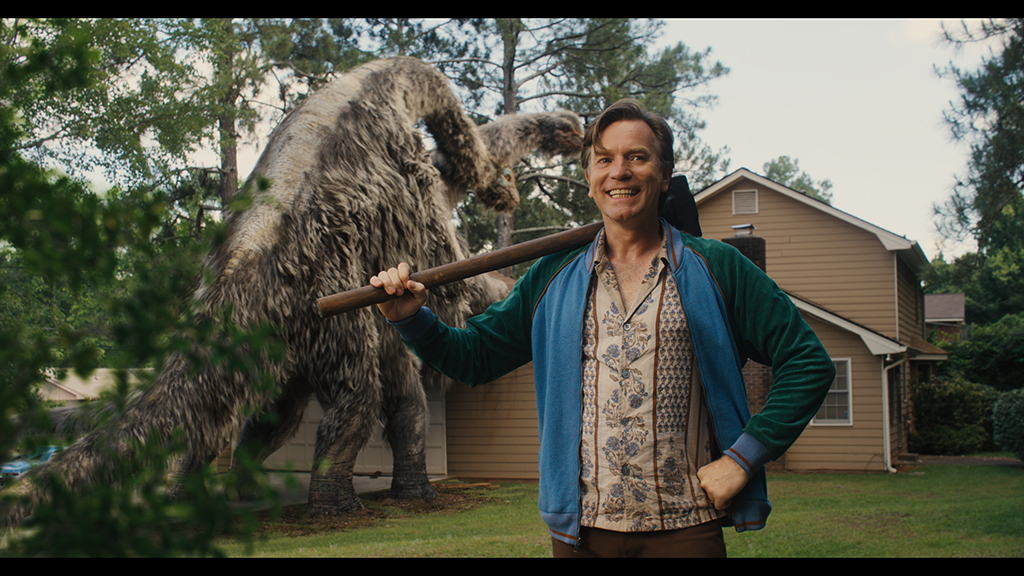
Like Jaws, the film builds suspense by holding back the reveal. “You don’t see the shark in the first 70 minutes of the movie,” Cooper notes. “There is some element of that which plays well in this movie. If you’re not seeing the dinosaurs, you’re hearing them. There’s that moment where the house shutters. You only see the Camarasaurus squeezing past the house through a window when Ewan gets out the candle. That’s great because when you have moments where you’re seeing bits and pieces, the audience has a much better capacity to create what isn’t there than a filmmaker ever can. It’s different for every person.”
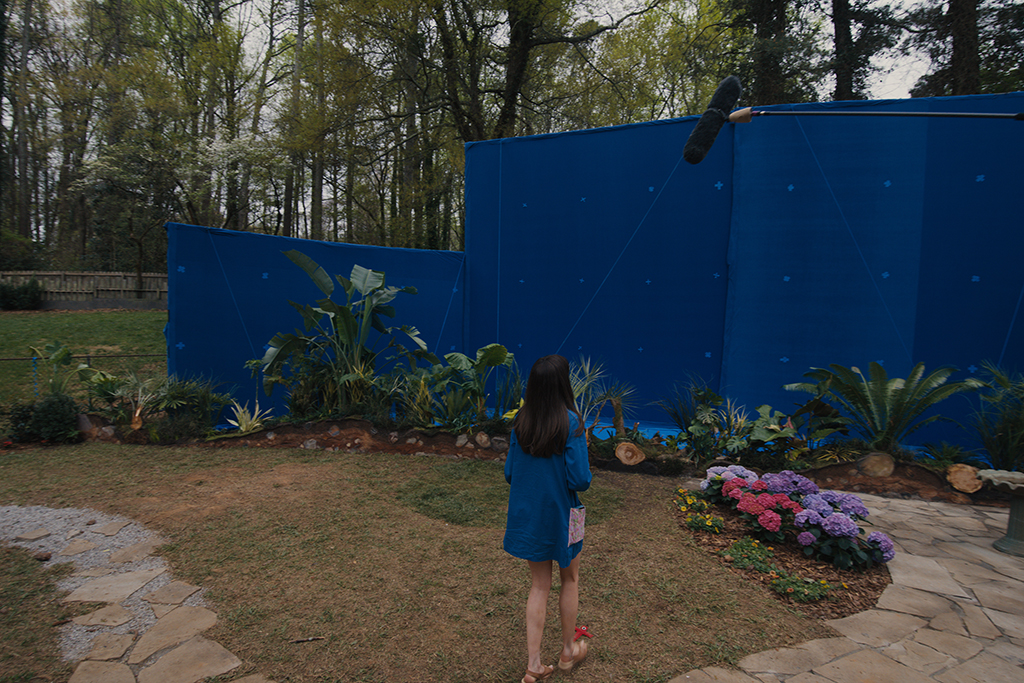
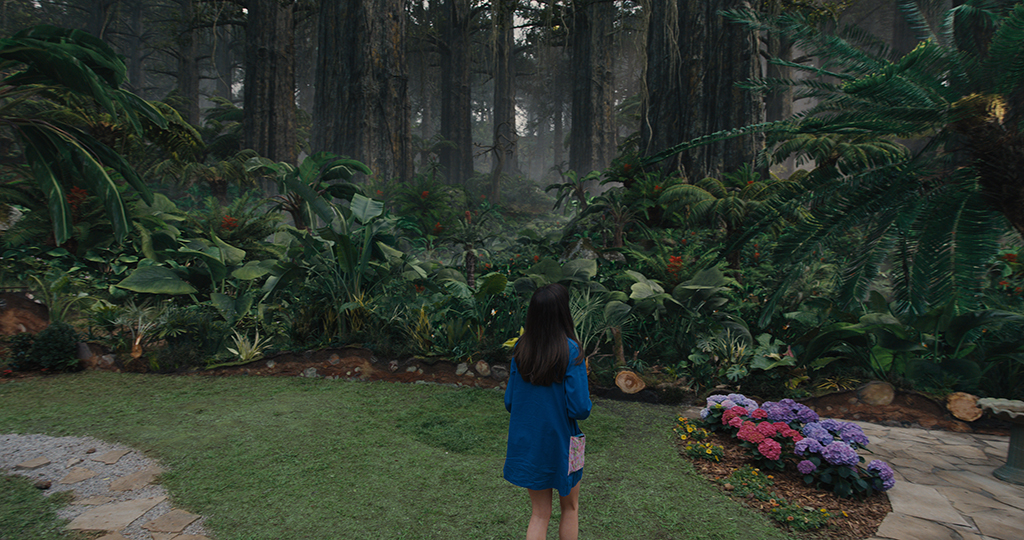
Ultimately, audience reaction is what makes the work worthwhile. “The thing that is the most fun about this movie…is the level of engagement we get from the audience when some of these ideas come to fruition. The woman who gets tackled on the porch at the beginning of the movie was an early idea, and we kept working to make it as violent as the PG-13 rating would allow. I delight in the success of those moments.”