Images courtesy of Sony Pictures Animation.

Images courtesy of Sony Pictures Animation.
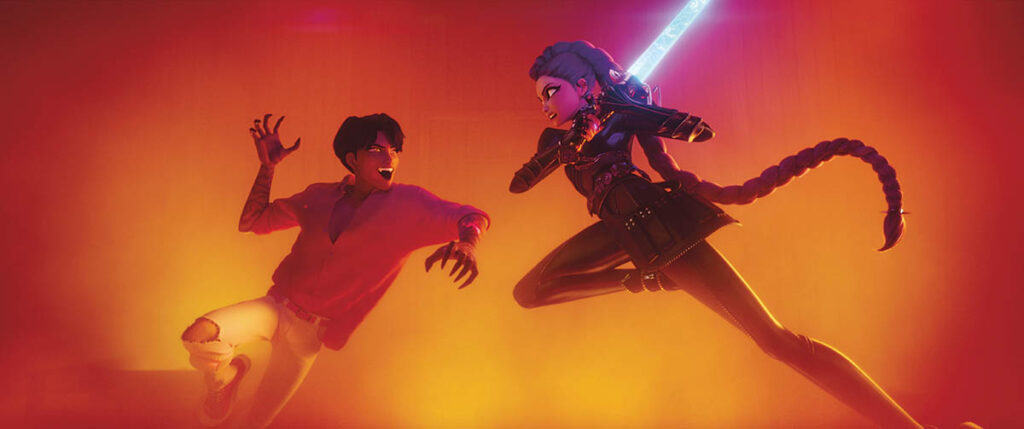
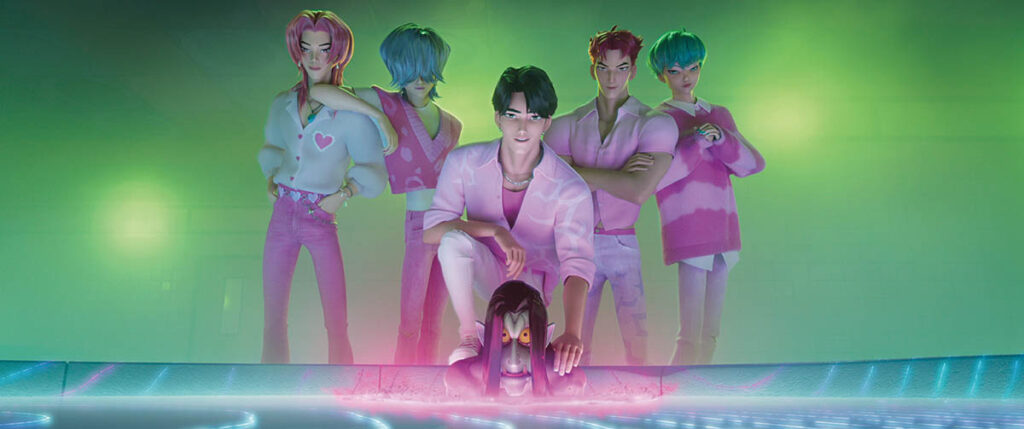
Alongside winning three 2026 VES Awards for Outstanding Animation in an Animated Feature, Outstanding Character in an Animated Feature (Rumi) and Outstanding Effects Simulations in an Animated Feature, KPop Demon Hunters conquered the Oscars, Annie Awards, Golden Globes, PGA Awards, Critics’ Choice Awards and joined the prestigious Criterion Collection. To better understand how a film about a K-pop girl group that covertly hunts demons between concert performances and public appearances became a cultural phenomenon, one need only examine the Bathhouse Battle sequence, where action spectacle, visual effects and character development converge. In this sequence, the rival Saja Boys unleash a horde of Water Demons on HUNTR/X, and the relationship between Jinu and Rumi transitions from being adversarial to romantic after he discovers they share demonic heritage.
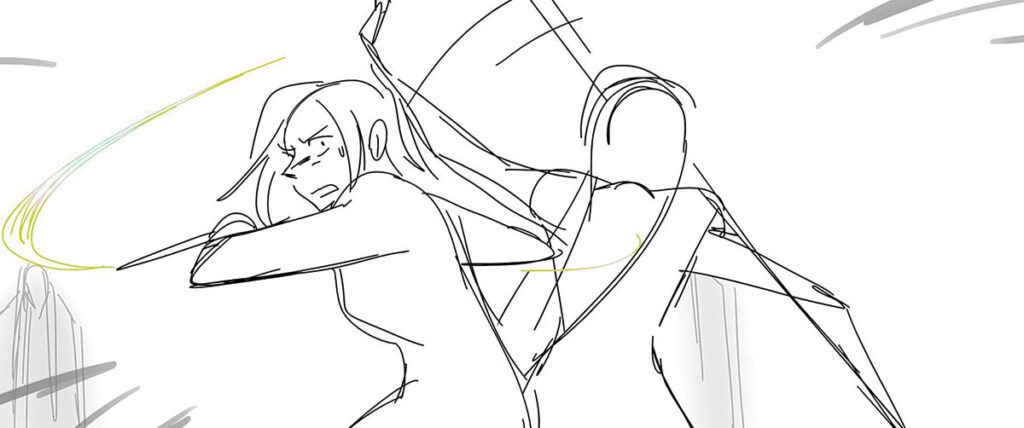
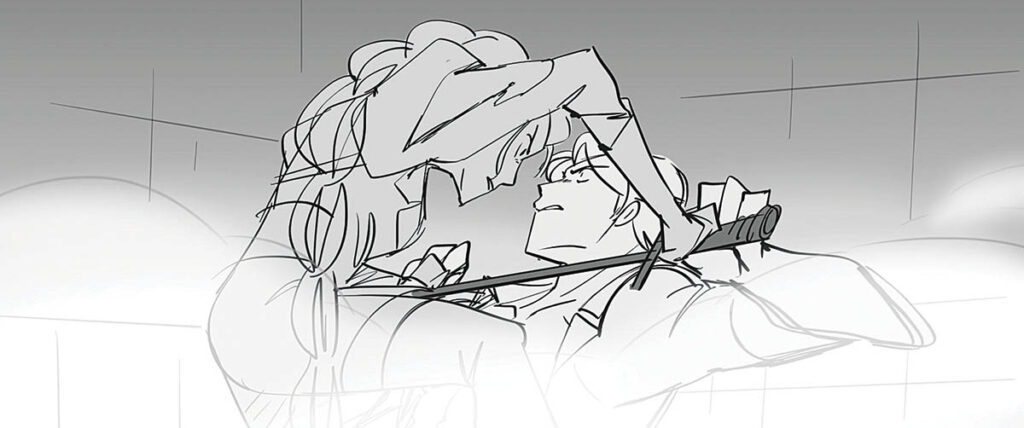
“It was important to me to make sure we channeled the right things in the movie, such as [using] K-dramas, K-pop music videos and big concert performances, like Blackpink’s, as references and picking the camera,” Gary H. Lee, Head of Cinematography Layout for KPop Demon Hunters, states. “We ended up going with an ARRI ALEXA LF because it gives us a big sensor. It allows for a shallow depth of field, which speaks to the K-drama where a lot of times that’s how they romanticize scenes of people out on location by trying to blur everything outside of the subject. We do not shy away from long lenses because they have an Asian cinematic aesthetic. Whenever the Bathhouse Battle goes into action, we [switch] to short lenses for dynamic composition. Even with the steam room, when Rumi is pinning Jinu on the bench, it’s wide. When we go to any of the well-choreographed fighting sequences, like when Zoey is running on the walls and shooting darts, we’re talking about probably 18mm or 14mm. At the beginning of the sequence, there is a lot of centralized composition. To frame the girls, you have that heroic triangle of Rumi in the middle and the two on the side, then the opposing composition with Jinu and the Saja Boys. It’s like trying to stage it as they’re equal, and then they’re going into this fight. Rumi and Jinu split off to go on their own adventure, while the chaos happens in the bathhouse with the Water Demons.”
“We tried to [assign] every demon a different class level and set of rules. Each one has been banished to a deeper level of shame, so the Water Demons are almost animalistic. They’re eerie and creepy but not so scary that they’re alienating. Lucky enough, we learned that no matter how violently you slice things open, if they blow up in pink sparkle glitter, we’re good!”
—Joshua Beveridge, Animation Director
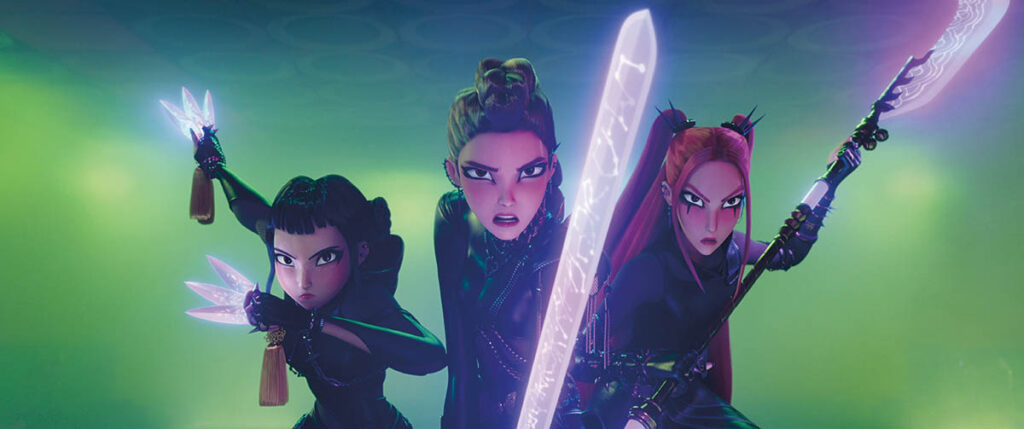
The weapons themselves had to be treated as characters in their own right.
KPop Demon Hunters is the first film at Sony Pictures Animation to complete its entire layout and previs process in Unreal Engine. “For a cinematographer, Unreal Engine is great because the camera behaves physically to the real world,” Lee remarks. “It means that when we use our large-format camera, set our focus point and f-stop, they are accurate to the real world. We’re able to make those choices even when we’re shooting previs. Before a lot of the other shows, when we did it in Maya, you’re interpreting a depth-of-field quality and hoping the downstream department will remember your intent and continue applying it later. It’s something you have to keep chasing.” Environments were manipulated to get the desired camera angles, such as when Rumi pursues Jinu down a hallway into the sauna. “We totally cheat back into the sauna so that it is right next to the bathhouse for when the wall crumbles down and Jinu and Rumi can see Mira and Zoey through that,” Lee reveals. “The configuration of the rooms was cheated to get the story to come across. In the bathhouse, we were also thinking about the moments that go into slow motion or time suspension. When Jinu grabbed Rumi and did that 360 spin, or when Mira and Zoey almost saw the pattern on Rumi’s shoulder, those are the moments where we go into time suspension/slow motion. It’s almost like a rule in KPop Demon Hunters that the time suspension/slow motion are for emotional impact rather than showcasing cool action sequences. Worth mentioning is the last shot, when they go into full action mode; the rule in the film when we go into action is we don’t have any rules.”
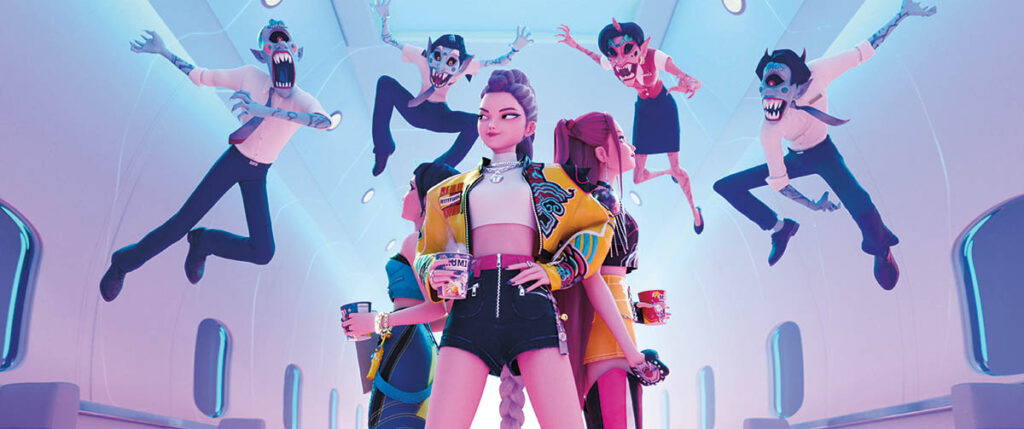
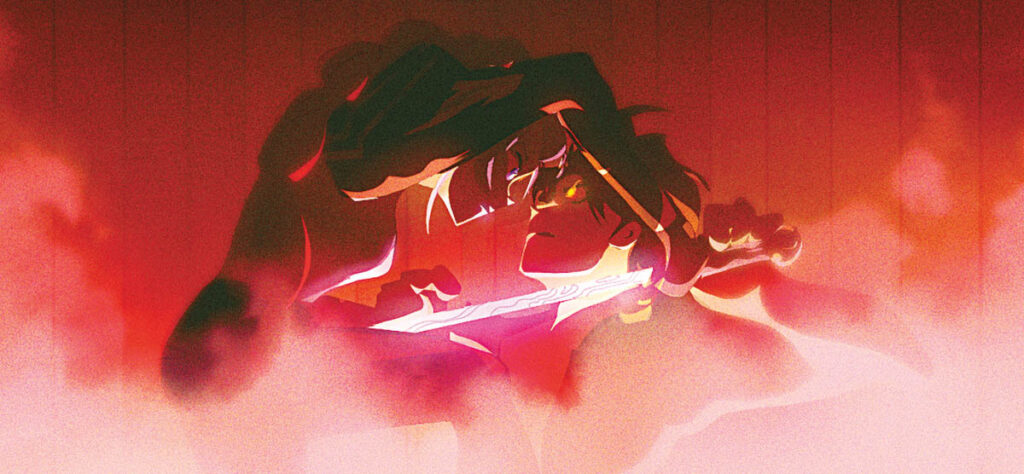
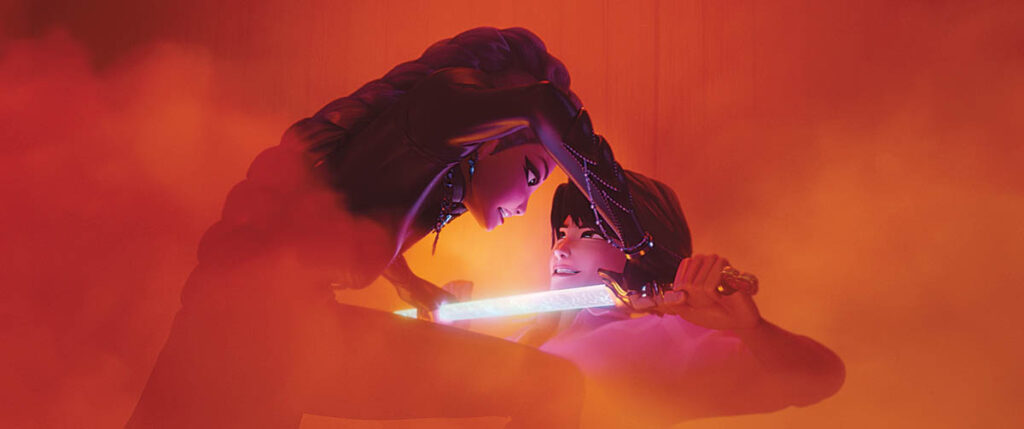
An example of full action mode is when Rumi reunites with Zoey and Mira to clear the bathhouse of Water Demons. “Animator Ryusuke Furuya did a lot of the heavy lifting, from the moment when Rumi forms her sword and throws it out to decapitate the Water Demon, which does a glitter burst all the way down, to slicing the polearm into the floor,” Joshua Beveridge, Animation Director, remarks. “We call that whole area a sandbox. We had to do a lot of solving because we hadn’t quite solved all the rules of the Honmoon magic yet; how weapons get drawn up, how things get sealed, where demons are coming from, especially the Water Demons, and how we’re going to banish them back. We were given this emotional arc where Mira and Zoey had to be overwhelmed because Rumi was on a side mission. To reach a breaking point in the tension, the whole room had to feel as if it was closing in on them. Finally, Rumi disembarks and splits them all in half. All we wanted from there on was this fluid move. We had Rumi draw out her sword, slice someone, and spiral to join Zoey and Mira. The goal was to make it as big a move as it possibly could be in a small space so we have one big impact. If it was sensational and big enough, it resets the audience’s mind, and you get a blank slate. The room has been cleared. We have enough kinetic energy and a wow factor. You don’t need to understand it. You just feel it.”
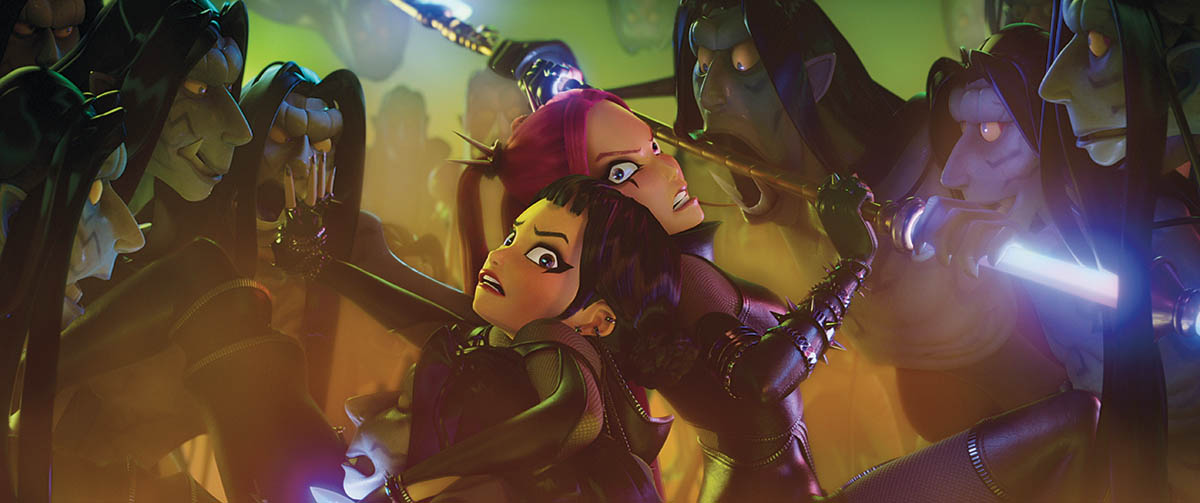
The Water Demons cause chaos. “They are based on actual Korean folklore characters,” Beveridge notes. “We didn’t know if we wanted them to go through the space as if they were always underwater, or they could only come out from water. We ended up [deciding] they could come from the ceiling, walls or anywhere wet, and there’s enough weakness in the membrane of the Honmoon. We tried to [assign] every demon a different class level and set of rules. Each one has been banished to a deeper level of shame, so the Water Demons are almost animalistic. They’re eerie and creepy but not so scary that they’re alienating. Lucky enough, we learned that no matter how violently you slice things open, if they blow up in pink sparkle glitter, we’re good!” In the sequence, a male bathhouse patron reprimands Rumi, Mira and Zoey. “We wanted the audience to not think about the bathhouse patrons until the end, which has the gag of the unfortunate soul left humming along who shoos the girls out. A funny little anecdote about that guy is we were starting to mock up how he would be scrubbing and cleaning up after he shoos the girls away. One of the leads on the team spoke up and said that the scrub brush we started using wasn’t actually [what was used in a real bathhouse]. There is this fingerless glove that has a pad that your hand slides into. We ended up modeling that.”
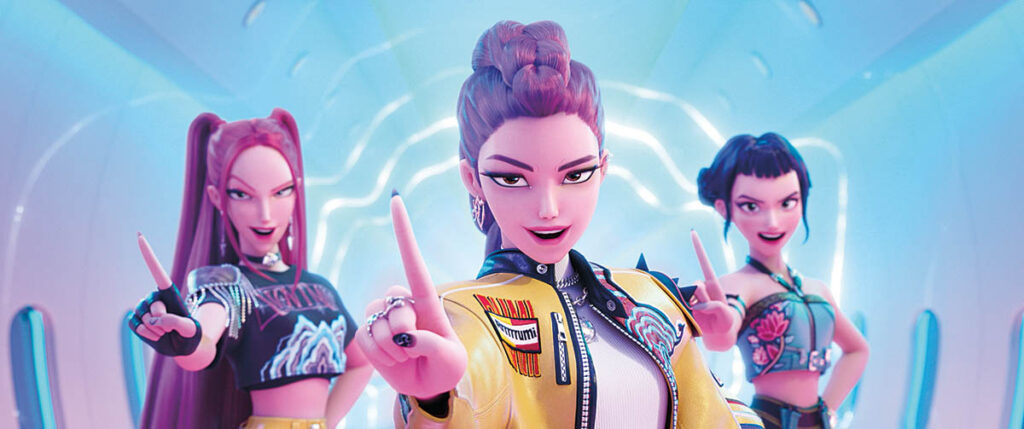
Treated as characters in their own right were Zoey’s shin-kal daggers, Mira’s gok-do (long-handled polearm) and Rumi’s sain-geom (Four Tiger Sword). “We did lots of tests in effects development because the weapons have a formation part, so how the weapons form itself is an effect,” Clara Chan, Co-Visual Effects Supervisor, explains. “The idea is we’re drawing the energy from the Honmoon, so the design was that these Honmoon lines come in and weave themselves into the shape of a sword. That was inspired by Korean knot-tying art (norigae), and we made sure that the lines capture that design element. Once they form a sword, there is a swish element. These lines, which conveyed the sword’s action, were specifically designed to incorporate Korean cultural influence and the Honmoon’s design. The weapons were fun.” The teleportation ability of Jinu and dissipating Water Demons followed a color motif. “We always know that pink is the demons’ color. When Jinu teleports, he usually transforms into a pink cloud and then moves away. Whenever the demons are destroyed, we would have a whole bunch of pink glitters that exploded from them.” Stylization was more important than actual physics. “We worked with animation a lot. The CFX department simulates the clothing and hair. Animation has their tools to rig and shape it the way they want, especially in special poses. There are certain moments when you want to see the shape, so animation usually gives us those guides. When CFX simulated it, they would make sure to hit those poses, but on top of it, there is actual physical simulation.”
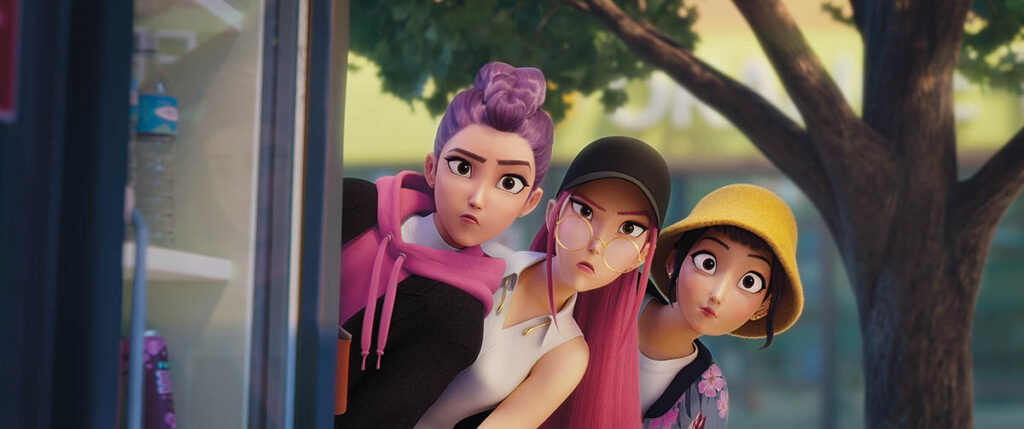
“All the effects are unique. We don’t see them often. The demon design is fun. There are so many things that come together in this short moment, and the almost monochromatic green and orange create such a big visual impact. It has a clarity to it. There are moments of humor as well as a romantic moment between the main characters. There is so much story in this one little sequence.”
—Clara Chan, Co-Visual Effects Supervisor
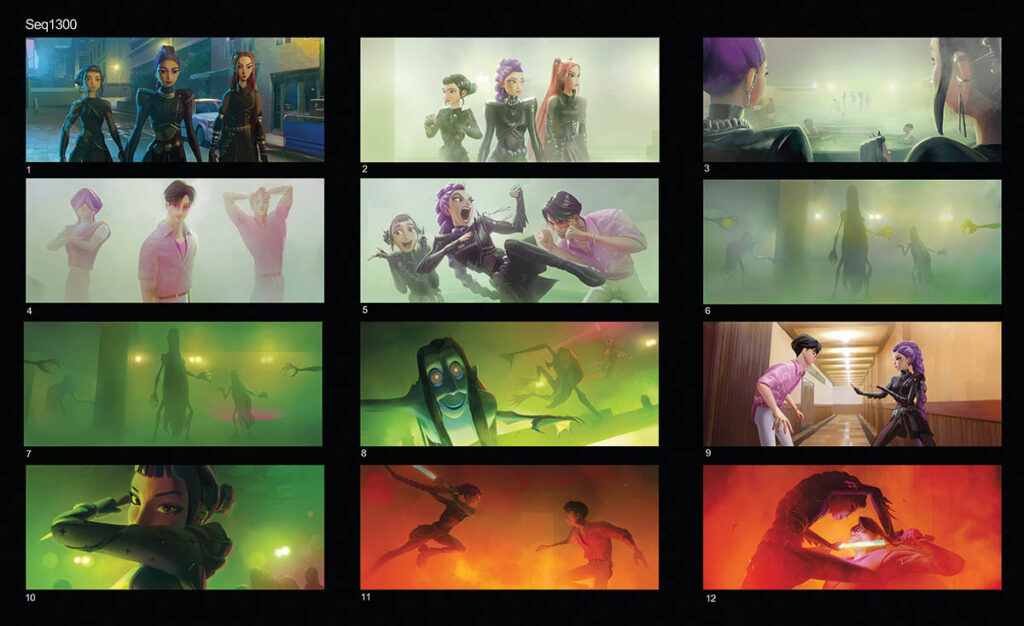
Green and red steam are the prevailing atmospheric. “It’s a collaboration between effects, lighting and compositing,” Chan states. “Effects has some standard steam elements that lighting could move and adjust if necessary. Benjamin Hendricks is the other Visual Effects Supervisor, and he’s in charge of lighting the show. The layering of the steam and where you position the light are important because we always want to see the characters. That is our number one goal and to see the action; to make sure that the light hits where it’s supposed to and let everything fade back. Whenever there are demons in the background, we would usually silhouette them and simplify so you don’t see so many eyes and faces in this one image. You just see what is most important and then let everything of second or third importance fade into silhouettes and have less contrast. We used the steam to hide a lot of detail. We looked at a lot of references for steam rooms and for photography with a lot of smoke and steam. The steam is a fun element to use as a composition tool.” For sweat droplets, 2D effects were used. “We have a 2D effects artist who draws frame by frame. Those popcorn eyes moments are mostly about swapping the geometry, and animation did the popcorn movement. They did it well, so we didn’t have to simulate it. Then, in lighting, we would try to simplify the lighting and make it slightly more 2D but not exactly flat.”
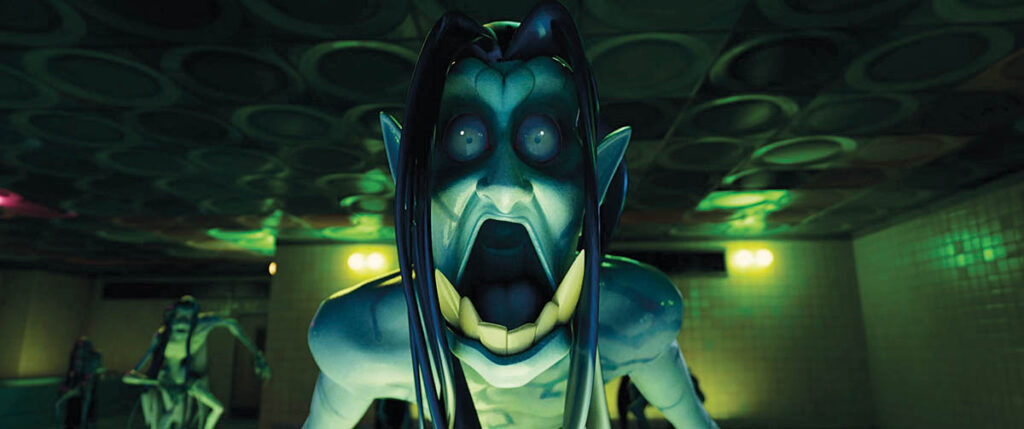
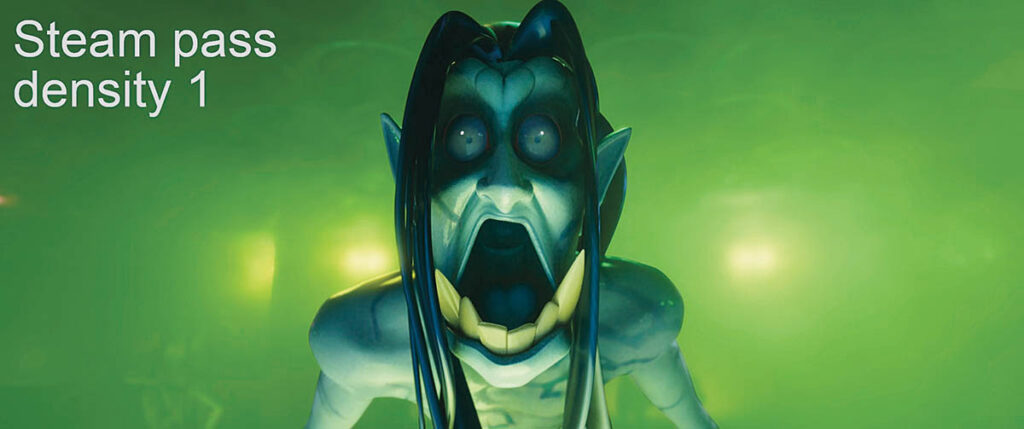
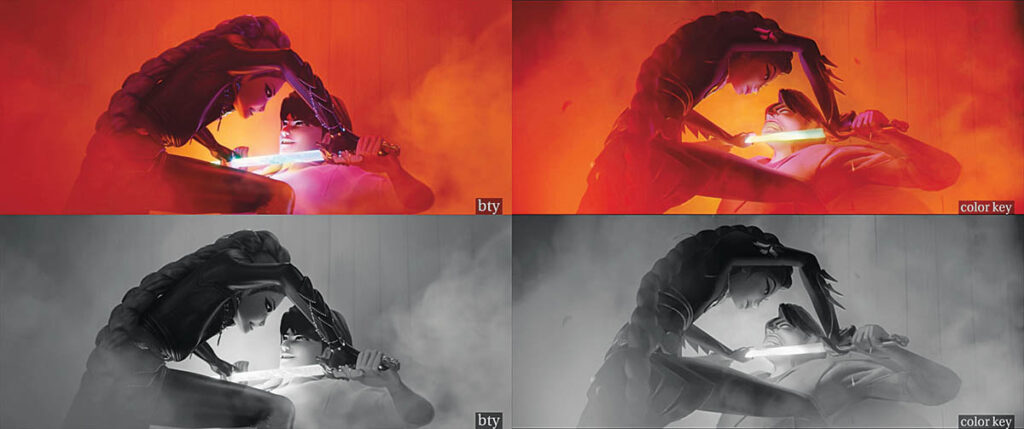
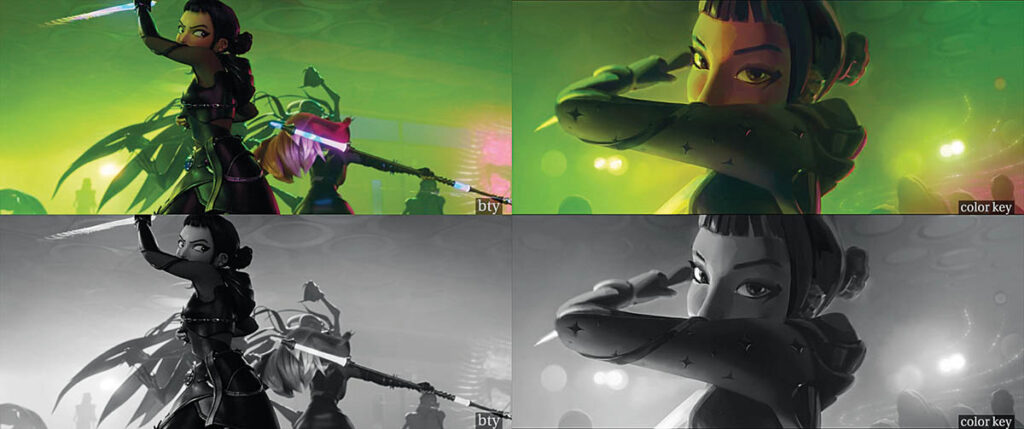
Hair was an extremely scary element. “All the Water Demon hair, plus Rumi’s and Mira’s hair, are basically giant, long rope rings; each strand of that would break most animation departments!” Beveridge laughs. “I am so impressed and grateful for how thoroughly our team took that on. It’s one of those things that folks wouldn’t assume to be as complicated as it is. But every single Water Demon is covered in braids and braids of hair. We had to make it flow and feel like it’s graphic-designed. Then it goes through a simulation pass as well. Those are all heavy lifts.”
There are many reasons why the Bathhouse Battle has been so well received. “If you trace back to a lot of Asian gangster films, the action or showdown that takes place in the bathhouse is not uncommon, but in a Western project, there’s something that’s fresh about it,” Lee observes. “I’m not surprised at all that people reacted to it. I give so much credit to directors Maggie Kang and Chris Appelhans, and the creative team. Our job is to land the airplane and make sure that it’s captured visually. At the end of the day, cinema is a visual language.”
Gone are the days where action stars have to be men to attract an audience. “People always love action, and it’s rare to see three women fighting demons,” Chan states. “The design of the environment is based on actual Korean bathhouses, so there’s an authentic cultural element to it. All the effects are unique. We don’t see them often. The demon design is fun. There are so many things that come together in this short moment, and the almost monochromatic green and orange create such a big visual impact. It has a clarity to it. There are moments of humor as well as a romantic moment between the main characters. There is so much story in this one little sequence.”