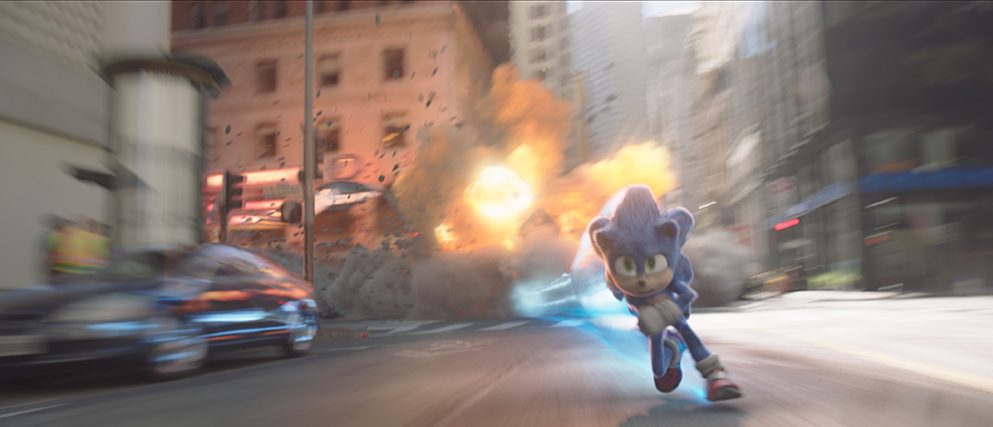
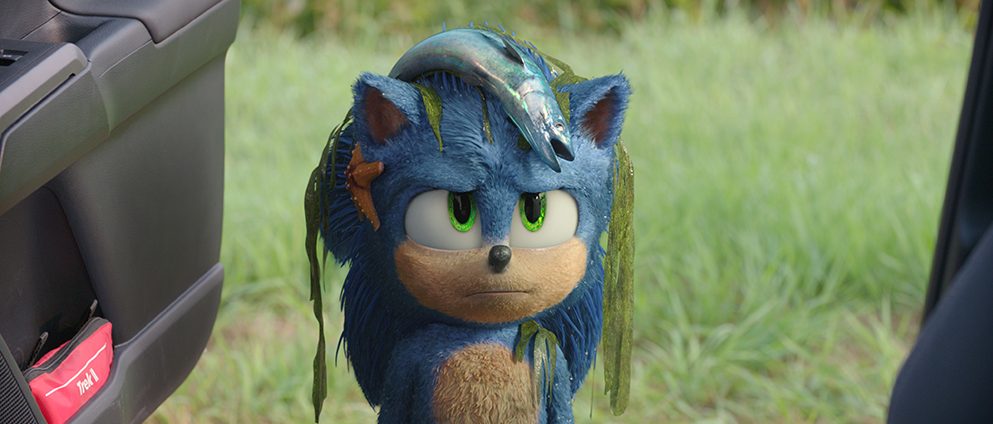
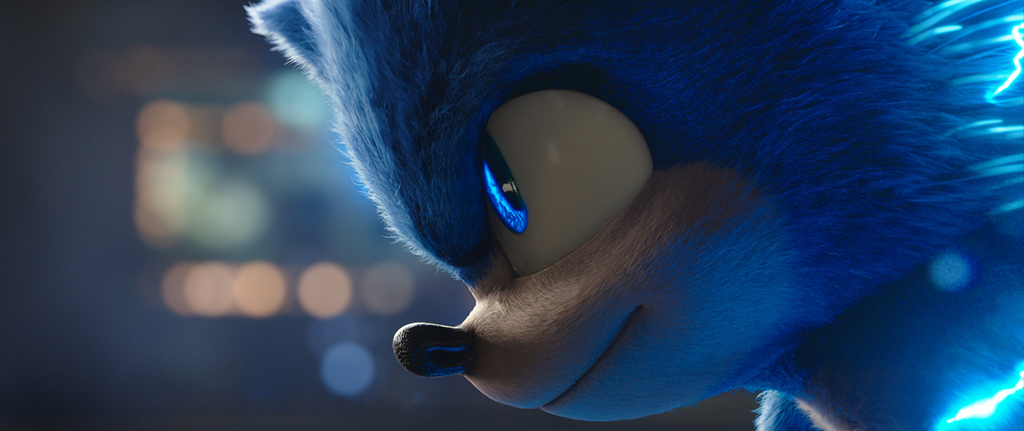
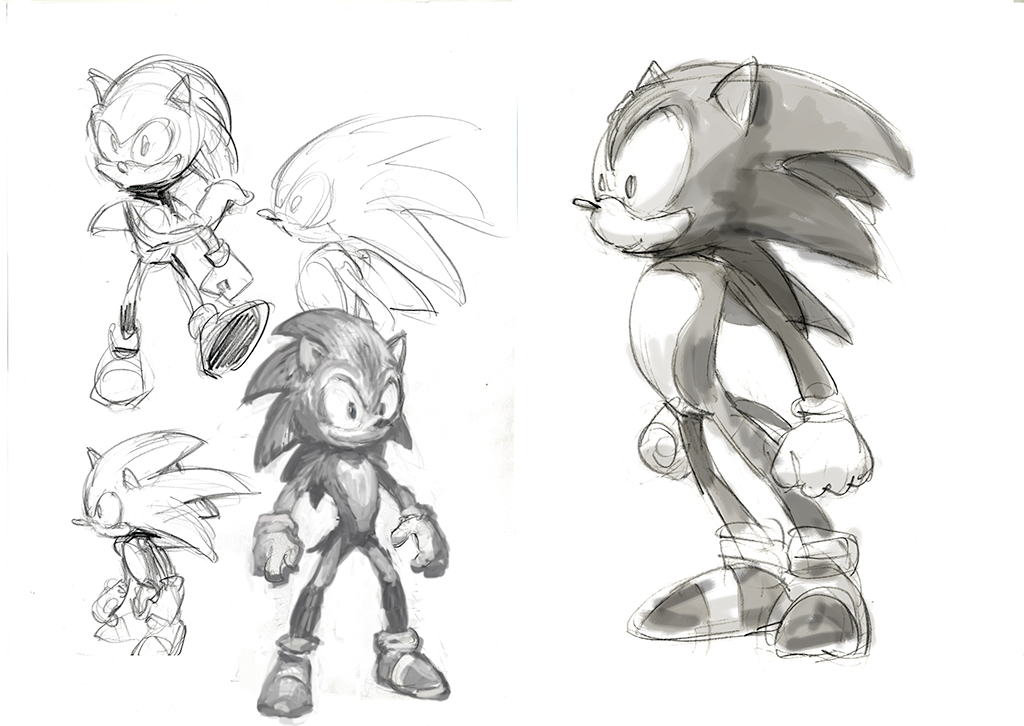
A trademark for Sonic is his bright blue fur that goes from being wet to fluffy. “We still use the same toolset as far as it being photorealistic fur, and kept pushing until it was the right visual gag rather that being technically exactly how long his hair would be if we hit him with a hairdryer,” explains Wright. “Whereas animals have variations of their fur color that is driven in a naturalistic way, Sonic’s fur color variation was driven by how you would accentuate his forms to make him feel more like Sonic. The actually quality of the fur was translated over, as well as the eyelashes, underlying iris and eye geometry. We gave him white gloves and added peach fuzz all over them so that they felt soft and could exist in that world. We paid extra attention to his limb length and height. Nearly all of the blocking work that we had done to that stage was still applicable. We could actually take the animation from the old rig and copy across to the new rig in a number of different shots. There were exceptions such, as with his hands, because a direct translation looked ridiculous as they’re enormous.”
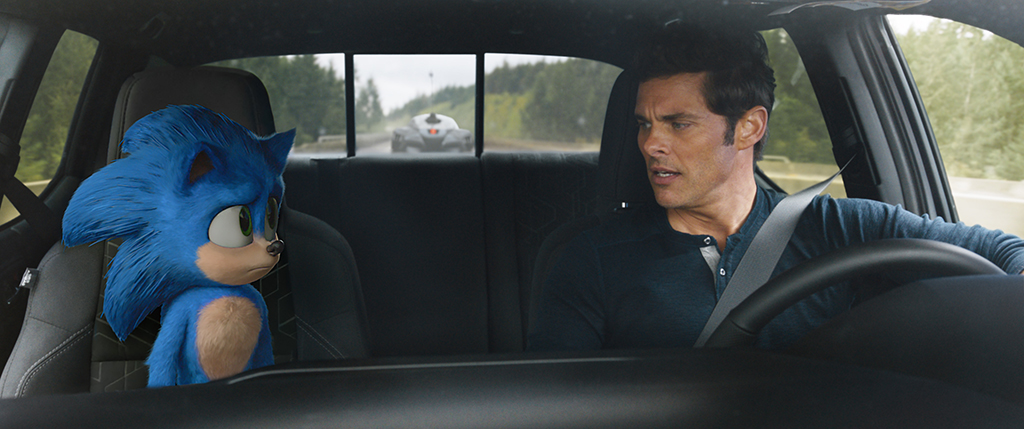
It was important to be able to get Sonic to emote, says Wright. “Part of that is a negotiation with everyone’s expectations. Once you have something that feels like Sonic from the game in 3D then you work your way towards a more neutral character that is able to emote and communicate different emotions beyond him just looking that he wants to run really fast.”



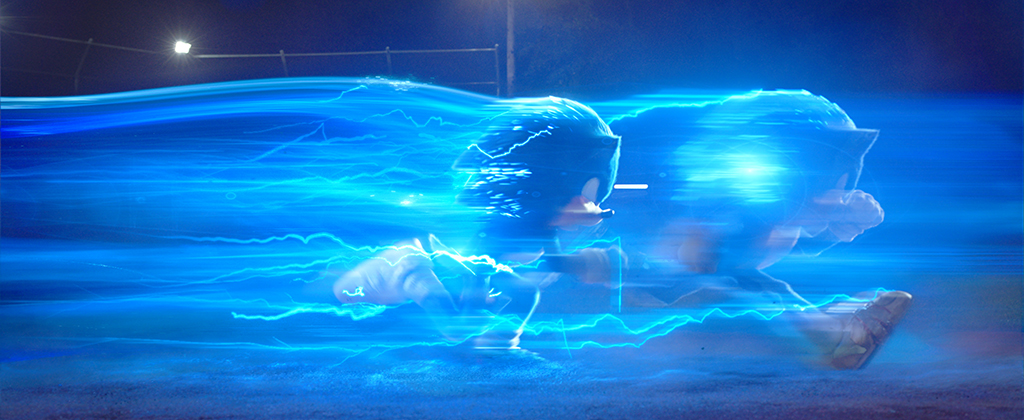
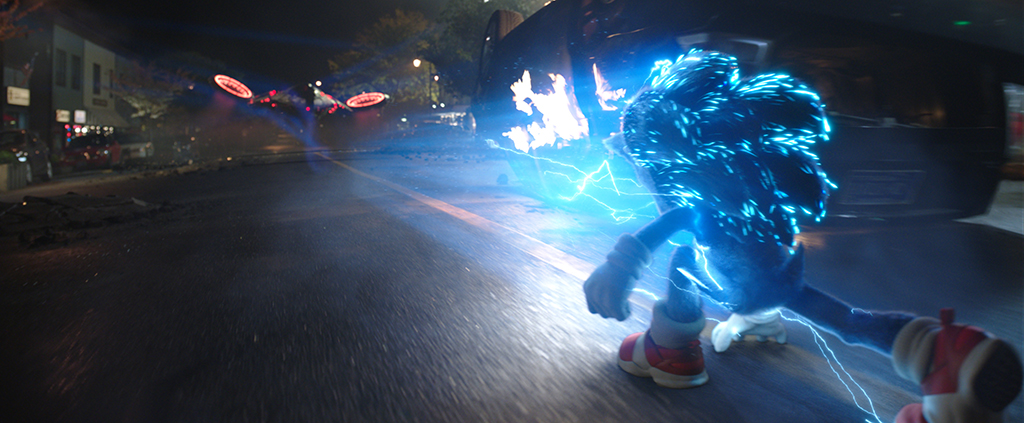 Sonic and Dr. Robotnik (Jim Carrey) face off against each other in a climatic showdown.