
While the expectations for episodic have grown, the restrictions of time and money continue the usual trend of becoming tighter. Visual effects teams have to be resourceful and selective to ensure that narrative is being served through a runtime that amounts to multiple feature films but within an even shorter production schedule than allotted for a single movie. In order to qualify for the 78th Primetime Emmys taking place at the Peacock Theater in downtown Los Angeles on September 14, 2026, episodes need to be released from June 1, 2025 to May 31, 2026. The number of competitors heavily favors established science fiction and fantasy franchises, though there are some new entrees that may prove impossible to ignore.
Apple has four major contenders consisting of Foundation Season 3, Monarch: Legacy of Monsters Season 2, Prehistoric Planet: Ice Age and new addition Pluribus. Fewer locations were visited for Season 3 of Foundation, which caused the shot count to increase by a 1,000, with the grand total of 4,000 supplied by BOT VFX, Crafty Apes, Framestore, Accenture Song, Outpost VFX, Otomo FX, PFX, Rodeo FX and SSVFX. “We did a lot of city extensions for Kalgan across the season,” states Chris MacLean, Visual Effects Supervisor. “This season, we did a lot more environment work than other seasons because we didn’t have the exotic backdrops that we were shooting in. We ended up spending a lot more time on that than anything else on the season.” Some locations had to be substantially altered. “We went and shot the Sacratorium on Mycogen in a location. But as Mycogen developed, the location we shot didn’t fit the aesthetic of the rest of the planet. We wholesale replaced that and actually replaced the Sunmaster-18’s crown, which was a huge undertaking by Framestore in post.”
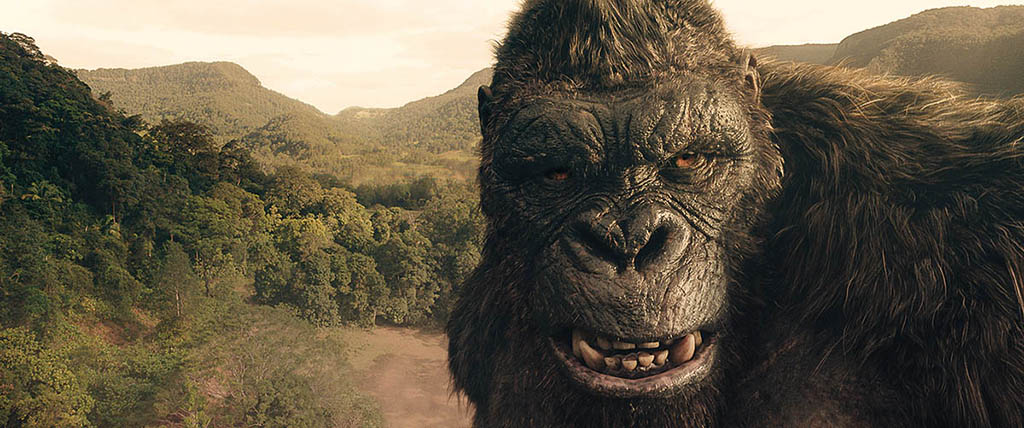
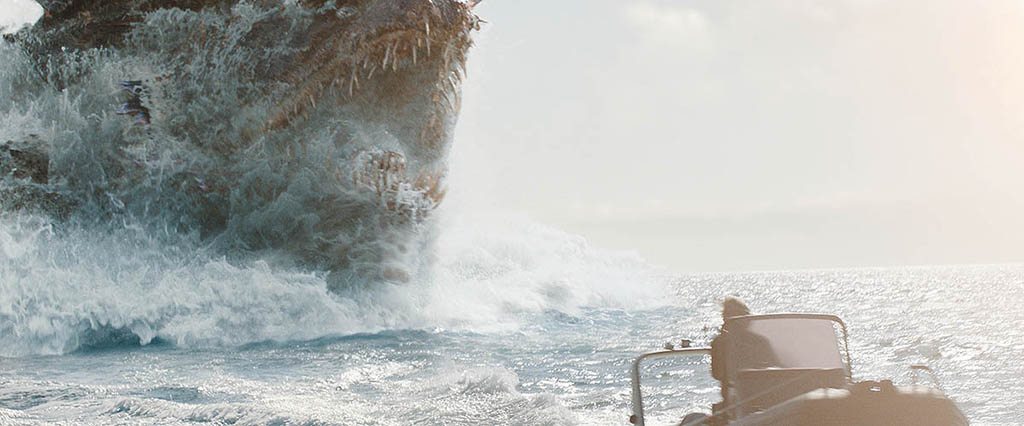
Upping the creature ante is Monarch: Legacy of Monsters Season 2 over the course of 3,000 visual effects shots with the help of Eyeline, Rising Sun Pictures, Rodeo FX, Trixter, Distillery VFX, Outpost VFX, Vitality VFX, Crafty Apes and Mist VFX. “Apple wanted a signature creature for the season and to have input on that,” explains Sean Konrad, Visual Effects Supervisor. “We actually started that concept work for Titan X a lot earlier than we started concept work on Season 1 in order to help get us across the line. A lot of our our creatures came as the scripts developed and feedback came in.” An effort was made to shoot on location to reduce environmental work. “One of the things that was tricky about shooting in Tokyo is you have limited location access and limited time windows because you’re shooting at night, and there are noise ordinances. With all of that, it’s a miracle that it works.”
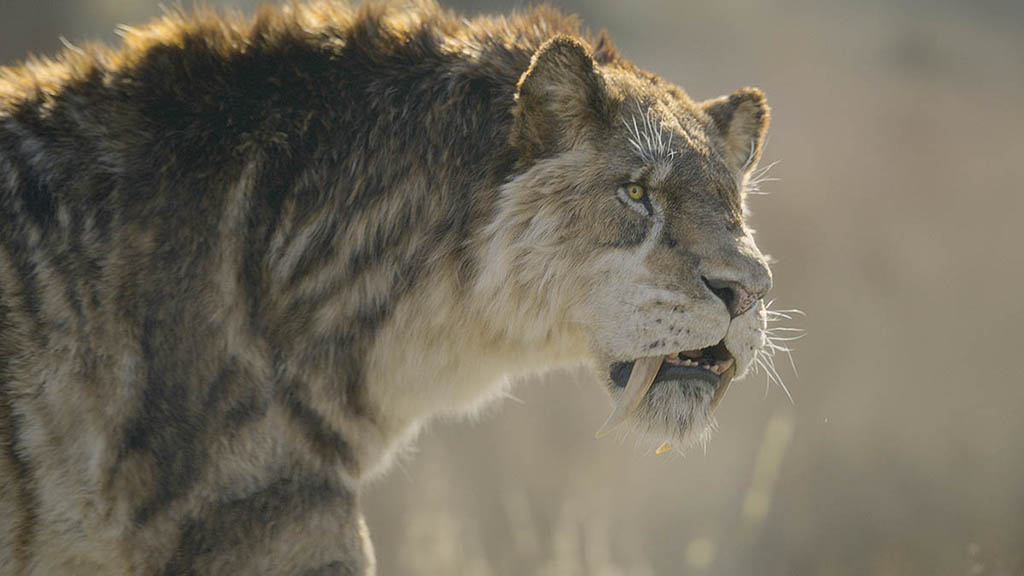
Stepping closer to the dawn of humanity, Prehistoric Planet: Ice Age saw Framestore produce over 700 visual effects shots to recreate the time when mammals became the de facto rulers of the world. “The demands of the show were crazy,” notes Russell Dodgson, Visual Effects Supervisor. “Matthew Thompson showed me a whole bunch of the animatics for the number of furry creatures rolling all over each other and running around in mud, snow, rain and tar. If I hadn’t had the experience of His Dark Materials, it wouldn’t have felt like such an exciting challenge rather than a terrifying one!” Interestingly, two-thirds of the Earth was not covered in snow, and the temperature was constantly fluctuating. “There was a constant cycle where the climate and aridity would change,” observes Matthew Thompson, Series Producer. “Grasslands would expand and forests would expand back. It was a complicated and exciting time for life. Life was being thrown from pillar to post with all of these changes. Various parts of the world were having different experiences. It led to this incredible variety of different animals.”
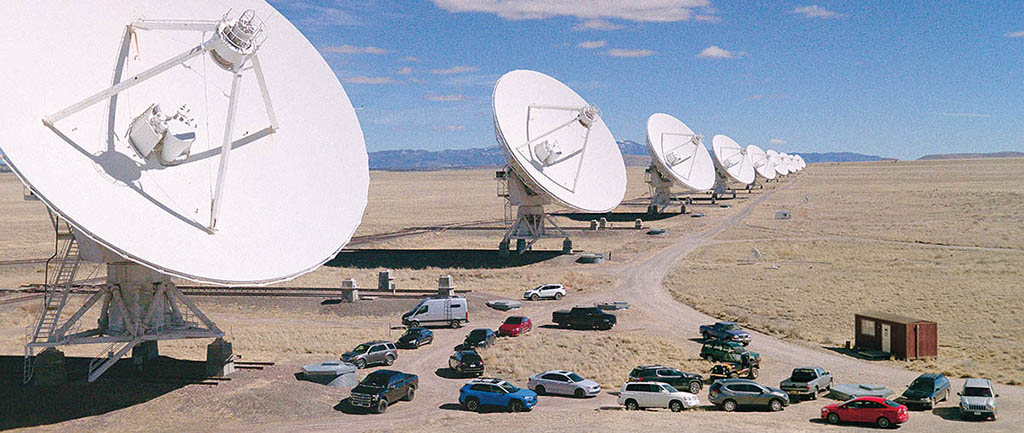
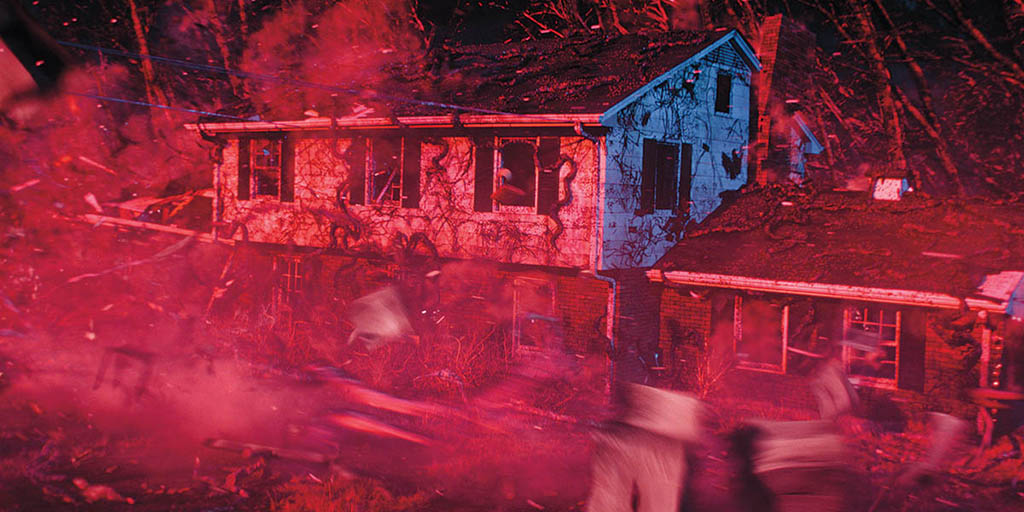
Needing a wide range of visual effects for approximately 510 shots by Rodeo FX was Pluribus. “One of the more complex visual effects was the destruction of Albuquerque and other cities caused by the Joining,” remarks Ara Khanikian, Visual Effects Supervisor. “We achieved this by enhancing principal photography with 2.5D matte paintings, CG fires, smoke and debris. Additionally, all signs of life were meticulously painted out from plates across the entire season to maintain the narrative’s tone. The Bilbao airport sequence was a significant task. As Air Force One is such an iconic aircraft, it presented a unique build challenge. Production used a real 747 landing gear, a life-size door and adjacent paneling replica, while Rodeo FX created a CG extension of the fuselage and airplane. These scenes were a complex composite of actor plates shot in Albuquerque and background elements captured at the actual Bilbao airport. On-set Visual Effects Supervisor Keith Kolder brilliantly oversaw the visual effects shoot of Season 1.”
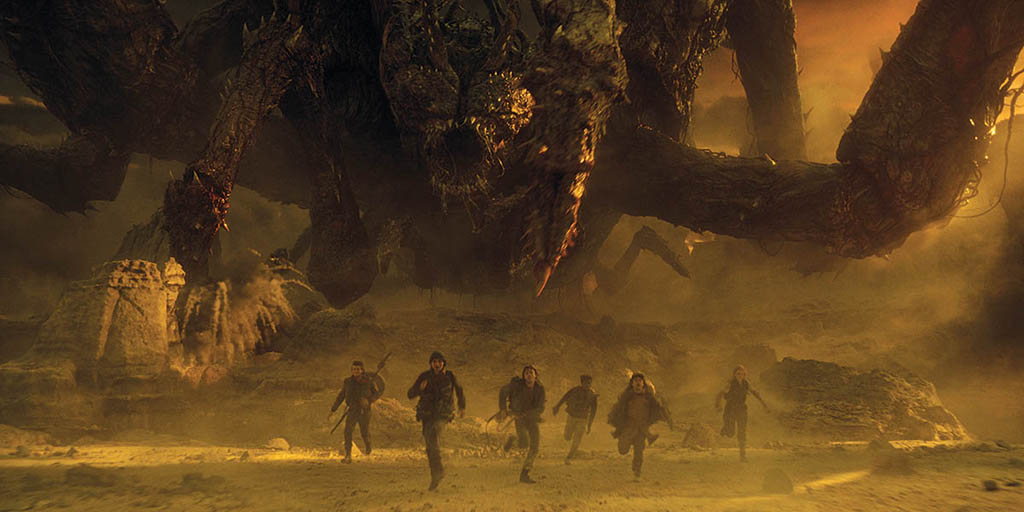
Seriously stacked is Netflix with Stranger Things Season 5, Wednesday Season 2, Squid Game Season 3 and The Witcher Season 4, as well as first timers Death by Lightning, The Boroughs and Something Very Bad is Going to Happen. Turning the streaming world upside down with their love letter to 1980s cinema and Amblin Entertainment, brothers Matt and Ross Duffer brought Stranger Things to close with Season 5 and a feature-length finale. “The battle with the Mindflayer required extensive previz and tech viz to choreograph a fight between a group of teenagers and such a huge creature,” explains Betsy Paterson, Visual Effects Supervisor. “The environment was also designed during pre-production so that the scripted beats felt seamless. The destruction of the upside down also required extremely complex visual effects. These were some of our greatest design challenges. We needed to show the epic scale of the destruction as well as include minute details recognizable to the audience. All of this required many layers of effects simulation.” Wētā FX handled the final battle, and ILM was responsible for destroying the parallel dimension known as Upside Down with a total of 5,844 visual effects shots. The biggest achievement was the design and animation of the Mindflayer transforming from a tree to the creature. Paterson notes, “The design and action were created in tandem with the script and stunt choreography to create a seamless whole. The creature and the environment required over two years of work to layer in enough detail for a grounded, realistic feel.”
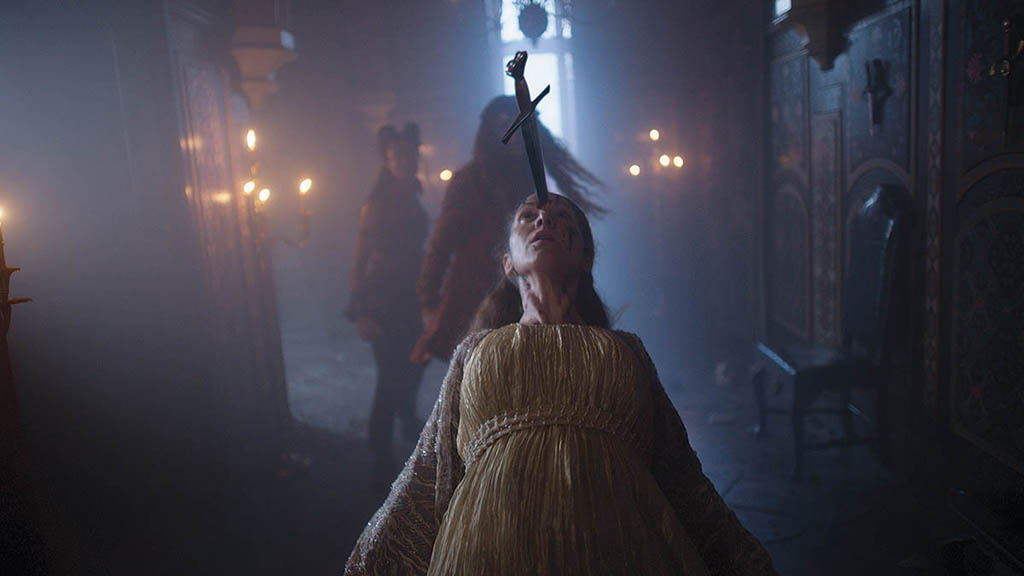
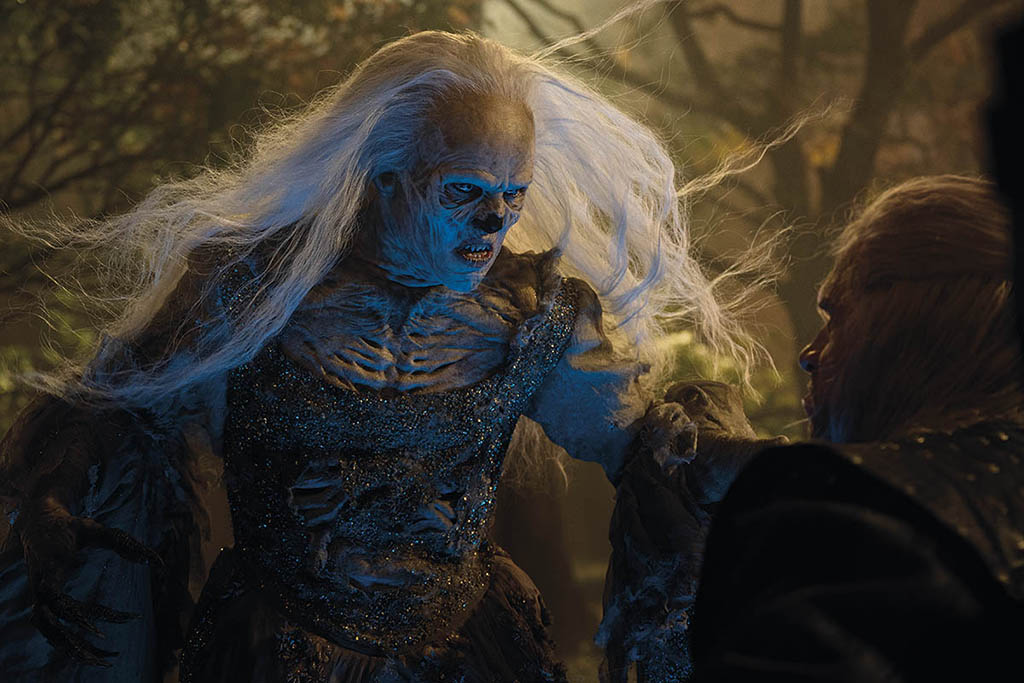
Given the ghoulish, gothic, macabre sensibility of Tim Burton, having a disembodied talking head in a jar of water, or a rotten corpse regenerate itself by eating brains and food, fit in quite nicely with visual aesthetic and narrative of Wednesday Season 2. “Slurp starts as a full-up zombie with a hole in his head, and he’s got no brains inside and a crazy, roving eye,” states Tom Turnbull, Visual Effects Supervisor, who had to deal with an increase of 1,500 visual effects shots, bringing the final tally to 3,700. which were handled by Eyeline, Herne Hill/Mr. X, MPC, Rocket Science VFX, Rodeo FX, WeFX and Folks VFX. “Slurp was driven partially by an actor in makeup, but with a lot of enhancements done to it in visual effects. Then, over the course of the episodes, he becomes more human. The hole in his skull disappears, and Slurp has this long tongue that he uses for eating brains. Slurp was like a work in progress. You would always be adding something new or different every time he showed up in another episode. Professor Orloff was a whole other challenge because he is a floating head in a jar.”
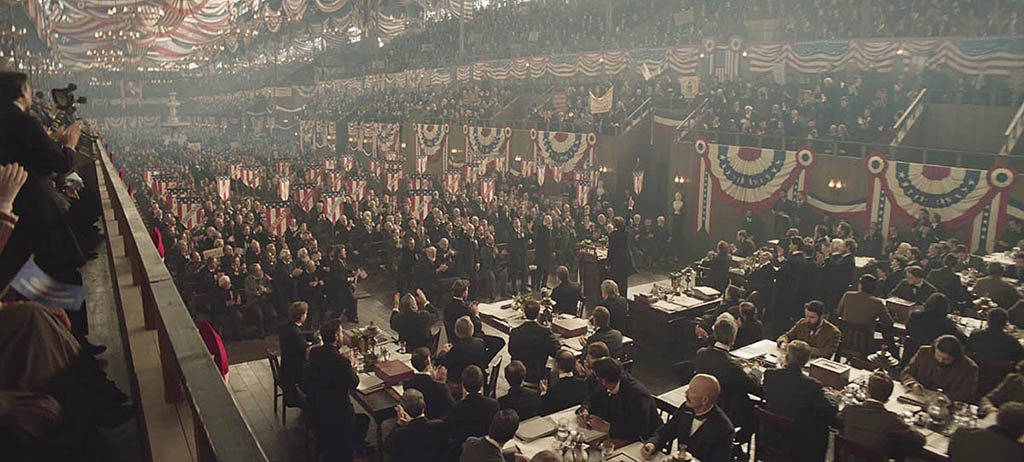
Recounting the assassination of U.S. President James Garflied is Death by Lightning, with the Republican National Convention held in Chicago from June 2 to 8, 1880 being a monumental asset creation. “We had the added benefit of this being an actual historical event, so we had drawings, etchings and even a couple of photographs from the real-world environment,” remarks Steve Kullback, Visual Effects Producer. “We discussed at length how to approach this, and it was decided that a set would be built and then extended.” The question was how to make best use of the 500 extras. “We actually photographed some background extras and printed these photographs on cardboards,” reveals Rainer Gombos, Visual Effects Supervisor. “We set them in so we would fill these spaces between the extras to make it even more packed in the foreground.” El Ranchito, Important Looking Pirates and Clearcut FX executed 604 visual effects shots. “For the cities, the Budapest streets looked good, but they were a bit too narrow,” Gombos notes. “We tried to create more open spaces and add grander buildings to it because Chicago didn’t have that many trees.”
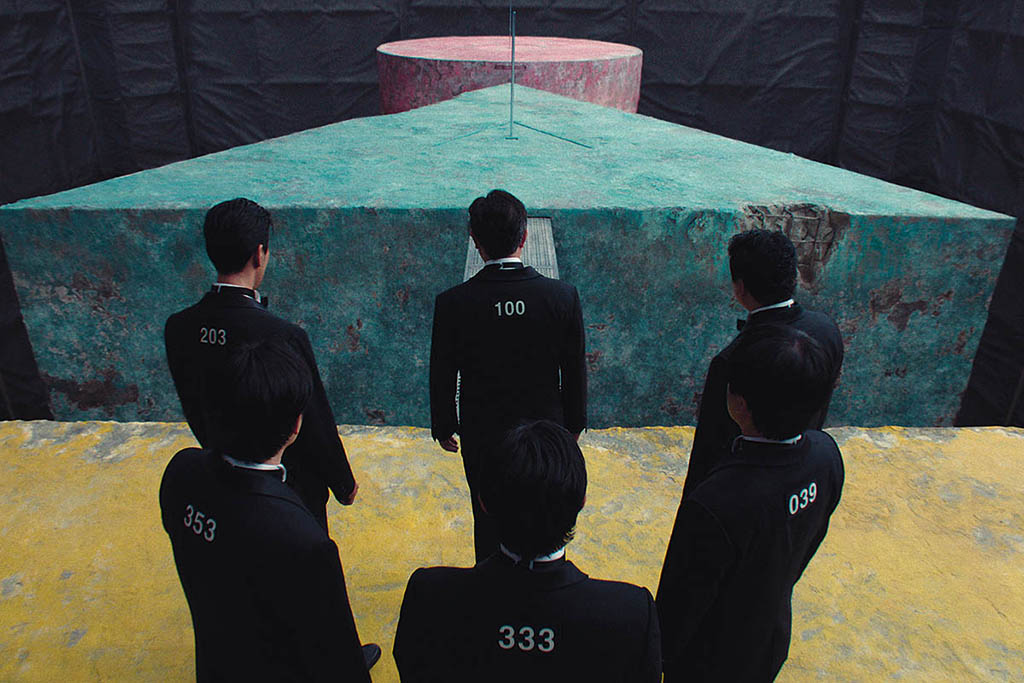
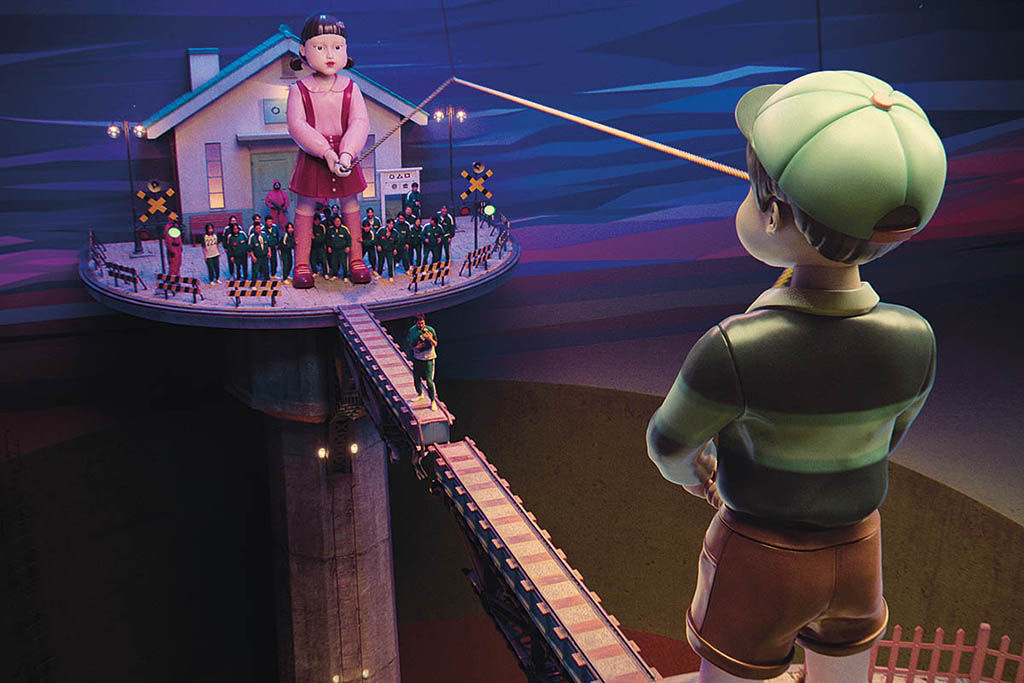
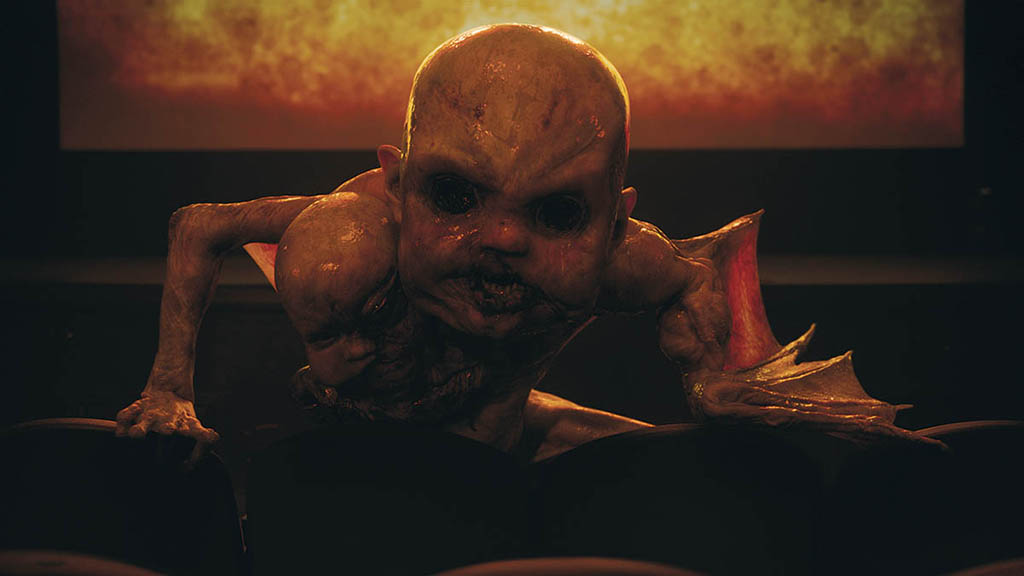
One can never discount the first non-English program to win the category back in 2022 with Squid Game returning for a third season. “The most complex sequences to execute in Season 3 were definitely the scenes set in the massive game arenas, the Hide and Seek,” observes Chegon Jai-Hoon, Visual Effects Supervisor. “The set itself was extremely intricate, so even finding the right filming location and planning the environment expansions was a major challenge. Because the space needed to be expanded vertically, the production design team created a highly detailed virtual spatial map that defined the layout of the entire space. Using that as a foundation, we were able to organically extend the physical set with a digital environment. Sixty-seven per cent of the 2,104 visuals shots were handled by Guilliver Studios with other contributions made by NetFX and IMAGEDECA. “I believe our most significant technological achievement was the introduction of AI-based techniques to realize the newborn baby’s facial expressions. The subtle and nuanced facial movements of a newborn cannot be authentically performed by an adult actor, nor can they be captured through conventional motion-capture sessions, making this approach both necessary and transformative.”
Something Very Bad is Going to Happen features a lot of people bleeding from their eyes, ears, nose and mouth, often in hero close-up. “Showrunner Haley Z. Boston wanted to lean into using practical blood effects where possible, which we fully embraced,” reveals Jo Hughes, Visual Effects Supervisor. “But shooting logistics led to three methodologies: Prosthetic tubing to deploy stage blood, where visual effects then connected blood to orifices and cleaned-up tubes; makeup blood on top of which visual effects added simulated movement; and fully digital VFX blood, sometimes on clean-faced cast members, and sometimes blended with the prosthetic or makeup approaches.” Rocket Science VFX was supported by NetFX to produce 700 visual effects shots. “From prep into production and through post, the curse blood was always top of everyone’s mind as the most important thing to get right. Shooting the finale’s blood scenes was logistically challenging, and ensuring all that hard work paid off was important to visual effects as we took hold of the baton.”
Standing out is the creature work in The Boroughs, with ILM, Framestore, Ghost VFX, Platige, Screen Scene, SDFX and Pixomondo contributing to the 1,200 visual effects shots. “Our creature has eight limbs, six of which have four joints, leading to 26 joints in the limb walk cycle,” explains Tara DeMarco, Visual Effects Supervisor. “The filmmakers wanted it to pressure-hold like a mountain climber and move across the ceiling in a non-spidery way. This led to some creative production design and animation for this complicated concept that we dubbed ‘geriatric parkour.’ Additionally, our creature needed to trigger fear at the start of the show and create empathy by the end of the show. The team at ILM put extra care into the expression and blood-flow design of the facial animation to create geriatric, paper-thin tissue where each expression change could be felt with skin wrinkles, dilation and blood movement through tissue and veins. The team developed a dynamic blood flow shader that reacts to skin compression driven by the creature’s animation. Greater tension in the skin, as it gets stretched across the creature’s muscles or bones, would cause restricted blood flow, reducing the amount of blood rendered underneath the skin.”
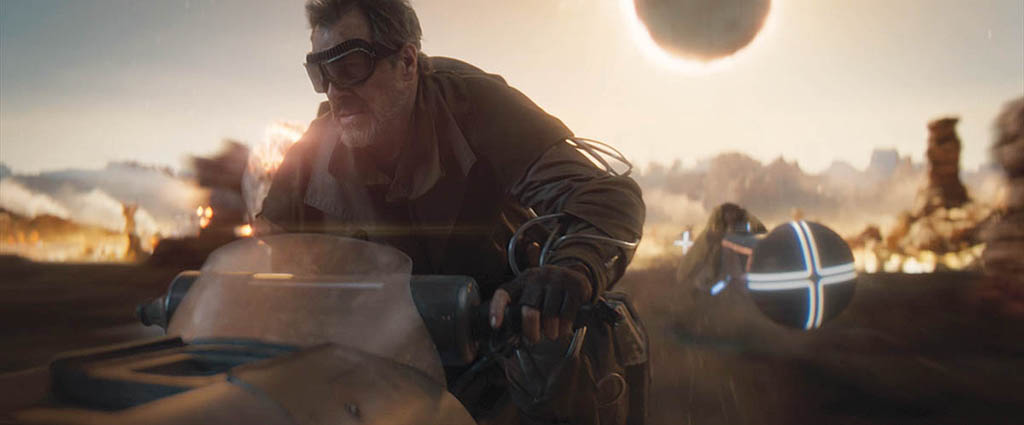
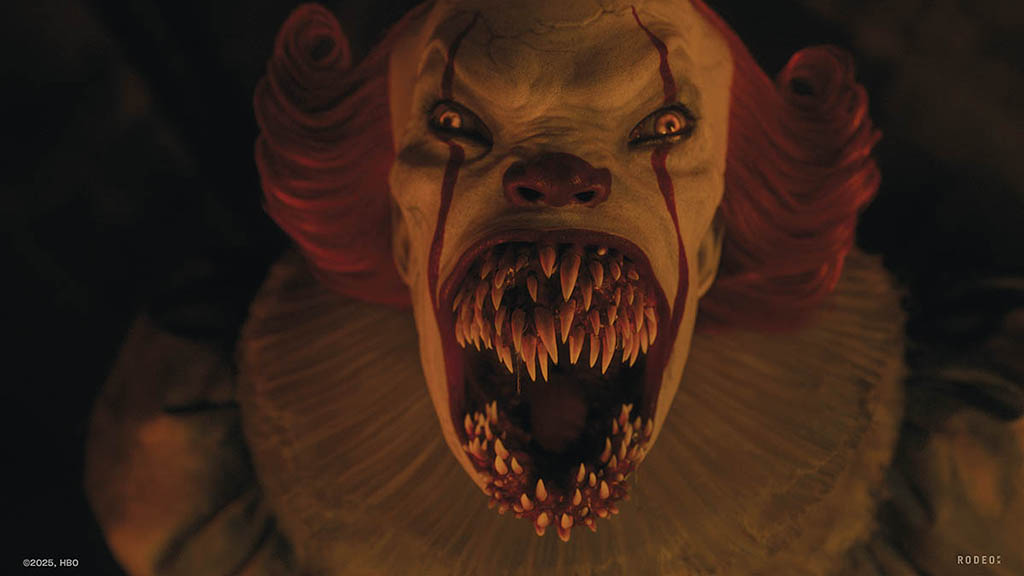
A frequent contender is HBO, with high hopes for newcomers It: Welcome to Derry and A Knight of Seven Kingdoms, as well as for established series such as The Gilded Age Season 3, Euphoria Season 3 and Peacemaker Season 2. Expanding upon the feature films It and It: Chapter Two, It: Welcome to Derry explores the historical relationship between Derry, Maine and a malevolent entity that preys upon children through their fears. “We had a strong base for any of the creatures or characters we had to do digitally, whether it was a motion performer working through the scene to be used as a starting point for movements or mechanics, as well as for lighting reference for what skin might look like in a certain outdoor environment,” explains Daryl Sawchuk, Visual Effects Supervisor. “If we had things that were based off of more effects-type simulations, we would film as much reference as we could and start with real things. Was it more freeing? Probably not because we were still tied to the boundaries of real-world physics, gravity and lighting.” Primary vendors Rodeo FX, Alchemy 24, Folks VFX, DNEG, Crafty Apes and Digital Domain were responsible for just under 2,700 shots with a variety of creatures ranging from a Skeleton Man that moves like a spider, to the Bed Mom, which is a woman shaped like a bed frame, to Pennywise adding batwings to his clown persona.
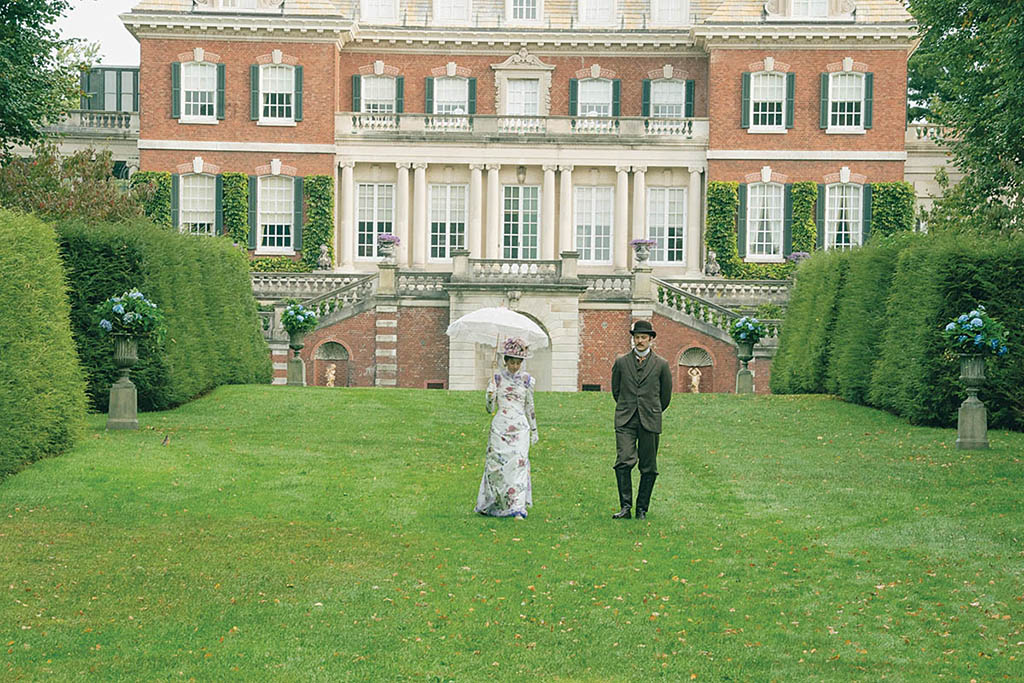
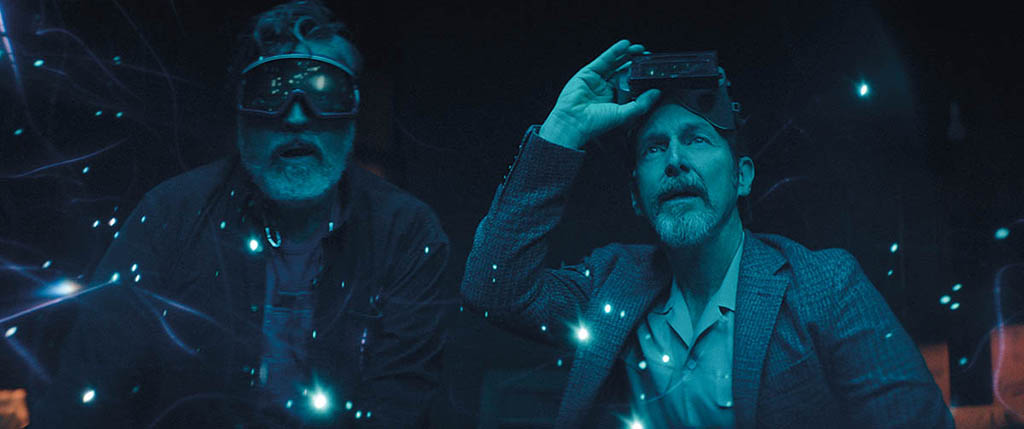
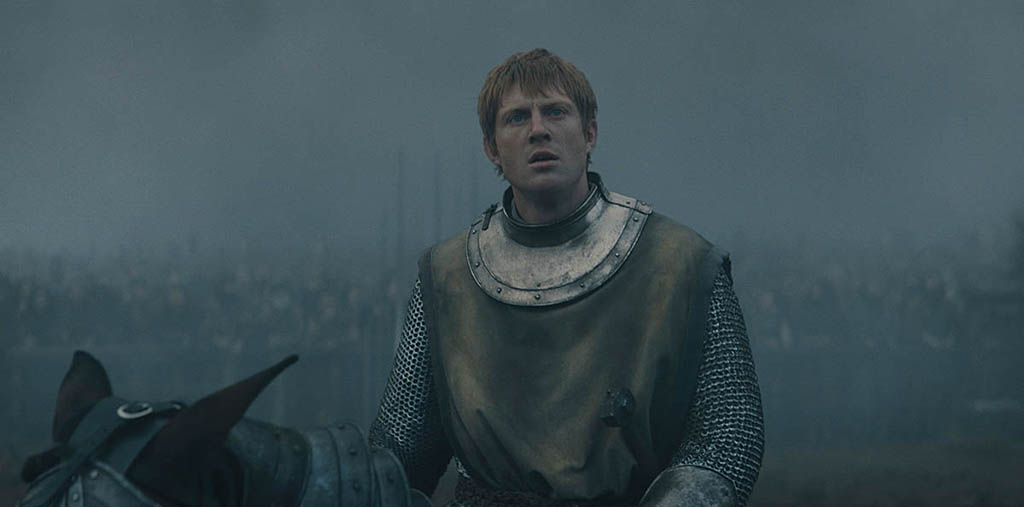
Crowds, not dragons, were the biggest concern for A Knight of the Seven Kingdoms, with 500 visual effects shots handled entirely by El Ranchito. “CG crowazds don’t come cheap,” observes Arron Roebuck, Visual Effects Supervisor. “One thing that made us feel safer committing to that approach was the amazing set build that was in the environment we had in Northern Ireland. Everywhere you look it’s a real set. It was fabulous. We realized that once we stood there and recce’d, if we take care of these slivers of the landscape that need crowd, and if we do that convincingly, no one would know that we were there.” A great partnership was had with special effects, especially when it came to atmospherics. “We would have gusts of wind change direction moment to moment, and credit to Thomas Lloyd, the Special Effects Floor Supervisor, because he worked tirelessly with his team to flood the area with practical atmosphere.”
Approximately 1,826 visual effects were created by Wētā FX, Rodeo FX, Folks VFX, SS VFX, Vitality VFX, Peerless VFX and Mammal Studios for Season 2 of Peacemaker. Dealing with the candy world behind one of the doors in the Quantum Unfolding Chamber was 100 shots of complex visual effects work. “The main challenge with the landscape was to make it look plausible while still staying in the color palette of the world we were in and making it work with the candy pieces and sky colors from the concepts,” states Mårten Larsson, Visual Effects Supervisor. “It was very easy to make it very monotone or dual tone with the pink/orange grass, purple sky and pink sunlight. So, to combat this we added a lot of warmth to the sunlight in the landscape, made the shadows cooler and added a subtle magenta/blue tone to the haze in the distant landscape, as long as we were not looking too close to the sun when the haze took on the warmer tone of the sun. All of this was used to add color complexity in a world that at first glance looked like a pink/orange world.”
Moving from New York City to Sidmouth Castle in England is Gladys Russell Vere in Season 3 of The Gilded Age, which had 1,453 visual effects shots crafted by beloFX, RVX, Phosphene and Fox & Wizard. “We really opened up the world this season starting out west, with George in Morenci securing copper mine rights, to Gladys marrying her Duke and moving to England to live at Sidmouth Castle,” notes Douglas Purver, Visual Effects Supervisor. Aside from sending a 2nd unit to New Mexico, and an element/ plate unit to the U.K., the shooting company did not travel to capture these scenes. A similar strategy was applied to Sidmouth. There is nothing of that age and scale here in the U.S. I went to scan pieces of castles in the U.K. to build our fictitious Sidmouth. I was also able to film plates of the countryside to build out the environment. I filmed a few angles of a small stone bridge, then we animated a CG version of our Duke’s horses and carriage to put in. The CG castle and its estate grounds is built around the entry of Ochre Court, a practical location we use up in Newport Rhode Island for the comings and goings as well as some of the castle interiors.”
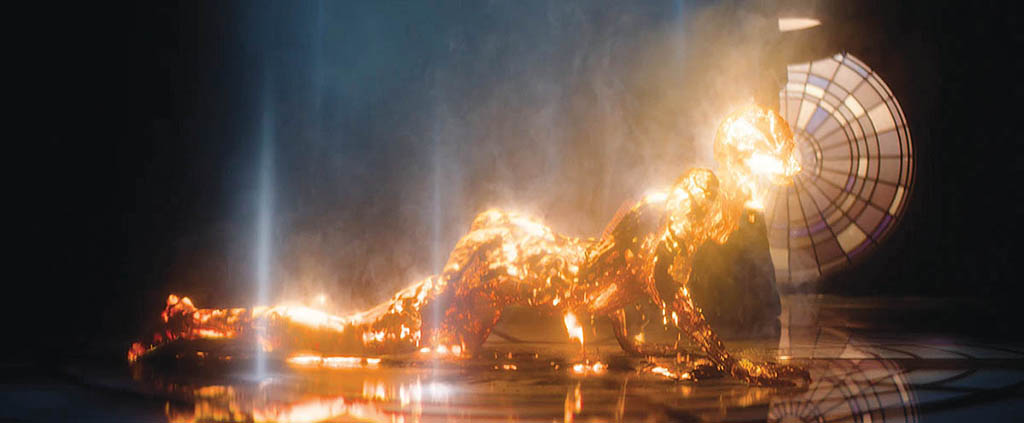
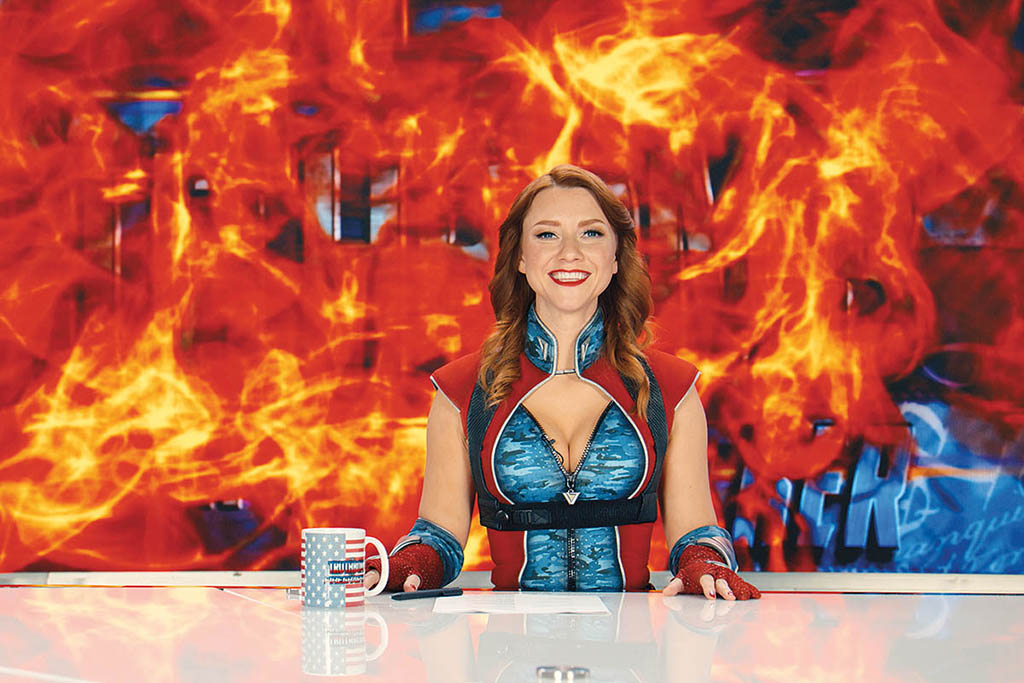
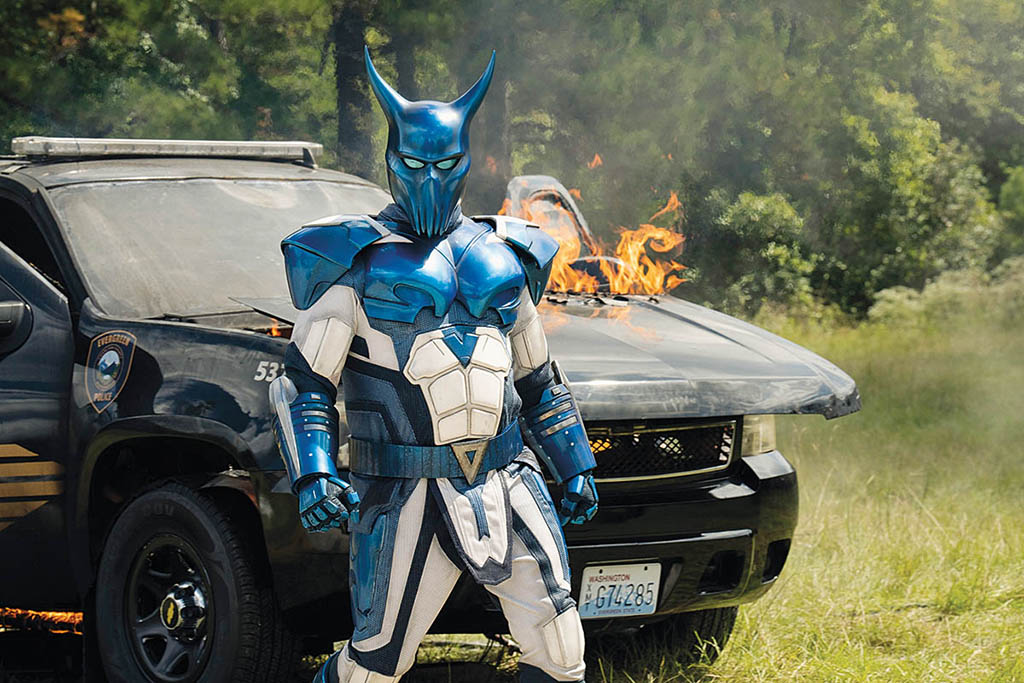
Prime Video has some serious Emmy-offerings as The Boys draws to an end with Season 5 while its spin-off series Gen V continues the superhero mayhem with Season 2, and Fallout returns with Season 2 alongside new live-action Spider-Verse series Spider-Noir. Nicolas Cage reprises his middle-aged gumshoe role for Spider-Noir, which can be seen in black and white as well as color. “While we had lots of complex visual effects challenges on the shot level, the trickiest one turned out to be our working with two looks [black and white and color],” states Hnedel Maximore, Visual Effects Supervisor. “With the series being presented in both black and white and color, we had to come up with an efficient pipeline with Picture Shop [Color/DI], visual effects vendors and editorial that allowed us to review every shot twice. We also had to support the colorist with more robust mattes to allow for better control in the black-and-white version of the show. In many cases that meant the additive effects on Dirk [Megawatt] had two unique versions versus our usual single version piped through two LUTs.” Approximately 3,200 visual effects shots were the responsibility of Alchemy 24, Barnstorm, BOT VFX, Cinesite, CoSA VFX, Eyeline, ILM, Ingenuity Studios and Version Zero. “Oren Uziel [Creator, Executive Producer, Showrunner] wanted Ben Reilly’s age, lifestyle and salty personality reflected in his web and his movements. As such, the look of Ben’s web is less pristine compared to other Spider characters. The mechanics of his swing is less acrobatic, and his combat style is more opportunistic and messy.”
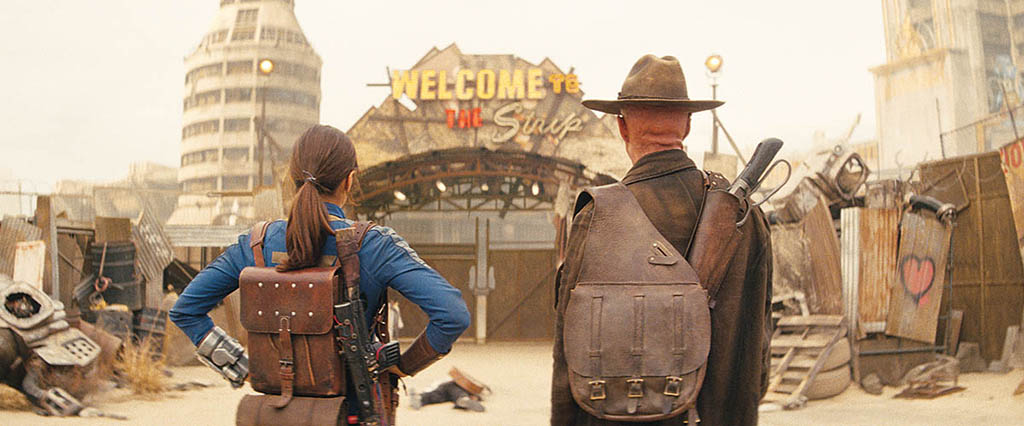
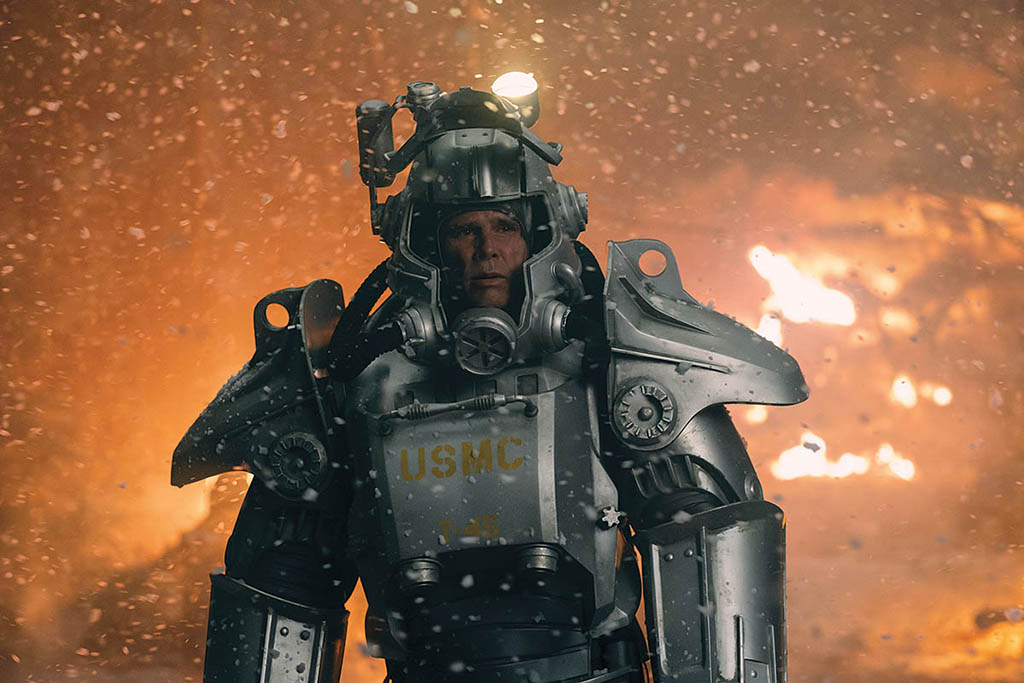
For the Deathclaw in the sophomore outing of Fallout, the video game was used as the starting point. “For the gamers out there, there are some beats that feel exactly like what the Deathclaw does,” states Jay Worth, Visual Effects Supervisor. The movement was the biggest challenge; to get the weight and heft, and to figure out if it runs or walks. It attacks, but because it’s at the top of the food chain in the game, it attacks but doesn’t necessarily run.” ILM, RISE, Important Looking Pirates, Raynault VFX, Refuge VFX, FutureWorks, Haymaker VFX, Curated and CoSA FX produced 3,202 visual effects shots, which included settings like New Vegas. “We worked with Howard Cummings [Production Designer] and the art department to figure out how to build these massive sets that need to represent and feel like the game that don’t need to match exactly.”
Not to be left on the sidelines are Disney+ with Wonder Man, Paramount+ with Star Trek: Strange New Worlds Season 3, FX with Alien: Earth, Starz with Outlander Season 8 and Peacock with The Miniature Wife. Virtual production had a much bigger presence on Star Trek: Strange New Worlds Season 3 compared to previous seasons, which helped to keep the visual effects shot count between 2,000 and 2,500 for Ghost VFX, Storm VFX, Crafty Apes, Pixomondo, Zoic Studios, AB VFX and Cause and FX. “Engineering is a perfect example of that because there is the small practical set, but this entire cavernous virtual set around it, which integrates seamlessly,” remarks Brian Tatosky, Visual Effects Supervisor. “For our side, it has moved the entire schedule of what needs to be delivered much sooner so it could be ready and photoreal for production on day one of shooting. It changes the schedule around quite a bit, but is also incredibly satisfying to see a well-lit and the integrated stage with the actors walking around.”

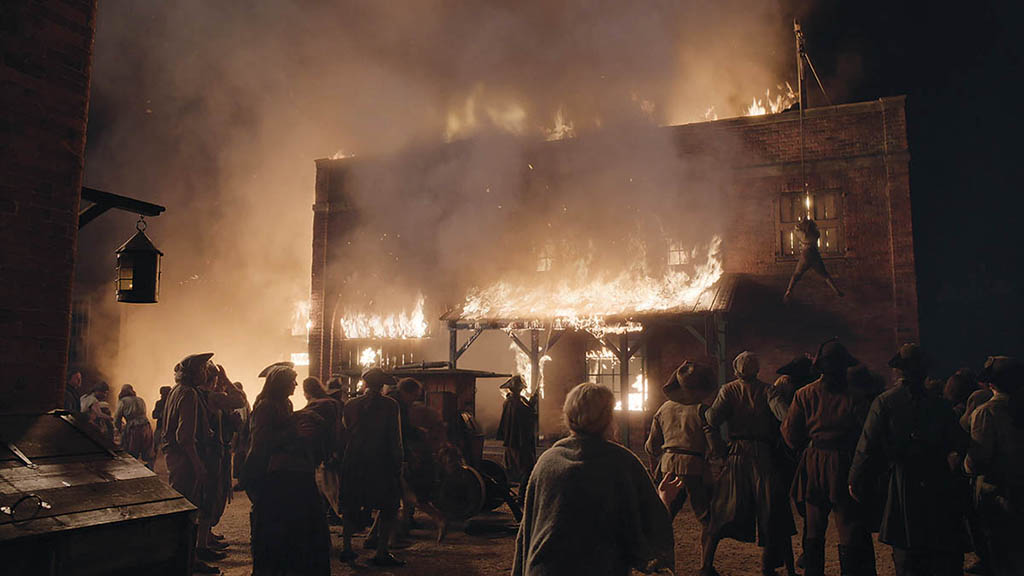
Concluding with its eighth season is Outlander, and there is no shortage of visual effects shots with BlueBolt creating 3,000, with major undertakings being Savannah Harbor, the print shop fire and Savannah Square. “Although set in 18th century Georgia, the harbor was shot in the U.K.,” reveals Jon Neill, Visual Effects Supervisor. “The base photography was captured at Calke Abbey, where red-brick buildings provided a period foundation. The location was landlocked and surrounded by countryside, with visible modern infrastructure. We retained the core architecture and removed modern elements, including vehicles, equipment and landscape features. Using on-site photogrammetry and texture capture, we developed modular warehouse assets to extend the port beyond the physical footprint. The surrounding terrain was replaced with a digital waterfront extending to the horizon while keeping as much of the photographed foreground as possible.” Interiors of the print shot fire were also shot at Calke Abbey. “To connect the interior and exterior, we removed one wall of the stage set and filmed it from outside, creating a ‘doll’s house’ view. These passes were used to extend the burning interior into bluescreen windows on location.”
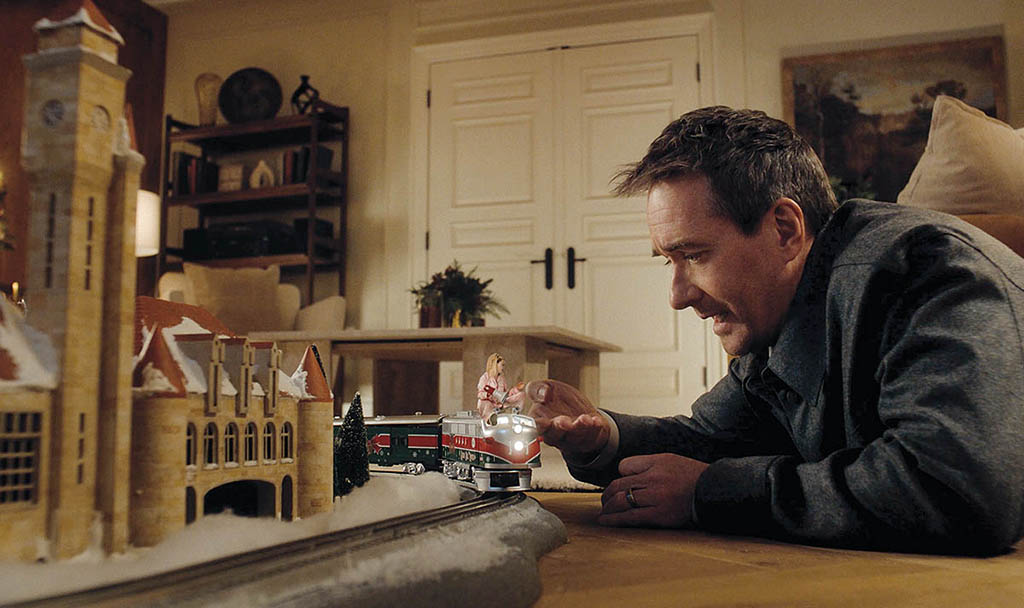
Shrinking a spouse down to doll-house size is The Miniature Wife, which features the work of Mavericks VFX, Zoic Studios, Tippett Studio, Spin VFX, Mr. X and Pixomondo to produce 3,000 visual effects shots. “When miniaturized, Lindy is 12 times smaller than her regular-sized self, so any real-world camera movements made in our big world needed to be scaled up 12 times in the small world in order to maintain our correct scale relationship,” explains Ashley Bernes, Visual Effects Supervisor. “With a moving camera, and, in our case, a moving toy train, that’s 12 times the distance, covering it at the same amount of time.” The shot had to be done as one long continuous take. Bernes says, “Where we landed was using the Bolt system on track to be able to program a camera move in the real world that would not exceed our capabilities in the small world to capture our toy train with our camera, as defined in the previs as what we called a ‘Part A’ with the ‘Part B’ at a later date being Lindy’s performance.” A six-axis programmable turntable increased the capabilities of the Bolt system. Bernes adds, “The data, which came from our techvis to compound the move with the Bolt arm, gave our buck and, in turn, Lindy the appearance of greater speed and distance than we were able to achieve natively.”
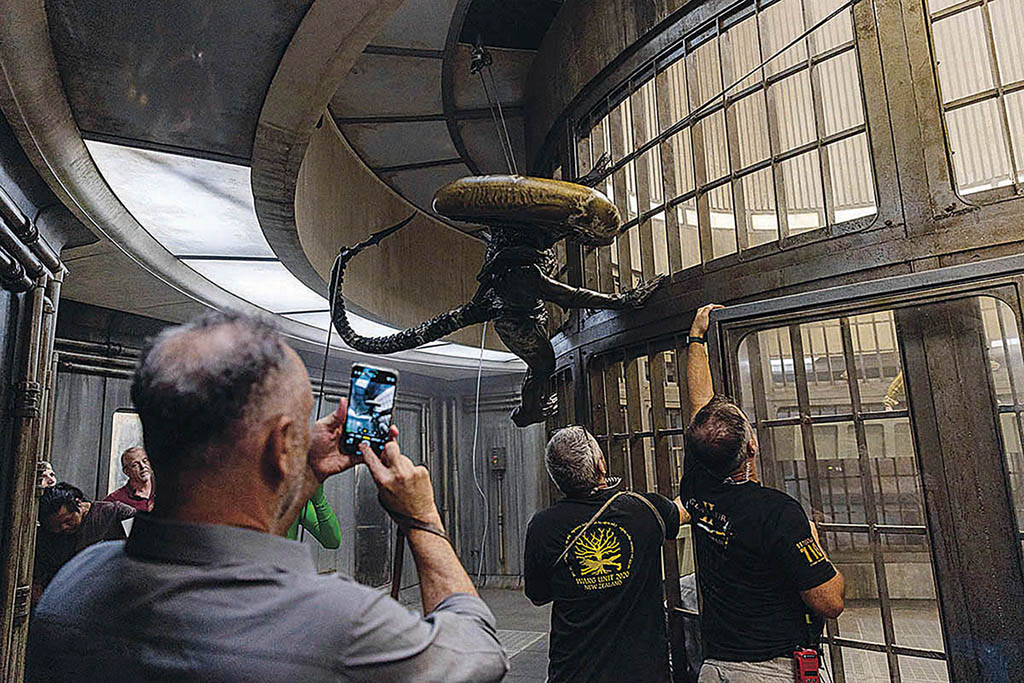
As multinational corporations battle each other over turning extraterrestrial threats into biological weapons, the warfare comes crashing down to more familiar surroundings in Alien: Earth. Around 2,000 visual effects shots contributed by Untold VFX, UPP, Zoic Studios, Pixomondo, Fin Design + Effects, Crafty Apes and Cos FX Films. “We have very few ‘effectsy’ effects in the show and even those have tried to downplay them so that they always feel like something that could have been done in late 1970s and early 1980s,” notes Jonathan Rothbart, Visual Effects Supervisor. “Anamorphic lenses always do unique different things, and each one has its own texture and look. These ones have that late 1970s, early 1980s feel to them where everything’s a little bit softer than normal. We did a lot of softening of things to get it to play in the plate. Then we also have the chromatic aberration where you start seeing the different colors split on the edge of the frames. And of course, the flares and the grain level, which is not the lens but the film. We’re trying to emulate the right kind of film stock.” Rothbart adds, “If I had my way, each shot would go by and people would say, ‘That’s really cool.’ But nobody would think about the fact that any of it is CG.”