Images courtesy of Blind Beagle VFX and NEON

Images courtesy of Blind Beagle VFX and NEON
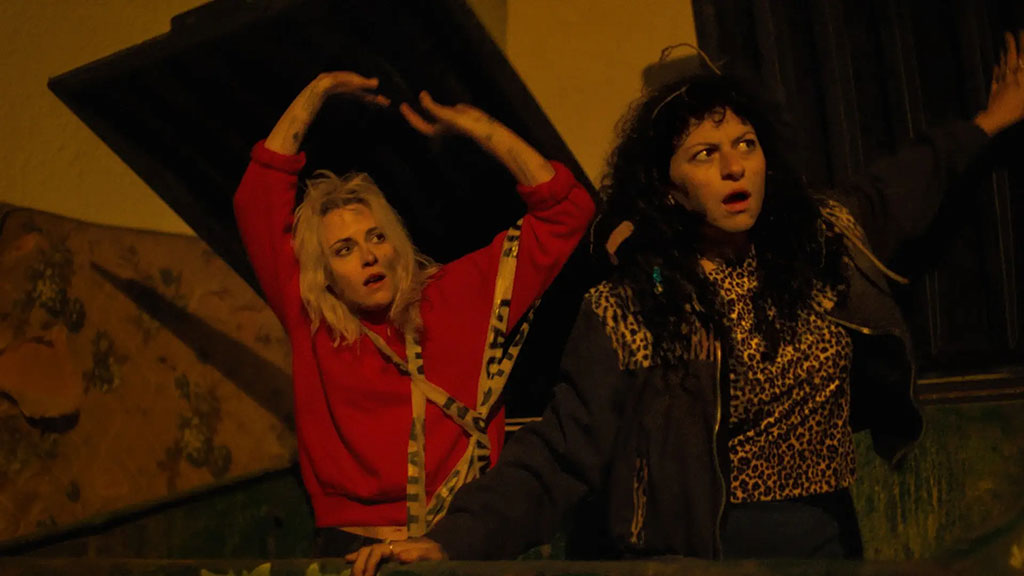
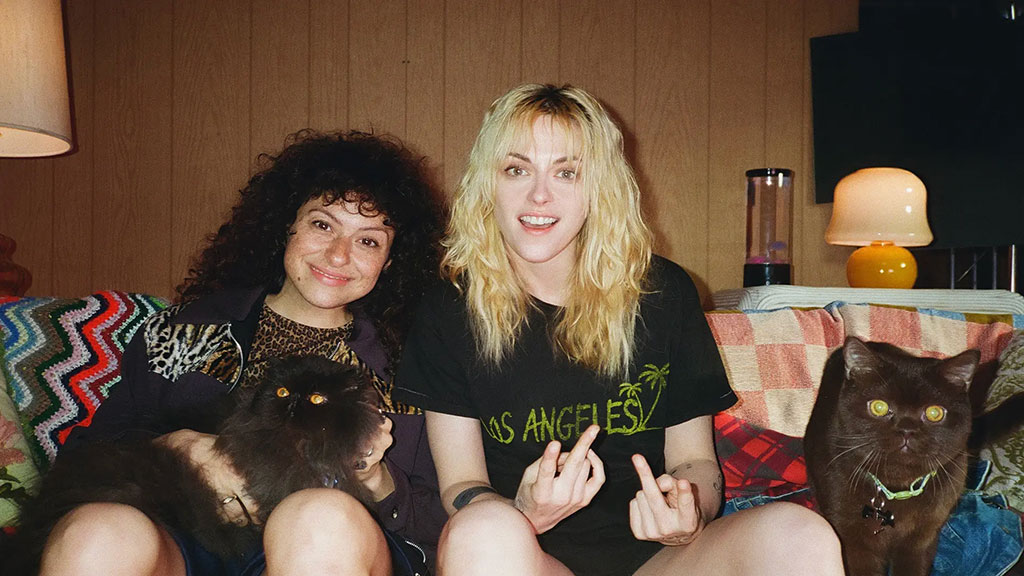
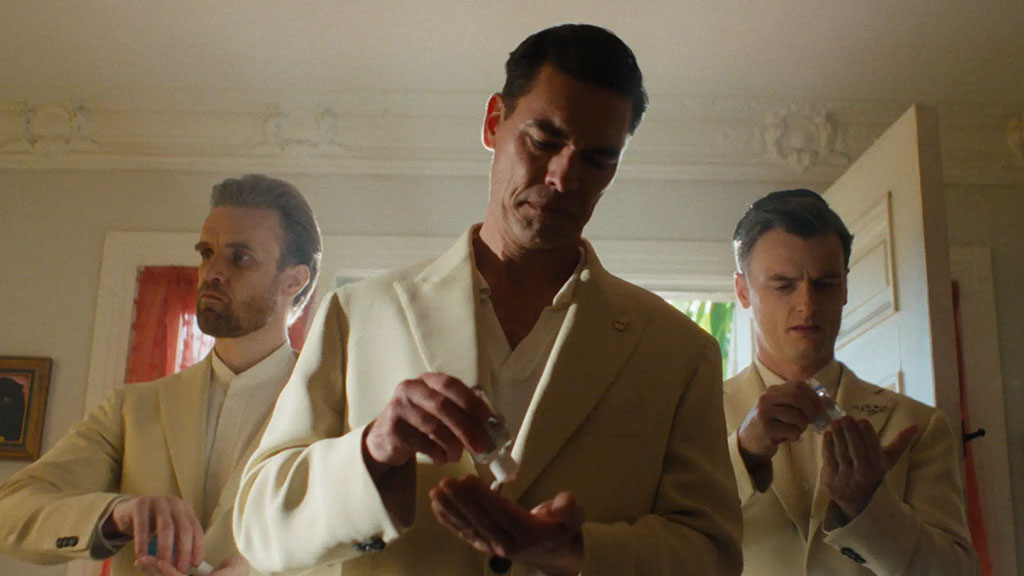
In NEON’s The Wrong Girls, down-on-their-luck best friends Frankie (Kristen Stewart) and Molly (Alia Shawkat) are struggling to make rent when a case of mistaken identity lands Frankie with a briefcase containing an experimental hallucinogen. When the duo decides to test the drug themselves, they develop telepathic abilities and end up on the run from a crew of impeccably dressed enforcers. Written and directed by Dylan Meyer, the stoner comedy puts squids in the spotlight, with Christopher Warren, Special Effects Director of Photography, and his team at Blind Beagle VFX photographing a few memorable sequences using miniatures.
![Motion control operator Les Bernstien [DB1.1]was responsible for the camera moves through the miniature environment.](https://vfxvoice.com/wp-content/uploads/2026/10/PIX-1-LesBernstien.jpg)
Following the team’s work on Boots Riley’s I Love Boosters, where the director was more interested in visuals that looked cool than in strict realism, Warren felt Meyer was working in much the same spirit. “With this movie, we did not need it to be grounded in reality,” Warren says. “I think she was in that same mode of, ‘It doesn’t have to look real, it just has to be cool.’”
“We actually did three different techniques for the title sequence: open ocean, Catalina Island, with the fish and the kelp, and then it goes into darkness. The squid and the dry-for-wet were separate.”
– Christopher Warren, Special Effects Director of Photography, The Wrong Girls
For the squid sequences, Blind Beagle combined underwater photography, miniature sets, motion control and a fiber-optic-lit practical puppet. Russell FX designed and fabricated the creature, while Warren and his team handled the photography and constructed the miniature underwater environment. “We probably did two or three separate days,” Warren says of the shoot. “The dry-for-wet took a little bit longer. That was about a week because we had to build it and do some testing, then we had to get Dylan to approve it.”
The film’s trippy title sequence combines three photographic approaches, beginning with footage Warren shot underwater off Catalina Island, a rocky island off the coast of Southern California. Originally intended as a reference, the footage ultimately made it into the film, establishing a naturalistic underwater environment before the miniature world begins. “We actually did three different techniques for the title sequence,” Warren reveals. “We did open ocean, Catalina Island, with the fish and the kelp, and then it goes into darkness. The squid and the dry-for-wet were separate.”
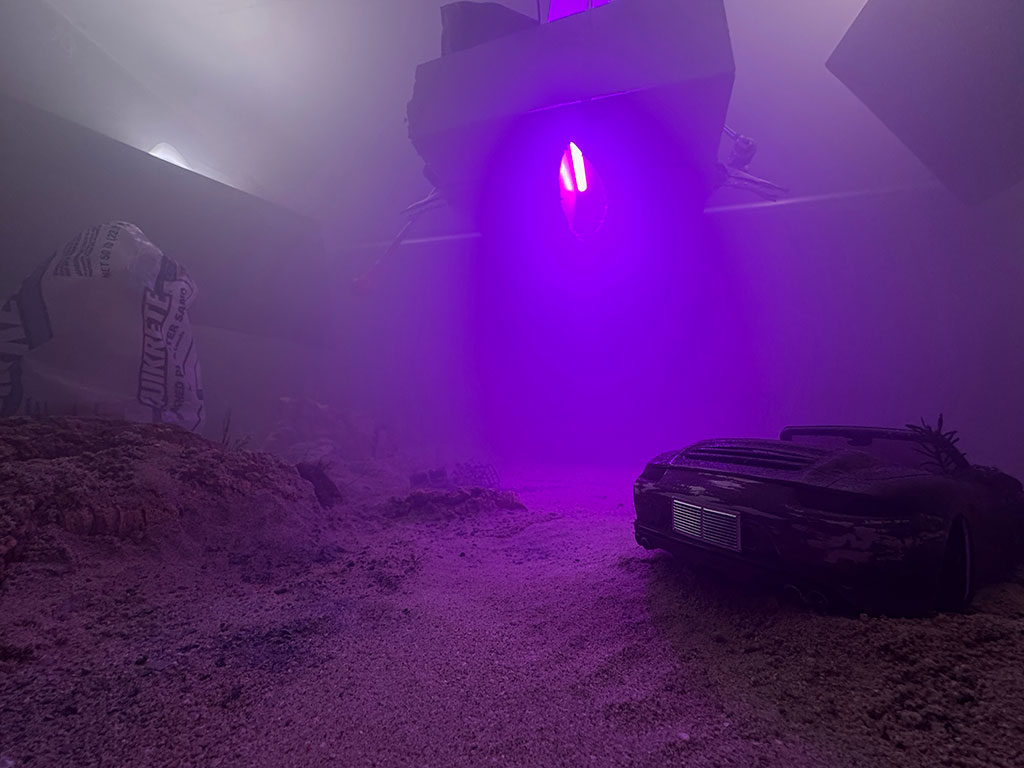
As the underwater footage fades to black, the miniature ocean floor emerges. “When you watch it, you’ll see the kelp edge, and a fish going by, and it’ll kind of go to black,” Warren explains. “Then the black turns into the ground on the floor. You’ll see the little Porsche on the right and then the little squid come over the top, and then it kicks back Wrong Girls in your face.”
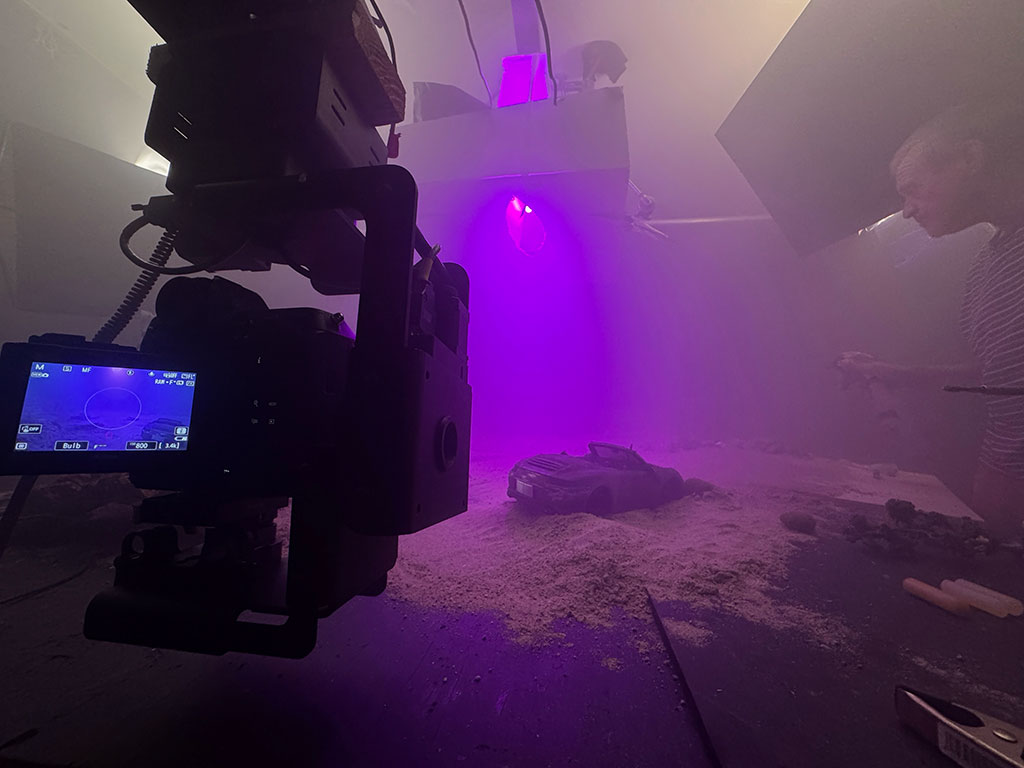
To create the miniature environment, Blind Beagle built an ocean floor with sand and other materials, then filled the set with smoke to simulate murky water. “Dry-for-wet is when you smoke up the room,” Warren explains. “You put a bunch of smoke in the room, and it makes it appear like murky water. Depending on what exposures you’re shooting at, you have to be careful that the smoke doesn’t move around too much.” Motion control operator Les Bernstien (Foundation) handled the camera moves through the miniature environment.
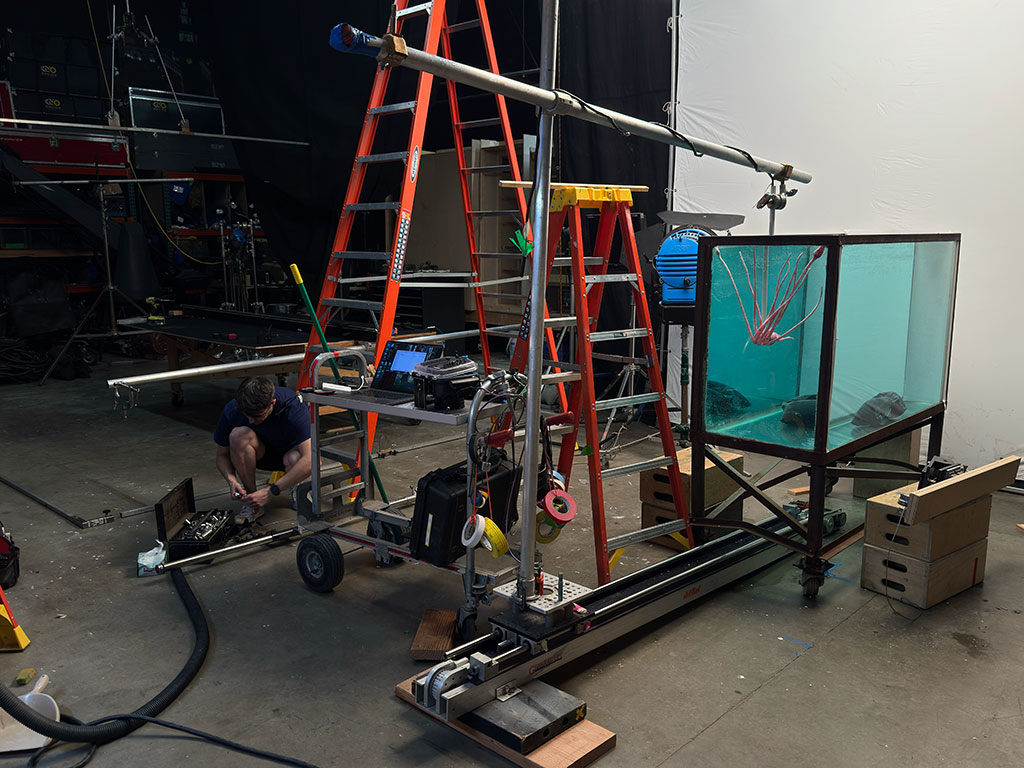
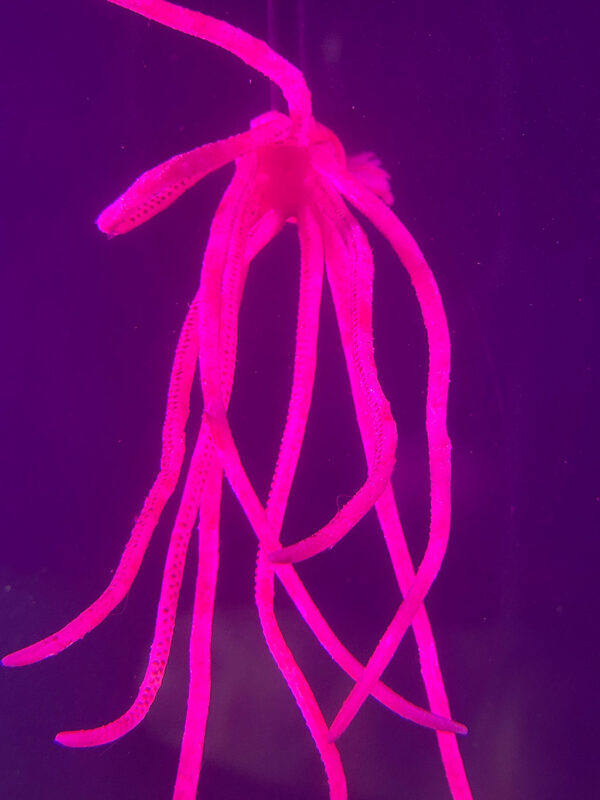
Led by designers Josh Russell and Sierra Spence, Russell FX sculpted, molded and assembled the practical squid elements, incorporating extensive fiber-optic cabling to give the creature its bioluminescent glow. The team created both the miniature squid puppet photographed by Blind Beagle VFX and the oversized tentacles featured in the film’s climax. “They brought the squid to us, and we did the photography,” Warren says. The miniature puppet measured about two and a half feet long, with a body roughly nine inches to a foot long. “The squid had fiber optics. The bioluminescent ones. Those were all done in a water tank. We had to figure out how to manipulate the squid in the actual tank that we had, as well as make sure that the fiber-optic lighting was staying lit.”
The rigging varied depending on the shot. In one setup for the title sequence, the squid was mounted on a dolly, with a rod extending down to the puppet. This allowed the crew to move it away from the camera before reversing its movement for the shot. “We would slide it down the dolly and then stop it and then make it kick back at us so we could spray the ink for Wrong Girls,” Warren explains. “The others were just on a rod, kind of free-flowing, swimming around over the top of the tank with a bit of a glow light on them, and then the fiber optics inside themselves.”
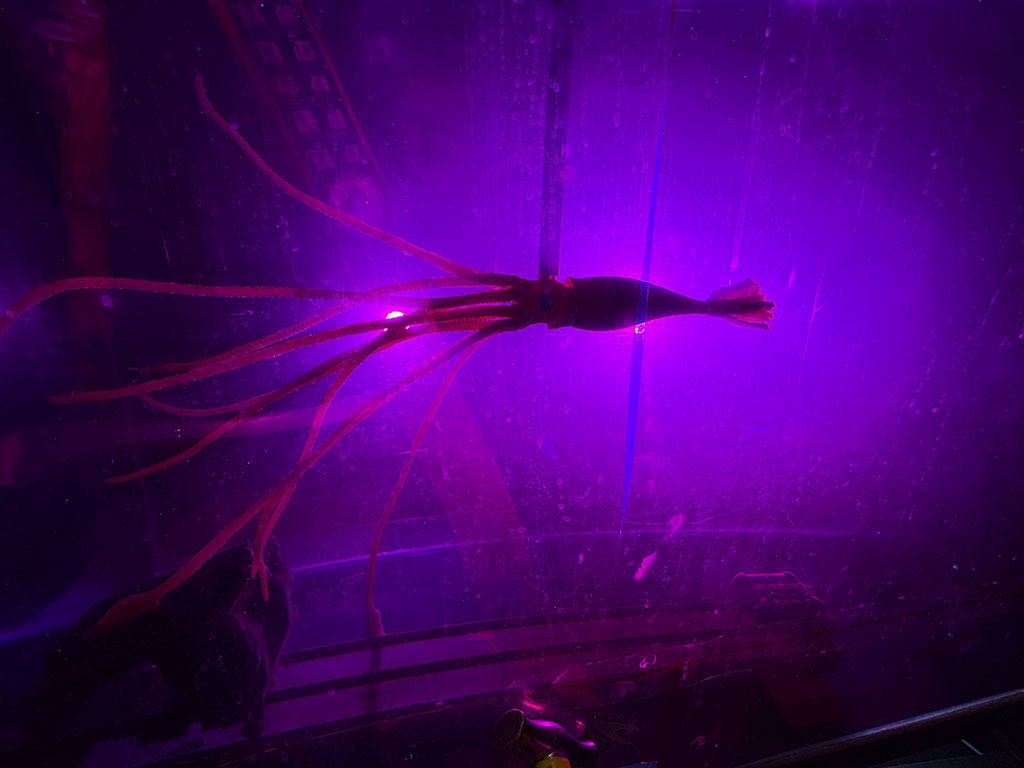
The team physically manipulated the puppet to find the movement and timing required for each shot. Gene Warren handled the squid while Christopher operated the camera for most of the photography. Other members of the Blind Beagle VFX team included Warren’s son, Brandon Knight-Warren, and Brian Bradford. After decades in the business, Warren says a key challenge of miniature photography is making a shot look convincing. “When you’re trying to fool the eye, you need to play tricks on the eye,” Warren says. “So it becomes, ‘Did we do enough to fool the audience?’”
Dylan’s longtime fascination with giant squids inspired their role in the story. “We joked about that on set a lot, about how cool they are and how unexplored they are,” Warren says. “They are amazing creatures.”
The shoot had its amusing moments. “There definitely were some moments of laughter when you’re trying to get a squid to act on stage,” Warren says. He also appreciated Meyer’s approach to the material. She was open to experimentation but clear about her intentions. “She knew what she wanted to do, but she was willing to explore,” Warren says. “And it’s always fun when you work with a director that’s just chill and like, ‘Show me what you got,’ and then, ‘Nope, this is what I want,’ and then you go do it. It was a fun shoot. Really fun.”