Images courtesy of Netflix.

Images courtesy of Netflix.
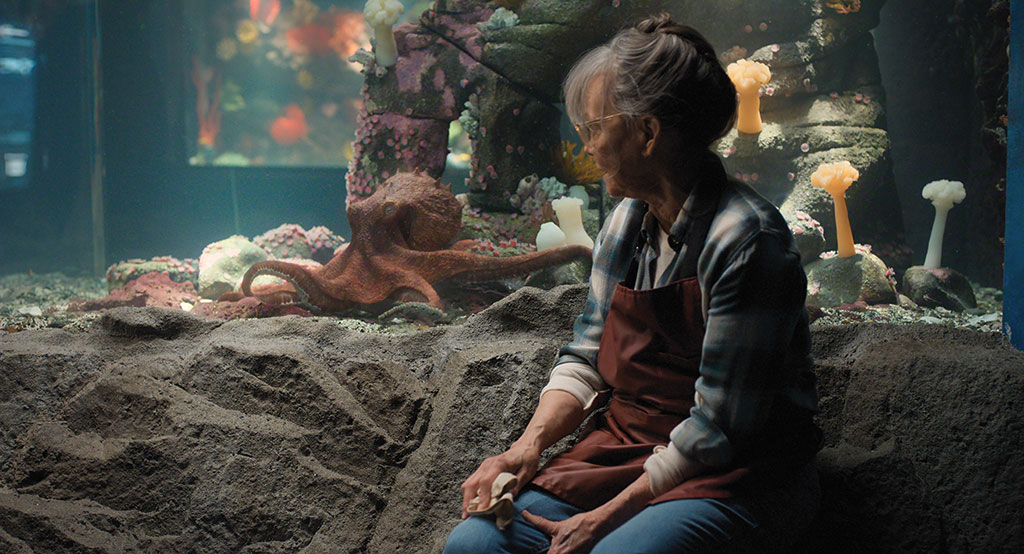
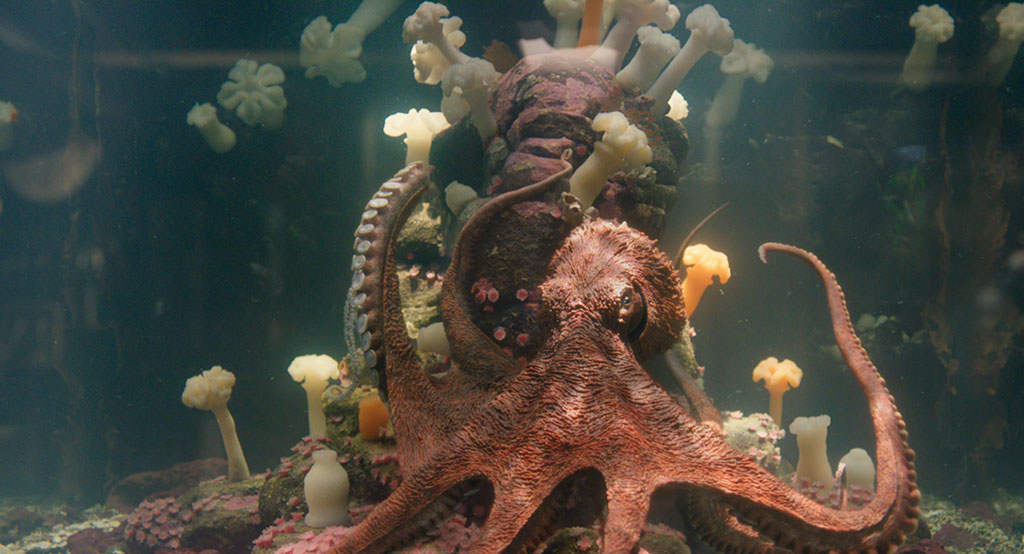
Few films can claim a giant Pacific octopus as both a narrator and a member of the principal cast. In Netflix’s Remarkably Bright Creatures, that octopus is Marcellus, who offers a unique perspective on human relationships, trauma and grief. Creating the CG Marcellus and seamlessly integrating the cephalopod into live-action photography became one of the production’s defining visual effects challenges.
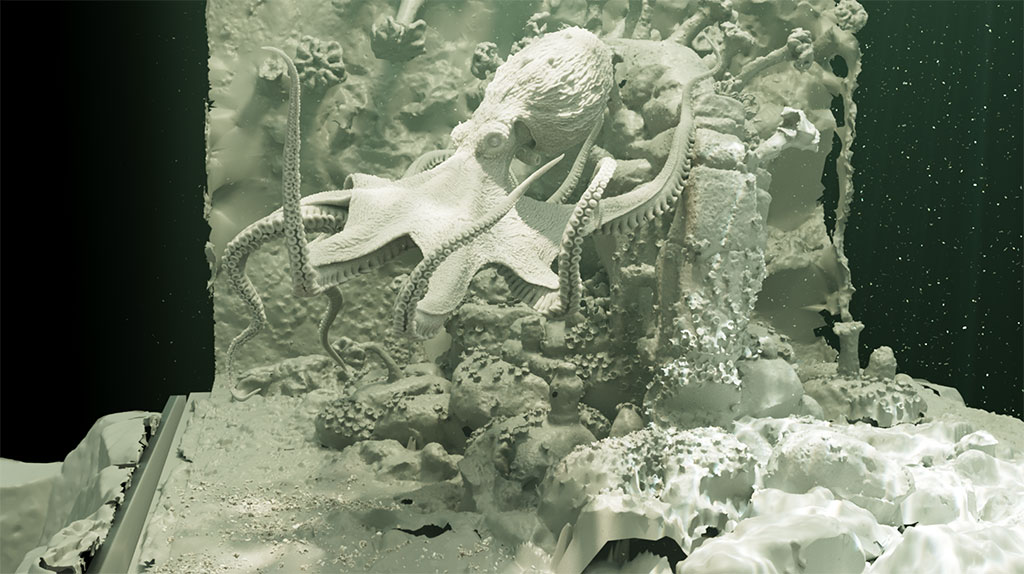
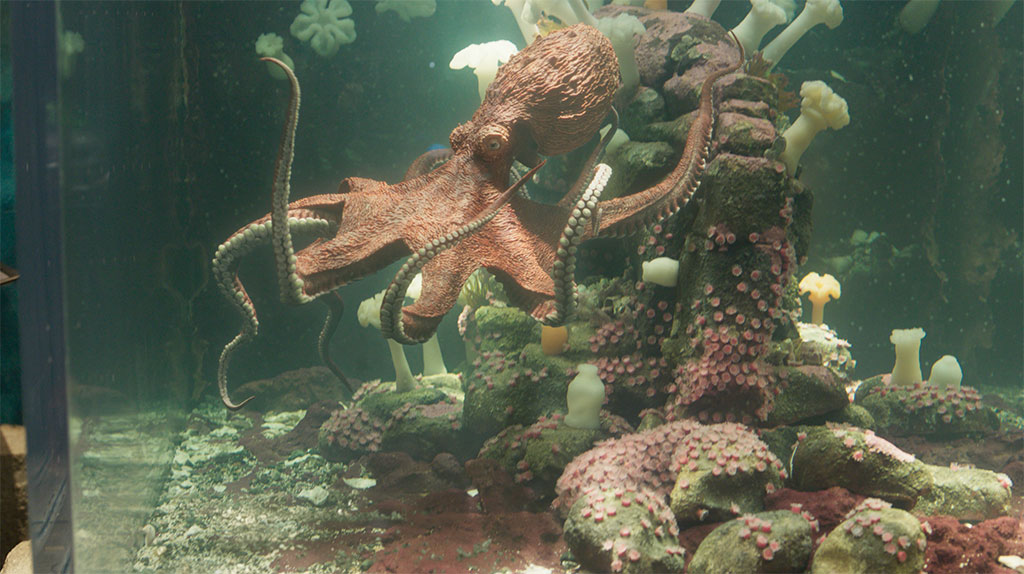
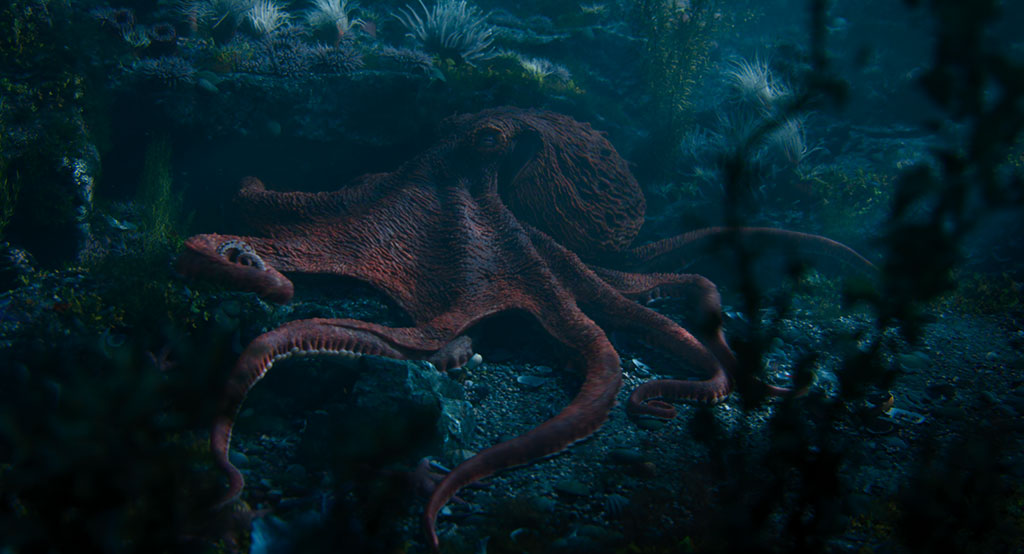
Visual Effects Supervisor Chris Ritvo – whose credits include Ms. Marvel and Alien: Earth – says, “Most of the cool stuff centered around Marcellus. We shot real ocean plates for the beginning, middle and end of the film. Then we had to retrofit our CG plant life into that, which is invisible when Marcellus is interacting with it. We shot real plates and copy over what was there into a digital form to get it to interact. Our environments were stunning with this cave.” Whereas wind causes environmental movement on land, currents do the same underwater. “There is an ambient displacement to the water itself, like an ocean current simulation. Marcellus has his own displacement, and depending on what he’s doing, there will be more or less simulated on top.”
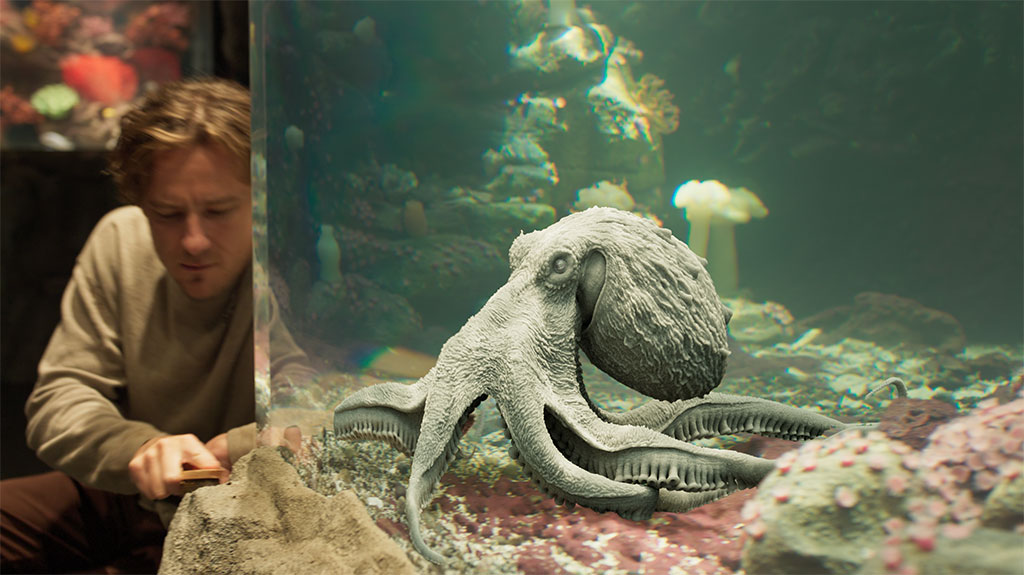
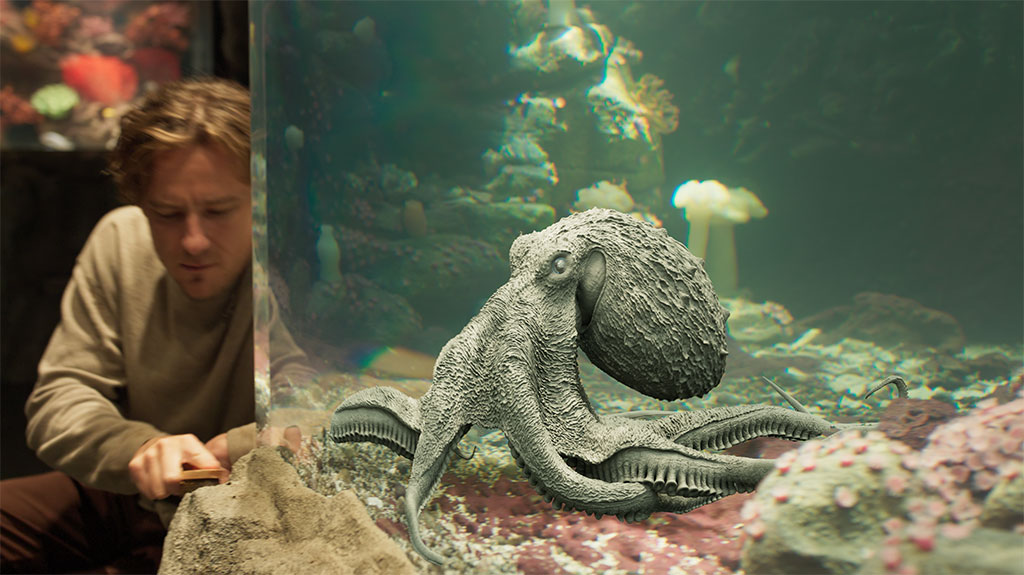
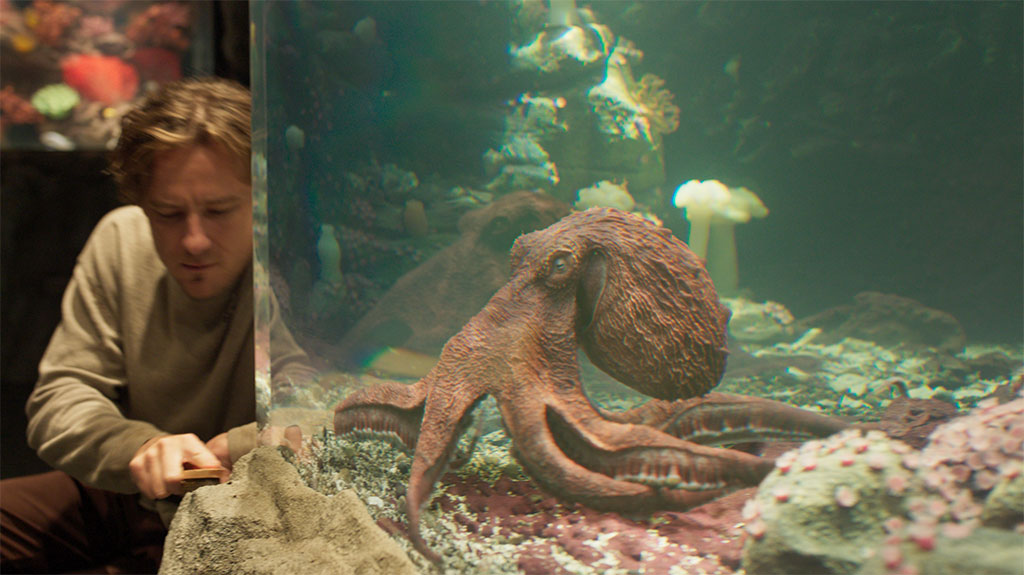
Murkiness and particulates had to be present at all times to make underwater shots believable. “The effects simulation was adding particulates to the tank because it needed to feel like Marcellus was affecting things around him, not just floating; otherwise, it appears separated,” Ritvo notes. “In the ocean, there is a natural falloff of murkiness. That was a big question. Do we want to embrace that, [given that] the upper northwest of Vancouver is not like the tropics? It’s not clear water. It’s dark and murky. It was tricky to find beautiful shots in that environment. We had to be closer to the surface for a bit more clarity, but the falloff is quite beautiful. It was about making sure we could find that average and grading to give it a touch more blue-y tinge, which was more inviting than the greens and browns you would normally find down there. Also, there was a time limit for the ocean plates, because there’s an algae bloom coming in the next two weeks.”
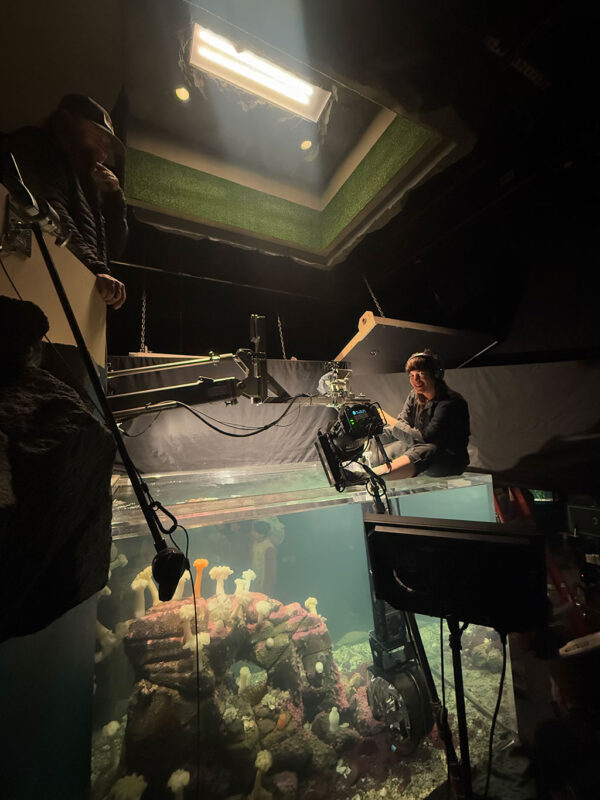
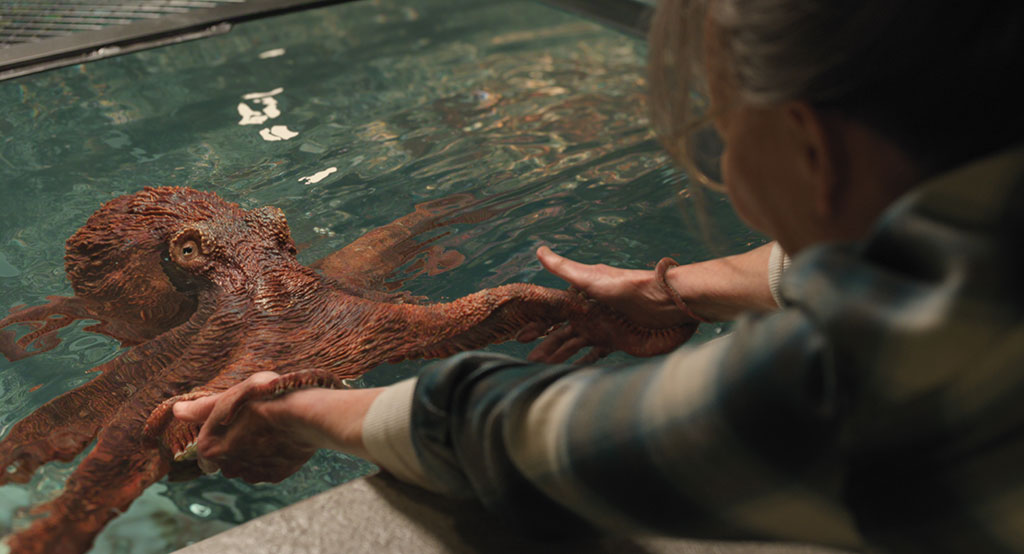
Scale was an issue within the tank. “Usually, when you’re doing water simulations, it’s at a much larger scale. It was quite difficult at the smaller scale of the tank to make it real and not miniaturized,” Ritvo explains. “We had real water in the tank that we were matching to, but it did take a few tries and iterations to get the scale of the water right so that it didn’t look like Marcellus was a shrunken-down giant octopus in the tank. The amount of detail that needed to be added, and then the bubbles and his breathing were part of it as well. When he’s interacting with their hands, we had to have droplets on the hands, and he was leaving a residue. When he’s out of the water, he has to have droplets on his face.”
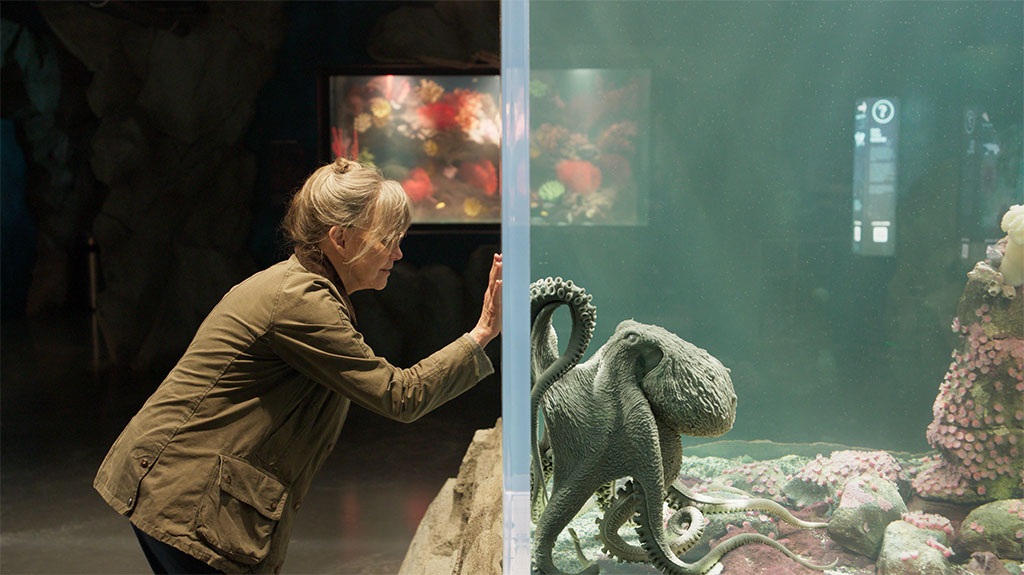
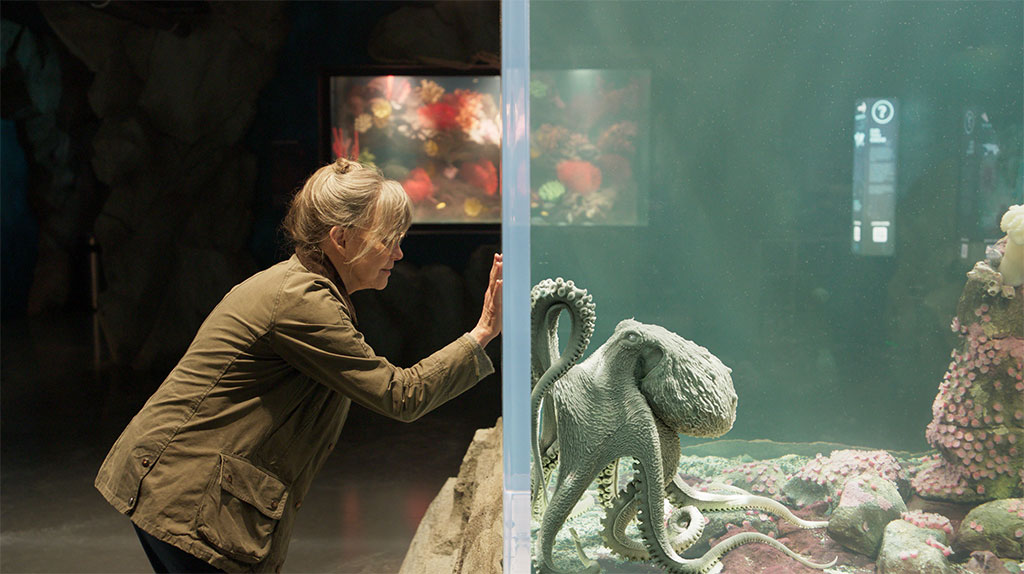
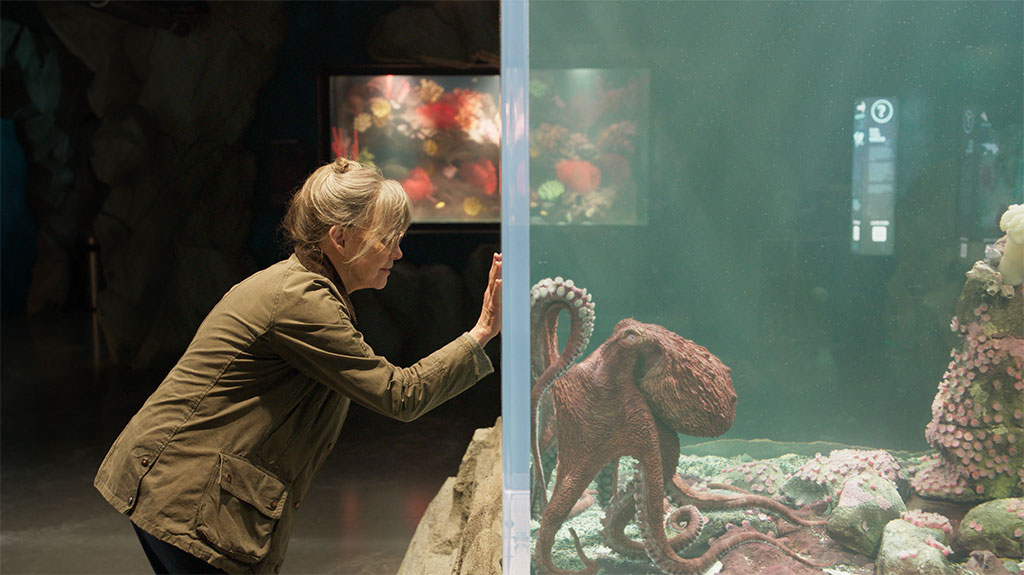
A puppet was not used when Marcellus was in the tank or at the tank’s surface. “Sally Field and Lewis Pullman were interacting with the water itself,” Ritvo reveals. “We replaced the water and the tank underneath, then added Marcellus. We had to hand-track all the hands to track and simulate water droplets. There was a creature effects pass that simulated his skin against theirs and all the sucker interactions.” The suckers were complicated to simulate. “They had to be ambiently animated, but they also had attractors to them so that when they came close to the fingers, they would attract on and stick, rub against and perforate when they came off. The water on top of that had to leave a residue on their skin and droplets. When they’re outside the tank, it was easier because we had this green sock puppet that Sally could interact with.”
Various puppets of Marcellus were utilized on set. “We 3D-printed a full-size Marcellus that had removable legs because it could get unwieldy quite quickly,” Ritvo says. “We had a full-size, correct-color prosthetic Marcellus that we could dip into the water to get our lighting reference; that would also give us a good reference for the refraction in the tank because the glass was correct.”
“The crab was one of my favorites, and we named him Frank. Ultimately, it was about matching as much reference as possible. Eels are quite ugly, and their skin is very specific and moldable. The eel is not seen that clearly, and it is a quick beat, but I wanted it to sell a terrifying moment, so getting the mouth structure correct was important. We wanted him to look like an ugly boxer who has been beaten up too many times. The eel has an oblong shape, and his jaw is messed up. It’s about finding those little character beats when you’re building the asset.”
—Chris Ritvo, Visual Effects Supervisor, Remarkably Bright Creatures
Marcellus crawling across the floor was hand-animated. “When an octopus gets outside of the water, it’s a bit like a pancake because there is very little structure in them. We did cheat that to make Marcellus more attractive, because they can get disgusting. We made the movement laborious and left behind what I called the ‘snail trail.’ Octopuses can stay out of the water so long because of this shiny film on them, which is trailing behind.”
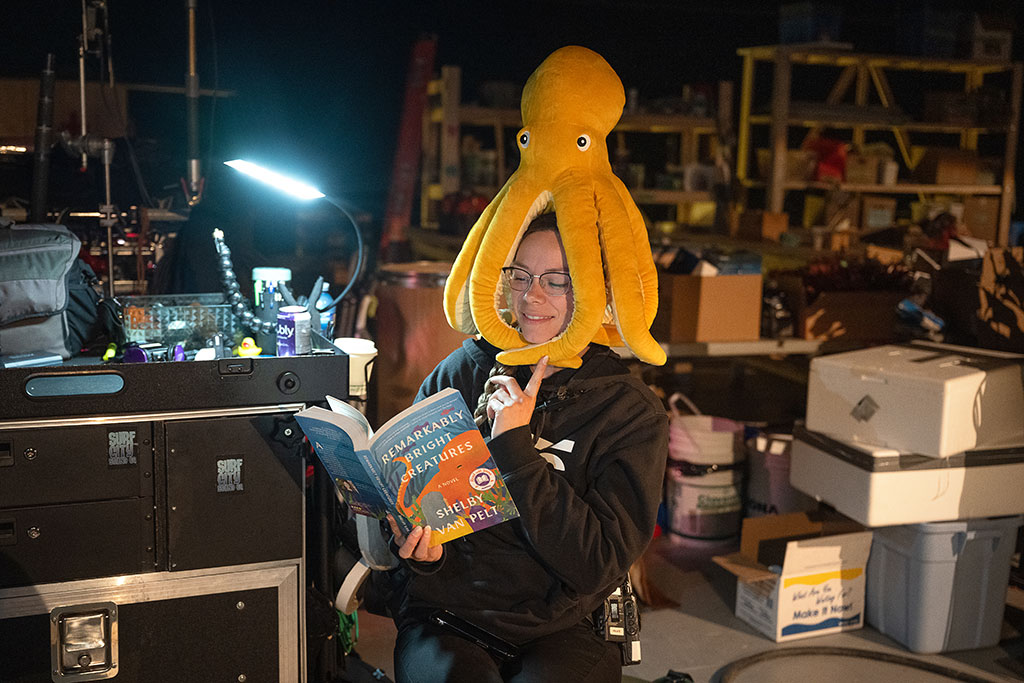
Rigging Marcellus was a challenge. “We had three layers of rig that the animators could turn on and off because it was so heavy that you had to isolate into different bits,” Ritvo states. “We had a general rig, a mid rig and a sucker rig that we could turn on at the end. We could lay them out essentially the way we wanted them, and then the simulation could take over from there. The tentacles could be simulated to give them a bit more flop and squish. The ends of the tentacles act like ribbons. We shot hours and hours of reference of a real octopus named Agnetha in Vancouver.”
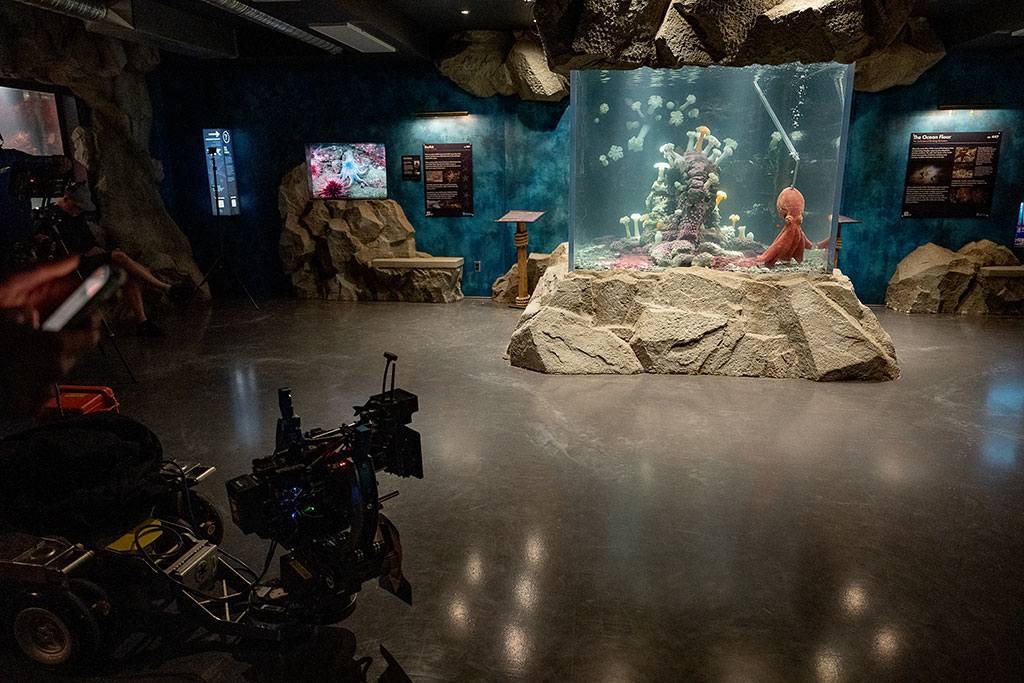
Micromovements had to be taken into account. Ritvo says, “Octopuses are always moving, so even if they’re stuck against the glass, all of the suckers are moving independently, and their skin is constantly moving. It’s informed by them, but also by the current inside the tank. We had to model everything for Marcellus because everything had to be simulated. Nothing could be cheated. We had to create an ocean current in the tank that could then inform its general ambiance, so that it looked correct on his skin, which ended up being like a cloth simulation. The suckers had to be simulated to give an ambient texture and a squish-pull interaction. The big thing was the amount of movement we needed to integrate into him to make it look correct.”
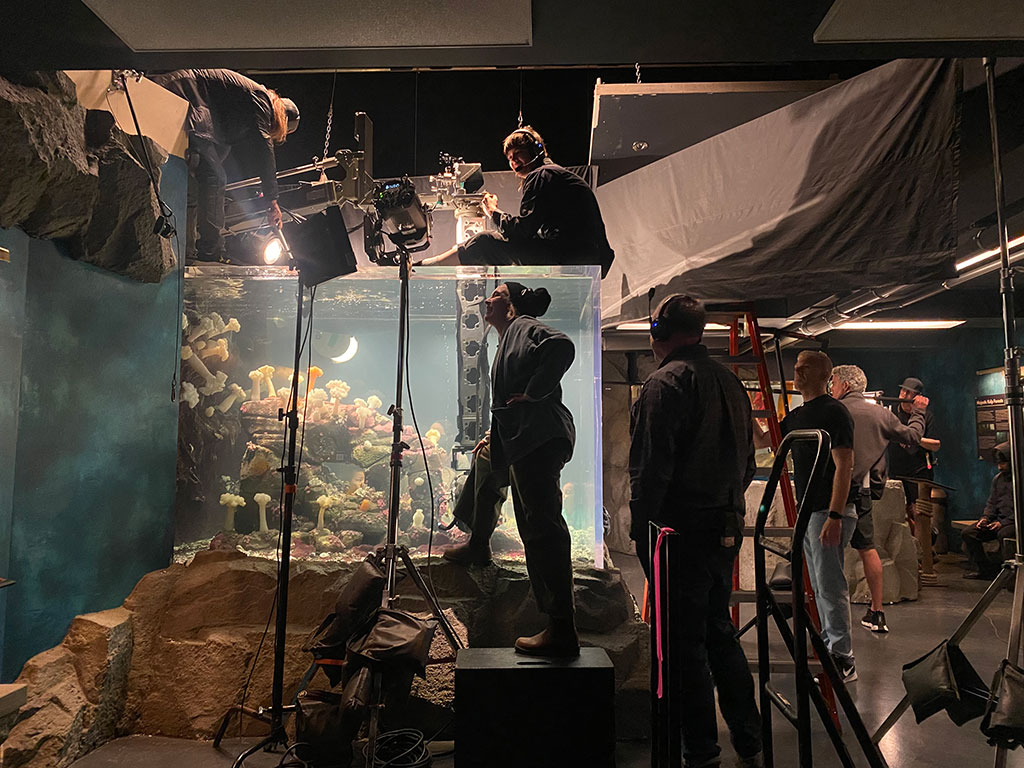
A complex water simulation occurred when Marcellus emerged from the bucket and was released into the ocean. “Not only does he have to splash into the water underneath him, but we actually replaced that whole water surface and matched the raindrops to the practical plate,” Ritvo shares. “But when Marcellus is coming out of the bucket, he has to add displacement to the water. You have the layer of practical water as well as matching the ocean simulation, raindrops and the splash of the water. When Marcellus collides with the water surface, he has to splash. It’s like there are six layers there that automatically have to interact with each other. Not just separate simulations but also the same simulations together.”
“That’s the most dramatic part for [Marcellus[ as a character in the film: getting back into the water. Also, Sally Field’s performance is amazing. The water coming out of the bucket is maybe one of the best water simulations that I’ve ever seen,”
—Chris Ritvo, Visual Effects Supervisor, Remarkably Bright Creatures
The pivotal moment could not be distracting or appear fake. “That’s the most dramatic part for him as a character in the film: getting back into the water. Also, Sally Field’s performance is amazing. The water coming out of the bucket is maybe one of the best water simulations that I’ve ever seen,” Ritvo reveals.
Other sea life populates the world in which Marcellus inhabits. “The crab was one of my favorites, and we named him Frank. Ultimately, it was about matching as much reference as possible,” Ritvo states. “Eels are quite ugly, and their skin is very specific and moldable. The eel is not seen that clearly, and it is a quick beat, but I wanted it to sell a terrifying moment, so getting the mouth structure correct was important. We wanted him to look like an ugly boxer who has been beaten up too many times. The eel has an oblong shape, and his jaw is messed up. It’s about finding those little character beats when you’re building the asset.” Marcellus releases a dark ink, obscuring the view of the eel attack. “The ink was interesting. It was looking at a ton of references of real ink and making sure it had that viscosity to it, because it’s easy for it to look like smoke in the water, but the ink itself is actually sinewy.”
Principal photography took place in Maple Ridge, British Columbia. “A lot of that’s in-camera,” Ritvo remarks. “The only thing we did, mostly in the town, was to affect some trees to look fuller. The aquarium is a combination of three spaces. We shot at a yacht club in the same harbor and enhanced the trees around it to make it feel more isolated. We built a set at the studio, which is mostly the interior. We actually shot at the Vancouver Aquarium for an evening to get all the beats with the sharks.”
Approximately 400 visual effects shots were created for the film. “Untold Studios was the main vendor doing the octopus and more of the advanced simulations. Wiley Co. VFX was our postvis vendor. Untold gave them a basic asset of the octopus, and they could animate it for us to get quicker blocking, essentially for editorial. We had Savage VFX do our exterior tree enhancements, and a few bits and bobs for compositing, and NetFX did our paintwork.”
The biggest challenge was ensuring Marcellus felt like a character. “It’s easy to get bogged down in the act of creating. You can make it as real as possible, but then the audience may not be attached to him. It was about finding those beats that the audience could attach to him and project their feelings onto him.” The final sequence is dramatic. “Sally Field is so good, and Marcellus helps sell that performance. It’s so emotional.”