By TREVOR HOGG

By TREVOR HOGG
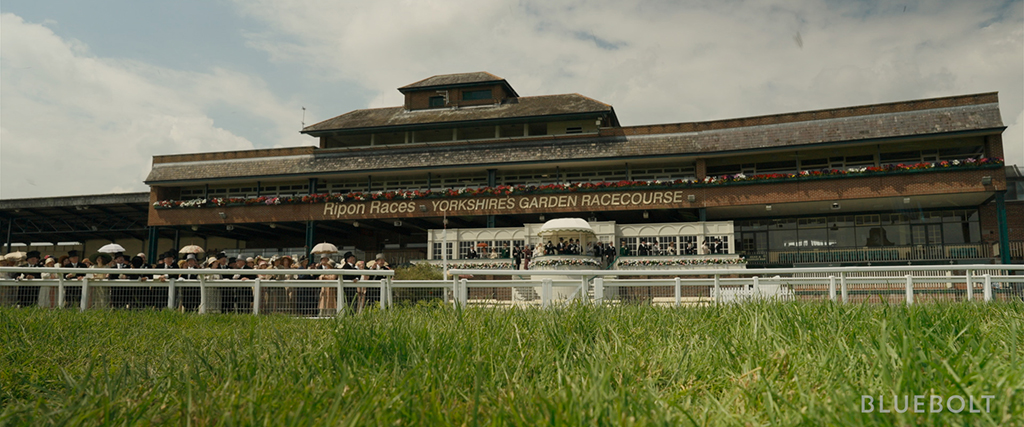
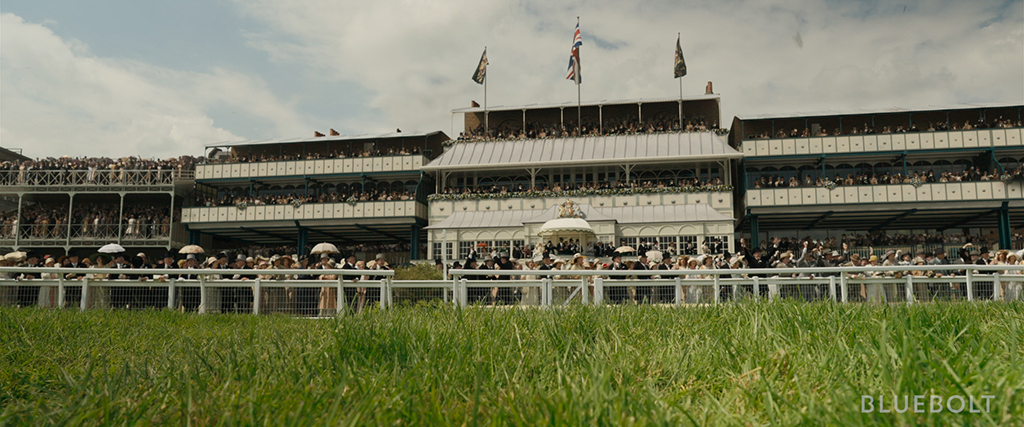
Given that both sprung from the creative mind of Julian Fellows, dealt with the inner workings of a British aristocratic household pre-World War II, and have been lauded with an Oscar and 15 Primetime Emmy awards, it is hard to completely separate Gosford Park and Downton Abbey from each other. Whereas the former consisted of a single feature film, the latter began as a television series consisting of 52 episodes over six seasons, as well as a trilogy of movies. Returning behind the camera for Downton Abbey: The Grand Finale is Simon Curtis, who brought on BlueBolt Visual Effects to create 138 shots featuring a long opening tracking shot through early 1930s Piccadilly Circus that concludes on the theatrical stage and recreates the splendor and crowds of Royal Ascot Raceday.
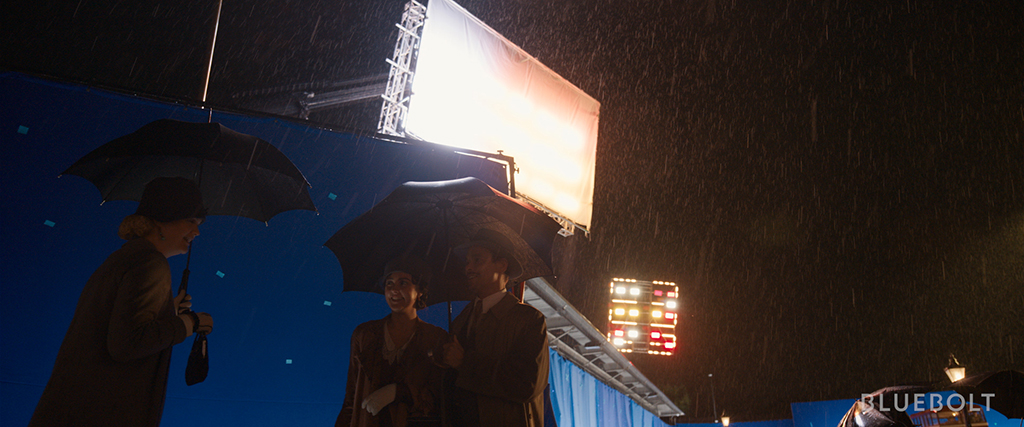
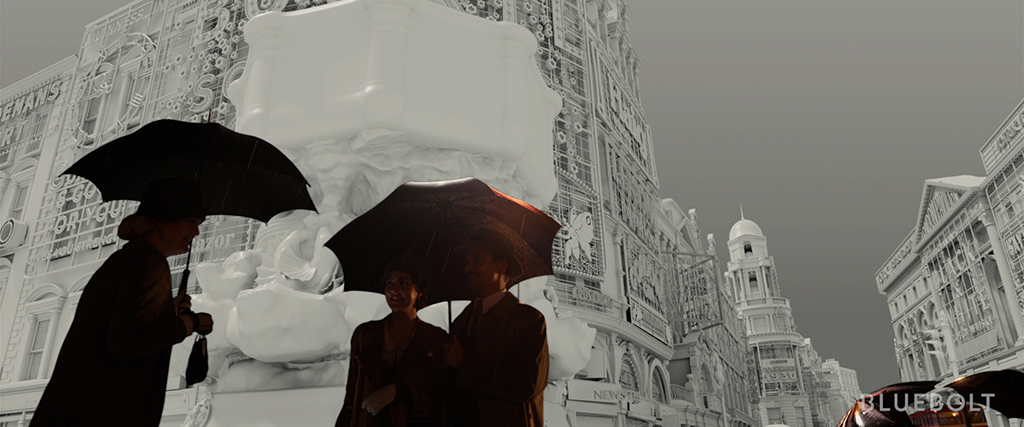
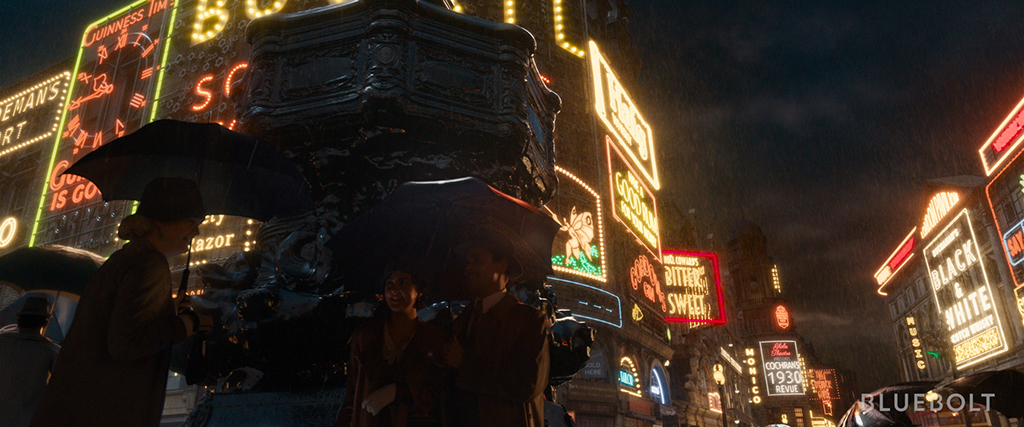
Coordinating the opening track shot in a way that would make Martin Scorsese proud was an exciting proposition. “It was an incredible way to set the tone,” states Henry Badgett, Visual Effects Supervisor at BlueBolt. “The opening main sequence up and until they get into the theater was quite a stretch, and it was treated as one long shot, broken up into lots of different layers to make sure that if something broke on a render we didn’t lose all of it.” Understanding the intention of a shot is critical. “You start with the basic idea and begin to understand the different things you’re going to introduce into it to give it more of a flavor that is wanted,” remarks Dave Cook, CG Supervisor at BlueBolt. “When we were going to do a takeover from one camera to another was planned before they shot it for real. We knew more or less what we could do to hide those transitions.”
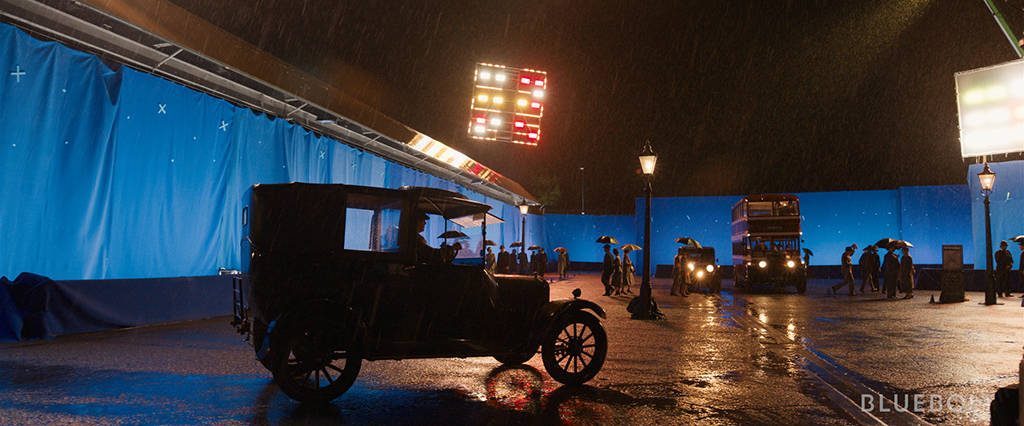
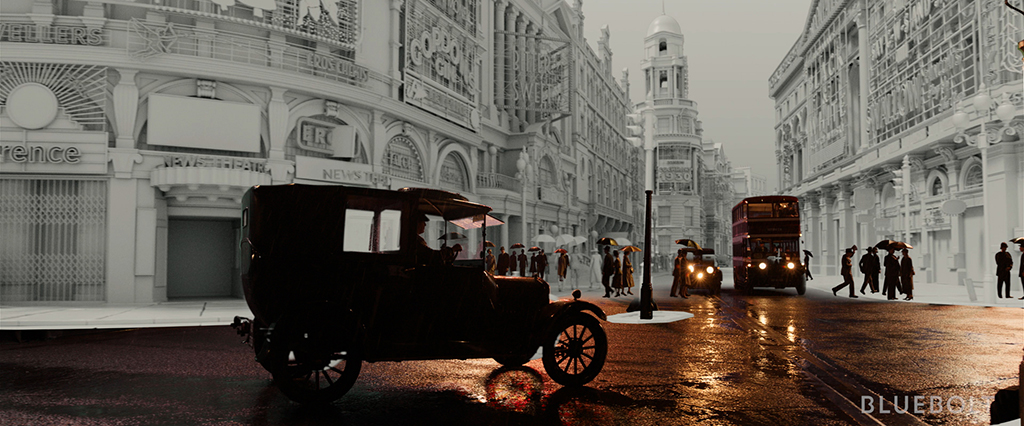
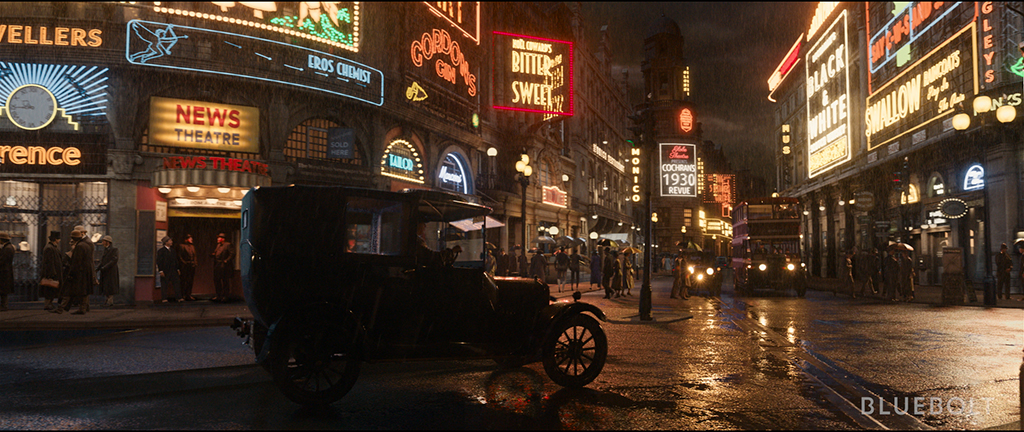
Minimizing transitions was the goal. “I wanted to do it as long as we could on the bluescreen set, which was the street section,” Badgett reveals. “We did film it all the way up to the door and put a wipe in the middle before that as the bus goes past. There is a guy running for the bus, and he jumps onto the back of it. You cannot help but look at him. Is he going to miss the bus? That is the key moment, when the wipe in the background is happening, and it’s also quite a shadowy area, so we were in control of that aspect of it as well.” Mother Nature obliged in wetting down the road. “We got a free wet down, and that created all sorts of problems, because all the other departments have their own concerns about whether the costumes are going to look like they’re drenched?” Badgett notes. “Were there enough period umbrellas to hand out?” The rain provided a subtle difference to the performance of the extras. “They’re really reacting to the rain, and that sells it,” Cook states. “We were able to use a little bit of the reflections on the road from the set, but made a reconstruction of that with our real set and lights that were interspliced with those reflections. You’re getting a mixture of the two kinds of reflections in the end.”
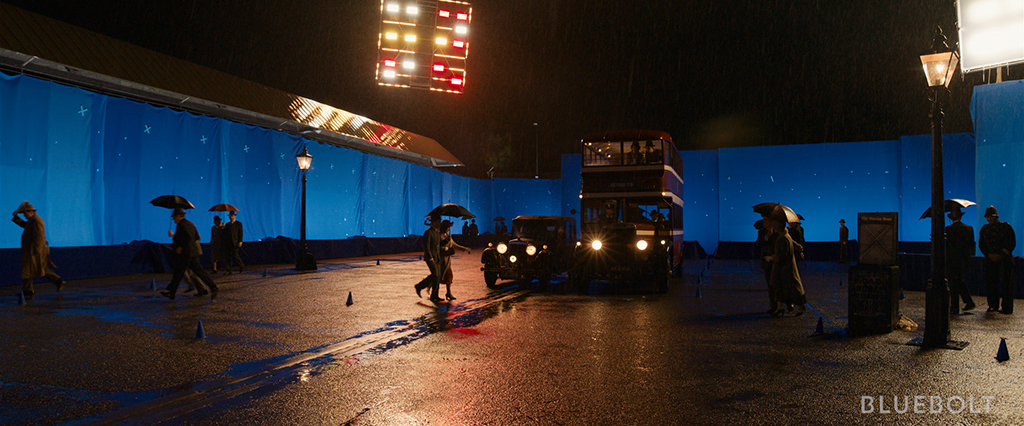
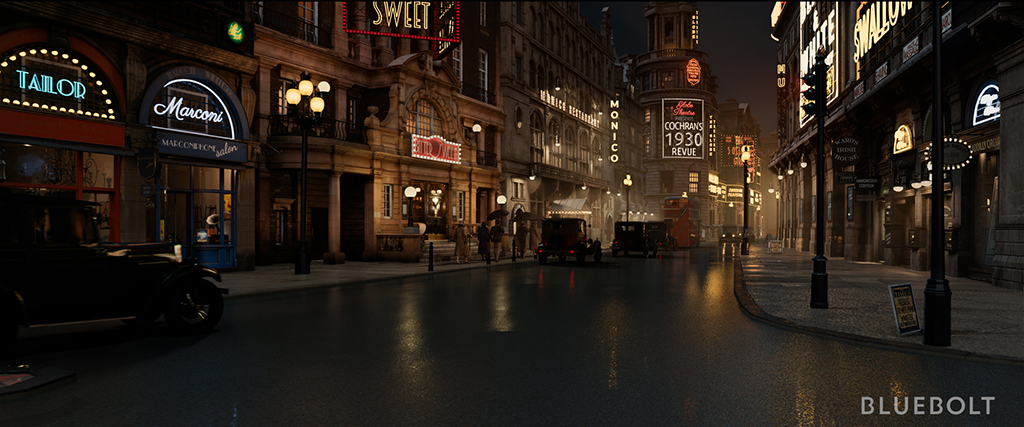
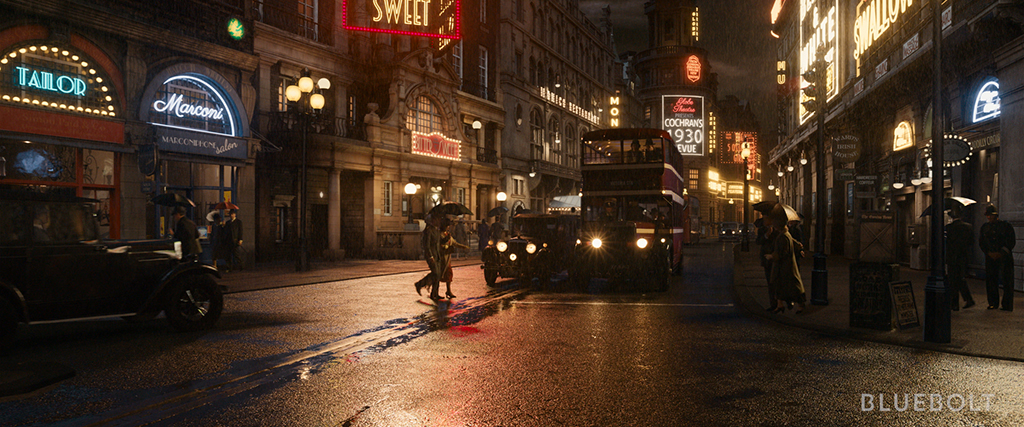
“We got a free wet down [from the rain], and that created all sorts of problems, because all the other departments have their own concerns about whether the costumes are going to look like they’re drenched? Were there enough period umbrellas to hand out?”
—Henry Badgett, Visual Effects Supervisor, BlueBolt
The bluescreens assisted with the reflections. “You use the blue that is reflected as further bluescreen, and you key it,” Badgett explains. “That’s where you can put your own reflections in.” The vintage vehicles were challenging because of reliability issues. “I was surprised they didn’t have a fleet of dressed cars that looked vintage and had usable engines inside,” Badgett remarks. “That wasn’t the case. The cars were vintage all the way down to the engine. They were only going to be used for one take, but then some of them break.” The set extension was more extensive than originally anticipated. “I was only expecting to go back a certain distance with the CG, but we went back a long way,” Cook states. “We had a narrow pavement with quite a lot of pedestrians on it and real ones to walk around. It was all about timing and some of real pedestrians crossing the road, and we have the cars, and a cyclist going the wrong way. It’s a question of taking it quite gradually and introducing what looks good at the time.”
The interior of the theater was mainly clean-up. “There weren’t any crowd enhancements because all of those seats in-camera were filled,” Badgett reveals. “The empty seats were just out of view. They had to build a ramp for the camera to get onto the stage, so we had to remove that as well. What we spent the most time on was stabilizing that so it felt smooth but natural and not robotic.” A David Fincher through-the-keyhole moment takes place. “There is a stitch in the interior, which was a camera tracking issue, where were go through the porthole window on the door into the auditorium,” Badgett states. “In real life, if you go through that door, you come out on the balcony, but instead, we did that move, stopped, cut, went downstairs and come in through the stalls. The stitch was mostly done through compositing.”
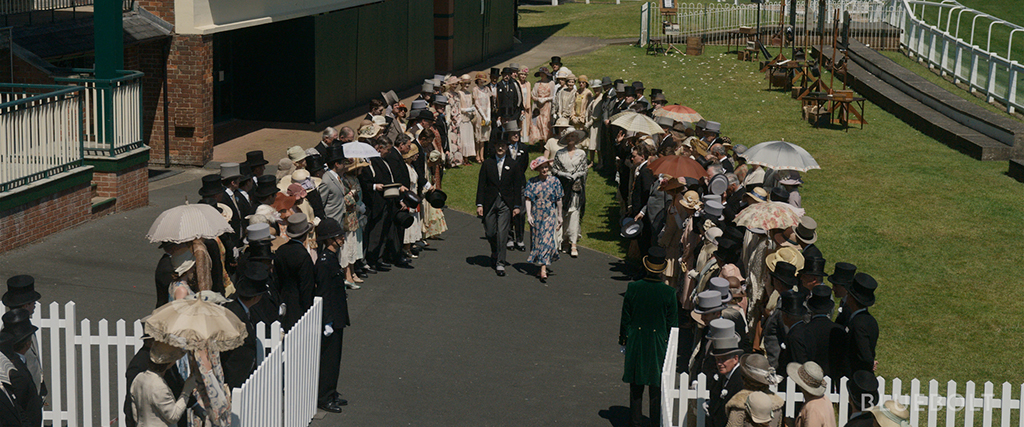
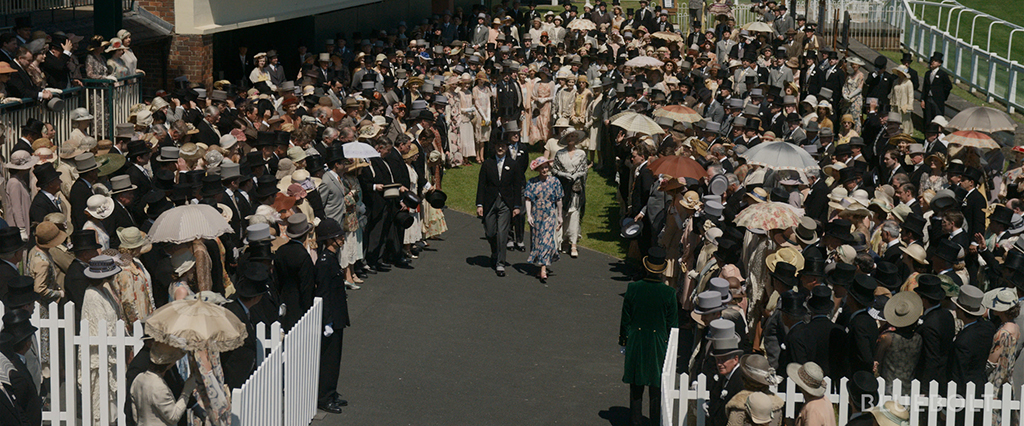
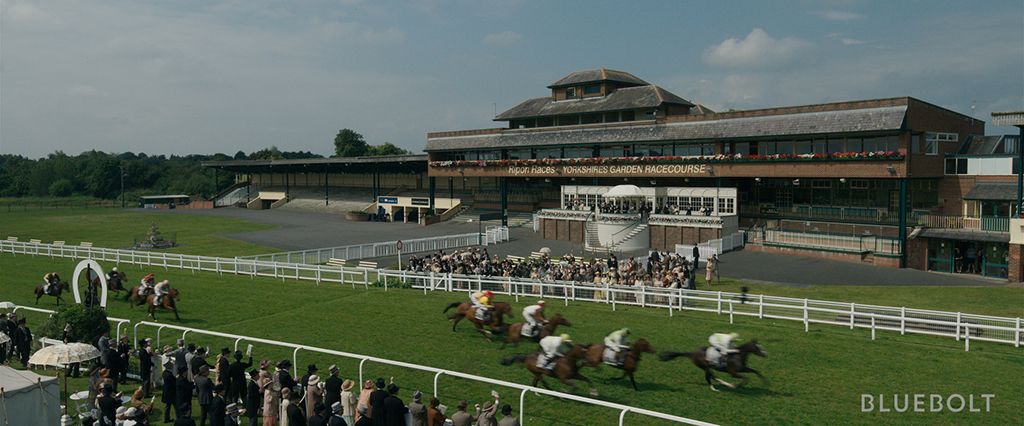
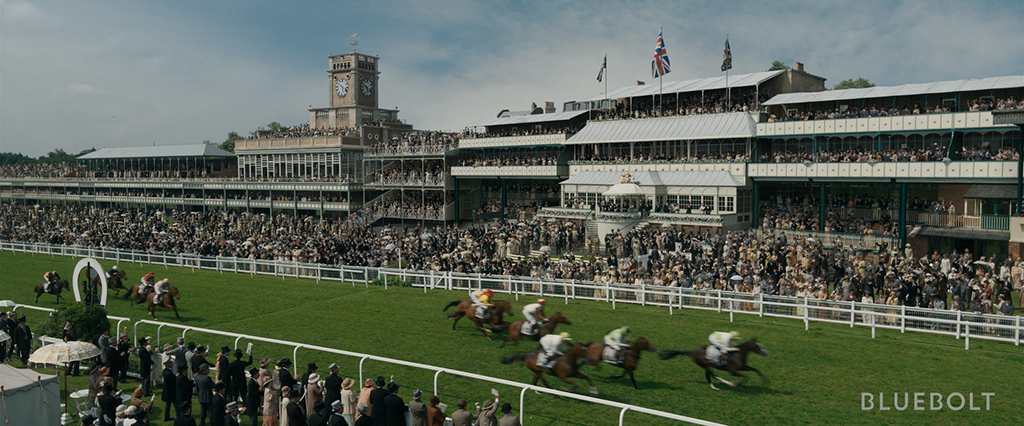
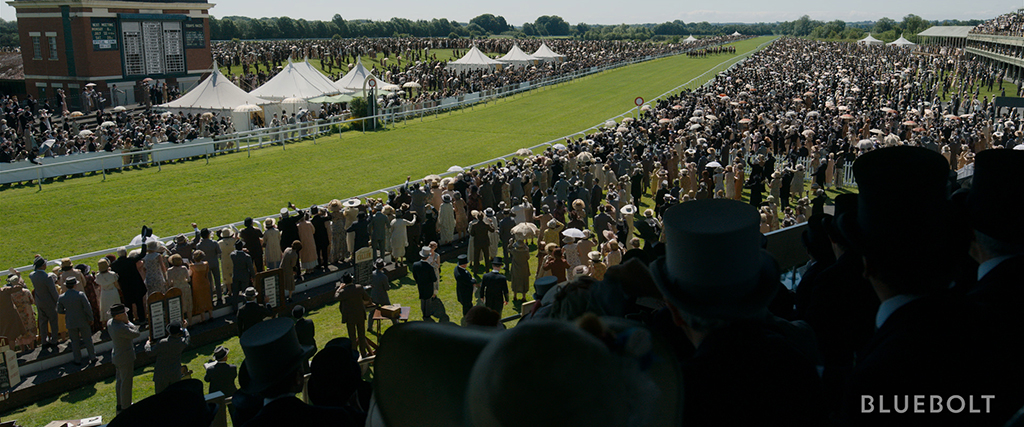
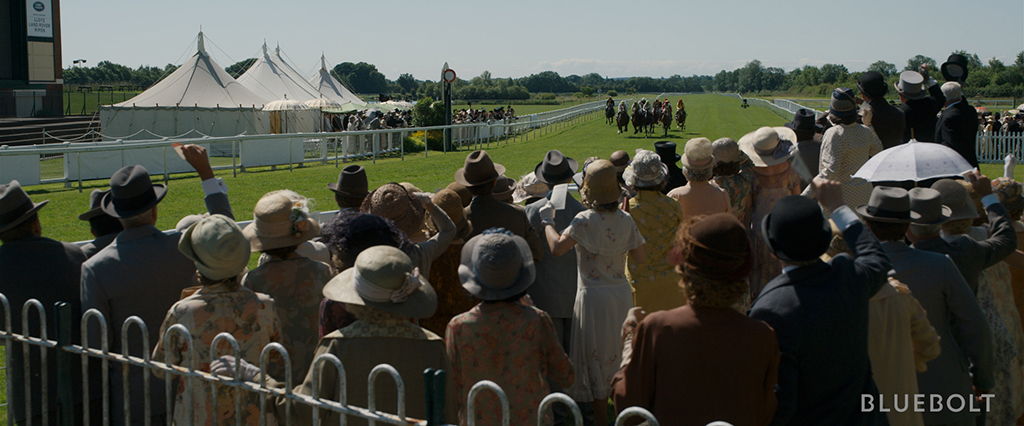
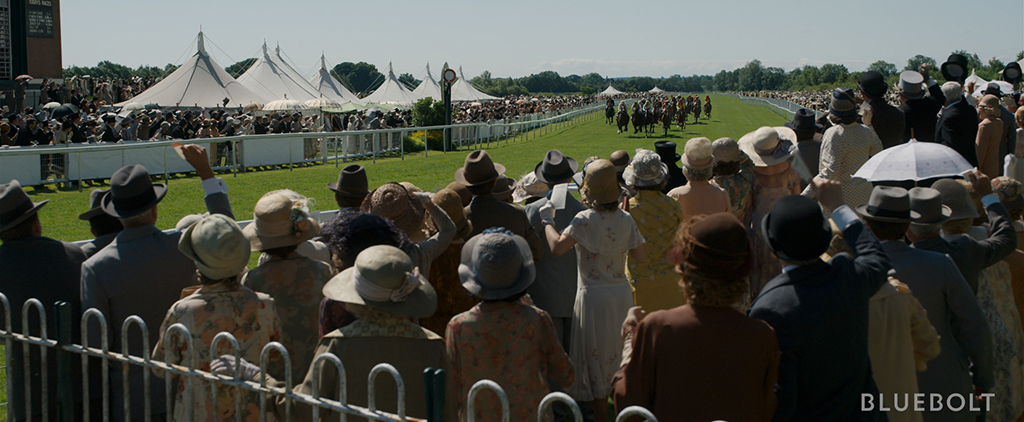
BlueBolt went off to the horse races at Ascot Racecourse, which in fact was Rippon Racecourse, with a CG grandstand and stands occupied by 2D and 3D-replicated crowds. “It was perhaps not so big [of an environment build] because camera was further away from the things we were constructing for much of the time,” Cook remarks. “It was more about populating and making sure that the crowd [members] were doing the right kind of thing at the right time, and felt like they were reacting to what was going on in the race, not only cheering robotically.” A few extras were shot for real. “The extras behaved in a directed period way,” Cook observes. “It wasn’t too enthusiastic, but enthusiastic enough. If you have people cheering like they’re at a football game nowadays, it is not like a 1930s racetrack crowd, so they have to be somewhat well-behaved and restrained, but also you have to get that feeling of excitement and emotion in there. We took our lead from them, and some of the plates were re-sped as well, so we tried to adjust our animation accordingly to feel like things were getting more exciting as the race was progressing.”
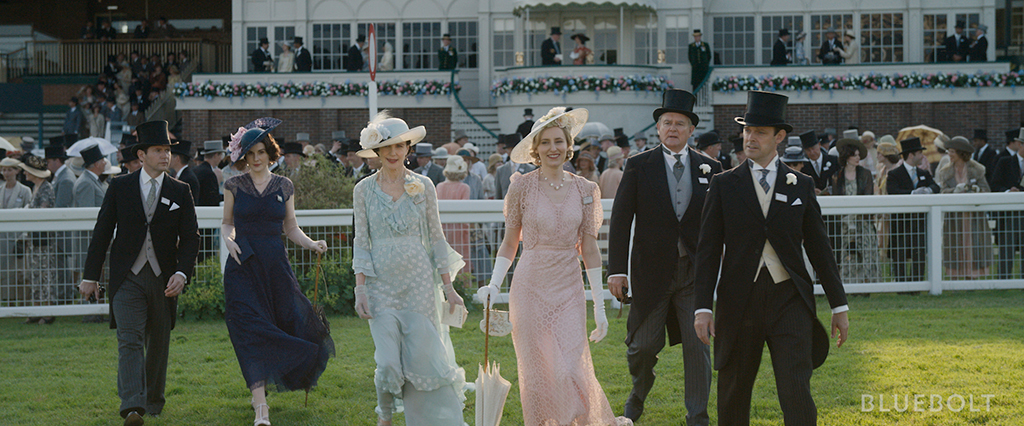
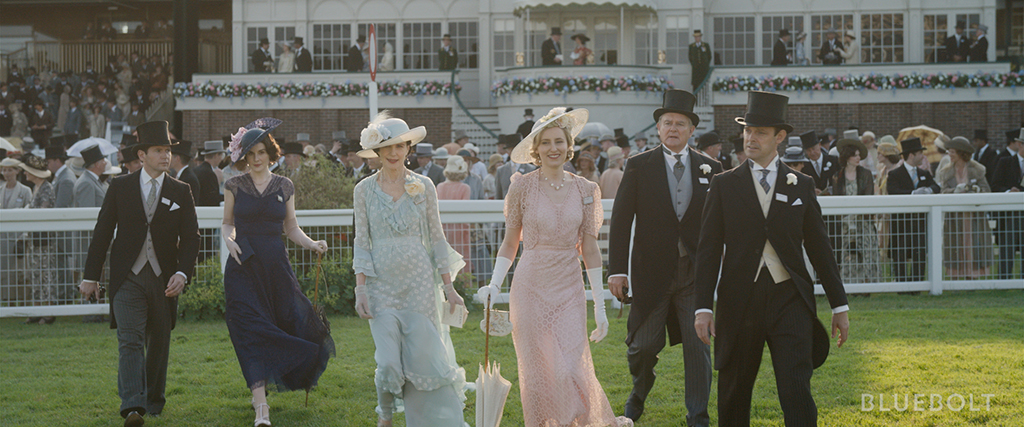
“The extras behaved in a directed period way. It wasn’t too enthusiastic, but enthusiastic enough. If you have people cheering like they’re at a football game nowadays, it is not like a 1930s racetrack crowd, so they have to be somewhat well-behaved and restrained, but also you have to get that feeling of excitement and emotion in there. We took our lead from them, and some of the plates were re-sped as well, so we tried to adjust our animation accordingly to feel like things were getting more exciting as the race was progressing.”
—Dave Cook, CG Supervisor, BlueBolt
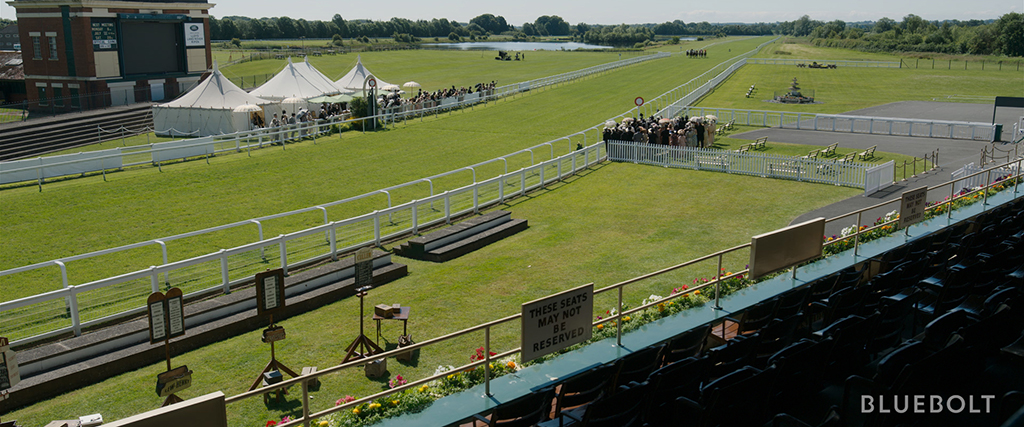
Part of the crowd wardrobe were the fascinators. “There was one moment when they were shooting over the shoulder and through somebody’s fascinator, and I stepped forward and said, ‘Please don’t do that,’” laughs Badgett, who had to deal a more serious issue. “Those were real racehorses, which were allowed to run at top speed for something ridiculous, like five minutes a week, while we were filming,” Badgett reveals. “When the producers got that number back from the American Humane Society, they couldn’t believe it and went into an emergency planning meeting, and reorganized the entire week shoot around this so we ended up only running the actual race twice. We suggested putting the drone in for eyeline to pick up all the crowd passes we needed.”
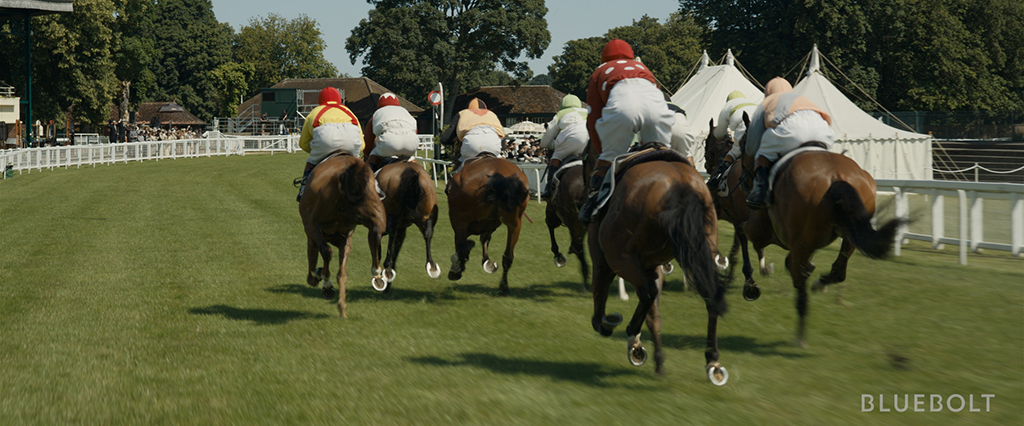
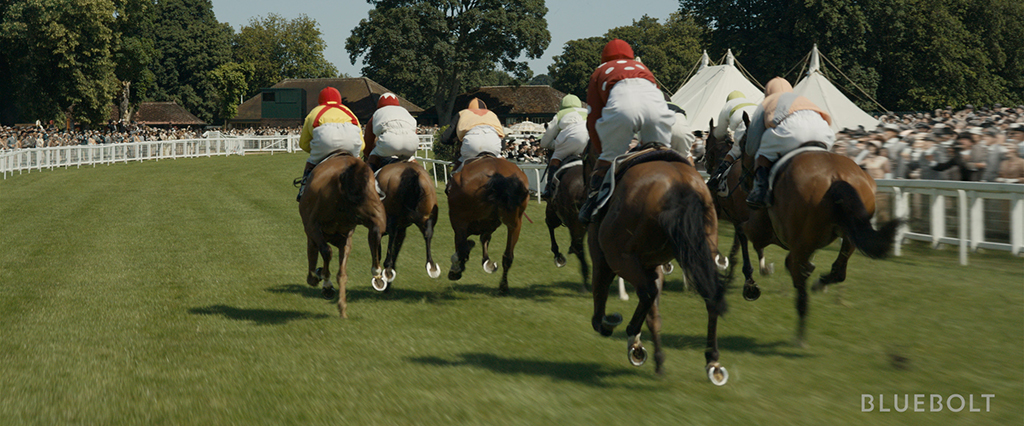
Contributing to the atmosphere was the drone. “It was like we were watching a Star Wars race because the noise of it on the racetrack was incredible,” Badgett recalls. “It was exciting when the horses were running for real. The plan was to have many cameras all shooting at the same time together, which isn’t a visual effects-compatible plan. They turned that over to us, and we worked a couple of hours to get the needed passes.” Digital horses and jockeys were added, “but in the easiest possible way,” Badgett notes. “Some of the horses were tiles. They had maybe eight or 10 horses and wanted to double that. For the jockeys, we had to change the colors of a couple shirts, and we had to remove the safety straps on the helmets because they didn’t exist in those days.”
“I was surprised they didn’t have a fleet of dressed cars that looked vintage and had usable engines inside. That wasn’t the case. The cars were vintage all the way down to the engine. They were only going to be used for one take, but then some of them break.”
—Henry Badgett, Visual Effects Supervisor, BlueBolt
Unlike Picadilly Circus, which occurs at nighttime, the action unfolds in daylight. “It is open-volume lighting, and there were some takes that have a sunny sky, sometimes there’s a cloud, and other times it’s very cloudy,” Cook states. “We did a bit of modulation across that. It was quite a forgiving lighting environment in terms of embedding all of our CG people and buildings with the plate ones.” A digital matte painting was created for the view over the Mall towards Buckingham Palace. “The distance from the subject means that it can be a DMP because we weren’t changing it too much from what was in the plates,” Badgett remarks. “We were making an older version of it. The rest of that shot was also about stabilizing it, which was a theme on this movie. That was a drone trying to be a crane and doing a vertical, coming down to street level to reveal the house they’re about to go into. There was something about the drone that finds it quite hard to drop that quickly and in stable way. The take of that we were working off of was wobbly, and that was the big challenge on that shot.”
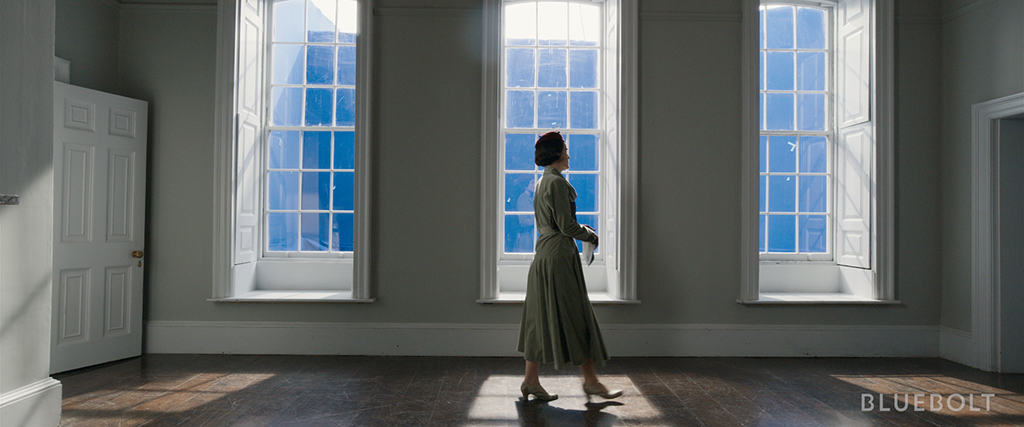
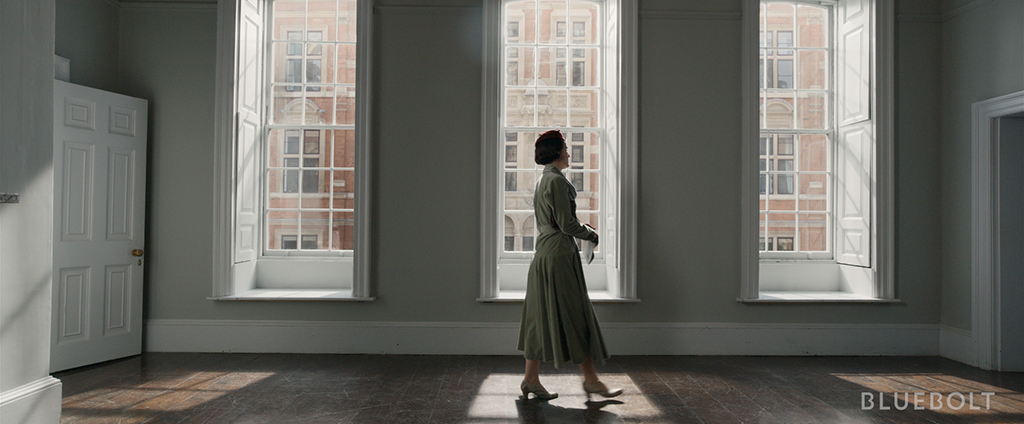
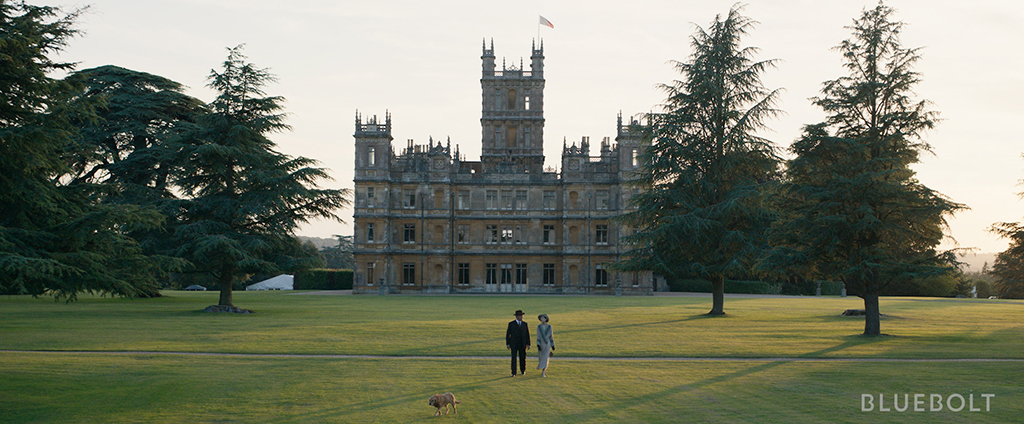
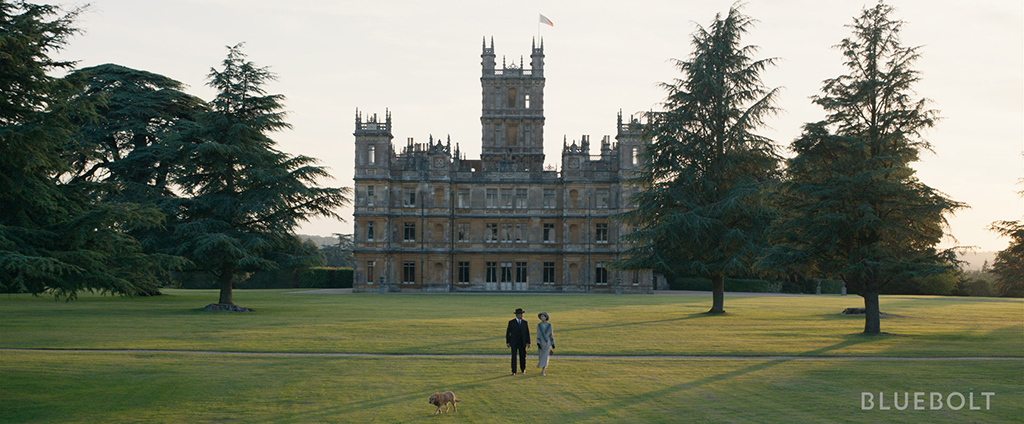
Views of South Kensington had to be inserted into windows. “I thought there might be more of that in the movie, bluescreens out of windows. It was a straightforward bluescreen on set, and the camera team sent out a splinter unit,” Badgett explains. “The DP [Ben Smithard] knew exactly what he wanted, so it wasn’t us creating an environment. Luckily, a lot of those buildings are still around.” Highclere Castle is seen from an aerial view. “We had to do some clean-up on the roof. It was fun to go there and look around,” Badgett notes. “It’s an interesting place with lots of stories. There is a bit of the driveway in front of the building where you can’t drive a lighting truck. There’s a weight limit because it’s over a cellar. The things that ended up being visual effects were the sky replacements and drone stabilization. There were concerns over dried grass because of shooting in the summer, and it needed to look Downton lush. I don’t remember doing any of that in the end, but we talked about it a lot.”
Planning the transitions for the opening sequence was a significant endeavor, especially with not being able to rely on motion control cameras. “We needed a plan that had some flexibility,” Badgett states. “It was a great relief when we did the initial slap comp and realized what we shot fit together. It made me get up to date with all of the previs tools so when I was on set I could have an iPad with the scene and be able to look around and show it to the rest of the team.” Along with developing a few more nuances for crowds in terms of props, rendering was something that had to be addressed. “The rendering was something I was slightly dreading because Picadilly Circus was a 2,000-frame shot to render with probably 40 different layers,” Cook acknowledges. “It’s a question of optimizing assets, making sure that everything is rendered in a rational way and is working ahead of time, and not rendering it too often.”
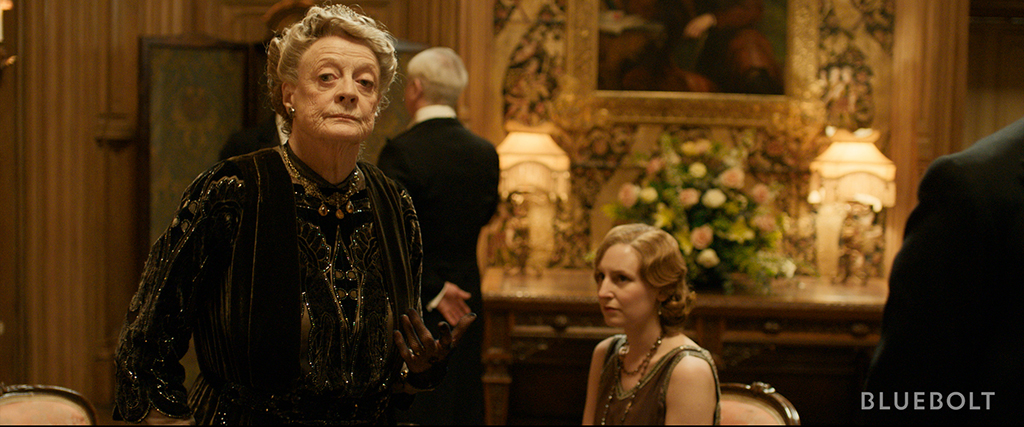
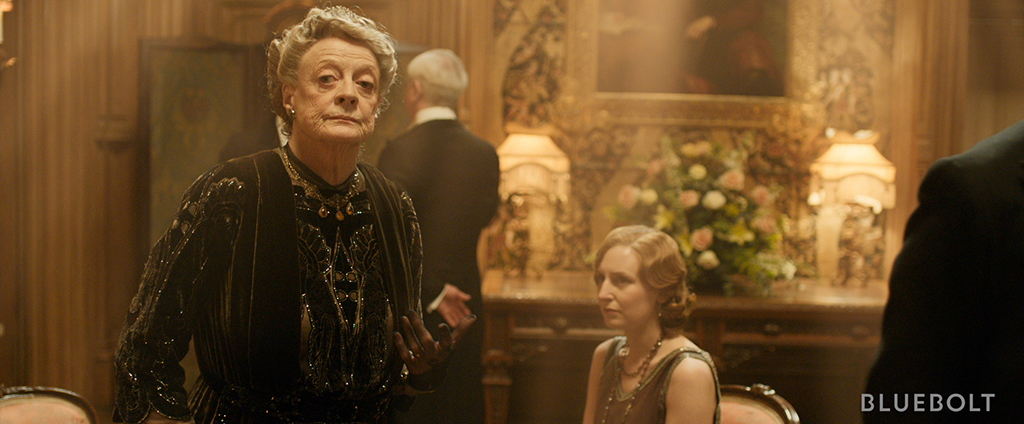
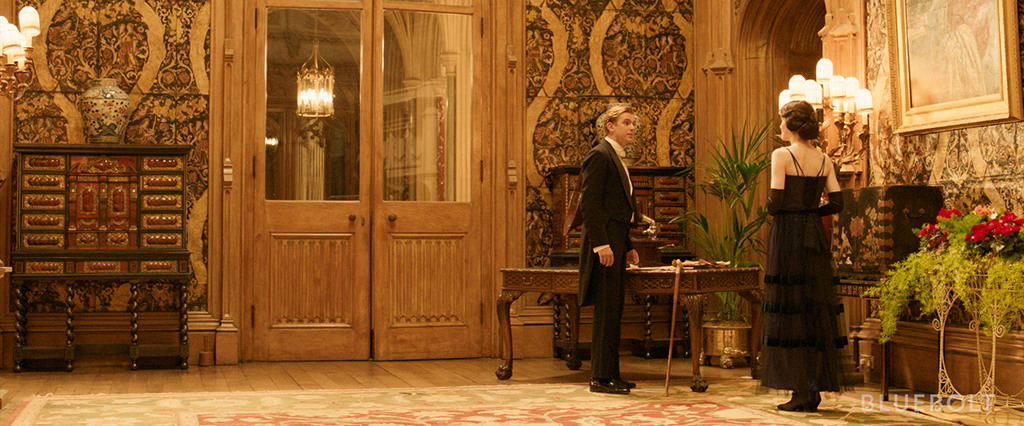
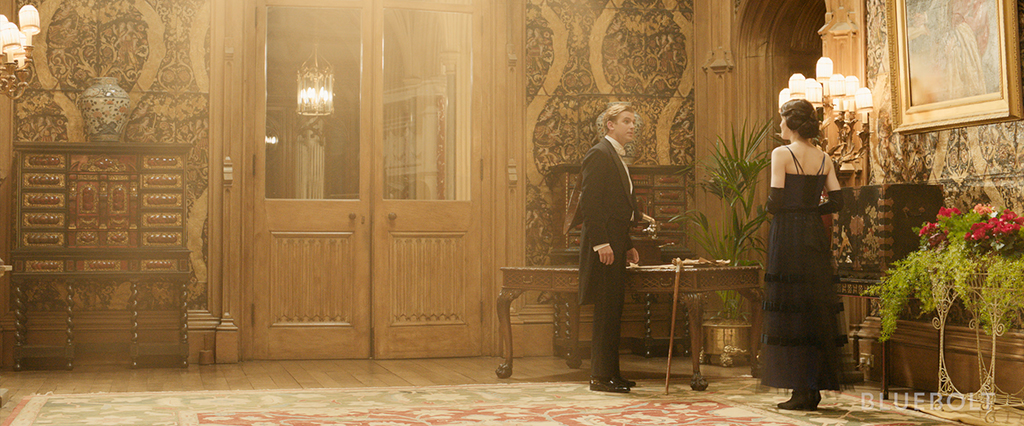
Near the end of the movie is a sequence called Lady Mary’s Memories. “This came from the editorial department, which did this wonderful montage of memories over the years, taken from all the different seasons,” Badgett remarks. “They handed it over to us and said, ‘Look, there you go. Make it look good.’ That introduced another layer of people with an opinion of what we were doing. That was challenging in a different way because although it wasn’t using assets, it was using some of the footage from the previous seasons of the TV show. They wanted to up-res it, and none of it had been filmed for this. It was more than a montage. There is a sequence of walking through the room, and people turn around and look at her… They had maybe two different shots of Maggie Smith and Jessica Brown Findlay looking over her shoulder. We had to re-time and improve the focus on her eyes because she was out of focus. That represents one of the first times we used AI tools to do facial sharpening, which was quite smooth. It worked nicely.”
Watch a breakdown video of BlueBolt’s brilliant VFX work recreating the vibrant 1930s pre-war era of Downton Abbey: The Grand Finale, including a buzzing 1930s Piccadilly Circus for the stunning opening sequence and elements of Royal Ascot Raceday, filmed at Rippon Racecourse, with a CG grandstand and surrounding stands. Click here: https://youtu.be/j1aFI4jYu2osi=LDc_mWbeMo2YztOl