Images courtesy of Vine FX and ITV.

Images courtesy of Vine FX and ITV.
Newly promoted Detective Jo Marshall (Sophie Rundle) investigates the discovery of a body on the moors of Waterside after a wildfire and learns of illegal chemical discharges in Season 2 of After the Flood.
Serving as the sole visual effects vendor, Vine FX (The Witcher) produced 336 shots across 94 sequences and six episodes, including moorland fire simulations, a flood wall, hybrid terrain workflows using Gaussian splats and invisible effects.
“I supervised Season 1 and was on set,” Michael Illingworth, Founder and Executive Visual Effects Supervisor at Vine FX, states. “We had a great working relationship with director Azhur Saleem (Doctor Who) and DP Phil Wood. It was supposed to be one of those low-level shows where we didn’t do much, but we ended up doing so many shots, including a really cool one. We were invited back to do Season 2. It’s a TV drama, so there aren’t supposed to be any cool visual effects, but we found ourselves doing some nice work on this project. Alesja Surubkina was the main VFX Supervisor on Season 2. I was there at the early stages as the Executive Supervisor, setting up the show and some of the techniques that we were going to use.”
The story is set about a year after the first season’s flood. “To prevent more floods from happening in a village, they built a flood wall, which was one of the biggest visual effects shots we’ve done that had no fires involved,” Alesja Surubkina, Visual Effects Supervisor at Vine FX, explains. “In Episode 201, there’s a shot revealing this new flood wall they built, which was a drone flying down the waters and panning towards Molly Marshall’s house. This was the main thing we had to do to connect the seasons. There was a whole discussion of the best way to reveal it. Michael did the initial recces where they tried one camera angle, but because of the locations they chose, it wasn’t working as well. There were too many trees for us to remove. Michael suggested an alternative way of filming it. Then, on set, I went there. We shot it in a way that was beneficial for us, them and the story being told.”
The flood wall was a major asset build. “One side of the flood wall was built out of wood, but they made it look like concrete. I took a lot of reference pictures and some measurements, then replicated the wall in CG and used the textures to match it on the other side,” Surubkina says. “We also had a water specialist run a simulation to give the shot a bit of life. Where we were filming had a puddle, which served as a good reference for what the water would look like. I used that as my guide when I was comping the shot for how transparent and dark the water should be.”
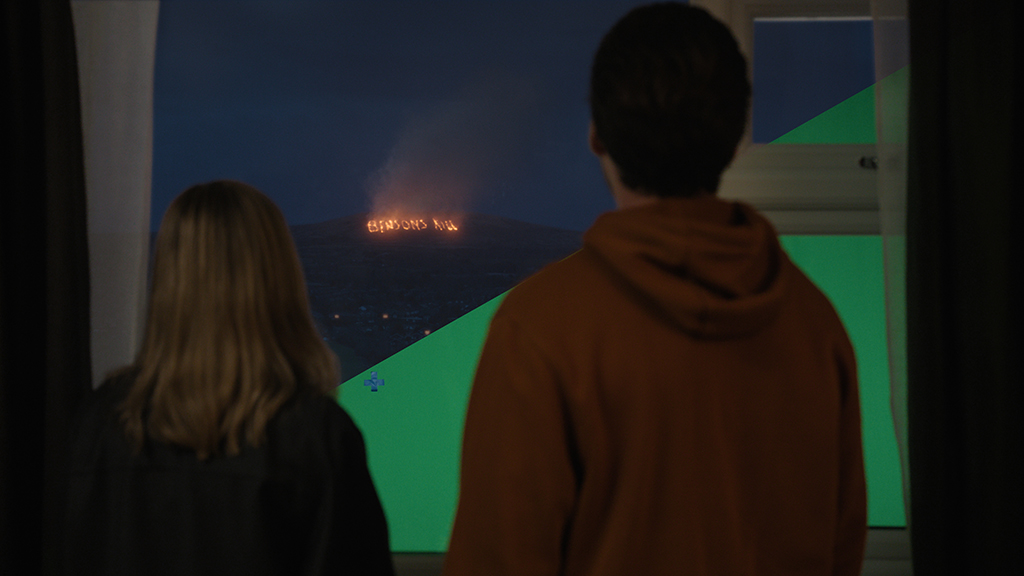
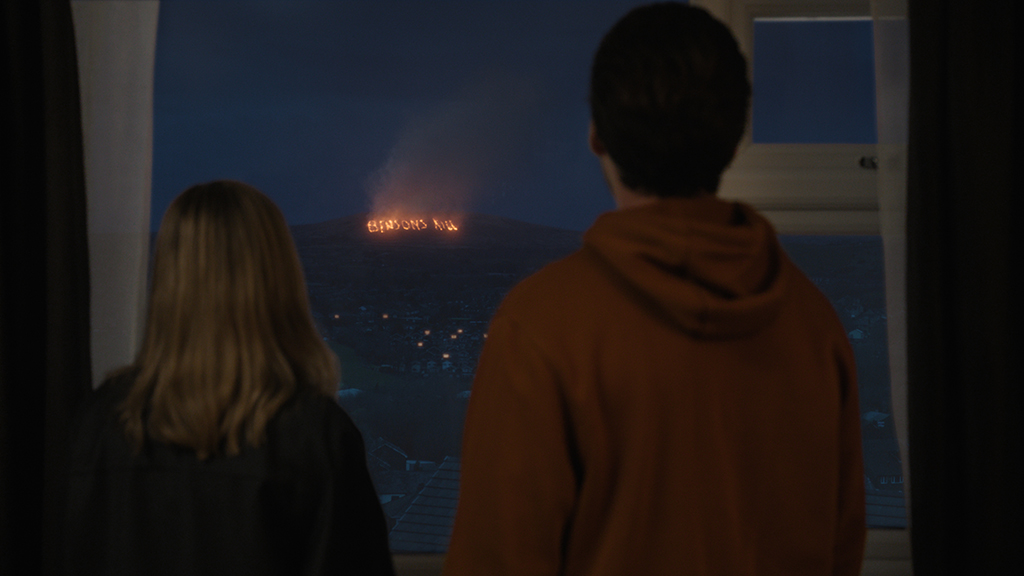
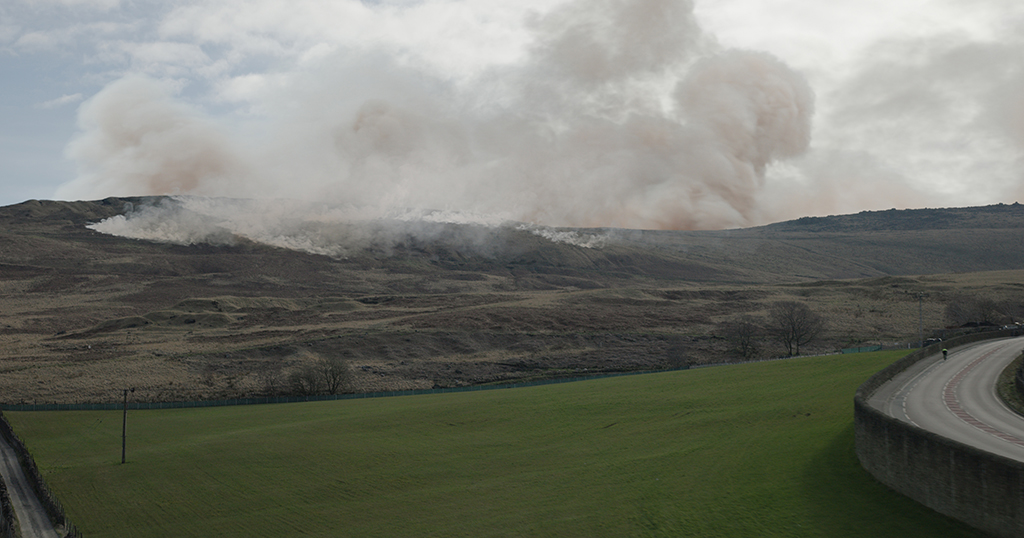
For the dramatic oner that opens the season, the camera starts from a window, pushes into an aerial view of the village and the moorland and comes down to settle upon a deceased body lying in a field. “It’s four different cameras at four different times in four different places,” Peter Noble, R&D Engineer at Vine FX, explains. “The ask was, ‘Can they be blended all into one shot?’ We kept an eye on the Gaussian splat stuff. We had maybe two or three versions of each plate, slightly offset from one another. For the middle section of the field, we had a drone flying in circuits, going round and round. You get a rough version out and stick them together. As we go from the village to the first bit of the field, if you put the grounds level with each other, you end up with a weird height difference. Some of it was retimed. We went back and got loads of material in multiple circuits, high and low. I tried training the Gaussian splat with classic NeRF datasets. Those looked fine, but if you zoom in, you can tell it’s a splat. But when we trained both datasets together, you can’t tell that it’s not the original plate, which is amazing. There are a few bits of this that the splats struggled with, like hills in the background. We would delete those and leave everything behind that ridge to comp where they could project it on a card. After the initial training, it was treated much more like a CG asset.”
The Gaussian splats became useful for Surubkina, who notes, “We could control the camera at any speed we desired while still keeping the consistent speed of a natural movement that we filmed originally.” The vegetation appears more realistic. “You can see that the level of parallax between one blade of grass to the next is there,” Illingworth remarks. “That complexity of each blade of grass is so difficult to do with photogrammetry. It just looks flat like a video game. This brought to the process a level of complexity that makes it look like a real drone shot.”
“One side of the flood wall was built out of wood, but they made it look like concrete. I took a lot of reference pictures and some measurements, then replicated the wall in CG and used the textures to match it on the other side. We also got a water specialist to run a simulation to give the shot a bit of life. Where we were filming had a puddle, which served as a good reference for what the water would look like. I used that as my guide when I was comping the shot for how transparent and dark the water should be.”
—Alesja Surubkina, Visual Effects Supervisor, Vine FX
The crew caught a lucky break during early-morning reshoots. “We went back to reshoot the village section of it at 5 a.m. when the sun hadn’t quite risen. The sky was bright, but there was no direct sun,” Noble reveals. “We got lucky in that there was no wind, rain, pedestrians or cars, and the trees were stationary. There weren’t much atmospherics to begin with. If any haze was in the way, we would do a clean-up pass, so just stuff near the ground was left. All the smoke and embers were done as effects passes. When creating the Gaussian splats, the cameras were solved in a traditional photogrammetry software, so we also splat out the photogrammetry at that point. It doesn’t look good at all, but it is easy for the CG to work with, do their effects passes on top of it and shoot out the splat render.”
The skies were problematic. “It was a full sky replacement, especially because we had to make it look as one environment, and the sky wasn’t the same between the shots,” Surubkina says. “On the ones they filmed on the fields, it was a bright blue sky, while the shots of the houses were cloudy.”
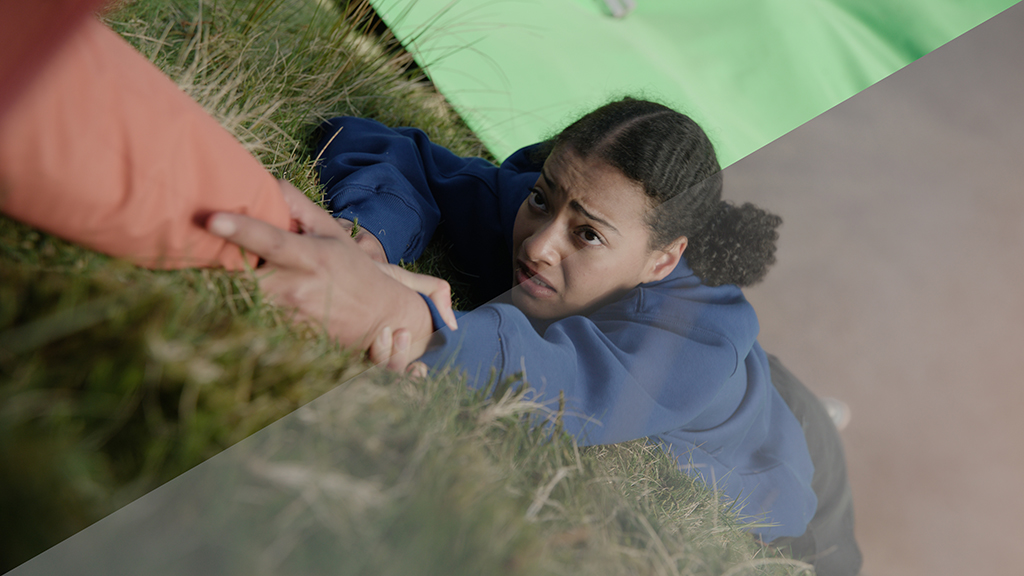
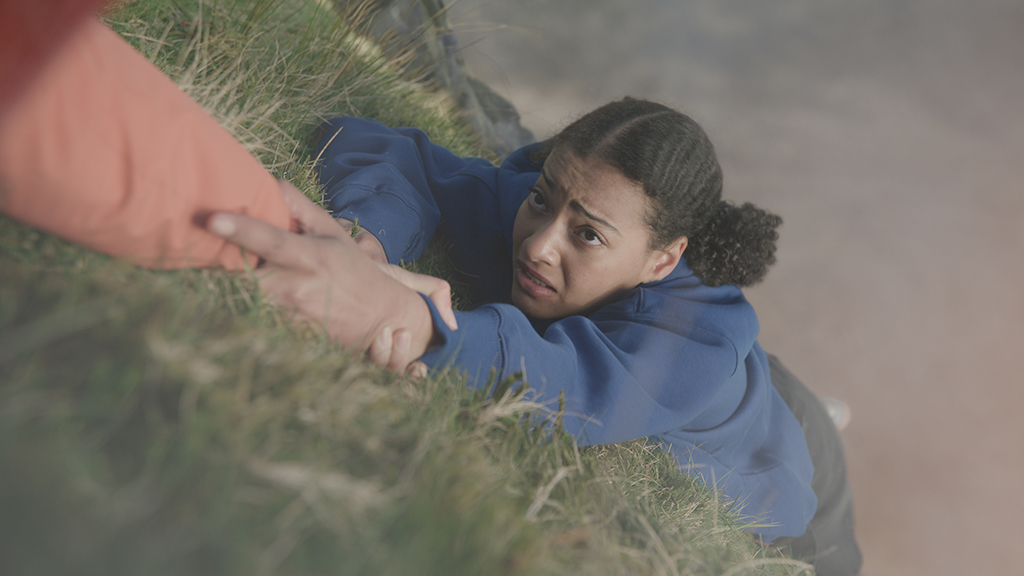
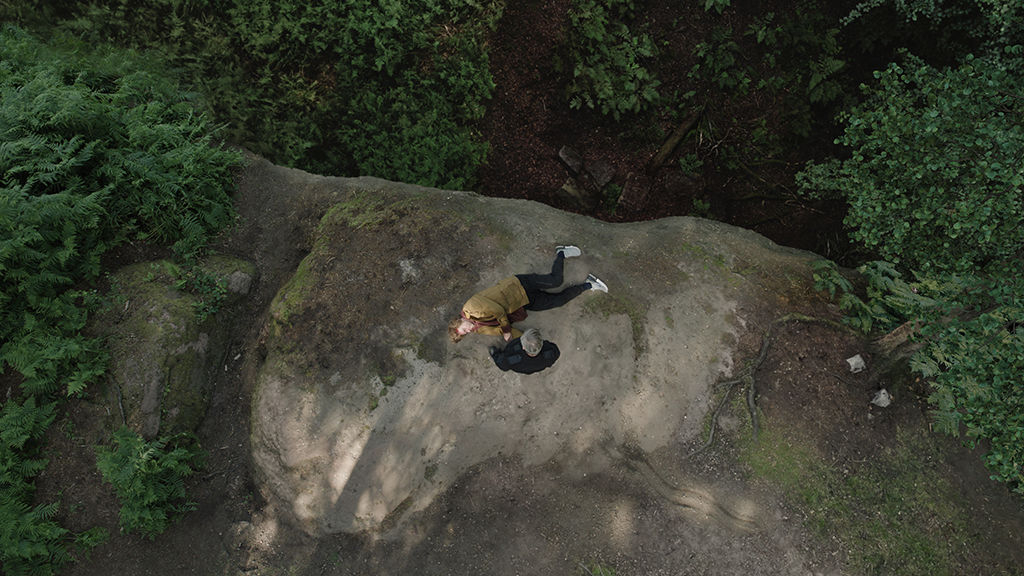
Fire plays a prominent narrative and visual role. “The biggest fires happen toward the end of Episode 201, where it’s out of control,” Surubkina states. “We also find out that a girl is lost; she accidentally slips and is about to fall into this pit full of fire. There are two different fires happening. There were patches of fires we were meant to see far in the distance, and a main fire underneath the cliff that we were focusing on. Technically, there were two simulations. We researched what forest fires and smoke looked like, and then there were dramatic creative decisions by the client to make it even more extreme. It ended up being a big and intense fire. To save time, we used a lot of 2D elements. I went to different libraries and found elements that looked quite a lot like our 3D simulation. We used that for the more distant fires in the background.”
“We went back to reshoot the village section of it at 5 a.m. when the sun hadn’t quite risen. The sky was bright, but there was no direct sun. We got lucky in that there was no wind, rain, pedestrians or cars, and the trees were stationary. There wasn’t much atmospherics to begin with. If any haze was in the way, we would do a clean-up pass, so just stuff near the ground was left. All the smoke and embers were done as effects passes. When creating the Gaussian splats, the cameras were solved in a traditional photogrammetry software, so we also splat out the photogrammetry at that point. It doesn’t look good at all, but it is easy for the CG to work with, do their effects passes on top of it and shoot out the splat render.”
—Peter Noble, R&D Engineer, Vine FX
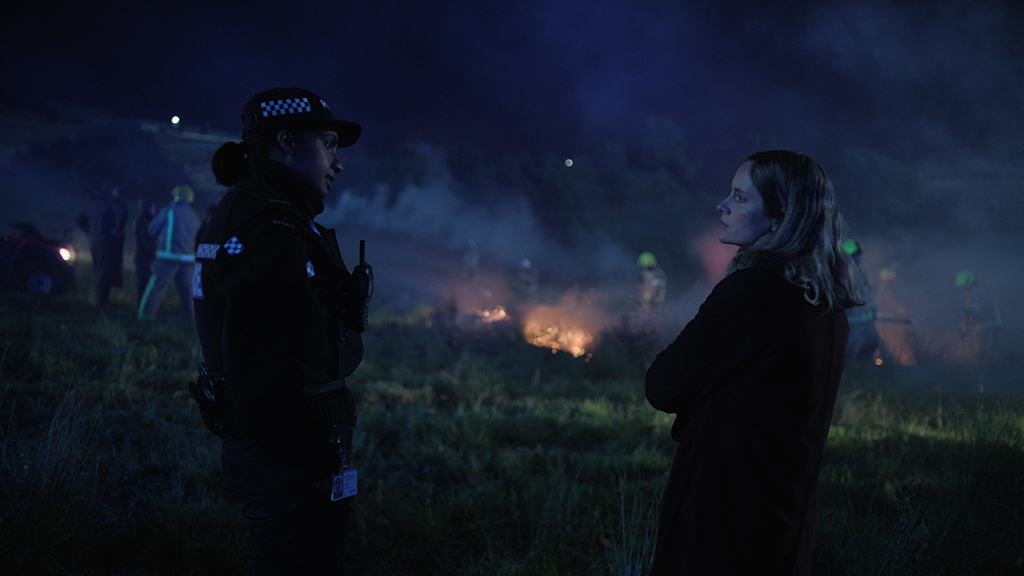
The special effects team had several smoke machines on set. “A number of shots were successful, but as the weather progresses, the wind blows and all of the smoke is gone,” Surubkina notes. “We had a mixture of shots where there was a good amount of smoke and others that had almost none. Our job was to balance the two and make sure they looked like they were part of the same environment. We had access to all the rushes, and because they filled it with practical smoke, we had real-life references to how smoke interacted with the environment and the actress, as well as its density. That helped us to build the layers and what it would approximately look like. Obviously, we wanted to make sure the actress was visible, so we had close-up shots and didn’t obstruct her face too much.”
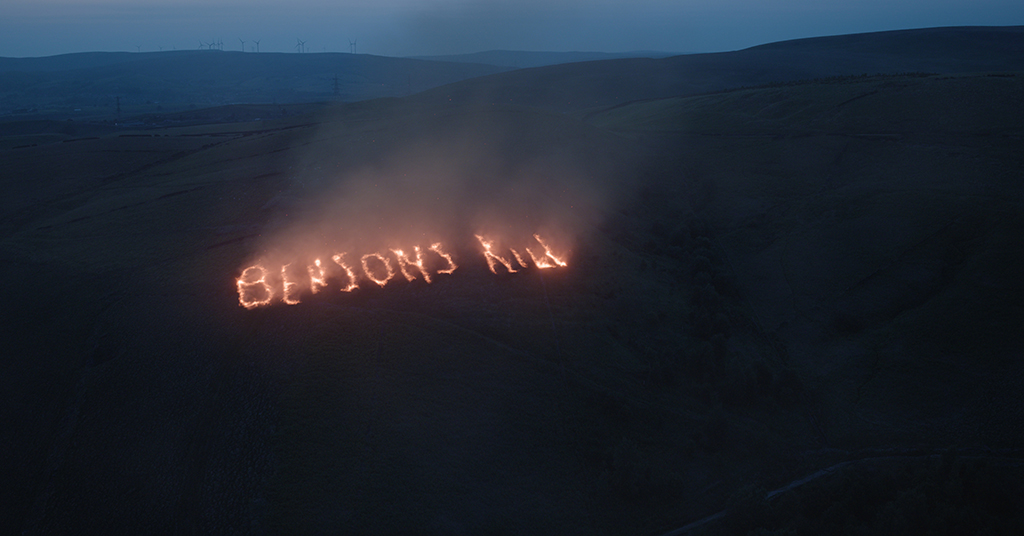
LiDAR scans were used for a specific shot. “A drone flies over an ambulance toward the mountain in Episode 204,” Surubkina remarks. “For that one, we needed to do LiDAR to be able to place the burning letters to correspond with the shape of the mountain. It took a while for us to decide whether to use ‘Bensons Kill’ or ‘Bensons Killed.’ We settled on ‘Bensons Kill,’ which is the family name of the main antagonist of the series, who sets the fires for hunting. Our talented DMP artists did a quick sketch of what it would look like because we needed it for three or four shots. It helped us decide on the scale and the approximate lighting. The client went, ‘We want it bigger.’ We made it even bigger, which helped us define the shape of the letters and their size. DMP generated an alpha matte, which was passed to the 3D artists, who used it as a base for constructing CG lettering. Being a night shot made this look much nicer as well because you get all of the nice luminance.”
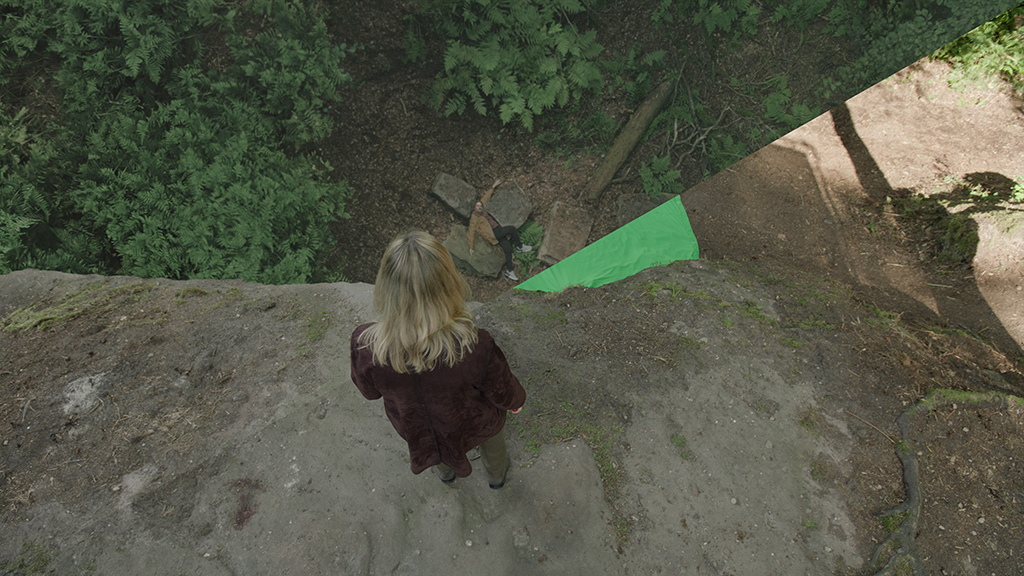
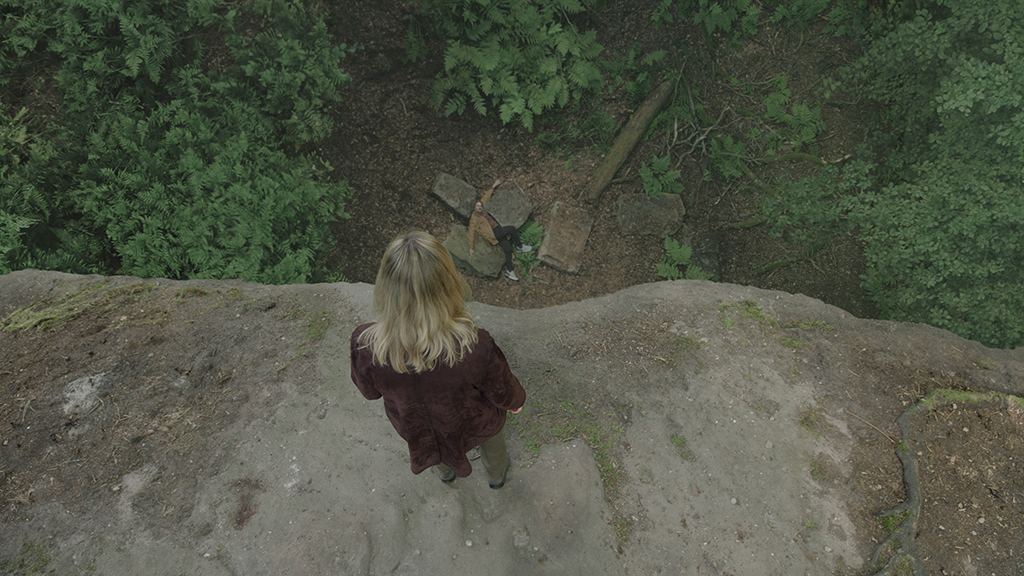
It is all about using different techniques to achieve the best result. “I’ve got this analogy that when you build a house, the bricks on the outside are rough, so you plaster the walls on the inside. But the edges of the plaster look awful, so you put on a skirting board, then you cover that over with carpet,” Illingworth remarks. “There are different layers of covering up bits that don’t look good, which makes the overall thing look great.”
The house analogy applies to how each shot was approached. “Every department was involved,” Surubkina states. “A person creating a camera, compositing putting it together, DMP doing burn patches, and 3D generated some grass and trees because we didn’t have enough data on the side. There were a lot of meetings with numerous people going, ‘This doesn’t work. That breaks. What can everyone do?’ We were passing around ideas and asking, ‘Can we do CG grass? How quickly can we do it? It’s quite easy. Cool. Let’s do that.’”